TrueNAS is the best of these NetApp alternatives for teams that want enterprise storage without a licence fee: it is free, open source and rated 4.8 out of 5 on G2 from 167 reviews. Qumulo suits large file workloads across cloud and on-premises, while Synology DiskStation is the simplest pick for smaller teams.
How we make this list: we compare pricing pages, product documentation and public user reviews, then re-check every price before each update. No product paid for a place. Disclosure.
TrueNAS is the highest-rated pick here at 4.8 out of 5 on G2 from 167 reviews, and the software costs $0.
Six of the nine tools publish no list price: Qumulo, HPE Alletra, IBM FlashSystem, VAST Data, Pure Storage and Dell PowerScale are all quote-only.
Qumulo's managed Azure service starts at $2,500 a month for 250 TB on the Cold tier, or $3,700 a month for 100 TB on Hot.
Synology DSM ships free with the hardware, so the cost is the NAS box, not a licence.
MinIO AIStor Free is a full-featured single-node object store at no charge; multi-node clusters need a quoted subscription.
What should you look for in NetApp alternatives?
NetApp alternatives split into two camps: enterprise arrays sold by quote, and free software you run yourself. The right camp depends on whether you need a vendor to own the hardware or you are happy to run storage on your own boxes.
File, block and object support decides most shortlists. NetApp ONTAP covers all three, so a real replacement should too, or you should know which protocol you can give up. TrueNAS and Pure Storage FlashArray cover all three; Qumulo covers file plus S3 object.
Price is the hardest part to compare. Six of the nine tools here publish no price at all, so shortlist on protocols, scale and support first, then get quotes for the same capacity from two or three vendors. Our 3-2-1 backup rule guide explains why a second copy matters whatever array you pick.
Ratings are thin for enterprise storage. IBM FlashSystem has 271 G2 reviews, but Pure Storage FlashArray has only 12, so treat small review counts as a weak signal and ask each vendor for reference customers in your industry.
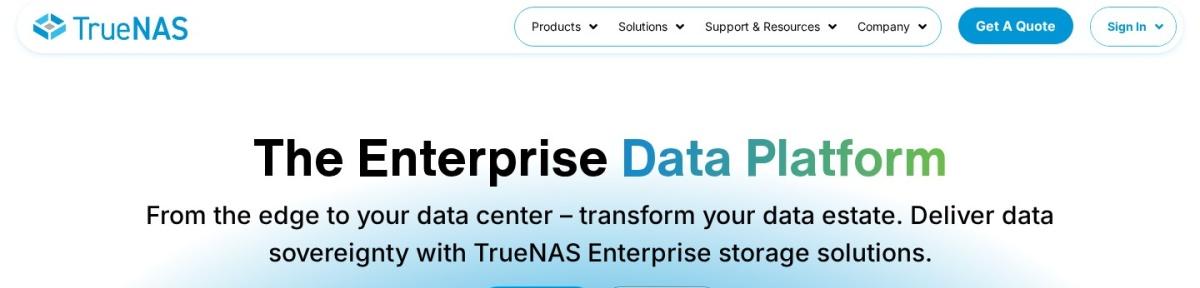
TrueNAS is a free, open-source storage platform built on OpenZFS, with file, block and object services in one system. It runs on your own hardware or on TrueNAS appliances, scales from 20 TB to 40 PB, and includes checksums, snapshots and self-healing against silent data corruption.
The trade off is support. The software costs $0, but production support and turnkey appliances are quoted, so a business deployment still needs a support contract. It suits teams that want full control and a proven open-source base without a licence bill.
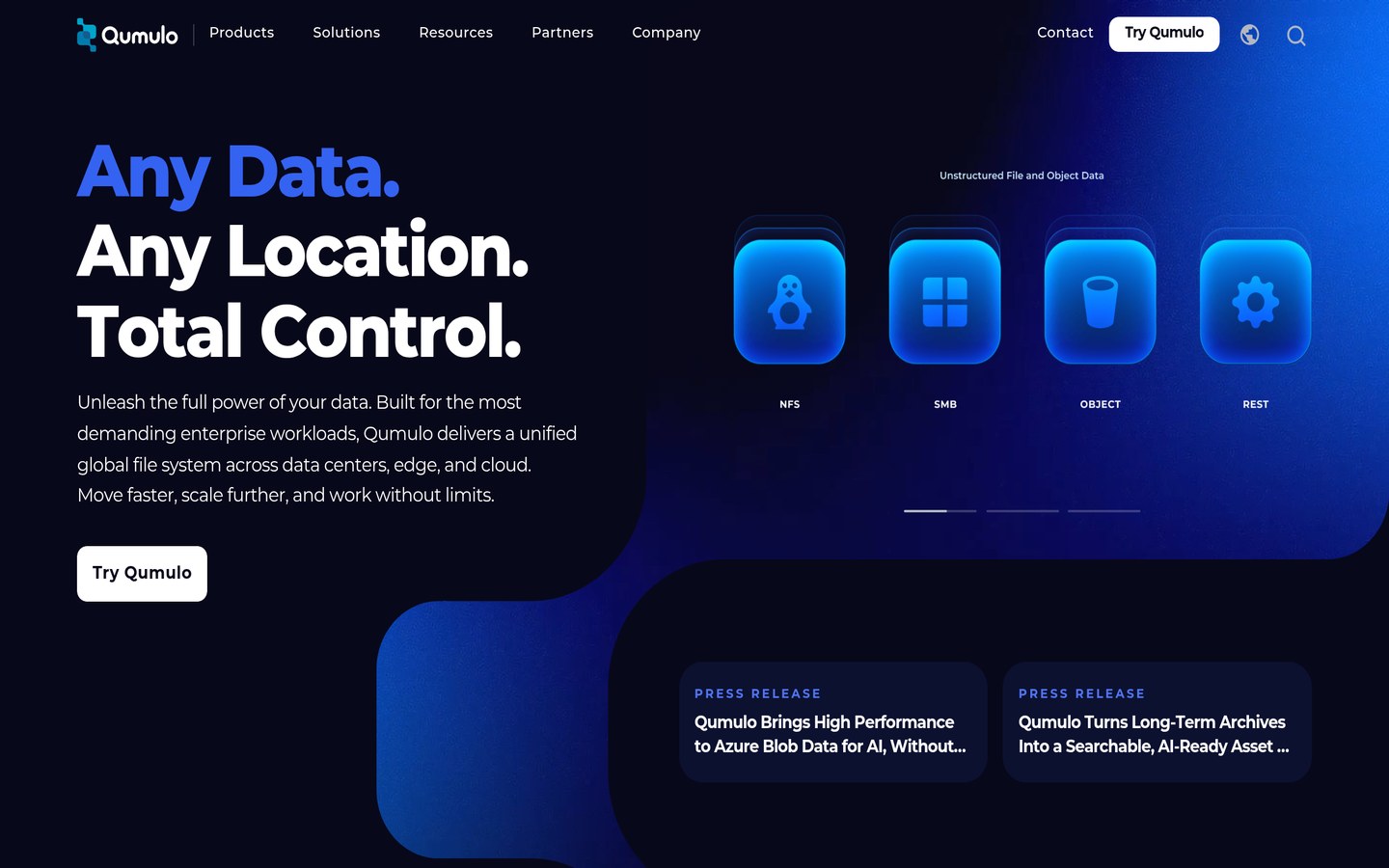
Qumulo is a scale-out file data platform with NFS, SMB and S3 access under one global namespace, running on premises or as a cloud-native service on AWS, Azure and Google Cloud. It is built for data-heavy workloads such as media, research and AI pipelines, and scales to exabytes.
The trade off is price. On-premises subscriptions are quoted, while the managed Azure service starts at $3,700 a month for 100 TB on the Hot tier and $2,500 a month for 250 TB on Cold. It suits teams that want one namespace across data centre, edge and cloud.
What we like
One global namespace across sites and clouds
NFS, SMB and S3 access in one platform
Cloud-native services on AWS, Azure and Google Cloud
Exabyte-scale file storage for data-heavy workloads
Watch out for
On-premises pricing is quote-only
Managed cloud tiers start at $2,500 a month
Only 19 G2 reviews
Cloud tiers bill monthly; on-premises adds hardware and a subscriptionVisit qumulo.com
03
Synology DiskStation
4.6/5on G2 (96 reviews, checked Nov 2026)
PriceFree
Best for small teams and offices
Software costFree with hardware
BackupHyper Backup, snapshots
Photos and filesPhotos, Drive, Office
Virtual machinesYes, Virtual Machine Manager
synology.com
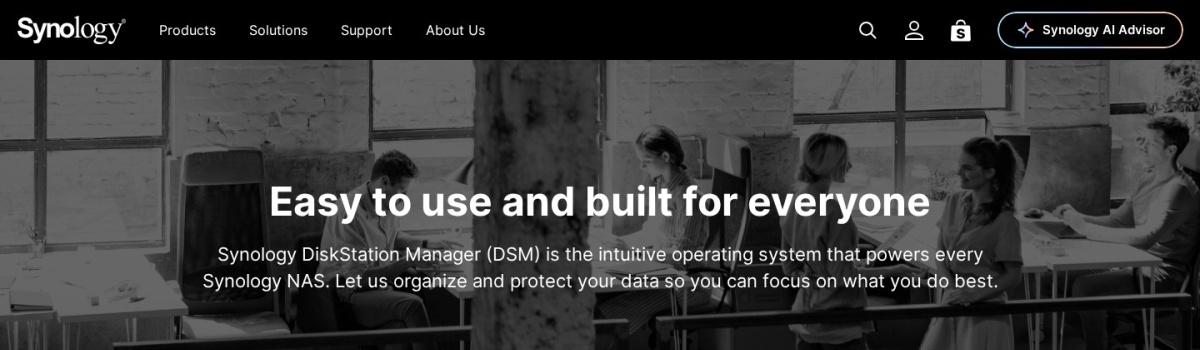
Synology DiskStation homepage, captured Nov 2026.
Synology DiskStation is the software that ships on Synology NAS boxes, turning a small box into a private cloud for files, photos, backups and media. Its apps cover photo management, file sync, surveillance and office documents through one calm interface, and it is rated 4.6 out of 5 on G2 from 96 reviews.
The trade off is hardware lock-in and cost. DSM only runs on Synology hardware, so you pay for the box first and cannot move the software to a PC you own. It suits small teams and offices that want a quiet appliance everyone can use without storage training.
HPE Alletra Storage is a cloud-managed storage platform built on a disaggregated architecture, so capacity and performance scale separately. The B10000 covers block and file workloads, the X10000 covers object and file for AI, and HPE guarantees 100% data availability.
The trade off is that pricing is quote-only and the range is aimed at larger buyers. The B10000 scales to 5.8 PB of raw capacity per system, and management runs through HPE's cloud console. It suits enterprises that already run HPE infrastructure and want one console for the whole fleet.
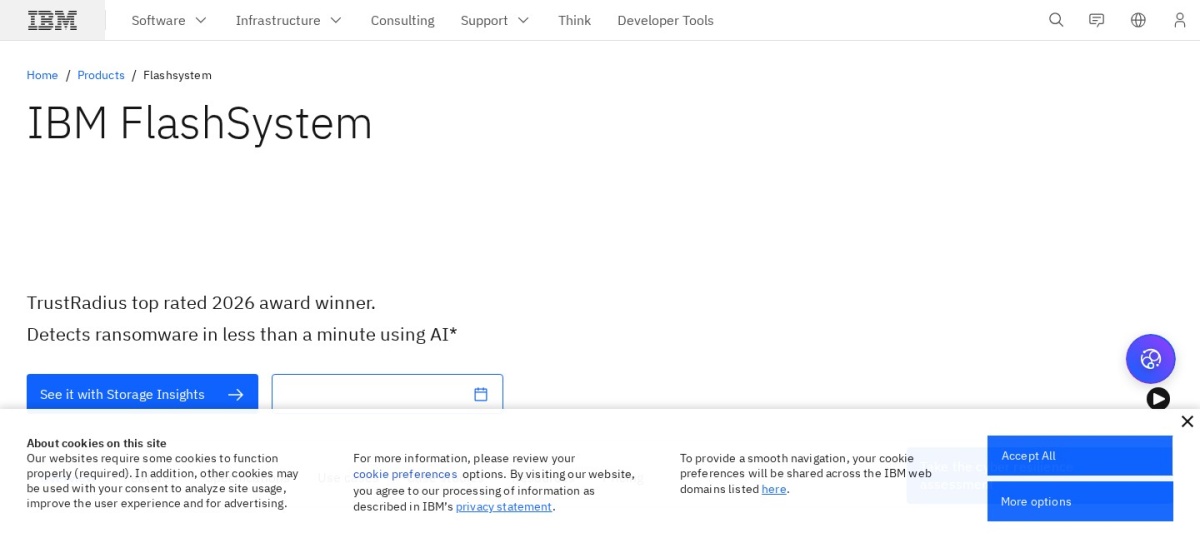
IBM FlashSystem is an all-flash array family built on Storage Virtualize software, from the entry-level 5200 to the enterprise 9500. FlashCore Module drives add built-in compression and ransomware detection, which IBM Research demonstrated within a minute of encryption starting in a lab test.
The trade off is price and complexity. Entry-level systems start at $18,400, the rest is quoted, and reviewers note a learning curve for teams new to IBM storage tools. It suits IBM shops and teams that need strong cyber resilience beside virtualisation and databases.
What we like
Most G2 reviews in this list at 271
Ransomware detection in under a minute in lab tests
Storage virtualisation across IBM and non-IBM arrays
Gartner Magic Quadrant Leader for 2026
Watch out for
Pricing is quote-only above entry level
Learning curve for teams new to IBM storage
File storage needs a separate IBM Scale layer
Storage Assurance adds non-disruptive data movementVisit ibm.com
06
VAST Data
4.4/5on G2 (28 reviews, checked Nov 2026)
PricingQuote/yr
Best for AI and GPU workloads
ArchitectureDASE, disaggregated
ProtocolsNFS, SMB, S3, K8s CSI
Data typesFiles, objects, tables
ScaleExabyte-scale archives
vastdata.com
VAST Data homepage, captured Nov 2026.
VAST Data is a unified data platform built on its DASE architecture, combining file, object and database services in one system with a single global namespace. It reads and writes through NFS, SMB, S3 and Kubernetes CSI, and is built for AI pipelines that span edge, core and cloud.
The trade off is cost and focus. Pricing is quote-only, reviewers flag a high entry cost, and the platform is aimed squarely at large AI and data-heavy workloads. It suits teams training models on petabyte-scale data, including customers such as Pixar, Zoom and Lambda.
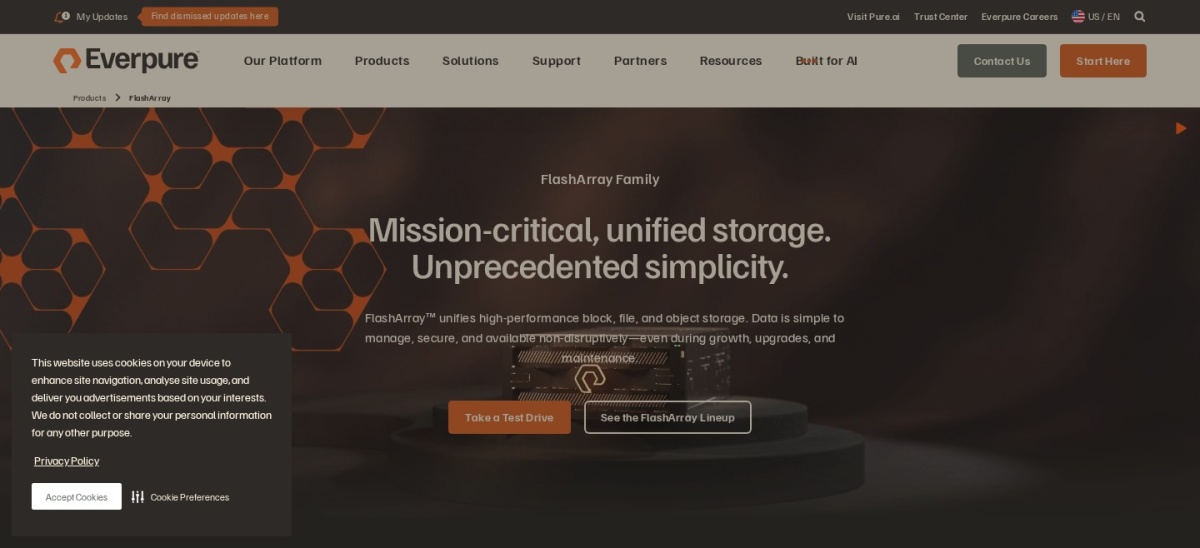
Pure Storage FlashArray homepage, captured Nov 2026.
Pure Storage FlashArray is an all-flash array that unifies block, file and object storage in one system. It averages 5-to-1 data reduction, scales to 9.4 PB of effective capacity, and upgrades blades, modules and software without downtime through its Evergreen program.
The trade off is price. FlashArray is sold by quote, reviewers call it a premium-cost system, and there is no small entry-level model for branch offices. It suits teams that want simple operations and non-disruptive upgrades for databases, VMware and virtualisation.
Dell PowerScale is a scale-out NAS platform built on the OneFS file system, designed for unstructured data and AI workloads. It scales from terabytes to petabytes, supports up to 500 tenants per cluster in OneFS 9.16, and plugs into the Dell AI Data Platform beside NVIDIA GPUs.
The trade off is cost and setup effort. Pricing is quote-only, reviewers flag high licensing costs, and advanced configuration needs specialist knowledge. It suits large teams consolidating file servers and AI data onto one platform, with subscription billing for what they use.
What we like
Scales from terabytes to petabytes
Up to 500 tenants per cluster in OneFS 9.16
Deep NVIDIA GPU integration for AI
Subscription billing for what you use
Watch out for
Pricing is quote-only
High licensing costs, per reviewers
Advanced setup needs specialist knowledge
Future-Proof Program adds non-disruptive upgradesVisit dell.com
09
MinIO AIStor
4.3/5on G2 (17 reviews, checked Nov 2026)
PriceFree
Best free S3-compatible object store
Storage typeS3-compatible object
Free tierSingle node, full features
Enterprise LiteUnder 400 TiB, quote
Support SLAUnder 4 hours, Enterprise
min.io
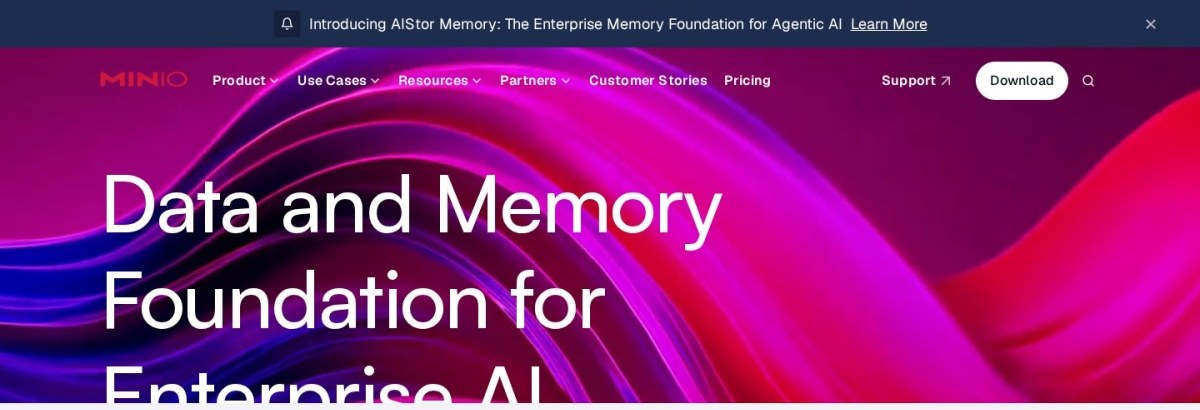
MinIO AIStor homepage, captured Nov 2026.
MinIO AIStor is a high-performance, S3-compatible object store that runs on any hardware, from edge to core to cloud. AIStor Free is a full-featured single-node deployment at no charge, with erasure coding and the full S3 API for cloud-native apps and AI workloads.
The trade off is the free tier limit. Multi-node deployments need a quoted Enterprise subscription, and the old open-source community edition is archived and no longer maintained. It suits teams building S3-compatible storage for apps and machine learning.
What we like
Full S3 compatibility for cloud-native apps
Free single-node edition with all features
Fast erasure-coded object storage
Runs anywhere, edge to cloud
Watch out for
Only 17 G2 reviews, a thin rating base
Free tier is single-node only
Community edition archived in 2026
Enterprise adds multi-node scale and 24x7 supportVisit min.io
What quote-only pricing means for buyers
Most enterprise storage vendors do not publish prices. They quote per deployment, based on capacity, performance, support level and contract length.
That makes the first quote hard to judge. Ask for the same usable capacity, the same support tier and the same contract length from each vendor, and ask what the renewal costs after year one.
Free software changes the maths. TrueNAS and MinIO AIStor Free cost $0 in software, so the comparison becomes hardware plus support, which is easier to price and easier to walk away from.
How we chose
We started from the established enterprise storage vendors that compete with NetApp ONTAP on file, block or object storage, then added the free software options teams actually run as replacements.
Prices come from each vendor's own pages and G2 vendor-provided pricing, checked on 29 November 2026. Ratings and review counts come from G2 on the same day, except HPE Alletra, which uses PeerSpot. Where a vendor shows no price, the list shows Quote.
We left out cloud-only object stores that cannot run on premises, and vendors with no public rating. No vendor paid for a place, and we do not claim to have used these tools ourselves.
How to choose a NetApp alternative
Start with the protocols your workloads need, then match scale, budget and support.
List the protocols you must keep. If you run file, block and object today, a replacement should cover all three, or you need a plan for the one it drops.
Size the capacity honestly. Count usable capacity after data reduction, not raw disk. A vendor quoting 5-to-1 reduction needs real numbers from your own data.
Decide who owns the hardware. Free software such as TrueNAS saves the licence fee but leaves hardware and support with you. See our guide on whether host backups are enough before relying on one copy.
Get two quotes for the same spec. Quote-only pricing cannot be compared without identical capacity, support tier and contract length.
FAQ
What is the best NetApp alternative in 2026?
TrueNAS is the best NetApp alternative for most teams. It is free and open source, covers file, block and object storage, and is rated 4.8 out of 5 on G2 from 167 reviews, the highest rating in this list.
How much do NetApp alternatives cost?
Most enterprise NetApp alternatives are quote-only, so there is no list price for Pure Storage, Dell, HPE, IBM or VAST Data. The free options are TrueNAS and MinIO AIStor Free at $0, while Synology DSM ships free with the hardware you buy.
Is there a free NetApp alternative?
Yes. TrueNAS is free and open source, with file, block and object storage on your own hardware, and MinIO AIStor Free is a full-featured single-node object store at no charge. Both charge for enterprise support, and TrueNAS appliances are quoted.
Which NetApp alternative is best for small teams?
Synology DiskStation is the best pick for small teams. DSM ships free with a Synology NAS box, the interface is the most polished here, and it covers files, photos, backups and media without storage training.
TrueNAS vs Qumulo: which is better?
TrueNAS is better for teams that want free software and full control, while Qumulo is better for large file workloads across cloud and on-premises. TrueNAS is rated 4.8 out of 5 on G2 from 167 reviews; Qumulo is rated 4.6 from 19.
Can I replace NetApp with cloud storage?
You can for object and backup workloads, but cloud storage does not replace on-premises file and block storage for low-latency apps. Most teams keep a local array for active data and use cloud storage for backup and archive copies.
Do NetApp alternatives support NFS and SMB?
Most do. TrueNAS, Qumulo, Synology, HPE Alletra, VAST Data, Pure Storage and Dell PowerScale all serve files over NFS and SMB. IBM FlashSystem is block storage, and MinIO is object-only, so both need a separate file layer.
SaaS SEO and WordPress specialist with about 8 years of experience. Rakib compares WordPress plugins, themes, hosting and software using public pricing, documentation and user reviews. See how we rank.