TalentLMS is the best Moodle alternative for most teams, with a free plan for 5 users and paid plans from 119 dollars a month for up to 40 users. Pick Canvas LMS for schools and universities, and Thinkific when you sell courses to the public.
How we make this list: we compare pricing pages, product documentation and public user reviews, then re-check every price before each update. No product paid for a place. Disclosure.
TalentLMS starts at 119 dollars a month for up to 40 users, with a free plan for 5 users and 10 courses.
Canvas LMS is free for individual teachers and holds a 4.5 G2 rating from 1,839 reviews, the largest review base here.
Thinkific charges no transaction fees on any paid plan, and Basic costs 36 dollars a month on annual billing.
Google Classroom is free for schools using Google Workspace, with a 4.5 G2 rating from 1,561 reviews.
Docebo, Absorb and Blackboard all sell by quote, so budgeting needs a sales conversation.
How do you choose the best Moodle alternatives?
Moodle is free and open source, but it needs hosting, maintenance and technical skill. An alternative earns its place by removing that work, or by adding the course selling, reporting or support that Moodle lacks.
Audience decides the shortlist. Schools and universities should look at Canvas, Blackboard and Brightspace, businesses training staff should look at TalentLMS, Absorb and Docebo, and creators selling courses should look at Thinkific and Teachable. Our guide to the best LMS software compares the same platforms on pricing.
Pricing models differ sharply. TalentLMS charges a flat monthly band per user group, Thinkific and Teachable charge per month with transaction fees on some tiers, and the enterprise platforms sell by quote with no published price.
Free plans are worth testing first. TalentLMS is free for 5 users, Canvas is free for teachers, and Google Classroom is free for schools, so you can run a real course before paying anything.
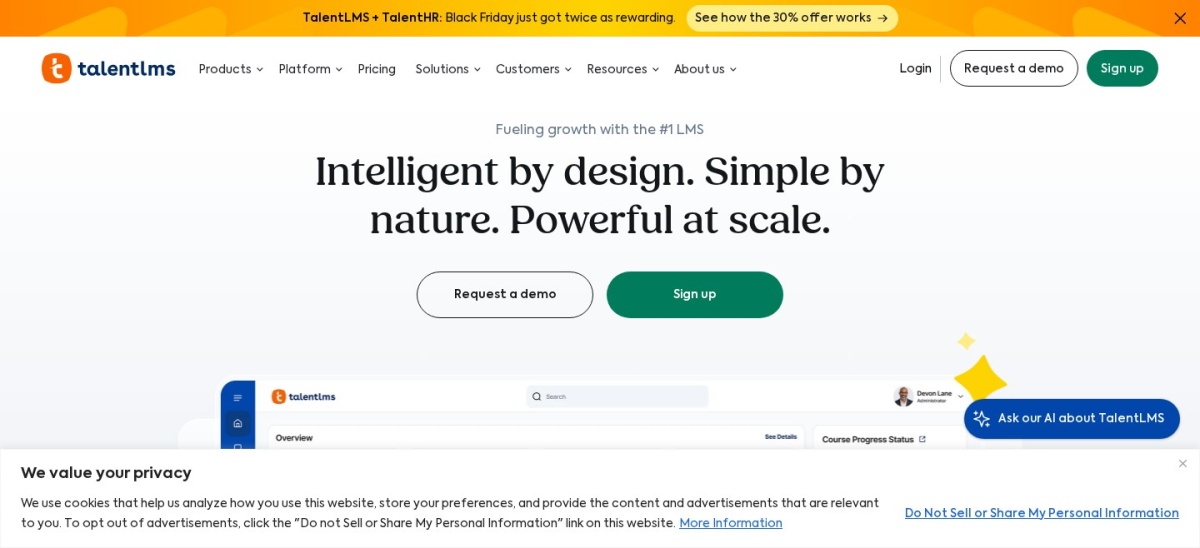
TalentLMS is a cloud learning platform for employee, customer and partner training, with a course builder, SCORM support, gamification and automations. Its free plan covers 5 users and 10 courses, and Core costs $119 a month billed yearly for up to 40 users.
The trade off is the user band. Core covers up to 40 users, so a team that grows past that band pays more, and learning paths need a higher tier. It suits small and mid-size teams that want training live within days.
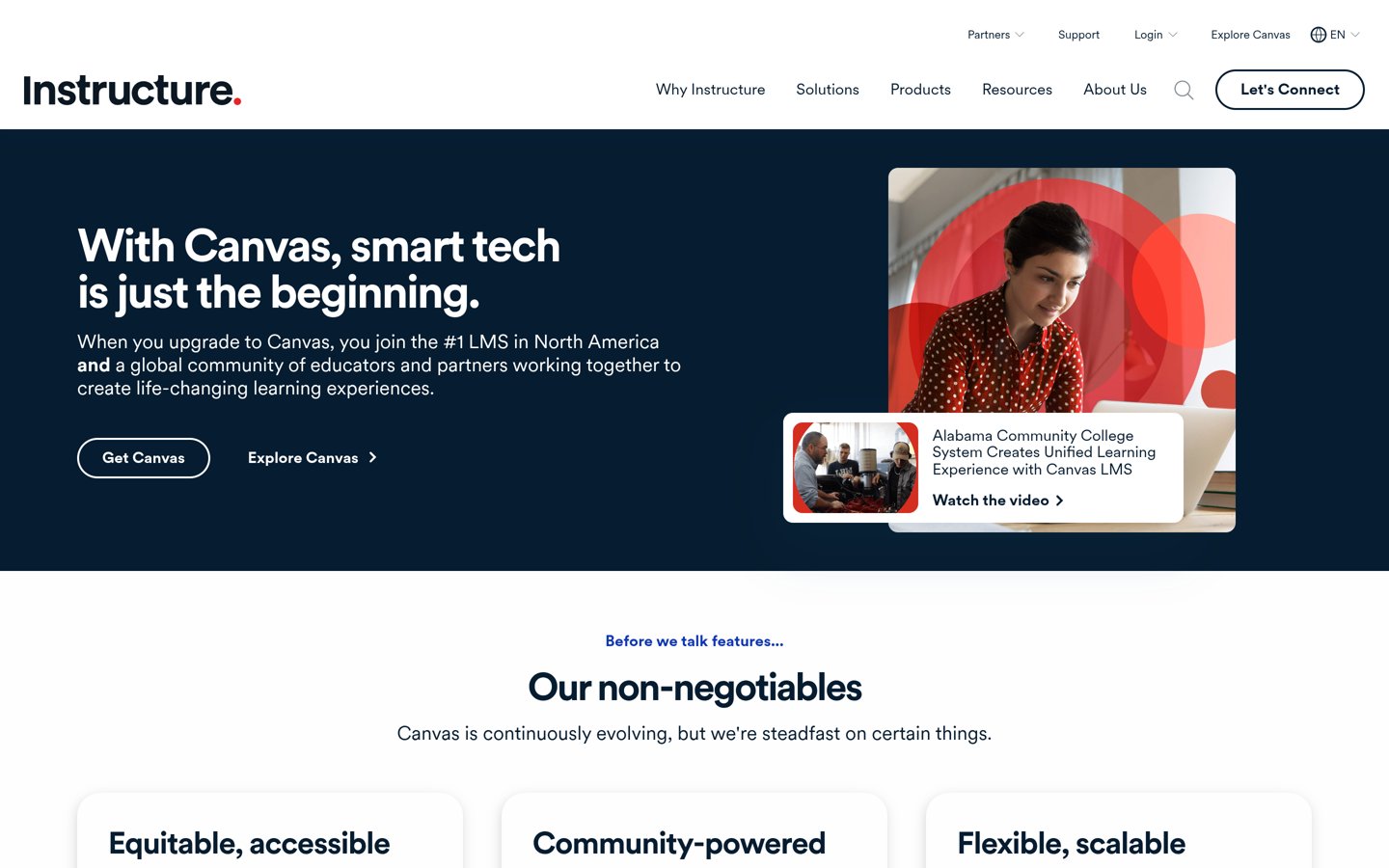
Canvas LMS is the learning platform from Instructure, used by schools and universities for courses, assignments, grading and messaging, with a modern interface and dedicated teacher and student apps. It is free for individual teachers, and institutions pay by quote.
The trade off is institutional pricing. There is no published price for a whole school, and advanced tools such as Canvas Studio cost extra. It suits schools and universities that want the most reviewed LMS in this list.
4.4/5on G2 (Not published reviews, checked Nov 2026)
Paid from$36/mo
Best for selling courses to the public
Free planYes, 1 course
Paid planBasic, $36/mo
Transaction fees0% on paid plans
Courses on BasicUnlimited
thinkific.com
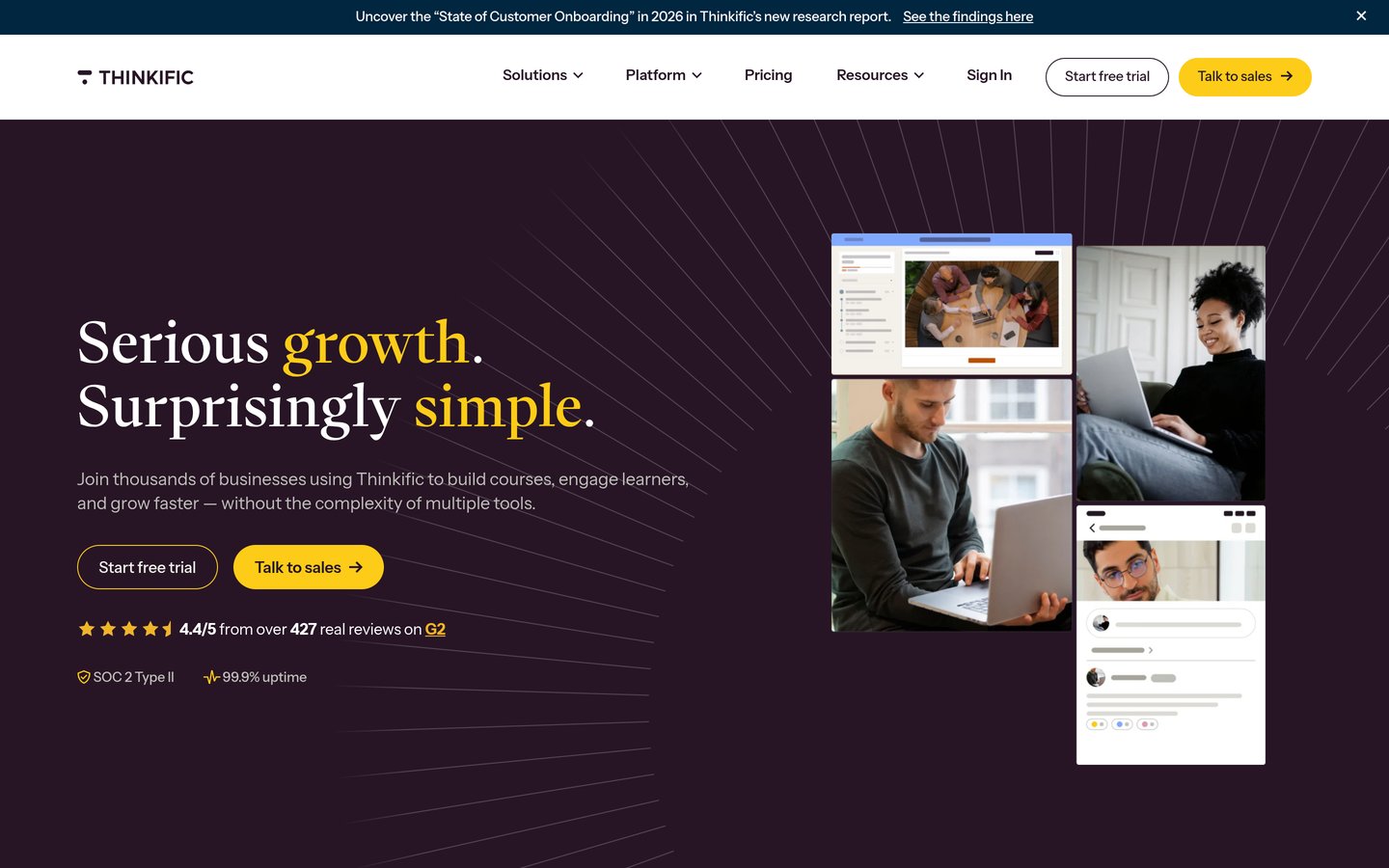
Thinkific homepage, captured Nov 2026.
Thinkific is a course platform for creators and training businesses that sell courses to the public, with a drag-and-drop builder, drip scheduling, coupons and communities. Basic costs $36 a month on annual billing, with unlimited courses and no transaction fees.
The trade off is the monthly price on short billing. Basic costs $49 a month billed monthly, and certificates and memberships need the $74 Start plan. It suits creators who want to keep every dollar of each sale.
4.4/5on G2 (Not published reviews, checked Nov 2026)
Starts at$29/mo
Best for coaching and sales tools
Free planNo, retired June 2025
Paid planStarter, $29/mo
Transaction fee7.5% on Starter
Products on Starter1
teachable.com
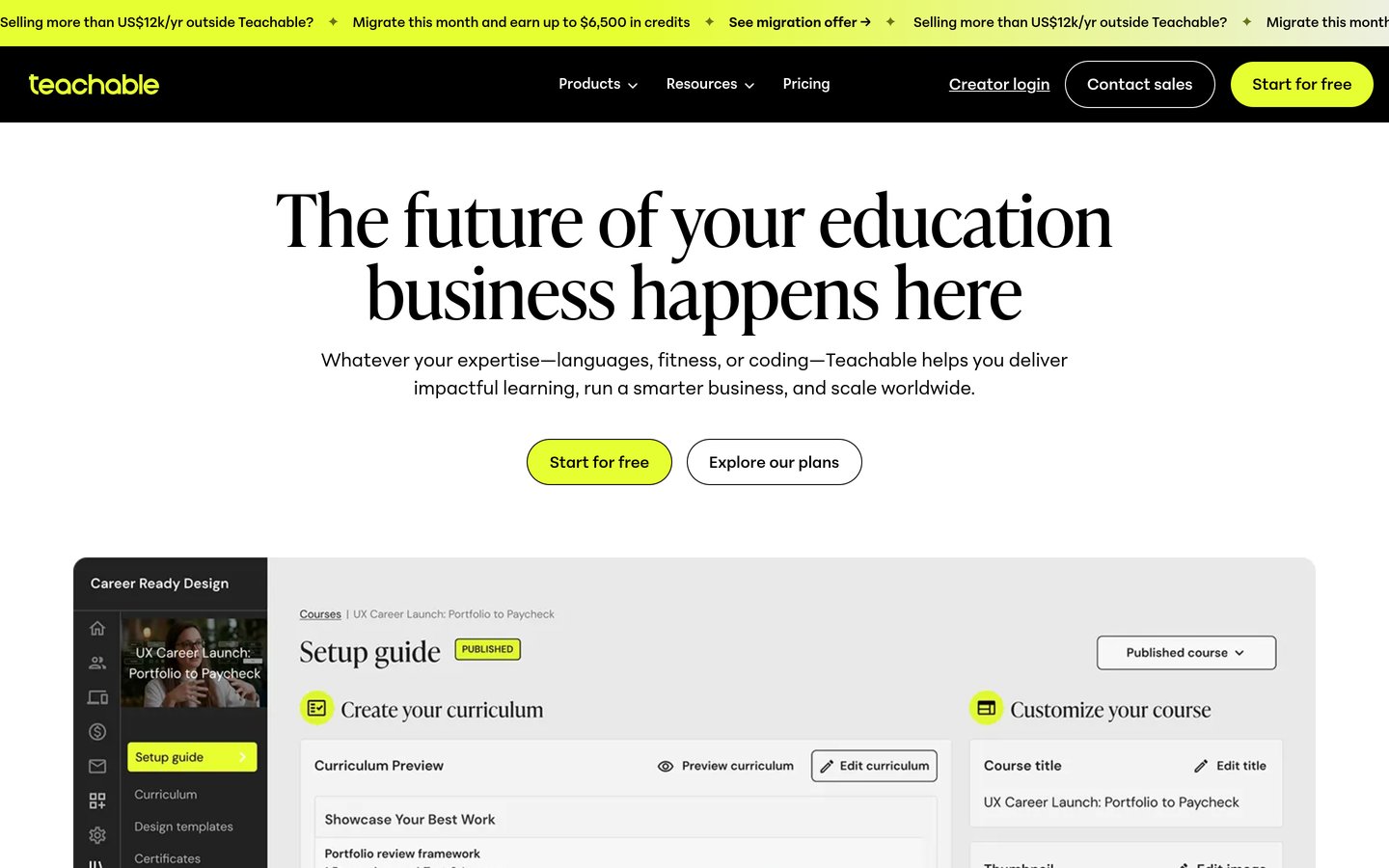
Teachable homepage, captured Nov 2026.
Teachable is a course platform for creators who sell courses, coaching and digital downloads, with checkout, affiliate tools and automated tax handling. Starter costs $29 a month on annual billing, or $39 billed monthly, with one product and a 7.5% transaction fee.
The trade off is the fee. Starter takes 7.5% of every sale, so a creator selling $4,000 a month pays $300 in fees on top of the subscription. It suits creators who value the sales tools and coaching features over the fee.
Google Classroom is a free learning platform for schools using Google Workspace, with classwork, assignments, grading and Meet links built around Docs and Drive. It is free for schools, and paid Workspace add-ons add more admin controls.
The trade off is depth. Classroom is a classroom tool, not a full LMS, with lighter reporting, no SCORM support and fewer corporate training features. It suits schools that already live in Google Workspace.
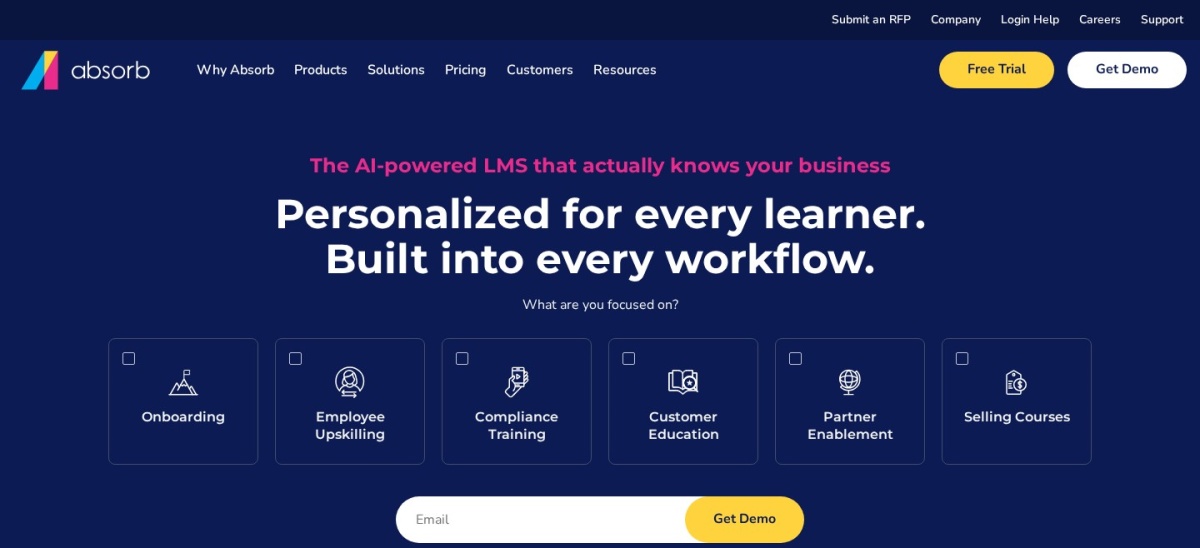
Absorb LMS is an AI-powered learning platform for mid-market and enterprise employee training, with automations, AI-personalised learning paths and compliance reporting across employees, partners and customers.
The trade off is price transparency. Absorb publishes no list price and sells by quote, with customers reporting quotes above $1,000 a month plus a setup fee. It suits larger teams with compliance needs and global deployment.
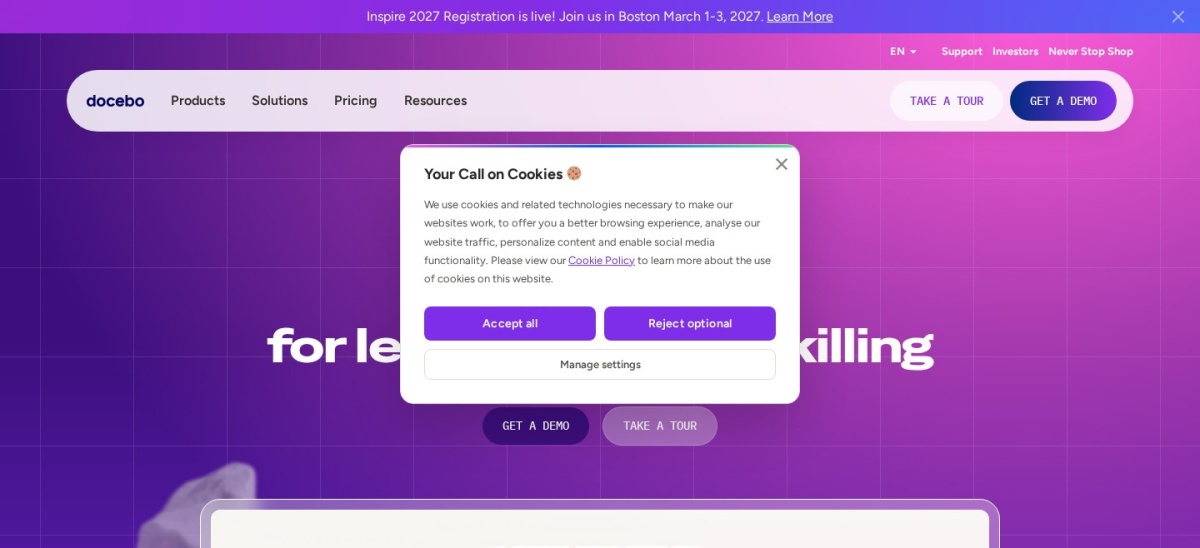
Docebo is an enterprise learning platform for employee, partner and customer training together, used by more than 3,900 organisations, with AI content, automations and analytics across large learner populations.
The trade off is cost and complexity. Docebo sells by quote with no published price, and it is widely regarded as one of the dearer LMS platforms. It suits enterprises running training for several audiences at once.
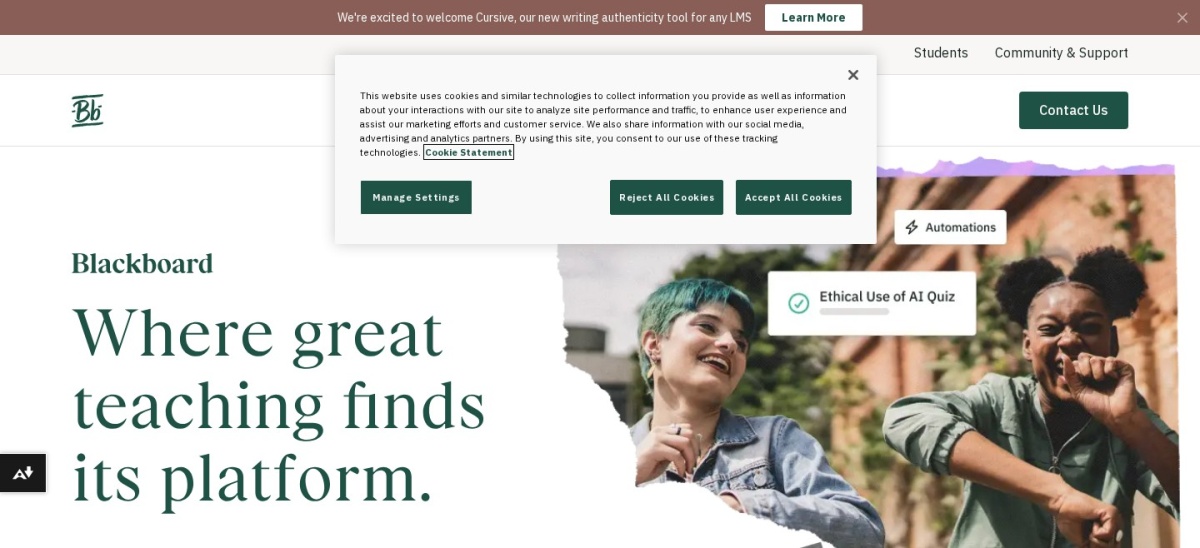
Blackboard Learn is a learning platform for large academic institutions, government and military training, with full course management, grading, collaboration tools and integrations across campus systems.
The trade off is the rating and the price. Blackboard holds the lowest G2 rating in this list at 4.0, and pricing is by quote with no published rate. It suits large institutions that already run Blackboard across campus.
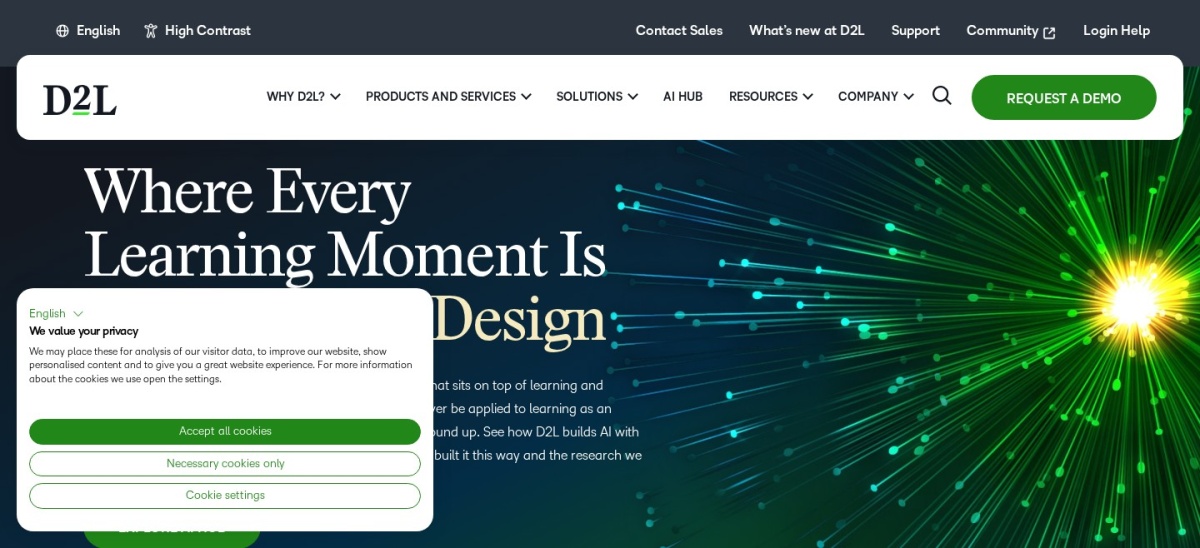
D2L Brightspace is a learning platform for schools, universities and businesses, with course creation, analytics and accessibility tools built into the authoring experience.
The trade off is price. Brightspace sells by quote with no published price, so budgeting needs a sales conversation, and it is less common than Canvas in higher education. It suits institutions that put accessibility first in course design.
Moodle itself is free to download, but hosting, maintenance, upgrades and support cost time and money. A hosted alternative bundles those costs into a subscription, which is often cheaper than staffing them.
Free plans on hosted tools are genuinely useful. TalentLMS covers 5 users, Canvas covers individual teachers, and Google Classroom covers whole schools, so a small course can run at no cost.
The bill grows with learners. TalentLMS charges by user band, Thinkific and Teachable charge a flat monthly rate, and enterprise platforms charge by quote, so price the tool at your real learner count.
How we chose
We started from the LMS platforms most often shortlisted against Moodle, then kept the nine with a real LMS product and a verifiable G2 rating.
Prices come from each vendor's pricing page or published plan, checked on 29 November 2026. TalentLMS Core at $119 a month billed yearly, Thinkific Basic at $36 a month on annual billing and Teachable Starter at $29 a month on annual billing were read from vendor pricing pages and November 2026 price checks the same day. Ratings and review counts come from G2.
We left out tools without a verifiable rating. No vendor paid for a place, and we do not claim hands-on testing for this list.
How to choose a Moodle alternative
Start with who you teach, then match the platform to schools, staff or paying students.
Name your audience first. Schools need Canvas, Blackboard or Brightspace, businesses need TalentLMS, Absorb or Docebo, and creators selling courses need Thinkific or Teachable.
Test the free plan with a real course. TalentLMS, Canvas and Google Classroom all offer free starts, so build one real course and check the authoring tools before you pay.
Check SCORM and reporting. If you buy or reuse SCORM courses, confirm support and check that reporting covers completion, compliance and certificates.
Price it at your real learner count. TalentLMS charges by user band and enterprise tools charge by quote, so get the price for your actual number of learners in writing.
FAQ
What is the best Moodle alternative in 2026?
TalentLMS is the best Moodle alternative for most teams. Its free plan covers 5 users and 10 courses, Core costs $119 a month for up to 40 users, and it holds a 4.6 G2 rating. Canvas LMS is the best pick for schools and universities.
Is there a free alternative to Moodle?
Yes. Google Classroom is free for schools using Google Workspace, Canvas LMS is free for individual teachers, and TalentLMS is free for up to 5 users and 10 courses. Moodle itself is also free to download, but you pay for hosting and maintenance.
How much do Moodle alternatives cost?
Published prices in this list run from $29 a month for Teachable Starter to $119 a month for TalentLMS Core, both on annual billing, with Thinkific Basic at $36 a month. Canvas, Absorb, Docebo, Blackboard and Brightspace all sell by quote.
Which Moodle alternative is best for schools?
Canvas LMS is the best Moodle alternative for schools. It holds a 4.5 G2 rating from 1,839 reviews, is free for individual teachers, and is built for courses, assignments and grading. Google Classroom suits schools that already use Google Workspace.
Which is better, Moodle or Canvas?
Canvas is easier to use and needs no hosting or maintenance, with a 4.5 G2 rating from 1,839 reviews against Moodle at 4.1 from 448. Moodle is free, open source and more customisable, but needs technical skill to host and maintain.
Can I sell courses with a Moodle alternative?
Yes. Thinkific and Teachable are built for selling courses to the public, with checkout, coupons and no or low transaction fees on paid plans. TalentLMS and Docebo also support customer and partner training, but are not course marketplaces.
SaaS SEO and WordPress specialist with about 8 years of experience. Rakib compares WordPress plugins, themes, hosting and software using public pricing, documentation and user reviews. See how we rank.