Stripe is the best merchant service for ecommerce for most online stores, with no monthly fee and support for cards, wallets and local payment methods in more than 135 currencies. Square suits sellers who also take payments in person, while Shopify Payments is the simplest choice inside a Shopify store.
How we make this list: we compare pricing pages, product documentation and public user reviews, then re-check every price before each update. No product paid for a place. Disclosure.
Stripe leads for most online stores, with no monthly fee and 2.9% plus 30 cents per card sale.
Square is the best choice if you also take payments in person.
Shopify Payments is the simplest option inside a Shopify store, at $29 a month.
Helcim offers interchange-plus pricing with no monthly fee, and Stax suits high-volume sellers.
PayPal costs more per sale but adds buyer trust that can lift conversion.
What should ecommerce sellers look for in merchant services?
Merchant services decide how much of every sale you keep. A store doing $10,000 a month in card sales pays very different fees on a 2.9% plan than on an interchange-plus plan.
There is no single cheapest option. Low-volume stores save with no monthly fee, while high-volume stores save with a flat fee and interchange at cost, so the right pick depends on your monthly sales.
Trust matters as much as price. A familiar checkout button can lift conversion on a new store, which is why PayPal still earns a place despite higher fees. Our guide on payment processing for small business explains the same fee maths in more detail.
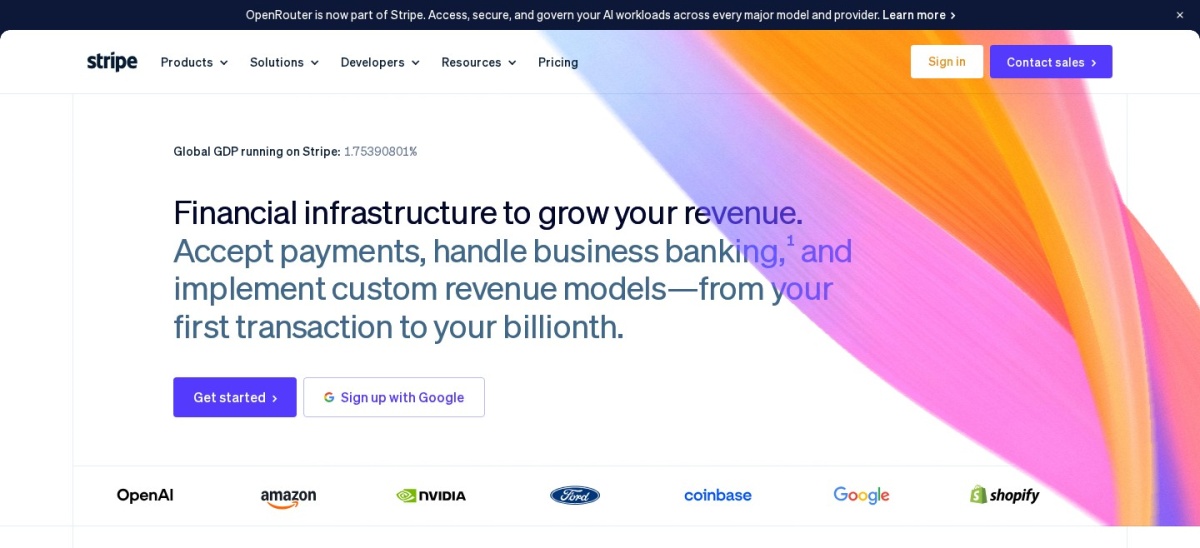
Stripe is a payment platform that charges no monthly fee and takes 2.9% plus 30 cents per domestic card transaction, which makes it easy to start selling online. It supports cards, wallets and local payment methods in more than 135 currencies, with strong tools for subscriptions and fraud checks.
The trade off is the per-transaction cost. At 2.9% plus 30 cents, Stripe costs more per sale than interchange-plus plans once volume grows, and international cards add 1.5%. It suits online stores that want a simple start with no monthly bill.
Square is a payment service that covers online and in-person sales in one account, which suits ecommerce sellers who also trade at markets or pop-up stalls. The free plan charges 3.3% plus 30 cents online, while the Plus plan at $49 a month per location brings the online rate to 2.9% plus 30 cents.
The trade off is the free-plan rate. At 3.3% plus 30 cents, online sales cost more than Stripe until you pay for Plus, and the monthly fee is charged per location. It suits sellers who take payments both online and face to face.
Shopify Payments is the payment service built into Shopify, so a store owner never needs a separate gateway account. The Basic plan costs $29 a month billed annually and charges 2.9% plus 30 cents per online card payment, with no extra fee for using Shopify's own checkout.
The trade off is lock-in. Shopify Payments only works inside Shopify, so moving your store means moving your payments too, and the monthly plan fee applies even in slow months. It suits stores already selling on Shopify that want the simplest setup.
PayPal is a payment service that many online shoppers already trust, which can lift conversion on a new store. The standard online card rate is 2.99% plus 49 cents with no monthly fee, and buyers can pay with a PayPal balance, card or bank account.
The trade off is the fee. At 2.99% plus 49 cents, PayPal costs more per sale than Stripe or Square, and the Checkout rate of 3.49% plus 49 cents is higher still. It suits stores that want the trust of a familiar checkout button.
Helcim is a payment service that charges interchange-plus pricing with no monthly fee, so you pay the card network cost plus a small markup. Online sales cost interchange plus 0.50% and 25 cents, while in-person sales cost interchange plus 0.40% and 8 cents.
The trade off is the smaller review base and brand. Helcim has only 19 Capterra reviews, so there is less public feedback than Stripe or Square, and its toolset is narrower. It suits stores that want transparent interchange pricing without a monthly bill.
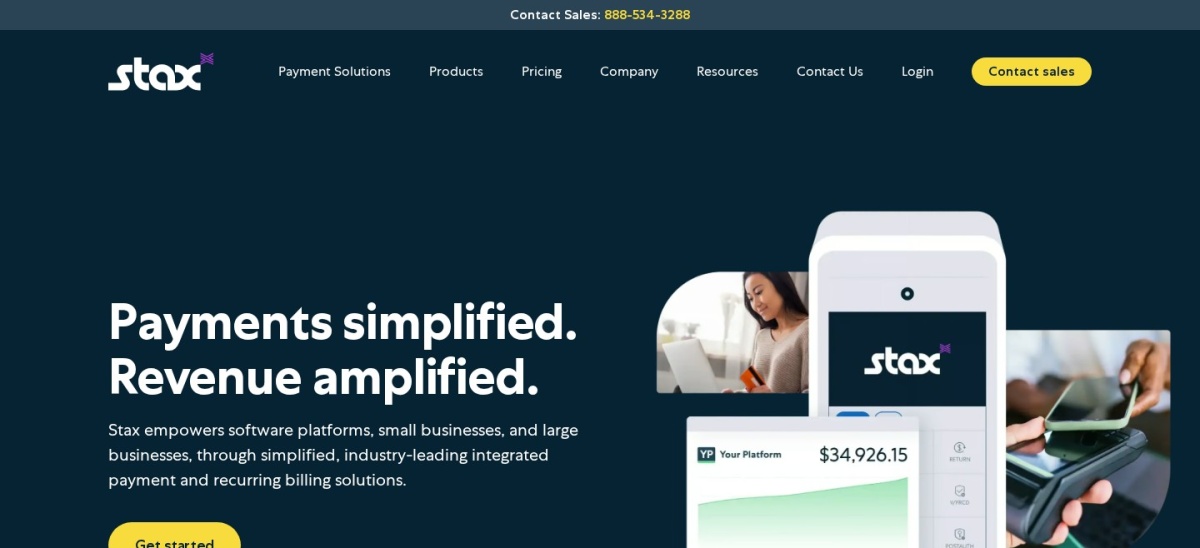
Stax is a payment service that charges a flat $99 a month and passes interchange through at cost with no markup, so high-volume sellers save on every sale. Online transactions cost interchange plus 15 cents and in-person sales cost interchange plus 8 cents.
The trade off is the monthly fee and the small review base. At $99 a month, Stax costs more than free options until volume is high, and it has only 44 G2 reviews. It suits stores processing enough volume for the flat fee to pay off.
Adyen is a global payment platform used by large retailers and marketplaces, with no monthly fee and a fee of 13 cents plus the payment-method cost per transaction. It supports more than 150 currencies and local payment methods in dozens of countries.
The trade off is access and complexity. Adyen is built for large sellers, so small stores may find onboarding slow and support geared to enterprise accounts. It suits ecommerce businesses selling across many countries at real scale.
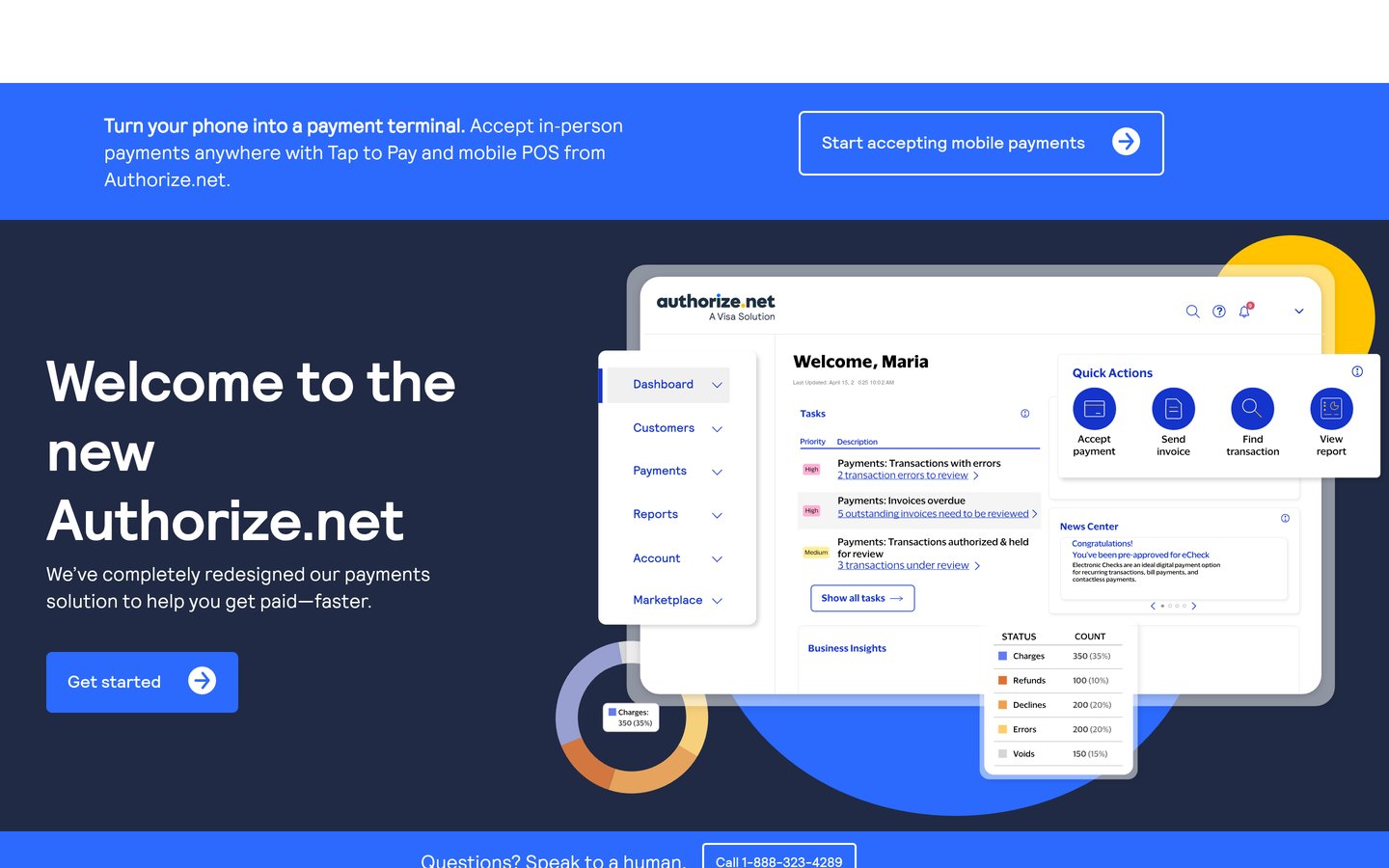
Authorize.net is a long-running payment gateway from Visa that costs $25 a month, with an all-in-one plan at 2.9% plus 30 cents per transaction. It is a familiar choice for stores that want a stable gateway with fraud tools and recurring billing.
The trade off is age and fees. Authorize.net charges a monthly fee plus per-transaction and batch fees on the gateway-only plan, and its interface feels older than Stripe or Square. It suits established stores that want a proven gateway.
Most merchant services charge in one of two ways. Flat-rate plans take a fixed cut of each sale, while interchange-plus plans pass the card network cost through and add a small markup.
Flat rate is simpler and often cheaper at low volume. Interchange-plus is usually cheaper at high volume, which is why Stax and Helcim suit busy stores. Our guide on payment processing for small business shows the same maths with worked examples.
Watch the extras too. Chargeback fees, international surcharges and monthly fees can add more than the headline rate suggests.
How we chose
We started from the payment services with the strongest G2 and Capterra ratings for online selling, then kept those that serve ecommerce stores: card payments, wallets and local methods.
Prices come from each vendor's pricing page, checked on 30 November 2026. Card rates and monthly fees are shown as published, and per-transaction tools show a yearly price of zero. Ratings come from G2 and Capterra on the same day.
We left out tools with no G2 or Capterra rating and gateway-only services with no ecommerce checkout. No vendor paid for a place, and we do not claim hands-on testing for this list.
How to choose a merchant service for ecommerce
Four checks before you pick a payment service for your store.
Add up your monthly card sales. A store doing $1,000 a month saves with no monthly fee, while a store doing $50,000 a month saves with interchange at cost.
Compare the full fee, not the headline rate. Monthly fees, per-sale fees and chargeback fees all matter, so add them together for your real volume before choosing.
Check which payment methods your buyers use. Cards, wallets and local methods vary by country, so pick a service that covers the methods your customers actually use.
Keep a trusted checkout option. A familiar button like PayPal can lift conversion on a new store, even at a higher fee. See our guide on payment gateways for the options.
FAQ
What is the best merchant service for ecommerce?
Stripe is the best merchant service for ecommerce for most online stores, with no monthly fee and support for cards, wallets and local payment methods in more than 135 currencies. Square suits sellers who also take payments in person.
How much do merchant services for ecommerce cost?
Stripe, PayPal, Helcim and Adyen charge no monthly fee and take a cut of each sale, while Stax costs $99 a month and Shopify Payments starts at $29 a month. The cheapest option depends on your monthly sales volume.
Is there a free merchant service for ecommerce?
Yes, Stripe, Square, PayPal, Helcim and Adyen all offer plans with no monthly fee, so you only pay per transaction. Square and PayPal both have free plans, while Stripe charges nothing until you make a sale.
Stripe vs Square: which is better for ecommerce?
Stripe is better for pure online selling, with wider currency support and stronger tools for subscriptions and fraud checks. Square is better if you also sell in person, since one account covers your website and your counter.
What is the cheapest merchant service for ecommerce?
For low volume, Stripe or Helcim are cheapest, since neither charges a monthly fee. For high volume, Stax is cheapest, because its $99 monthly fee buys interchange at cost with no markup on each sale.
Do merchant services charge a monthly fee?
Some do and some do not. Stripe, PayPal, Helcim and Adyen charge no monthly fee, while Shopify Payments starts at $29 a month, Stax at $99 a month and Authorize.net at $25 a month.
SaaS SEO and WordPress specialist with about 8 years of experience. Rakib compares WordPress plugins, themes, hosting and software using public pricing, documentation and user reviews. See how we rank.