Postmark is the best Mailgun alternative for most teams, with the fastest delivery and separate streams for transactional and bulk mail. Mailtrap suits teams that want the largest free plan, while Amazon SES fits high-volume senders on AWS.
How we make this list: we compare pricing pages, product documentation and public user reviews, then re-check every price before each update. No product paid for a place. Disclosure.
Postmark leads on delivery speed, with separate streams and 45-day logs from $15 a month.
Mailtrap has the most generous free plan at 4,000 emails a month and the joint-highest G2 rating at 4.8 out of 5.
Amazon SES costs $0.10 per 1,000 emails, the cheapest per email here, but you handle setup yourself.
Brevo is the only pick with email, SMS and WhatsApp in one account, from $9 a month.
MailerSend is the cheapest paid entry at $5.60 a month, and SMTP2GO has the best-rated support.
How do you choose the best Mailgun alternatives?
Mailgun is built for developers who want API routing and validation, so the best alternative depends on what you value most. Postmark wins on speed, Mailtrap on its free plan, SES on price at scale, and SendGrid on volume.
Price comparisons need a common volume. This list prices each tool at its cheapest paid plan and states the included volume, so compare at your own monthly volume before choosing.
Free plans vary more than prices. Mailtrap gives 4,000 emails a month, Resend gives 3,000, Brevo gives 300 a day, and Postmark gives only 100 a month, so a free plan that fits a side project may not fit a product launch.
SparkPost is the caution in this list. It is now Bird Email with deposit-based pricing, its old plans are gone, and its Trustpilot score has slipped, so check the current Bird pricing page before you budget.
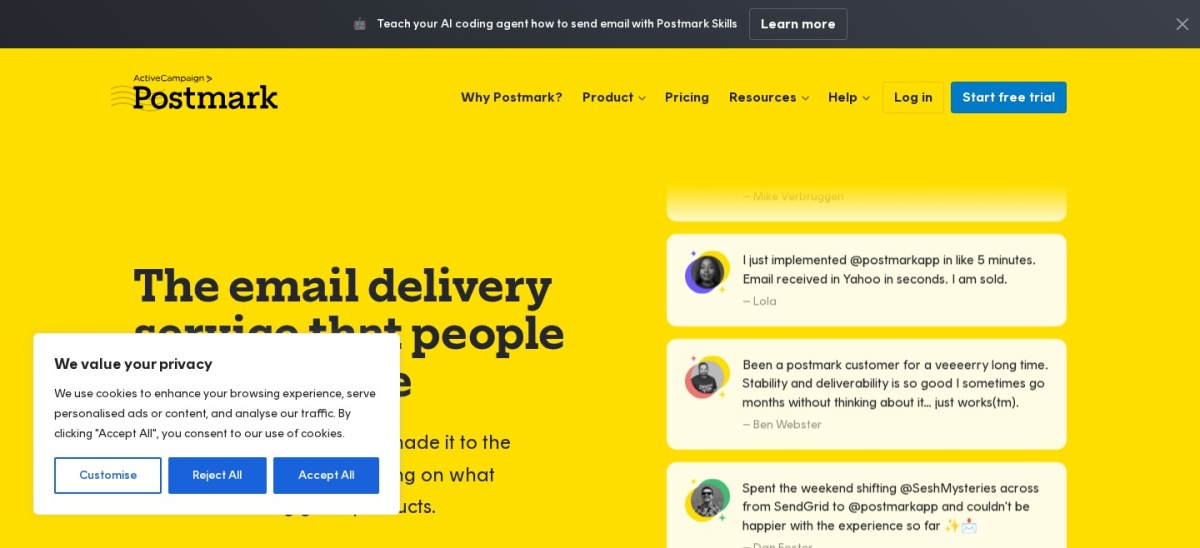
Postmark is the speed-first Mailgun alternative for teams where receipts and password resets cannot be late. It keeps transactional and bulk mail on separate streams, delivers fast with strong inbox placement, and publishes delivery statistics on its status page.
The trade off is price at scale. Basic costs $15 a month for 10,000 emails, but 50,000 emails run $60.50 a month, and overage is $1.80 per 1,000 emails. It suits SaaS teams that value delivery speed above all.
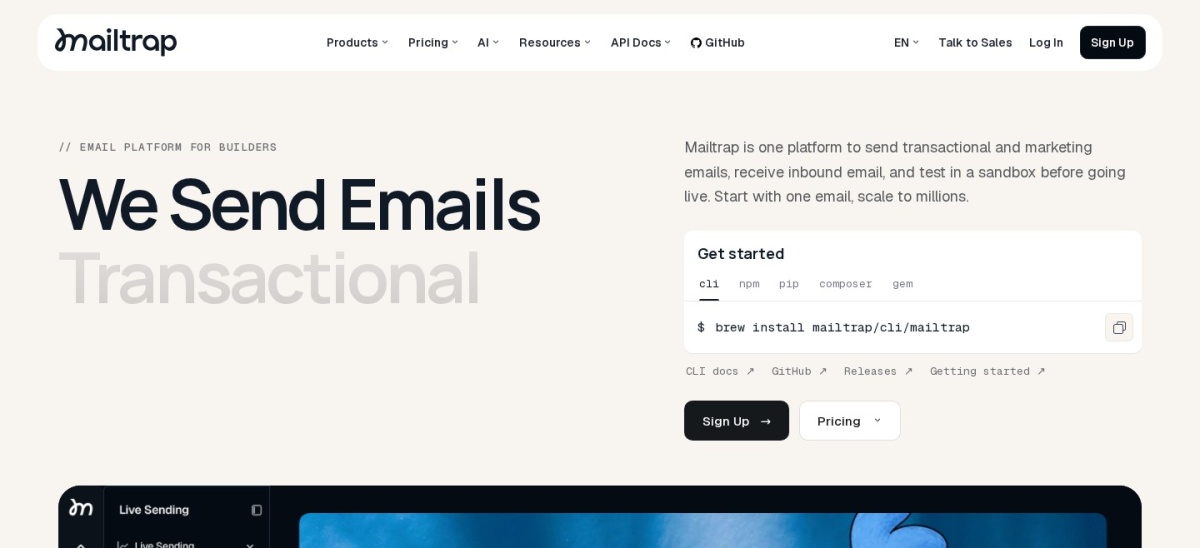
Mailtrap is the deliverability-first Mailgun alternative for developers and product teams. Its free plan covers 4,000 emails a month, paid plans start at $15 a month for 10,000 emails, and the Business plan adds a dedicated IP with automatic warmup.
The trade off is the daily cap. The free plan allows 150 emails a day, and the Business plan at $85 a month is a big jump for a dedicated IP. It suits teams that want email testing and production sending in one account.
SendGrid is the scale-first Mailgun alternative for larger teams inside the Twilio ecosystem. Its Essentials plan costs $19.95 a month for 50,000 emails, the largest entry allowance here, and Pro scales to 2.5 million emails a month.
The trade off is reputation and rating. It holds the lowest G2 rating in this list at 4.0 out of 5, and there is no permanent free plan, only a 60-day trial. It suits high-volume teams that already use Twilio.
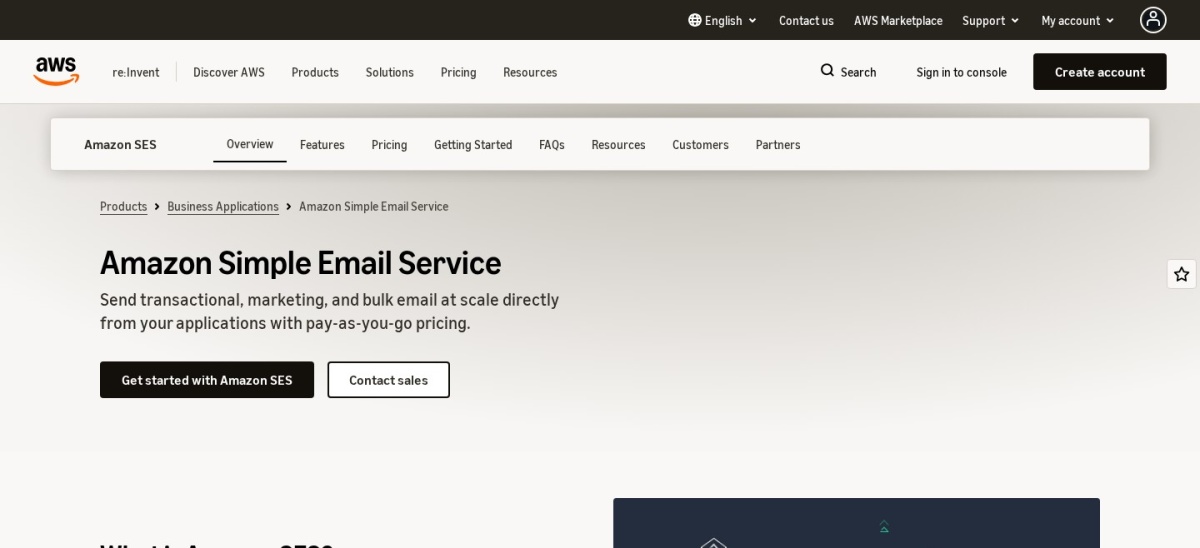
Amazon SES is the cheapest Mailgun alternative at scale for teams already on AWS. It charges $0.10 per 1,000 emails with no monthly minimum, so a million emails costs about $100, and the first 3,000 emails a month are free for 12 months from EC2.
The trade off is the work. You build your own monitoring, templates and bounce handling, and new accounts now start on the Essentials plan at $0.16 per 1,000 emails. It suits engineering teams that want the lowest per-email cost.
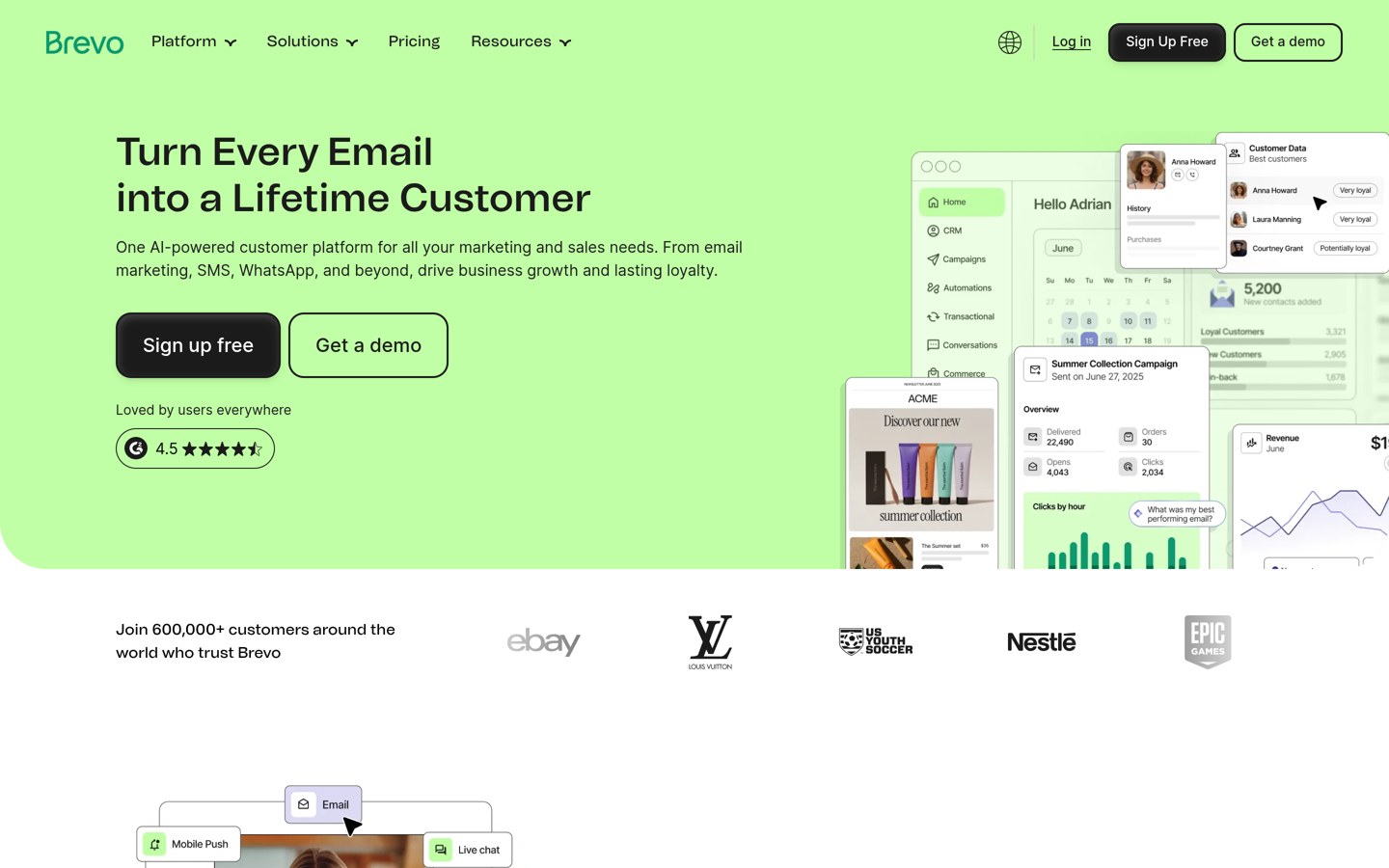
Brevo is the all-in-one Mailgun alternative for teams that want email, SMS and WhatsApp in one account. Its free plan covers 300 emails a day, and Starter costs $9 a month for 5,000 emails with marketing automation included.
The trade off is the transactional add-on. Transactional email API packs start at $15 a month on top of the marketing plan, so pure transactional sending costs more than the headline price. It suits SMBs that mix marketing and transactional mail.
Resend is the modern Mailgun alternative for developer teams on new stacks. Its clean API and React Email support make transactional mail easy to build, with a free plan covering 3,000 emails a month and Pro at $20 a month for 50,000.
The trade off is youth and proof. It launched in 2023, its G2 rating rests on only 10 reviews, and there is no independent deliverability data yet. It suits startups shipping a new integration this week.
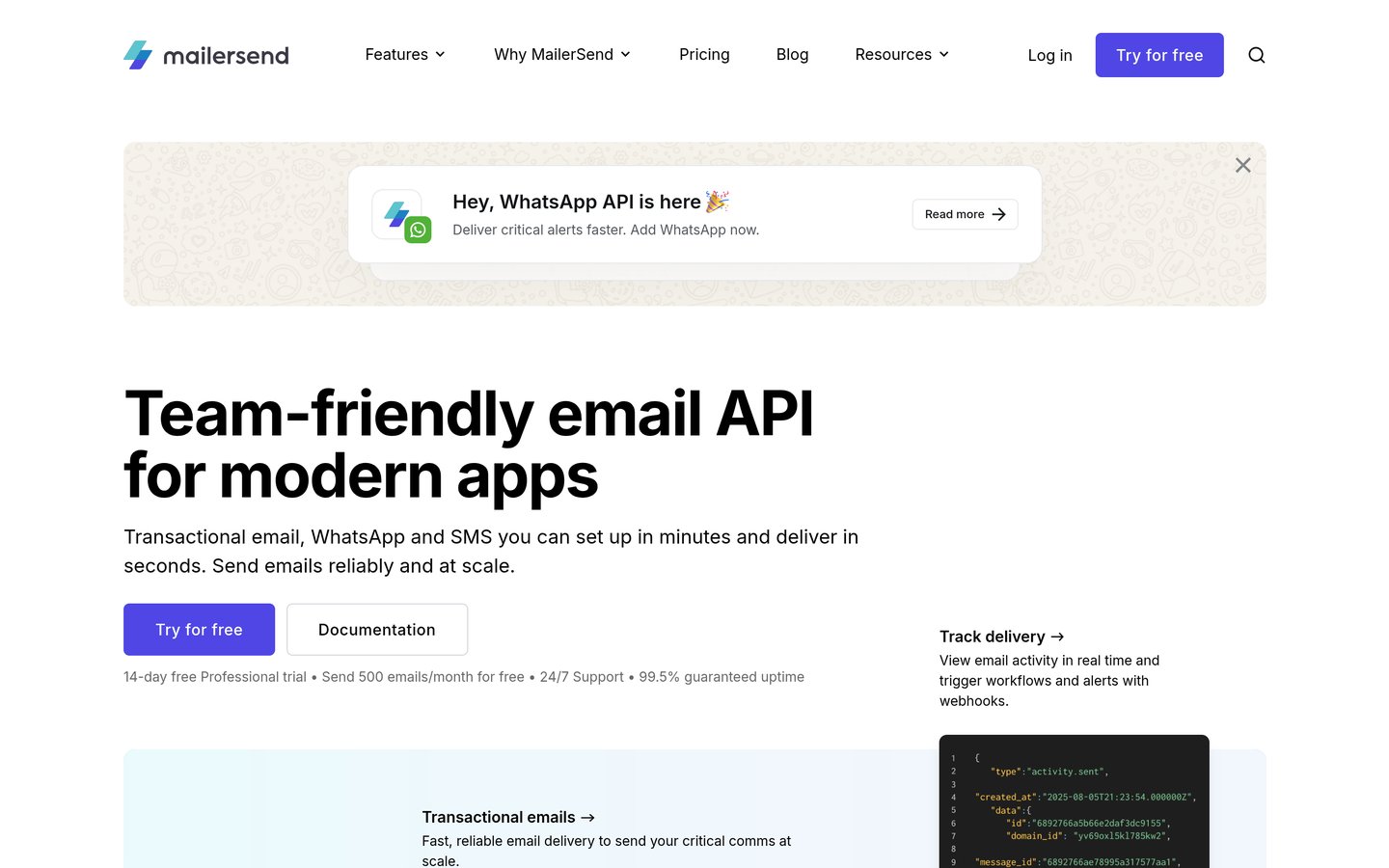
MailerSend is the cheapest Mailgun alternative for small senders. Its Starter plan costs $5.60 a month for 5,000 emails, the lowest paid entry here, with a drag-and-drop template builder and 100 SMS messages included.
The trade off is the free tier. It covers only 500 emails a month and needs a card, and the G2 rating of 4.3 rests on a mixed review base. It suits developers who want the smallest credible monthly bill.
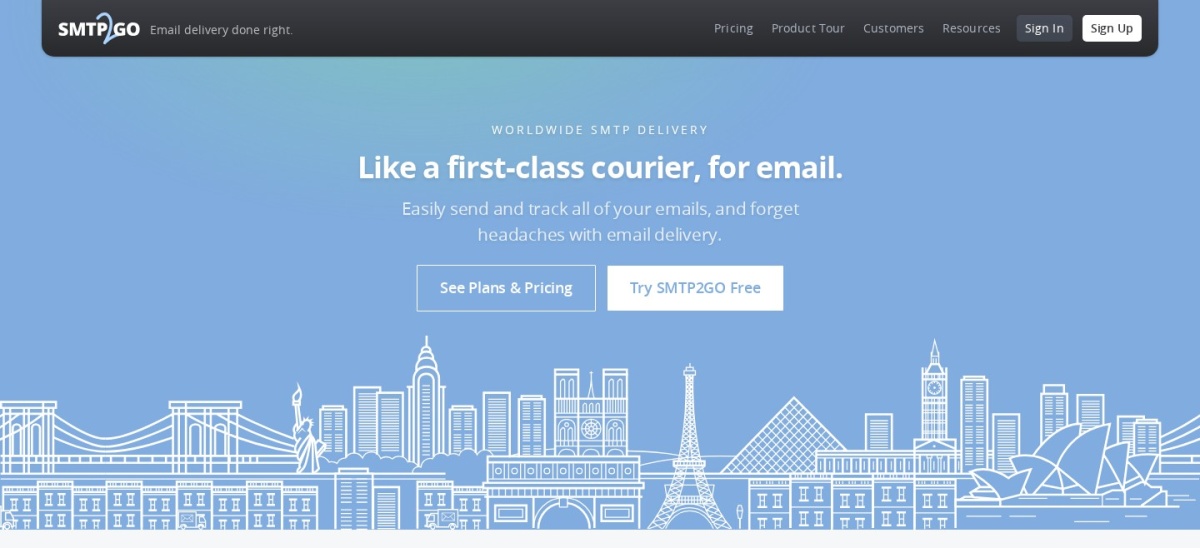
SMTP2GO is the support-first Mailgun alternative for teams that want help when sending stops. Its free plan covers 1,000 emails a month, paid plans start at $10 a month for 10,000 emails, and reviewers rate its support the highest in this category.
The trade off is the interface. The dashboard looks dated next to Postmark or Resend, and there is no built-in contact list management for marketing sends. It suits teams that value a phone call over a pretty dashboard.
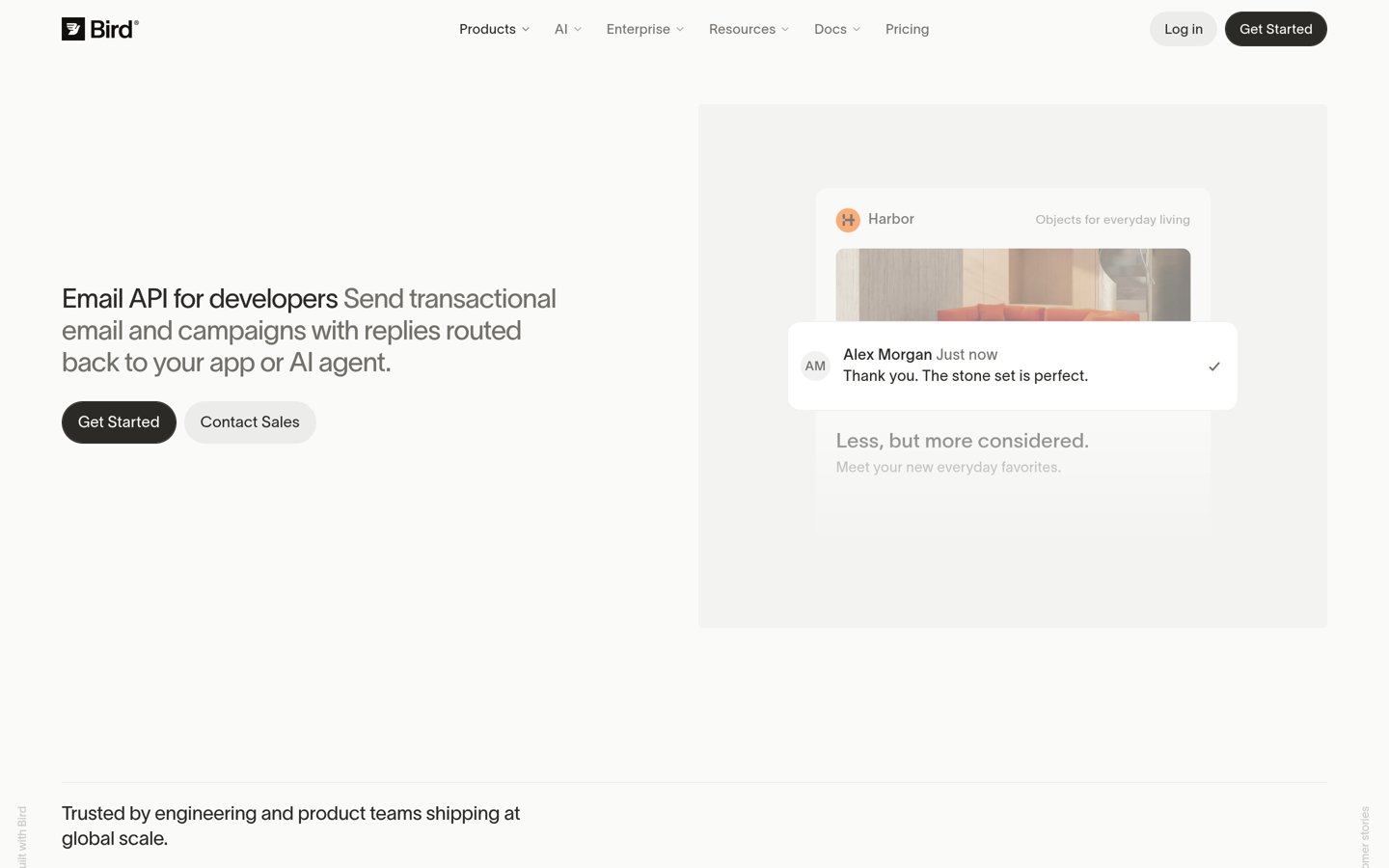
SparkPost is the enterprise Mailgun alternative now sold as Bird Email. Its Startup plan works as a $15 monthly deposit that turns into a Bird balance, covering about 37,500 emails at $0.40 per 1,000, with a free tier of 1,000 emails a month.
The trade off is the change. The old Test, Starter and Premier plans are gone, pricing now redirects to Bird, and its Trustpilot score has slipped to 1.5 out of 5. It suits enterprise teams already on Bird.
Free plans here are real but capped. Mailtrap gives 4,000 emails a month, Resend gives 3,000, and Brevo gives 300 a day, which covers a side project or a small product.
Paid plans mostly buy volume and logs. Entry plans run from $5.60 to $19.95 a month, and higher plans add dedicated IPs, longer log retention and support.
Amazon SES is the exception. It has no real subscription: you pay $0.10 per 1,000 emails, so the bill follows your volume exactly.
How we chose
We started from the transactional email tools reviewers name most often as Mailgun alternatives, then kept the nine with a verifiable G2 rating and a published price.
Prices come from each vendor's pricing page and recent pricing checks dated October and November 2026, with monthly billing used where the vendor lists it. Ratings and review counts come from G2 on 29 November 2026. Where a vendor shows a sale, the list shows the regular price.
We left out tools with no verifiable rating on G2, Capterra or Trustpilot. No vendor paid for a place, and we do not claim hands-on testing for this list.
How to choose a Mailgun alternative
Start with your monthly volume, then match the tool to that number.
Pick your monthly volume first. Prices here cover 5,000 to 50,000 emails on entry plans, so work out your real volume before you compare headline prices.
Check the free plan against your launch. Mailtrap and Resend cover thousands of emails free, while Postmark covers 100 a month. A free plan that fits testing may not fit launch week.
Separate transactional from bulk mail. Postmark keeps the streams apart by design. If you mix receipts with newsletters on one sender, deliverability suffers.
Test deliverability with real mail. Send real receipts and resets to Gmail, Outlook and Yahoo inboxes from the top two tools and compare placement before you switch.
FAQ
What is the best Mailgun alternative in 2026?
Postmark is the best Mailgun alternative for most teams. It delivers transactional mail fastest, keeps transactional and bulk mail on separate streams, and starts at $15 a month for 10,000 emails with 45-day log retention.
How much do Mailgun alternatives cost?
Entry prices run from $5.60 a month for MailerSend and $9 a month for Brevo to $15 a month for Postmark, Mailtrap and Mailgun, and $19.95 a month for SendGrid. Amazon SES charges $0.10 per 1,000 emails with no monthly fee.
Which Mailgun alternative has the best free plan?
Mailtrap has the best free plan, with 4,000 emails a month. Resend gives 3,000 a month, Brevo gives 300 a day, and SMTP2GO gives 1,000 a month, while Postmark gives only 100 emails a month for testing.
Postmark vs Mailtrap: which is better?
Postmark wins on delivery speed and stream separation, which matters when receipts cannot be late. Mailtrap wins on its free plan and email testing tools. Choose Postmark for speed-critical mail and Mailtrap for testing and generous free sending.
Is Amazon SES cheaper than Mailgun?
Yes, at volume. SES charges $0.10 per 1,000 emails with no monthly fee, so a million emails costs about $100, while Mailgun charges $15 a month for 10,000 emails. SES needs more setup work, so the saving buys engineering time.
What happened to SparkPost?
SparkPost is now part of Bird, formerly MessageBird, and sparkpost.com pricing redirects to Bird Email. Plans are now monthly deposits that turn into a Bird balance, starting at $15 a month, and the old Test, Starter and Premier plans are gone.
SaaS SEO and WordPress specialist with about 8 years of experience. Rakib compares WordPress plugins, themes, hosting and software using public pricing, documentation and user reviews. See how we rank.