Codility is the best Karat alternative for teams that need a hiring decision they can defend, with scored assessments and live interviews in more than 80 languages. HackerRank suits teams that want a large question library, and TestGorilla is the cheapest route in for broad screening across many roles.
How we make this list: we compare pricing pages, product documentation and public user reviews, then re-check every price before each update. No product paid for a place. Disclosure.
Codility leads with the highest G2 rating here, 4.6 from 907 reviews, and the only scoring model that keeps every AI interaction on the record.
HackerRank and CodeSignal both start at $79 a month billed annually, and both now bundle an AI interviewer on every plan.
TestGorilla is the only pick with a free plan, covering 5 tests and 10 credits a month, with paid plans from $215 a month.
TestDome is the cheapest way to hire a few developers a year, with no subscription and packs from $100 for 5 candidates.
Only iMocha hides pricing behind a quote, and HireVue starts at about $35,000 a year, so both suit enterprise budgets only.
How do you choose the best Karat alternative?
Karat sells interviews run by trained human interviewers, so the first question is whether you want people or software doing the talking. A human interviewer is hard to fool, but it costs enterprise money and needs scheduling. Software interviews run on demand and cost far less.
Start with what you need to defend. If a hiring decision may be challenged by a candidate, a regulator or a client, pick a tool that records every prompt, command and code change, as Codility does. A simple score with no audit trail is weak evidence.
Check the cheating controls next. Desktop apps, ID checks and plagiarism detection matter more than ever, because candidates now sit tests with AI coding assistants open. Tools that let candidates use those assistants inside the task, with the activity saved, give a fairer read than tools that only try to block them.
Finally, match the price to your volume. Invite, attempt and credit packs all bill differently, so work out your cost per hire, not the headline monthly figure. A $100 pack beats a $4,800 annual plan when you hire two developers a year.
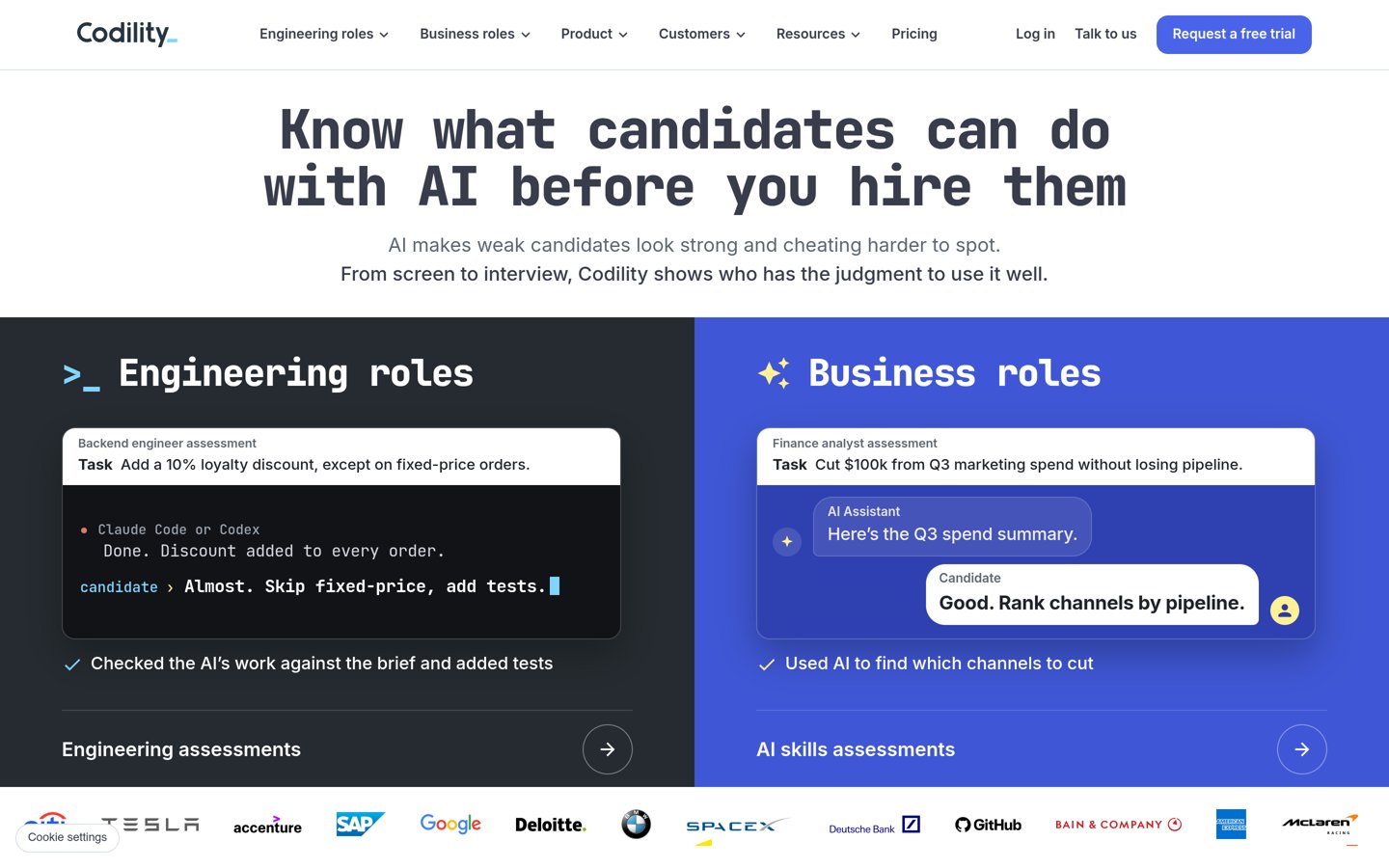
Codility is the technical hiring platform for teams that need a decision they can defend to a candidate, a regulator or a client. Its Screen assessments and live Interviews cover 80-plus languages and frameworks, and candidates work with Claude Code and Codex inside the task while every prompt, command and code change is saved for review.
The trade off is price and the lack of a free plan. Online plans start at $4,800 a year for 200 invites, or $800 a month, and there is no AI interviewer by design. It suits enterprise teams hiring engineers at volume who need an audit trail more than a low entry price.
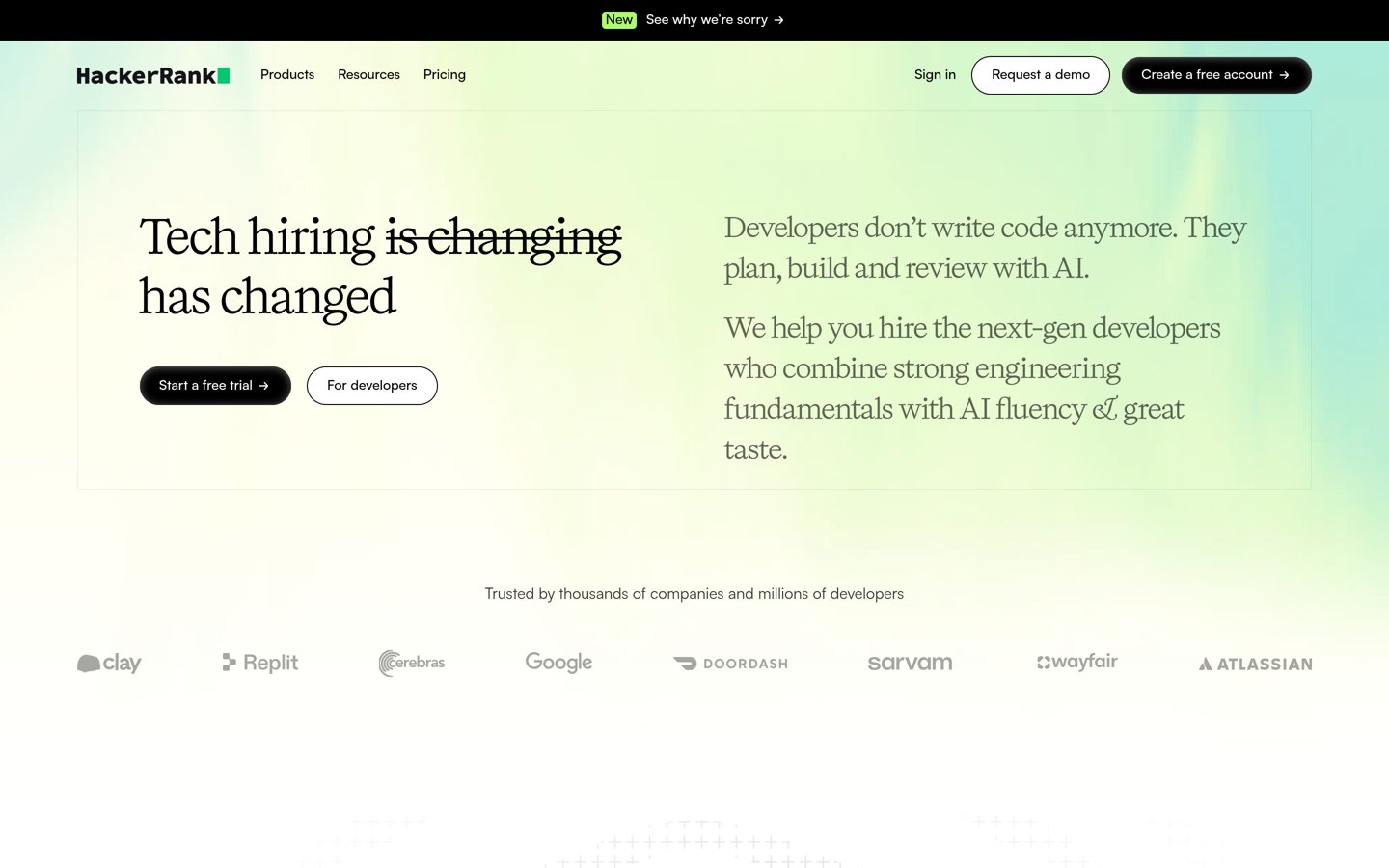
HackerRank is the best-known coding assessment platform, pairing Screen take-home tests with live pair-programming interviews and Chakra, its AI interviewer. The Starter plan costs $79 a month billed annually and covers 60 candidate attempts a year, unlimited users and a library of more than 2,000 questions across 55-plus languages.
The trade off is the attempt meter. Extra attempts cost $20 each, so a busy hiring quarter can push the bill well past the headline price, and the desktop app and certified assessments sit on Enterprise. It suits teams that want the biggest ready-made library with an AI interviewer included.
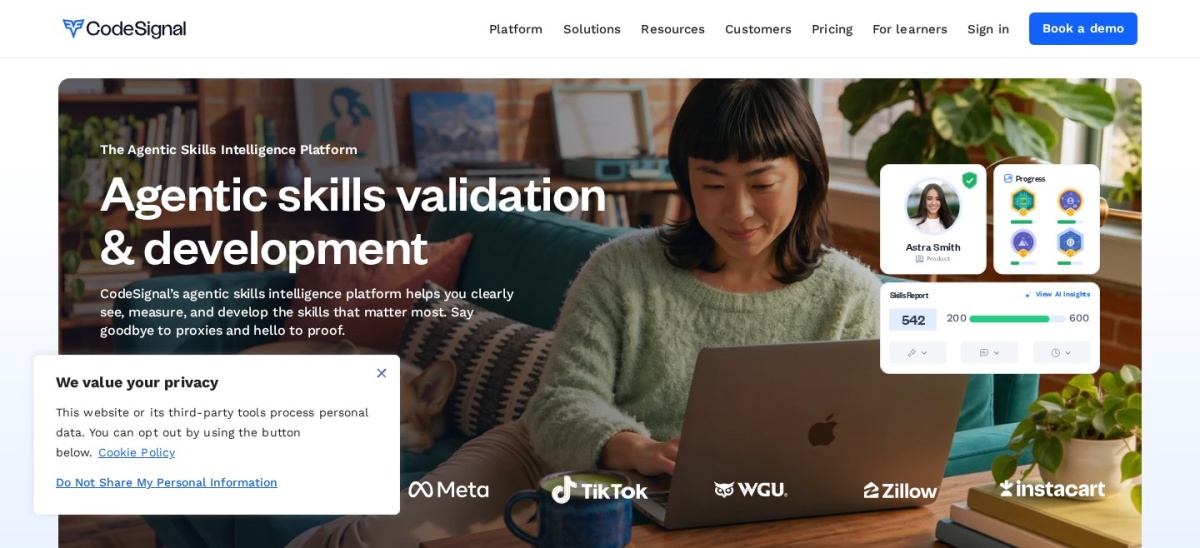
CodeSignal is an AI-native skills platform whose Hire product covers assessments, AI interviews and live technical interviews in one place. The Build plan costs $79 a month billed annually and includes 60 credits a year, with AI interviewers for product, design and engineering roles and a core assessment library.
The trade off is the credit model. A credit is spent when a candidate starts an assessment or interview, and on-demand credits cost $20 each once the included 60 run out. It suits teams that want AI interviewers beyond engineering, including go-to-market roles on higher plans.
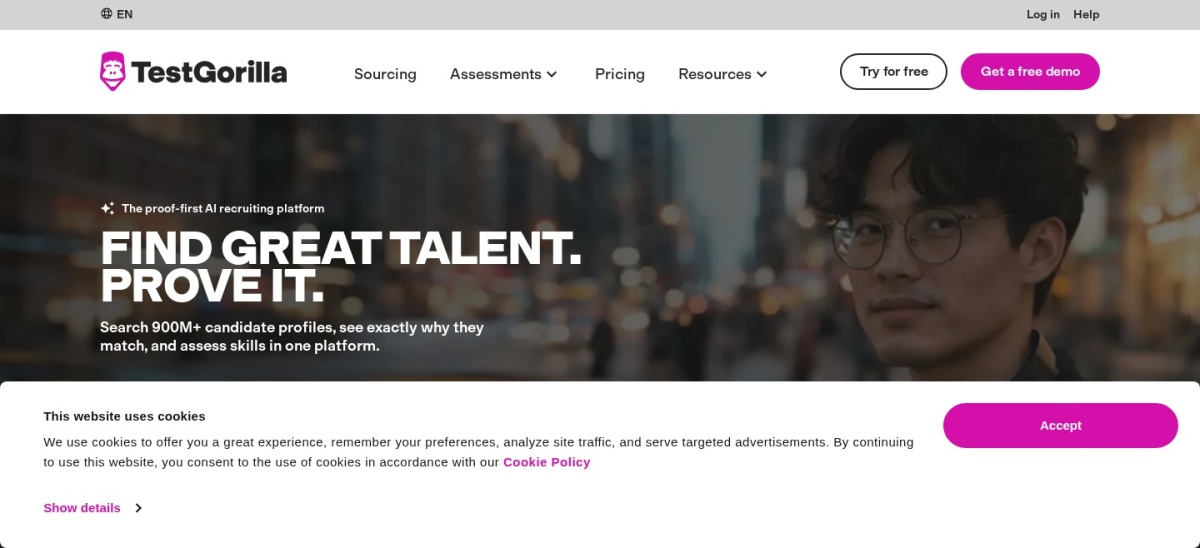
TestGorilla is a skills-based screening platform with more than 350 tests covering coding, cognitive ability, personality and role skills. The free plan gives 10 credits a month and 5 essential tests, while the paid Core plan starts at $215 a month billed annually and unlocks the full library with AI-powered scoring.
The trade off is depth in coding. Its coding tests are thinner than the dedicated technical platforms, and the jump from free to paid is steep, with no monthly billing discount on the entry tier. It suits teams hiring across many functions who want one screening tool for every role.
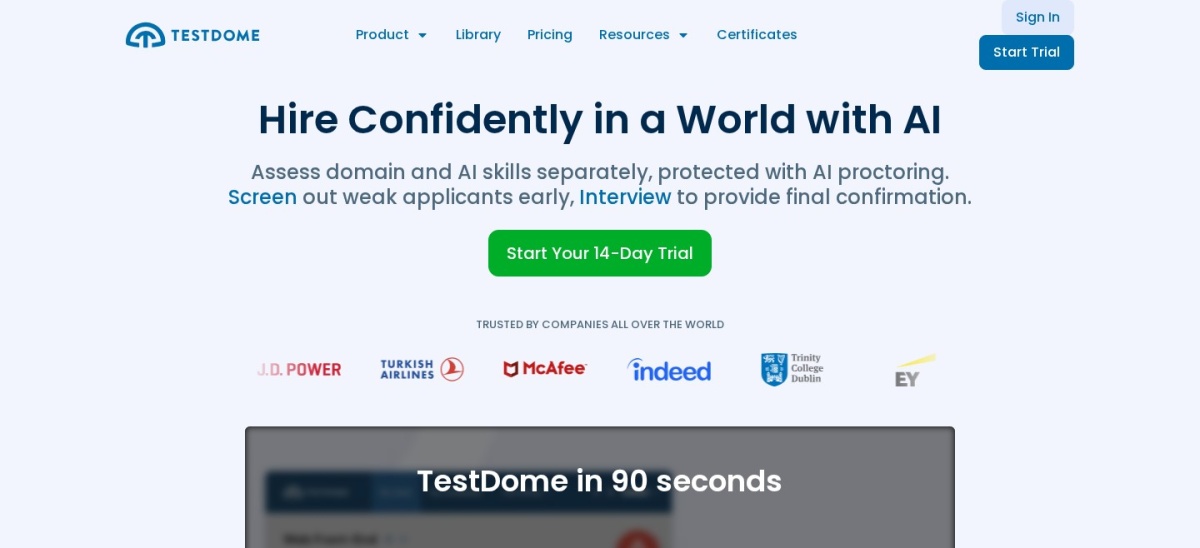
TestDome is a work-sample assessment platform that sells candidate packs instead of a subscription. The Starter pack costs $100 for 5 candidates, packs never expire, and unused invites return to your balance if a candidate does not start within 6 days. Tests cover 130-plus skills with 2,000-plus questions in 12 formats.
The trade off is simplicity. There are no live interviews, no coding agents and no enterprise controls, and the per-candidate cost climbs fast at volume. It suits small teams that hire a few developers a year and refuse to pay for a subscription they barely use.
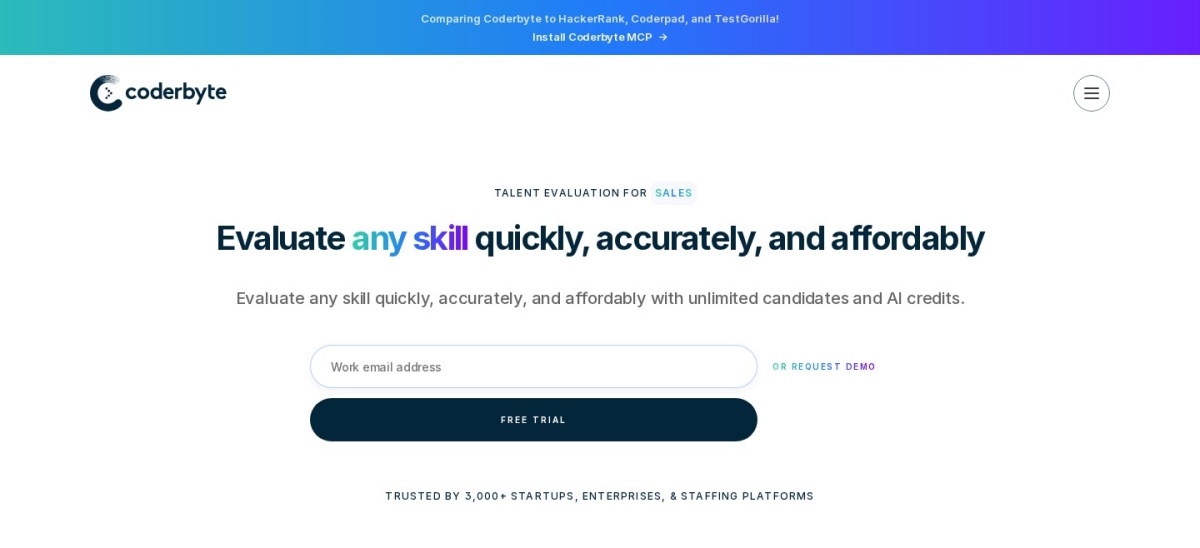
Coderbyte is a coding assessment platform that sells coding screens, take-home projects and live interviews with unlimited candidates and admins for one annual price. The Pro plan costs $1,999 a year, and candidates can work in VS Code projects with Codex and Claude Code, while a pay-per-candidate option starts at $99 a month for 20 invites.
The trade off is the audit trail. Its help pages do not document how AI activity is saved for the reviewer, and proctoring costs extra as an add-on. It suits mid-market teams that screen large volumes and want a flat annual price with no per-candidate meter.
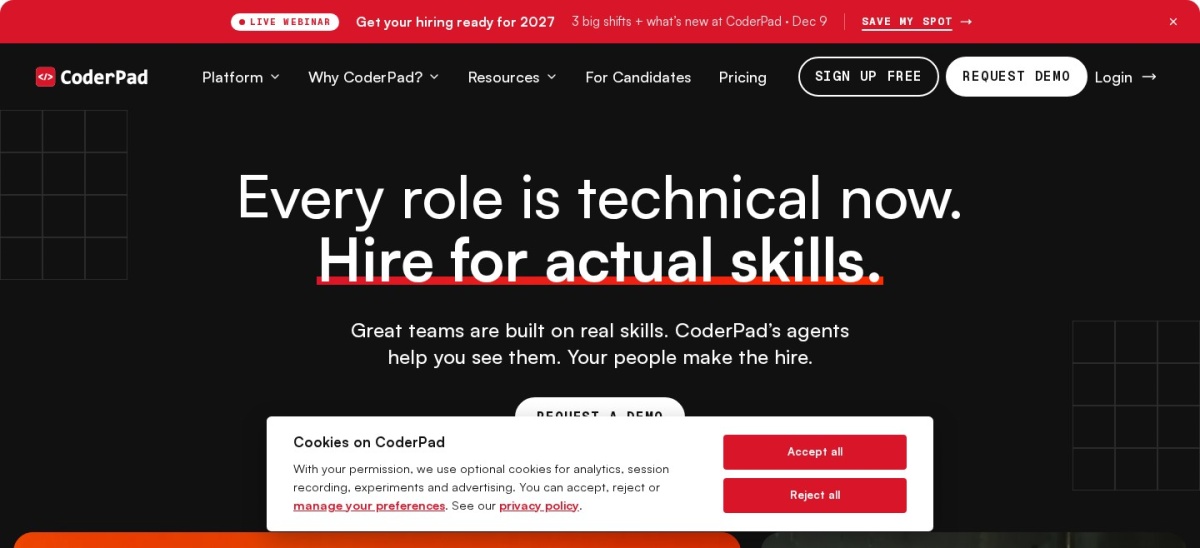
CoderPad is a live coding interview platform built around a real-time collaborative IDE. Interviewers and candidates code together in 99-plus languages, with code playback that replays the whole session, and the Starter plan costs $80 a month with 400 ready-made questions and 60 tests or interviews a year.
The trade off is proctoring. It sits on the Enterprise tier, and the jump from Starter to Team is steep for small teams that only run a handful of interviews a month. It suits teams that interview live and value a clean, distraction-free pairing session over a big assessment library.
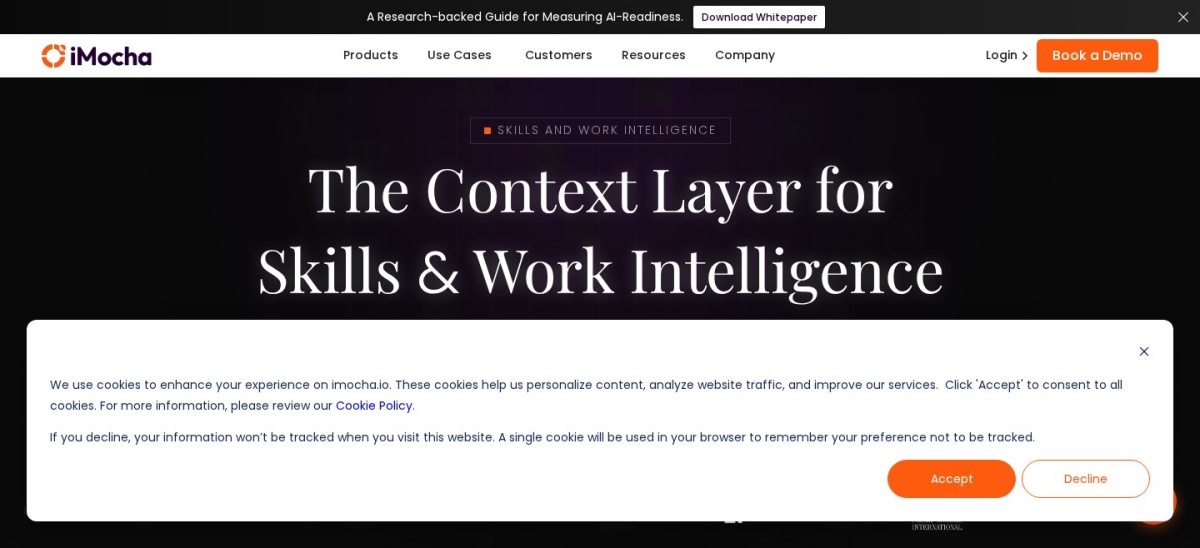
iMocha is a skills intelligence platform that tests candidates and maps the skills of the staff you already employ. Its library covers more than 10,000 skills, including 500-plus IT skills and 37 coding languages, with an AI interviewer called Tara and proctoring through a safe assessment browser.
The trade off is price transparency. iMocha publishes no prices and sells by custom quote, and G2 reviewers report about 2 months to set up. It suits large employers that want one skills platform for hiring and workforce planning, not a quick self-serve purchase.
What we like
10,000-plus skills in one library
Covers hiring and current staff skills
AI interviewer Tara included
Rated 4.4 from 276 G2 reviews
Watch out for
No published pricing at all
About 2 months to set up, per G2 reviewers
Built for large employers, not small teams
Pricing is by quote, based on volume and productsVisit imocha.io
09
HireVue
4.1/5on G2 (256 reviews, checked Nov 2026)
Starts at$35,000/yr
Best for enterprise video interviews
Cheapest planEssentials, from $35,000/yr
Interviews hosted70M+ interviews
Video interviewsLive and on-demand
AI scoringYes, with compliance
hirevue.com
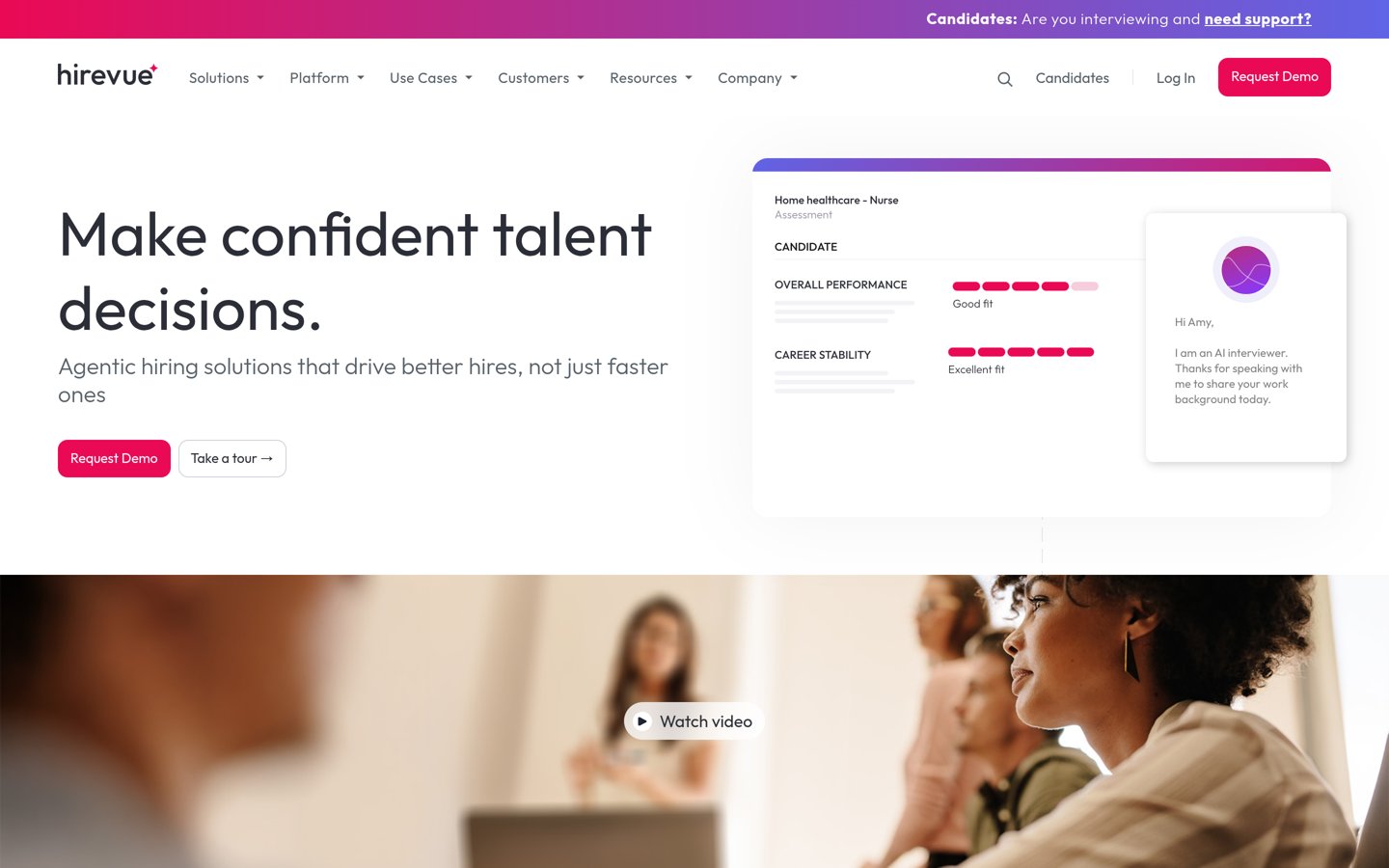
HireVue homepage, captured Nov 2026.
HireVue is an enterprise video interview and assessment platform that screens candidates at scale with on-demand video interviews, structured rating guides and game-based cognitive tests. It says it has hosted more than 70 million interviews, and its customers include large employers running graduate and hourly hiring at high volume.
The trade off is cost and opacity. Pricing starts at about $35,000 a year, the vendor publishes no prices on its own site, and candidates often describe one-way video interviews as impersonal. It suits large, regulated employers screening tens of thousands of applicants a year.
Human interviewers vs AI interviewers: what changes
A human interviewer watches how a candidate thinks, asks follow-ups and spots bluffing in real time. That is what Karat sells, and it is the hardest format to fake.
An AI interviewer runs on demand, costs far less per candidate and scores every candidate the same way. The risk is a thin audit trail, so check whether the tool saves transcripts, code changes and AI prompts.
Most teams land in the middle: software screening first, then a short live interview with a human for finalists. That keeps the cost down without giving up the human read where it matters most.
How we chose
We started from every tool G2 lists as a Karat alternative with 100 or more reviews, then kept the nine with a published price or a clear enterprise fit, ordered by G2 rating and how closely each replaces a live interview.
Prices come from each vendor's pricing page, checked on 29 November 2026. Codility, HackerRank and CodeSignal prices were read on their official pricing pages today. TestGorilla, Coderbyte and CoderPad prices come from November 2026 readings of their pricing pages, and HireVue's starting price comes from G2 vendor-supplied data. All are flagged as second-hand in our notes.
We left out tools with no verifiable rating and tools that only sell video interviews with no technical assessment. No vendor paid for a place, and we do not claim hands-on testing for this list.
How to choose a Karat alternative
Decide who interviews first, then match the tool to your hiring volume and budget.
Decide human, AI or both. If you want a person running the interview, only Karat-style services qualify. If software is fine, AI interviewers from CodeSignal or HackerRank cost far less.
Check the audit trail. Ask whether transcripts, prompts and code changes are saved. A score with no record behind it is hard to defend if a candidate challenges the result.
Work out the cost per hire. Invites, attempts and credits bill differently. Multiply the entry price by your expected hires, not by the monthly figure on the pricing page.
Trial it with a real role. Run one live vacancy through the tool before you buy. Check candidate experience, cheating controls and how fast your team can read the results.
FAQ
What is the best Karat alternative in 2026?
Codility is the best Karat alternative for most teams. It scores 4.6 out of 5 on G2 from 907 reviews, and it saves every prompt, command and code change, so a hiring decision can be defended. HackerRank is the closest budget pick at $79 a month.
How much does a Karat alternative cost?
Entry prices run from $100 for a TestDome candidate pack to about $35,000 a year for HireVue. HackerRank and CodeSignal both start at $79 a month billed annually, while TestGorilla starts at $215 a month.
Is there a free Karat alternative?
Yes. TestGorilla has a free plan with 10 credits a month and 5 tests, and CoderPad offers a free tier for core interviews. The other tools here offer a free trial or a demo, but no permanent free plan.
Which Karat alternative is best for small teams?
TestDome is the best fit for small teams that hire a few developers a year, because packs start at $100 and never expire. HackerRank Starter at $79 a month suits teams that want a large library and an AI interviewer included.
Codility vs HackerRank: which is better?
Codility is better when a hiring decision must hold up to scrutiny, with a 4.6 G2 rating and a full audit trail. HackerRank is better for teams that want a bigger question library and a lower entry price, starting at $79 a month.
Do Karat alternatives include live interviews?
Most do. Codility, HackerRank, CodeSignal, Coderbyte and CoderPad all include live interviews, and CodeSignal and HackerRank add AI interviewers. TestDome is the exception, with assessments only and no live interview format.
SaaS SEO and WordPress specialist with about 8 years of experience. Rakib compares WordPress plugins, themes, hosting and software using public pricing, documentation and user reviews. See how we rank.