Gusto is the best HR software for ecommerce brands for most small teams, with its Simple plan at $49 a month plus $6 per person covering payroll, tax filing, benefits and onboarding in one login. BambooHR suits growing brands that need deeper HR records, while Homebase is the free pick for hourly store and warehouse staff.
How we make this list: we compare pricing pages, product documentation and public user reviews, then re-check every price before each update. No product paid for a place. Disclosure.
Gusto is the cheapest published-price pick for small teams: Simple costs $49 a month plus $6 per person and includes unlimited payroll runs.
Rippling starts at $8 per user a month plus a $40 monthly base fee, but payroll, benefits and IT are separate modules that raise the real bill.
BambooHR publishes Core at $10 per employee a month, or a flat $250 a month for teams of 25 or fewer.
Homebase is free for one location with up to 10 employees, which covers many single-store brands.
Only Paylocity hides its price entirely here: every other tool in this list publishes at least a starting rate.
How do you choose HR software for an ecommerce brand?
Ecommerce teams are rarely all salaried. A brand usually mixes salaried office staff with hourly pickers, packers, store associates and seasonal support agents, so the HR tool has to handle both payroll and shift work.
Payroll is the deciding factor for most brands. A tool that files taxes, handles multi-state staff and pays contractors in the same login saves more hours than any engagement feature.
Scheduling matters as much as payroll for hourly teams. Homebase and Deputy cover rosters and time clocks, while Gusto, Rippling and BambooHR focus on records, payroll and benefits.
Price scales with headcount in almost every tool here, so check the per-person rate at your real team size. Our HR software guide compares the same tools without the ecommerce angle.
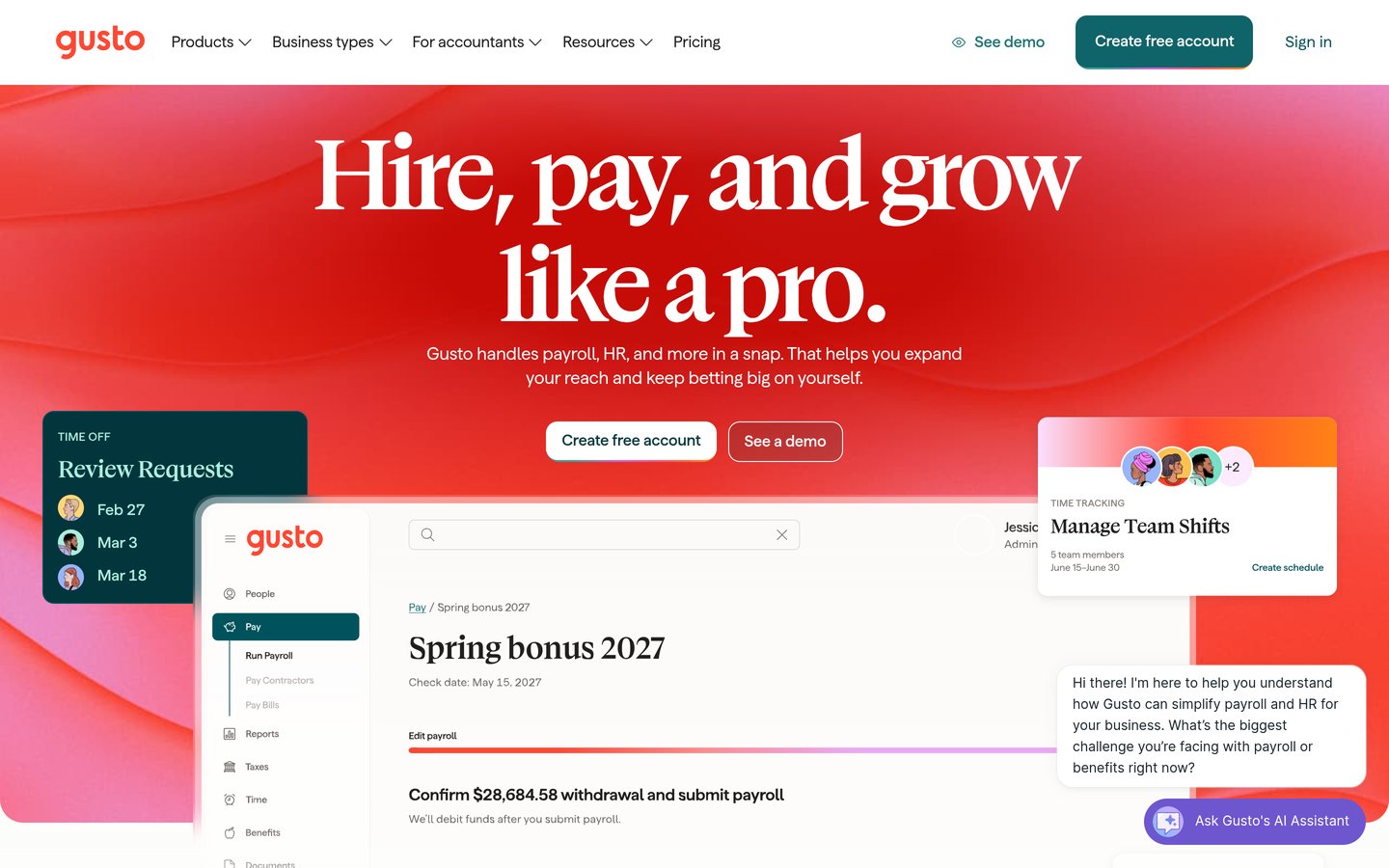
Gusto is a payroll-first HR platform built for small US businesses, and it fits ecommerce brands that run lean teams across a store, a warehouse and a remote support desk. Simple covers unlimited payroll runs, automatic tax filing, employee self-service, benefits access and onboarding for $49 a month plus $6 per person.
The trade off is the per-person math. A 20-person team pays $169 a month on Simple, and multi-state payroll needs Plus at $80 a month plus $12 per person. It suits ecommerce brands with up to about 50 people that want one login for payroll, HR and benefits without a sales call.
What we like
Published prices with no sales call needed
Unlimited payroll runs and automatic tax filing
Benefits, onboarding and time tracking in one login
Rated 4.6 out of 5 from more than 14,000 G2 reviews
Watch out for
No free plan, and the per-person fee grows with headcount
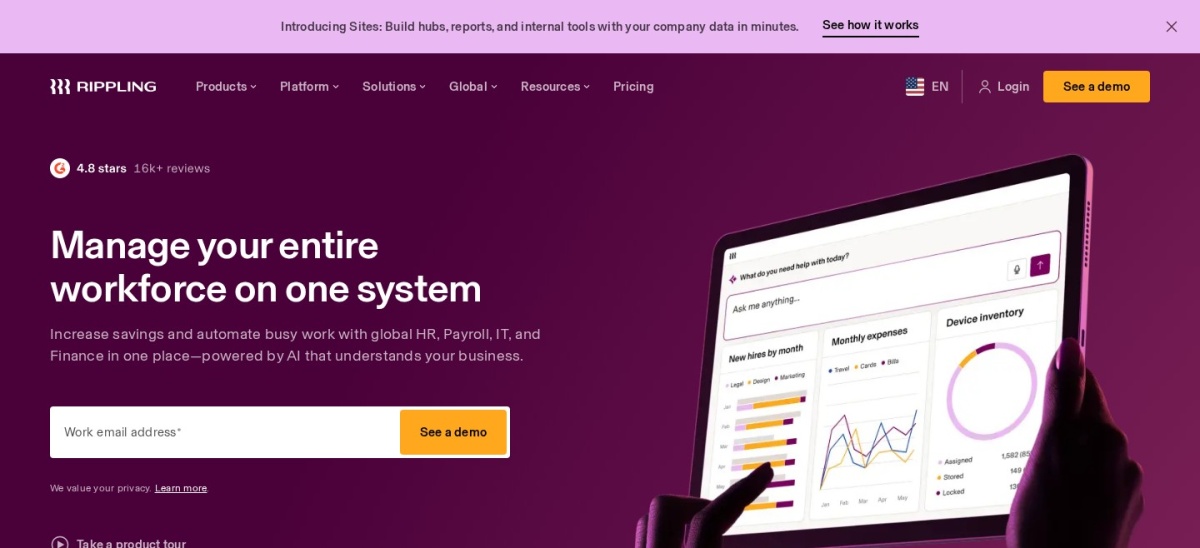
Rippling is a unified workforce platform that combines HR, payroll, IT and finance in one system, so an ecommerce brand can manage employee records, devices, apps and spend without separate tools. The Core platform starts at $8 per user a month plus a $40 monthly base fee, and US payroll is $8 per employee a month on top.
The trade off is modular billing. Each product adds its own per-employee charge, so a full setup with payroll, benefits and time tracking runs well above the $8 headline. It suits growing brands that want to consolidate several tools and can get a written quote first.
What we like
Highest G2 rating in this list at 4.7 out of 5
One system for HR, payroll, IT and finance
Strong automation for onboarding and offboarding
Employer of record covers 130-plus countries
Watch out for
No published price list, every deal is a custom quote
The $8 headline covers only the core platform
Annual contracts only, with no month-to-month option
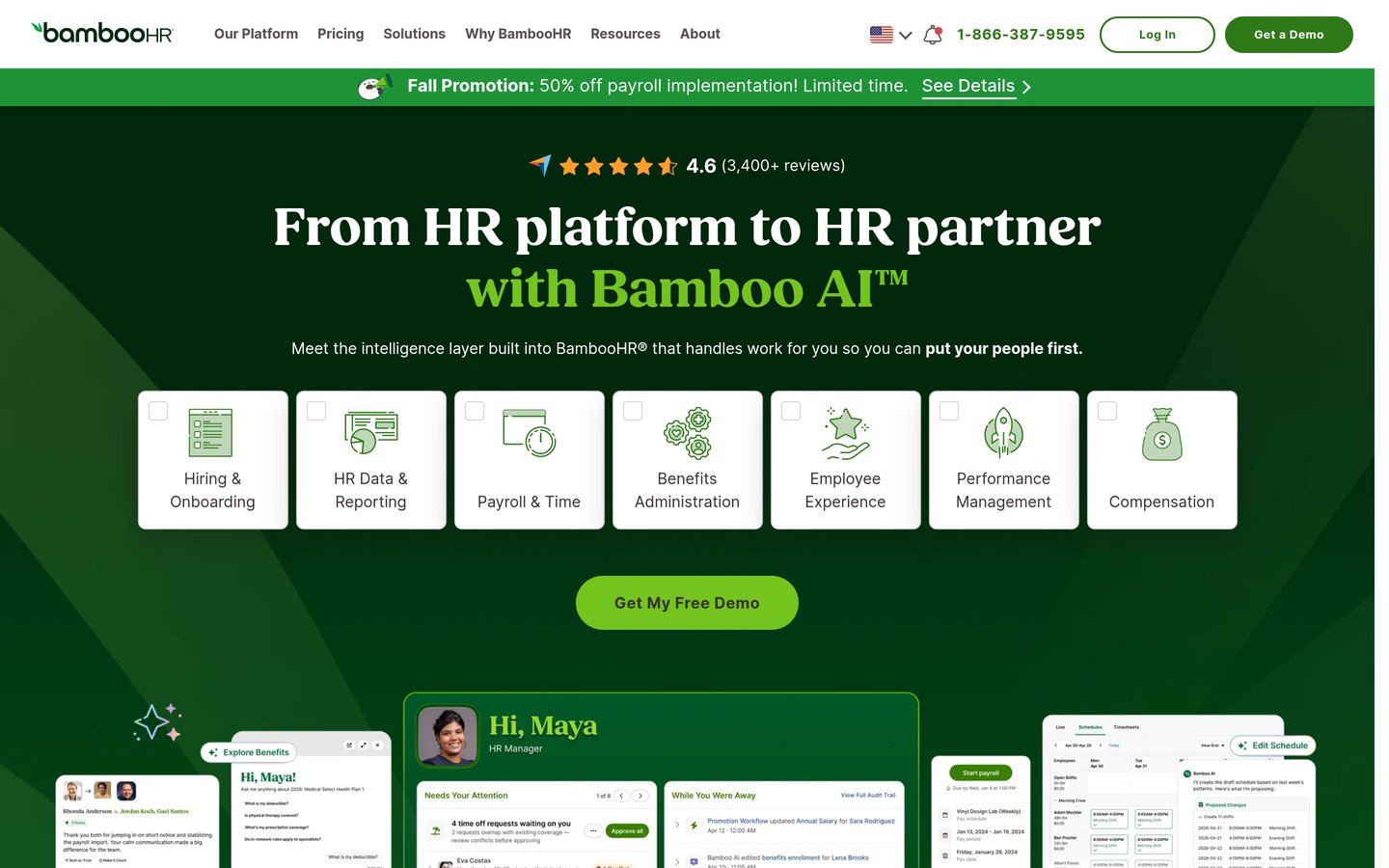
BambooHR is an HR information system for small and mid-size teams that want one home for employee records, time off, hiring, onboarding and performance. Core costs $10 per employee a month for teams over 25 people, or a flat $250 a month for 25 or fewer, and covers records, reports, an applicant tracker and time off.
The trade off is that payroll is not included. Payroll, benefits administration and time and attendance are quoted separately, so the published rate is only the HR system. It suits brands that already have payroll sorted and want a clean, easy HR system their whole team will actually use.
What we like
Published per-employee prices with a flat small-team rate
Rated 4.6 out of 5 on Capterra from 3,500-plus reviews
Easiest HR system in this list to roll out
Hiring, onboarding and time off included in Core
Watch out for
Payroll and benefits are quote-only add-ons
No free plan or free trial published
Reporting is a common complaint in reviews
Pro adds performance and recognition at $17 per employee a monthVisit bamboohr.com
04
Deel
4.8/5on G2 (13,900 reviews, checked Nov 2026)
Starts at$5/emp/mo
Best for ecommerce brands hiring across borders
Cheapest planHR Core, $5/emp/mo
Free planNo
Countries150+
EOR priceFrom $599/emp/mo
deel.com
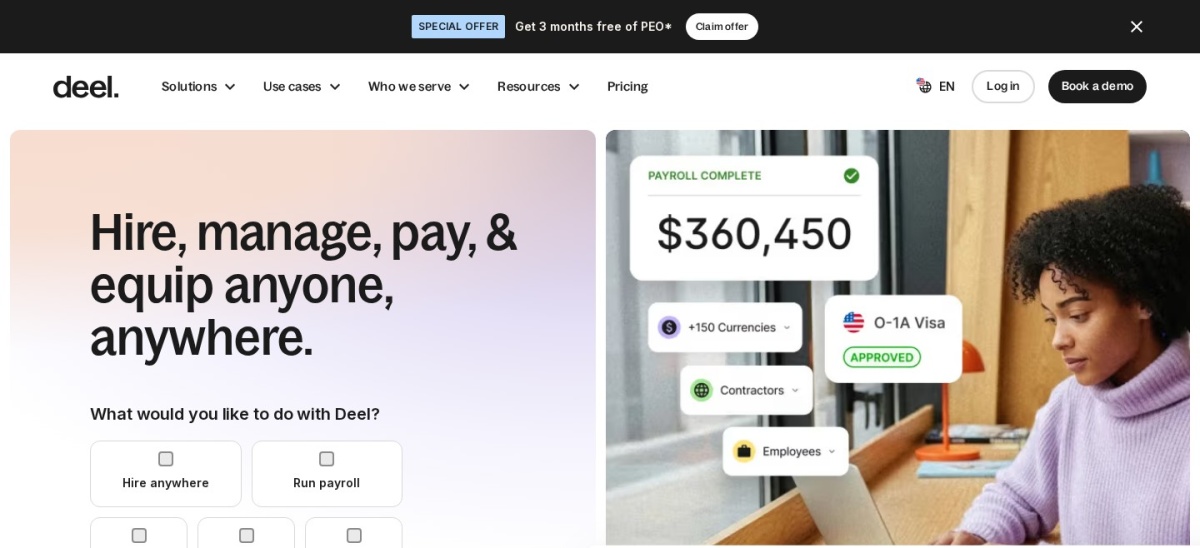
Deel homepage, captured Nov 2026.
Deel is a global employment platform that hires, pays and manages workers in more than 150 countries through employer of record, contractor management and global payroll. Deel HR Core starts at $5 per employee a month and covers worker profiles, org charts, time off, workflows and people analytics.
The trade off is that the cheap HR tier is only a system of record. Contractors cost $49 a month each, global payroll starts at $29 per employee a month, and employer of record starts at $599. It suits brands with remote support, design or engineering staff in other countries.
What we like
Highest G2 rating here at 4.8 out of 5
Cheapest entry price in this list at $5 per employee a month
Covers 150-plus countries with EOR and payroll
Contractor payments and compliance built in
Watch out for
EOR hires need a refundable salary deposit
Reviewers report high costs and slow support
No free plan, and every product is priced separately
Advanced HR adds performance and learning at $19 per employee a monthVisit deel.com
05
Homebase
4.6/5on G2 (648 reviews, checked Nov 2026)
Paid from$30/location/mo
Best free pick for hourly store and warehouse staff
Cheapest paid planEssentials, $30/location/mo
Free planBasic, 1 location, 10 staff
Payroll add-on$49/mo + $6/employee
POS integrationsSquare, Toast, Clover, Shopify
joinhomebase.com
Homebase homepage, captured Nov 2026.
Homebase is a team management app for small businesses with hourly staff, and it is the only free tool in this list. The Basic plan costs nothing for one location with up to 10 employees and includes basic scheduling, basic time tracking, team messaging and point-of-sale integration.
The trade off is the cap. An 11th employee or a second location pushes you to Essentials at $30 per location a month, and payroll is a separate add-on at $49 a month plus $6 per employee. It suits single-store brands and small warehouses that live on shift schedules.
What we like
Free plan with a time clock and no credit card needed
Priced per location, so hiring more staff costs nothing extra
Best for shift scheduling that scales with headcount
Cheapest planLite, $5/user/mo
Free planNo
SchedulingAuto-scheduling on Core
Time clockMobile and kiosk
deputy.com
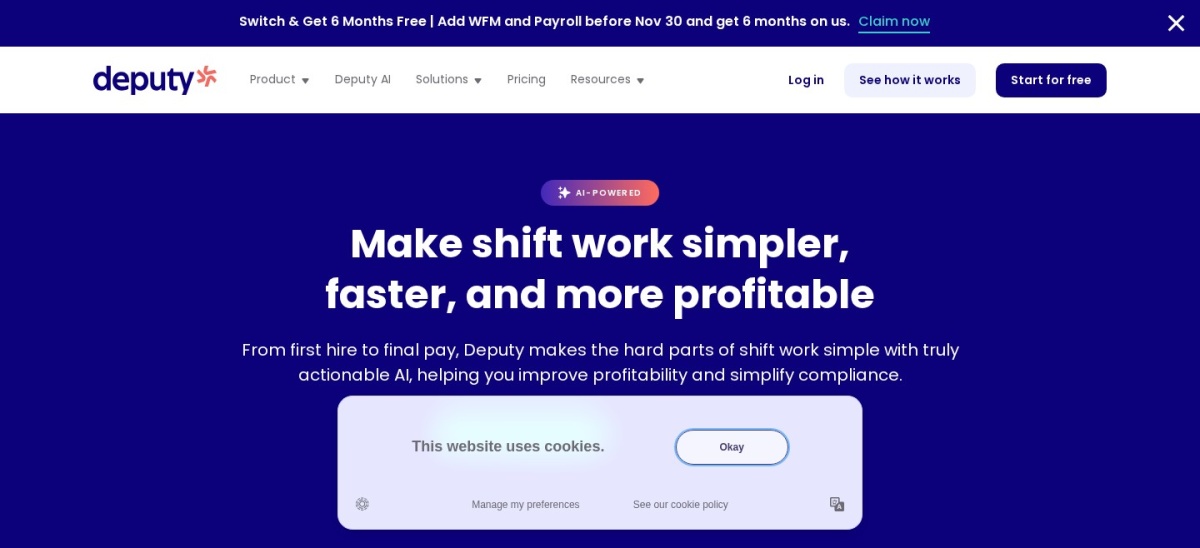
Deputy homepage, captured Nov 2026.
Deputy is a workforce management tool built around shift scheduling, timesheets and time clocking for retail, hospitality and warehouse teams. The Lite plan starts at $5 per user a month and covers basic scheduling, timesheets, time clocking and payroll integrations, with a Deputy HR add-on at $2 per user a month.
The trade off is per-user billing. Costs rise with every active user, so a large seasonal team gets expensive, and auto-scheduling needs Core at $6.50 per user a month. It suits ecommerce brands with busy stores or warehouses that schedule dozens of shifts a week.
What we like
Strong scheduling with demand forecasting on Core
Rated 4.5 out of 5 on G2 from nearly 1,000 reviews
Mobile time clock with photo capture
HR add-on is only $2 per user a month
Watch out for
Per-user pricing climbs fast with seasonal hiring
No free plan
Some reviewers report a slow mobile app
Core adds auto-scheduling and wage budgeting at $6.50 per user a monthVisit deputy.com
07
Justworks
4.6/5on G2 (1,126 reviews, checked Nov 2026)
Starts at$50/mo
Best for small brands that want PEO benefits
Cheapest planPayroll, $50/mo + $8/employee
Free planNo
PEO Basic$79/emp/mo
Support24/7
justworks.com
Justworks homepage, captured Nov 2026.
Justworks is a PEO and payroll platform for small US businesses that bundles HR, benefits and payroll under co-employment at a flat per-employee price. The Payroll plan costs a $50 monthly base fee plus $8 per employee and covers payroll, tax filings, PTO management and contractor payments in all 50 states.
The trade off is the PEO jump. Group health insurance and full benefits come with PEO Basic at $79 per employee a month, which is a big step up from payroll alone. It suits small ecommerce brands that want enterprise-level health benefits without hiring an HR team.
What we like
Rated 4.6 out of 5 on G2 from 1,126 reviews
Group health insurance rates small brands cannot get alone
Payroll covers all 50 states with tax filing
24/7 support on PEO plans
Watch out for
No free plan or free trial
PEO prices come from third-party reads, not a vendor price list
Reviewers report health premium increases of 25 to 47 percent
PEO Plus adds medical, dental and vision at $109 per employee a monthVisit justworks.com
08
Workable
4.4/5on G2 (706 reviews, checked Nov 2026)
Starts at$149/mo
Best for hiring warehouse and support staff fast
Cheapest planStarter, $149/mo
Free planNo, 15-day trial
Active jobs (Starter)2
Job boards200+
workable.com
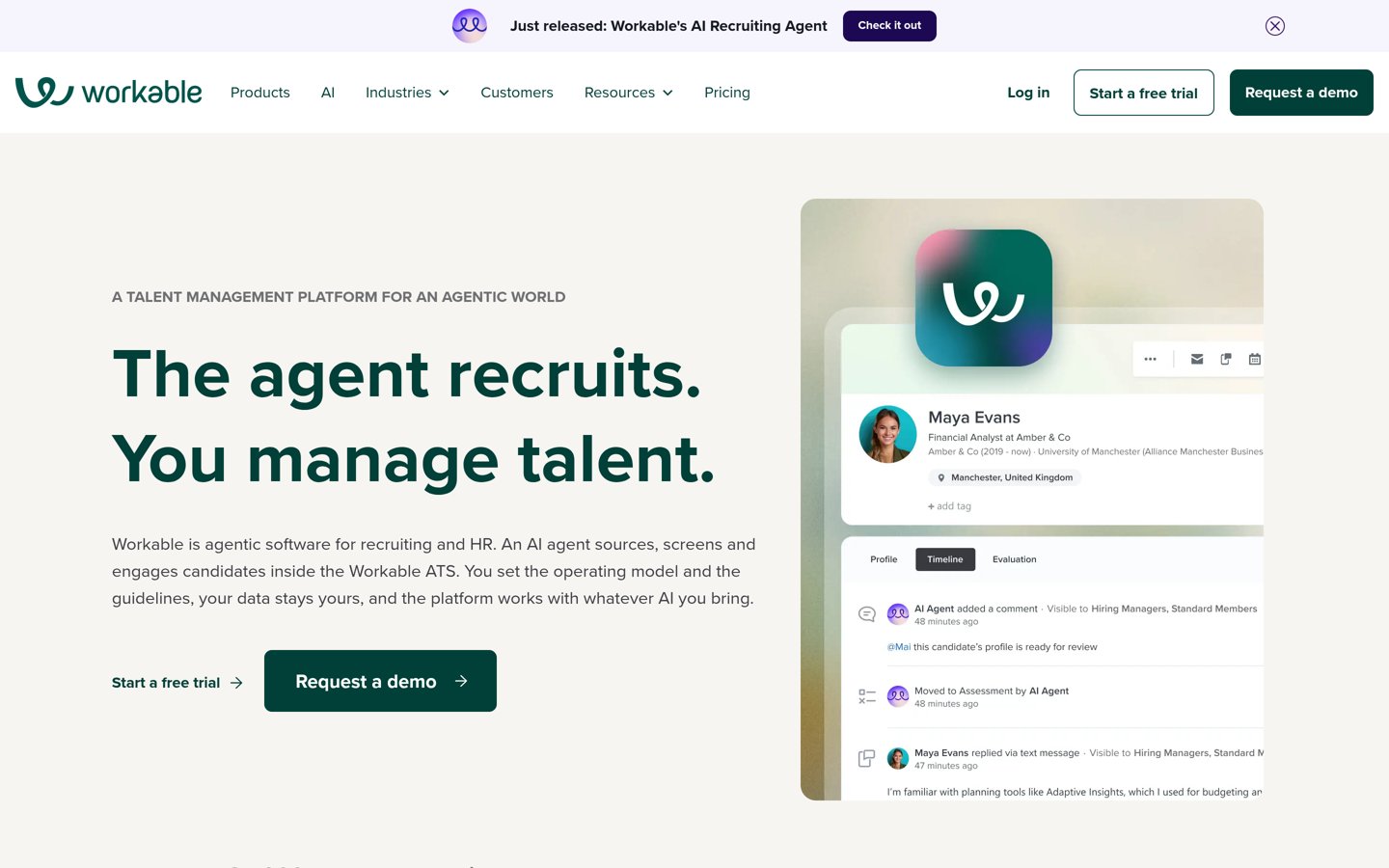
Workable homepage, captured Nov 2026.
Workable is a recruiting platform that pairs an applicant tracking system with light HR tools such as onboarding, time off and e-signatures. Starter costs $149 a month on annual billing and posts to more than 200 job boards, with candidate sourcing and a hiring plan included.
The trade off is the Starter cap. It covers only 2 active jobs, so steady hiring pushes most brands to Standard at $299 a month, and texting, video interviews and assessments are paid add-ons. It suits ecommerce brands that hire in bursts for seasonal peaks.
What we like
Published pricing with a 15-day trial
Posts to more than 200 job boards
Unlimited active jobs on Standard
AI screening agent included on higher plans
Watch out for
Starter covers only 2 active jobs
Texting, video and assessments cost extra on Standard
Priced by company size, so it climbs with headcount
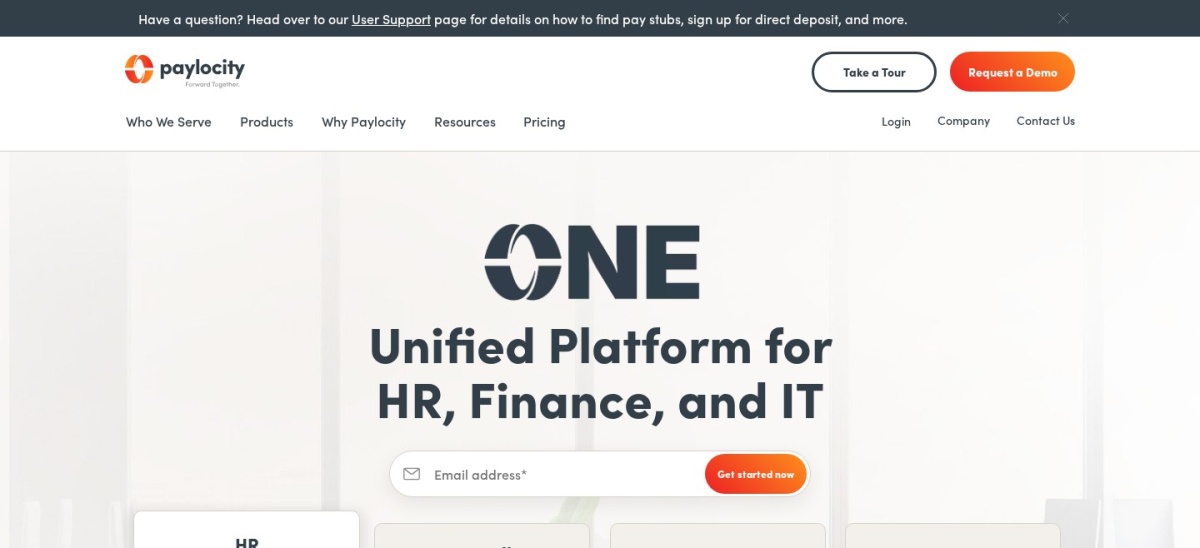
Paylocity is a cloud human capital management suite that covers payroll, HR, onboarding, benefits, time and labor and talent in one platform. It sells three small-business tiers, Express, Enrich and Elite, and serves more than 44,000 clients, with strong engagement and culture tools on top of the core HR.
The trade off is price transparency. Paylocity publishes no rates and sells by quote only, with third-party estimates around $18 to $32 per employee a month for the full suite. It suits mid-size ecommerce brands that want one negotiated contract instead of several tools.
What we like
One suite for payroll, HR, finance and IT
Rated 4.4 out of 5 on G2 from 6,080 reviews
Strong engagement and culture features
Three tiers sized for small business up to enterprise
Watch out for
No published prices, everything needs a sales call
Payroll vs HRIS: what ecommerce brands actually need
Payroll and HR software are not the same thing. Payroll pays people and files taxes, while an HRIS keeps records, time off, hiring and performance in one place.
Gusto and Justworks lead with payroll and add HR on top, while BambooHR leads with HR records and sells payroll as an add-on. Rippling and Paylocity try to cover both in one suite.
If your team is mostly hourly, start with scheduling and time tracking. Homebase or Deputy will save more hours than a full HRIS, and you can add payroll later.
How we chose
We started from the HR tools most often shortlisted by ecommerce brands, then kept the nine with a published starting price or a clear quote model, a G2 rating and a real fit for hourly or remote teams.
Prices come from each vendor's pricing page, checked on 30 November 2026, except Rippling, whose page lists no prices, and Paylocity and Justworks, whose PEO rates come from third-party reads of vendor pages. Ratings and review counts come from G2 on the same day.
We left out tools with no G2 rating and tools built only for enterprise teams. No vendor paid for a place, and we do not claim hands-on testing for this list.
How to choose HR software for your ecommerce brand
Count your hourly staff first, then your salaried staff, and price every tool at that real headcount.
Separate hourly from salaried staff. Hourly store and warehouse teams need scheduling and a time clock, while salaried staff need records, time off and benefits.
Check multi-state payroll early. If anyone works in a second state, Gusto needs Plus and BambooHR needs its payroll add-on, so price the plan you actually need.
Price the per-person fee at your real headcount. A $6 per-person fee is cheap at 10 people and steep at 100, so multiply before you compare headline prices.
Ask for the quote in writing. Rippling and Paylocity sell by quote, so get the full first-year cost, including modules and implementation, before you sign.
FAQ
What is the best HR software for ecommerce brands in 2026?
Gusto is the best HR software for ecommerce brands for most small teams. Simple costs $49 a month plus $6 per person and covers payroll, tax filing, benefits and onboarding, and it holds a 4.6 out of 5 rating on G2 from more than 14,000 reviews.
How much does HR software cost for a small ecommerce brand?
Expect $49 to $169 a month for a small team on Gusto Simple, depending on headcount, or $0 on Homebase Basic for one location with up to 10 employees. Per-employee tools such as BambooHR start at $10 per employee a month, while quote-only suites such as Paylocity run higher.
Is there free HR software for ecommerce brands?
Homebase is the only free option in this list, with Basic covering scheduling and time tracking for one location and up to 10 employees at no cost. The other tools offer trials or demos, but no free plan, so free means Homebase or a paid tool's trial.
Which HR software is best for hourly warehouse staff?
Homebase is best for hourly warehouse and store staff because it is free for small teams and built around shift scheduling and a time clock. Deputy is the paid step up, with auto-scheduling and demand forecasting from $5 per user a month.
Gusto vs Rippling: which is better for ecommerce brands?
Gusto is better for small ecommerce brands that want a published price and simple payroll, while Rippling is better for growing brands that want HR, payroll, IT and finance in one system. Rippling starts at $8 per user a month, but its modules push the real cost well above Gusto.
Do I need HR software if I only sell on Shopify?
Yes, once you hire anyone. Shopify handles the store, not payroll, tax filing, time off or scheduling, so a tool such as Gusto or Homebase covers the people side while Shopify covers the storefront.
SaaS SEO and WordPress specialist with about 8 years of experience. Rakib compares WordPress plugins, themes, hosting and software using public pricing, documentation and user reviews. See how we rank.