Rippling is the best HRIS option for most growing teams, starting at $8 per user a month plus a base fee with a 4.7/5 G2 rating from 15,278 reviews. Pick Gusto for small-business payroll with HR built in, or BambooHR for a classic core HRIS.
How we make this list: we compare pricing pages, product documentation and public user reviews, then re-check every price before each update. No product paid for a place. Disclosure.
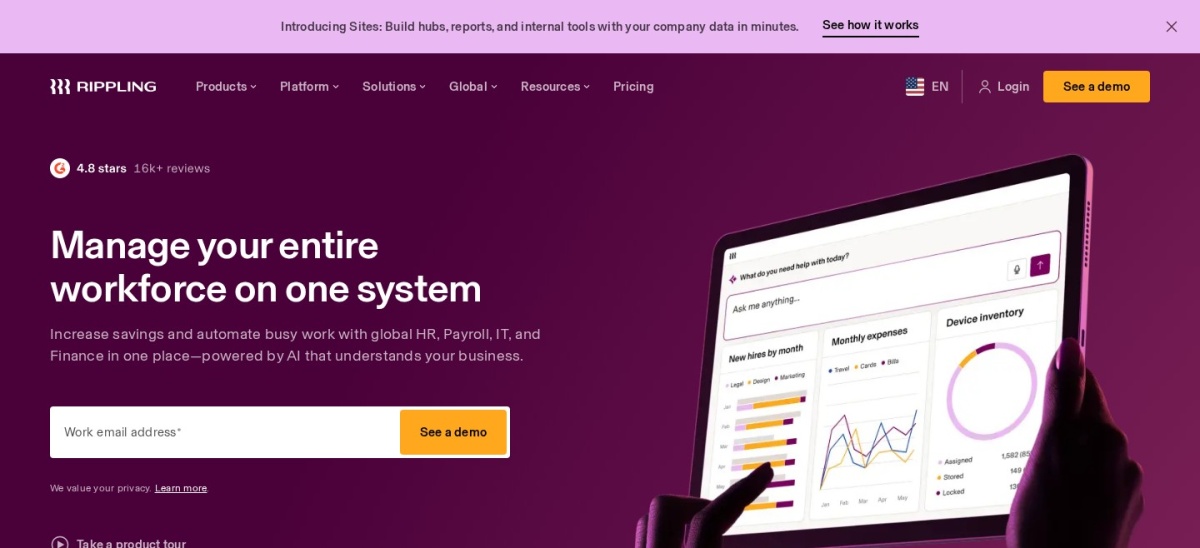
Rippling leads on rating and breadth: 4.7/5 from 15,278 G2 reviews, with HR, payroll, IT, and finance on one employee record from $8 per user a month.
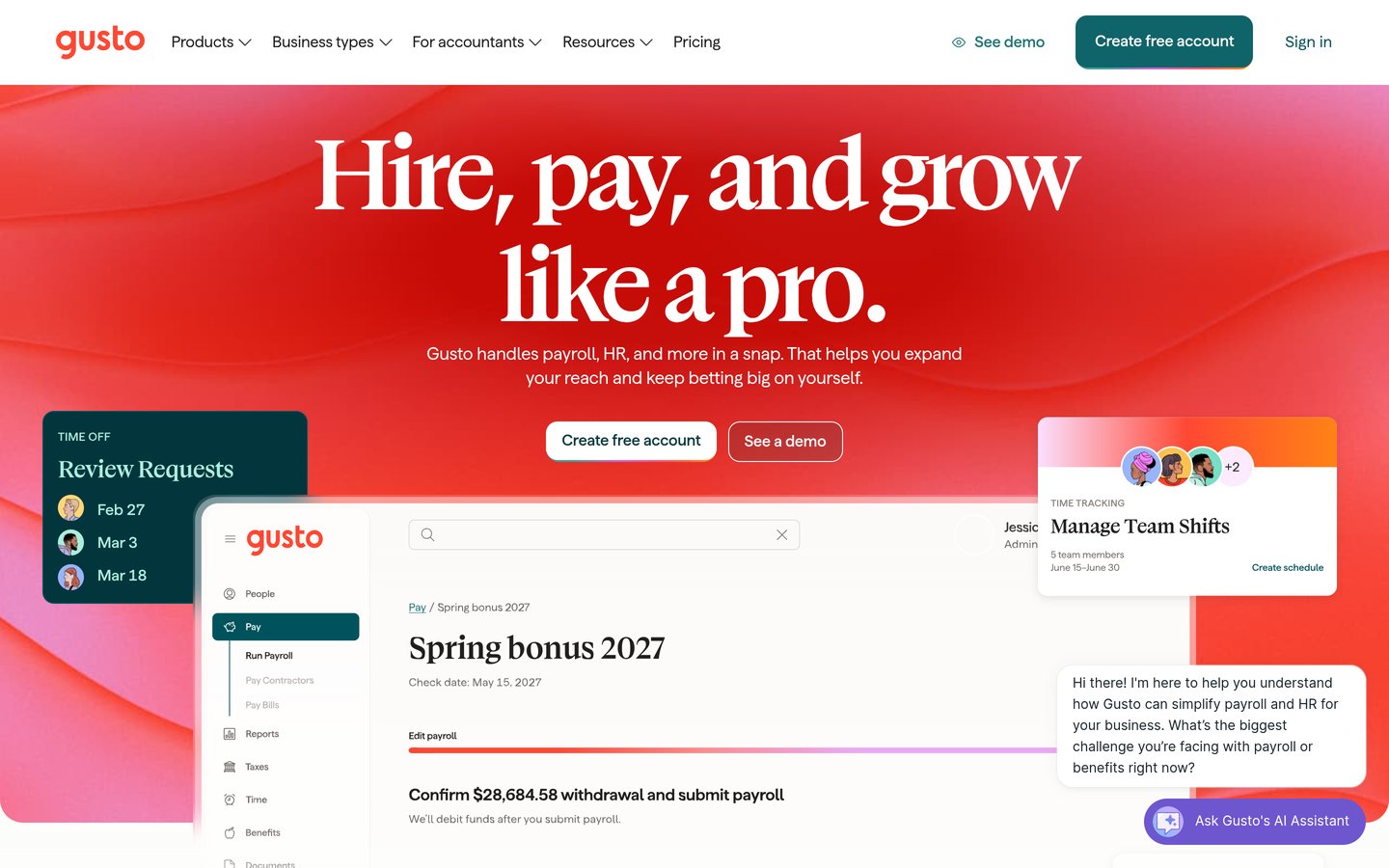
Gusto is the small-business pick: $49 a month plus $6 per person, with full-service payroll, tax filing, and benefits in the same plan.
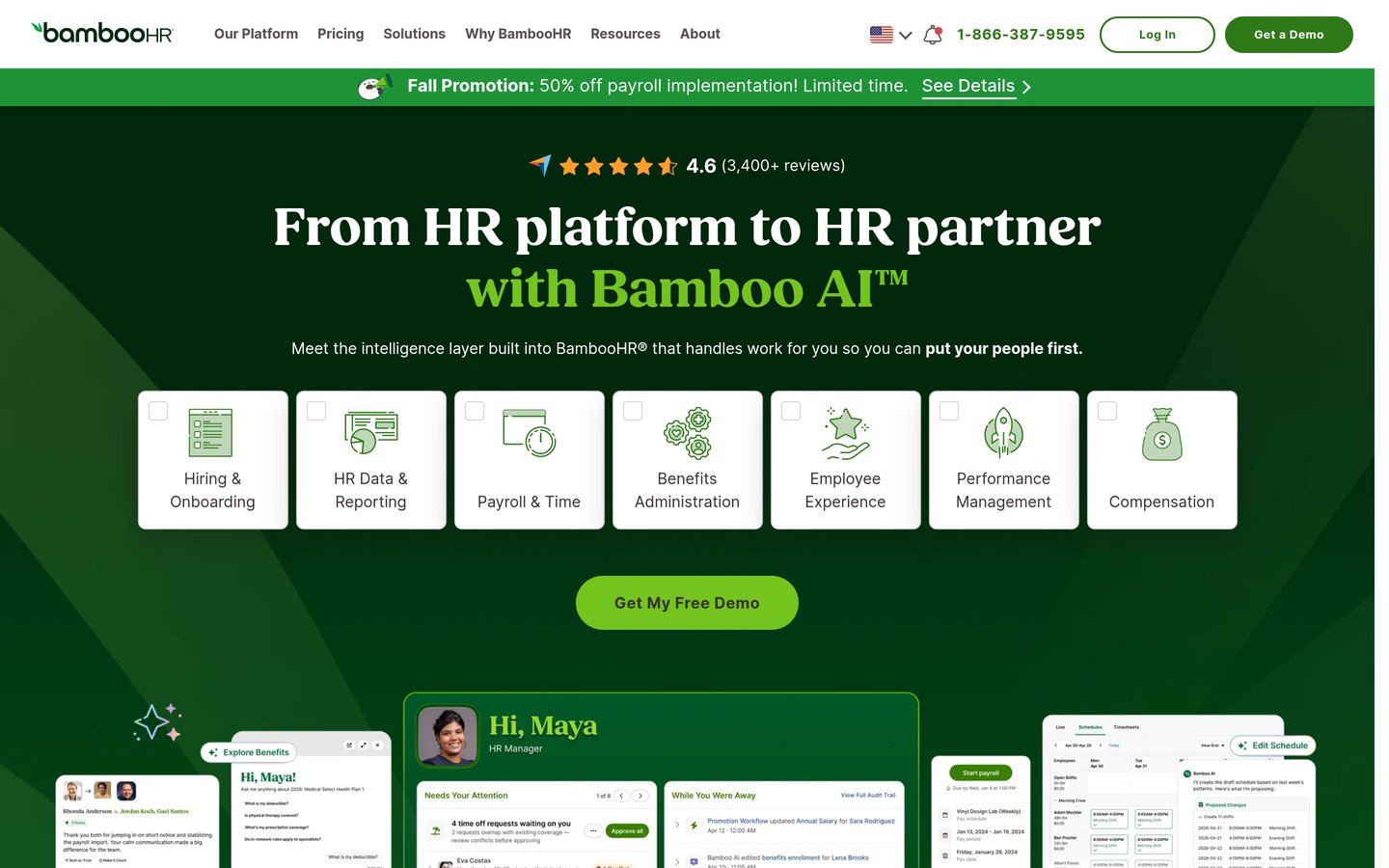
BambooHR is the classic HRIS: $10 per user a month on Core, with records, onboarding, time off, and a built-in applicant tracker.
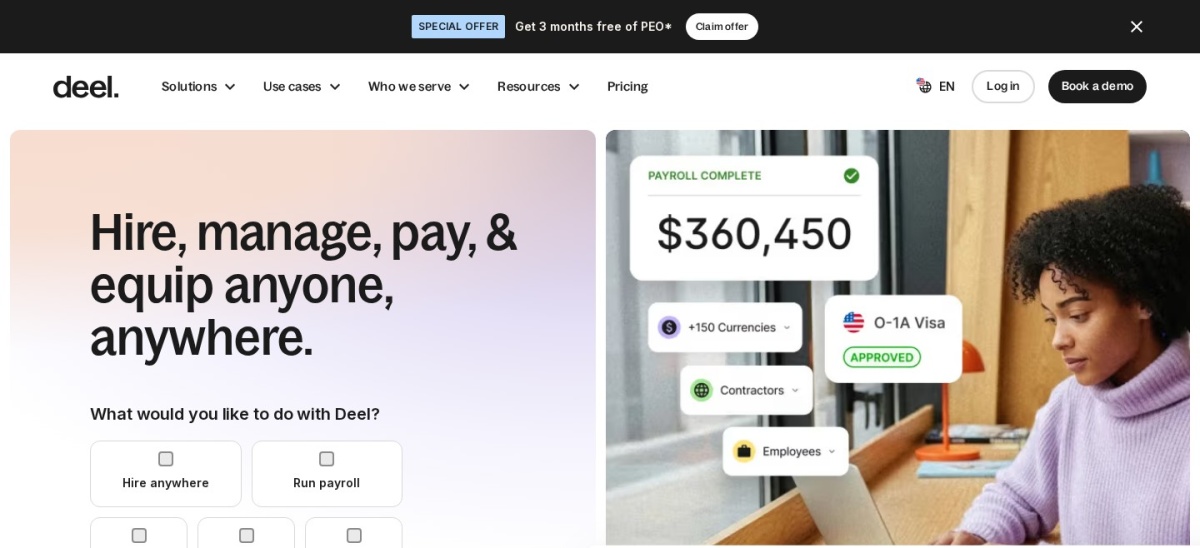
Deel is the global pick: its HRIS is free for up to 200 employees, and contractor management starts at $49 per contractor a month.
Three of the nine tools publish no prices at all: HiBob, Paylocity, and ADP Workforce Now are all quote-only, so budget a sales call.
Zoho People is the cheapest paid start: $1.25 per user a month, with a free plan for up to 5 users.
What to look for in an HRIS
An HRIS is the system of record for your people: employee profiles, documents, time off, and onboarding in one place. Payroll, benefits, and performance tools may sit inside it or connect to it.
Start with headcount and geography. A 20-person team in one country needs payroll and benefits; a 200-person team across three countries needs compliance, approvals, and reporting that a small-team tool will not have.
Price is usually per employee per month, plus a base fee, and the cheapest headline rate rarely covers payroll. Check what each tier adds before you compare, and ask for the first-year total in writing.
Implementation time matters as much as price. G2 reviewers report most of these tools going live in one to three months, and the quote-only tools usually need a longer sales and setup cycle.
Rippling is a workforce platform that runs HR, payroll, IT, and finance from one employee record. The core platform starts at $8 per user a month, and payroll adds $8 per user a month when billed annually. Onboarding, time off, documents, and org charts are in the core, and changes sync to every module at once.
The trade off is modular pricing. Each product is priced separately, so the real monthly bill depends on which modules you switch on, and the base fee is not published. It suits growing teams that want one system for HR, IT, and finance instead of three separate tools.
What we like
One employee record across HR, payroll, IT, and finance
Gusto is a payroll-led people platform for small businesses, with full-service payroll, health benefits, and HR tools in one login. The Simple plan costs $49 a month plus $6 per person and covers unlimited payroll runs, direct deposit, and automatic tax filing. Onboarding checklists, offer letters, and e-signatures are included.
The trade off is scope. Simple covers single-state payroll only, so a hire in a second state means upgrading to Plus at $80 a month plus $12 per person. It suits US teams of about 5 to 100 people that want payroll and HR together without a sales call.
BambooHR is a cloud HRIS for small and mid-size teams, built around one central employee record. The Core plan costs $10 per user a month and covers records, onboarding, time off, benefits tracking, and reporting. A built-in applicant tracker is included, with 5 open jobs on Core.
The trade off is price structure. Teams of 25 or fewer pay a flat $250 a month instead of the per-user rate, and payroll, benefits administration, and time tracking are paid add-ons. It suits teams that want a proven core HRIS without buying a full payroll suite.
Deel is a global workforce platform for hiring, paying, and managing people in more than 150 countries. Its core HRIS is free for up to 200 employees and covers onboarding, time off, documents, and org charts. Contractor management starts at $49 per contractor a month, with compliant contracts and payments in over 120 currencies.
The trade off is price jumps. Employer-of-record hiring starts at $599 per employee a month, so the bill climbs fast once contractors become full-time hires abroad. It suits distributed teams that hire across borders and need compliance handled in each country.
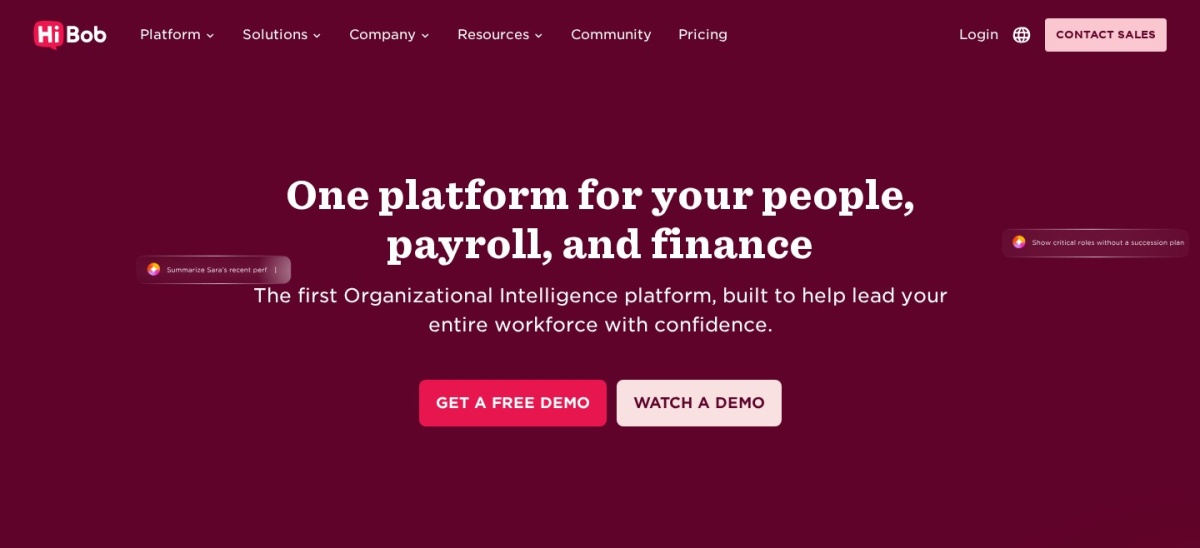
HiBob is a cloud HR platform for mid-size and multinational teams, sold as Bob. Bob Core holds the employee database, time off, lifecycle workflows, and analytics, and talent, compensation, and payroll modules all read from the same record. It serves more than 5,500 organizations in over 170 countries.
The trade off is pricing. HiBob publishes no prices, so every plan starts with a quote, and each module is priced separately. It suits culture-led teams of about 50 to 1,000 people that want engagement, performance, and core HR in one place.
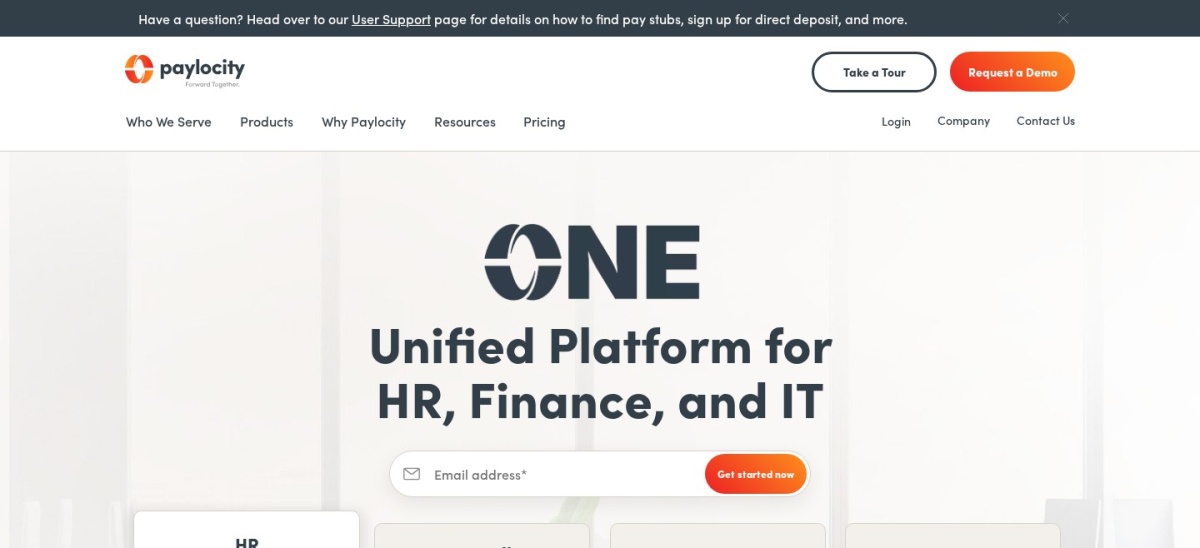
Paylocity is a cloud HCM suite for mid-size US employers, covering payroll, core HR, time and labor, benefits, and talent in one platform. It has 113 integrations with accounting, benefits, and recruiting tools, and reviewers praise its ease of use and mobile app. Implementation most often takes one to three months.
The trade off is price opacity. Paylocity publishes no list prices, and third-party estimates put the full suite at about $22 to $33 per employee a month, with implementation fees on top. It suits employers of about 50 to 1,000 people that want one vendor for payroll and HR.
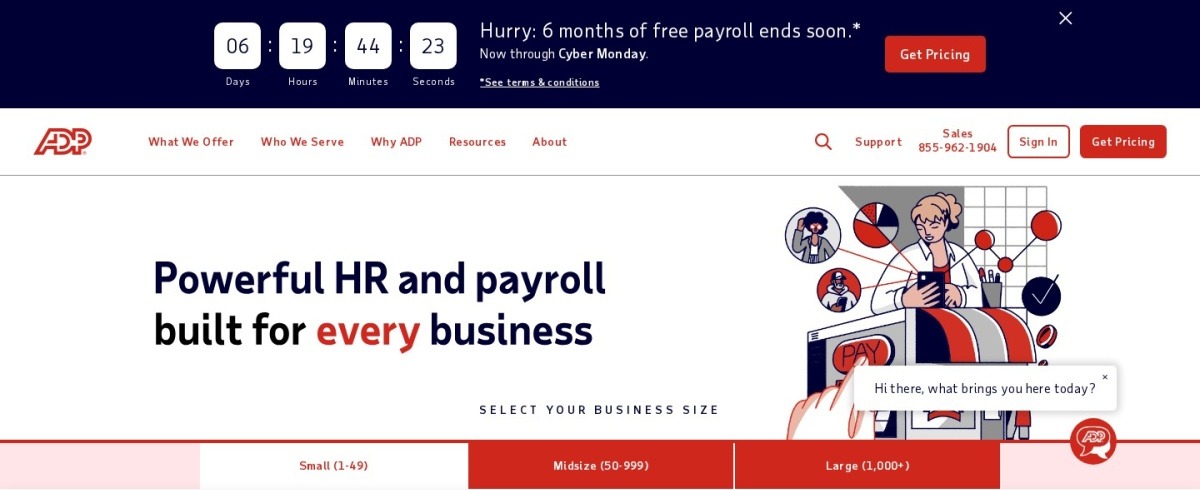
ADP Workforce Now is a workforce platform for mid-size employers, covering HR, payroll, time, benefits, and talent. It is sold in three tiers: Select for payroll and HR, Plus for benefits administration, and Premium for time and attendance. ADP processes payroll for about 1 in 6 American workers.
The trade off is the buying process. Every plan is sold by quote, and third-party estimates range from about $23 to $30 per employee a month, with setup fees quoted per account. It suits employers that want a large, established vendor and can manage a structured implementation.
Zoho People is a low-cost cloud HR system for small and mid-size teams. The free plan covers up to 5 users, and the paid Essential HR tier starts at $1.25 per user a month billed annually. It covers employee records, leave, attendance, onboarding, and documents, and links to other Zoho apps.
The trade off is depth and pricing by region. Payroll is sold separately, some features sit in higher tiers, and the published price changes by region, so the US list price may differ from what you see. It suits small teams that want core HR cheaply, especially inside the Zoho ecosystem.
Paycor is a payroll and human capital management platform for growing US employers. Its small-business Basic plan costs $99 a month plus $5 per employee and covers payroll, tax filing, and the mobile app. Higher bundles add onboarding, recruiting, time tracking, and analytics on the same record.
The trade off is price transparency. Paycor stopped publishing prices for larger employers in 2025, so teams above 50 employees need a quote, and reviewers report add-on and year-end fees. It suits employers of about 25 to 1,000 people with an HR person to run it.
Two tools here have a genuinely free plan: Deel's HRIS is free up to 200 employees, and Zoho People is free up to 5 users. Both cover the core record, time off, and documents without a card.
Three tools publish no prices at all: HiBob, Paylocity, and ADP Workforce Now. Expect a demo, a discovery call, and a quote that depends on headcount and modules.
Between those poles, the published per-employee rate is only part of the bill. Base fees, payroll add-ons, and implementation fees all sit outside the headline number, so ask for the first-year total in writing.
How we chose
We started from the most widely used HRIS platforms on G2, then kept nine that cover small teams, mid-market employers, and global hiring.
Prices come from each vendor's pricing page, checked on 25 November 2026, with G2 ratings and review counts from the same day. Where a vendor shows a sale, the list shows the regular price. Three vendors publish no prices, so those entries show Custom and the body says so.
We left out tools closed to new sign-ups and tools with no public rating. No vendor paid for a place, and we do not claim to have used these tools ourselves.
How to choose an HRIS
Count heads, countries, and pay runs first, then shortlist two or three tools that fit that shape.
Count employees and countries. A single-country team under 100 people can use Gusto or BambooHR; a team hiring abroad needs Deel or HiBob. The count also decides whether a per-employee price or a flat fee is cheaper.
Decide what payroll must do. Full-service payroll with tax filing is built into Gusto, Rippling, Paylocity, and ADP, while BambooHR, HiBob, and Zoho People charge extra or sell it separately.
Add up the first-year total. Base fees, payroll modules, and implementation can double the headline rate. People costs stack up the same way: see how much a WordPress developer costs for a worked example of a hiring budget.
Run a trial or a demo with real data. Load a few real employee records, run a time-off request, and check the reports you need every month. If the trial cannot do that, ask for a guided demo.
FAQ
What is the best HRIS software?
Rippling is the best HRIS for most growing teams. It starts at $8 per user a month plus a base fee, covers HR, payroll, IT, and finance in one record, and holds a 4.7/5 G2 rating from 15,278 reviews.
What is the cheapest HRIS software?
Zoho People is the cheapest paid start in this list at $1.25 per user a month, with a free plan for up to 5 users. Deel's core HRIS is free for up to 200 employees, though contractor management starts at $49 per contractor a month.
Do I need payroll in my HRIS?
It depends on team size. Small teams often run payroll inside the HRIS, and Gusto, Rippling, Paylocity, and ADP include it. Larger teams sometimes keep a separate payroll provider and use the HRIS for records, time off, and performance only.
Why do some HRIS tools not publish prices?
HiBob, Paylocity, and ADP Workforce Now sell by quote because the price depends on headcount, modules, and contract length. Expect a demo and a discovery call first, and ask for the first-year total, including implementation, in writing.
What is the difference between an HRIS and an HCM?
An HRIS is the system of record for employee data, time off, and onboarding. HCM is the broader label, covering the HRIS plus payroll, talent, compensation, and analytics, which is how ADP and Paylocity describe their suites.
How long does it take to set up an HRIS?
G2 reviewers report most of these tools going live in one to three months. Small teams on Gusto or BambooHR can be faster, while quote-only suites with payroll migration usually take longer and need a planned rollout.
SaaS SEO and WordPress specialist with about 8 years of experience. Rakib compares WordPress plugins, themes, hosting and software using public pricing, documentation and user reviews. See how we rank.