Freshdesk is the best help desk software for edtech platforms for most teams, with omnichannel ticketing from $19 per agent a month and a 4.4 out of 5 G2 rating. Zendesk suits larger platforms that need deeper routing, while Zoho Desk is the cheapest paid start at $7 per agent a month.
How we make this list: we compare pricing pages, product documentation and public user reviews, then re-check every price before each update. No product paid for a place. Disclosure.
Freshdesk is the best all-round pick: tickets, chat, a knowledge base and AI help from $19 per agent a month.
Zendesk is the strongest choice for large platforms, but useful features sit on the $55 Suite Team plan, not the $19 entry plan.
Zoho Desk is the cheapest paid start at $7 per agent a month, with a free plan for up to 3 agents.
Help Scout and HubSpot Service Hub both offer free plans, so a small course team can start without paying.
AI help is now billed per resolution or per session on most tools, so check that cost before you commit.
Paid plans in this list run from $84 to $348 a year per agent, before AI add-ons.
How do you choose help desk software for edtech platforms?
Edtech support is seasonal. Enrolment weeks, exam periods and new course launches can triple ticket volume overnight, so a tool that only handles email will leave learners waiting.
A good help desk for a learning platform should turn every learner message into one ticket, whatever the channel. Email, live chat, web forms and social messages should land in the same queue, with one owner and one reply thread.
Self-service matters more here than in most sectors. A searchable help centre that answers login, payment and course-access questions can cut the queue before it forms, and our guide on adding an AI chatbot to WordPress shows how a chatbot can sit in front of it.
Check the AI price, not just the seat price. Several tools in this list charge per AI resolution or per AI session on top of the seat price, and that line can grow faster than the seat bill during enrolment.
Finally, weigh the free plan honestly. A free tier that covers 3 to 5 agents is enough for a small course team, but it usually caps the knowledge base or the automation a growing platform needs.
The 9 best help desk software for edtech platforms
01
Freshdesk
4.4/5on G2 (3,907 reviews, checked Nov 2026)
Starts at$19/mo
Best help desk software for edtech platforms overall
Entry planGrowth, $19/agent/mo
Free optionFree program, 2 agents, 6 months
Knowledge baseYes, from Growth
AI help500 Freddy sessions, then $49/100
freshdesk.com
Freshdesk homepage, captured Nov 2026.
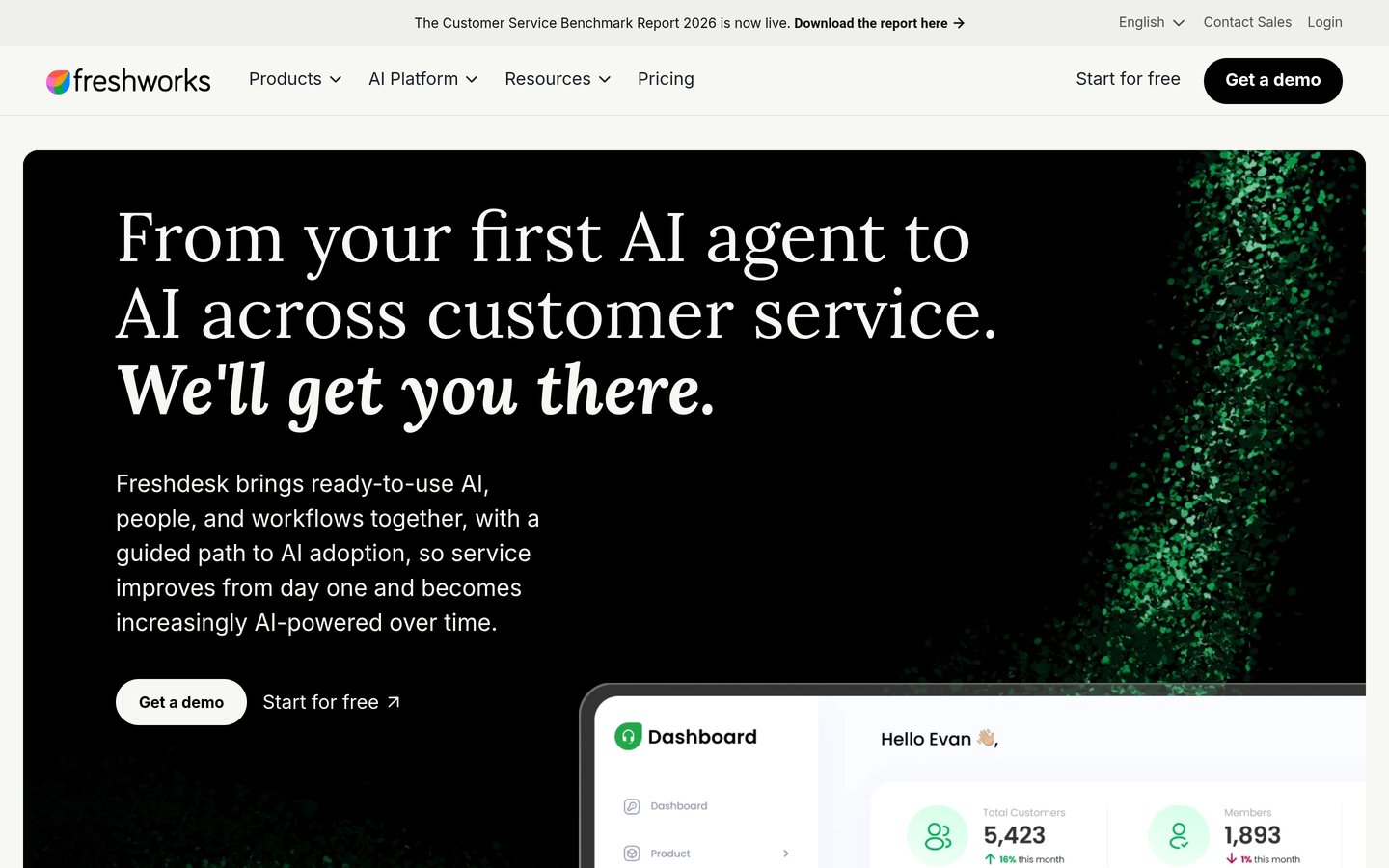
Freshdesk is a cloud help desk that turns email, chat, phone and social messages into tickets in one shared queue. The Growth plan costs $19 per agent a month billed yearly and includes a customer portal, a knowledge base, SLA rules and 500 Freddy AI Agent sessions per account.
The trade off is that true omnichannel messaging needs Freshdesk Omni from $29 per agent a month, and extra Freddy sessions cost $49 per 100. It suits edtech teams that want a fast setup, clear per-agent pricing and a help centre learners can search before they write in.
What we like
Low $19 entry price with a knowledge base included
Strong G2 record: 4.4 out of 5 from 3,907 reviews
SLA rules and automation help during enrolment spikes
Zendesk is the most established help desk in this list, with ticketing, omnichannel messaging, a help centre and AI agents that resolve requests end to end. Support Team costs $19 per agent a month billed yearly and covers email ticketing, routing and prebuilt dashboards.
The trade off is the gap between the headline and the useful plans. Chat, a help centre and AI agents need Suite Team at $55 per agent a month, and Copilot costs $50 more. It suits large platforms with thousands of learner requests and a team to run the admin side.
What we like
Largest review base here: 4.3 out of 5 from 7,051 reviews
Deepest routing, triggers and analytics in this list
More than 1,800 marketplace apps and integrations
AI agents resolve requests without an agent
Watch out for
Entry plan is email only, with no help centre
Costs climb fast once AI and add-ons are switched on
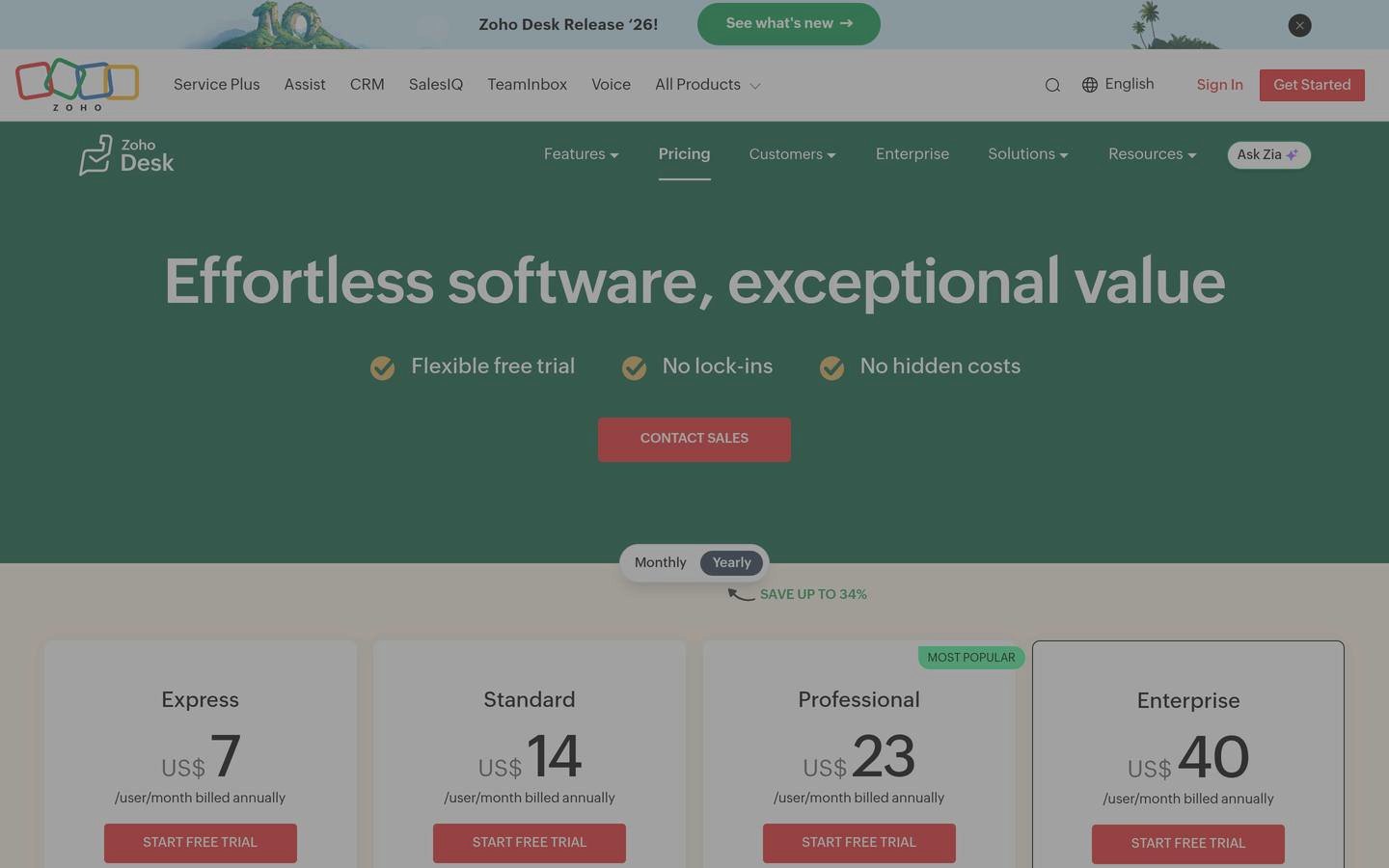
Zoho Desk is a low-cost help desk that turns email, social, chat and phone requests into tickets with automation, SLAs and a knowledge base. The free plan covers up to 3 agents, and Express costs $7 per agent a month billed yearly, the lowest paid start in this list.
The trade off is the learning curve. Reviewers praise the value and the Zoho ecosystem link, but flag a dated interface and slow vendor support. It suits small edtech teams on a tight budget, especially those already using Zoho CRM.
What we like
Lowest paid price here at $7 per agent a month
Free plan for up to 3 agents
Strong rating at scale: 4.4 out of 5 from 7,851 reviews
Multichannel tickets from the Standard plan
Watch out for
Express caps at 5 agents, so growth forces Standard
Interface feels dated next to newer tools
Full Zia AI needs the $40 Enterprise plan
Standard at $14 adds live chat, WhatsApp and a knowledge baseVisit zoho.com
04
Help Scout
4.4/5on G2 (431 reviews, checked Nov 2026)
Paid from$25/mo
Best for small teams replacing shared email
Entry planStandard, $25/user/mo
Free optionFree for up to 5 users
Knowledge baseDocs, included
AI helpAI Answers, $0.75/resolution
helpscout.com
Help Scout homepage, captured Nov 2026.
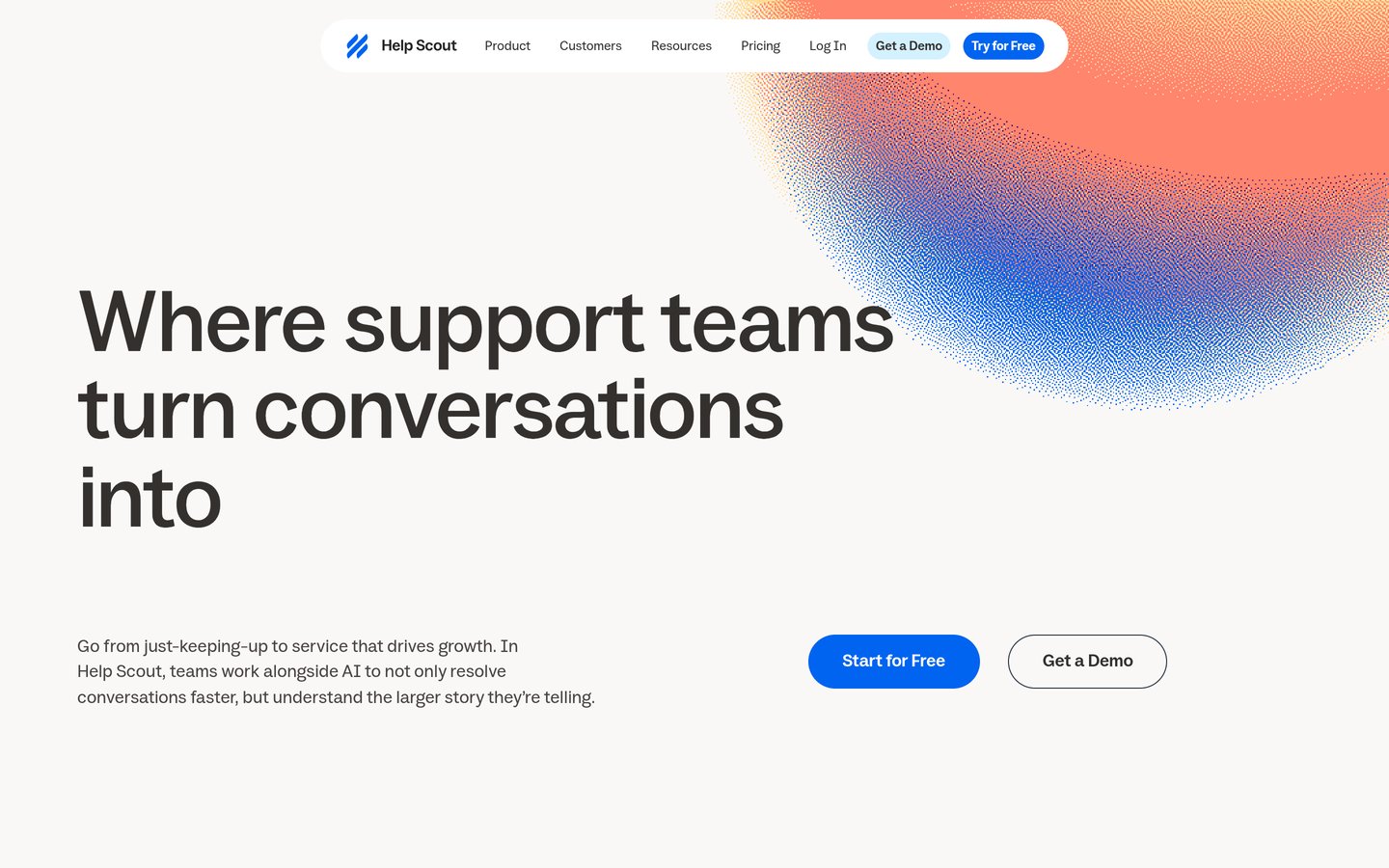
Help Scout is a shared-inbox help desk built for email-first teams, with live chat, a Docs knowledge base and an embeddable help widget. The free plan covers up to 5 users, and Standard costs $25 per user a month billed yearly with unlimited contacts.
The trade off is depth. Reporting is basic, routing is limited and the bill grows with every user, while Pro needs at least 10 users. It suits small edtech teams that want support to feel like email, not a ticket queue, and a help centre learners can read first.
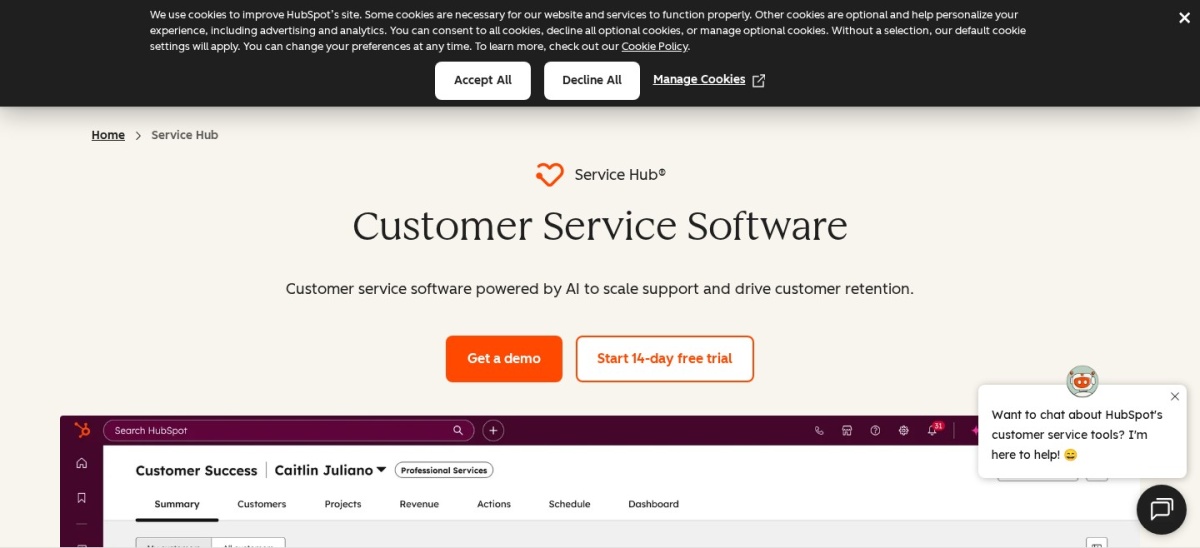
HubSpot Service Hub puts support tickets on the same CRM record as a learner's enrolment and marketing history, so agents see the full story in one place. The free tier covers up to 2 users, and Starter costs $20 per seat a month with a shared inbox, simple tickets and live chat.
The trade off is the jump. Professional costs $100 per seat a month, so teams that outgrow Starter face a steep rise, and onboarding fees apply on higher plans. It suits edtech teams whose sales and marketing already run on HubSpot.
What we like
Tickets, CRM and knowledge base in one system
Free tier for up to 2 users
Strong rating: 4.4 out of 5 from 2,912 reviews
Easy setup for teams that know HubSpot
Watch out for
Starter to Professional jump is $20 to $100 a seat
Free and Starter tiers limit automation
No native SMS in Service Hub
Professional at $100 adds automation, playbooks and reportingVisit hubspot.com
06
Intercom
4.5/5on G2 (3,913 reviews, checked Nov 2026)
Starts at$29/mo
Best AI-first chat for learner support
Entry planEssential, $29/seat/mo
Free option14-day trial only
Knowledge basePublic help centre included
AI helpFin, $0.99 per outcome
intercom.com
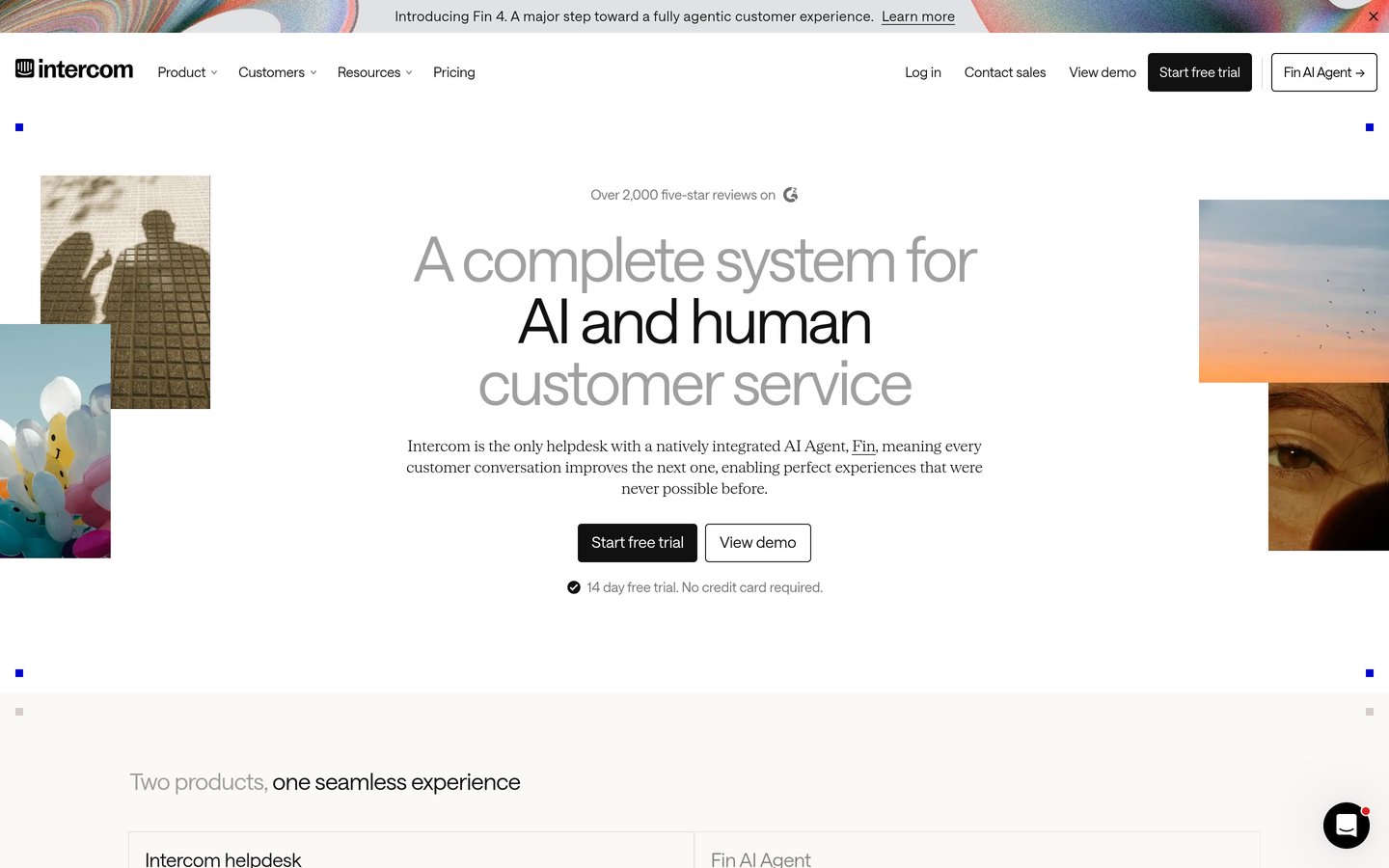
Intercom homepage, captured Nov 2026.
Intercom is an AI-first support platform built around Fin, an AI agent that resolves learner questions across chat, email and messaging, with a shared inbox and help centre behind it. Essential costs $29 per seat a month billed yearly, and Fin bills at $0.99 per resolved conversation.
The trade off is forecasting. Fin's per-outcome billing can swing with enrolment volume, and the full feature set takes work to set up. It suits product-led edtech platforms that want learners answered in chat first, with agents stepping in only when needed.
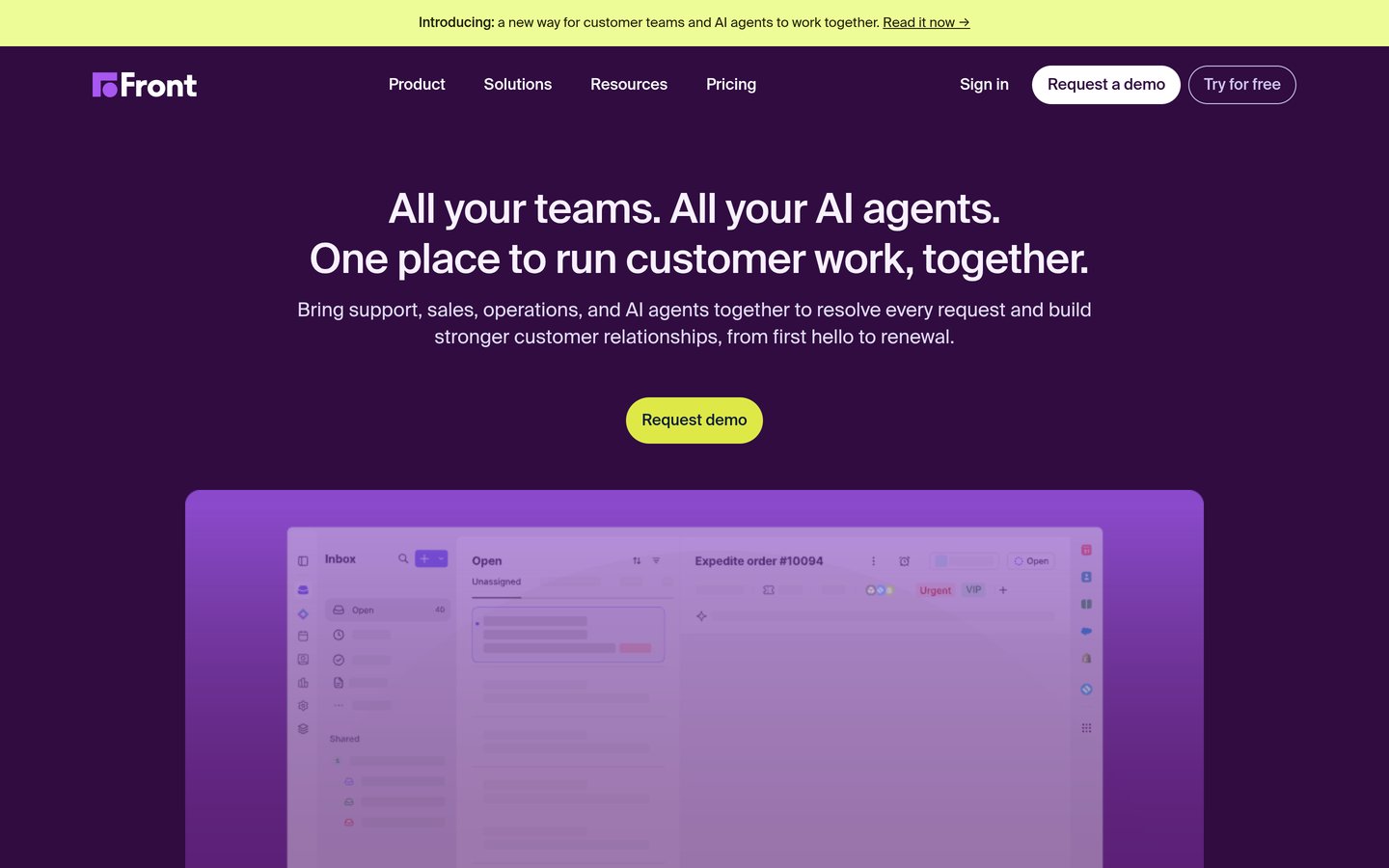
Front is a collaborative inbox that pulls email, chat, social and SMS into one queue, with shared drafts, internal comments and rules that route learner messages to the right tutor or team. Starter costs $25 per seat a month billed yearly.
The trade off is that a knowledge base is an add-on, not part of the core product, so self-service costs extra. It suits edtech teams handling high volumes across channels, where several staff need to work the same inbox without duplicating replies.
What we like
Highest rating here: 4.7 out of 5 from 2,518 reviews
Best-in-list collaboration inside the inbox
Familiar email-style view agents learn fast
Strong omnichannel coverage from the entry plan
Watch out for
Knowledge base is a paid add-on
No free plan, only a 14-day trial
AI features sit on higher plans
Growth and Scale plans add AI, analytics and more rulesVisit front.com
08
LiveAgent
4.5/5on G2 (1,537 reviews, checked Nov 2026)
Starts at$15/mo
Best budget option for live chat and phone
Entry planStarter, $15/agent/mo
Free option30-day trial only
Knowledge baseYes, included
AI helpAI features on every plan
liveagent.com
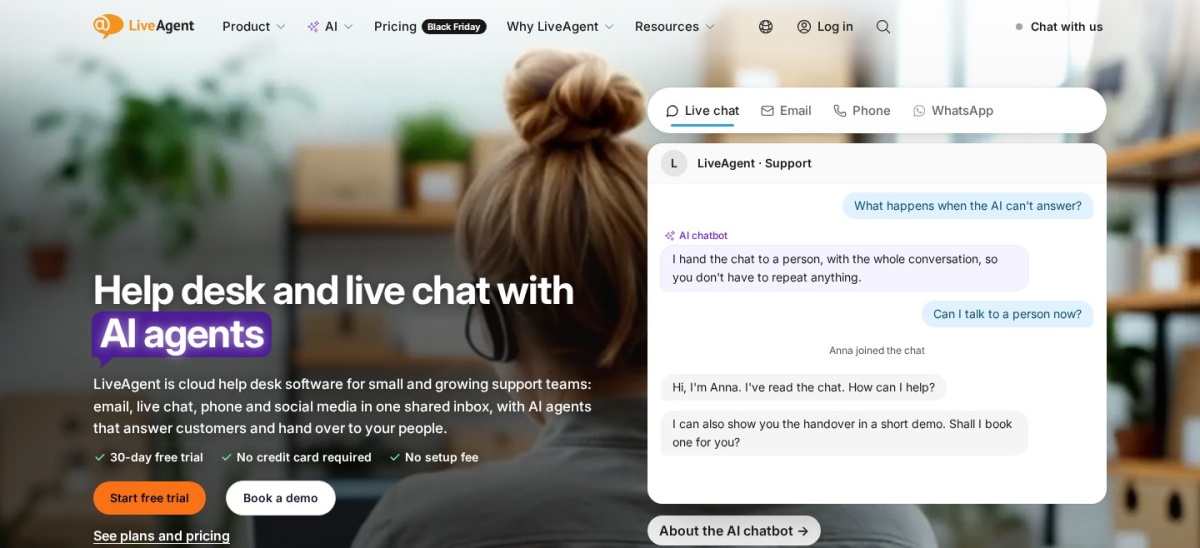
LiveAgent homepage, captured Nov 2026.
LiveAgent is a multichannel help desk that combines email tickets, live chat, phone and social messages in one inbox. The Starter plan costs $15 per agent a month billed yearly and includes AI features on every plan, plus a knowledge base.
The trade off is the sale. A limited offer cuts Starter to $9 per agent a month, but the regular price is $15, and higher plans at $29 and $49 add more agents, departments and AI capacity. It suits small edtech teams that answer learners mainly by chat and phone.
What we like
Low $15 entry price with chat and phone included
AI features on every plan, not just the top tier
Strong rating: 4.5 out of 5 from 1,537 reviews
30-day trial, the longest in this list
Watch out for
No free plan after the trial
Ticketing depth is lighter than Zendesk or Freshdesk
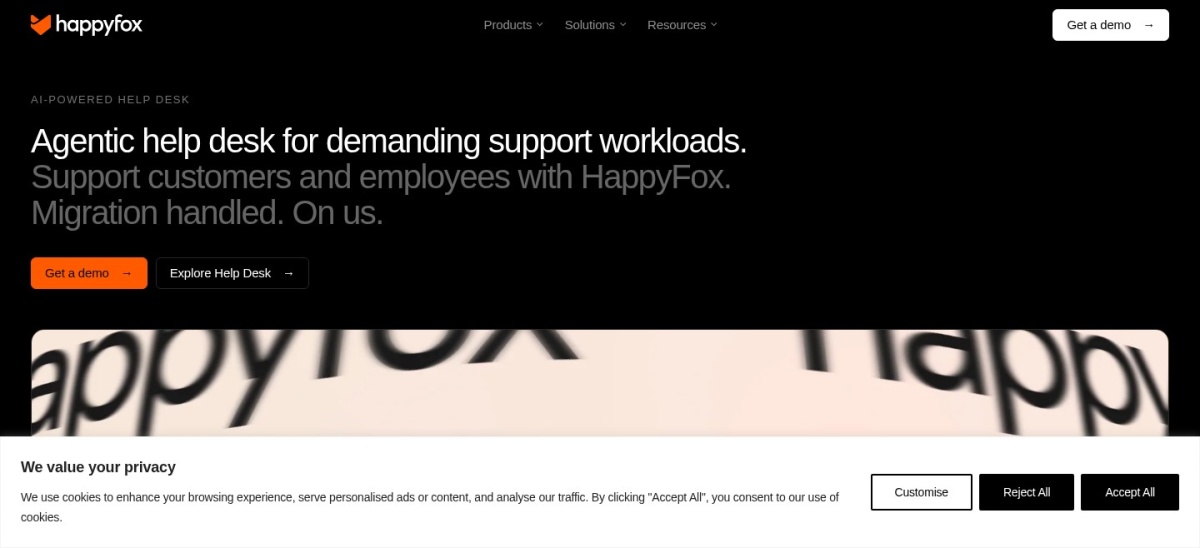
HappyFox is a cloud help desk that turns email, forms, chat and phone requests into tickets with SLAs and smart routing rules. The Basic plan costs $24 per agent a month billed yearly for up to 5 agents and includes unlimited tickets, a knowledge base and single sign-on.
The trade off is scale. Basic caps at 5 agents, so growing teams move to Team at $49, and HappyFox AI costs from $14 more per agent a month. It suits edtech teams that need strict response-time targets across departments, from admissions to IT.
What we like
SLA tracking and smart routing on every plan
Strong rating: 4.5 out of 5 from 138 reviews
Covers support, IT and other departments in one place
Handling enrolment spikes without hiring for the peak
Enrolment weeks punish tools that rely on agents alone. A help centre that answers login, payment and course-access questions can absorb the first wave before it reaches the queue.
Automation should route by topic, not just by channel. A password reset, a payment failure and a course-access problem need different owners, and rules that sort them on arrival save hours a day.
AI help earns its keep in these weeks, but only if the price is capped. Per-resolution billing with no cap can turn a busy Monday into a surprise bill, so set a spend limit before enrolment opens.
How we chose
We started from the help desks most often recommended for education and edtech teams, then kept the nine with published prices, a knowledge base or help centre, and a verifiable G2 rating.
Prices come from each vendor's pricing page, checked on 30 November 2026, and show the regular annual price, not sale prices. Ratings and review counts come from G2 on the same day.
We left out tools with quote-only pricing, because an edtech team cannot compare them on price, and tools built only for K-12 device fleets. No vendor paid for a place, and we do not claim to have used these tools ourselves.
How to choose help desk software for edtech platforms
Start with your busiest week, not your quietest one, then pick the tool that survives it.
Count tickets in your peak week. Enrolment and exam weeks set the real load. A tool that copes in a quiet month can still fall behind when volume triples.
Check the help centre first. Learners search before they write in. Pick a tool whose knowledge base is included on the plan you can afford, not an add-on.
Price the AI, not just the seats. Work out what 1,000 AI resolutions or sessions would cost in a peak month, and set a spend cap before you switch it on.
Trial it with real learner questions. Run the trial on last term's most common questions, and check how fast agents find the answer and how clear the reply looks to a learner.
FAQ
What is the best help desk software for edtech platforms in 2026?
Freshdesk is the best pick for most edtech teams. It combines omnichannel ticketing, a knowledge base and Freddy AI help from $19 per agent a month, and it is rated 4.4 out of 5 on G2 from 3,907 reviews.
How much does help desk software for edtech platforms cost?
Paid plans in this list run from $7 to $29 per agent a month on annual billing, or $84 to $348 a year per agent. AI help usually costs extra per resolution or per session, so the seat price is not the full bill.
Is there a free help desk for edtech platforms?
Yes. Zoho Desk is free for up to 3 agents, Help Scout is free for up to 5 users, and HubSpot Service Hub is free for up to 2 users. Freshdesk also offers a free program for 2 agents for 6 months.
Which help desk is best for a small edtech team or a single course?
Zoho Desk is the cheapest paid start at $7 per agent a month, and its free plan covers 3 agents. Help Scout is the simplest choice if the team lives in email and wants a help centre without a long setup.
Freshdesk or Zendesk: which is better for edtech platforms?
Freshdesk is better for most edtech teams because it includes a knowledge base and AI help from $19 per agent a month. Zendesk is better for large platforms that need deeper routing and analytics, but those features sit on the $55 Suite Team plan.
Do these tools work with a learning management system?
Most connect to learning platforms through Zapier, native apps or an API rather than a built-in LMS link. Check the integration list for your platform before you buy, and confirm that learner records can sync with tickets.
SaaS SEO and WordPress specialist with about 8 years of experience. Rakib compares WordPress plugins, themes, hosting and software using public pricing, documentation and user reviews. See how we rank.