Luzmo is the best embedded reporting software for fintech apps, with white-label embeds, multi-tenant security and AI chat in one plan from 2,495 dollars a month. ThoughtSpot is the best pick for plain-language questions, while Metabase is the cheapest open-source route for teams that self-host.
How we make this list: we compare pricing pages, product documentation and public user reviews, then re-check every price before each update. No product paid for a place. Disclosure.
Luzmo leads with the complete platform in one plan, from $2,495 a month, with white-label embeds and AI chat included.
ThoughtSpot is the best pick for plain-language questions, with its Spotter AI agent from $25 per user a month.
Metabase is free to self-host, and Pro adds multi-tenant embedding from $575 a month.
Preset is the cheapest hosted route at $20 per user a month, though embedded viewers cost $500 extra.
Power BI Embedded suits Microsoft shops, with unlimited viewers on about $736 a month of Azure capacity.
How do you choose embedded reporting software for a fintech app?
Embedded reporting puts dashboards inside your fintech app, so customers see balances, transactions and portfolio data without leaving your product. The report is part of the app, not a separate login.
Tenant isolation is the first test. Every customer must see only their own data, which means row-level security, multi-tenant workspaces and single sign-on are requirements, not extras.
Pricing models differ more than features do. Luzmo charges a flat $2,495 a month, ThoughtSpot and Tableau charge per user, and Power BI Embedded charges for Azure capacity, so the bill at 500 customers varies widely. Our guide on embedded analytics platforms compares the same market in detail.
Compliance decides the shortlist for fintech. Look for SOC 2 Type II certification, data encryption, audit logs and regional hosting before you compare charts, because a reporting tool that cannot pass your security review will never ship.
Start with the embed, not the dashboard builder. A tool that looks great in a demo but needs Enterprise for customer-facing embedding, as ThoughtSpot does, can double the budget you planned.
The 9 best embedded reporting software for fintech apps
01
Luzmo
4.6/5on G2 (76 reviews, checked Nov 2026)
Starts at$2,495/mo
Best embedded analytics platform overall
Entry planEmbedded Everywhere, $2,495/mo
White-labelIncluded
Multi-tenant securityYes, row-level
Free trialYes
luzmo.com
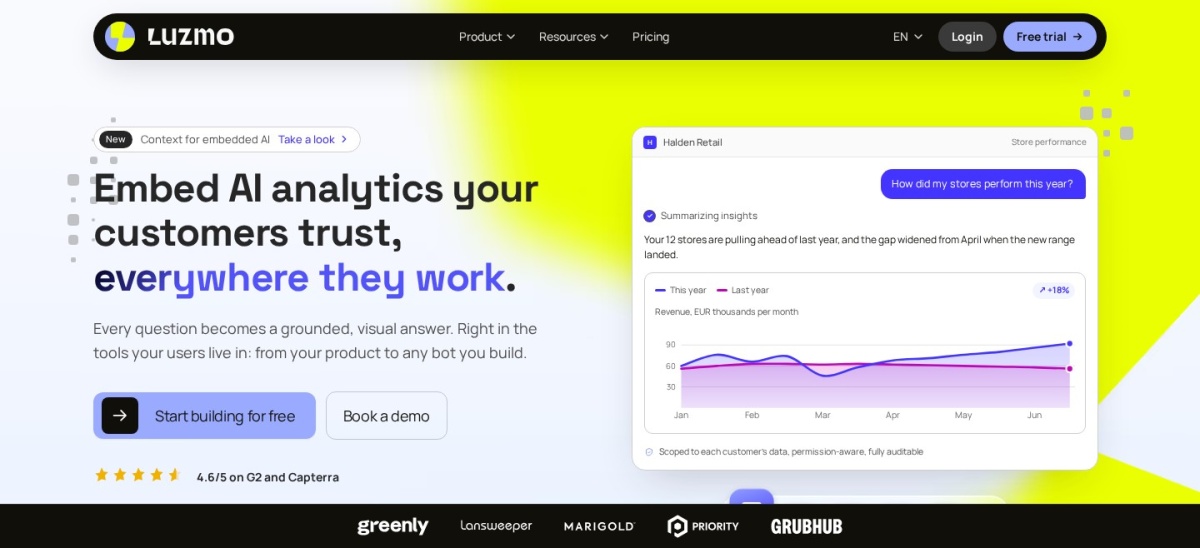
Luzmo homepage, captured Nov 2026.
Luzmo is an embedded analytics platform built for SaaS products, and its one plan includes white-label embeds, an embedded dashboard editor for end users, multi-tenant security and Luzmo IQ, its AI chat. It costs $2,495 a month billed annually in the Americas, or 1,995 euros a month in Europe.
The trade off is the price. It is the most expensive tool on this list by a wide margin, and the single plan means there is no cheaper tier for a small fintech app. It suits product teams that want the complete platform from day one without negotiating feature tiers.
What we like
Single plan includes everything: white-label, editor, AI chat
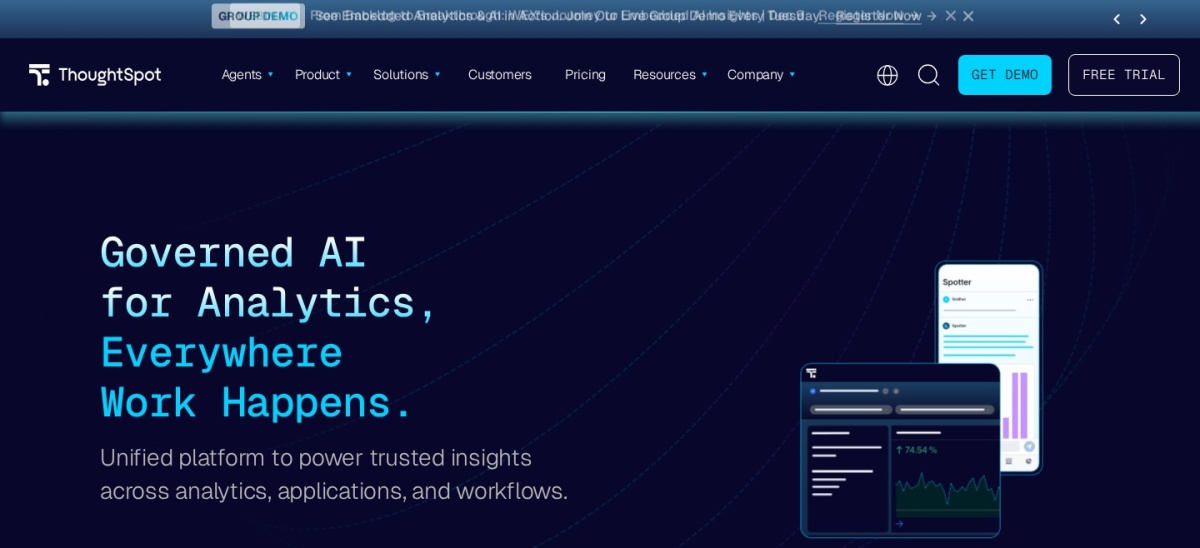
ThoughtSpot is a search and AI-driven analytics platform. Users type a question in plain language and Spotter, its AI agent, builds the chart or dashboard. Essentials starts at $25 per user a month billed annually, for 5 to 50 users and 25 million rows.
The trade off is that customer-facing embedding is an Enterprise feature, so the $25 plan covers internal use and embedded dashboards for your own app need the higher tier. It suits fintech teams that want customers to ask questions in plain language instead of reading static reports.
What we like
Spotter AI agent answers plain-language questions
Row-level security and data isolation included
Live connections to Snowflake, Databricks and Redshift
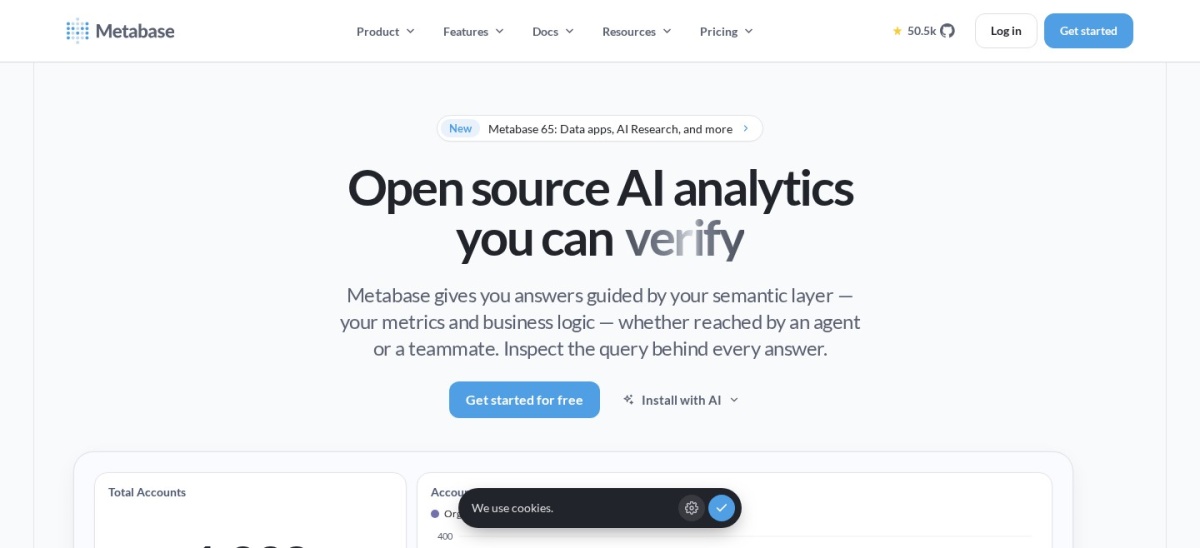
Metabase is an open-source BI platform that is free to self-host, and its Pro plan adds multi-tenant embedding, single sign-on, row and column security and white-labeling from $575 a month for 10 users. It is SOC 2 Type II certified, which matters for fintech apps handling customer money data.
The trade off is that every signed-in customer counts as a user, so interactive embedding at scale can push the bill well past $575 a month. It suits fintech teams that want an open-source core and are happy to pay per user for embedding.
What we like
Free open-source core to self-host
Pro adds multi-tenant embedding and SSO
SOC 2 Type II certified
Watch out for
Interactive embedding bills per signed-in customer
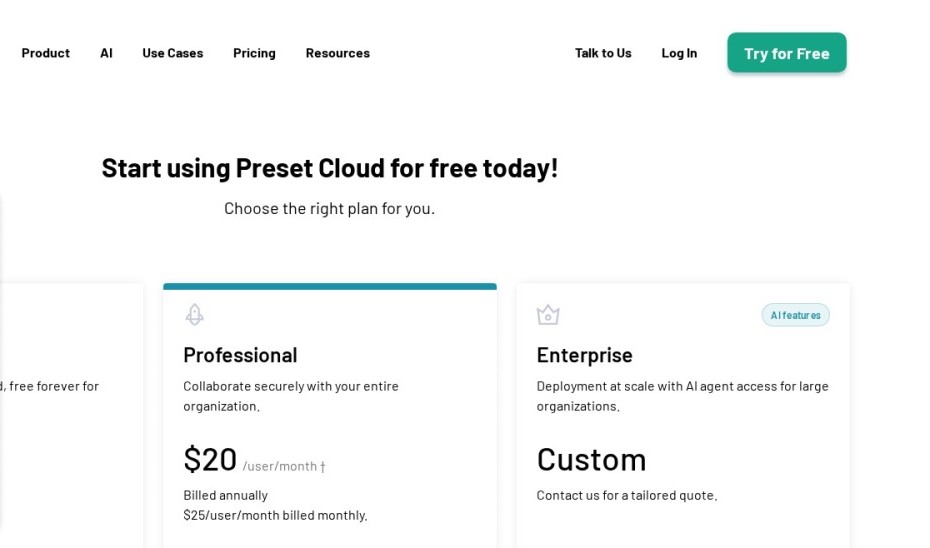
Preset is the managed cloud version of Apache Superset, the open-source BI tool, built by the team that created it. It costs $20 per user a month, the cheapest hosted route on this list, with a free plan for trying it out.
The trade off is the thin review base: its 4.6 G2 rating rests on only 8 reviews, and embedded viewers cost $500 a month extra for 50 viewers. It suits small fintech teams that want a managed Superset without running infrastructure.
What we like
Cheapest hosted entry on this list
Built by the team that created Superset
Free plan to try before paying
Watch out for
G2 rating rests on only 8 reviews
Embedded viewers are a $500/mo add-on
Embedded viewers cost $500/mo extra for 50 viewersVisit preset.io
05
Tableau
4.4/5on G2 (4,200 reviews, checked Nov 2026)
Paid from$15/mo
Best for visual analysis at scale
Entry planViewer, $15/user/mo
CreatorFrom $75/user/mo
EmbeddingEmbedded analytics, all plans
Free trialFree plan
tableau.com
Tableau homepage, captured Nov 2026.
Tableau is the most established visual analytics platform here, with deep charting, governed data sources and embedded dashboards that run inside a fintech app. Viewer seats start at $15 per user a month, and there is a free plan for trying it out.
The trade off is that building dashboards needs Creator seats at $75 per user a month, and per-user pricing gets expensive as the customer base grows. It suits fintech teams that already run Tableau and want proven, governed reporting inside their product.
Bold BI is Syncfusion's embedded analytics platform, built for embedding dashboards directly into apps with multi-tenancy, so each fintech customer sees only their own data. The On-Premises plan costs $499 a month for 100 users, or $1,999 a month per application with unlimited users.
The trade off is the interface: reviewers call it functional rather than beautiful, and the Cloud edition costs twice the On-Premises price at $999 a month. It suits fintech teams that want a fixed price for many viewers instead of per-user billing.
What we like
Fixed price for 100 users, no per-viewer meter
Multi-tenancy built in
On-premises and air-gapped deployment
Watch out for
Cloud edition costs $999 a month, double On-Premises
Power BI Embedded is Microsoft's capacity-based way to put Power BI reports inside an app, billed through Azure instead of per user. The smallest A1 capacity costs about $736 a month, and any number of viewers can read the embedded reports.
The trade off is that capacity pricing is hard to predict: heavier concurrent use needs a larger SKU, and building reports still needs Power BI Pro or Premium licences. It suits fintech teams already running Microsoft 365 and Azure.
Qlik is a capacity-priced BI platform (Qlik Cloud Analytics) with an associative engine that lets users explore data freely instead of following fixed drill paths. The Standard plan costs $300 a month for 10 users, and it charges nothing extra for additional viewers.
The trade off is that anonymous public access needs the Premium plan, and the $300 plan is priced by data volume rather than seats. It suits fintech teams that want many customers viewing dashboards on one fixed fee.
What we like
Fixed fee with no charge for extra viewers
Associative engine for free-form exploration
Strong data integration
Watch out for
Anonymous access needs Premium
Priced by data volume, not seats
Standard covers 10 users; extra viewers are freeVisit qlik.com
09
Holistics
4.6/5on Capterra (89 reviews, checked Nov 2026)
Starts at$800/mo
Best governed self-service BI
Entry plan$800/mo
Semantic layerYes, code-based
Version controlYes, Git
Free trialNo free plan
holistics.io
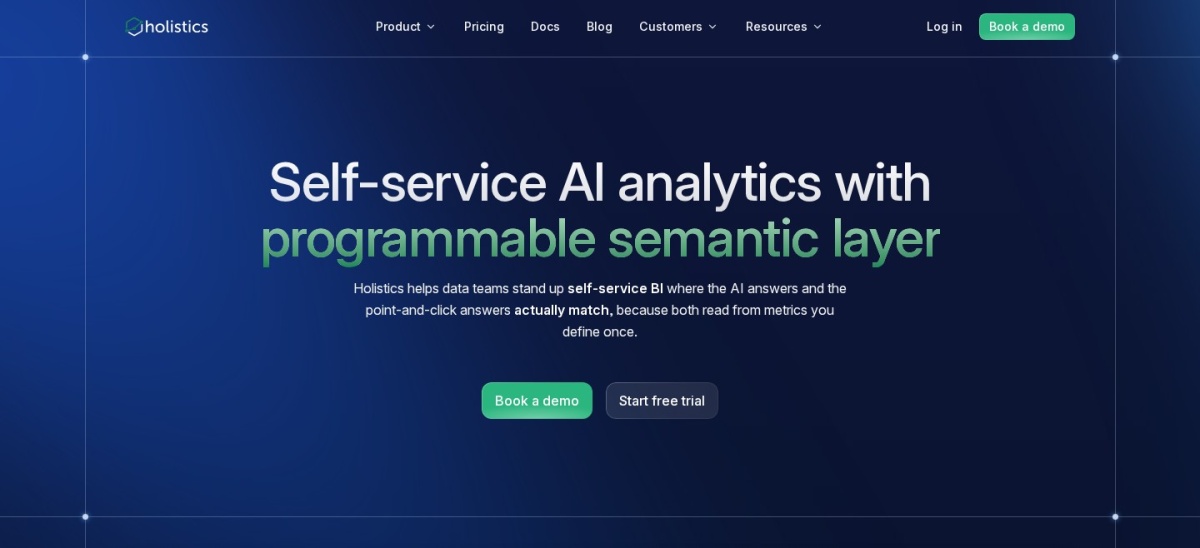
Holistics homepage, captured Nov 2026.
Holistics is a self-service BI platform with a code-based semantic layer and native Git version control, so metric definitions live in code and change through review. It costs $800 a month, with governed self-service for teams that want one set of metrics everywhere.
The trade off is the thin G2 base: its 4.3 G2 rating rests on only 15 reviews, though Capterra shows 4.6 from 89 reviews, and there is no free plan. It suits data teams that want governance and version control more than drag-and-drop charts.
What we like
Code-based semantic layer with Git version control
Flat price vs per-user vs capacity: what a fintech app actually pays
Only three tools here publish a flat monthly price: Luzmo at $2,495, Qlik at $300 and Holistics at $800. Everything else scales with users, viewers or capacity.
Per-user pricing looks cheap until customers sign in. Tableau Viewer is $15 per user a month and ThoughtSpot Essentials is $25, but every signed-in customer counts, so a fintech app with thousands of users can outgrow the entry tier fast.
Capacity pricing removes the per-viewer meter. Power BI Embedded costs about $736 a month for the smallest capacity with unlimited viewers, and Bold BI charges $499 a month for 100 users on-premises, or $1,999 per application with unlimited users.
Add-ons change the total too. Preset charges $500 a month extra for 50 embedded viewers, Metabase Pro charges $12 per extra user beyond the first 10, and ThoughtSpot puts customer-facing embedding on Enterprise. Ask every vendor for the price at your actual customer count before you compare.
How we chose
We started from the embedded analytics tools that appear on most 2026 shortlists, then kept the nine with the strongest ratings and the clearest fit for fintech apps, where tenant isolation and compliance matter as much as charts.
Prices come from each vendor's pricing page, checked on 30 November 2026. Luzmo and Metabase prices were confirmed on their own pricing pages today; ThoughtSpot, Preset, Tableau, Bold BI, Power BI Embedded, Qlik and Holistics prices rest on vendor-page reads from 23 to 26 November 2026. Ratings and review counts come from G2 or Capterra on the same day.
We left out Explo, which was acquired by Omni in 2025 and is being folded into that platform, and Embeddable, which has no published price and only 17 G2 reviews. No vendor paid for a place, and we do not claim hands-on testing for this list.
How to choose embedded reporting software for fintech apps
Start with tenant isolation and compliance, then check the pricing model at your customer count, then compare the embed itself.
Confirm every customer sees only their own data. Ask for row-level security, multi-tenant workspaces and single sign-on in writing. A demo that shows one tenant is not proof: ask how data isolation is enforced and whether audit logs record who saw what.
Price the tool at your real customer count. A $15 viewer seat is cheap for 50 customers and expensive for 5,000. Get quotes for 100, 1,000 and 10,000 viewers, including add-ons such as Preset's $500 viewer block or Metabase's $12 per extra user.
Check the compliance box before the feature list. Ask for SOC 2 Type II, encryption in transit and at rest, regional hosting and a data processing agreement. A tool that cannot pass your security review will never ship, however good its charts are.
Embed a real report before you sign. Use the trial to embed one dashboard in a staging app with real customer data. Check load time, white-labeling, mobile rendering and how the tool handles a customer with no data yet.
FAQ
What is the best embedded reporting software for fintech apps?
Luzmo is the best embedded reporting software for fintech apps. Its one plan includes white-label embeds, an embedded dashboard editor, multi-tenant security and AI chat from $2,495 a month, and it holds a 4.6 rating on G2 from 76 reviews.
How much does embedded reporting software cost?
Published entry prices run from $15 per user a month for Tableau Viewer and $20 for Preset to $300 a month for Qlik and $800 for Holistics. Luzmo costs $2,495 a month, Metabase Pro starts at $575, and Power BI Embedded runs about $736 a month for the smallest capacity.
What is the cheapest embedded reporting software for a fintech app?
Preset is the cheapest hosted route here at $20 per user a month, with a free plan to try. Metabase is free to self-host, though multi-tenant embedding needs Pro at $575 a month. Tableau Viewer is also cheap at $15 per user a month, but building dashboards needs Creator seats.
What security features does embedded reporting need for fintech?
Row-level security, multi-tenant isolation, single sign-on and encryption are the minimum. SOC 2 Type II certification matters too: Metabase holds it, and Luzmo, ThoughtSpot and the enterprise tools all publish compliance pages. Always ask for audit logs and regional hosting before you sign.
Is Metabase or Luzmo better for a fintech app?
Luzmo is the better pick if you want the complete platform from day one, with white-labeling, self-service editing and AI chat included. Metabase is the better pick if you want an open-source core and are happy to pay $575 a month for Pro embedding, with per-user costs as customers sign in.
Can Power BI Embedded work for a fintech app?
Yes, Power BI Embedded works well for fintech teams already running Microsoft 365 and Azure. The smallest A1 capacity costs about $736 a month and covers unlimited viewers, though building reports needs separate Power BI Pro licences and capacity costs climb with concurrent use.
SaaS SEO and WordPress specialist with about 8 years of experience. Rakib compares WordPress plugins, themes, hosting and software using public pricing, documentation and user reviews. See how we rank.