Blackbaud Raiser's Edge NXT is the best donor stewardship software for higher education for most advancement offices, pairing moves management with finance integration. Pick ThankView for personal video thank-yous and Bloomerang for smaller teams that want strong retention tools.
How we make this list: we compare pricing pages, product documentation and public user reviews, then re-check every price before each update. No product paid for a place. Disclosure.
Raiser's Edge NXT is the standard for large advancement offices, with moves management and finance integration, but pricing is quoted and G2 rates it 3.9 out of 5.
ThankView is the only pure stewardship tool here: personal video thank-yous from $3,000 a year, rated 4.9 out of 5 on G2.
Bloomerang leads on retention tools at $125 a month, while Little Green Light is the cheapest donor CRM at $45 a month.
Three of the nine tools publish no price at all, so budget for a sales conversation before you shortlist.
Givebutter is the only free plan here, with 0% platform fees when donor tips are turned on.
What should donor stewardship software for higher education cover?
Stewardship is the work after the gift: thanking donors, showing impact and keeping them giving. A good system records every touch, from the first thank-you to the fifth-year impact report, so no donor is thanked twice or forgotten.
University structure matters most. Gifts arrive for different schools, funds and campaigns, and the software must keep each gift tied to its fund while showing one view of each donor. Tools built for general nonprofits often struggle with that split.
Speed matters more than polish. Donors who hear back within days give again more often, so look for automatic receipts, acknowledgement workflows and video thank-yous. Email is still the main channel for most of that follow-up, and our guide on growing an email list with WordPress covers list basics that apply to donor email too.
Price is the hardest thing to compare. Three tools here publish no price, and the rest price by records, users or revenue, so compare the same size of database on every quote and ask what modules cost extra.
The 9 best donor stewardship software tools for higher education
01
Blackbaud Raiser's Edge NXT
3.9/5on G2 (644 reviews, checked Nov 2026)
PricingCustom/yr
Best for large advancement offices
Moves managementYes, built in
Finance integrationFinancial Edge NXT
PricingQuote only
Free trialNo
blackbaud.com
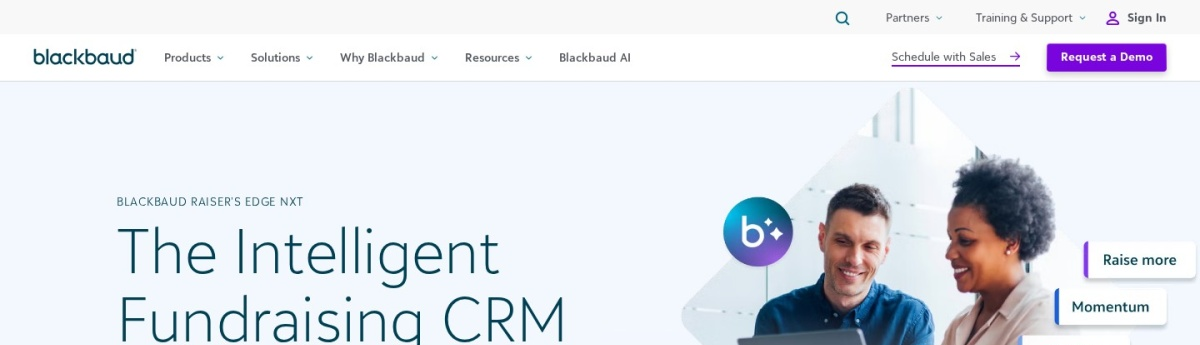
Blackbaud Raiser's Edge NXT homepage, captured Nov 2026.
Blackbaud Raiser's Edge NXT is the fundraising CRM most large advancement offices already run, built around constituent records, gift tracking and moves management for major-gift portfolios. It connects with Financial Edge NXT so fundraising and finance share the same gift data, and it covers events, membership and online giving as modules.
The trade off is cost and complexity. Pricing is quoted per institution with three-year terms as standard, reviewers rate it 3.9 out of 5 on G2, the lowest here, and the older database view loses support on 15 September 2027. It suits large shops with dedicated database staff and a major-gifts programme.
What we like
Deepest moves management and portfolio tools here
Finance integration with Financial Edge NXT
Widely used in higher education, so new hires often know it
Watch out for
Quote-only pricing with three-year terms
Lowest G2 rating in this list at 3.9 out of 5
Older database view support ends in September 2027
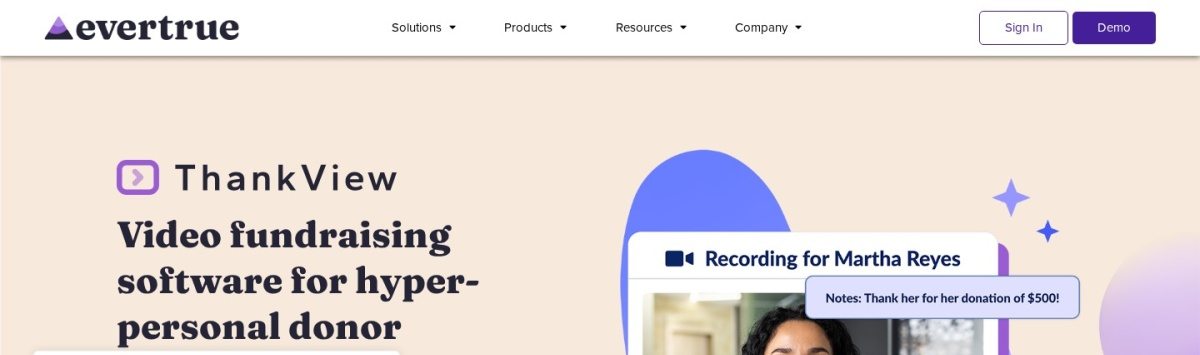
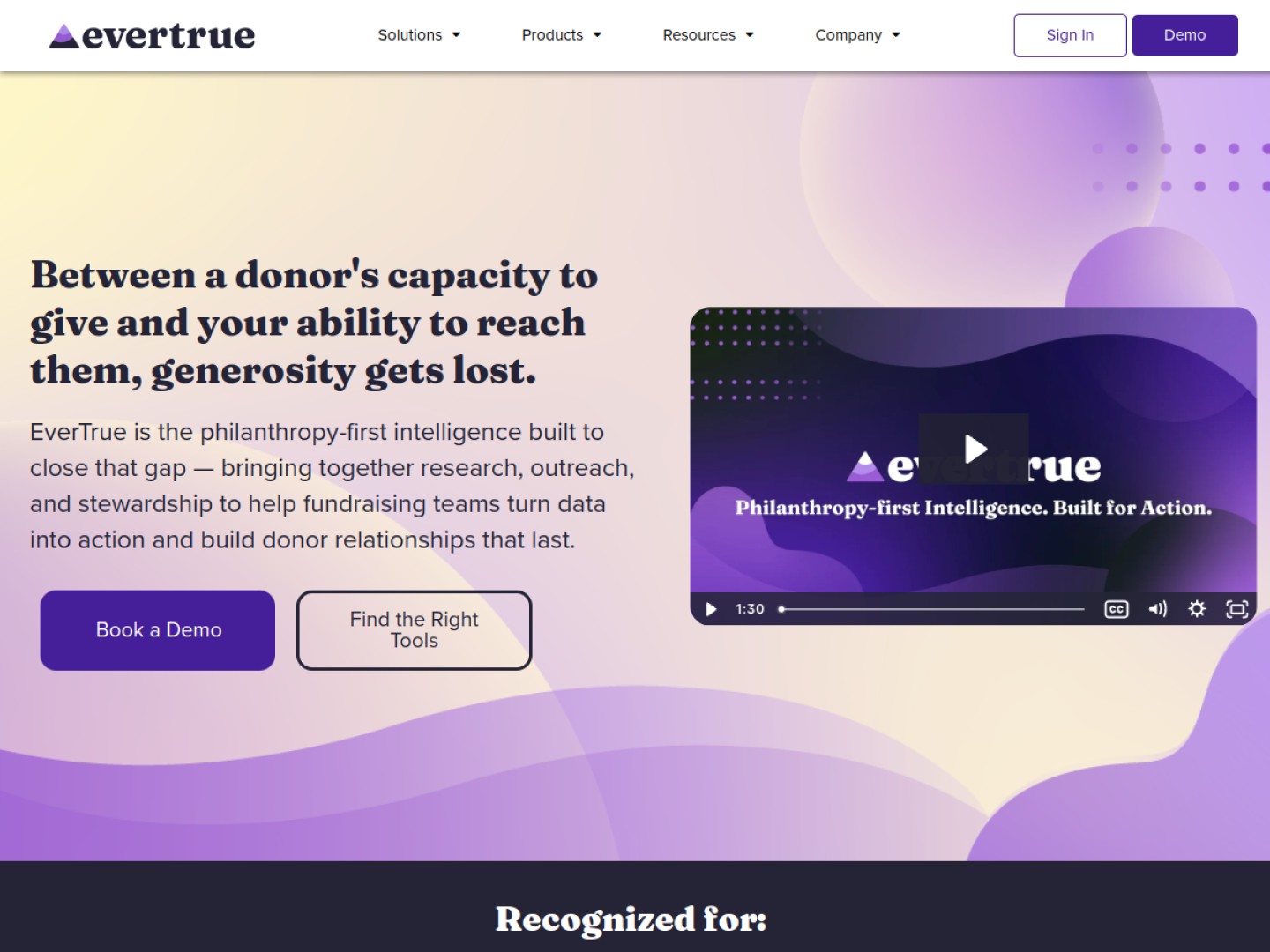
ThankView is video fundraising software for personal donor thank-yous, built for advancement and donor-relations teams. Staff and students record short videos for individual donors, and the platform tracks opens and later giving from each message. It is now part of EverTrue, so it pairs with prospect research and donor data.
The trade off is scope. ThankView does one job well and is not a donor database, so it sits beside a CRM rather than replacing one, and Starter costs $3,000 a year. It suits shops that want every major donor thanked by a real person on video within days of the gift.
Bloomerang is a donor CRM built around retention, with an engagement meter and donor scoring that flag who is ready for an upgrade and who is about to lapse. The CRM starts at $125 a month billed annually, priced by constituent count with unlimited users, and covers email, reporting and volunteer tools.
The trade off is depth for complex shops. Bloomerang fits small and mid-sized teams best, and gift accounting for multi-unit universities is thinner than in Raiser's Edge NXT. It suits a small college or foundation team that wants donors thanked and retained without a heavy system.
What we like
Strongest ease-of-use scores in this list
Retention scoring flags at-risk donors early
Unlimited users at every tier
Watch out for
Less suited to complex multi-school gift accounting
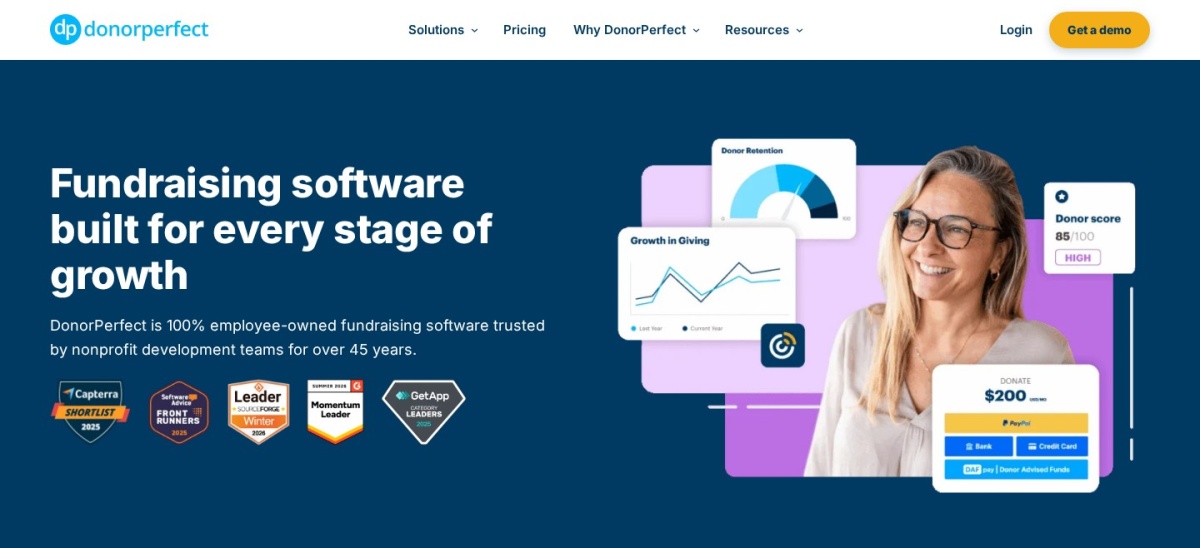
DonorPerfect is a donor management system used by more than 12,000 organisations, with donor profiles, gift tracking, automated receipts and acknowledgements, and a donor score on each record. Core starts at $99 a month with 500 records included, and every plan includes email through Constant Contact.
The trade off is fit for large universities. DonorPerfect is less tailored to complex advancement structures where several schools report together, and its own pricing page lists $99 while G2 shows $119, so confirm the quote. It suits small colleges that want deep reporting and live support.
What we like
Reviewers praise its support quality most
Donor journeys and automatic acknowledgements
90% year-over-year client retention, per the vendor
Watch out for
Less suited to complex university structures
Starting price is listed as $99 and $119 in different places
EverTrue is an advancement intelligence platform that connects donor data to social and demographic sources so gift officers can find prospects, track career changes and manage portfolios. Its 2021 merger with ThankView added personalised video for donor stewardship, and more than 2,000 nonprofits use it.
The trade off is that it is not a community platform or a full CRM. There is no member portal, and pricing is quoted per institution, so most teams pair it with a database such as Raiser's Edge NXT. It suits gift officers who need to know who to call next.
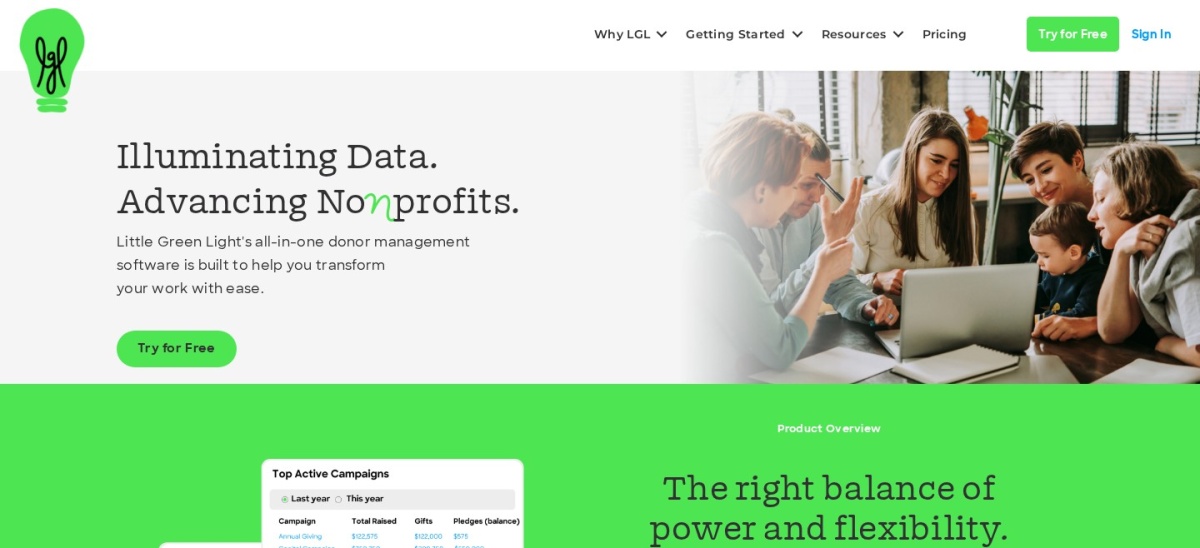
Little Green Light is a cloud donor management platform for small nonprofits, covering donor records, gifts, events, email and online giving in one place. It starts at $45 a month for up to 2,500 records with no per-user fees, and a 30-day free trial is included.
The trade off is polish and scale. The interface looks dated next to newer tools, and it lacks the prospect research and multi-unit reporting of enterprise systems. It suits a small college foundation or alumni office that wants honest donor tracking at the lowest price here.
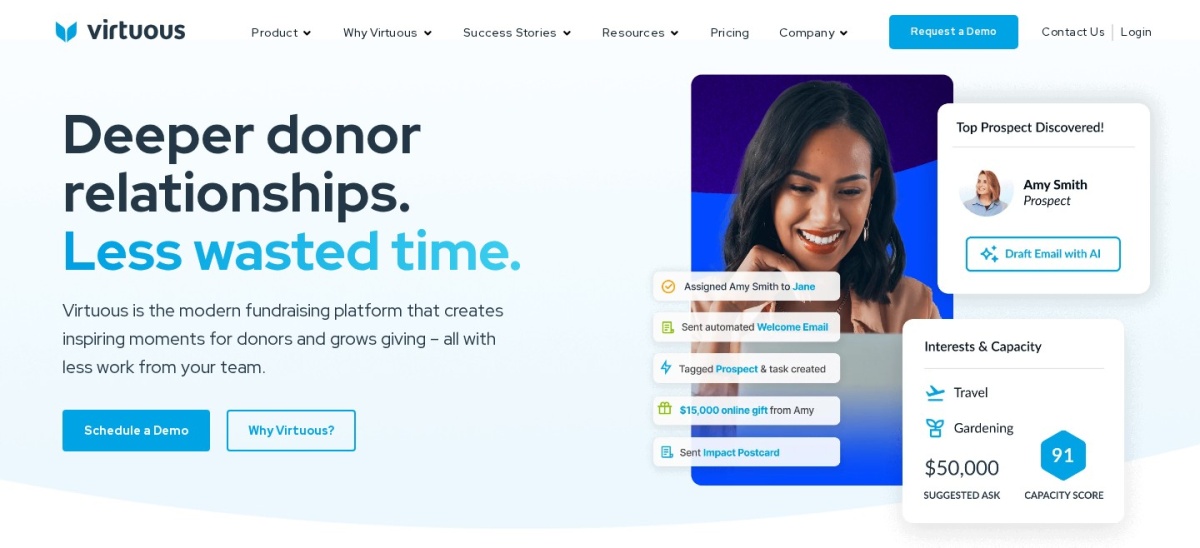
Virtuous is a nonprofit CRM built around responsive fundraising, with marketing automation that moves donors through personalised journeys based on their behaviour. Pricing is quoted by annual fundraising revenue, with Platform for teams raising up to $5 million a year and Enterprise above that.
The trade off is transparency. There is no public price to budget against, so the real cost only appears after a sales conversation, and smaller teams may find the platform more than they need. It suits mid-sized advancement teams that want automation to do the follow-up.
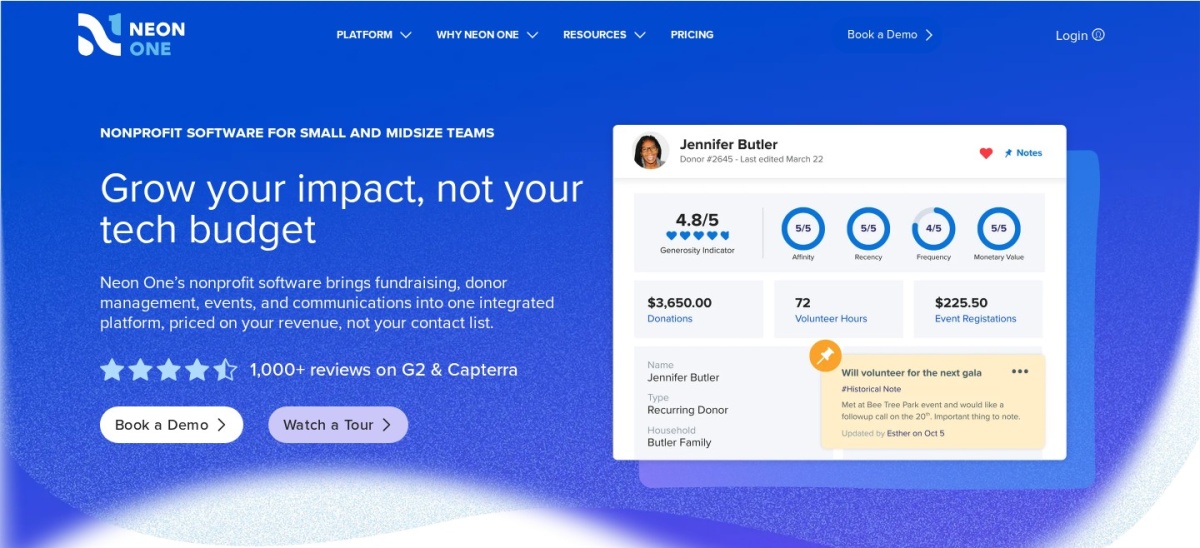
Neon CRM is the donor management product from Neon One, combining donor records, online giving, events, memberships and volunteers in one database. It starts at $99 a month with unlimited users and an open API, and pricing scales with the organisation's revenue.
The trade off is add-on cost. Memberships, events and volunteers are priced as extras on top of the CRM, so the bill grows as the team uses more of the platform. It suits a small advancement office that also runs events and a membership programme.
Givebutter is a fundraising platform whose core tools are free, funded by optional donor tips, with no platform fee when tips are turned on. It covers donation pages, peer-to-peer campaigns, events and a donor CRM, and it holds the highest review count here at 4.7 out of 5 from 2,668 G2 reviews.
The trade off is stewardship depth. Givebutter is built for campaigns and giving days rather than major-gift portfolios, and turning tips off adds a 3% platform fee plus card processing. It suits small colleges and student groups that need a giving page live this week at no fixed cost.
A donor database stores gifts. Stewardship software makes sure each gift gets thanked, reported on and followed up, with tasks and dates attached.
That is why ThankView and EverTrue sit beside a CRM in this list rather than replacing one. The CRM holds the record; the stewardship tool drives the next touch.
If you buy only one system, pick the CRM first. Add a stewardship tool once the database is clean, or the thank-yous will go to the wrong people.
How we chose
We started from the tools advancement and donor-relations teams actually compare for higher education, then kept those with a published G2 rating and a verifiable price or a clear quote-only model.
Prices come from each vendor's pricing page or G2 vendor-supplied listing, checked on 30 November 2026. Ratings and review counts come from G2 on the same day. Where a vendor shows a sale, the list shows the regular price.
We left out tools with no public rating and general CRMs with no donor features. No vendor paid for a place, and we do not claim to have used these tools ourselves.
How to choose donor stewardship software for higher education
Start with the size of your advancement office, then match the tool to the gifts you actually manage.
Count your donors and funds. A single-school foundation and a multi-school university need different depths of gift accounting. Match the system to your fund structure first.
Separate the database from the thank-you. Most teams need a donor CRM plus a stewardship tool such as ThankView. Decide which half you are buying before you compare prices.
Price the whole first year. Ask what events, memberships and extra users cost, and how card processing is charged. Our guide on what a payment gateway is explains the fees that sit beside the subscription.
Ask for a demo on your own data. Give the vendor a sample of your funds and donor types and watch how a thank-you and an impact report are produced.
FAQ
What is the best donor stewardship software for higher education?
Blackbaud Raiser's Edge NXT is the best pick for most advancement offices. It pairs moves management for major gifts with finance integration, and it is the system most large universities already run. Smaller teams should look at Bloomerang instead.
How much does donor stewardship software cost?
Prices run from free on Givebutter to $3,000 a year for ThankView Starter, with donor CRMs from $45 to $125 a month. Three tools here publish no price at all, so expect a quoted annual contract for enterprise systems.
Is there a free donor stewardship software for higher education?
Givebutter is the only free plan in this list, with core fundraising tools free when donor tips are turned on. The other tools offer demos or trials, but their stewardship features need a paid plan.
Which tool is best for a small college advancement team?
Bloomerang is the best fit for most small teams, at $125 a month with retention scoring and unlimited users. Little Green Light is cheaper at $45 a month if the team only needs straightforward donor and gift tracking.
Raiser's Edge NXT vs ThankView: which should we buy?
Buy Raiser's Edge NXT if you need a donor database, and ThankView if you need better thank-yous. They do different jobs, and many advancement offices run both: the CRM holds the record and ThankView sends the personal video.
What does donor stewardship software actually do?
It manages the work after a gift: thank-you messages, impact reports, donor journeys and follow-up tasks. A donor CRM stores the gift record, while stewardship tools make sure each donor hears back quickly and personally.
SaaS SEO and WordPress specialist with about 8 years of experience. Rakib compares WordPress plugins, themes, hosting and software using public pricing, documentation and user reviews. See how we rank.