Brandfolder is the best digital asset management software for ecommerce brands, with the strongest asset analytics and partner distribution in this list. Bynder suits large multi-market catalogs, while Cloudinary is the pick for image and video delivery at scale with a free plan.
How we make this list: we compare pricing pages, product documentation and public user reviews, then re-check every price before each update. No product paid for a place. Disclosure.
Brandfolder leads for ecommerce distribution, with asset analytics and partner portals, but every deal is a custom quote.
Bynder is the enterprise pick, rated 4.5 out of 5 on G2 from 1,292 reviews, with guidelines and approvals built in.
Cloudinary is the only tool here with a free plan and CDN delivery, from $89 a month on Plus.
Canto's Retail Suite is the most ecommerce-specific pick, with Shopify and Amazon connections.
Filecamp is the budget pick at $29 a month with unlimited users; the other six quote-only tools need a sales call.
How do you choose digital asset management software for ecommerce brands?
Start with distribution, not storage. An ecommerce DAM earns its keep when approved product photos reach the storefront, marketplaces and retail partners without a designer in the middle, so portals, CDN links and usage analytics matter more than raw storage.
Price transparency splits this market in two. Cloudinary, Filecamp and Air publish prices, while Brandfolder, Bynder, Canto, Acquia DAM, Frontify and MediaValet sell by quote, so budget for a sales conversation and ask what storage, seats and add-ons cost before signing. Our DAM software guide compares the leading platforms head to head.
Ecommerce integrations decide the shortlist. Canto's Retail Suite connects Shopify and Amazon, Cloudinary transforms and delivers images through a CDN, and Brandfolder tracks which assets partners actually use, so pick the integration that matches where your products sell.
Small stores should start cheap and simple. Filecamp at $29 a month or Cloudinary's free plan covers a shared library well, and a team can move to a quoted platform once assets flow to partners every week.
The 9 best digital asset management software tools for ecommerce brands
01
Brandfolder
4.7/5on Capterra (454 reviews, checked Nov 2026)
PricingCustom/yr
Best for ecommerce asset distribution
Asset analyticsYes, built in
Brand portalsYes
Free trialYes
Paid planCustom quote
brandfolder.com
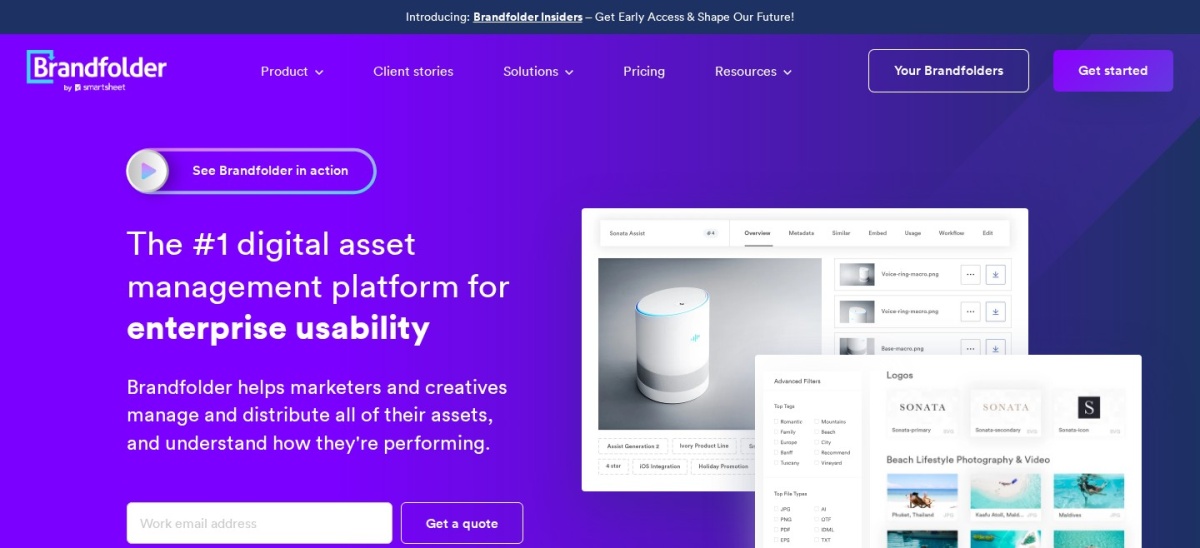
Brandfolder homepage, captured Nov 2026.
Brandfolder is a digital asset management platform from Smartsheet that centralises brand assets and tracks how partners and agencies use them. Its asset analytics show which product photos and campaign files get downloaded and shared, and brand portals give retailers and marketplaces self-serve access to approved files.
The trade off is price. Brandfolder publishes no prices and sells by custom quote, so a small ecommerce brand cannot budget from a price list, and the analytics depth matters most once assets flow to many partners. It suits brand-led ecommerce teams that distribute assets widely.
What we like
Strongest asset usage analytics in this list
Brand portals for partners and retailers
Rated 4.7 out of 5 on Capterra
Watch out for
No published price; every deal is a quote
Analytics depth is overkill for a one-person store
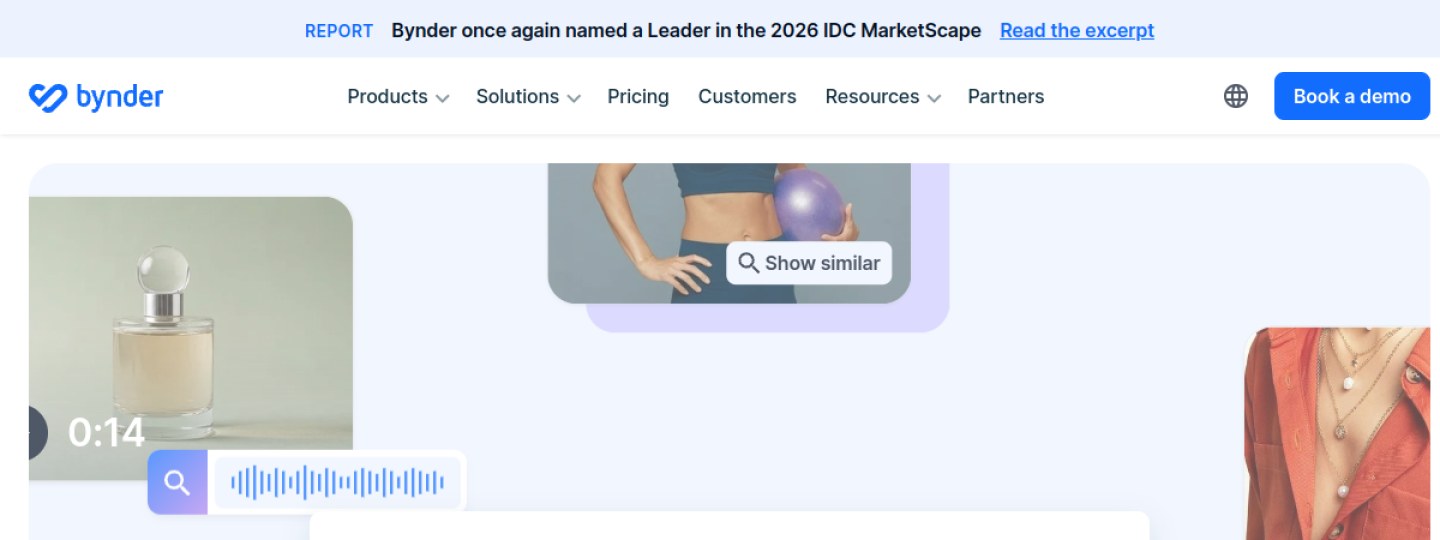
Bynder is an enterprise digital asset management platform that pairs a central asset library with brand guidelines, creative templates and approval workflows. More than 4,000 brands use it, and it holds 4.5 out of 5 on G2 from 1,292 reviews, the largest review base in this list.
The trade off is price and setup time. Bynder publishes no prices and every package is custom, with third-party procurement data putting the median signed contract near $41,400 a year, and onboarding takes months rather than days. It suits large ecommerce brands selling across many markets.
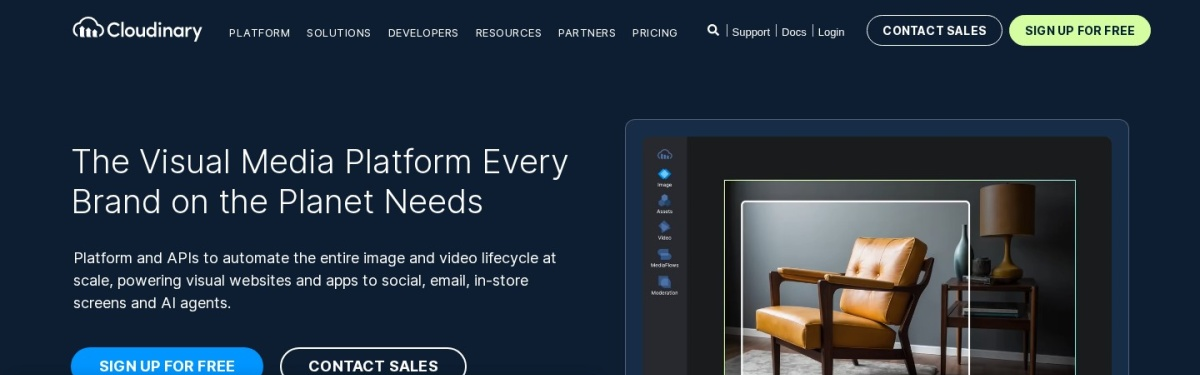
Cloudinary is a media platform that pairs a digital asset management library with image and video transformation and CDN delivery. The free plan covers 25 monthly credits and 3 users, and the Plus plan at $89 a month adds auto-tagging search, role-based access and backup to your own storage.
The trade off is complexity. Cloudinary is built around credits and APIs, so creative teams without developers can find setup harder than a plain DAM, and costs rise with transformations and bandwidth. It suits ecommerce teams that need fast product imagery on every storefront.
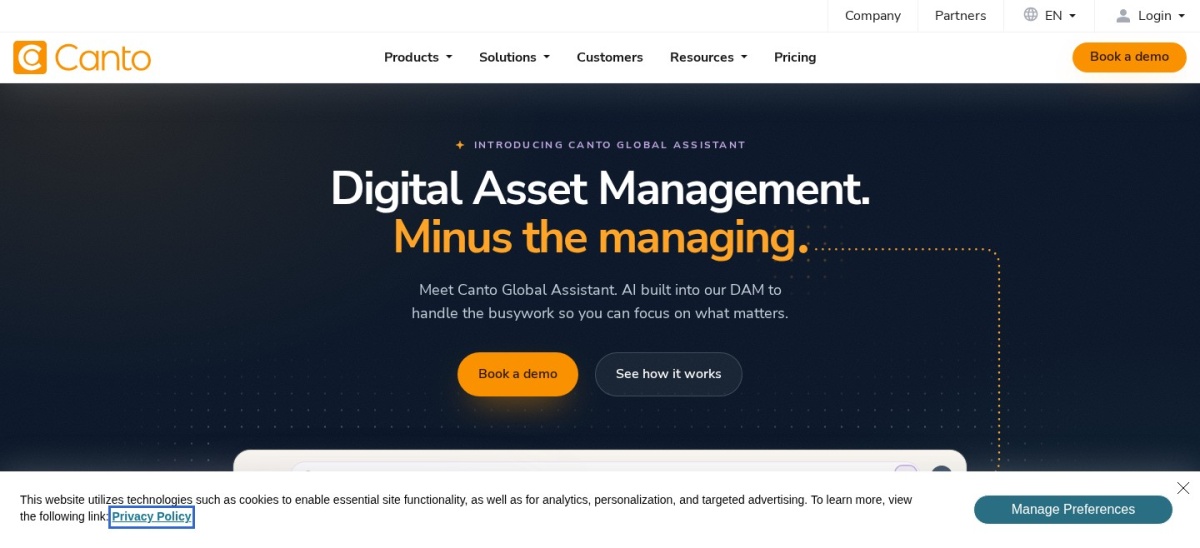
Canto is a digital asset management platform built for teams that want an organised asset library without a long implementation. Its Retail Suite adds product content tools with Shopify and Amazon connections, so product stories stay consistent from the library to the storefront.
The trade off is price transparency. Canto publishes no dollar prices and customises every plan by team size and storage, so budgeting needs a sales conversation. It suits mid-size ecommerce brands that want the easiest DAM to adopt.
Acquia DAM (Widen) is a digital asset management platform built around deep metadata and taxonomy controls. Retail and consumer-goods teams use it to organise large product image libraries, with brand portals, bulk metadata editing and usage tracking.
The trade off is implementation time. G2 reviewers report an average implementation of about four months, and the interface can feel clunky for casual users. It suits ecommerce teams with a dedicated DAM admin and a large catalogue.
Frontify is a brand management platform that puts living brand guidelines, a digital asset library and locked templates in one place. A logo rule can link straight to the approved file, so regional teams and agencies use the right product imagery without asking.
The trade off is billing. Frontify charges by monthly active user and publishes no fixed price, so costs rise as more people adopt it and budgeting needs a sales call. It suits marketing-led ecommerce brands where inconsistent branding costs real money.
What we like
Strongest guidelines hub in this list
Locked templates for regional teams
Multi-brand support
Watch out for
No published price; custom quote only
Billed by active users, so costs rise with adoption
MediaValet is a cloud digital asset management platform built around a central, searchable library with watermarking and controlled sharing. Teams can share product imagery with retailers and agencies through branded portals without handing over the whole library.
The trade off is setup effort. Reviewers note that structuring the library takes real work up front, and implementation averages about three months on G2. It suits ecommerce teams that share assets with many outside partners.
Filecamp is a cloud digital asset management platform for organising, searching and sharing business files. Its $29 monthly Basic plan includes 20 GB of storage, unlimited users, free bandwidth, custom branding, metadata search and access controls.
The trade off is depth. Advanced organisation and collaboration features need the $59 Advanced or $89 Professional plans, and there is no free plan. It suits small ecommerce brands that need a shared asset library without enterprise cost.
Air is a digital asset management platform for creative teams that remembers the context around each asset, not just the file. Its AI tools resize and edit product shots in batches, and CDN links serve the current approved version wherever it is embedded.
The trade off is the price jump. The free plan covers 3 users and 10 GB, the Starter plan costs $100 a month billed annually, and Business features many growing teams want start at $900 a month. It suits ecommerce creative teams shipping high-volume campaigns.
Check the storefront connection before the feature list. Canto's Retail Suite links Shopify and Amazon, Cloudinary delivers images through a CDN, and Brandfolder tracks which assets partners download and use.
Ask whether the integration is native or an add-on. Native connections keep product data and assets in sync, while add-ons can add cost and a second login.
For a small store, a free plan plus a CDN link may be enough. Larger brands should confirm the DAM handles product variants, regional imagery and rights expiry before signing.
How we chose
We started from the DAM platforms most often recommended for ecommerce and retail teams, then kept the nine with real storefront, marketplace or partner-distribution features and a public review base.
Prices come from each vendor's pricing page, checked on 30 November 2026. Ratings and review counts come from G2 and Capterra on the same day. Where a vendor publishes no price, the list shows Custom.
We left out DAM tools without an ecommerce angle or a usable review base. No vendor paid for a place, and we do not claim hands-on testing for this list.
How to choose digital asset management software for ecommerce brands
Start with where your products sell, then match the DAM to that channel.
List where assets need to go. Storefront, Amazon, social and retail partners each need different formats and permissions. Pick the tool that serves those channels directly.
Check the ecommerce integrations. Look for Shopify, Amazon or PIM connections and CDN delivery before comparing storage or AI features.
Get the full quote in writing. Six tools here sell by quote only. Ask what storage, seats, onboarding and overages cost before you sign.
Try the free or trial plan first. Cloudinary and Air have free plans and most others offer trials. Load real product shots and test search before committing.
FAQ
What is the best digital asset management software for ecommerce brands?
Brandfolder is the best pick for most ecommerce brands. It combines asset analytics with brand portals that give retailers and agencies self-serve access to approved files, and it holds 4.7 out of 5 on Capterra from 454 reviews.
How much does DAM software for ecommerce cost?
Published prices run from free on Cloudinary and Air to $29 a month for Filecamp and $89 a month for Cloudinary Plus. The other six tools sell by custom quote, so expect a sales conversation and a contract priced by users and storage.
Is there a free DAM tool for ecommerce brands?
Yes. Cloudinary has a free plan with 25 monthly credits and 3 users, and Air has a free plan for up to 3 users and 10 GB. Both cover a small store's basic library, with paid plans adding storage, users and automation.
Which DAM tool is best for Shopify stores?
Canto is the strongest Shopify pick here. Its Retail Suite connects Shopify and Amazon, unifies product data with brand assets, and keeps product stories consistent from the library to the storefront.
Brandfolder vs Bynder: which is better for ecommerce?
Brandfolder wins for distribution and analytics, with the strongest usage insights for partner sharing. Bynder wins for governance, with guidelines, templates and approvals for large multi-market catalogs. Pick Brandfolder to spread assets widely and Bynder to control them tightly.
Does Cloudinary work as a DAM for ecommerce?
Yes, for delivery-led teams. Cloudinary pairs a DAM library with image and video transformation and CDN delivery, which suits stores that need fast product imagery everywhere. Creative review and approvals are thinner than in Brandfolder or Bynder.
SaaS SEO and WordPress specialist with about 8 years of experience. Rakib compares WordPress plugins, themes, hosting and software using public pricing, documentation and user reviews. See how we rank.