Livestorm is the best of the Demio alternatives for most teams, with a free plan covering 30 attendee credits a year and Pro from $100 a month. GoTo Webinar suits recurring training at $59 a month for 500 participants, and WebinarJam is the cheapest sales-led option at $39 a month.
How we make this list: we compare pricing pages, product documentation and public user reviews, then re-check every price before each update. No product paid for a place. Disclosure.
Livestorm is the only tool here with a free plan, covering 30 attendee credits a year; Pro starts at $100 a month.
Demio Starter costs $45 a month billed yearly for 50 attendees, so GoTo Webinar's $59 Reach plan buys ten times the room.
WebinarJam and ClickMeeting are the cheapest paid options at $39 a month billed yearly, but WebinarJam holds the lowest G2 rating here at 3.6.
Zoom Webinars scales furthest, to 100,000 attendees, but it is an add-on that needs a paid Zoom Workplace plan underneath.
eWebinar and EverWebinar run automated webinars only, so pair them with a live tool if you still present live.
How do you choose the best Demio alternative?
Room size sets the price more than features do. Demio Starter covers 50 attendees at $45 a month billed yearly, while GoTo Webinar covers 500 at $59, so compare the plan you would actually buy, not the headline price.
Browser-based rooms suit audiences on locked-down work computers. Livestorm, EasyWebinar, Crowdcast and ClickMeeting run in the browser, while Zoom and GoTo Webinar ask attendees to install an app or join from a browser.
Automation decides whether a tool replaces Demio fully. Demio's automated webinars start on Growth at $117 a month billed yearly, so a live-only switch such as Crowdcast leaves that job undone unless you add a second tool.
Registration pages and reminders matter as much as the room. Our guide on creating a landing page in WordPress shows how the page around the webinar shapes sign-ups, and most tools here include their own registration pages.
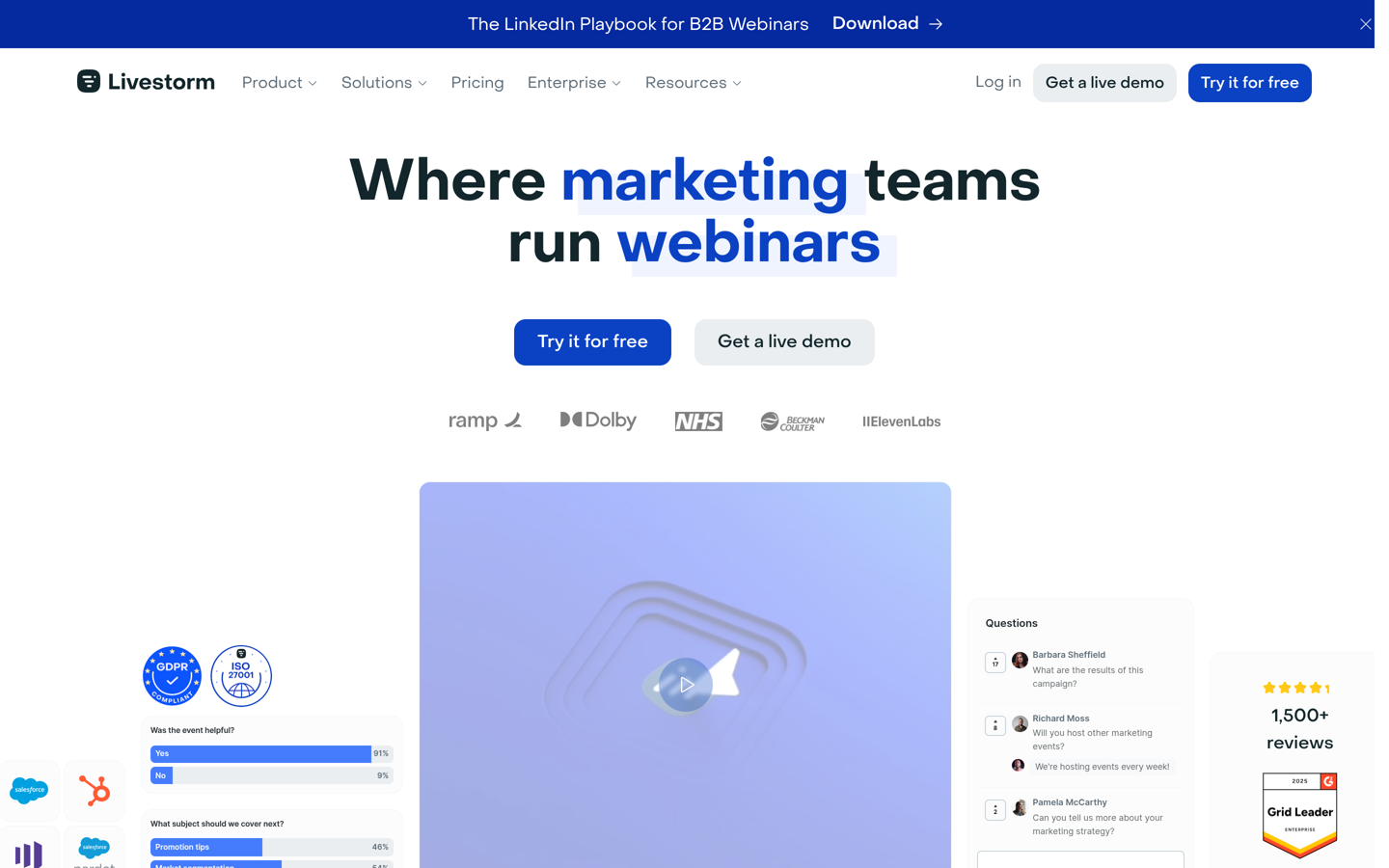
Livestorm is a browser-based webinar platform built around lead generation, with registration pages, attendance tracking and CRM sync to HubSpot and Salesforce. The free plan covers 30 attendee credits a year, and paid plans use credits that only burn when someone joins.
The trade off is the credit model. Credits come in annual packs starting at $1,200 a year for 400 credits, and a busy month can burn through a pack fast. It suits B2B teams that treat webinars as a lead source and want to pay only for people who show up.
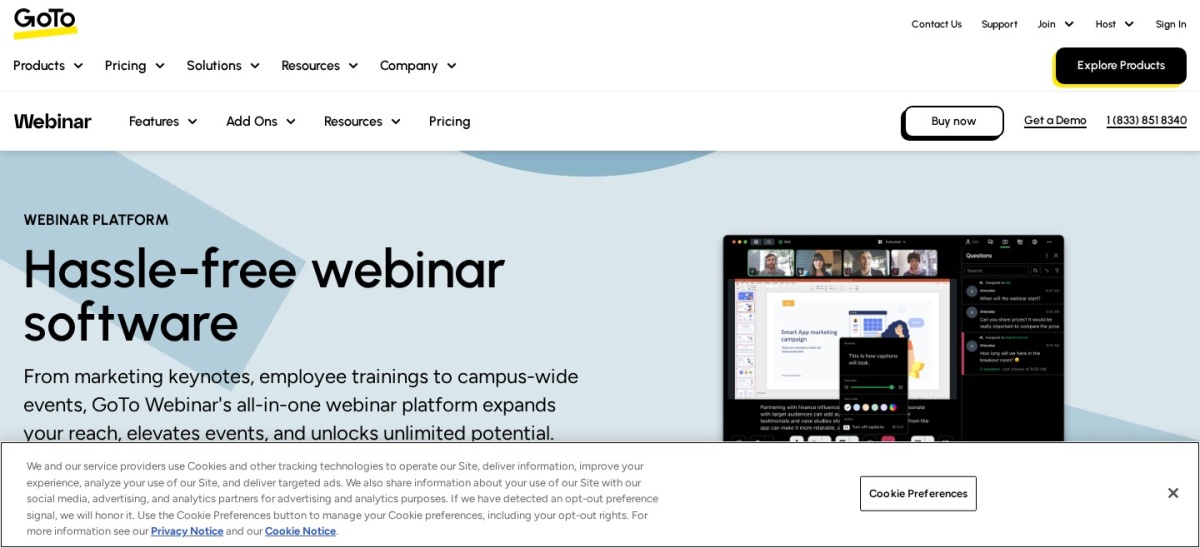
GoTo Webinar is the longest-running tool here, built for recurring corporate webinars and training with polls, Q and A, handouts and detailed attendance reports. Reach covers one organizer seat and up to 500 participants, with automated reminders and pre-recorded webinars.
The trade off is age. The interface feels dated next to Demio and Livestorm, and some reviewers report audio cut-outs on large calls. It suits training teams that run the same session every week and want a dependable room.
What we like
Reliable for recurring programs
Strong attendance reporting
500 participants on the entry plan
Watch out for
Interface feels dated
Custom branding needs a higher plan
Elevate adds 1,000 participants and 3 organizer seatsVisit goto.com
03
Zoom Webinars
4.5/5on G2 (412 reviews, checked Nov 2026)
Starts at$79/mo
Best for large live broadcasts
Free planNo, free trial
Attendee cap500 on entry plan
Session lengthUp to 30 hours
Paid planWebinars, $79/mo
zoom.us
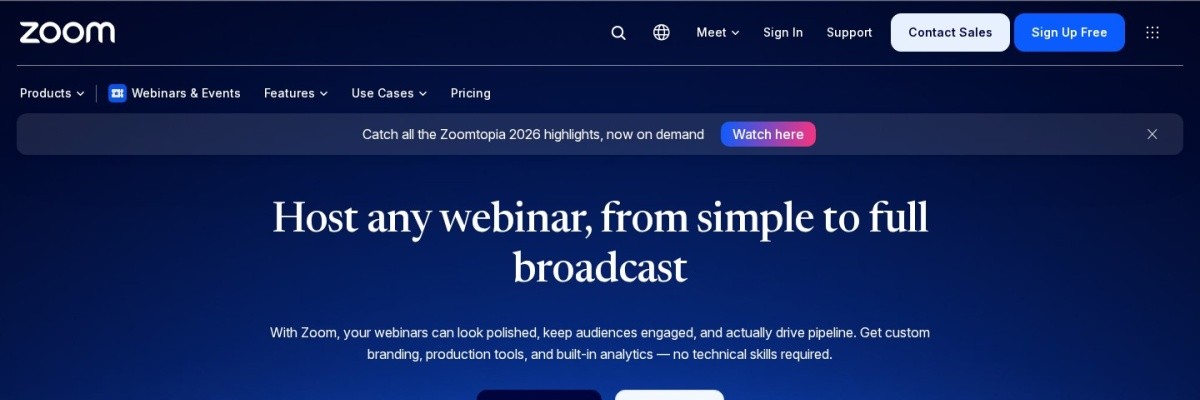
Zoom Webinars homepage, captured Nov 2026.
Zoom Webinars is the webinar add-on to Zoom Workplace, built for large live broadcasts with registration pages, Q and A, polls and breakout rooms. The entry plan covers 500 attendees with sessions up to 30 hours, and larger rooms scale to 100,000 attendees on enterprise plans.
The trade off is that it is an add-on, not a standalone product. You need a paid Zoom Workplace plan underneath, and the webinar price rises with each attendee tier. It suits teams already on Zoom that run large company broadcasts or customer events.
What we like
Largest rooms in this list, up to 100,000 attendees
Attendees already know the join flow
Strong registration, polls and Q and A tools
Watch out for
Needs a paid Zoom Workplace plan underneath
Branding options are limited on lower tiers
Webinars Plus adds simulive and branding toolsVisit zoom.us
04
EasyWebinar
4.5/5on G2 (117 reviews, checked Nov 2026)
Starts at$44/mo
Best for live plus automated funnels
Free planNo, 7-day trial
Attendee cap50 per session, Launch
Automated webinarsGrowth plan
Paid planLaunch, $44/mo
easywebinar.com
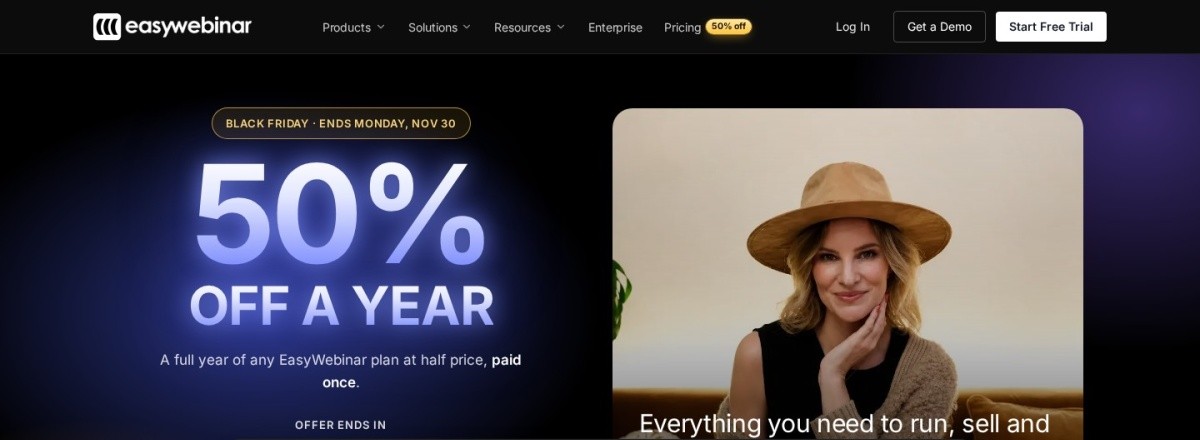
EasyWebinar homepage, captured Nov 2026.
EasyWebinar is a webinar platform for course creators and marketing teams that want live, automated and evergreen sessions on one subscription, with a built-in CRM and checkout inside the room. Launch covers 50 attendees per session with the AI webinar builder and browser-based joining.
The trade off is price for automation. Automated webinars start on Growth at $116 a month billed yearly, and extra attendees past your monthly pool cost $0.78 each. It suits creators who sell from webinars and want the funnel, CRM and checkout in one place.
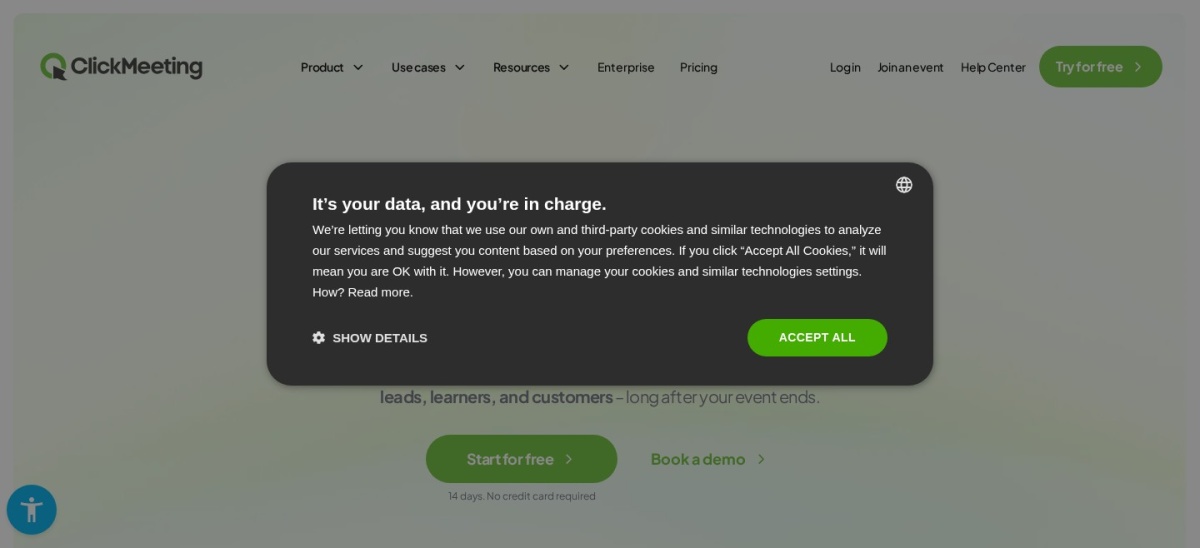
ClickMeeting is a browser-based webinar tool for training, classes and paid events, with tests, quizzes, a whiteboard and ticket sales built in. Essential covers 2 presenters, 5 breakout rooms and email automation, with paid webinars that take tickets, discount codes and donations.
The trade off is automation. Automated and on-demand webinars need Standard at $79 a month billed yearly, so the entry plan is live-only. It suits educators and small teams that run paid workshops and want ticketing without a second tool.
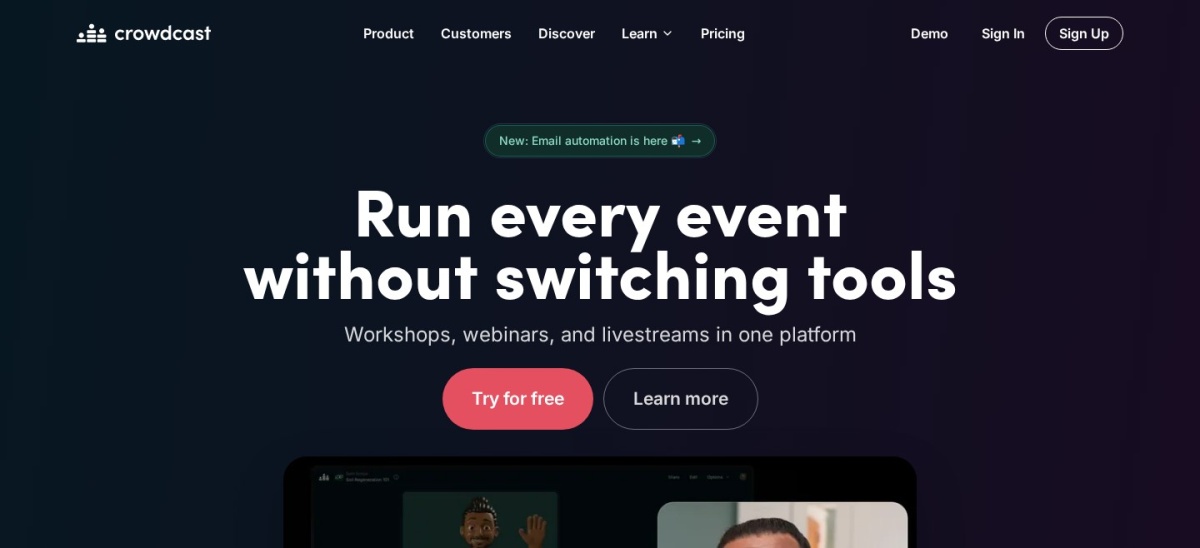
Crowdcast is a live event platform built for creators, coaches and communities, with Q and A, polls, chat and paid ticketed events. The Lite plan covers 100 live attendees with unlimited events and recordings, and extra attendees past the limit cost $0.15 each per session.
The trade off is scale. It tops out below the enterprise tools here, and marketing automation is lighter than Demio or Livestorm. It suits creators running paid workshops and community calls who want ticketing built in.
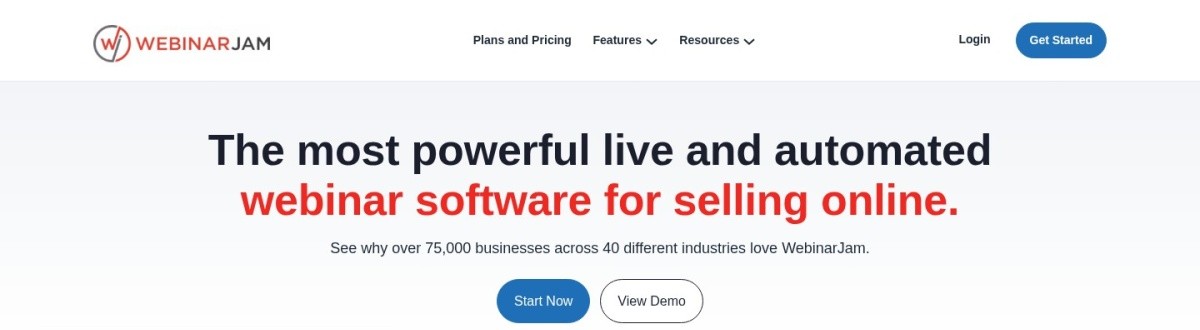
WebinarJam is a sales-led webinar tool from Genesis Digital, built for live selling with one-click purchase buttons, live chat, polls and streaming to YouTube and Facebook. Starter covers 100 attendees and one host with sessions up to one hour, plus automated webinars on every plan.
The trade off is polish. It holds the lowest G2 rating here at 3.6, and reviewers note an aging interface and thin analytics. It suits creators and small businesses running sales webinars on a budget.
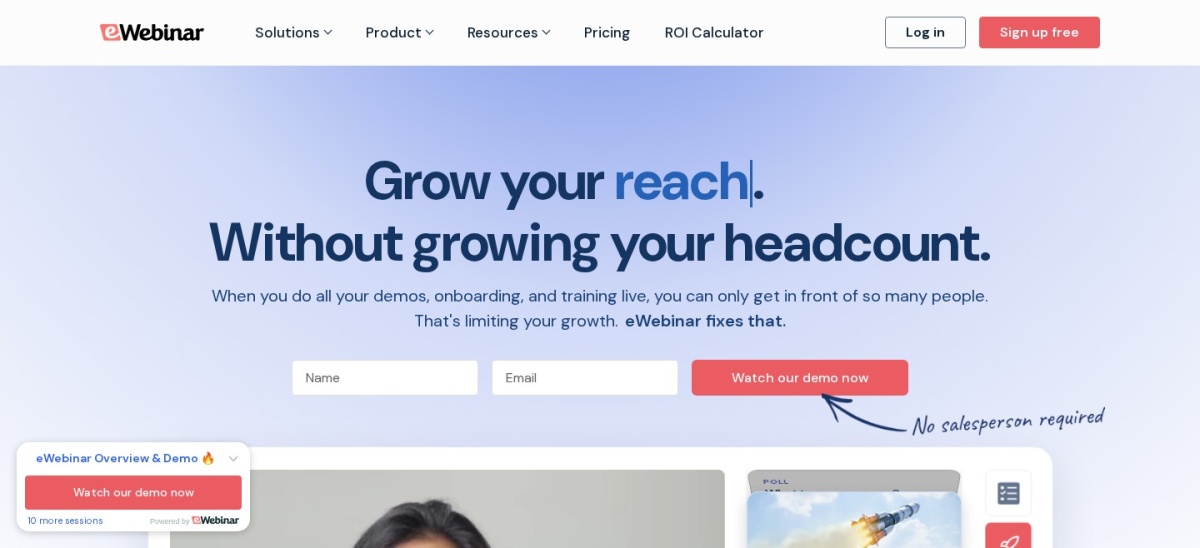
eWebinar is an automated webinar platform that runs recorded sessions with no live host needed. You record once, then the session runs on a schedule or on demand, with real two-way chat answered by your team and polls, Q and A and calls to action.
The trade off is that it never does live events. Level 1 covers one active eWebinar and 1,000 registrants a month, and the annual bill is $1,010. It suits sales and onboarding teams replacing repeat live demos.
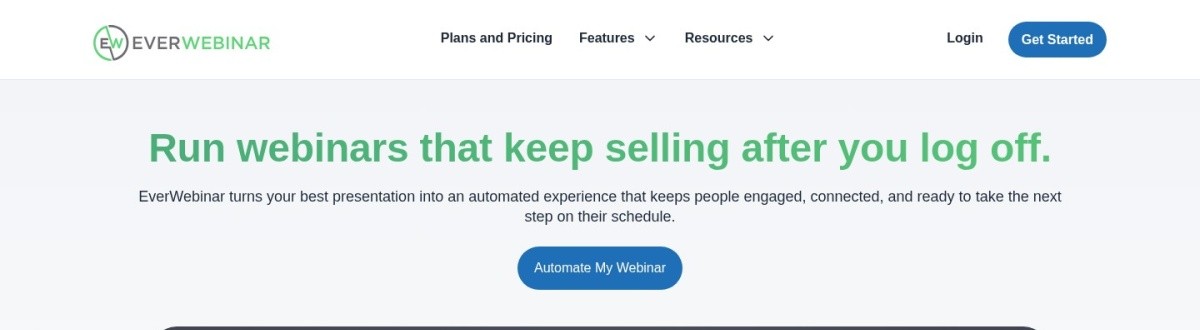
EverWebinar is the automated companion to WebinarJam, turning a recorded presentation into a webinar that runs around the clock. It handles registration, just-in-time scheduling, reminders, timed offers and follow-up, with the same features on every billing term.
The trade off is that it never hosts live. You need a recording first, and the monthly price is $199 unless you commit to a year at $99 a month. It suits coaches and course sellers whose recorded webinar already converts.
Live, automated and simulive: what is the difference
A live webinar runs in real time with a host presenting, taking questions and making offers as the session happens.
An automated webinar plays a recording on a schedule or on demand, with registration and reminders like a live event. eWebinar and EverWebinar work this way, and WebinarJam includes automated sessions on every plan.
Simulive sits between the two: a recording plays while a host answers chat live. Demio offers this on Growth, and EasyWebinar includes it from its Growth plan.
How we chose
We started from the webinar platforms most often named as Demio replacements in 2026 comparisons, then kept nine with published prices and public G2 ratings.
Prices come from each vendor's pricing page, checked on 29 November 2026, and show the regular price, not a sale price. Ratings and review counts come from G2 on the same day. Where a vendor shows a sale, the list shows the regular price.
We left out quote-only platforms such as BigMarker and ON24, which publish no fixed price, and WebinarGeek, which prices in euros. No vendor paid for a place, and we do not claim to have used these tools ourselves.
How to choose a Demio alternative
Match the tool to the room size and format you run most weeks, not to the longest feature list.
Count your biggest room first. Demio Starter covers 50 attendees, so if your sessions run larger, start with tools that cover 500 on the entry plan, such as GoTo Webinar or Zoom Webinars.
Decide if you need automated webinars. If replays sell while you sleep, shortlist EasyWebinar, eWebinar or EverWebinar. If you only present live, a simpler tool such as Crowdcast or ClickMeeting costs less.
Check what sits underneath the price. Zoom Webinars needs a paid Zoom Workplace plan, Livestorm needs an annual credit pack, and Crowdcast adds a 5% fee on ticket sales. Our guide on how much email marketing costs helps budget the follow-up stack too.
Try the room before you switch. Run one real session on a trial with your usual audience size, and check registration, reminders and the replay before you move your list.
FAQ
What is the best alternative to Demio in 2026?
Livestorm is the best Demio alternative for most teams in 2026. Its free plan covers 30 attendee credits a year, Pro starts at $100 a month, and it handles live, automated and on-demand sessions with CRM sync to HubSpot and Salesforce.
How much does a Demio alternative cost?
Entry prices run from $34 a month billed yearly for Crowdcast to $100 a month for Livestorm Pro. Demio itself starts at $45 a month billed yearly for 50 attendees, so most alternatives cost about the same or less for a bigger room.
Is there a free alternative to Demio?
Livestorm is the only free option in this list, with 30 attendee credits a year and no card required. The other tools offer free trials of 7 to 14 days, but no free plan.
Which Demio alternative is best for beginners or small teams?
ClickMeeting is the easiest fit for small teams, with browser-based rooms from $39 a month billed yearly and paid webinars built in. Crowdcast is simpler still for creators, with ticketed events from $34 a month billed yearly.
Livestorm or GoTo Webinar: which is better?
Livestorm wins for lead generation, with a free plan, credit billing and CRM sync, while GoTo Webinar wins for recurring training, with 500 participants on Reach at $59 a month billed yearly. Pick Livestorm for marketing and GoTo Webinar for regular training sessions.
Which Demio alternative is best for automated webinars?
eWebinar is the best automated-only option, running recorded sessions on a schedule with live chat from $99 a month. EverWebinar suits sales funnels at the same price, while EasyWebinar covers live and automated webinars on one plan from $44 a month.
SaaS SEO and WordPress specialist with about 8 years of experience. Rakib compares WordPress plugins, themes, hosting and software using public pricing, documentation and user reviews. See how we rank.