Snowflake is the best Databricks alternative for most teams, with a 4.6/5 G2 rating from 783 reviews and usage pricing from $2 per credit. Pick Google BigQuery for serverless queries at $6.25 per TiB scanned, or Microsoft Fabric if your team already lives in Power BI.
How we make this list: we compare pricing pages, product documentation and public user reviews, then re-check every price before each update. No product paid for a place. Disclosure.
Snowflake leads at 4.6/5 from 783 G2 reviews, with credits from $2 each and separate storage and compute.
BigQuery is the cheapest way to start: 1 TiB of queries free each month, then $6.25 per TiB scanned.
Fabric is the only pick with Power BI built in, but its smallest capacity costs $262.80 a month whether you use it or not.
Dremio, Starburst and SingleStore all offer a free tier; ClickHouse Cloud scales to zero when idle.
Every platform here bills by usage, so price the same workload on each instead of comparing headline rates.
How do you choose the best Databricks alternative?
Usage billing is the real difference between these tools. Databricks charges per DBU, Snowflake per credit, BigQuery per TiB scanned and Fabric per capacity unit, so a flat monthly comparison hides the true cost.
Start from the workload, not the brand. A team running nightly batch jobs needs different billing than a team serving dashboards all day, and the cheapest tool flips when the workload changes.
Free tiers matter more than headline rates for small teams. BigQuery gives 1 TiB of queries a month free, Dremio and Starburst Galaxy keep a permanent free tier, and SingleStore offers a free Shared tier.
Governance decides the shortlist for larger teams. Unity Catalog is the Databricks feature teams miss most, so check catalog, access control and lineage on each alternative before committing.
Snowflake is a cloud data warehouse that separates storage from compute, so teams scale each side on its own. It runs standard SQL, shares data across accounts without copying it, and includes a $400 trial credit for new accounts.
The trade off is cost control. Credits start at $2 each on the Standard edition, and an idle warehouse that never suspends keeps burning credits. It suits teams that want a managed warehouse with strong SQL and sharing, and can set auto-suspend limits.
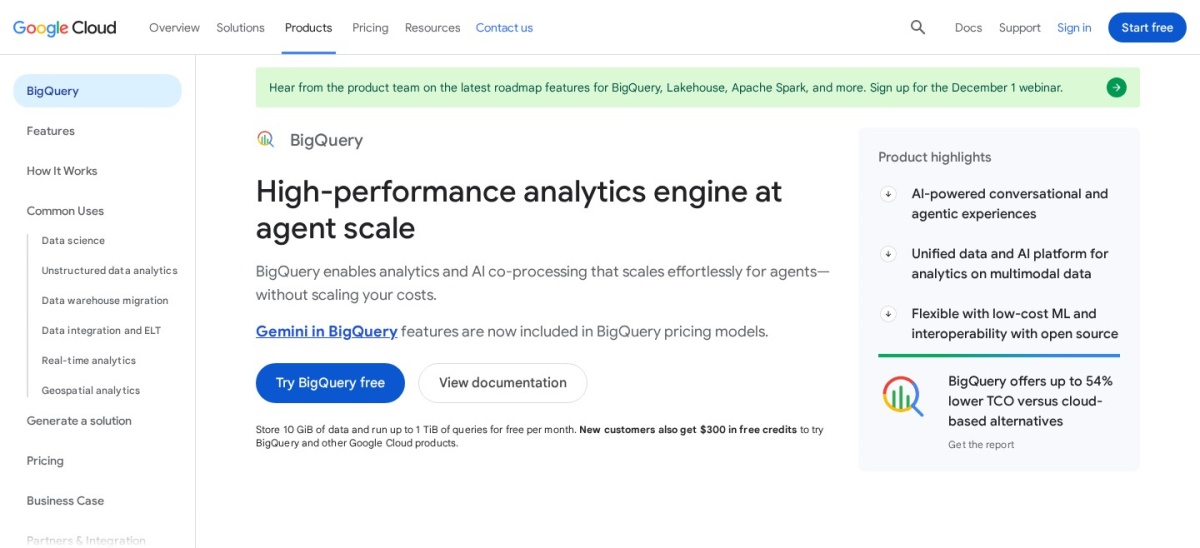
Google BigQuery is a serverless data warehouse with no servers to size or clusters to manage. The first 1 TiB of queries and 10 GB of storage are free each month, and on-demand queries cost $6.25 per TiB scanned.
The trade off is scan-based billing. A badly written query that scans whole tables costs the same as a careful one that scans little, so costs rise with sloppy SQL. It suits Google Cloud teams with light or irregular query volume.
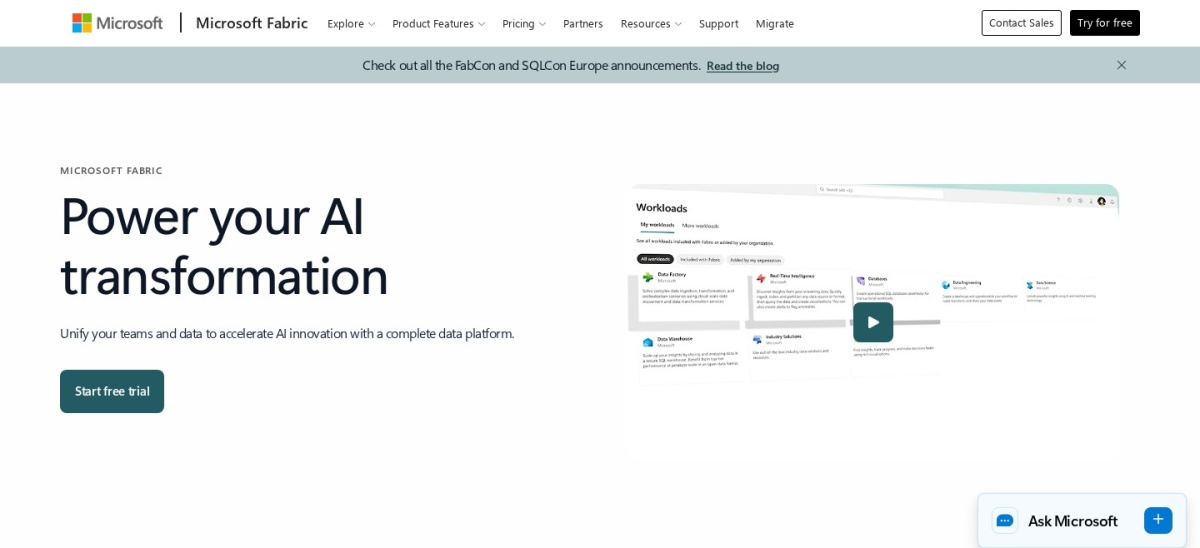
Microsoft Fabric is a unified analytics platform that puts lakehouse storage in OneLake, pipelines, notebooks and Power BI on one capacity. The smallest F2 capacity costs $262.80 a month pay-as-you-go, and a 60-day trial is available.
The trade off is the capacity model. F2 bills whether you use it or not, and report viewers below F64 still need Power BI Pro licences. It suits Microsoft shops that already pay for Power BI and Azure.
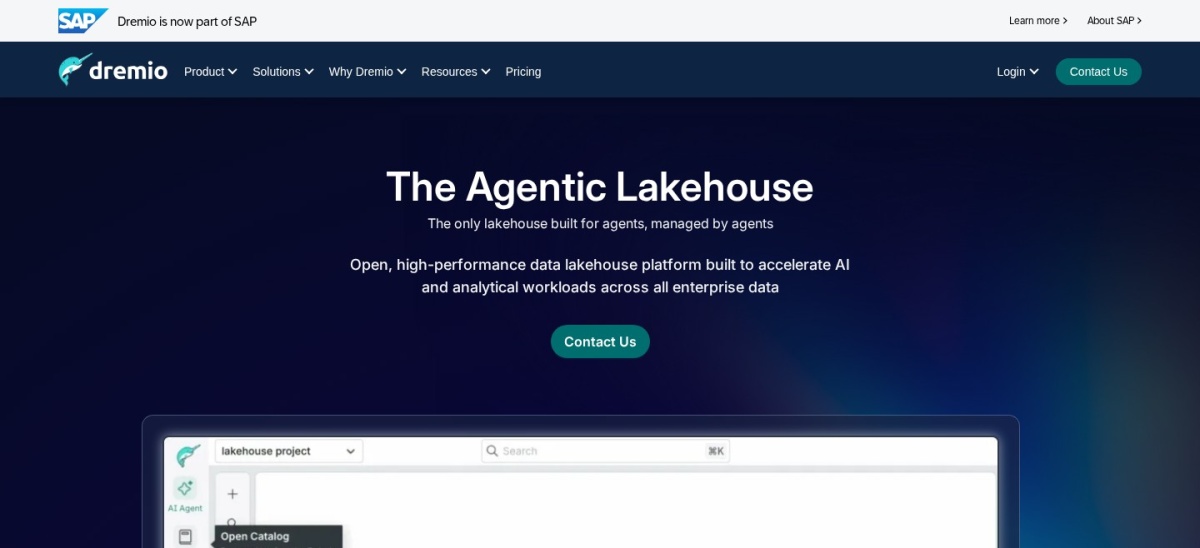
Dremio is an open data lakehouse platform built on Apache Iceberg and Apache Arrow that runs SQL directly on object storage. Dremio Cloud includes a permanent free tier, while paid engines bill at $0.20 per Dremio Compute Unit, from $6.40 an hour for an XS engine.
The trade off is that the free tier is small, and engine hours add up fast on busy dashboards. Advanced governance and support sit in Enterprise plans priced by sales. It suits teams standardising on Iceberg who want fast BI queries without moving data.
What we like
Permanent free tier on Dremio Cloud
Queries run directly on object storage
Fast BI queries on Iceberg tables
Open formats avoid lock-in
Watch out for
Engine hours add up on busy dashboards
Enterprise pricing needs a sales quote
Paid engines add scalable DCU compute and accelerationVisit dremio.com
05
Starburst
4.3/5on G2 (132 reviews, checked Nov 2026)
Paid from$0.50/credit
Best for federated SQL across silos
Billing unit$0.50 per credit, Pro
Free tierUp to 3 Galaxy clusters
EngineEnterprise Trino
Trial credit$500 for 30 days
starburst.io
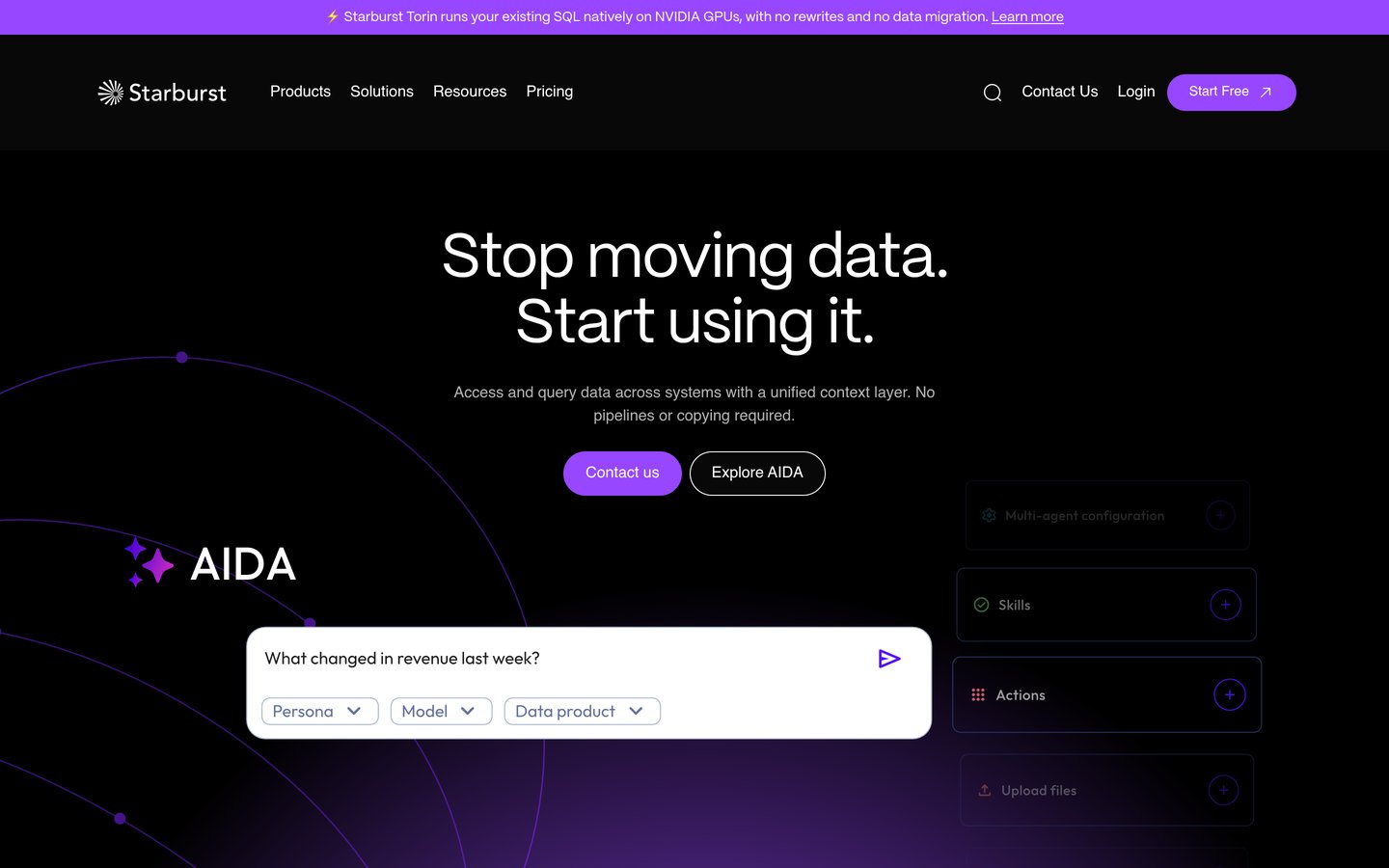
Starburst homepage, captured Nov 2026.
Starburst is an enterprise distribution of open-source Trino that runs federated ANSI SQL across data lakes, warehouses and operational databases in place. Its managed Galaxy service includes a free tier with up to three clusters, while paid Pro plans start at $0.50 per credit.
The trade off is price at scale. Enterprise features raise the rate to $0.75 per credit, and reviewers warn that costs climb fast as query volume grows. It suits teams that need one SQL layer over many sources without copying data first.
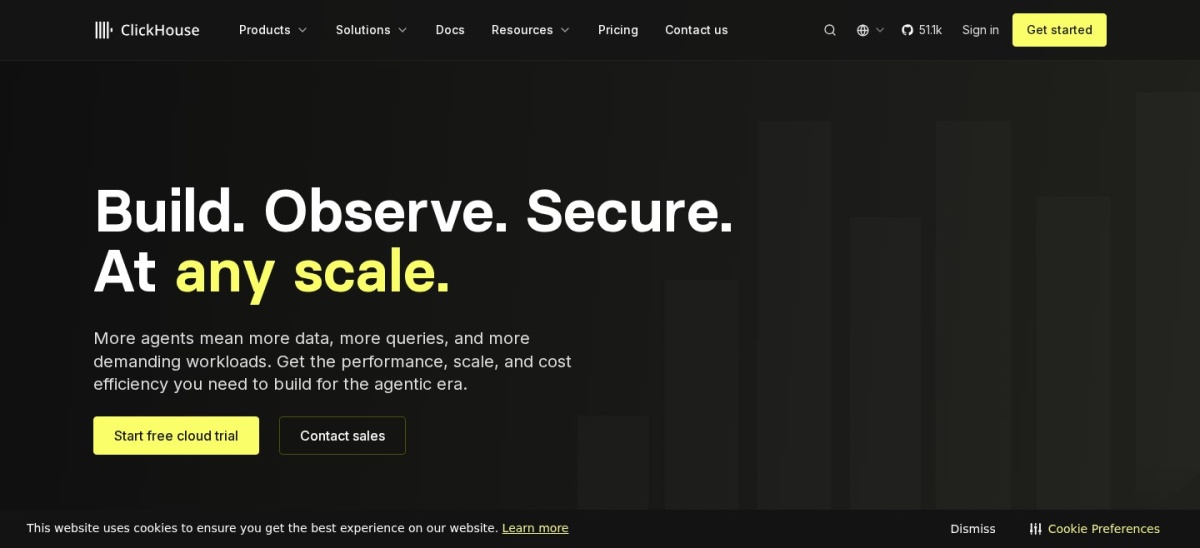
ClickHouse Cloud is the managed version of the open-source columnar database, built for sub-second dashboards over billions of rows. Basic compute costs $0.2181 per unit-hour in US East, storage costs $25.30 per TB a month, and services scale to zero when idle.
The trade off is scope. It is an analytical engine first, not a full lakehouse, so governance and catalog features trail the bigger platforms. It suits engineering teams running real-time dashboards and event analytics on a tight budget.
Amazon Redshift is the AWS data warehouse, available as provisioned clusters or as a serverless service that scales with demand. Serverless costs $0.375 per RPU-hour, with a 4 RPU minimum working out to $1.50 an hour, and new serverless users get a $300 credit for 90 days.
The trade off is the AWS tie-in. Moving data or skills to another cloud takes work, and the default 128 RPU base can cost $48 an hour while busy if left unchanged. It suits teams already running their data on AWS.
SingleStore Helios is a unified database for transactional SQL and real-time analytics in one system. The smallest S-00 workspace costs $0.99 an hour before storage, and a free Shared tier lets small teams test workloads first.
The trade off is complexity. Distributed setup has a learning curve, and the 99.99% SLA tier needs Multi-AZ, which raises compute costs. It suits teams that need fast analytics on live operational data without a separate warehouse.
Apache Spark is the free open-source engine Databricks is built on, for large-scale batch and streaming data processing in Python, Scala, Java and SQL. There is no licence fee, and it runs on your own servers or on any major cloud.
The trade off is operations. You manage clusters, tuning and upgrades yourself, or pay a cloud vendor to run Spark for you. It suits engineering teams with Spark skills who want full control and no per-unit platform bill.
No two platforms bill the same unit. Snowflake sells credits, BigQuery sells TiB scanned, Dremio sells DCUs, Starburst sells credits and Fabric sells capacity units.
Pick one workload and price it everywhere. Take a week of real queries, note the data scanned and the compute hours, then run those numbers through each vendor calculator.
Watch the idle cost. Fabric capacity bills while idle, Snowflake warehouses bill until they suspend, and ClickHouse Cloud scales to zero, so the same quiet weekend costs very different amounts.
How we chose
We started from the platforms buyers compare with Databricks most often: lakehouse platforms, cloud warehouses and the open-source engine Databricks is built on.
Prices come from each vendor pricing page and G2 listings, checked on 29 November 2026. Ratings and review counts come from G2 on the same day. Where a vendor shows a sale, the list shows the regular price.
We left out tools with no public rating and tools sold only by custom quote. No vendor paid for a place, and we do not claim to have used these tools ourselves.
How to choose a Databricks alternative
Start with the workload, then price it the same way on every platform.
Name the workload first. Batch jobs, streaming, dashboards and AI work bill differently. Write down what runs daily before you compare prices.
Price one real week everywhere. Take actual queries and data volumes, then run them through each vendor calculator instead of comparing headline unit rates.
Check the free tier and the idle cost. A generous free tier covers small teams, but capacity that bills while idle can cost more than usage billing at low volume.
Test governance before you migrate. Check catalog, access control and lineage on your shortlist, because those features are the hardest to replace later.
FAQ
What is the best free alternative to Databricks?
Apache Spark is the best free alternative to Databricks, because it is the same open-source engine with no licence fee. It needs engineers to run and tune it, so teams without Spark skills should start with BigQuery, which gives 1 TiB of queries free each month.
How much do Databricks alternatives cost?
Most bill by usage, not by seat. Snowflake credits start at $2 each, BigQuery queries cost $6.25 per TiB scanned, Dremio charges $0.20 per DCU and Fabric F2 capacity costs $262.80 a month. Total cost depends on how much you query, so price one real workload on each.
Which Databricks alternative is best for small teams?
Google BigQuery is the best pick for small teams, because there are no servers to manage and the first 1 TiB of queries each month is free. Dremio Cloud and Starburst Galaxy also offer free tiers, while Fabric is the most expensive way to start.
Is Snowflake or BigQuery the better Databricks alternative?
Snowflake is better for teams that want a full managed warehouse with data sharing and separate storage and compute, rated 4.6/5 from 783 G2 reviews. BigQuery is better for Google Cloud teams with irregular queries, rated 4.5/5 from 1,138 reviews, because serverless billing charges only for data scanned.
Is Microsoft Fabric a good Databricks alternative?
Microsoft Fabric is a good Databricks alternative for teams already using Power BI and Azure, because OneLake, notebooks and reporting share one capacity. The smallest F2 capacity costs $262.80 a month whether you use it or not, so it suits steady workloads better than occasional queries.
Can I migrate from Databricks to an alternative easily?
Migration is rarely easy, because notebooks, jobs and Unity Catalog governance do not move directly to another platform. Open formats such as Delta Lake and Apache Iceberg help, and Dremio and Starburst both query those formats in place, which lowers the migration cost.
SaaS SEO and WordPress specialist with about 8 years of experience. Rakib compares WordPress plugins, themes, hosting and software using public pricing, documentation and user reviews. See how we rank.