Qodo is the best of the CodeRabbit alternatives for most teams, with a 4.5 out of 5 G2 rating from 122 reviews and credit packs from $30 a month with no per-seat fee. Pick Greptile for full-codebase context at $1 per review credit, or Sourcery for the cheapest dedicated reviewer at $12 a developer a month.
How we make this list: we compare pricing pages, product documentation and public user reviews, then re-check every price before each update. No product paid for a place. Disclosure.
Qodo leads on review volume: 4.5/5 from 122 G2 reviews, with $30 credit packs and no per-seat fee.
Greptile charges $1 per review credit with no seat fees, so a quiet month costs almost nothing.
Sourcery is the cheapest dedicated reviewer at $12 a developer a month billed annually, rated 4.8/5 on Capterra.
Bito has the cheapest seat at $12 a month, but each seat only covers 5,000 reviewed lines a month.
Paid plans here run from $1 a credit to $34 a month; only Qodo and CodeAnt AI have no permanent free plan.
GitHub Copilot is the cheapest paid entry at $10 a user a month, with code review built into GitHub pull requests.
How do you pick the right CodeRabbit alternative?
Price is the first split. Most alternatives charge per developer seat, from $12 to $34 a month, while Qodo and Greptile charge for the reviews themselves through credits.
Review depth is the second split. Dedicated reviewers such as Qodo, Greptile and Sourcery comment on pull requests, while platforms such as Codacy, DeepSource and SonarQube Cloud add static analysis, security scanning and quality gates around the same review.
Free tiers are generous but narrow. Most cover public repositories or individual developers, and private repositories, security checks and team features sit on paid plans.
Check the Git host before you shortlist. GitHub Copilot works with GitHub only, while Qodo, Greptile, Bito and CodeAnt AI cover GitHub, GitLab and Bitbucket as well.
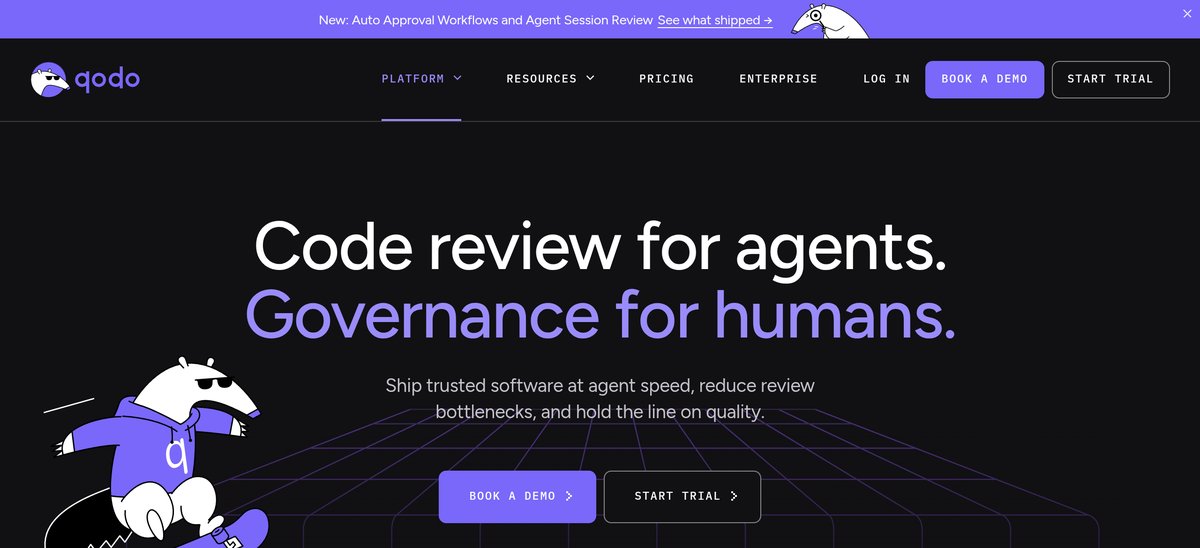
Qodo is an AI code review platform that reviews pull requests against multi-repository context, not just the diff. It also generates unit tests, learns rules from past merges, and works with GitHub, GitLab, Bitbucket and Azure DevOps.
The trade off is the meter. A $30 Pro Team pack buys 2,000 credits, about 19 reviews by Qodo's own estimate, and unused credits expire each month. It suits small teams with modest pull request volume that want no per-developer fee.
What we like
No per-user fee; credits pool across the team
Multi-repository context for reviews
Generates unit tests as well as reviews
Rules system learns from past merges
Watch out for
Credit packs make monthly spend hard to predict
Unused credits expire at the end of each month
No permanent free tier, only a 14-day trial
Pro Team packs start at $30 a month for about 19 reviewsVisit qodo.ai
02
Greptile
4/5on G2 (27 reviews, checked Nov 2026)
Pricing$1/credit
Best for full-codebase context
Pricing$1 per credit, no seats
Base review1 credit
Free planStarter, 1 developer, 50 credits/mo
Review tiersBase, Plus, Apex
greptile.com
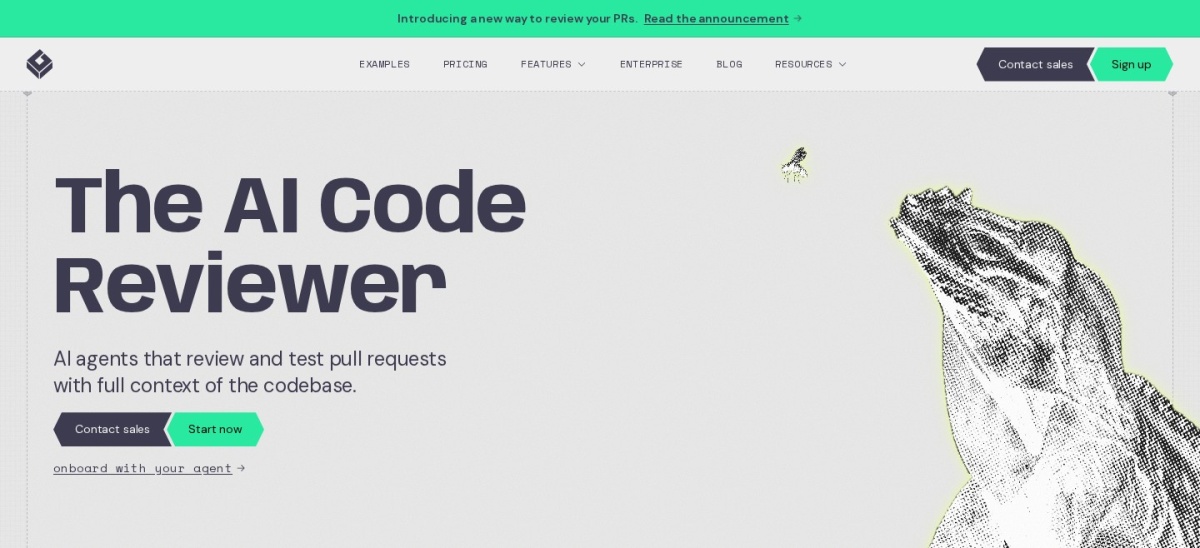
Greptile homepage, captured Nov 2026.
Greptile is an AI code reviewer that indexes your whole codebase into a graph before reviewing a pull request, so it can trace bugs across files and services. It learns from your team's reactions and supports GitHub, GitLab and Bitbucket.
The trade off is predictability. A Base review costs 1 credit, Plus costs 3 and Apex costs 10, so deep reviews on a busy month can cost far more than a flat seat price. It suits teams whose worst bugs hide in how files interact.
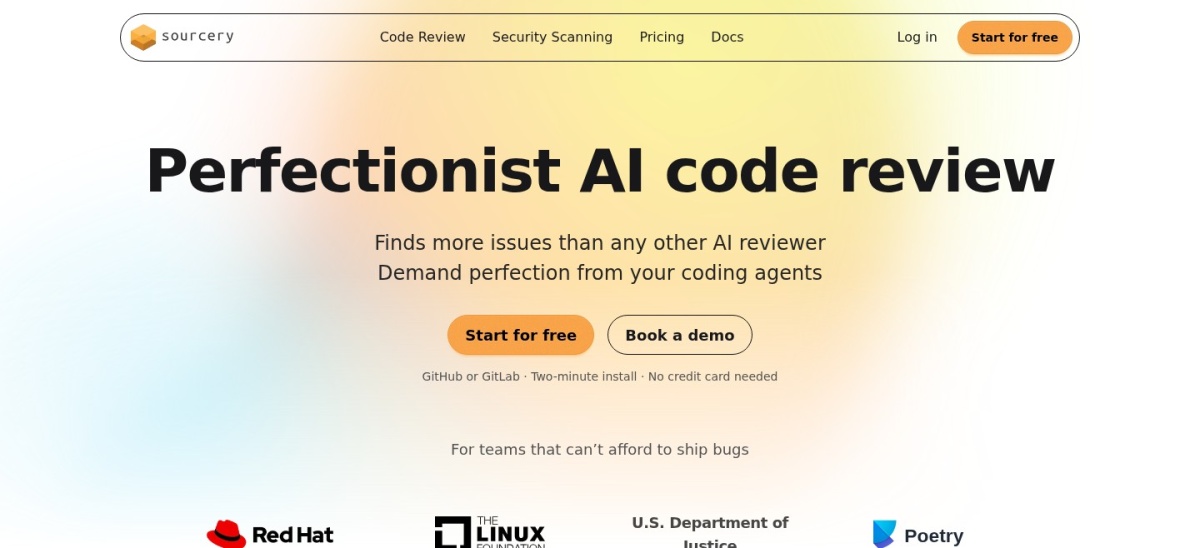
Sourcery is an AI reviewer for GitHub and GitLab that posts summaries, diagrams and line-by-line feedback on pull requests. The free Open Source plan covers public repositories, and Pro adds private repositories and deep refactors across 30+ languages.
The trade off is depth. Pro's review limits are higher than the free tier but not published as a number, and security scanning and analytics wait for the Team plan at $24. It suits budget-conscious teams that want AI review on private repos at the lowest seat price.
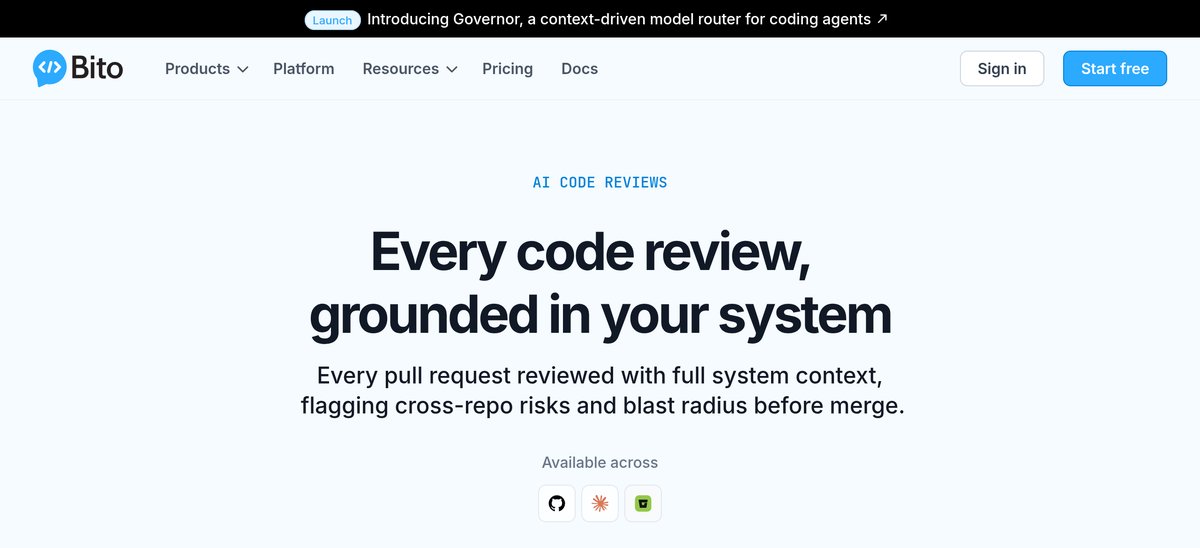
Bito is an AI code review agent that works across Git, the IDE and the command line, posting summaries and suggestions on pull requests. The free plan covers individuals, and the Team plan adds AI review with a 5,000-line monthly allowance per seat.
The trade off is the line meter. Each seat includes 5,000 reviewed lines a month, and extra lines cost more, so large pull requests raise the bill. It suits teams on Bitbucket or mixed Git hosts that want a low seat price and IDE review too.
What we like
Lowest seat price for team review
Works in the IDE as well as pull requests
Highest G2 rating in this list at 4.7
Free plan for individuals
Watch out for
Line allowance caps each seat
Custom guidelines need Professional at $20
Only 16 G2 reviews
Team costs $12 a seat a month billed annuallyVisit bito.ai
05
Codacy
4.6/5on G2 (31 reviews, checked Nov 2026)
Paid from$18/mo
Best all-in-one quality and security
Languages49
AI ReviewerIncluded in Team
Free planDeveloper tier
Cheapest paid planTeam, $18/mo
codacy.com
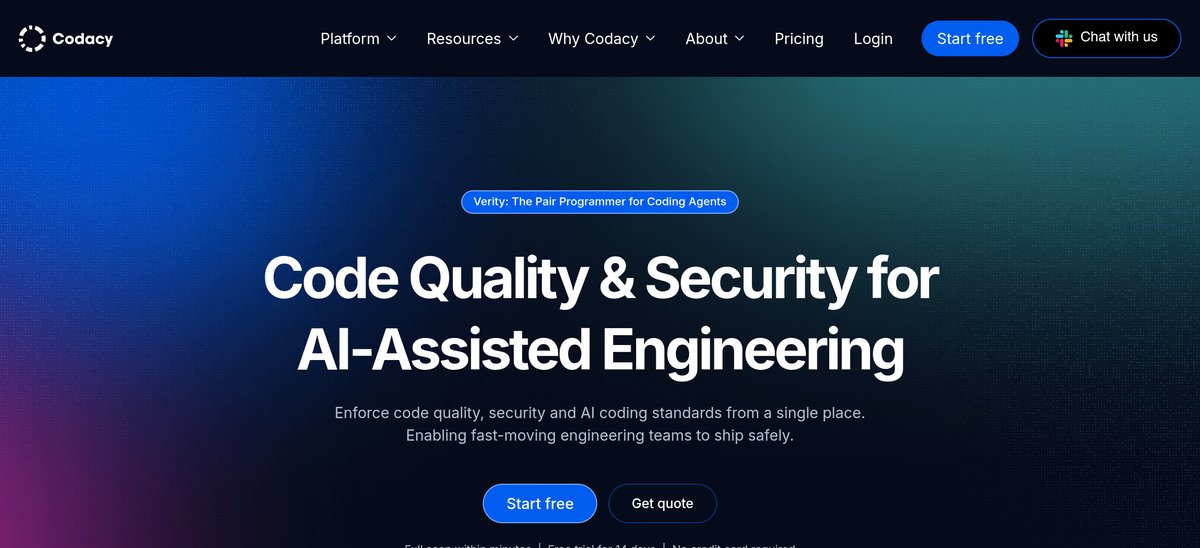
Codacy homepage, captured Nov 2026.
Codacy is a code quality and security platform that combines static analysis with an AI reviewer on every pull request. The free Developer tier covers the Guardrails IDE extension, while the Team plan adds the full cloud platform with SAST, SCA, secrets detection and quality gates.
The trade off is that the free tier is thin. Real pull request review, coverage tracking and dashboards need the Team plan at $18 per developer a month billed annually, or $21 month to month. It suits teams that want quality and security checks in one dashboard.
DeepSource is a code analysis platform that runs deterministic static analysis before its AI reviews a pull request, and claims a false-positive rate under 5%. The free tier covers individual developers and open-source projects, and the Team plan adds AI review, Autofix and security scanning.
The trade off is metering. Team costs $24 per user a month billed annually, and AI review draws on credits billed at $8 per 10,000 lines of code on the Standard tier, so heavy AI use adds to the bill. It suits teams that want fewer, more precise findings.
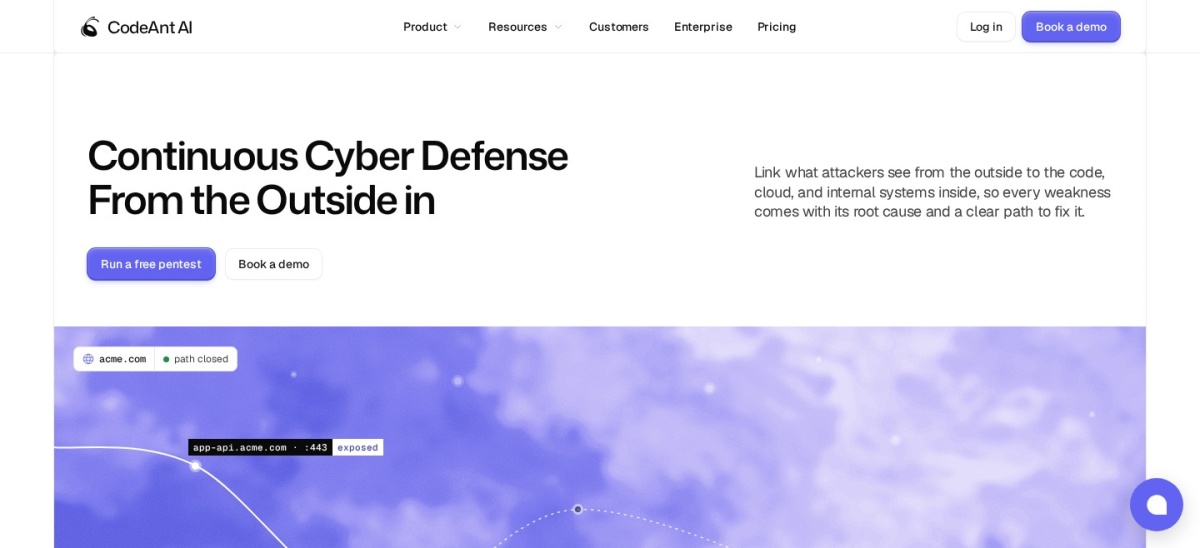
CodeAnt AI is an AI code review platform that runs line-by-line reviews on every pull request, with PR summaries, custom rules and one-click fixes in the IDE. It covers 24+ languages and every Git host, including GitHub, GitLab, Bitbucket and Azure DevOps.
The trade off is scope creep. The homepage now leads with penetration testing and cloud security, so the code review module shares the platform with a much larger security suite. It suits teams that want review, SAST and secrets detection from one vendor.
What we like
Line-by-line review with custom rules
24+ languages and every Git host
Highest G2 rating here at 4.7 with security bundled
SonarQube Cloud is the hosted version of SonarQube, a code quality platform that applies more than 7,000 rules to every pull request. The free tier covers private projects up to 50,000 lines of code, and the Team plan adds more languages and enterprise features.
The trade off is the billing unit. Team starts at $32 a month for up to 100,000 lines of code, so the bill grows with the codebase rather than the team. It suits teams that want deterministic quality gates and security hotspots in one scan.
GitHub Copilot is GitHub's AI coding assistant, and its code review runs inside the pull request with no separate tool to install. The Pro plan costs $10 a user a month and includes review, agent mode, chat and unlimited completions, with a free plan for light use.
The trade off is scope. Review runs on GitHub only, and heavier agent work draws on AI credits beyond the plan allowance, so GitLab or Bitbucket teams need a different tool. It suits teams already on GitHub that want review where the code already lives.
What we like
No setup: review runs inside GitHub pull requests
Pro at $10 a month is the cheapest paid entry here
Largest review base in this list at 404 G2 reviews
Covers completions, chat and agents beside review
Watch out for
Review is GitHub only
Agent work consumes AI credits beyond the allowance
Credit pricing wins on quiet months. Greptile charges $1 per credit and Qodo sells $30 packs, so a team that merges a few pull requests a week pays less than any per-seat plan.
Seat pricing wins on busy months. A flat $12 to $24 a month per developer covers unlimited reviews at Bito, Sourcery, Codacy and DeepSource, so heavy pull request volume costs the same every month.
Do the maths on your own volume before you choose. Count last month's pull requests, then compare the credit cost against the seat price for your team size.
How we chose
We started from every established AI code review tool that competes directly with CodeRabbit, then kept the nine with published pricing and a public rating.
Prices come from each vendor's pricing page, checked on 29 November 2026. Ratings and review counts come from G2 or Capterra on the same day. Where a vendor shows a sale, the list shows the regular price.
We left out tools with no public rating or no published price. No vendor paid for a place, and we do not claim hands-on testing for this list.
How to choose a CodeRabbit alternative
Start with your pull request volume, then match the billing model to it.
Count last month's pull requests. Under 20 reviews a month favours credit pricing from Qodo or Greptile; over that, a flat seat price is usually cheaper.
Check your Git host. GitHub Copilot's review runs inside GitHub only, so GitLab or Bitbucket teams should shortlist Qodo, Greptile, Bito or CodeAnt AI instead.
Decide whether you need security scanning too. Codacy, DeepSource, CodeAnt AI and SonarQube Cloud add SAST, secrets detection and quality gates beside the review.
Try the free tier on a real repository. Most tools review public repositories free, so run one on an active project and read the comments before paying.
FAQ
What is the best CodeRabbit alternative in 2026?
Qodo is the best CodeRabbit alternative for most teams. It rates 4.5 out of 5 from 122 G2 reviews, reviews pull requests against multi-repository context, and charges $30 a month for credit packs with no per-seat fee.
How much do CodeRabbit alternatives cost?
Paid plans run from $1 per review credit at Greptile to $34 a month at SonarQube Cloud. Per-seat plans start at $12 a developer a month at Bito and Sourcery, while Qodo's credit packs start at $30 a month for the whole team.
Is there a free CodeRabbit alternative?
Yes. Greptile, Sourcery, Bito, Codacy, DeepSource, SonarQube Cloud and GitHub Copilot all have free plans, usually for public repositories or individual developers. Qodo and CodeAnt AI offer a 14-day free trial instead of a permanent free plan.
Which CodeRabbit alternative is best for small teams?
Sourcery suits small teams best: $12 a developer a month billed annually, a free plan for public repositories, and a 4.8 out of 5 Capterra rating. Bito matches the $12 seat price and adds IDE review, but caps each seat at 5,000 reviewed lines a month.
Which CodeRabbit alternative is best for beginners?
Greptile is the easiest start: its free Starter plan covers one developer with 50 credits a month, no seat fees and no card. Sourcery is the other simple option, with a free plan for public repositories and a two-minute install.
Qodo vs Greptile: which is better?
Qodo suits teams that want test generation beside review, with 122 G2 reviews behind its 4.5 rating. Greptile suits teams whose worst bugs hide across files, because it indexes the whole codebase into a graph before reviewing. Qodo charges $30 a month per pack; Greptile charges $1 per credit.
SaaS SEO and WordPress specialist with about 8 years of experience. Rakib compares WordPress plugins, themes, hosting and software using public pricing, documentation and user reviews. See how we rank.