SonarQube Cloud is the best of the Code Climate alternatives for most teams, with quality gates on every pull request, a free tier to 50,000 lines of code and a 4.4/5 G2 rating from 154 reviews. Pick Codacy for the cheapest all-in-one plan at $18 a month, or CodeScene if you want to rank technical debt by cost.
How we make this list: we compare pricing pages, product documentation and public user reviews, then re-check every price before each update. No product paid for a place. Disclosure.
SonarQube Cloud is the strongest all-round swap: Team at $34 a month with quality gates, a free tier to 50,000 lines of code and a 4.4/5 G2 rating from 154 reviews.
Codacy is the cheapest all-in-one plan at $18 per developer a month, with 49 languages and a 4.6/5 G2 rating from 31 reviews.
Qodana is the cheapest paid plan in this list at $5 per contributor a month, and it runs the same inspections as JetBrains IDEs.
DeepSource and CodeRabbit add AI review on pull requests, from $24 a month, while Semgrep is the pick for writing your own rules at $30.
Paid plans across the 9 tools run from $5 to $34 a month: Qodana is cheapest and SonarQube Cloud is dearest.
How do you choose the best Code Climate alternatives?
Price is the first filter. SonarQube Cloud charges by lines of code, Codacy, DeepSource and Snyk charge per developer, and Qodana charges $5 per contributor, so the cheapest plan for your team depends on team size and codebase size.
A maintainability grade is not the same as a security scan. Code Climate graded maintainability and tracked coverage, while SonarQube, Semgrep and Snyk add security findings, and CodeScene ranks debt by delivery cost instead of counting rule violations.
Free plans are not all the same. SonarQube Cloud covers private projects to 50,000 lines of code, Codacy's free tier is IDE-only, and DeepSource is free for open-source projects only, so check what the free tier actually scans before you build around it.
Quality gates decide whether the tool stops bad code. SonarQube Cloud, Codacy, CodeScene and Qodana can all block a failing pull request, while CodeRabbit comments and suggests fixes without grading the code. Our guide on checking a plugin for vulnerabilities shows the same flaw classes these tools look for.
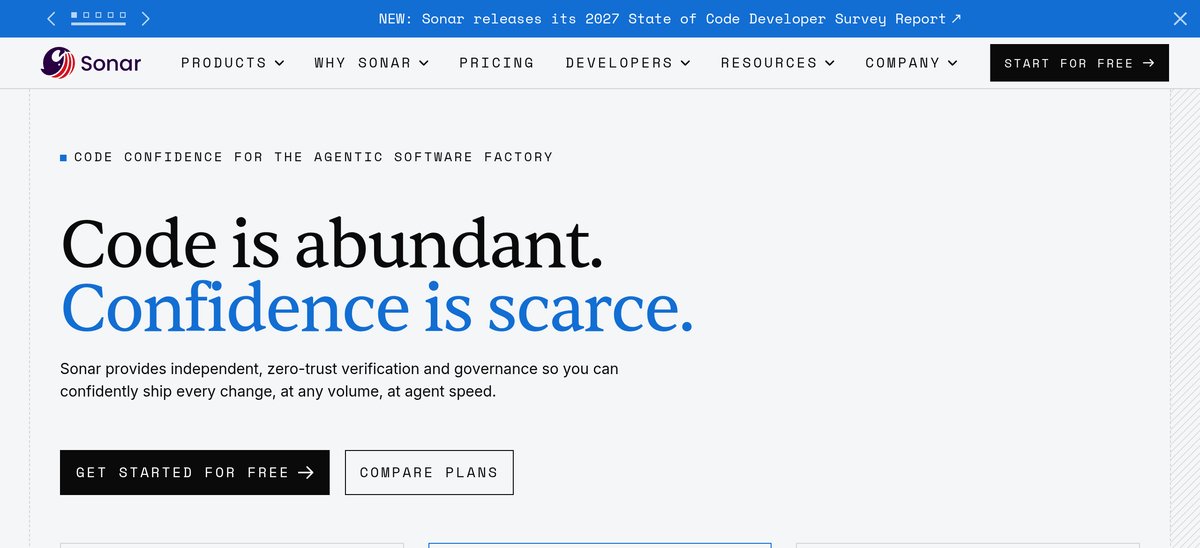
SonarQube Cloud is the hosted version of SonarQube from SonarSource, and it pairs code quality checks with security scanning in one place. The free plan covers private projects up to 50,000 lines of code, and the Team plan starts at $34 a month for up to 100,000 lines, with no seat limit.
The trade off is the meter. The bill follows lines of code, so a large codebase costs more even with a small team, and dependency scanning sits in a paid add-on. It suits teams that want quality gates on every pull request at one flat monthly figure.
What we like
Free tier covers private projects to 50,000 lines
Quality gates can block a failing pull request
Flat price per codebase, not per developer
Covers 35+ languages with 7,000+ rules
Watch out for
Cost rises with lines of code, not team size
Dependency scanning needs the Advanced Security add-on
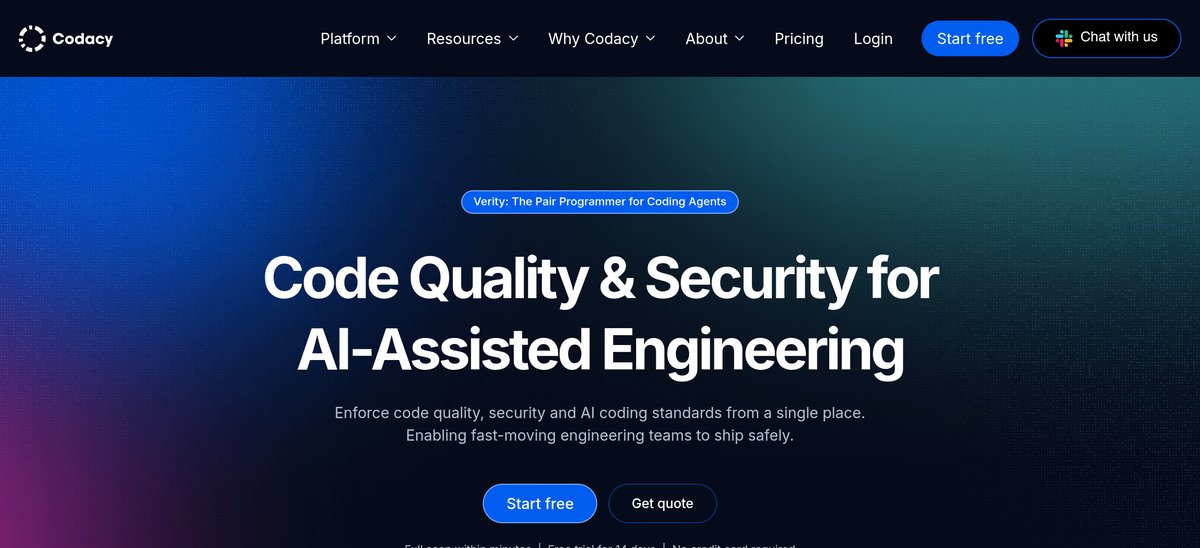
Codacy is an automated code quality and security platform that checks pull requests across 49 languages. One dashboard covers code quality, security scanning, secrets detection, coverage tracking and AI code review, and the free Developer tier covers IDE scanning.
The trade off is the ceiling. Team stops at 30 developers and 100 private repositories, and DAST, container scanning and SSO need the quote-only Business plan. It suits teams under 30 developers that want one bill for quality and security.
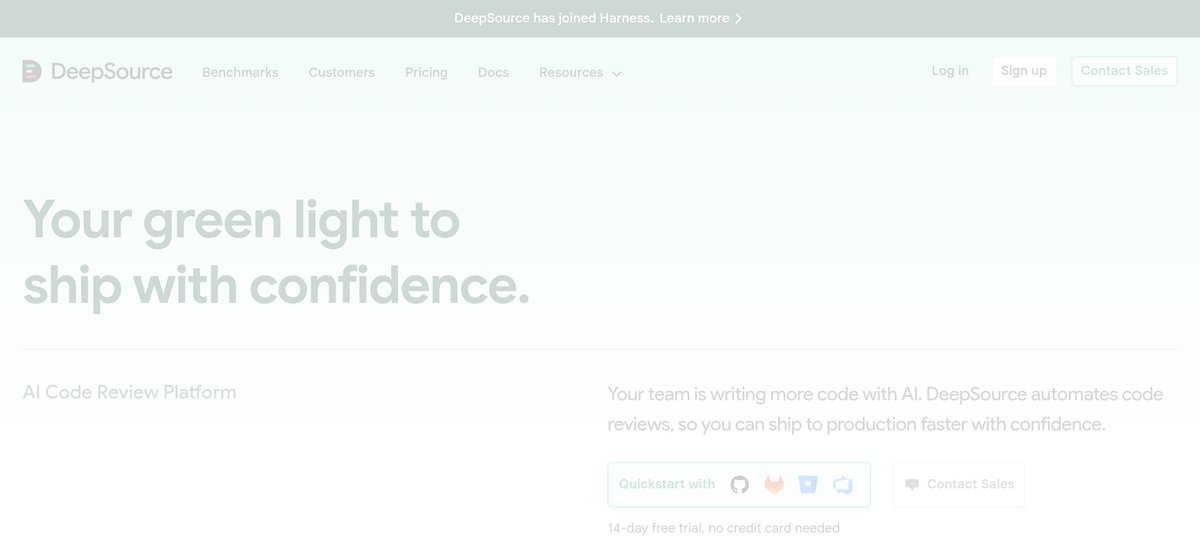
DeepSource is an AI code review platform built on static analysis with more than 5,000 rules. It comments on pull requests, checks security against OWASP and SANS lists, and suggests autofixes that are verified before they are shown.
The trade off is metering. Team costs $24 per user a month billed yearly, and AI review draws on credits beyond the included $100 a year per user. It suits teams that process many pull requests a day and want review comments they can trust.
What we like
Autofixes are verified before they are suggested
Low false-positive rate under 5%
Free for open-source projects
Rated 4.6/5 from 22 G2 reviews
Watch out for
No free plan for private repositories
AI review credits cost extra beyond the seat price
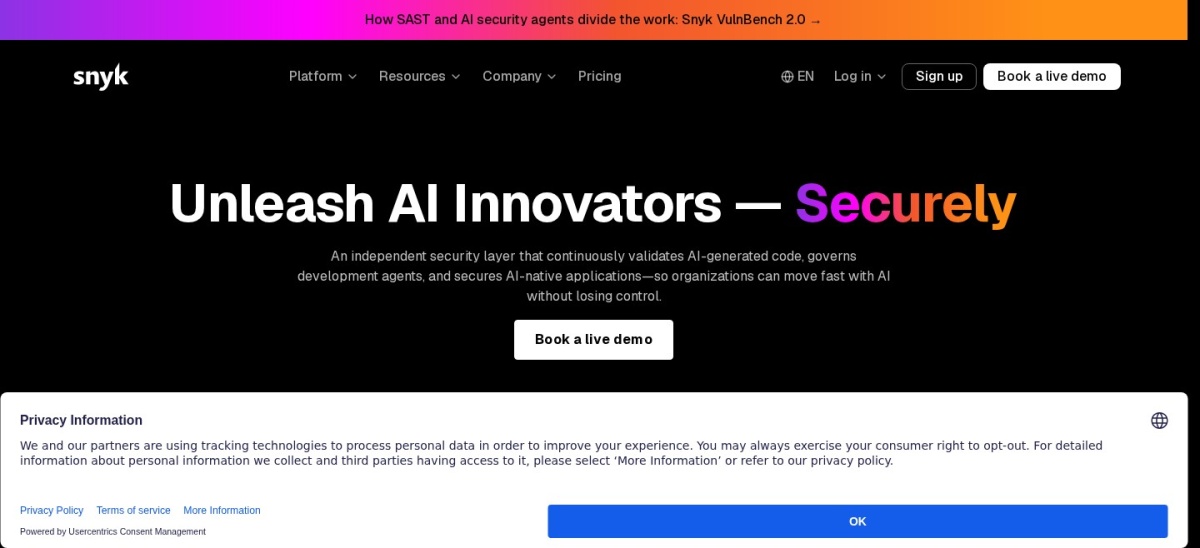
Snyk Code is the static analysis module inside the Snyk platform, built on the DeepCode engine. It scans in the IDE and in CI, and each finding comes with a plain-language explanation, the data flow behind it and a suggested fix.
The trade off is the Team cap. Team costs $25 per contributing developer a month, needs at least 5 developers and stops at 10, so growing teams move to credit-based Enterprise pricing. It suits small teams that want fixes, not just findings, in the pull request.
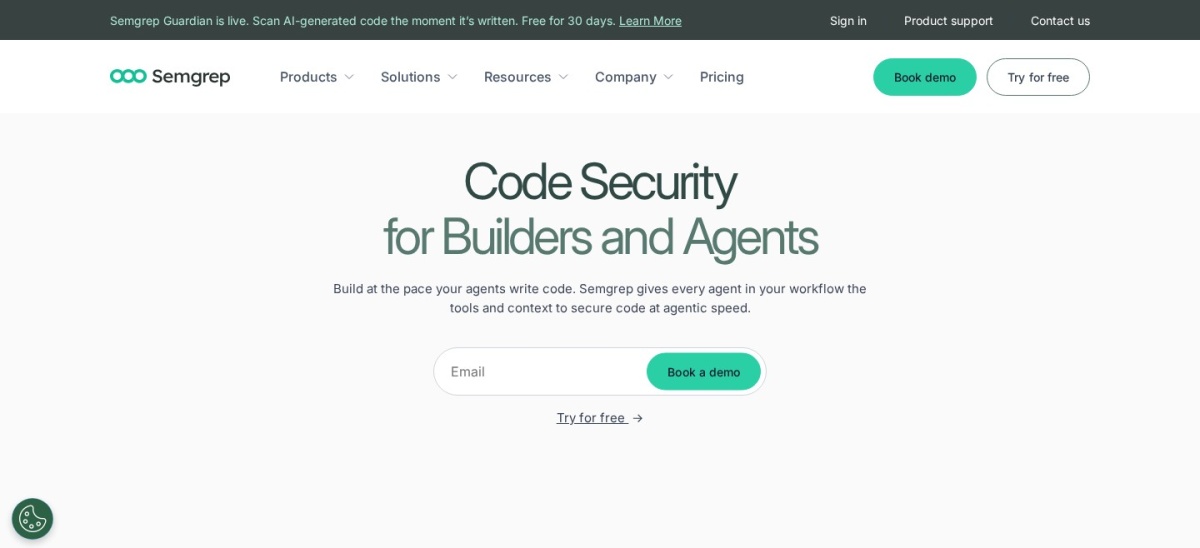
Semgrep is a rule-based scanner with a free open-source engine and a commercial platform on top. Its rule language reads like the code it matches, so teams can write their own checks for internal APIs and frameworks.
The trade off is that the products are sold separately. Code, Supply Chain and Secrets cost $30, $30 and $15 per contributor a month, so buying all three triples the bill. It suits security teams that want custom rules and fast scans in CI.
What we like
Open-source engine is free with community rules
Readable rule language for custom checks
Free tier covers 10 contributors and 10 repos
Rated 4.6/5 from 56 G2 reviews
Watch out for
Each product is billed separately
Cross-file analysis needs a paid plan
Security-first, less focus on maintainability grades
CodeScene is a behavioral code analysis platform that scores every file with a CodeHealth metric built on 25+ factors. It reads Git history to find hotspots, knowledge silos and delivery risks that rule-based scanners cannot see.
The trade off is price and focus. Standard lists at €18 per active author a month, about $19, and it prioritizes technical debt rather than blocking pull requests on rule violations. It suits engineering leaders who need to rank refactoring by cost.
What we like
CodeHealth score predicts defects and delivery risk
Hotspot maps show where debt actually slows teams
Free Community edition for open-source projects
Rated 4.6/5 from 40 G2 reviews
Watch out for
Priced in euros, so the dollar figure moves
Less rule-based scanning than SonarQube or Semgrep
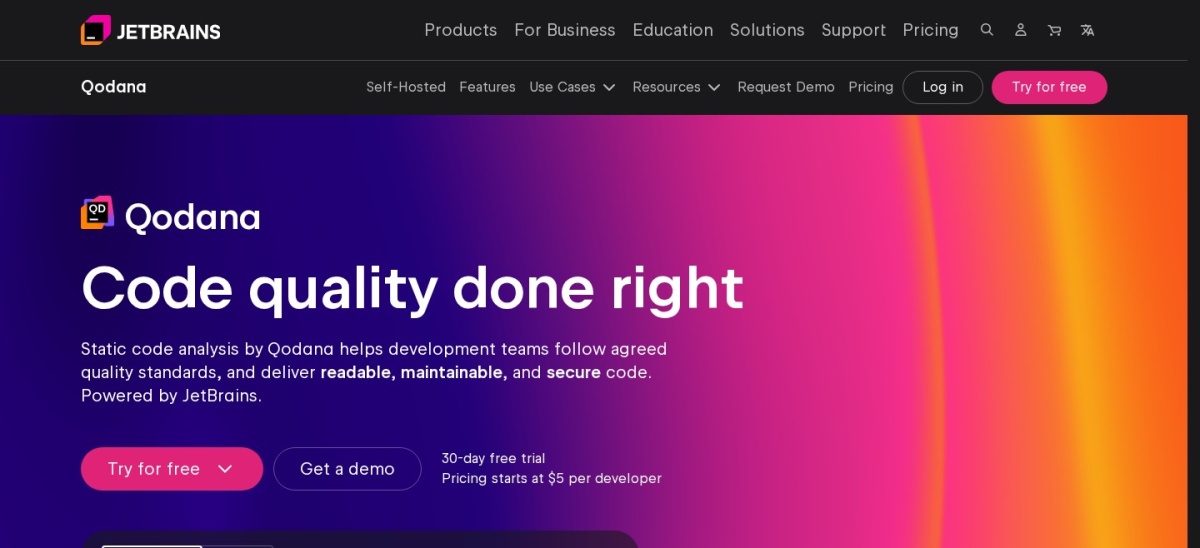
Qodana is JetBrains' code quality platform, and it runs the same 3,000-plus IntelliJ inspections in CI that developers see in their IDE. That means a finding in the pipeline matches what the IDE already showed, with no second rule set to keep in sync.
The trade off is the ecosystem. Qodana fits best where developers already use JetBrains IDEs, and taint analysis, SSO and unlimited history need Ultimate Plus at $15 a month. It suits JetBrains shops that want the cheapest paid analysis in this list.
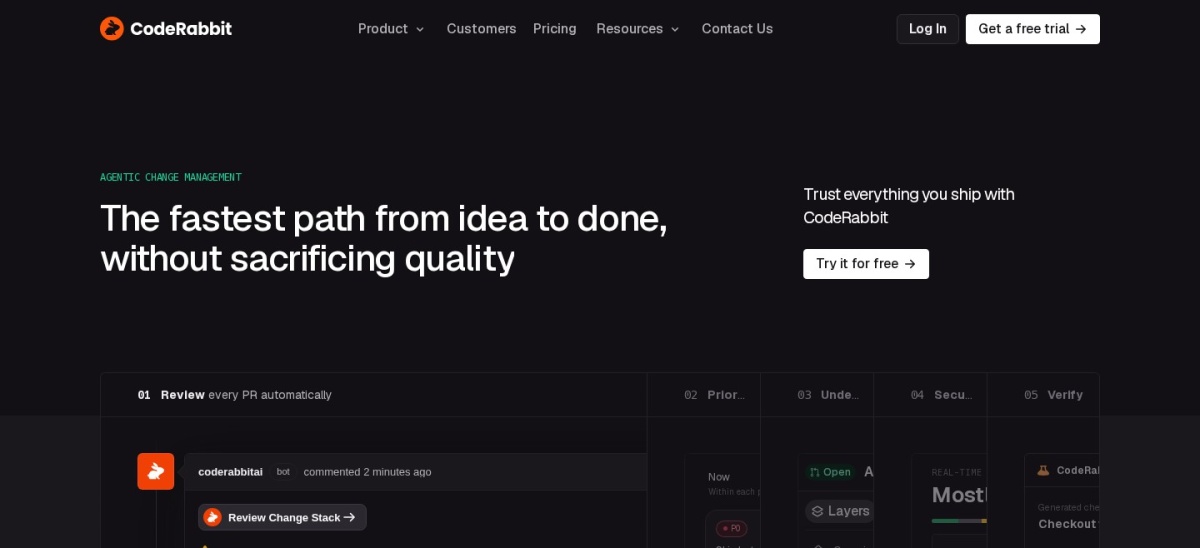
CodeRabbit is an AI code review tool that reads every pull request and posts line-by-line comments, summaries and fix suggestions. It covers bugs, security issues and style, and it learns from reviewer feedback on later pull requests.
The trade off is that it reviews rather than grades. There is no maintainability score like Code Climate's, and the full review plan costs $24 per user a month billed yearly. It suits teams that want a tireless first reviewer on every pull request.
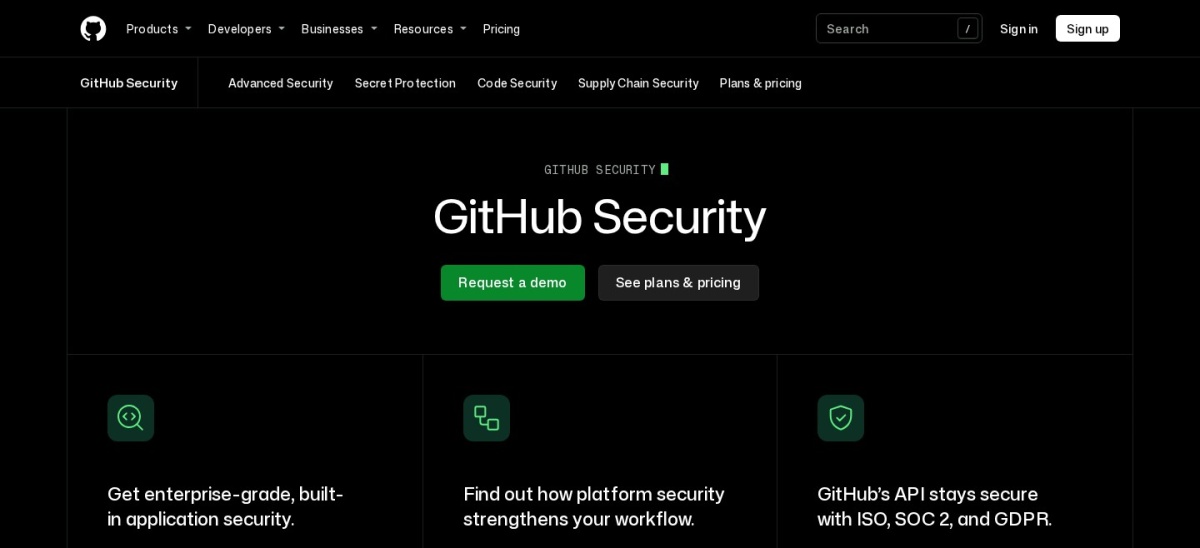
GitHub Code Security is GitHub's own security product, and CodeQL is the semantic analysis engine behind its code scanning. It builds a queryable database of the codebase, traces data flow across files, and files findings as pull request alerts.
The trade off is price and lock-in. Code Security costs $30 per active committer a month on private repositories, and it only makes sense if the code already lives on GitHub. It suits GitHub shops that want scanning without adding another dashboard.
Free plans cover the basics well. Most include pull request comments, a quality score and some kind of gate, and Qodana's Community tier runs real inspections in CI.
Paid plans mostly add depth and history. You get more languages, longer trend history, SSO and AI review, and Semgrep's cross-file analysis sits behind Teams Code at $30 a month.
If the codebase earns money every day, the first year of a paid plan often costs less than one production incident. Start free, then pay when the free cap or a missing feature gets in your way.
How we chose
We started from the tools most often named as Code Climate replacements, then kept 9 with published pricing and a public rating.
Prices come from each vendor's pricing page, checked on 29 November 2026. Ratings come from G2 on the same day, except GitHub Code Security, whose G2 figure is GitHub's overall profile. Where a vendor shows a sale, the list shows the regular price.
We left out Qlty, the successor built by the Code Climate team, because it has no public rating on G2, Capterra or Trustpilot, and Code Climate itself because this list replaces it. No vendor paid for a place, and we do not claim to have used these tools ourselves.
How to choose a Code Climate alternative
Start with your codebase size and team size, then check what the free tier actually scans.
Count your codebase and your team. SonarQube Cloud bills by lines of code, so a large codebase costs more even with a small team, while Codacy and DeepSource bill per developer. Price both models at your real size.
Decide what must stop a merge. If a failing quality gate must block pull requests, pick SonarQube Cloud, Codacy, CodeScene or Qodana. If comments and fixes are enough, DeepSource or CodeRabbit will do.
Check the free tier before you commit. SonarQube Cloud covers private projects to 50,000 lines, Codacy's free tier is IDE-only, and DeepSource is free for open source only. Build one real month of reviews before paying.
Match the tool to the job, not the brand. Use CodeScene to rank technical debt, Semgrep to write custom rules, and Qodana if the team already lives in JetBrains IDEs.
FAQ
What is the best Code Climate alternative in 2026?
SonarQube Cloud is the best Code Climate alternative for most teams in 2026. Its Team plan costs $34 a month, covers quality gates on every pull request and a free tier to 50,000 lines of code, and it holds a 4.4/5 G2 rating from 154 reviews.
What is the best free alternative to Code Climate?
SonarQube Cloud has the best free alternative to Code Climate. Its free tier covers private projects up to 50,000 lines of code with quality gates, while Qodana Community and Codacy Developer are also free with narrower coverage.
How much does a Code Climate alternative cost?
Paid plans in this list run from $5 to $34 a month. Qodana Ultimate is cheapest at $5 per contributor a month, Codacy Team costs $18, and SonarQube Cloud Team is dearest at $34 a month for up to 100,000 lines of code.
Which Code Climate alternative is best for beginners or small teams?
Codacy is the easiest starting point for beginners and small teams, because Team costs $18 per developer a month and covers quality, security and coverage in one dashboard. Qodana is cheaper still at $5 a month for JetBrains shops.
SonarQube Cloud vs Codacy: which is the better Code Climate alternative?
SonarQube Cloud is better if you want quality gates and the deepest rule set, with Team at $34 a month billed by lines of code. Codacy is better if you want one per-developer bill for quality and security, with Team at $18 a month.
What happened to Code Climate?
Code Climate spun its Quality product out as Qlty Software, and the team rebuilt it as Qlty, a code health platform with maintainability grading and AI autofixes. Qlty has no public rating on G2, Capterra or Trustpilot, so it is not in this list.
SaaS SEO and WordPress specialist with about 8 years of experience. Rakib compares WordPress plugins, themes, hosting and software using public pricing, documentation and user reviews. See how we rank.