Juniper Networks is the best Cisco alternative for enterprise switching, rated 4.7 out of 5 on G2, with Mist AI cloud management across its EX and QFX switches. For a lower bill, Netgate pfSense covers firewall and routing from $129 a year, while HPE Aruba Networking is the strongest pick for campus Wi-Fi and switching under one console.
How we make this list: we compare pricing pages, product documentation and public user reviews, then re-check every price before each update. No product paid for a place. Disclosure.
Juniper Networks leads on switching, rated 4.7 out of 5 on G2, with Mist AI and the Marvis assistant for cloud-managed wired and wireless networks.
Netgate pfSense is the cheapest serious firewall here: the CE edition is free, and pfSense Plus costs $129 a year per instance with TAC Lite support.
HPE Aruba Networking, rated 4.6 out of 5 on G2 from 27 reviews, manages switches and access points from one Aruba Central console.
Ubiquiti UniFi is the only pick with no subscription at all: the Express 7 gateway lists at $199 once and runs the full UniFi Network app.
Seven of the nine tools are priced by quote only, so get a written quote for hardware plus the required subscription before you compare totals.
WatchGuard Firebox, rated 4.7 out of 5 on G2 from 266 reviews, bundles firewall, VPN and endpoint security with simple cloud management for small offices and MSPs.
How do you choose the best Cisco alternatives?
Cisco sells switches, routers, Wi-Fi, firewalls and collaboration tools, so no single product replaces all of it. Start by naming the Cisco gear you want to replace: campus switching, data-centre switching, Wi-Fi, or the firewall at the edge.
Switching buyers should compare the operating system first. Juniper runs Junos OS and Aruba runs AOS-CX, and each one shapes how your team automates config and monitors the network.
Firewall buyers should check what the subscription covers. FortiGate, Palo Alto Networks and SonicWall all sell the box and the security services separately, so the first-year total is hardware plus a yearly suite.
Budget is where the list splits. Enterprise vendors quote per deal and give no public price, while pfSense and UniFi publish real entry prices of $129 a year and $199 once.
Juniper Networks is the closest like-for-like Cisco rival for switching and routing, with EX Series campus switches, QFX data-centre switches and SRX firewalls all running Junos OS. Its Mist AI cloud manages wired and wireless networks together, and the Marvis virtual assistant flags faults and answers network questions in plain language.
The trade off is price and licensing. Juniper publishes no list price, and Mist Wi-Fi Assurance is a required subscription rather than an optional add-on, so the real cost is hardware plus a yearly subscription quoted per deal. It suits large campus and enterprise teams replacing Catalyst switching.
What we like
Highest G2 rating in this list at 4.7 out of 5
Mist AI covers wired, wireless and SD-WAN in one cloud
Marvis assistant speeds up fault-finding
Junos OS is consistent across switches, routers and firewalls
Watch out for
No published prices, everything is quoted per deal
Mist Assurance subscription is required, not optional
Smaller review base than FortiGate or Palo Alto Networks
Quote covers hardware plus the required Mist subscriptionVisit juniper.net
02
Netgate pfSense
4.7/5on G2 (326 reviews, checked Nov 2026)
Paid from$129/yr
Best value firewall and router
Free editionpfSense CE, open source
Paid planPlus, TAC Lite, $129/yr
VPNWireGuard, IPsec, OpenVPN
Add-on packagesSnort, Suricata, pfBlockerNG
pfsense.org
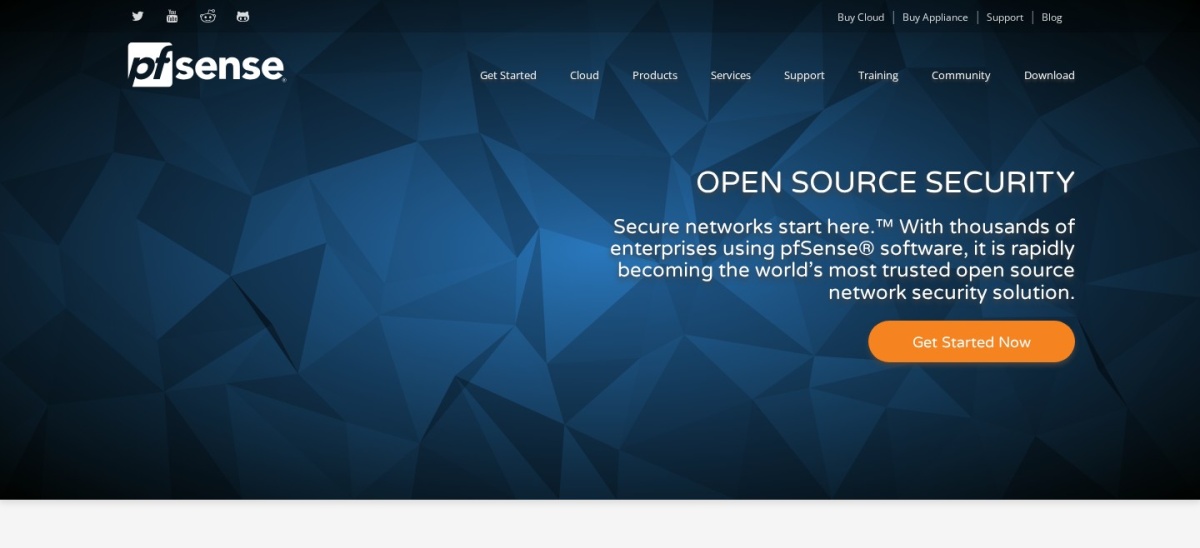
Netgate pfSense homepage, captured Nov 2026.
Netgate pfSense is an open source firewall and router that runs on your own hardware, a virtual machine or a Netgate appliance. The free CE edition covers stateful firewall rules, NAT, VLANs, VPN with WireGuard and IPsec, traffic shaping and high availability, with packages for intrusion detection and DNS filtering.
The trade off is that business use needs the paid build. pfSense Plus costs $129 a year per instance with TAC Lite support, and Netgate said in October 2026 that the two editions will merge into one free edition with version 26.10, which had not shipped at the time of writing. It suits small offices and IT teams that can run their own box.
What we like
Free CE edition with no feature paywall
Rated 4.7 out of 5 on G2 from 326 reviews
Cheapest paid plan in this list at $129 a year
Runs on hardware you already own
Watch out for
No vendor hardware in the $129 price, you supply the box
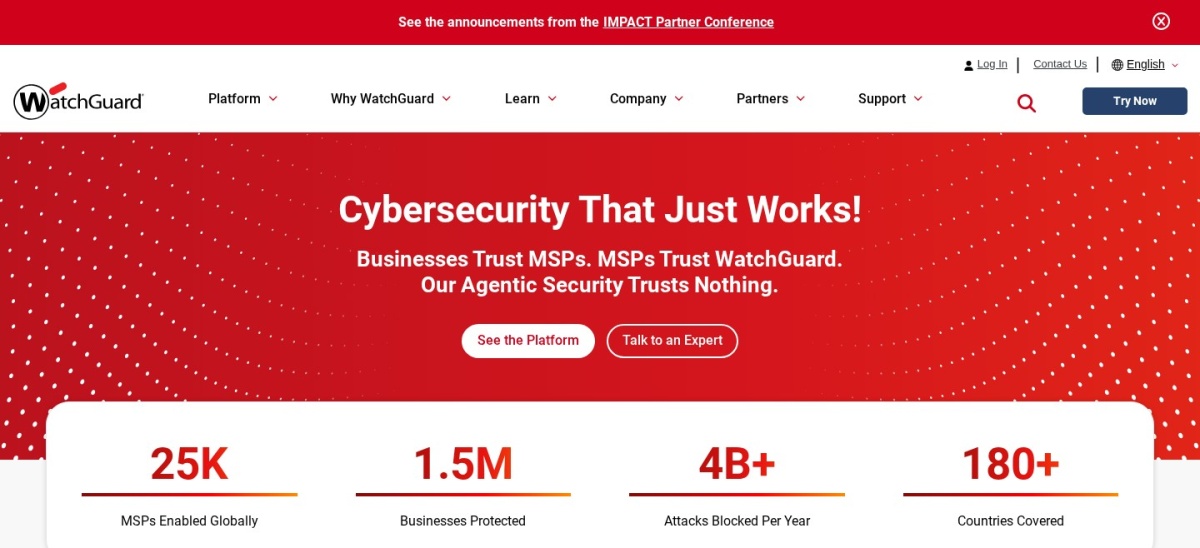
WatchGuard is an all-in-one network security platform built around its Firebox firewalls, with intrusion prevention, VPN, web filtering and endpoint security managed from WatchGuard Cloud. RapidDeploy deploys a Firebox in minutes, and AuthPoint adds multi-factor authentication to the same console.
The trade off is price and depth. WatchGuard publishes no list price, advanced features cost extra, and reviewers say the admin tools lag Palo Alto Networks for complex sites. It suits small offices and MSPs that want one bundled security platform without Cisco complexity.
HPE Aruba Networking is the campus pick in this list, with CX switches, Wi-Fi 6 and Wi-Fi 7 access points and ClearPass network access control managed from one Aruba Central console. Reviewers praise the single dashboard for switches and access points, plus AI alerts that flag problems before users report them.
The trade off is licensing. Aruba publishes no list price, and reviewers call the subscription tiers confusing, with advanced features locked behind extra licences. It suits schools, hospitals and mid-size offices replacing Catalyst switches and Cisco wireless.
What we like
One console for switches, Wi-Fi and access control
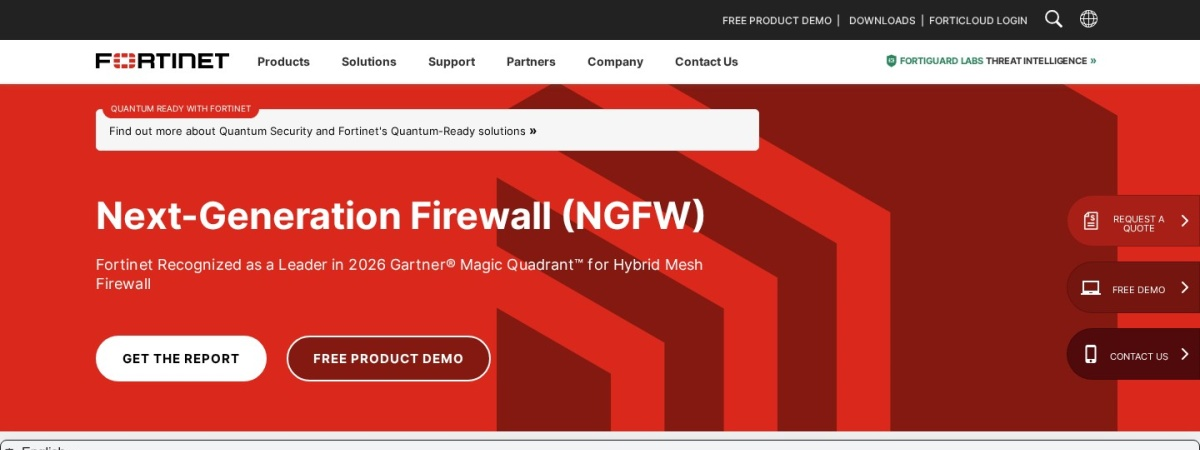
Fortinet FortiGate is a next-generation firewall that covers the Cisco firewall and SD-WAN roles in one appliance, running FortiOS with built-in SD-WAN, intrusion prevention and FortiGuard threat intelligence. It has the largest review base among the firewalls here, rated 4.6 out of 5 on G2 from 92 reviews.
The trade off is licensing complexity. Fortinet publishes no list price, and the security services, support and central management are separate subscriptions on top of the appliance. It suits mid-size and large networks that want one box for firewall, VPN and SD-WAN.
What we like
Firewall, VPN and SD-WAN in one appliance
Rated 4.6 out of 5 on G2 from 92 reviews
Strong inspected throughput for the price class
FortiManager manages many sites centrally
Watch out for
No published prices, quoted per deal
Firmware and licensing transparency draw complaints
Ubiquiti UniFi is the no-subscription pick, with the Express 7 gateway at $199 list, a 10 GbE WAN port, tri-band Wi-Fi 7 and the full UniFi Network app for firewall rules, VLANs, traffic inspection and intrusion detection. There is no yearly fee for the software, which is why reviewers call it enterprise features at a small-business cost.
The trade off is the single wired port and the checkout price. One 2.5 GbE LAN port means a switch for wired devices, and the US store lists $199 but adds a memory surcharge that brought the checkout total to $219 in October 2026. It suits homes and small offices that want UniFi management without a yearly bill.
What we like
No subscription fees for the software
Rated 4.5 out of 5 on G2 from 39 reviews
Wi-Fi 7 and 10 GbE WAN in a small box
IDS/IPS rated at 2.3 Gbps
Watch out for
Only one 2.5 GbE LAN port
Store surcharge lifts checkout above the $199 list
No phone support at any price
Higher UniFi gateways add ports and throughputVisit ui.com
07
Palo Alto Networks
4.3/5on G2 (251 reviews, checked Nov 2026)
PricingCustom/yr
Best for threat prevention depth
Operating systemPAN-OS
Central managementPanorama
Threat preventionAdvanced, ML-powered
DeploymentCloud or appliance
paloaltonetworks.com
Palo Alto Networks homepage, captured Nov 2026.
Palo Alto Networks is the threat-prevention pick, with Cloud NGFW and its appliance firewalls running PAN-OS, deep application visibility and machine-learning threat prevention. It has the largest review base in this list, rated 4.3 out of 5 on G2 from 251 reviews, and Panorama manages policies across many sites.
The trade off is cost and complexity. Palo Alto Networks publishes no list price, reviewers call it expensive for small environments, and Panorama has a steep learning curve. It suits enterprises that need the strongest prevention capability and can staff it.
Extreme Networks is a full campus alternative, with fabric switching from core to edge, wireless, network access control and ExtremeCloud IQ management in one portfolio. Reviewers praise the clear cloud portal, the easy setup of switches and access points, and the fabric design that simplifies large campus networks.
The trade off is polish and price. Extreme publishes no list price, reviewers note inconsistent hardware quality and slow access-point onboarding, and support quality draws mixed reports. It suits campuses and venues that want fabric switching without Cisco pricing.
SonicWall is the small-office firewall pick, with Gen 8 TZ desktop firewalls from the TZ280 up, plus NSa rackmount models for larger sites, all running SonicOS with SD-WAN, intrusion prevention and content filtering. The TZ line suits a few users and a single uplink, while larger models handle busy branches with heavier TLS inspection.
The trade off is that the vendor publishes no list price, so budgets come from resellers: the entry TZ280 lists near $545, and the security suite, not the box, sets the yearly cost. It suits small businesses that want a managed appliance and a support contract in one purchase.
Enterprise networking vendors sell through partners and quote per deal, so seven of the nine tools in this list publish no price at all. That is normal for this market, and it is why the ladder shows Custom for most entries.
A quote has two parts: the hardware and the yearly subscription. Juniper requires Mist Assurance, Aruba needs Central licensing, and FortiGate, Palo Alto Networks and SonicWall all charge yearly for their security services.
Only pfSense and UniFi publish a real entry price: $129 a year for pfSense Plus and $199 once for the UniFi Express 7. If you need a firm number before talking to sales, start with those two.
Ask every vendor for the same scope in writing: hardware, subscription, support tier and renewal price in year two, so the totals compare fairly.
How we chose
We started from the vendors most often named as Cisco replacements for switching, Wi-Fi and firewalls, then kept those with a public G2 rating and review count.
Prices come from each vendor's pricing page or store, checked on 29 November 2026. Ratings and review counts come from G2 on the same day. Where a vendor shows no price, the list shows Custom instead of a guessed figure.
We left out Cisco's own Meraki line, since it is a Cisco product, and collaboration-only tools that do not replace network gear. No vendor paid for a place, and we do not claim hands-on testing for this list.
How to choose a Cisco alternative
Start with the Cisco gear you want to replace, then match the vendor to that job.
Name the Cisco product you are replacing. Switching, Wi-Fi, firewall and SD-WAN are different jobs. Juniper leads on switching, Aruba on campus Wi-Fi, FortiGate and Palo Alto Networks on firewalls.
Get a written quote for hardware plus subscription. Seven of the nine tools are quote only, and the subscription often costs more than the box over three years. Ask for the year-two renewal price too.
Check the operating system your team knows. Junos OS, EOS, AOS-CX, FortiOS and PAN-OS all work differently. A familiar CLI is worth more than a small price gap.
Try the budget route first for small sites. pfSense at $129 a year or a $199 UniFi gateway covers many small offices. See how to run a WordPress security audit before you widen the scope.
FAQ
What are the best Cisco alternatives in 2026?
Juniper Networks is the best Cisco alternative for enterprise switching, rated 4.7 out of 5 on G2, with Mist AI cloud management. Netgate pfSense is the best value at $129 a year, and HPE Aruba Networking is the strongest pick for campus Wi-Fi and switching.
How much do Cisco alternatives cost?
Most enterprise vendors quote per deal and publish no price, so you need a written quote for hardware plus the yearly subscription. The two published entry prices are pfSense Plus at $129 a year and the UniFi Express 7 gateway at $199 once.
Is there a free alternative to Cisco?
Yes. Netgate pfSense CE is free and open source, covering firewall, routing, VPN and VLANs on your own hardware. UniFi software also carries no subscription fee, though you still buy the gateway hardware.
Which Cisco alternative is best for a small business?
Ubiquiti UniFi is the simplest small-business pick, with a $199 gateway and no subscription. Netgate pfSense is the best value firewall if your team can run its own box, and SonicWall TZ suits offices that want a managed appliance.
Juniper vs Aruba: which is the better Cisco alternative?
Juniper leads on enterprise switching and AI-driven operations with Mist and Marvis, while Aruba leads on campus Wi-Fi and single-console management of switches and access points. Pick Juniper for large switching estates and Aruba for campuses.
Do Cisco alternatives include SD-WAN?
Yes, several do. FortiGate has SD-WAN built in, Juniper Mist covers SD-WAN alongside wired and wireless, and Palo Alto Networks offers it through its Prisma line. pfSense covers site-to-site VPN but not full SD-WAN orchestration.
SaaS SEO and WordPress specialist with about 8 years of experience. Rakib compares WordPress plugins, themes, hosting and software using public pricing, documentation and user reviews. See how we rank.