Apollo is the best Clearbit alternative for most sales teams, with a database of 275 million contacts and paid plans from 49 dollars a user a month. Pick Lusha for quick phone numbers or Hunter when you only need verified emails.
How we make this list: we compare pricing pages, product documentation and public user reviews, then re-check every price before each update. No product paid for a place. Disclosure.
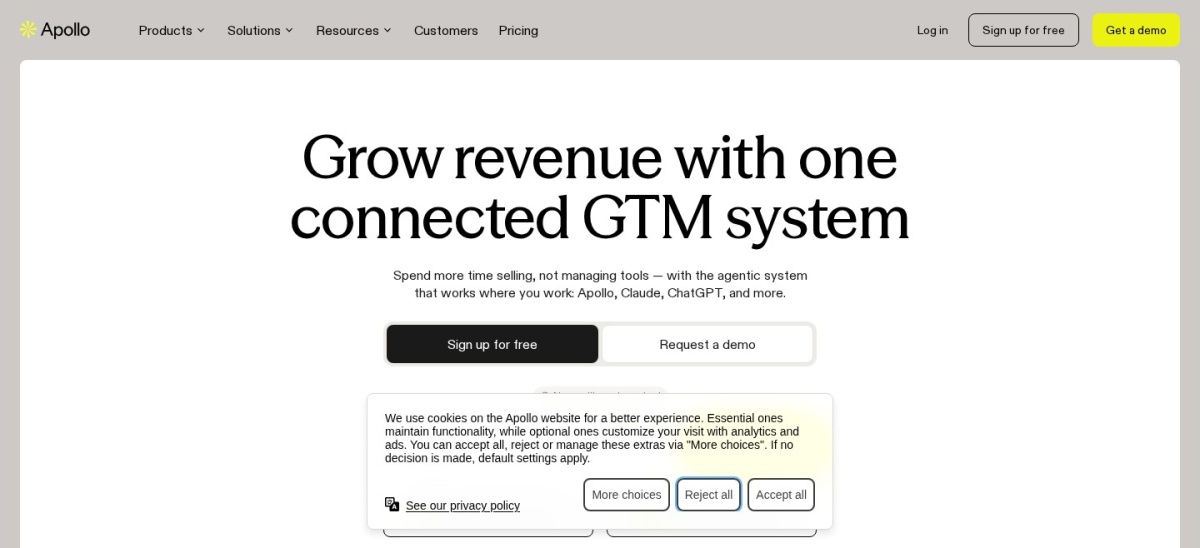
Apollo is the best all-round pick, with 275 million contacts, sequences included and Basic at 49 dollars a user a month.
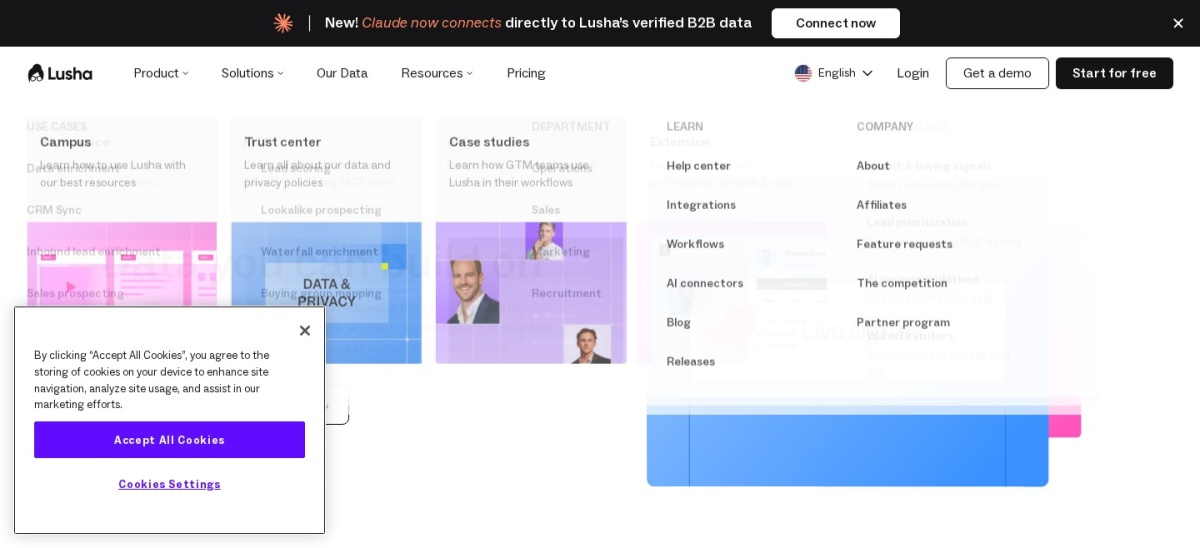
Lusha is the cheapest way to get verified phone numbers, with Starter at about 37 dollars a month billed yearly.
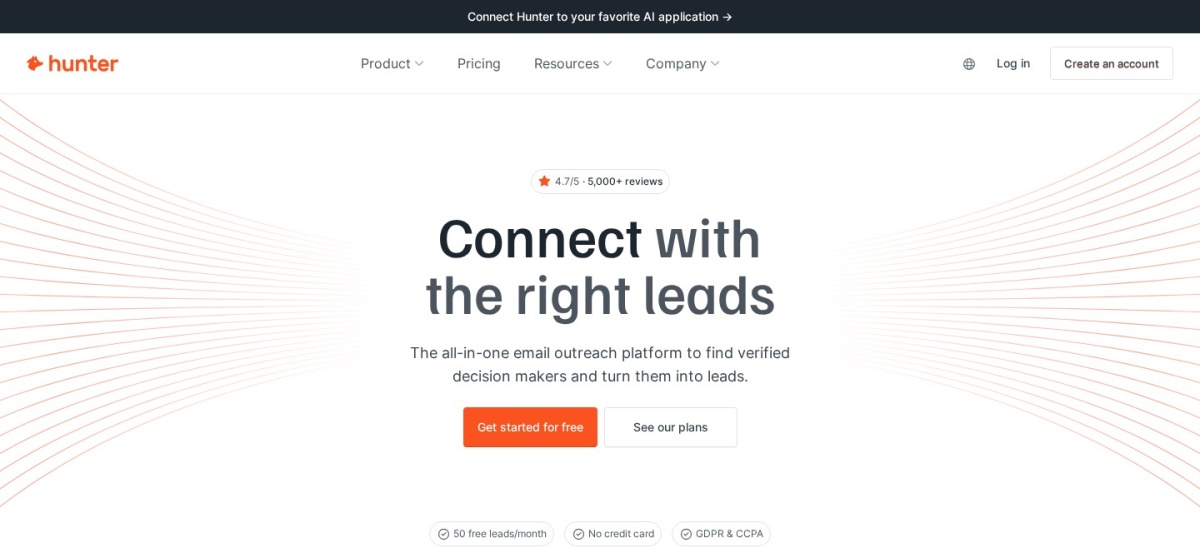
Hunter is the simplest email finder, with a free plan of 50 credits a month and Starter at 34 dollars a month.
ZoomInfo and Cognism publish no prices and sell annual contracts only, so budget for a sales conversation.
Clay suits teams that enrich from many providers at once, but Launch starts at 167 dollars a month.
How do you choose the best Clearbit alternative?
Start with the job, not the database size. Clearbit was a data enrichment tool, now part of HubSpot as Breeze Intelligence, so decide whether you need bulk lists, one-off lookups or CRM enrichment.
Credits decide the real cost. Apollo, Lusha and Hunter all ration lookups by credits, so a cheap monthly figure can run out fast on a big list.
Check where your buyers are. Cognism leads on European coverage and phone-verified mobiles, while Apollo and Lusha are stronger value picks for global lists.
Mind the contract. ZoomInfo and Cognism sell annual quote-only contracts with no self-serve checkout, while Apollo, Lusha and Hunter let you pay by card and cancel anytime.
Apollo.io is a sales platform that combines a database of more than 275 million contacts with email sequencing, call recording and pipeline tools. Basic costs 49 dollars a user a month billed yearly and includes unlimited sequences, and a free plan covers light use.
The trade off is that the built-in dialer waits for Professional at 79 dollars a user a month billed annually, and data quality varies by region. Credits expire each cycle and do not roll over. It suits small and mid-size teams that want prospecting and outreach in one login.
Lusha is a self-serve contact database with a browser extension that reveals verified emails and phone numbers on LinkedIn and company sites. Starter costs 37 dollars and 45 cents a month billed yearly for 400 credits a month, and the free plan gives 40 credits a month.
The trade off is credit math. An email costs 1 credit but a phone number costs 5, so 400 credits cover only 80 numbers a month. It suits reps who need quick one-off lookups without a sales call.
Hunter.io is a focused tool for finding and verifying work emails from domains and public web pages. Starter costs 34 dollars a month billed yearly for 2,000 credits a month, with domain search, an email finder and verifier, and cold email sequences.
The trade off is scope. Hunter finds emails only, with no company database or phone numbers, so teams that call prospects need a second tool. It suits anyone who wants the simplest way to find a verified work email.
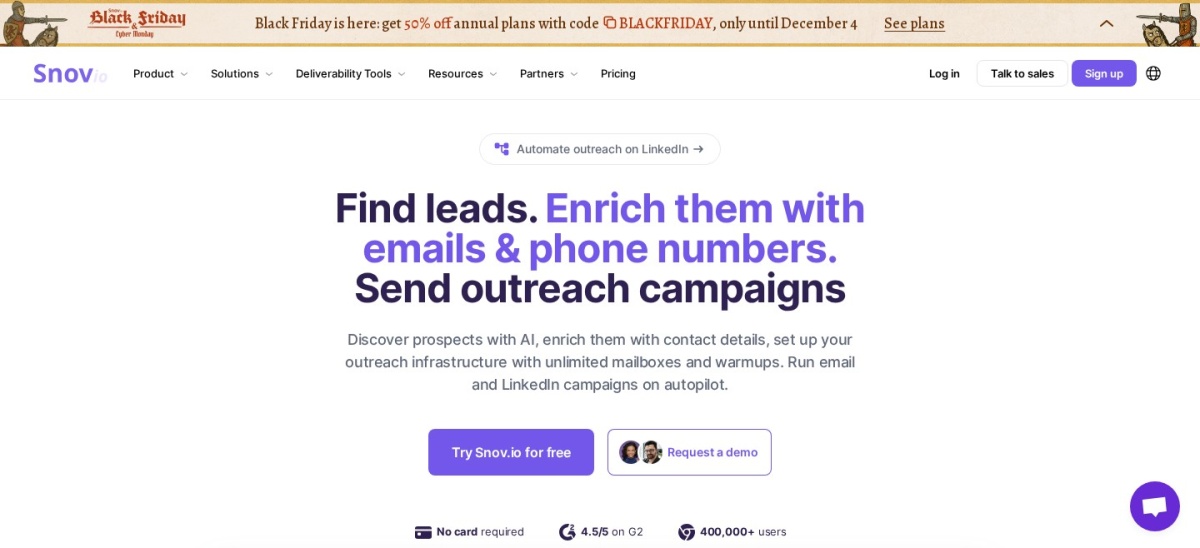
Snov.io is an all-in-one lead generation and outreach platform with a finder, verifier, warm-up and drip campaigns. Starter costs 29 dollars and 25 cents a month billed yearly for 1,000 credits, 5,000 campaign recipients and unlimited team seats.
The trade off is credit limits. Starter covers 1,000 credits a month, so heavy prospecting needs Pro S at 74 dollars and 25 cents a month. It suits freelancers and small teams that want finding and sending in one subscription.
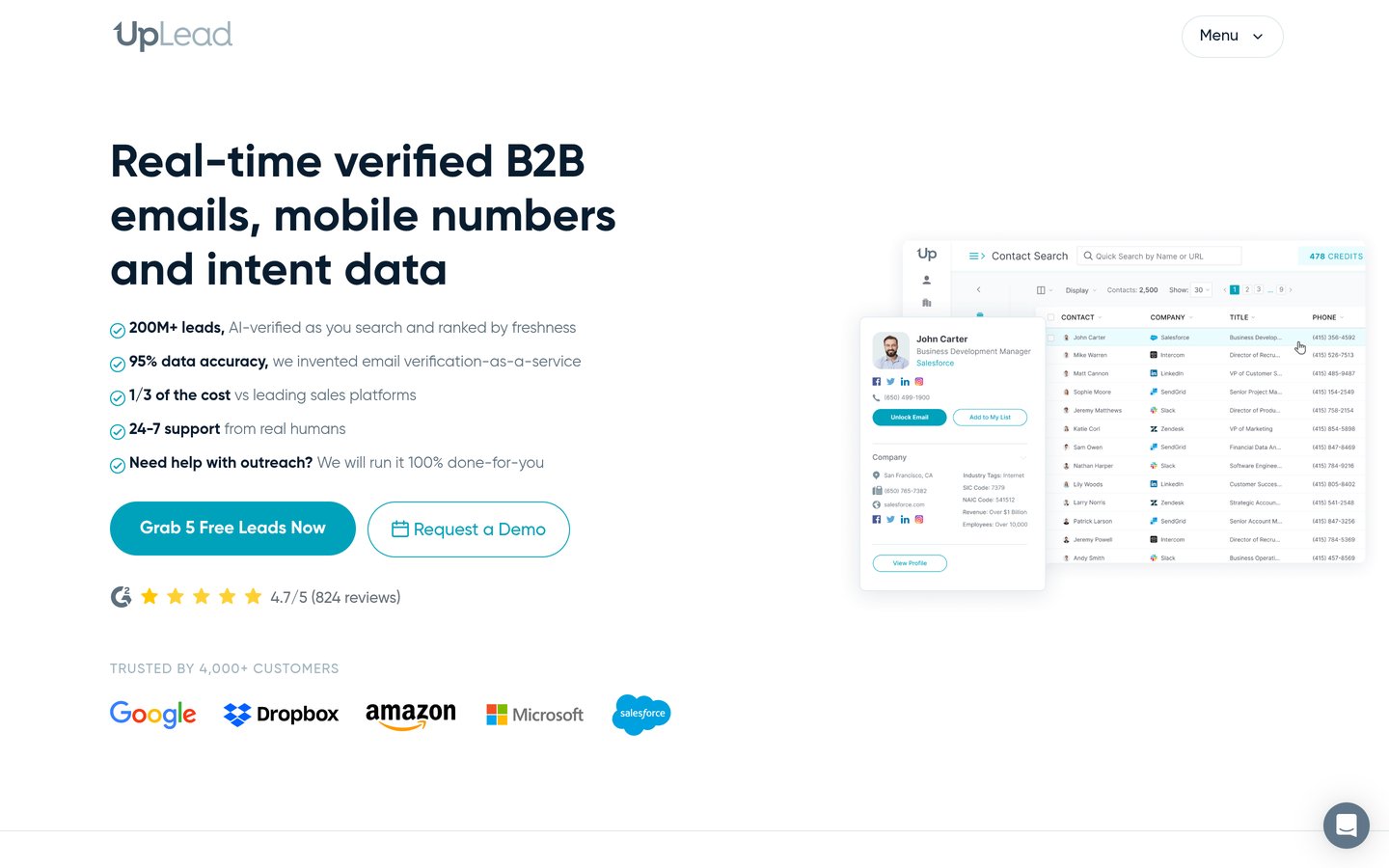
UpLead is a B2B contact database built around one promise: every email is verified in real time before you pay for it. Essentials costs 74 dollars a month billed yearly for 170 credits a month, with 2,040 credits a year and a 95 percent accuracy guarantee.
The trade off is coverage. G2 reviewers note gaps at smaller companies, and there is no recurring free plan, only a 7-day trial with 5 credits. It suits teams that call and email and want one credit to cover both.
ZoomInfo is the heavyweight of B2B data, with verified contact and company records, intent signals and deep Salesforce and HubSpot integrations. It holds 4.5 out of 5 on G2 from more than 9,200 reviews, with over 321 million contacts across 104 million companies.
The trade off is the contract. ZoomInfo publishes no prices and sells annual contracts only, with buyer reports putting Professional near 14,995 dollars a year. It suits enterprise teams that need deep data on large accounts and can pay for annual contracts.
Cognism is a London-headquartered platform built around phone-verified mobile numbers and European coverage. It screens numbers against 15 Do Not Call lists, sells Standard and Pro packages of 5 seats each, and holds 4.5 out of 5 on G2 from more than 1,300 reviews.
The trade off is access. Cognism publishes no prices, sells through a sales team only, and buyer reports put median contracts near 32,750 dollars a year. It suits teams of 5 or more reps with a European pipeline who live on the phone.
Clay is a data enrichment workspace with no database of its own. It runs each row through a waterfall of more than 150 providers until one returns an email or number, and Launch costs 167 dollars a month billed yearly with unlimited seats.
The trade off is the learning curve. Clay is a table you build yourself, with prompts and workflows, so it suits teams with someone technical. Phone numbers need the Launch plan or higher, and credits add up on big lists. It suits RevOps teams that enrich from many sources at once.
RocketReach is a people search tool with a database of 700 million professionals, a web app and a Chrome extension. Essentials costs 399 dollars a year for 1,200 exports, with emails only, and the free account gives 5 lookups.
The trade off is that phone numbers need the Pro plan, and the annual price has changed more than once, so confirm it on the pricing page before paying. It suits anyone who wants a few lookups a month with no sales call.
HubSpot acquired Clearbit in 2023 and folded it into HubSpot as Breeze Intelligence, so standalone Clearbit plans ended.
Teams that used Clearbit for enrichment now buy a separate data tool. Apollo, Lusha and ZoomInfo are the closest replacements, depending on budget.
If you already pay for HubSpot, check Breeze Intelligence first. It covers enrichment inside HubSpot, but teams outside HubSpot need one of the tools below.
How we chose
We started from the data tools Clearbit users compare most often, then kept the 9 with a public price or a clear quote-only model and a G2 rating from real reviewers.
Prices come from each vendor's pricing page, checked on 29 November 2026. Ratings and review counts come from G2 on the same day. Where a vendor shows a sale, the list shows the regular price.
We left out tools with no verifiable rating. No vendor paid for a place, and we do not claim hands-on testing for this list.
How to choose a Clearbit alternative
Match the tool to how you find contacts, then check the credit math.
Decide how you prospect. Bulk list building suits Apollo or UpLead, while one-off LinkedIn lookups suit Lusha or RocketReach.
Count the credits you will burn. A plan with 400 credits a month covers about 400 emails, but only 80 phone numbers on Lusha, where each number costs 5 credits.
Check coverage for your market. Cognism leads in Europe, ZoomInfo leads in North America, and Apollo covers 275 million contacts worldwide.
Avoid a contract you cannot exit. Quote-only tools need 60 to 90 days notice to cancel in many cases, so start with a monthly plan where you can.
FAQ
What is the best Clearbit alternative in 2026?
Apollo is the best Clearbit alternative for most sales teams. It holds 4.7 out of 5 on G2 from more than 9,600 reviews, covers 275 million contacts, and Basic costs 49 dollars a user a month billed yearly.
What happened to Clearbit?
HubSpot acquired Clearbit in 2023 and folded it into HubSpot as Breeze Intelligence. Standalone Clearbit plans ended, so teams that used it for enrichment now buy Apollo, Lusha or ZoomInfo instead.
Which Clearbit alternative is cheapest?
Snov.io is the cheapest paid start at about 29 dollars a month billed yearly, followed by Hunter at 34 dollars a month. Lusha Starter costs about 37 dollars a month and adds verified phone numbers.
Apollo vs Lusha: which is better?
Apollo wins for teams that want a database plus email sequences in one tool. Lusha wins for quick one-off lookups, with a browser extension and phone numbers from the Starter plan.
Does ZoomInfo publish its prices?
No. ZoomInfo sells annual quote-only contracts with no monthly billing or self-serve checkout. Buyer reports put Professional near 14,995 dollars a year, so confirm the figure in writing before signing.
Which Clearbit alternative is best for phone numbers?
Lusha is the best value pick for phone numbers, with 1 credit per email and 5 per number on Starter. Cognism leads on phone-verified European mobiles, but it sells quote-only packages of 5 seats.
SaaS SEO and WordPress specialist with about 8 years of experience. Rakib compares WordPress plugins, themes, hosting and software using public pricing, documentation and user reviews. See how we rank.