Cin7 Core is the best of the Brightpearl alternatives for most multichannel sellers, with one stock pool across channels, forecasting and a $349 a month Standard plan. Zoho Inventory is the budget pick at $29 a month, while Katana suits sellers who make what they sell.
How we make this list: we compare pricing pages, product documentation and public user reviews, then re-check every price before each update. No product paid for a place. Disclosure.
Cin7 Core leads for multichannel sellers: $349 a month, 700+ integrations and built-in demand forecasting.
Zoho Inventory is the cheapest paid start at $29 a month, with a free tier and native Zoho Books sync.
Katana is the clearest pick for makers: a free tier up to 30 SKUs, then Core at $299 a month.
Linnworks publishes no price at all, so budget for a sales call before you shortlist it.
NetSuite-style ERP depth is overkill below about $1 million in annual trade, where lighter tools fit better.
How do you choose Brightpearl alternatives?
Brightpearl is a retail operations system that handles orders, stock, purchasing and accounting links for sellers on many channels. Its price is a custom quote, and customers go live in 90 to 120 days on average.
The tools here split into three groups. Budget tools such as Zoho Inventory and Odoo cover one or two channels at a low monthly cost. Multichannel tools such as Cin7 Core, Linnworks and Finale sync many channels and warehouses. Manufacturing tools such as Katana, Fishbowl and Unleashed track parts, builds and work orders.
Price models differ more than the headline numbers suggest. Some plans cap orders, items or users, and some charge extra for each sales order, location or add-on, so read the plan limits beside the price.
Size is the first filter, not features alone. Brightpearl itself targets merchants trading $1 million a year or more, so smaller sellers should start with a budget tool and move up when volume demands it.
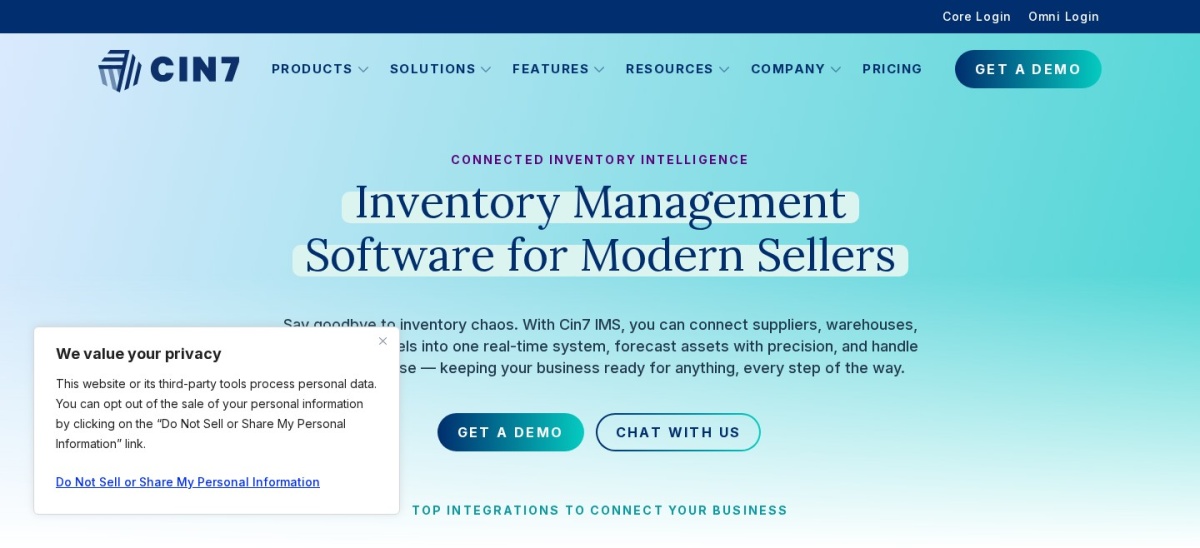
Cin7 Core is a cloud inventory and order platform for brands that sell on several channels at once. The Standard plan costs 349 dollars a month on a 12-month contract, covers 5 users and 6,000 sales orders a year, and connects to 700+ integrations. It syncs stock across stores and marketplaces in real time and adds built-in demand forecasting.
The trade off is price and commitment. There is no free plan, only a 14-day trial, and the entry plan is 349 dollars a month on an annual contract, so small or single-channel sellers pay for scale they may not use. It suits growing brands that already sell on three or more channels and need one stock count everywhere.
What we like
Syncs stock across stores, marketplaces and retail partners
Built-in demand forecasting on the entry plan
700+ integrations, including 200+ shipping carriers
Watch out for
No free plan, only a 14-day trial
Entry plan needs a 12-month contract
Standard adds forecasting and 6,000 orders a yearVisit cin7.com
02
Zoho Inventory
4.4/5on G2 (91 reviews, checked Nov 2026)
Paid from$29/mo
Best value for small businesses
Free planYes
Paid planStandard, $29/mo
Batch trackingYes, with expiry dates
Zoho apps syncBooks and CRM
zoho.com
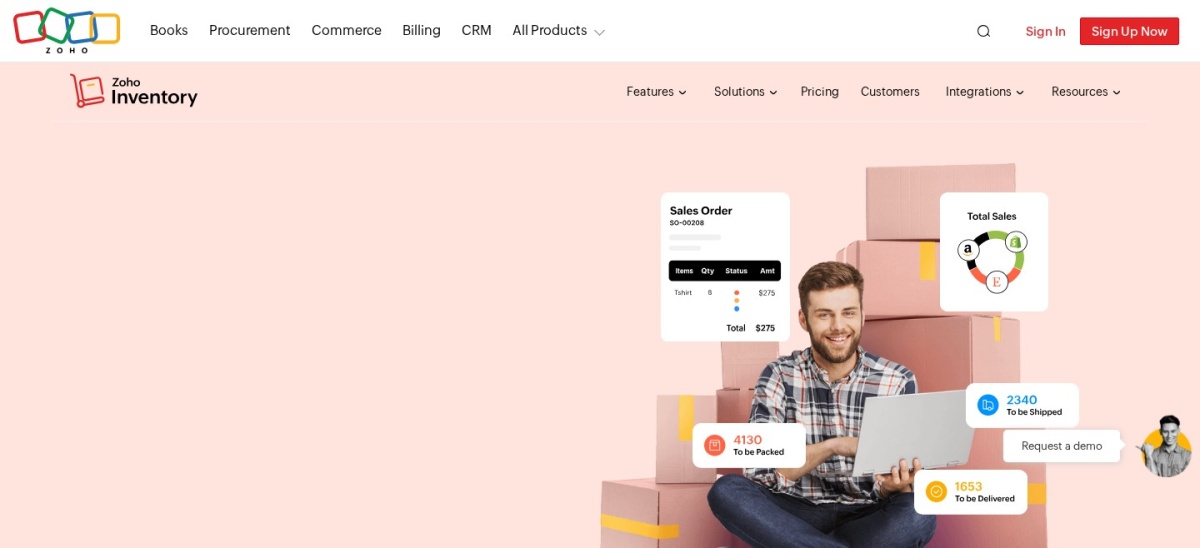
Zoho Inventory homepage, captured Nov 2026.
Zoho Inventory is a cloud stock and order tool that fits inside the wider Zoho suite. The free tier covers a small monthly order count, and paid plans start at 29 dollars a month when billed annually, or 39 dollars month to month. It tracks batches and serial numbers with expiry dates and syncs natively with Zoho Books and Zoho CRM.
The trade off is scale. Order limits rise with each tier, and multi-level manufacturing or very high order volumes push you into the higher plans fast. It suits small businesses already using Zoho apps, or sellers who want the lowest-cost start with real multichannel sync.
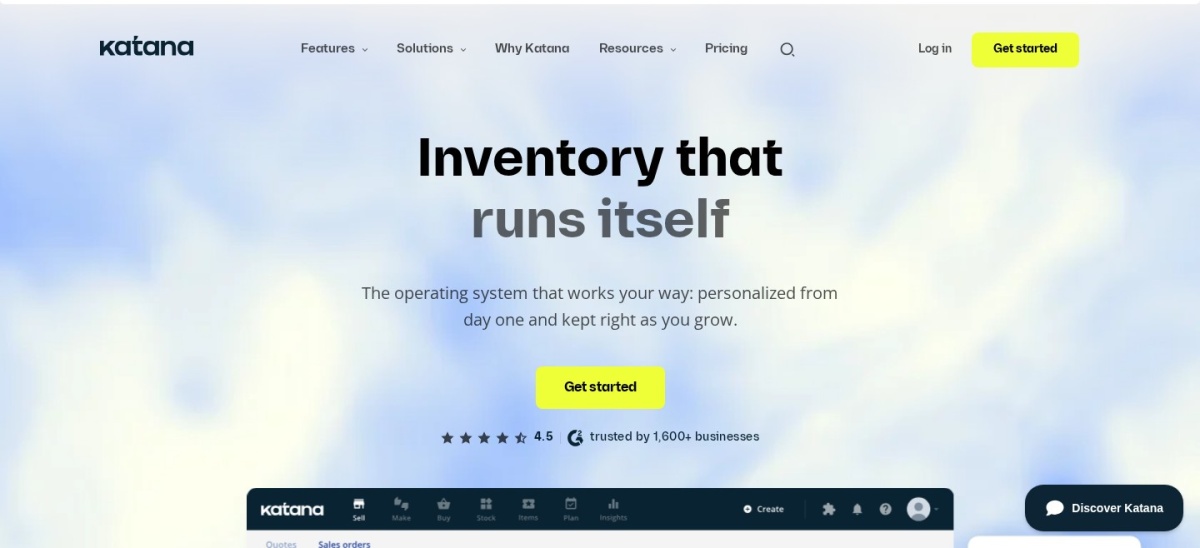
Katana is a production-first inventory tool for businesses that make what they sell. The free tier covers up to 30 SKUs, and the Core plan starts at 299 dollars a month with one inventory location and unlimited users. It tracks raw materials through to finished goods, with visual production scheduling.
The trade off is that manufacturing costs extra. The Manufacturing Management add-on is 199 dollars a month on top of Core, and sales orders are billed by usage, so the monthly total moves with volume. It suits small manufacturers who plan production daily and need to know what is in stock, on order and in production.
Finale Inventory is cloud stock and warehouse software for ecommerce brands that sell on many channels. The Essentials plan starts at 499 dollars a month and covers more than one warehouse, purchase planning and 40+ channel links, including Shopify, Amazon FBA and Walmart. It also handles serial and lot tracking.
The trade off is price and contract length. Essentials starts at 499 dollars a month, Growth adds the mobile barcode module at 799 dollars a month, and most buyers sign 12, 24 or 36-month deals. It suits high-volume sellers with more than one warehouse who need serial-level control.
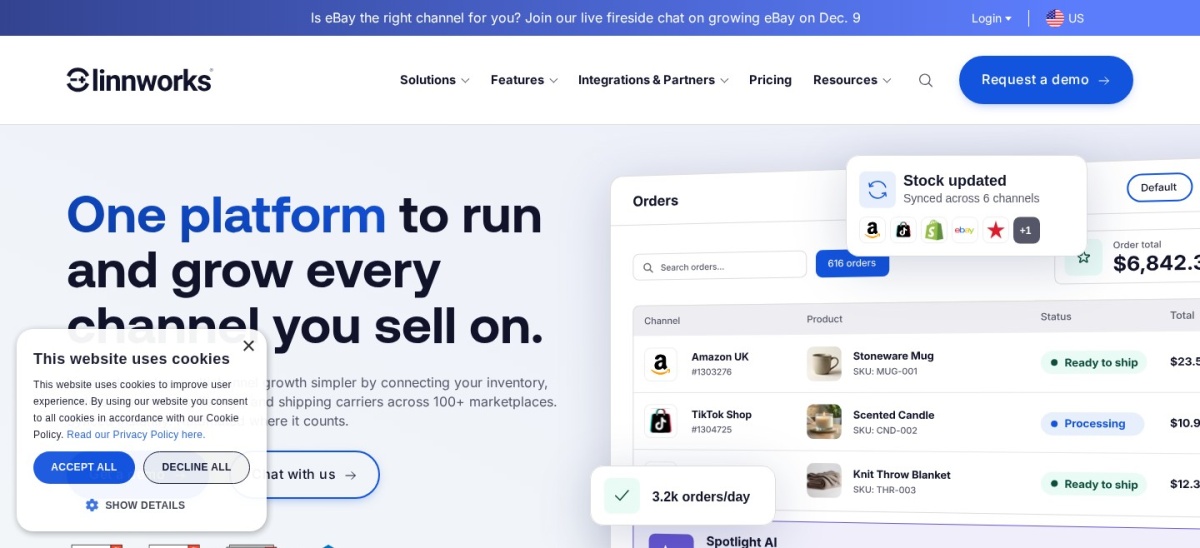
Linnworks is a multichannel operations platform for mid-market sellers who list, sell and ship across many marketplaces. It connects inventory, orders, listings and warehouse work in one system, with 100+ marketplace integrations and a warehouse management module. Linnworks reports 242 million orders handled a year.
The trade off is price transparency. Linnworks publishes no prices: plans are priced by monthly order volume and need a custom quote, and add-ons for listings, forecasting and the warehouse module each add cost. It suits sellers doing 1,000 or more orders a month who want one platform instead of several tools.
Odoo is a modular ERP where you start with one or two apps, such as Inventory and Sales, and add CRM, Accounting, Manufacturing or ecommerce later. One app is free, and the Enterprise plan lists at 31.10 dollars per user a month. That modular path keeps early costs low.
The trade off is that the per-user price adds up as the team grows, and implementation often needs a partner. It suits sellers who want ERP depth on a budget and like adding apps one at a time.
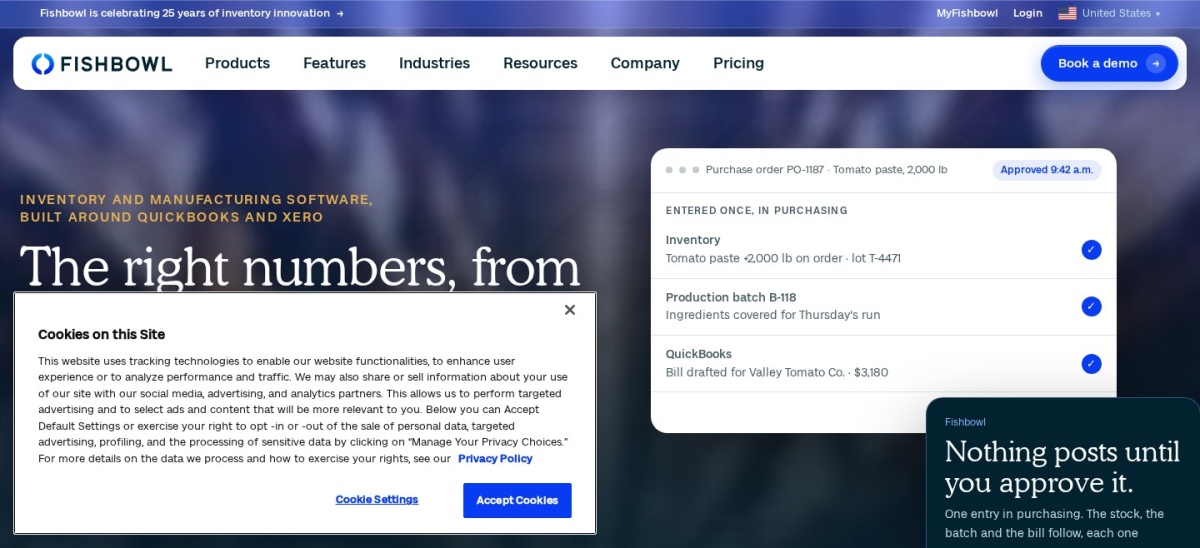
Fishbowl is warehouse inventory software built around QuickBooks and Xero. The Essentials plan starts at 229 dollars a month billed annually and includes 2 users, real-time stock tracking, reorder points and mobile barcode scanning. It syncs sales, purchases and stock with QuickBooks Online or Desktop.
The trade off is the total cost. Fishbowl also requires an implementation package, and manufacturing, advanced warehousing and demand forecasting sit in higher plans from 429 to 729 dollars a month. It suits warehouses and distributors that keep QuickBooks at the centre of their accounts.
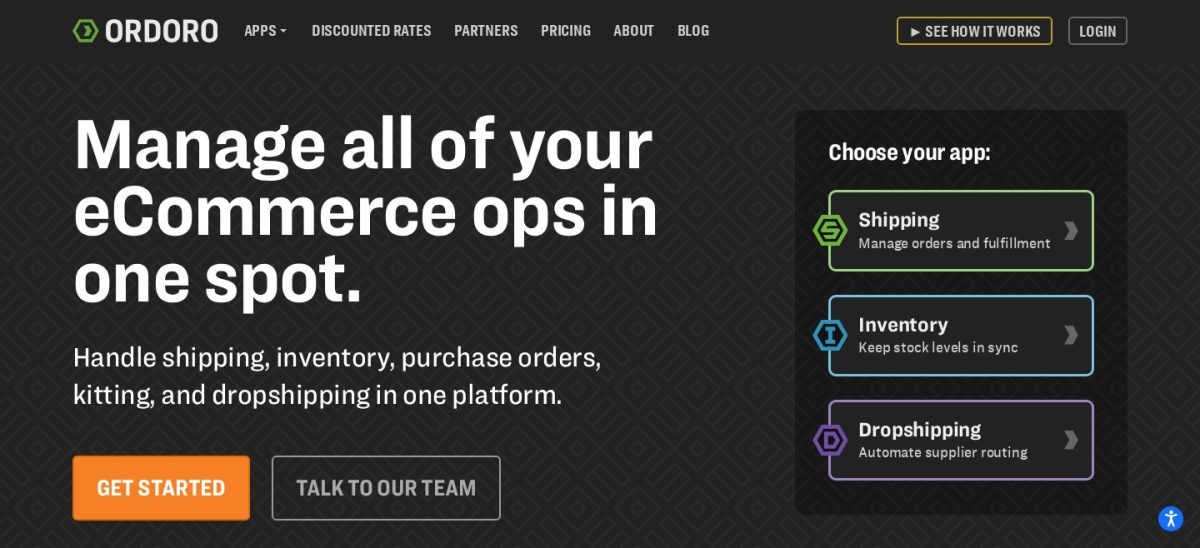
Ordoro is an ecommerce operations platform that combines shipping, inventory and dropshipping in one system. The Inventory app starts at 349 dollars a month on the Advanced plan, which includes 1,000 orders a month. The free Shipping Essentials plan covers 100 labels a month, and the Dropshipping app starts at 299 dollars a month.
The trade off is that the apps are priced separately. Buying inventory, shipping and dropshipping together costs more than any single app, and overage fees apply once you pass the order or label caps. It suits online sellers who want stock, labels and supplier orders in one place.
What we like
Inventory, shipping and dropshipping in one account
Unleashed is cloud inventory software for product businesses that want accurate stock records beside their accounts. The Core plan costs 399 dollars a month for 3 users and covers multi-warehouse stock, serial and batch tracking, and integrations with Xero and QuickBooks.
The trade off is the jump between plans. Production tools such as bills of materials, assemblies and forecasting need the Pro plan at 729 dollars a month, and reviewers call the interface rigid next to newer tools. It suits wholesalers, distributors and food businesses that value stock accuracy over a modern interface.
Free plans here cover the basics: Zoho Inventory, Katana and Odoo all let you track real stock without paying, with caps on orders, SKUs or items.
Paid plans mostly add volume and workflow. You get more orders, locations and users, plus purchasing, B2B portals or manufacturing that free tiers leave out.
Watch the renewal price, not the headline. Several tools bill annually only, and implementation packages add to the first-year cost.
If you sell on one channel and hold a few hundred items, a free tier can last a year. Move up when stock counts across channels start to drift.
How we chose
We started from the inventory and order tools that appear most often in G2 and Capterra rankings for multichannel sellers, then kept nine with published ratings, real pricing pages and an established user base.
Prices come from vendor pricing pages, checked on 29 November 2026. Ratings come from G2 or Capterra on the same day, and the list shows regular prices, not first-year discounts. Linnworks publishes no price, so it is listed as a custom quote.
We left out tools with no public rating and quote-only ERP suites that need a sales process to price. No vendor paid for a place, and we do not claim hands-on testing for this list.
How to choose a Brightpearl alternative
Start with how you sell, then match the tool to that flow, not to the longest feature list.
Count your channels and locations. One store and one warehouse needs a simple tool such as Zoho Inventory or Odoo. Three or more channels points to Cin7 Core, Linnworks or Finale.
Check whether you make what you sell. Makers need bills of materials and work orders, which Katana, Fishbowl Advanced and Unleashed Pro cover. Resellers can skip that cost.
Read the plan limits, not just the price. Order caps, item caps, user counts and per-order fees change the real monthly cost.
Try the free tier or trial on real stock. Load a sample of SKUs, run a purchase order and a sale, and check the stock count updates on every channel before you pay.
FAQ
What are the best Brightpearl alternatives in 2026?
Cin7 Core is the best Brightpearl alternative for most growing brands. Its $349-a-month Standard plan syncs stock across sales channels, adds demand forecasting and covers 5 users and 6,000 sales orders a year. Smaller sellers should start with Zoho Inventory at $29 a month.
How much do Brightpearl alternatives cost?
Most tools in this list cost $29 to $499 a month. Zoho Inventory starts at $29 a month, Odoo at $31.10 per user a month and Cin7 Core at $349, while Finale starts at $499. Linnworks is quote-only, so its cost depends on monthly order volume.
Is there a free Brightpearl alternative?
Yes. Zoho Inventory, Katana and Odoo all have free tiers, with caps on orders, SKUs or items. Ordoro has a free shipping plan, but its inventory app is paid. Free tiers suit small sellers; growing businesses outgrow the caps.
Which Brightpearl alternative is best for manufacturers?
Katana is the best fit for small manufacturers, with production scheduling and raw-material tracking from $299 a month. Fishbowl Advanced and Unleashed Pro also cover bills of materials and work orders, at $595 and $729 a month.
What is the difference between Cin7 Core and Linnworks?
Both sync stock across many channels, but Cin7 Core publishes its price at $349 a month with built-in forecasting, while Linnworks is quote-only and prices by order volume. Cin7 suits growing brands; Linnworks suits mid-market sellers who also need listings and warehouse tools.
Do I need inventory software if I use WooCommerce?
WooCommerce tracks stock for one store, but it does not sync counts across Amazon, eBay or a warehouse. Inventory software keeps one count everywhere and adds purchase orders, barcode scanning and reorder alerts as sales grow.
SaaS SEO and WordPress specialist with about 8 years of experience. Rakib compares WordPress plugins, themes, hosting and software using public pricing, documentation and user reviews. See how we rank.