Best Software for Simulation in 2026: 9 Tools Compared
WLWPLegible EditorsLast verified 24 Nov 2026How we rank13 min read
★ Short answer
Ansys Fluent is the best software for simulation for most engineering teams. It is the industry-standard CFD solver for fluid flow, heat transfer and turbulence, sold by quote. Pick Autodesk CFD for flow and thermal simulation inside Autodesk CAD, and Simulink for control systems and dynamic models.
How we make this list: we compare pricing pages, product documentation and public user reviews, then re-check every price before each update. No product paid for a place. Disclosure.
Ansys Fluent is the industry-standard CFD solver, rated 4.5/5 on G2 from 122 reviews, sold by quote.
Autodesk CFD holds a 4.3/5 G2 rating from 31 reviews and integrates with Inventor and Fusion, sold by quote.
Simulink costs $1,585 a year for an annual license, plus a MATLAB license at $1,050 a year.
AnyLogic is the only multimethod tool here, with discrete-event, agent-based and system dynamics in one environment.
OpenFOAM is free and open source, rated 4.3/5 on G2, for teams with in-house CFD expertise.
What simulation software should cover
Most commercial simulation software is sold by quote, not by a price list. Ansys Fluent, COMSOL, AnyLogic, FlexSim and Simio all require a sales conversation, so request quotes for the same model size and user count.
Free options exist for learning and small work. OpenFOAM is fully free and open source, and AnyLogic offers a free Personal Learning Edition for non-commercial use.
The physics you model decides the tool. CFD tools such as Fluent, Autodesk CFD and OpenFOAM model fluid flow and heat, while discrete-event tools such as FlexSim and Simio model factories, warehouses and processes.
Hardware matters as much as the license. Desktop solvers need serious workstations for large models, while cloud tools move the compute to the browser and charge by core hours.
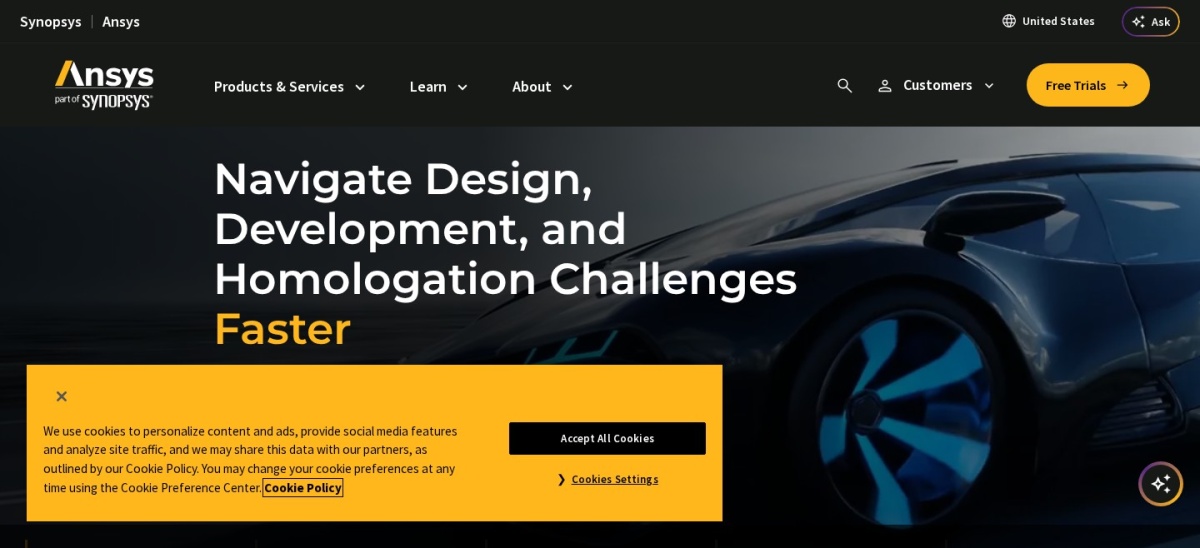
Ansys Fluent is the industry-standard CFD solver for fluid flow, heat transfer and turbulence, used across aerospace, automotive and energy. It runs on Windows, Linux and cloud, and holds a 4.5 out of 5 G2 rating from 122 reviews.
The trade off is price and hardware. Fluent is sold by quote only, needs serious compute for large models, and the full Ansys portfolio adds cost fast. It suits engineering teams where solver accuracy and validation matter more than budget.
Autodesk CFD is Autodesk's computational fluid dynamics tool for simulating fluid flow, heat transfer and thermal management in product design. It integrates with Autodesk CAD tools such as Inventor and Fusion, and holds a 4.3 out of 5 G2 rating from 31 reviews.
The trade off is price opacity. Autodesk publishes no CFD price list, and licensing runs through a sales conversation or an Autodesk subscription. It suits product designers already working in Autodesk CAD who need thermal and flow simulation in the same workflow.
Simulink is MathWorks' block-diagram environment for modeling and simulating dynamic systems, control design and signal processing. It integrates with MATLAB, generates code for embedded targets, and costs $1,585 a year for an annual license.
The trade off is the stack cost. Simulink needs a MATLAB license on top, and toolboxes add hundreds more per year, so budget the full stack. It suits engineers already using MATLAB who model control systems and dynamic plants.
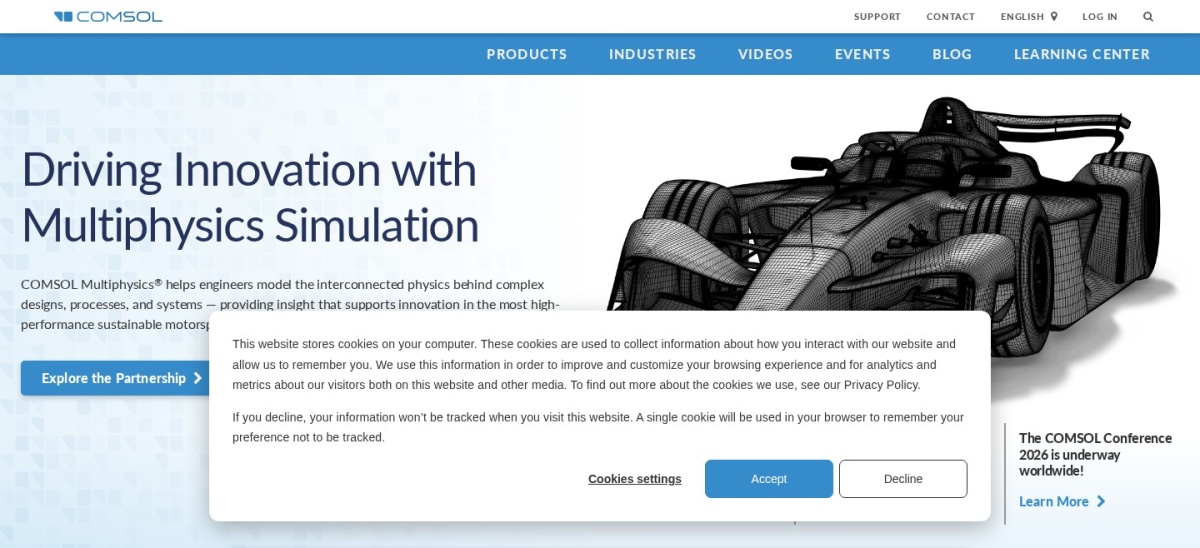
COMSOL Multiphysics is a single coupled environment for structural, fluid, electromagnetic and thermal simulation, with add-on modules for each physics. It is known for an intuitive interface, and holds a 4.3 out of 5 G2 rating from 36 reviews.
The trade off is price opacity. No list price appears on the site, and every inquiry goes through a sales form, with third-party figures putting a base license near $4,000. It suits R&D and academic teams that model coupled physics in one place.
Best numerical platform for modeling and simulation
LicenseAnnual, $1,050/yr
Pairs withSimulink, $1,585/yr
PlatformsWindows, Mac, Linux
Paid planAnnual, $1,050/yr
mathworks.com
MATLAB homepage, captured Nov 2026.
MATLAB is MathWorks' numerical computing platform for modeling, simulation and data analysis, used across engineering, finance and science. It pairs with Simulink for block-diagram simulation, and holds a 4.5 out of 5 G2 rating from 771 reviews.
The trade off is the stack cost. MATLAB costs $1,050 a year for an annual license, and toolboxes add hundreds more per year, so budget the full stack. It suits engineers who need one environment for math, modeling and simulation.
MethodsDiscrete-event, agent-based, system dynamics
Free planPersonal Learning Edition
CloudAnyLogic Cloud included
Paid planQuote, Professional edition
anylogic.com
AnyLogic homepage, captured Nov 2026.
AnyLogic is the only tool here that combines discrete-event, agent-based and system dynamics modeling in one environment. It covers supply chains, warehouses and logistics with 2D and 3D animation, and holds a 4.2 out of 5 G2 rating from 49 reviews.
The trade off is the learning curve. Meaningful models need training and Java familiarity, and commercial licenses are quote only. It suits teams whose system mixes agents, queues and system dynamics in one model.
FlexSim is 3D discrete-event simulation for factories, warehouses, healthcare and logistics, built from the ground up for visual modeling. Racks, conveyors, AGVs and robots are first-class objects, and it holds a 4.4 out of 5 G2 rating from 57 reviews.
The trade off is the buying motion. FlexSim sells consultative packages of software, training and model-building support, with a standalone subscription near $6,000 a year through resellers. It suits warehouse and plant teams that want visual realism without heavy coding.
Simio is object-oriented discrete-event simulation for manufacturing, warehousing and supply chain, built around the idea of a living digital twin. Models connect to live data for daily decisions, and it holds a 4.3 out of 5 G2 rating from 28 reviews.
The trade off is price opacity. Commercial Design, Team, Enterprise, Portal and RPS editions all require a sales conversation, and the platform leans Windows. It suits operations teams that want a process digital twin, not a one-off study.
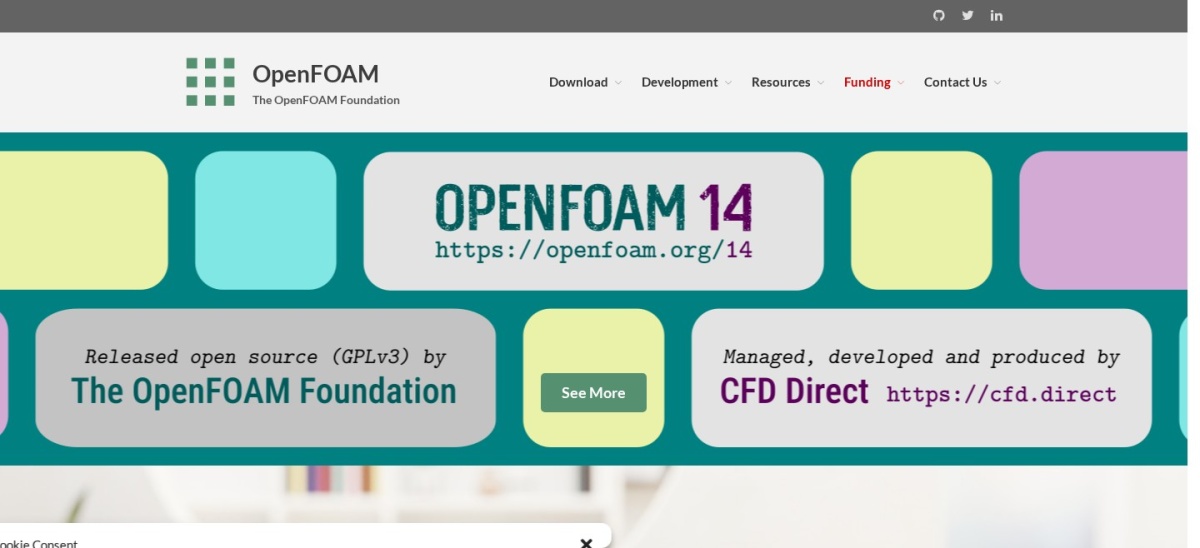
OpenFOAM is the free, open-source CFD toolbox for fluid flow, heat transfer, turbulence and multiphase problems. It is the standard open alternative to commercial solvers, and holds a 4.3 out of 5 G2 rating from 35 reviews.
The trade off is effort. OpenFOAM has no graphical interface by default and needs Linux and C++ comfort, with support coming from the community. It suits teams with in-house expertise that want full control at zero license cost.
Enterprise simulation is licensed by solver, user count and compute, so vendors price each deal separately. A quote for one Fluent seat looks nothing like a quote for a 50-seat site license.
The free tiers are the honest way to compare. Run the same model in OpenFOAM and a Fluent trial before you talk to sales.
How we chose
We started from the simulation tools most often named in 2026 engineering and operations comparisons, then kept those with real solver or modeling depth for engineering and operations teams.
Prices come from each vendor's pricing page and official price lists, checked on 24 November 2026. Ratings and review counts come from G2 on the same day. Where a vendor shows a sale, the list shows the regular price.
We left out tools with no verifiable G2 rating and tools that only do CAD without simulation. No vendor paid for a place, and we do not claim hands-on testing for this list.
How to choose software for simulation
Start with the physics you model, then check whether the price is published or quote-only.
Name the physics first. CFD, FEA, multiphysics and discrete-event tools solve different problems, so pick the physics before you pick the vendor.
Check whether the price is published. Most tools here are quote-only, so request quotes for the same model size and user count and compare the totals.
Try the free tier with a real model. Run the same model in OpenFOAM and a trial before you talk to sales.
Budget the hardware too. Desktop solvers need serious workstations for large models, while cloud tools charge by core hours instead.
FAQ
What is the best software for simulation?
Ansys Fluent is the best pick for most engineering teams. It is the industry-standard CFD solver for fluid flow, heat transfer and turbulence, rated 4.5/5 on G2 from 122 reviews, and sold by quote.
How much does simulation software cost?
Most commercial tools are quote-only. Simulink costs $1,585 a year for an annual license plus a MATLAB license at $1,050 a year, and FlexSim runs near $6,000 a year through resellers. OpenFOAM is free.
Is there free simulation software?
Yes. OpenFOAM is free and open source. AnyLogic offers a free Personal Learning Edition for non-commercial use, and Ansys offers a free Student version for learning.
What is the best simulation software for beginners?
AnyLogic's free Personal Learning Edition is the easiest way to learn multimethod modeling, and OpenFOAM is free for anyone comfortable with Linux and the command line.
What is the difference between CFD and discrete-event simulation?
CFD models fluid flow, heat transfer and turbulence in physical systems. Discrete-event simulation models processes, queues and resources in factories, warehouses and services.
Which simulation software is best for manufacturing?
FlexSim is the best pick for 3D factory and warehouse modeling, and Simio is the best pick for a process digital twin. Both are quote-only with free trials.