Best CAD Software for 3D Modeling in 2026: 9 Tools Compared
WLWPLegible EditorsLast verified 23 Nov 2026How we rank13 min read
★ Short answer
AutoCAD is the best CAD software for 3D modeling for most firms. It costs $2,095 a year, it writes the DWG files every architect, engineer and manufacturer expects, and it is rated 4.4 out of 5 on G2. Pick SolidWorks for mechanical parts, or Blender for full 3D modeling at no cost.
How we make this list: we compare pricing pages, product documentation and public user reviews, then re-check every price before each update. No product paid for a place. Disclosure.
AutoCAD is still the drafting standard, with DWG files that open everywhere and seven specialist toolsets for $2,095 a year.
SolidWorks owns mechanical design at $2,820 a year, with parametric parts, assemblies and drawings that update together.
Blender is the highest-rated free tool here at 4.6 out of 5, with full modelling, sculpting and rendering for $0.
Fusion is the best value for product design, packing CAD, CAM, simulation and PCB design into one $680 a year subscription.
Rhino is the only paid tool here sold outright at $995 once, and FreeCAD is the best free parametric option at $0.
What CAD software for 3D modeling should cover
3D modeling CAD splits by job: parametric parts for manufacture, BIM models for buildings, and freeform surfaces for product design. No single tool leads at all three, so the work you do picks the tool.
DWG compatibility decides most purchases. AutoCAD defines the format, and BricsCAD exists to read and write it for less money, while SolidWorks and Fusion own mechanical design and Blender owns free 3D work.
Pricing runs from free to $2,820 a year per seat. Monthly billing costs far more than yearly on every subscription here, so compare the annual figure and the free tier before you commit.
Our guide on how much a WordPress site redesign costs makes the same point about design tools: the licence is only part of the cost, and training time matters too.
AutoCAD is the drafting tool most of the industry already runs on. The subscription costs $260 a month or $2,095 a year, and it includes seven industry-specific toolsets for architecture, mechanical, electrical, plant, MEP, mapping and raster work, plus web and mobile versions. It is rated 4.4 out of 5 on G2 from 2,010 reviews.
The trade off is the subscription. There is no perpetual licence and no hobby plan, so a single seat is a $2,095 yearly commitment. It suits architects, engineers and drafters who need the industry-standard DWG workflow.
SOLIDWORKS is the mechanical CAD standard for product teams. Design Standard with Cloud Services costs $2,820 a year, and it covers parametric parts, assemblies and drawings with weldments, sheet metal and mold tools. It is rated 4.5 out of 5 on G2 from 646 reviews.
The trade off is the price and the platform. It is the highest annual figure here, it runs on Windows, and training takes time. It suits mechanical engineers who design machined parts for manufacture every day.
Autodesk Fusion is a cloud workspace for product design that packs CAD, CAM, simulation and PCB design into one subscription. It costs $85 a month or $680 a year, and hobbyists get a free personal-use plan while students and qualifying startups pay nothing. It is rated 4.5 out of 5 on G2 from 519 reviews.
The trade off is the cloud. Files live in Autodesk's cloud, and the free personal licence only lets you edit 10 documents at a time. It suits startups and small teams that want CAD, CAM and simulation in one subscription.
Blender is a free, open-source 3D creation suite for modelling, sculpting, animation and rendering. It covers hard-surface modelling, organic sculpting, UV unwrapping, texturing and the Cycles renderer, with no paid tier at all. It is rated 4.6 out of 5 on G2 from 319 reviews, the highest rating here.
The trade off is that it is not parametric CAD. Dimension-driven parts and engineering drawings are thinner than in SolidWorks or Fusion, and the interface takes time to learn. It suits artists, designers and makers who want full 3D power for no money.
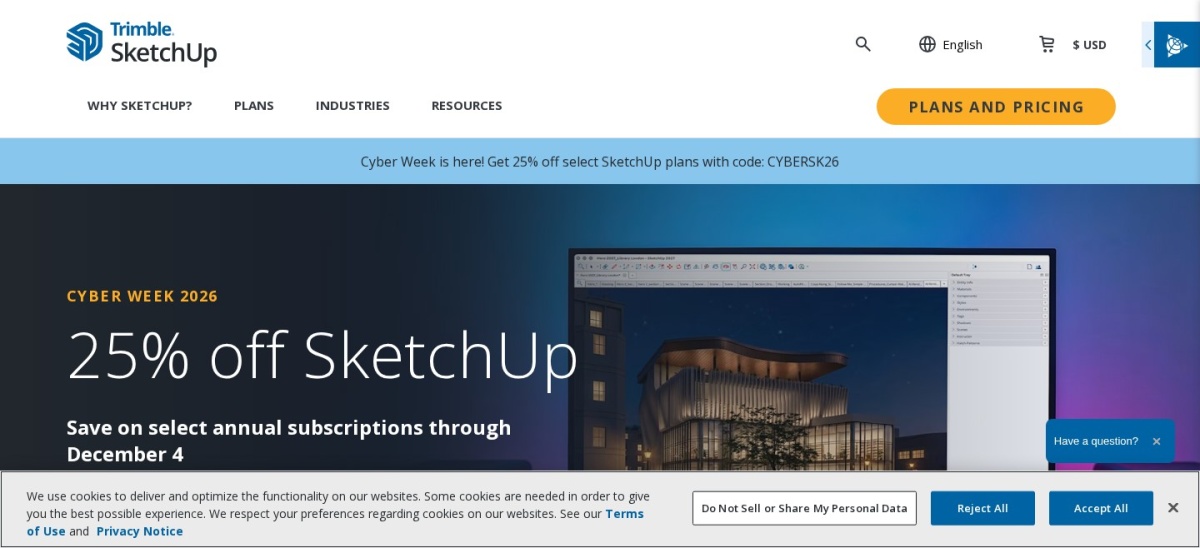
SketchUp is the fastest tool here to learn and the easiest way to get a building, room or piece of furniture into 3D. Go costs $129 a year for the web and iPad, and Pro costs $399 a year with the desktop app, LayOut documentation and extensions. It is rated 4.5 out of 5 on G2 from 1,327 reviews.
The trade off is depth. Push-pull modelling is fast for concepts but thin for parametric engineering, and the free version runs only in a browser without extensions. It suits architects, interior designers and woodworkers who want quick, presentable models.
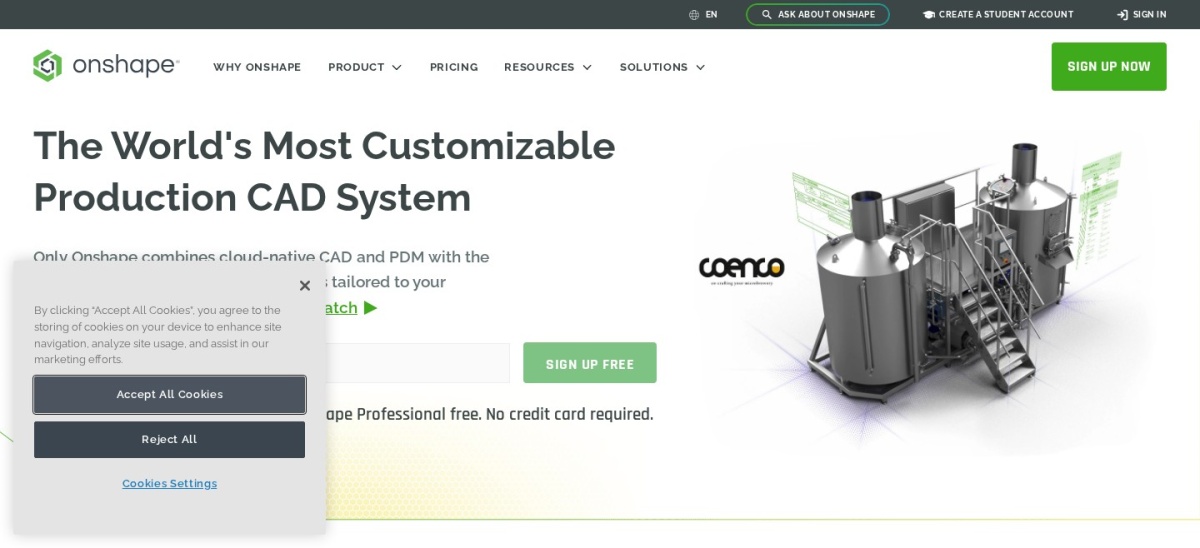
Onshape is cloud-native CAD that runs entirely in a web browser. Two engineers can edit the same assembly at once, every change is versioned like source code with branching and merging, and there is nothing to install or update. It is rated 4.7 out of 5 on G2 from 724 reviews.
The trade off is the free plan. It is for non-commercial use and every free document is public, while Standard costs $1,500 per user per year. It suits distributed product teams that want real-time collaboration without a file server.
Rhino is a 3D modeller built on NURBS geometry for freeform and organic shapes. It covers architecture, product design, jewellery and marine design, with SubD modelling and Grasshopper for computational design. It costs $995 once for Windows and Mac, with upgrades at $595. It is rated 4.4 out of 5 on G2 from 192 reviews.
The trade off is that it is not parametric CAD. Dimension-driven parts and assemblies are thinner than in SolidWorks or Fusion, and there is no free tier, only a 90-day evaluation. It suits designers who need precise freeform surfaces.
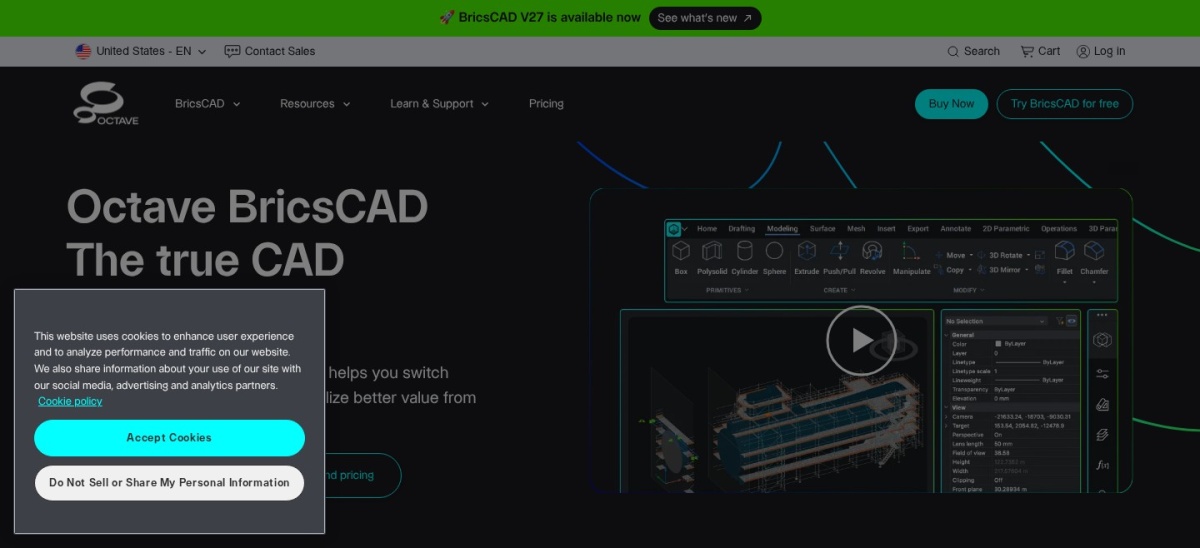
BricsCAD is a DWG-based CAD platform from Bricsys, now part of Hexagon. It reads and writes native DWG files and mirrors AutoCAD's commands closely enough that experienced drafters switch in days. Lite costs $345 a year, and a perpetual licence is also available. It is rated 4.5 out of 5 on G2 from 135 reviews.
The trade off is price reporting. The Lite price is also listed as 314 euros a year, so the dollar figure moves with the vendor's store. It suits AutoCAD users who want the same workflow for less money.
What we like
Native DWG with AutoCAD-like commands
Perpetual licence option, rare here
LISP support for old AutoCAD scripts
Rated 4.5 out of 5 from 135 G2 reviews
Watch out for
Price is listed in euros on some pages
Smaller ecosystem than Autodesk
Higher tiers add up for BIM and mechanical
Pro adds 3D at $780 a year; perpetual licences availableVisit bricsys.com
09
FreeCAD
4.1/5on G2 (62 reviews, checked Nov 2026)
PriceFree
Best free and open-source CAD
Entry priceFree, open source
ModellingParametric 3D, assemblies
ExportSTEP, STL and more
PlatformsWindows, Mac, Linux
freecad.org
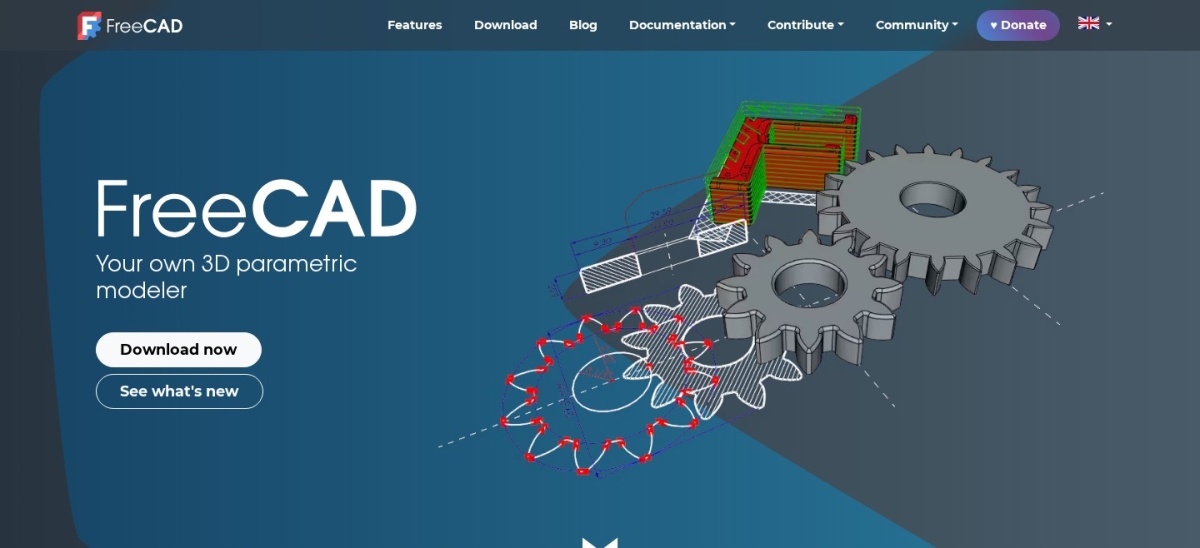
FreeCAD homepage, captured Nov 2026.
FreeCAD is a free, open-source parametric 3D modeller for designing real objects of any size. It covers feature-based modelling, assemblies, technical drawing workbenches and Python scripting, with STEP export for manufacturing. It is rated 4.1 out of 5 on G2 from 62 reviews.
The trade off is polish. The interface is rougher than paid tools, assembly handling is weaker, and support comes from the community. It suits students, hobbyists and small shops that need real parametric CAD for no money.
Most CAD here is subscription-only. AutoCAD, SolidWorks, Fusion, SketchUp and Onshape stop working when the subscription ends, so the yearly fee is a running cost, not a purchase.
Rhino is the exception, sold once for $995, and BricsCAD also sells perpetual licences alongside subscriptions. Blender and FreeCAD cost nothing at all.
Free tiers have limits that matter. Fusion for personal use allows only 10 editable documents, Onshape makes free documents public, and SketchUp Free runs only in a browser.
How we chose
We started from the CAD tools that appear most often in current roundups, then kept the nine with the strongest review record and a published price.
Prices come from each vendor's pricing page, checked on 23 November 2026. Ratings come from G2 on the same day. Where a vendor shows a sale, the list shows the regular price.
We left out tools aimed only at car and aircraft makers. No vendor paid for a place, and we do not claim hands-on testing for this list.
How to choose CAD software for 3D modeling
Start with what you make, since a floor plan, a machined part and a freeform sculpture need different tools.
Name what you make first. Floor plans need 2D drafting, machined parts need parametric 3D, and freeform shapes need NURBS or mesh modelling, so the job picks the tool.
Check DWG compatibility. If clients send DWG files, the tool must read and write them cleanly. AutoCAD defines the format, and BricsCAD matches it for less.
Try the free tier with a real job. Blender, FreeCAD, Fusion personal use, SketchUp Free and Onshape free all let you model a real part before paying, so test with your own work.
Compare the yearly price, not the monthly one. Monthly billing costs far more than yearly on every subscription here, so budget from the annual figure and the renewal terms.
FAQ
What is the best CAD software for 3D modeling?
AutoCAD is the best pick for most firms. It costs $2,095 a year, it writes the DWG files clients and manufacturers expect, and it is rated 4.4 out of 5 on G2 from 2,010 reviews.
Is there free CAD software for 3D modeling?
Yes. Blender and FreeCAD are fully free and open source, Fusion has a free personal-use plan, SketchUp Free runs in a browser, and Onshape has a free plan for non-commercial work.
How much does AutoCAD cost?
AutoCAD costs $260 a month or $2,095 a year. AutoCAD LT, for 2D only, costs $70 a month or $540 a year, and a 30-day free trial is available.
Which CAD software is best for beginners?
SketchUp is the fastest to learn, with push-pull modelling and a free web version. Blender is free and far more capable, but its interface takes longer to learn.
What is the cheapest professional 3D CAD software?
BricsCAD Lite is the cheapest paid seat here at $345 a year, and Fusion follows at $680 a year with CAD, CAM and simulation included. Both are full commercial tools.
Do I need AutoCAD or is BricsCAD enough?
BricsCAD is enough if you need DWG drafting and 3D at a lower price. You need AutoCAD only when clients, employers or collaborators require native Autodesk files and toolsets.