Best Software for Bookkeepers in 2026: 7 Tools Compared
WLWPLegible EditorsLast verified 22 Nov 2026How we rank12 min read
★ Short answer
QuickBooks Online is our top bookkeeping software pick, with automated transaction categorization and Simple Start at $38 monthly. Xero is better for bookkeepers who need unlimited user access, while Zoho Books provides a free plan and paid Standard pricing from $15 monthly with annual billing.
How we make this list: we compare pricing pages, product documentation and public user reviews, then re-check every price before each update. No product paid for a place. Disclosure.
QuickBooks Online Simple Start costs $38 monthly and includes access for 2 accountants alongside the main user.
Xero Early costs $27 monthly at its regular rate, with 20 invoices and 5 bills included.
Zoho Books Standard costs $15 monthly with annual billing, includes 3 users and supports 200 receipt autoscans monthly.
Wave provides unlimited bookkeeping records on Starter, while Pro costs $190 annually and adds automatic bank transaction imports.
FreshBooks Lite costs $23 monthly or $248.40 annually at regular pricing and supports invoicing for 5 clients.
Patriot Accounting Basic costs $20 monthly, while Sage 50 Pro Accounting lists at $132.17 monthly with an annual commitment.
What bookkeepers should look for in accounting software
Bookkeepers manage financial records, categorize transactions, reconcile accounts and prepare reports. The right software reduces manual data entry while maintaining accurate records that accountants and business owners can review.
Start with bank reconciliation and transaction management. Automatic imports, matching rules and reconciliation reports can reduce repetitive work. Check whether these features are included in the entry plan or require an upgrade.
Client management matters when you handle several businesses. Look for accountant access, separate organizations, user permissions and reliable reporting exports. A platform designed for one business may not provide an efficient workflow for a bookkeeping practice.
Compare invoicing, expense capture and financial reporting together. Some products focus on client billing, while others include inventory, payroll integrations and detailed accounting controls. Choose the features your clients actually use.
Finally, compare regular subscription prices rather than introductory discounts. Check billing commitments, additional user charges and whether every client needs a separate paid subscription.
QuickBooks Online is a cloud accounting platform for tracking income, expenses, invoices and financial reports. Its free plan provides basic transaction tracking, 1 connected bank and limited invoicing, while Simple Start adds automated bookkeeping, accountant access and general business reporting. Bookkeepers can categorize imported transactions and monitor financial performance.
The trade off is subscription cost and feature restrictions across plans. Simple Start costs $38 monthly, or $456 annually, although a temporary promotion reduces the initial subscription charge. It suits professional bookkeepers managing small business records and working with accountants.
What we like
Automated transaction categorization
Built-in reconciliation and financial reporting
Simple Start includes access for 2 accountants
Broad accounting integration ecosystem
Supports invoicing and bill payments
Watch out for
Paid subscriptions cost more than budget alternatives
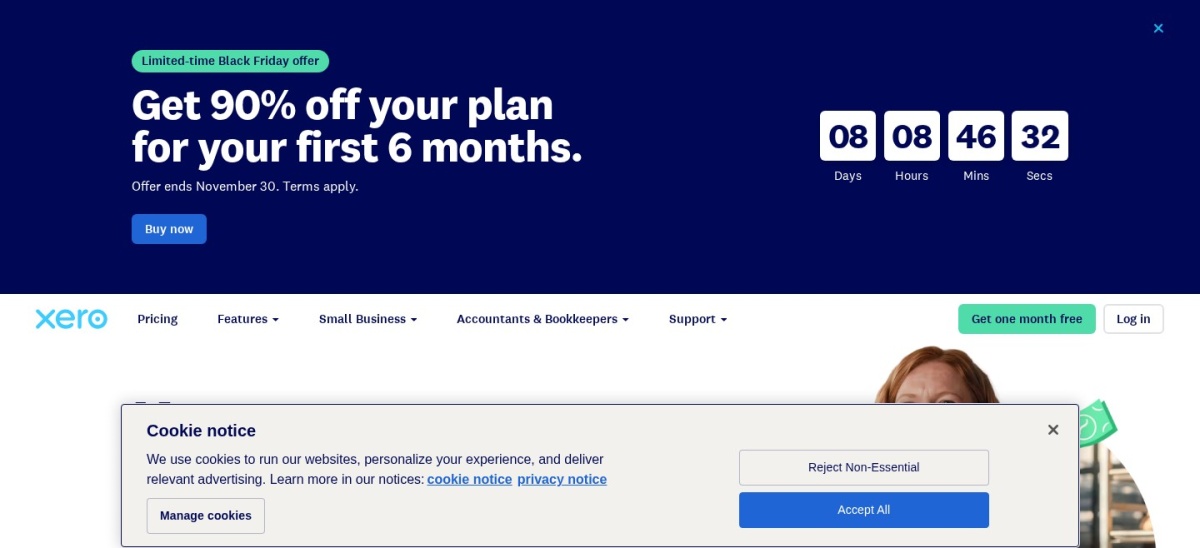
Xero is a cloud accounting platform designed for bookkeeping, invoicing, bank reconciliation and financial reporting. Its Early plan includes 20 invoices, 5 bills, smart document capture and real-time financial reports. Unlimited users allow business owners, bookkeepers and accountants to collaborate without paying for additional seats.
The trade off is the transaction limits on its entry plan. Early costs $27 monthly, equivalent to $324 annually, after temporary introductory discounts. Bookkeepers handling larger invoice and bill volumes may need Growing. It suits practices that prioritize shared access and streamlined reconciliation.
What we like
Unlimited user access across plans
Smart bank reconciliation
Document capture and reporting
Connects with a broad application ecosystem
Suitable for accountant and client collaboration
Watch out for
Early limits invoices and bills
Higher-volume businesses need an upgrade
Some specialized features cost extra
Growing removes the entry-level invoice and bill limits and expands automation.Visit xero.com
03
Zoho Books
4.4/5on G2 (333 reviews, checked Nov 2026)
Paid from$15/mo
Best value for growing bookkeeping businesses
Free access1 user plus 1 accountant
Standard users3
Standard receipt scans200/month
Paid planStandard, $15/mo annually
zoho.com
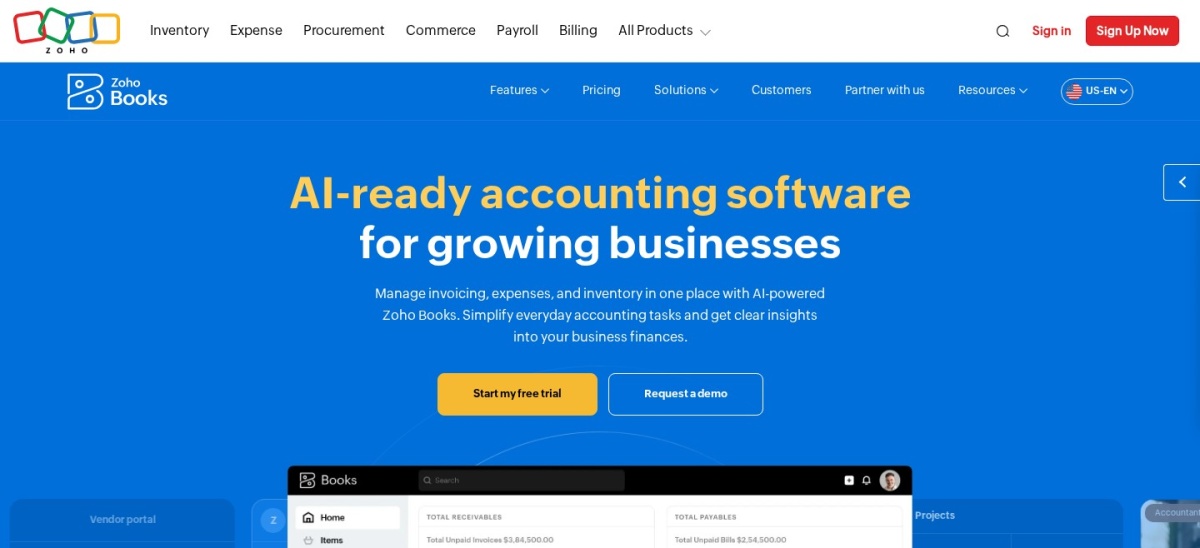
Zoho Books homepage, captured Nov 2026.
Zoho Books is an online accounting platform combining bookkeeping, invoicing, bank reconciliation and reporting. Its free plan includes journals, expense management, vendor records and access for 1 user plus 1 accountant. Standard adds connected bank feeds, custom reports, transaction locking and 200 monthly receipt autoscans.
The trade off is that advanced inventory, multicurrency accounting and project profitability require higher tiers. Standard costs $15 monthly with annual billing, equivalent to $180 yearly, or $20 with monthly billing. It suits bookkeepers seeking affordable accounting tools with room to automate routine tasks.
What we like
Permanent free plan available
Standard includes 3 users
Bank reconciliation and custom reporting
Receipt scanning and document management
Integrates with other Zoho business applications
Watch out for
Advanced inventory requires Professional
Multicurrency transactions require an upgrade
Additional organizations have separate subscriptions
Standard adds bank feeds, transaction locking, custom reports and more receipt scans.Visit zoho.com
04
Wave
4.3/5on G2 (329 reviews, checked Nov 2026)
Paid from$190/yr
Best free bookkeeping software
Free bookkeeping recordsUnlimited
Free invoicesUnlimited
Bank auto-importPro
Paid planPro, $190/yr
waveapps.com
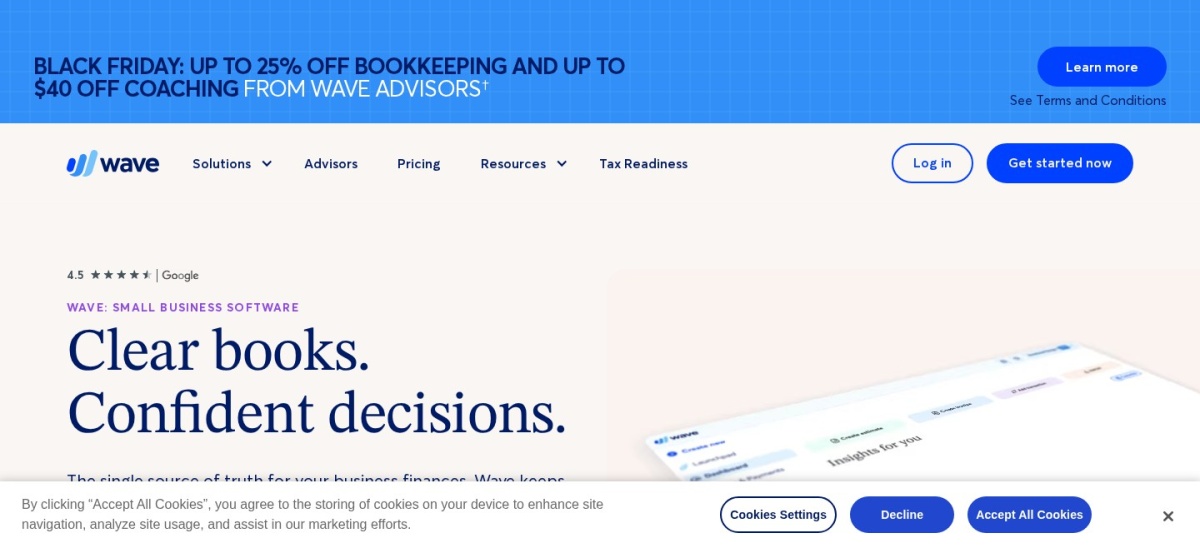
Wave homepage, captured Nov 2026.
Wave is a cloud bookkeeping and invoicing platform for small businesses and independent professionals. Its free Starter plan supports unlimited estimates, invoices, bills and bookkeeping records. Users can track cash flow, manage customers and maintain financial records without paying a recurring subscription.
The trade off is automation. Pro costs $190 annually, compared with $19 monthly on monthly billing, and adds automatic bank imports, transaction categorization and unlimited receipt capture. It suits budget-conscious bookkeepers working with businesses that have relatively straightforward accounting needs.
What we like
Free accounting and bookkeeping records
Unlimited invoices and bills on Starter
Simple dashboard for basic financial records
Pro automates bank imports
Annual Pro billing reduces subscription cost
Watch out for
Automatic bank imports require Pro
Advanced accounting controls are limited
Payment processing fees apply
Less suitable for complex inventory accounting
Pro adds automatic bank imports, transaction categorization and receipt capture.Visit waveapps.com
05
FreshBooks
4.5/5on G2 (983 reviews, checked Nov 2026)
Starts at$248.40/yr
Best for service-business bookkeeping
Lite clients5
InvoicingUnlimited customized invoices
Regular monthly price$23
Paid planLite, $248.40/yr
freshbooks.com
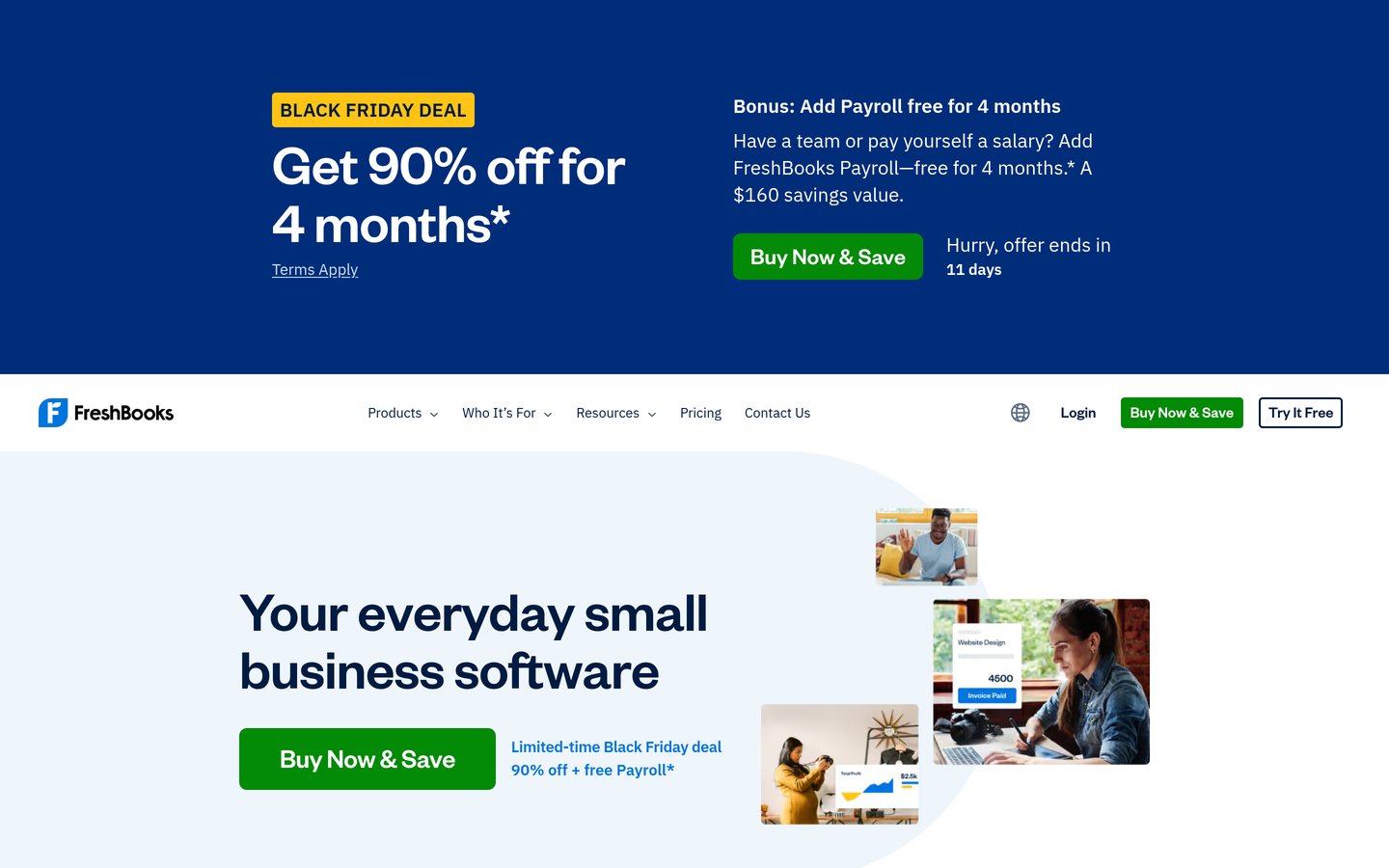
FreshBooks homepage, captured Nov 2026.
FreshBooks is an accounting and invoicing platform for service businesses, freelancers and professionals. Lite supports invoicing for 5 clients, real-time expense tracking, estimates and tax-time reports. It also offers payment collection and client billing features suited to businesses that charge for services.
The trade off is that Lite limits billable clients and places several accounting features in Plus. Lite normally costs $23 monthly or $248.40 annually, although a temporary promotion offers a lower introductory rate. It suits bookkeepers serving consultants, agencies and other service businesses.
What we like
Straightforward invoicing and expense tracking
Client billing and estimate creation
Tax-time reporting available
Payment collection integrations
Useful for service-oriented businesses
Watch out for
Lite supports only 5 billable clients
Accountant access requires a higher tier
Additional team members cost extra
Advanced accounting reports require upgrades
Plus adds accountant access, financial reports, receipt scanning and more clients.Visit freshbooks.com
06
Patriot Software
4.8/5on G2 (630 reviews, checked Nov 2026)
Starts at$20/mo
Best for straightforward bookkeeping and payroll
Customers and invoicesUnlimited
Vendors and paymentsUnlimited
Bank importsAutomatic
Paid planAccounting Basic, $20/mo
patriotsoftware.com
Patriot Software homepage, captured Nov 2026.
Patriot Software is an accounting and payroll platform for small businesses and bookkeeping professionals. Accounting Basic includes unlimited customers, invoices, vendors and payments, plus automatic bank imports, reconciliation and financial reports. An accountant partner program provides additional practice-oriented pricing options.
The trade off is that recurring invoices, receipt management and user permissions require Accounting Premium. Basic costs $20 monthly, equivalent to $240 yearly, before temporary introductory discounts. It suits bookkeepers who want straightforward financial records and an optional connection to payroll services.
Accounting Premium adds recurring invoices, user permissions and receipt management.Visit patriotsoftware.com
07
Sage 50
3.9/5on G2 (163 reviews, checked Nov 2026)
Starts at$132.17/mo
Best for detailed bookkeeping and inventory
Pro users1
Bank reconciliationAutomated
InventoryIncluded
Paid planPro Accounting, $132.17/mo
sage.com
Sage 50 homepage, captured Nov 2026.
Sage 50 is an accounting platform designed for businesses requiring detailed financial records, inventory management and job costing. Pro Accounting includes automated bank reconciliation, invoicing, expense management, reporting and inventory controls for 1 user. It also supports purchase orders, cash flow management and automatic backups.
The trade off is its higher subscription price and annual commitment. Pro Accounting lists at $132.17 monthly with a one-year commitment, equivalent to $1,586.04 over twelve months. It suits bookkeepers managing businesses with inventory, purchasing requirements and more detailed accounting workflows.
What we like
Detailed general ledger and financial reporting
Inventory and job costing features
Automated bank reconciliation
Purchase orders and approvals
Automatic updates and backups
Watch out for
Higher entry cost than cloud bookkeeping alternatives
Essential features every bookkeeper should compare
Bank reconciliation is a core bookkeeping activity. Software that imports transactions and suggests matches can reduce repetitive data entry, although bookkeepers must still review discrepancies and verify balances.
Financial reporting is equally important. Profit and loss statements, balance sheets, general ledger reports and transaction histories help bookkeepers identify errors and prepare records for accountants.
Document management reduces missing paperwork. Receipt scanning, bill attachments and searchable transaction records make month-end reviews easier, particularly when clients submit expenses throughout the accounting period.
For bookkeeping practices, client access and permissions are important. Separate organization records, accountant invitations, approval controls and reliable exports help maintain accurate records while protecting sensitive financial information.
How much should professional bookkeepers spend on software?
A small bookkeeping practice can begin with free or lower-priced accounting software. Wave Starter and Zoho Books Free provide useful entry points, while paid plans add automated banking, reporting and additional accounting controls.
Client volume changes the calculation. QuickBooks Online, Xero and Zoho Books provide different collaboration models, and businesses may need separate subscriptions for separate accounting organizations.
Compare the regular annual expense rather than relying on temporary discounts. Payroll, payment processing, receipt scanning, additional users and specialized reporting may introduce extra charges.
The lowest subscription is not always the most economical. Software that reduces transaction entry, improves reconciliation and simplifies month-end reporting may save enough staff time to justify a higher price.
How we chose
We selected established accounting and bookkeeping platforms with active vendor offerings and substantial public user feedback. The shortlist covers cloud bookkeeping, invoicing, accountant collaboration, payroll-connected accounting and detailed inventory-based financial management.
We reviewed official vendor pricing pages and G2 ratings on 24 November 2026 for the article dated 22 November 2026. Regular prices, subscription billing periods, client limits and included bookkeeping features were compared. Promotional discounts were excluded from annual price calculations, and numeric ratings reflect the publicly displayed review records.
We excluded products without verifiable published pricing, sufficient independent review history or clear bookkeeping functionality. We also excluded specialized tax preparation and payroll-only products that do not adequately replace general bookkeeping software. No vendor paid for a place, and we do not claim testing for this list.
How to choose the best software for bookkeepers
Identify your bookkeeping workload, then compare reconciliation features, client access, reporting and subscription costs.
Match the software to your clients. List the types of businesses you manage and their accounting requirements. Service businesses may benefit from FreshBooks, while inventory-heavy businesses may need Sage 50. General bookkeeping practices should compare QuickBooks Online, Xero and Zoho Books.
Prioritize reconciliation and accurate reporting. Check bank transaction imports, matching rules, journal entries and account reconciliation. Review whether financial statements, general ledger reports and transaction exports are available without purchasing expensive add-ons.
Evaluate your client management workflow. Check how accountants and bookkeepers access records, whether users need separate subscriptions and how each business is organized. Review permissions, client document sharing and export options before moving existing bookkeeping records.
Calculate the true annual subscription cost. Include regular software charges, client organizations, additional users, payroll integrations and payment processing fees. Compare annual billing discounts against monthly flexibility, and consider the administrative time saved by automation.
FAQ
What is the best software for bookkeepers in 2026?
QuickBooks Online is our overall recommendation because it supports transaction categorization, reconciliation, invoicing and financial reporting. Simple Start costs $38 monthly and includes access for 2 accountants. Xero and Zoho Books are strong alternatives for collaboration and budget-conscious bookkeeping practices.
What bookkeeping software do professional bookkeepers use?
Professional bookkeepers commonly work with QuickBooks Online, Xero, Zoho Books and other established accounting platforms. The right choice depends on client requirements, reporting needs and existing financial records. Some practices also use specialized tools for document collection, payroll and workflow management.
Is QuickBooks or Xero better for bookkeepers?
QuickBooks Online is suitable for bookkeeping practices prioritizing automated transaction categorization and accountant access. Xero is attractive when multiple users need access without additional seat charges. QuickBooks Simple Start costs $38 monthly, while Xero Early costs $27 monthly at regular pricing.
What is the best free bookkeeping software?
Wave and Zoho Books offer permanent free plans. Wave Starter includes unlimited bookkeeping records, estimates, invoices and bills. Zoho Books Free includes journals, reconciliation and accountant access. Both are useful starting points, although some banking automation and advanced features require paid subscriptions.
Can bookkeeping software automatically reconcile bank transactions?
Many accounting platforms import transactions and suggest matches using existing records or categorization rules. QuickBooks Online, Xero, Zoho Books and Sage 50 provide reconciliation features. Automation can reduce repetitive work, but bookkeepers should still review exceptions, investigate discrepancies and confirm account balances.
Which software is best for managing multiple bookkeeping clients?
QuickBooks Online and Xero are established options for client bookkeeping and accountant collaboration. Zoho Books provides separate organizations and accountant access, while Patriot offers an accountant partner program. Compare how each platform handles client subscriptions, permissions and reporting before selecting a practice-wide system.
Is FreshBooks suitable for professional bookkeeping?
FreshBooks works well for service businesses that emphasize invoicing, expense tracking and client billing. Lite supports 5 billable clients, while Plus expands accounting reports and accountant access. Bookkeepers handling detailed inventory or more complex financial records may prefer a different platform.
How much does bookkeeping software cost per month?
Free options are available from Wave and Zoho Books. Regular paid entry prices include Zoho Books Standard at $15 monthly with annual billing, Patriot Accounting Basic at $20 monthly, Xero Early at $27 monthly and QuickBooks Online Simple Start at $38 monthly. Additional features may increase the total.
Do bookkeepers need accounting software with payroll?
Not every bookkeeper manages payroll. If your clients require payroll processing, look for accounting software that integrates with a suitable payroll service. Patriot offers separate accounting and payroll subscriptions, while QuickBooks and other platforms provide payroll connections. Verify the additional subscription costs and reporting requirements.