Availity leads for broad multi-payer connectivity with a free Essentials portal for sponsored plans and Essentials Plus starting at $25/month. For automated primary source verification and credentialing workflows, Verifiable and MedTrainer are strong alternatives depending on team size and custom quote needs.
How we make this list: we compare pricing pages, product documentation and public user reviews, then re-check every price before each update. No product paid for a place. Disclosure.
Availity Essentials is free for sponsored payers, while Essentials Plus starts at $25/month with 250 non-sponsored transactions.
Verifiable holds a 4.7/5 rating across 14 G2 reviews for automated primary source verification and credentialing workflows.
MedTrainer holds a 4.4/5 rating across 95 G2 reviews and combines credentialing with compliance and training tools.
CredentialStream holds a 3.9/5 rating across 90 G2 reviews for enterprise provider credentialing and privileging.
symplr Provider holds a 3.9/5 rating across 27 G2 reviews for hospital privileging and provider lifecycle tracking.
Medallion holds a 3.6/5 rating across 15 G2 reviews for multi-state licensing, credentialing, and payer enrollment.
What to look for in provider data management software
Provider data management software centralizes clinician demographics, licenses, payer enrollments, and directory records so healthcare teams avoid fragmented spreadsheets. Accurate records support clean claims submission, timely payer reimbursement, and directory compliance.
Many tools in this category overlap with provider credentialing, primary source verification, and multi-payer transaction portals. Buyers should separate daily eligibility and claims exchange from deeper credentialing, privileging, and master data matching.
Public pricing is limited across enterprise healthcare platforms. Most vendors quote custom contracts based on provider count, modules, or verification volume, while self-serve entry tiers are less common.
Before committing to a platform, check whether you need automated primary source checks, payer roster updates, or multi-state enrollment tracking. Integration with existing EHR, billing, or identity systems often determines rollout speed.
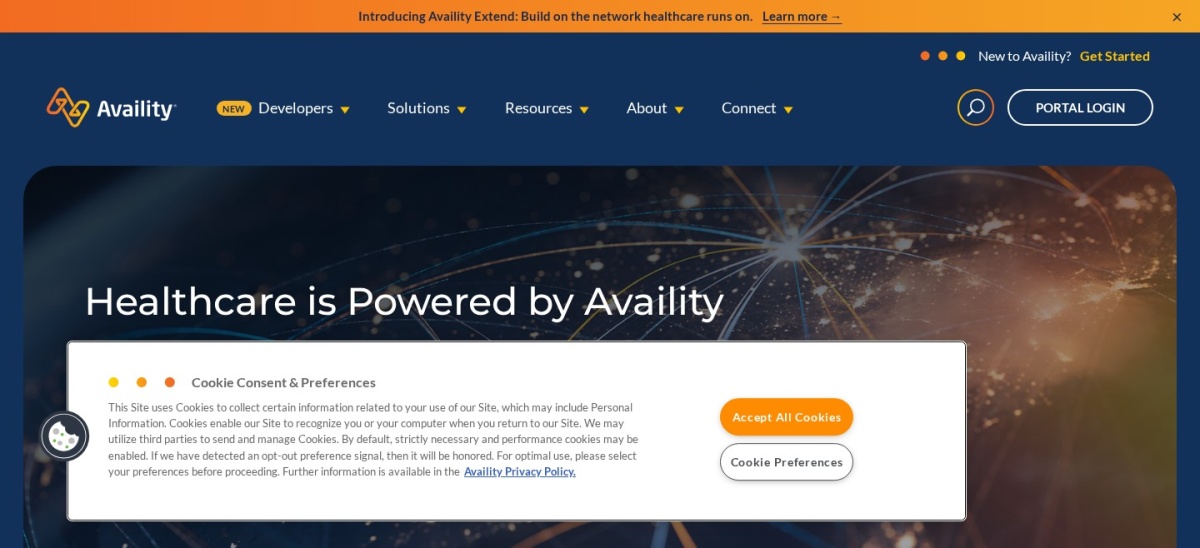
Availity is a healthcare network and portal used by providers to exchange eligibility, claims, and payer data. Its Essentials tier has no charge for sponsoring payers, while Essentials Plus adds non-sponsored payer access with 250 transactions included.
The trade off is that free access depends on payer sponsorship, and Essentials Plus charges $25/month with overage fees past 250 non-sponsored transactions. It suits practices seeking a low-cost portal for eligibility checks and payer transactions.
What we like
Essentials tier is free for sponsoring health plans
Published entry pricing at $25/month for Essentials Plus
Supports eligibility checks, claims, and payer workflows in one portal
Rated 4.0/5 across 42 G2 reviews
Watch out for
Non-sponsored payer access requires a paid upgrade or clearinghouse plan
Overage charges apply above the 250-transaction allowance on Essentials Plus
Some users report navigation friction and mixed support experiences
Essentials Plus ($25/month) adds non-sponsored payer transactions on top of free sponsored access.Visit availity.com
02
Verifiable
4.7/5on G2 (14 reviews, checked Nov 2026)
PricingCustom/yr
Best for automated verification
Primary focusAutomated credentialing & PSV
Pricing modelCustom vendor quote
Compliance alignmentNCQA-aligned workflows
G2 score4.7/5 (14 reviews)
verifiable.com
Verifiable homepage, captured Nov 2026.
Verifiable is a cloud credentialing and provider verification platform that automates primary source checks and license tracking. Public listings on Capterra note starting rates around $9 per user per month, though final plans are quoted by the vendor.
The trade off is that official pricing requires a direct vendor quote rather than a self-serve checkout, and some users note reporting could be more streamlined. It suits healthcare groups automating license and credential verifications.
What we like
Automates primary source verification and license monitoring
Supports configurable credentialing workflows and tracking
Strong 4.7/5 rating across 14 G2 reviews
Watch out for
Official pricing is not published as a self-serve plan on the vendor site
Some reviewers note reporting features can require extra steps
Smaller public review count on G2 compared with legacy suites
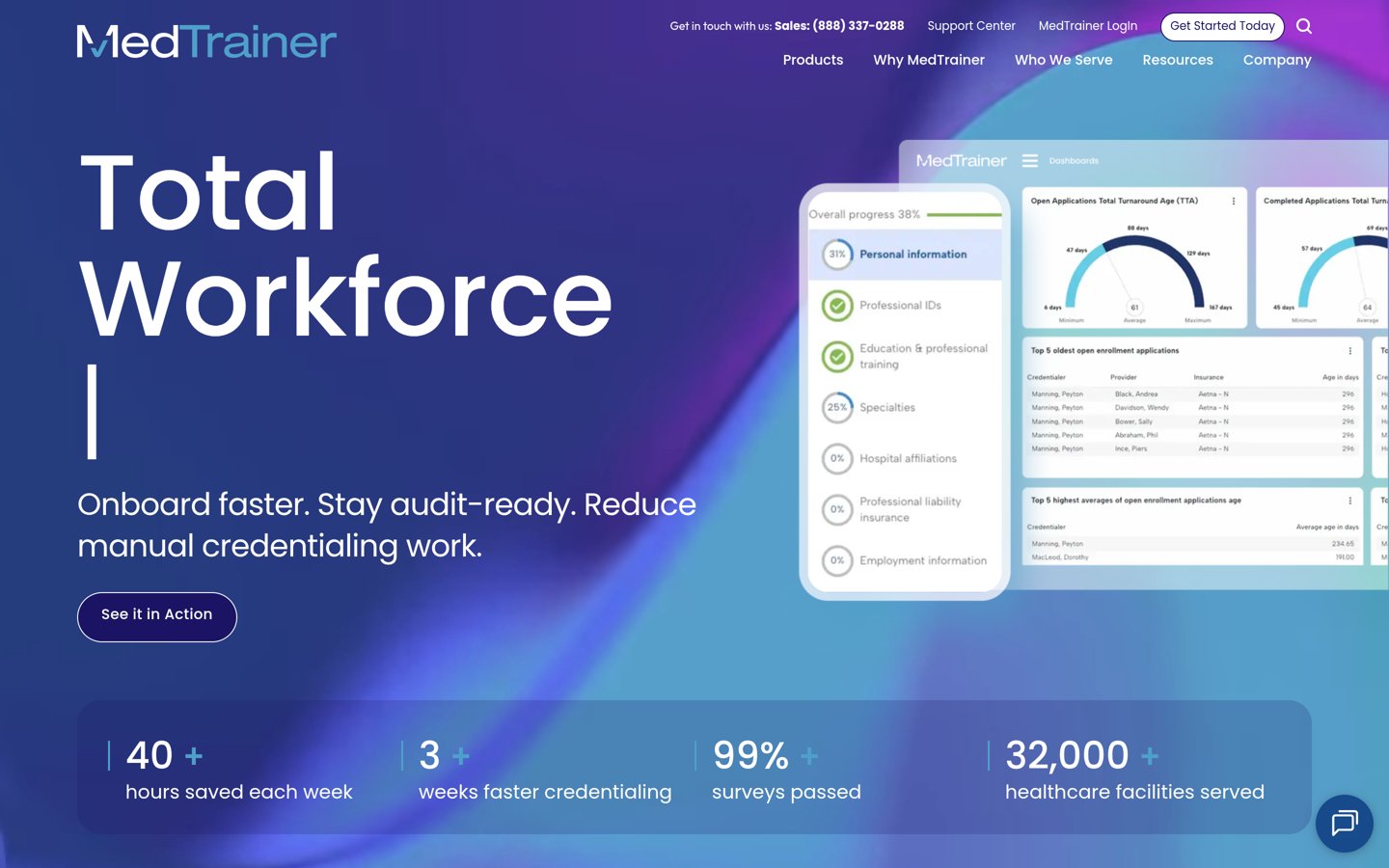
MedTrainer is a healthcare compliance and credentialing platform that tracks provider licenses, expirations, and staff training in one place. Vendor guidance notes typical per-user software rates of $20 to $50/month, while official quotes are modular.
The trade off is that buyers must request a custom quote rather than buy online, and some reviewers find the interface dated or less customizable. It suits small to mid-size clinics consolidating credentialing and compliance training.
What we like
Combines provider credentialing with compliance and training tools
Tracks license expirations and required documents centrally
Higher review volume on G2 with a 4.4/5 score across 95 reviews
Watch out for
Requires a sales quote rather than transparent self-serve pricing
Some users report a dated interface and limited custom reporting
May include extra compliance modules if you only want provider data
Paid modular subscriptions add credentialing automation, managed services, and training catalogs.Visit medtrainer.com
04
CredentialStream
3.9/5on G2 (90 reviews, checked Nov 2026)
PricingCustom/yr
Best for enterprise credentialing
VendorHealthStream
Pricing modelCustom enterprise quote
Key functionsCredentialing, privileging & PSV
G2 score3.9/5 (90 reviews)
healthstream.com
CredentialStream homepage, captured Nov 2026.
CredentialStream is HealthStream's provider lifecycle platform for managing applications, primary source verification, privileging, and enrollment. It offers dedicated options such as CredentialStream for Groups alongside enterprise editions on custom quotes.
The trade off is that custom enterprise pricing is not listed publicly, and reviewers note an initial learning curve for workflows and reports. It suits health systems and groups needing structured credentialing and privileging.
What we like
Covers onboarding, verification, privileging, and enrollment workflows
Offers dedicated options for smaller medical groups and larger health systems
Backed by 90 G2 reviews with a 3.9/5 rating
Watch out for
Pricing requires a custom quote based on organization size and modules
Initial workflow setup and custom reporting can take time to learn
Heavier than simple provider roster or directory trackers
Paid plans scale across provider counts, privileging modules, and CVO support options.Visit healthstream.com
05
symplr Provider
3.9/5on G2 (27 reviews, checked Nov 2026)
PricingCustom/yr
Best for hospital privileging
Vendorsymplr
Pricing modelCustom annual quote
Key modulesCore, Privileging, CVO & Committee
G2 score3.9/5 (27 reviews)
symplr.com
symplr Provider homepage, captured Nov 2026.
symplr Provider is a healthcare operations platform for managing provider records, credentialing, privileging, payer enrollment, and committee reviews. It divides capabilities across Core, Privileging Tools, Committee Manager, and CVO add-ons with custom pricing.
The trade off is that pricing is quote-only per year, and several reviewers report complex query building and uneven support. It suits hospitals and health systems with formal privileging and medical staff committees.
What we like
Handles provider data from initial application through privileging and enrollment
Includes specialized privileging and electronic committee review modules
Rated 3.9/5 across 27 G2 reviews
Watch out for
Annual pricing requires custom negotiation with the vendor
Some users find database queries, reporting, and support inconsistent
More complex than needed for small outpatient clinics
Medallion is a provider network platform focused on multi-state licensing, credentialing, and payer enrollment for growing healthcare groups. It combines automated verification workflows with specialist review on custom annual or volume-based quotes.
The trade off is that no self-serve pricing is published, and reviewers note mixed support experiences and limited report customization. It suits multi-state clinical groups managing frequent licensing and payer enrollments.
What we like
Built around multi-state licensing, credentialing, and payer enrollment
Combines workflow automation with specialist review and SLA tracking
Centralizes license renewals and enrollment status visibility
Watch out for
Custom pricing only; no public self-serve plan tiers
Reviewers cite reporting limits and occasional support or hand-off issues
Less suited to single-state practices with simple tracking needs
Verato MDM Cloud is a cloud master data management platform that unifies and matches provider, patient, and organization identities across systems. It uses referential matching to link records across disparate sources under custom enterprise agreements.
The trade off is that enterprise pricing is custom-quoted, and public G2 review volume is currently small at four reviews. It suits larger health enterprises resolving duplicate or fragmented identity records.
What we like
Matches and unifies identities across multiple data sources
Cloud-hosted setup avoids maintaining on-premise master data servers
High 4.6/5 score on G2 across initial reviews
Watch out for
Custom enterprise pricing requires direct vendor engagement
Small sample of four reviews on G2
Some reviewers note speed lags or rule-maintenance complexity
Enterprise agreements cover identity matching volume, enrichment, and integrations.Visit verato.com
Credentialing vs. directory management
Teams shopping for provider data management often compare payer portals, credentialing suites, and master data platforms. Payer portals like Availity focus on eligibility checks and claim transactions, while credentialing platforms focus on primary source verification, licenses, and enrollments.
Larger organizations may also look at master data management tools like Verato MDM Cloud when reconciling overlapping records across departments. Matching the tool to your primary bottleneck prevents paying for unused modules.
How we chose
We built this list by reviewing healthcare software directories, vendor documentation, and public user review pages for provider data management and credentialing tools.
All pricing details, plan structures, and G2 ratings in this guide were checked on 22 Nov 2026 against public sources.
We excluded products that lacked clear current listings, relied on unverified pricing claims, or focused solely on unrelated clinical or billing tasks.
No vendor paid for a place, and we do not claim testing for this list.
How to choose provider data management software
Follow these four steps to narrow down the right platform for your organization.
Map your core data workflows first. Decide whether your main bottleneck is payer eligibility checks, license verification, payer enrollment, or identity matching across systems.
Check payer and network compatibility. Confirm which health plans, registries, or external directories your team interacts with most so you avoid manual re-entry.
Compare pricing models and hidden limits. Look past headline rates for transaction caps, per-user fees, add-on modules, or custom contract terms.
Review user feedback on support and reporting. Read recent reviews for implementation speed, report export flexibility, and ongoing support responsiveness.
FAQ
What is provider data management software?
Provider data management software helps healthcare organizations store, verify, and maintain accurate clinician profiles, licenses, credentials, and network records. Accurate provider records support cleaner claims processing, faster onboarding, and up-to-date provider directories across payers and health systems.
Is provider data management software free?
Most dedicated credentialing and enterprise platforms charge paid subscriptions or custom quotes. However, Availity offers a free Essentials tier for sponsoring health plans, with Essentials Plus starting at $25 per month for non-sponsored transactions.
How does provider credentialing differ from provider data management?
Provider data management covers maintaining accurate clinician profiles, directories, and ongoing records across systems. Credentialing focuses specifically on verifying education, licenses, work history, and sanctions before approving a provider to practice or bill.
Why do most healthcare data vendors use custom pricing?
Healthcare platforms often price contracts around provider count, number of locations, payer mix, or verification volume. Because needs vary sharply between a small clinic and a multi-hospital network, vendors typically quote tailored terms.
What should small practices look for in a tool?
Small practices usually benefit from straightforward tools that reduce manual form filling and track license expirations without heavy enterprise setup. Checking transaction limits and support responsiveness is especially important when staff time is limited.
How often should provider data be updated?
Teams should review provider records whenever a clinician joins, leaves, changes locations, or renews a license or insurance policy. Regular audits ahead of payer re-credentialing and directory updates help catch errors early.
SaaS SEO and WordPress specialist with about 8 years of experience. Rakib compares WordPress plugins, themes, hosting and software using public pricing, documentation and user reviews. See how we rank.