Payhip is the best platform to sell ebooks for most independent authors, offering unlimited products on its free plan with a 5% transaction fee. Choose Sellfy for subscription-based selling without standard platform transaction fees or Stan for selling directly through social media profiles.
How we make this list: we compare pricing pages, product documentation and public user reviews, then re-check every price before each update. No product paid for a place. Disclosure.
Payhip offers unlimited ebook listings on its free plan with a 5% transaction fee.
Sellfy starts at $22/month billed annually with no standard platform transaction fees.
Stan costs $300/year and has a 4.7/5 Trustpilot rating from 2,229 reviews.
Shopify Basic costs $29/month billed annually and supports downloadable products through its digital product app.
Podia includes 50 products and 100 email subscribers for $504/year.
SendOwl supports unlimited products and storage from $390/year but has a low 1.6/5 Trustpilot rating.
What a platform for selling ebooks should include
An ebook selling platform should handle product listings, checkout, payment collection and automatic file delivery. Customers should receive their purchased ebooks without requiring manual emails from the author.
Compare subscription costs with transaction fees. A platform without monthly charges can be economical for beginners, while a subscription may produce better margins as sales increase.
Look for download controls, PDF protection, customer records and promotional tools. These features help protect digital products and encourage repeat purchases.
Consider whether you need a standalone bookstore, a checkout button for an existing website or a storefront designed for social media audiences. Direct selling platforms generally require authors to generate their own traffic.
4.5/5on Trustpilot (577 reviews, checked Nov 2026)
Paid from$29/mo
Best for independent ebook authors
Free plan fee5% per transaction
Product limitUnlimited
Revenue limitUnlimited
Paid planPlus, 2% transaction fee
payhip.com
Payhip homepage, captured Nov 2026.
Payhip is a digital commerce platform for selling ebooks, courses and memberships through a hosted storefront. Its free plan includes unlimited products, unlimited revenue and access to the same core features as paid subscriptions, with a 5% transaction fee.
The trade off is the percentage charged on every sale. Plus costs $29 monthly and reduces the platform fee to 2%, while payment processing charges remain separate. It suits independent authors who want to launch without committing to recurring software costs.
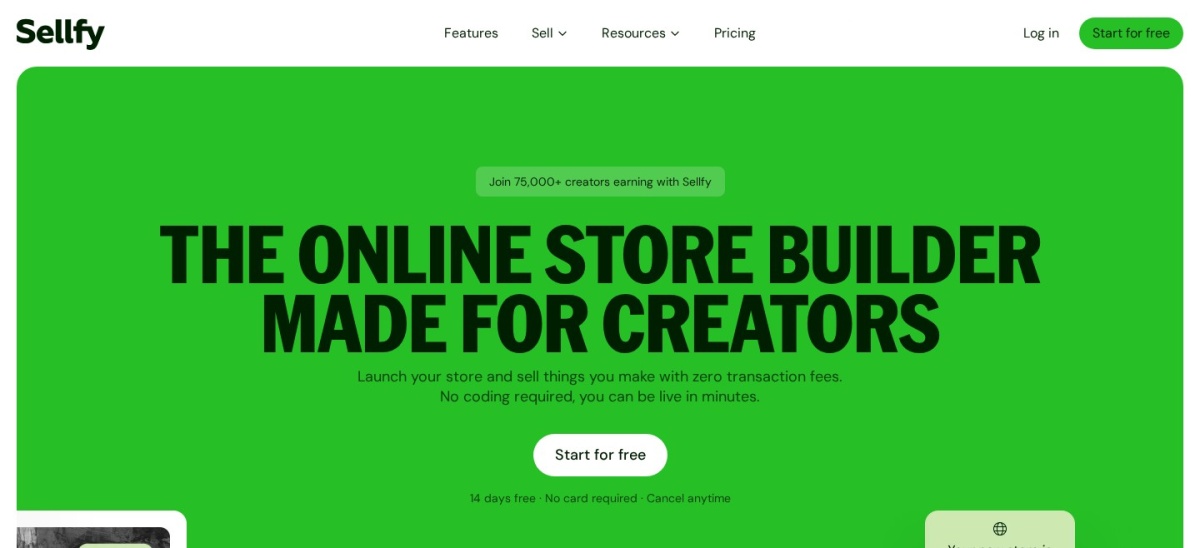
Sellfy is a hosted commerce platform for creators selling ebooks, downloadable files and merchandise. Its Starter subscription costs $22 monthly with annual billing and does not charge standard platform transaction fees within its plan limits.
The trade off is that Sellfy requires a paid subscription even during months without sales. Higher sales volumes and advanced marketing requirements may require an upgrade from the $264 annual Starter plan. It suits authors with established audiences and regular ebook purchases.
4.7/5on Trustpilot (2,229 reviews, checked Nov 2026)
Starts at$300/yr
Best for selling ebooks through social media
Entry planCreator
Monthly billing$29/month
Platform transaction fee0%
MarketingLead magnets and email collection
stan.store
Stan homepage, captured Nov 2026.
Stan is a creator commerce platform designed to turn social media followers into customers. Its Creator plan costs $300 annually or $29 monthly and includes digital products, storefront analytics, email collection and course creation.
The trade off is limited advanced marketing functionality on the $300 annual Creator subscription. Integrated promotional emails, affiliate features and advanced payment options require Creator Pro. It suits authors who promote ebooks through social media rather than traditional ecommerce websites.
What we like
Mobile-friendly storefront
No platform commission on sales
Integrated audience collection
Supports courses and digital downloads
Watch out for
No permanent free storefront
Advanced email marketing requires an upgrade
Creator Pro adds email campaigns and affiliate selling features.Visit stan.store
04
Shopify
4.4/5on G2 (5,172 reviews, checked Nov 2026)
Starts at$29/mo
Best for building a branded online bookstore
Entry storefront planBasic
Product limitUnlimited
Digital deliveryShopify Digital Products app
Monthly billing$39/month
shopify.com
Shopify homepage, captured Nov 2026.
Shopify is an ecommerce platform for building branded online stores that sell physical and downloadable products. Its Basic storefront plan costs $29 monthly with annual billing and supports unlimited product listings, customizable themes and integrated checkout.
The trade off is the additional setup required for digital file delivery through an app. Basic costs $348 annually, with payment processing and optional app charges separate. It suits publishers and authors building a bookstore that may also sell printed books or merchandise.
What we like
Extensive storefront customization
Unlimited product listings
Physical and digital product support
Large extension marketplace
Watch out for
Requires digital delivery configuration
Additional applications can increase costs
Basic provides a full online store and unlimited product listings.Visit shopify.com
05
Podia
4.4/5on G2 (26 reviews, checked Nov 2026)
Starts at$42/mo
Best for selling ebooks alongside online courses
Entry planMover
Product limit50
Included email subscribers100
Platform transaction fee5%
podia.com
Podia homepage, captured Nov 2026.
Podia is a creator business platform combining downloadable products, websites, courses and email marketing. Its Mover plan costs $504 annually and includes 50 products, unlimited customers and email marketing for up to 100 subscribers.
The trade off is paying both a $42 monthly equivalent subscription and a 5% platform transaction fee. Growing email lists or product catalogs may require additional spending. It suits educational authors who want to combine ebook sales with courses and audience newsletters.
What we like
Integrated digital product delivery
Website and email marketing included
Supports online courses
Unlimited customers on Mover
Watch out for
Entry plan charges transaction fees
Product and email subscriber limits
Higher plans expand product allowances and reduce transaction fees.Visit podia.com
06
SendOwl
1.6/5on Trustpilot (158 reviews, checked Nov 2026)
Starts at$32.50/mo
Best for adding ebook checkout to existing websites
Entry planLaunch, billed annually
Annual orders5,000
Annual sales allowance$10,000
Monthly bandwidth20 GB
sendowl.com
SendOwl homepage, captured Nov 2026.
SendOwl is a digital commerce platform focused on checkout and automated delivery of downloadable products. Its Launch plan includes unlimited products and storage, an annual allowance of 5,000 orders and $10,000 in yearly sales.
The trade off is the $390 annual subscription and volume-based plan limits. Its 1.6/5 Trustpilot rating also warrants careful investigation before committing to an annual contract. It suits website owners who prioritize dedicated digital delivery over building another storefront.
What we like
Unlimited digital product listings
Unlimited file storage
Dedicated digital checkout
Features available across subscription tiers
Watch out for
Low Trustpilot customer rating
Sales, order and bandwidth limits
No permanent free plan
Higher plans increase sales, order and bandwidth allowances.Visit sendowl.com
07
Kajabi
4.1/5on G2 (93 reviews, checked Nov 2026)
Starts at$143/mo
Best for ebook-led education businesses
Entry planBasic
Included contacts2,500
Email sendsUnlimited
Platform revenue share0%
kajabi.com
Kajabi homepage, captured Nov 2026.
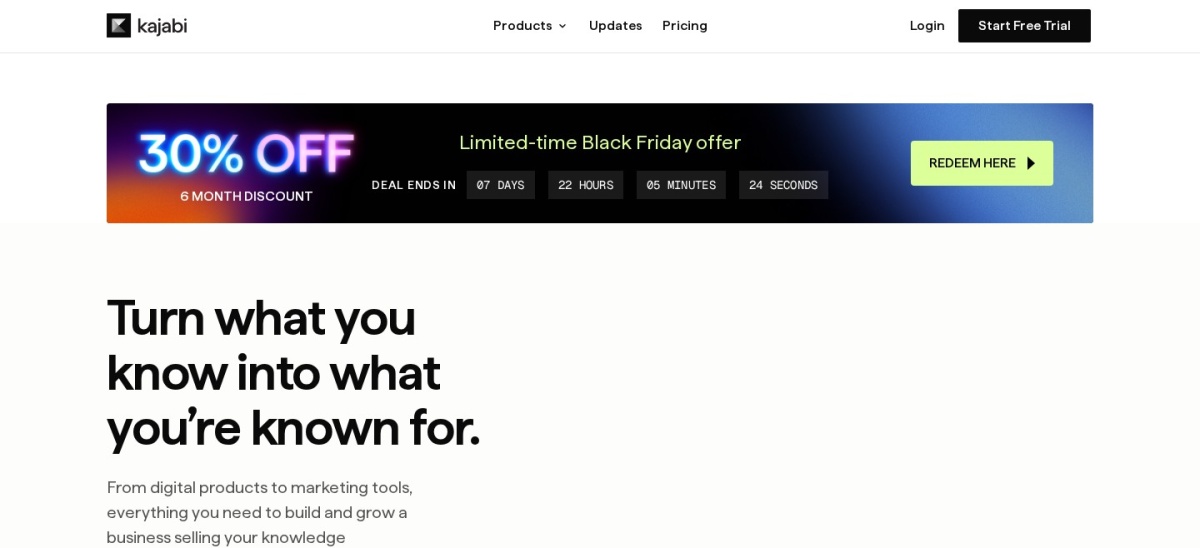
Kajabi is a digital business platform for monetizing educational content through products, memberships and marketing campaigns. Its Basic plan includes 2,500 contacts, unlimited email sends, sales funnels, landing pages and a branded website.
The trade off is the $1,716 annual Basic subscription, which is difficult to justify for occasional ebook sales. Authors can deliver downloadable educational material through their product offers. It suits established experts using ebooks as part of a larger education business.
What we like
Integrated email marketing
Sales funnels and landing pages
Branded website and checkout
No platform revenue share
Watch out for
High annual subscription cost
Excessive functionality for standalone ebook selling
Not a dedicated ebook discovery marketplace
Growth adds advanced automation and affiliate program management.Visit kajabi.com
How much does it cost to sell ebooks online?
Payhip allows authors to start without a recurring subscription, charging 5% per transaction on its free plan. Subscription-based alternatives such as Sellfy and Stan have predictable platform charges but require payment regardless of monthly sales.
The annual price ladder compares regular subscription rates and excludes payment processing charges, transaction commissions, optional applications and applicable taxes. Annual billing discounts are included where available.
Transaction-only publishing marketplaces are excluded from this comparison because their royalty and commission structures cannot be represented accurately as fixed annual subscription prices.
How we chose
We shortlisted established digital commerce platforms offering downloadable product sales, customer checkout and digital content delivery. Rankings prioritize suitability for independent authors, predictable costs and the ability to manage direct customer relationships.
Official pricing pages and independent G2 or Trustpilot ratings were checked on 25 Nov 2026. Annual prices use regular annual billing rates where available, rather than introductory offers. Ratings from different review platforms should not be treated as directly equivalent.
We excluded transaction-only marketplaces, products without sufficient independent reviews and services without accessible subscription pricing. SendOwl's low Trustpilot rating is disclosed, while Shopify pricing represents its full storefront plan. No vendor paid for a place, and we do not claim testing for this list.
How to choose the best platform to sell ebooks
Compare platforms based on your audience, expected sales, file delivery requirements and long-term publishing plans.
Estimate your monthly ebook revenue. Compare fixed subscriptions with percentage-based transaction fees using realistic sales projections. Include payment processing charges when estimating your margins.
Check file delivery and protection. Confirm supported file formats, upload limits, download restrictions and customer access options. Consider PDF stamping if unauthorized redistribution is a concern.
Decide how customers will discover your ebooks. Choose a social storefront for an existing follower base, an embedded checkout for an established website or a full ecommerce store for a branded publishing business.
Evaluate marketing and audience ownership. Review customer exports, email collection, promotional codes, analytics and product bundling. Make sure you can maintain customer relationships as your catalog grows.
FAQ
What is the best platform to sell ebooks online?
Payhip is our overall pick because it combines unlimited product listings, digital delivery and a permanent free plan. Sellfy is better suited to authors seeking predictable subscription costs, while Stan focuses on creators with social media audiences.
Can I sell ebooks online for free?
Yes. Payhip lets authors create a storefront without paying a monthly subscription. Its free plan charges a 5% platform transaction fee on sales, and payment processors may charge separate fees.
Which ebook selling platform charges no transaction fees?
Sellfy charges no standard platform transaction fees within its subscription limits, while Stan also advertises zero platform commission. Both require paid subscriptions, and external payment processing fees remain applicable.
Can I sell ebooks through my own website?
Yes. Platforms such as SendOwl and Sellfy support selling digital products through existing websites. Shopify is another option if you want to build a complete branded bookstore with integrated checkout and downloadable product delivery.
Do I need an ISBN to sell ebooks directly?
An ISBN is generally not required to sell your own downloadable ebook directly through a creator storefront. However, publishing distributors, bookstores and particular distribution arrangements may have different identification requirements.
How can I protect ebooks from unauthorized sharing?
Use platforms that support PDF stamping, controlled download access or download limits. These measures discourage casual unauthorized redistribution, although no digital delivery system can completely prevent customers from copying or sharing purchased content.
SaaS SEO and WordPress specialist with about 8 years of experience. Rakib compares WordPress plugins, themes, hosting and software using public pricing, documentation and user reviews. See how we rank.