Best Plagiarism Software in 2026: 7 Tools Compared
WLWPLegible EditorsLast verified 22 Nov 2026How we rank11 min read
★ Short answer
Quetext is our top plagiarism software pick for students and writers, offering a free 1,000-word check and paid DeepSearch scanning of 100,000 words monthly. Scribbr is better for one-time academic paper checks, while Grammarly suits writers who also want grammar, clarity and citation assistance.
How we make this list: we compare pricing pages, product documentation and public user reviews, then re-check every price before each update. No product paid for a place. Disclosure.
Quetext checks up to 1,000 words free and offers 100,000 plagiarism-checking words monthly with Essential at $14.99/month.
Scribbr charges $19.95 per check for documents up to 7,499 words, without requiring a subscription.
Grammarly Pro starts at $12/month and combines plagiarism detection with writing suggestions and 2,000 monthly AI prompts.
Copyleaks Personal costs $13.99/month billed annually and checks plagiarism across more than 100 languages.
Originality.ai Pro costs $12.95/month billed annually, with 200,000 words of monthly checking capacity.
Winston AI Essential has a regular annual-billing price of $10/month and provides 100,000 credits monthly.
What to look for in plagiarism detection software
Plagiarism software compares submitted writing against available web pages, publications and other indexed documents. It highlights matching passages so writers and educators can review sources and correct attribution problems.
The main difference is source coverage. Some checkers emphasize published web content, while others support academic databases, previously submitted documents or institutional repositories. No independent checker can guarantee access to every university's private submission database.
Pricing also matters. Subscription services typically limit monthly words, credits or scans. Pay-per-document tools can be less expensive when you need to check a thesis or assignment occasionally.
Finally, separate text similarity from AI detection. Similarity reports identify matching source material, while AI detectors estimate whether writing may have been generated by software. Neither result alone proves academic misconduct.
4.6/5on Trustpilot (154 reviews, checked Nov 2026)
Paid from$14.99/mo
Best plagiarism checker overall
Free plagiarism checkUp to 1,000 words
Essential allowance100,000 words/month
Essential bulk uploads20 files
Paid planEssential, from $14.99/mo
quetext.com
Quetext homepage, captured Nov 2026.
Quetext is a plagiarism checker built around DeepSearch, source matching and citation assistance. Its free plan checks up to 1,000 words for plagiarism and another 1,000 words for AI detection, while Essential includes 100,000 plagiarism-checking words monthly. The platform also provides an AI detector, citation generator and writing tools.
The trade off is the limited free word allowance and an Essential starting price of $14.99 per month, with annual billing discounts advertised separately. Larger document batches and extended usage require paid access. It suits students, teachers and content writers who need source comparisons alongside citation support.
4.2/5on Trustpilot (15,758 reviews, checked Nov 2026)
Paid from$19.95/site
Best for academic papers and dissertations
Small documentUp to 7,499 words
Small document price$19.95 per check
Regular document$29.95 per check
Payment modelPer document
scribbr.com
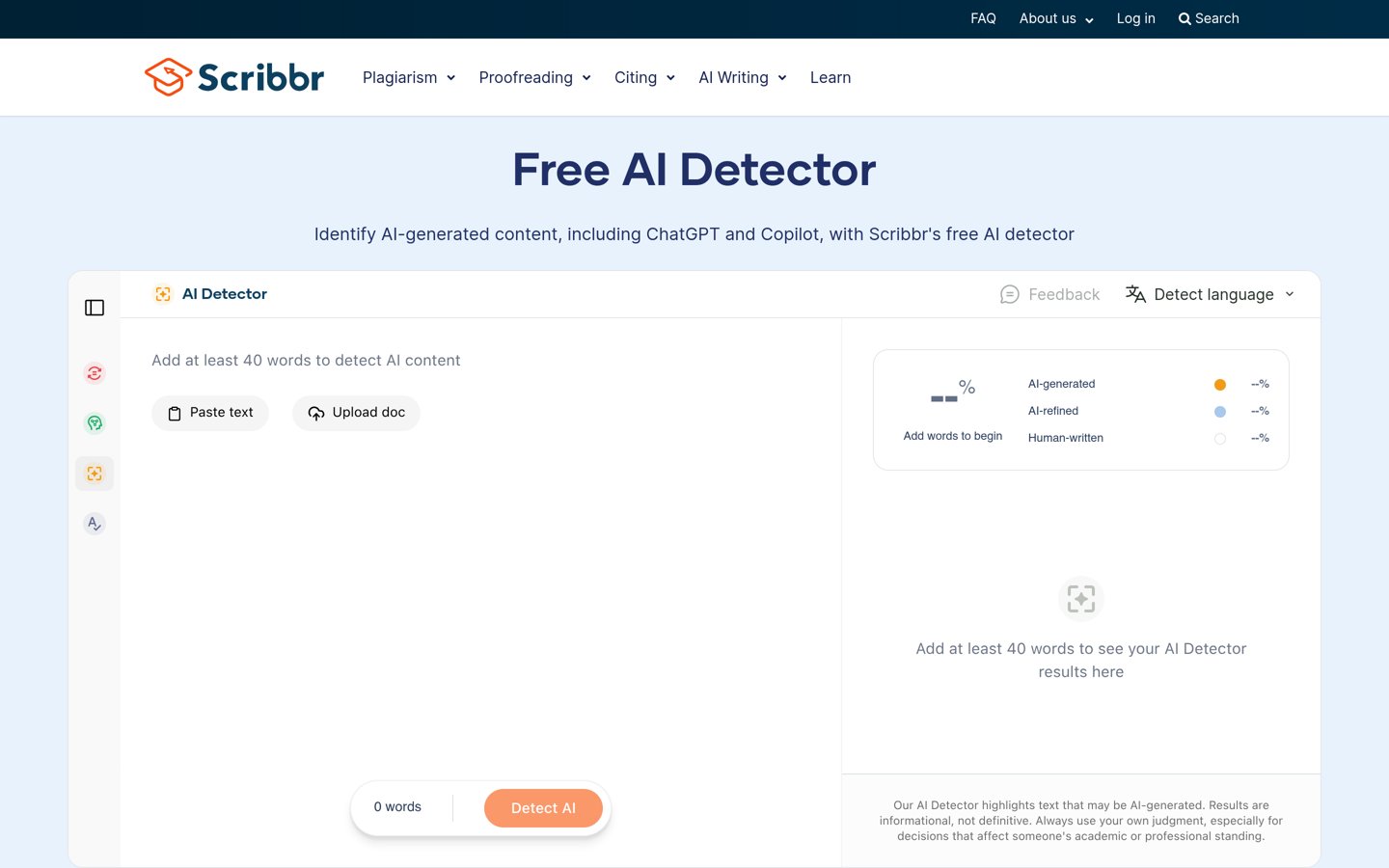
Scribbr homepage, captured Nov 2026.
Scribbr is an academic plagiarism checker designed for essays, research papers and dissertations. Its free checker provides an initial similarity-risk assessment, while the paid service supplies highlighted matches, source comparisons and citation assistance. A small-document plagiarism check costs $19.95 for up to 7,499 words.
The trade off is paying for every complete report instead of receiving recurring monthly checks. Documents with 7,500 to 49,999 words cost $29.95 per check, and larger documents cost $39.95. It suits students preparing important submissions who want an academic-focused report without an ongoing subscription.
What we like
Academic-focused plagiarism checking
No recurring subscription required
Detailed source comparisons
Supports self-plagiarism checks using uploaded documents
Integrated citation assistance
Watch out for
Every premium check costs extra
Free results are less detailed
Less economical for frequent document scanning
Premium unlocks a full similarity report, highlighted matches and source comparisons.Visit scribbr.com
03
Grammarly
4.7/5on G2 (14,158 reviews, checked Nov 2026)
Paid from$12/mo
Best for plagiarism checking with writing assistance
Free writing toolsGrammar and spelling
Free AI prompts100/month
Pro AI prompts2,000/month
Paid planPro, $12/mo
grammarly.com
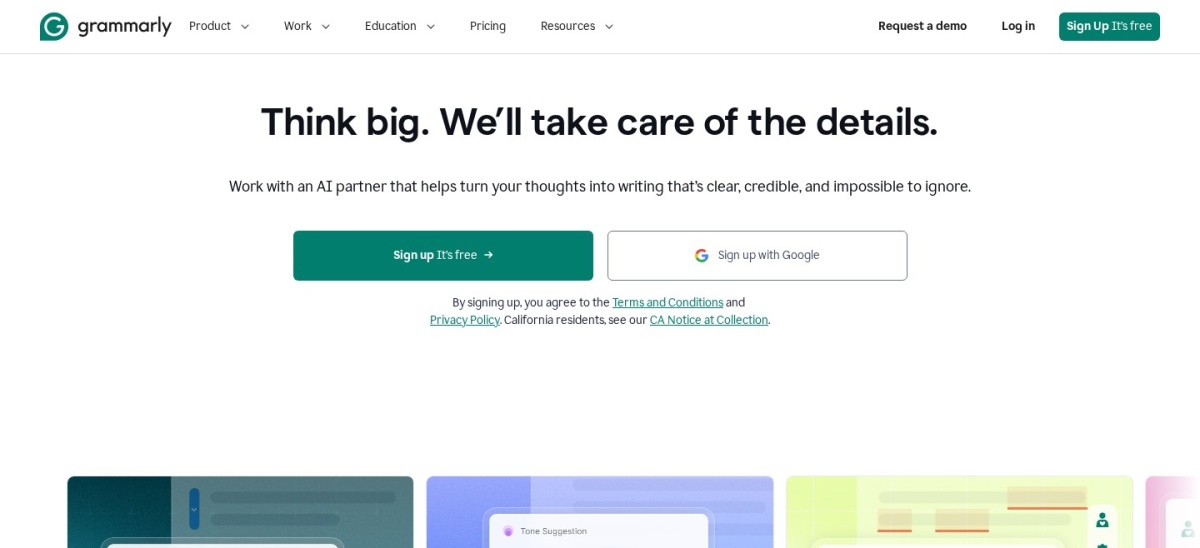
Grammarly homepage, captured Nov 2026.
Grammarly is a writing assistant that combines grammar correction, clarity suggestions and plagiarism detection in its paid Pro plan. The free version includes spelling, grammar and tone assistance with 100 monthly AI prompts. Pro adds plagiarism checking, AI-generated text detection, sentence rewriting and 2,000 monthly AI prompts.
The trade off is that plagiarism checking is not included in the permanent free writing plan. Pro is listed at $12 per month, making it more suitable for recurring writing than occasional standalone plagiarism checks. It suits students, researchers and professionals who want editing assistance and originality checks together.
What we like
Grammar and spelling corrections included free
Plagiarism checking bundled with Pro
Writing feedback across multiple applications
Citation consistency and tone assistance
Large independent G2 review base
Watch out for
Free plan does not include full plagiarism checking
Writing suggestions need human review
Not a replacement for institutional similarity databases
Pro adds plagiarism detection, AI text checks, advanced rewriting and expanded AI prompts.Visit grammarly.com
04
Copyleaks
2.7/5on Trustpilot (397 reviews, checked Nov 2026)
Paid from$13.99/mo
Best for multilingual plagiarism detection
Plagiarism languages100+
AI detection languages30+
Annual billing$167.88
Paid planPersonal, $13.99/mo annually
copyleaks.com
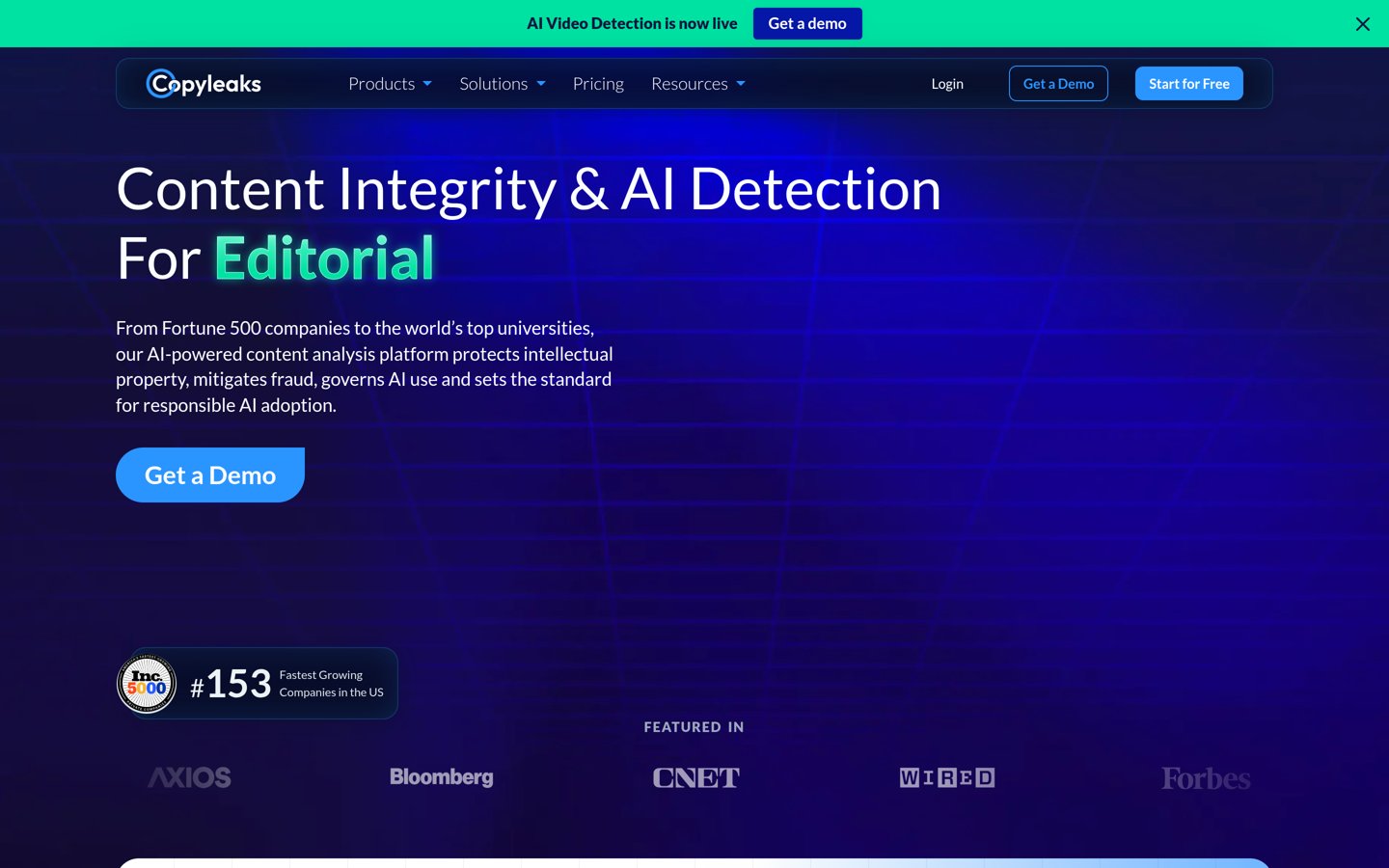
Copyleaks homepage, captured Nov 2026.
Copyleaks is a text-analysis platform combining plagiarism checking with AI-generated content detection. Its Personal plan supports plagiarism detection in more than 100 languages and AI detection in more than 30 languages. Features include combined scanning reports, multiple-file uploads and access to its Shared Data Hub.
The trade off is its credit-based usage model and mixed customer feedback about billing and AI detection. Personal costs $13.99 per month billed annually, or $16.99 with monthly billing. It suits multilingual educators, publishers and organizations that need plagiarism and AI checks through the same platform.
What we like
Plagiarism detection across 100+ languages
Combines AI and similarity detection
Multiple-file upload support
Shared Data Hub for document comparisons
Education and API integrations available
Watch out for
Credits can limit scanning volume
Low Trustpilot customer rating
Institutional features require custom plans
Personal adds paid scanning credits and combined plagiarism, AI text and AI image detection.Visit copyleaks.com
05
Originality.ai
4.5/5on Trustpilot (1,379 reviews, checked Nov 2026)
Paid from$12.95/mo
Best for publishers and editorial teams
Free allowance10,000 words, one time
Pro allowance200,000 words/month
Credit conversion100 words/credit
Paid planPro, $12.95/mo annually
originality.ai
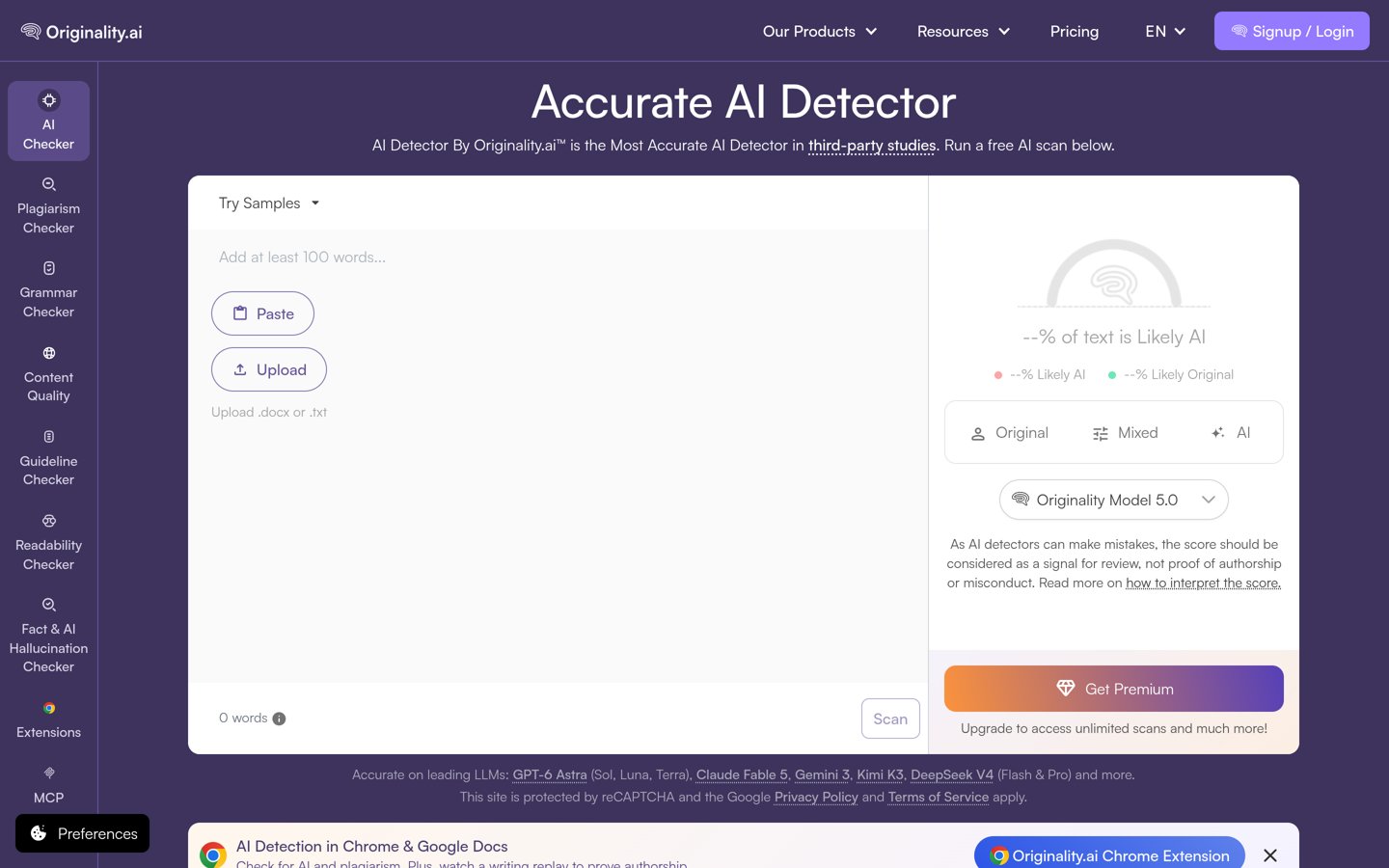
Originality.ai homepage, captured Nov 2026.
Originality.ai is a content verification platform for publishers, editors and writing teams. Its free plan provides a one-time allowance of 100 credits, equivalent to 10,000 words, for features including plagiarism, AI, grammar and readability checks. Pro adds 2,000 monthly credits, bulk scanning, file uploads and downloadable reports.
The trade off is that credits restrict ongoing use, and the free allowance does not renew monthly. Pro costs $12.95 per month billed annually or $14.95 with monthly billing. It suits publishers and editorial managers who review large amounts of submitted content and want consolidated verification reports.
What we like
Plagiarism and AI checking together
One-time free allowance of 10,000 words
Pro supports 200,000 words monthly
Bulk scans and downloadable reports
Team management on Pro
Watch out for
Free credits do not renew
Usage is limited by credits
AI detection scores require careful interpretation
Pro adds recurring credits, bulk scanning, report sharing, file uploads and team management.Visit originality.ai
06
Winston AI
4.4/5on Trustpilot (26 reviews, checked Nov 2026)
Paid from$10/mo
Best for combined plagiarism and AI screening
Free trial credits2,000
Trial duration14 days
Essential credits100,000/month
Paid planEssential, regular $10/mo annually
gowinston.ai
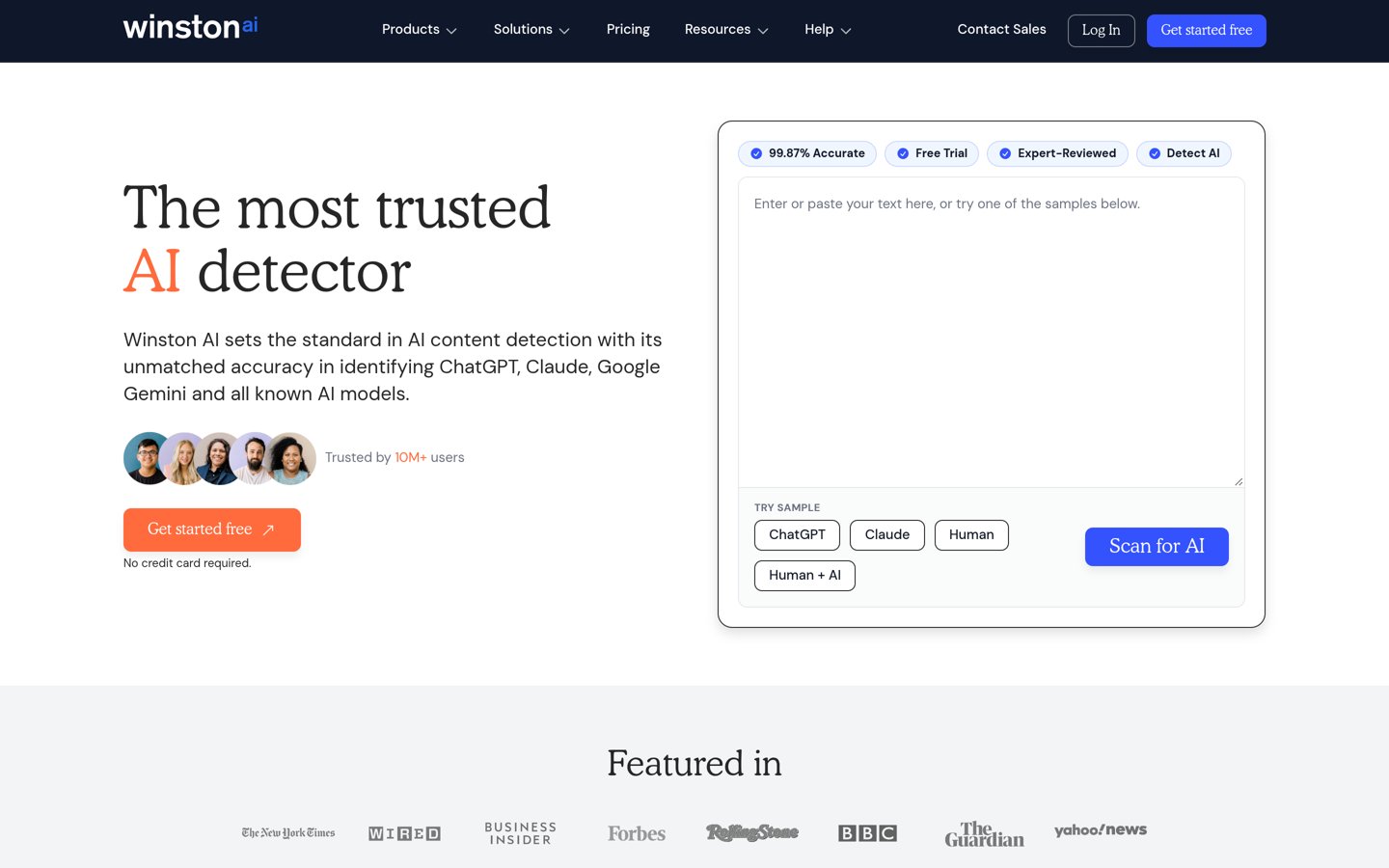
Winston AI homepage, captured Nov 2026.
Winston AI is a content screening platform that combines AI detection, plagiarism checking and document analysis. Its free trial provides 2,000 credits over 14 days. Essential includes 100,000 credits monthly, document scanning, picture and handwriting scanning, plagiarism detection and shareable PDF reports.
The trade off is the limited free trial and credit-based allowances. Essential normally costs $10 per month with annual billing, while a temporary BF50 coupon advertises a lower promotional price. It suits teachers, editors and content teams that want plagiarism checking alongside AI content screening.
DupliChecker is an online plagiarism checker aimed at students, bloggers and general content writers. It offers a free checking interface alongside paid plans that increase word allowances and search capacity. Its entry Basic II weekly plan includes 10,000 words and 33 searches.
The trade off is a complicated plan structure and low customer ratings concerning subscriptions and cancellation. Basic II costs $5 per week, equivalent to $260 across 52 weeks, while a separate monthly Basic II subscription is listed at $9.99 per month. It suits occasional users who prefer straightforward text checks.
Plagiarism detection is not the same as AI detection
A plagiarism checker compares text with available source material and highlights passages that appear elsewhere. The result helps identify possible copying, missing citations and overlapping wording.
An AI detector instead estimates whether text shows characteristics associated with machine-generated writing. Such estimates can produce false positives and should not independently establish academic misconduct.
Copyleaks, Originality.ai and Winston AI combine both functions. That can simplify workflows, but each output still needs separate interpretation.
For academic submissions, review every matching passage and follow your institution's citation and originality policies rather than relying on a single similarity percentage.
What students should know before submitting a paper
Not all plagiarism checkers search the same sources. A tool that checks public websites may miss material in private academic repositories or unpublished assignments.
Scribbr focuses on academic documents and offers detailed paid source comparisons. Quetext combines similarity checking and citation assistance, while Grammarly adds broader writing feedback.
Review quoted material, references, common phrases and properly cited passages. A similarity percentage does not automatically establish plagiarism because legitimate writing may contain matching text.
Also check document privacy terms. Research papers, unpublished work and confidential assignments should only be uploaded to services with acceptable data-handling policies.
How we chose
We selected established plagiarism checking and writing verification platforms used by students, educators, researchers and publishing teams. The comparison emphasizes available sources, reporting features, word allowances and pricing transparency rather than unsupported accuracy rankings.
Official pricing pages and public review profiles were reviewed on 23 Nov 2026 for an article carrying the requested 22 Nov 2026 editorial date. Published prices distinguish regular subscription rates from introductory promotions. Scribbr charges per check, and DupliChecker offers weekly billing, so their costs are not directly comparable with annual subscriptions.
We excluded institution-only services without confirmable public pricing and products whose current paid plans could not be verified. Customer ratings describe broader vendor experiences and do not measure plagiarism detection accuracy. No vendor paid for a place, and we do not claim testing for this list.
How to choose plagiarism software
Identify your document type and checking frequency before comparing individual products.
Match the checker to your writing. Choose academic-focused tools for essays, dissertations and research papers. General web-content checkers may be more suitable for blog posts, marketing material and published articles.
Compare source coverage and reports. Look for highlighted matching passages, identifiable sources and citation support. Check whether the service searches academic publications, public websites or uploaded documents.
Calculate your actual checking volume. Estimate monthly words and document sizes before choosing a subscription. For occasional work, a per-document check may be cheaper than paying every month.
Review privacy and detection limitations. Check how uploaded documents are stored, whether they enter comparison databases and how reports can be shared. Treat similarity and AI detection results as evidence requiring human evaluation.
FAQ
What is the best plagiarism software in 2026?
Quetext is our top overall choice because it combines DeepSearch plagiarism matching with citation assistance and a free 1,000-word allowance. Scribbr is more suitable for one-time academic papers, while Grammarly is useful when grammar correction and plagiarism checking are both priorities.
What is the best free plagiarism checker?
Quetext offers free plagiarism checking for up to 1,000 words, while Originality.ai provides a one-time allowance of 10,000 words across its checking features. Free plans are useful for short drafts, but longer assignments and detailed source reports generally require paid access.
Which plagiarism checker is best for students?
Scribbr is designed for academic writing and provides detailed similarity reports with source comparisons. Its paid checking starts at $19.95 for a document up to 7,499 words. Quetext is another option for students who want recurring checking and citation assistance.
Can plagiarism checkers detect paraphrased content?
Some checkers can identify similarities in reworded passages, depending on their matching technology and indexed sources. However, no checker detects every example of paraphrasing or improper attribution. Review highlighted passages manually and cite source ideas even when the wording differs.
Is a plagiarism score proof that someone copied?
No. Similarity scores show the amount of text matching material available to the checker. They may include quotations, references, technical phrases and properly attributed passages. Determining plagiarism requires examining context, sources, citations and the relevant academic or editorial rules.
Is Turnitin available to individual students?
Turnitin generally provides its institutional similarity products through educational organizations rather than standard direct student subscriptions. Students can use independent services such as Scribbr, but the results may differ because checkers do not necessarily access identical databases.
How much does plagiarism software cost?
Prices vary by billing model. Grammarly Pro is listed at $12 per month, Copyleaks Personal at $13.99 monthly with annual billing, and Scribbr at $19.95 per small-document check. Compare word allowances, recurring costs and source-report features before purchasing.
Can plagiarism software detect AI-written text?
Some services, including Copyleaks, Originality.ai and Winston AI, offer both plagiarism checking and AI detection. These features answer different questions. AI detector results are estimates and can misclassify human writing, so they should not be used alone to accuse someone of misconduct.
Will a plagiarism checker save my uploaded document?
Document handling varies by provider. Some platforms store scan histories or maintain comparison libraries, while others emphasize confidential checking. Review the provider's privacy policy and retention settings before uploading unpublished research, student assignments or sensitive business documents.