ClickUp leads for broad operational workflows, backed by a 4.6/5 rating across 15,910 G2 reviews and a Core plan starting at $9 per user per month billed yearly. Asana fits structured cross-team handoffs starting at $10.99 per user per month billed yearly, while Airtable suits custom relational operational databases starting at $20 per seat per month billed yearly.
How we make this list: we compare pricing pages, product documentation and public user reviews, then re-check every price before each update. No product paid for a place. Disclosure.
ClickUp holds a 4.6/5 rating from 15,910 G2 reviews and starts at $9/user/mo billed annually on Core.
monday.com holds a 4.7/5 rating from 17,975 G2 reviews and starts at $9/seat/mo billed annually on Basic.
Asana starts at $10.99/user/mo billed annually on Starter with a 4.4/5 G2 rating across 14,148 reviews.
Airtable starts at $20/seat/mo billed annually on Team and holds a 4.6/5 G2 rating from 3,306 reviews.
Smartsheet starts at $9/member/mo billed annually on Pro with no free plan and 23,292 G2 reviews at 4.4/5.
What to look for in operations management software
Operations management software coordinates recurring workflows, task handoffs, SOPs, schedules, and cross-functional reporting in one shared system. Teams usually weigh whether they need structured project boards, relational tables, visual timelines, or flexible documentation alongside task tracking.
Seat minimums and automation caps often change the real bill more than the headline monthly rate. A low per-user tier can restrict automation runs, limit external guests, or lock workload views behind higher tiers.
Adoption across non-technical staff matters just as much as feature depth. If a workspace requires weeks of custom configuration before daily work runs smoothly, teams often revert to spreadsheets or chat threads.
Check whether AI credits, guest access, or extra storage are included or billed separately before signing an annual contract.
ClickUp is a work management platform combining tasks, docs, chat, whiteboards, and workflow automations in one workspace. Its Free Forever plan starts at $0, while the Core paid plan costs $9 per user per month billed yearly (or $12 monthly) and adds unlimited storage, spaces, and 1,000 monthly automations.
The trade off is setup complexity and higher tiers for timesheets or workload views, which start at $17 per user per month billed yearly on Business. It suits teams that want tasks, documentation, and internal chat in one place.
What we like
Combines tasks, docs, chat, and automations under one login
Core plan includes unlimited storage and spaces at $9/user/mo yearly
Free Forever plan available for light workflows and testing
Watch out for
Wide feature set can feel overwhelming during initial setup
Timesheets and workload views require upgrading to Business
Core adds unlimited storage, spaces, and 1,000 monthly automations.Visit clickup.com
02
monday.com
4.7/5on G2 (17,975 reviews, checked Nov 2026)
Paid from$108/yr
Best for visual board and status tracking
Free tierFree ($0, up to 2 seats)
Entry paid planBasic ($9/seat/mo yearly)
Monthly billing$12/seat/mo on Basic
G2 rating4.7/5 (17,975)
monday.com
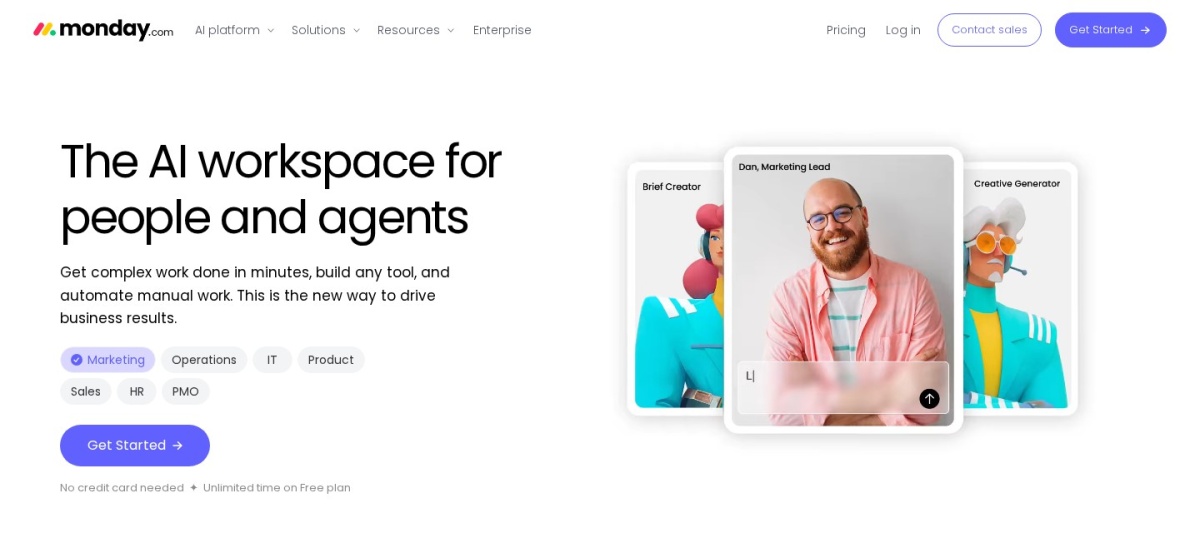
monday.com homepage, captured Nov 2026.
monday.com is a visual work management platform built around customizable boards, status columns, and team workflows. It offers a Free plan for up to 2 seats with 3 boards and 3 docs, while Basic starts at $9 per seat per month billed yearly ($12 monthly) with unlimited items and viewers.
The trade off is that Basic does not include workflow automations or integrations, which start on Standard at $12 per seat per month billed yearly (or $14 monthly), alongside multi-seat minimums on paid tiers. It suits operations teams that prefer clean visual boards and quick status updates.
What we like
High 4.7/5 G2 rating across 17,975 reviews for visual clarity
Unlimited free viewers and unlimited items on Basic
Broad library of ready-made operational templates
Watch out for
Basic plan lacks automations, integrations, and timeline views
Paid plans enforce multi-seat minimums and fixed seat bundles
Asana is a structured work management platform focused on task dependencies, timelines, project templates, and cross-team coordination. Its Personal plan is free for up to 2 users, while Starter costs $10.99 per user per month billed yearly ($13.49 monthly) and adds timeline view, workflow builder, and custom templates.
The trade off is that Starter caps automated rule runs and leaves portfolios and workload views for Advanced at $24.99 per user per month billed yearly. It suits operations teams that want disciplined task routing without heavy workspace clutter.
What we like
Clear interface for tracking owners, deadlines, and dependencies
Starter includes timeline view, custom templates, and workflow builder
Free Personal tier available for up to 2 users
Watch out for
Starter limits monthly automation runs and excludes workload view
Portfolios and cross-project workload require upgrading to Advanced
Notion is a connected workspace combining SOP documentation, team wikis, and flexible databases in one place. It offers a Free plan for individuals with limits on shared blocks and file size, while Plus costs $10 per member per month billed yearly ($12 monthly) and expands file uploads to 5 GB and 30-day page history.
The trade off is that full Notion AI features sit on Business at $20 per member per month billed yearly, and large multi-database workspaces can require careful organization. It suits teams that keep SOPs and playbooks next to active operational trackers.
What we like
Pairs structured SOP documentation and wikis with linked databases
Plus at $10/member/mo yearly increases upload limits and page history
4.6/5 rating across 14,021 G2 reviews
Watch out for
Full Notion AI features require upgrading to the Business plan
Complex databases and large workspaces can become slow or cluttered
Plus adds 5 GB file uploads, 30-day page history, and custom forms.Visit notion.com
05
Airtable
4.6/5on G2 (3,306 reviews, checked Nov 2026)
Paid from$240/yr
Best for custom relational operational data
Free tierFree ($0, up to 5 editors)
Entry paid planTeam ($20/seat/mo yearly)
Monthly billing$24/seat/mo on Team
G2 rating4.6/5 (3,306)
airtable.com
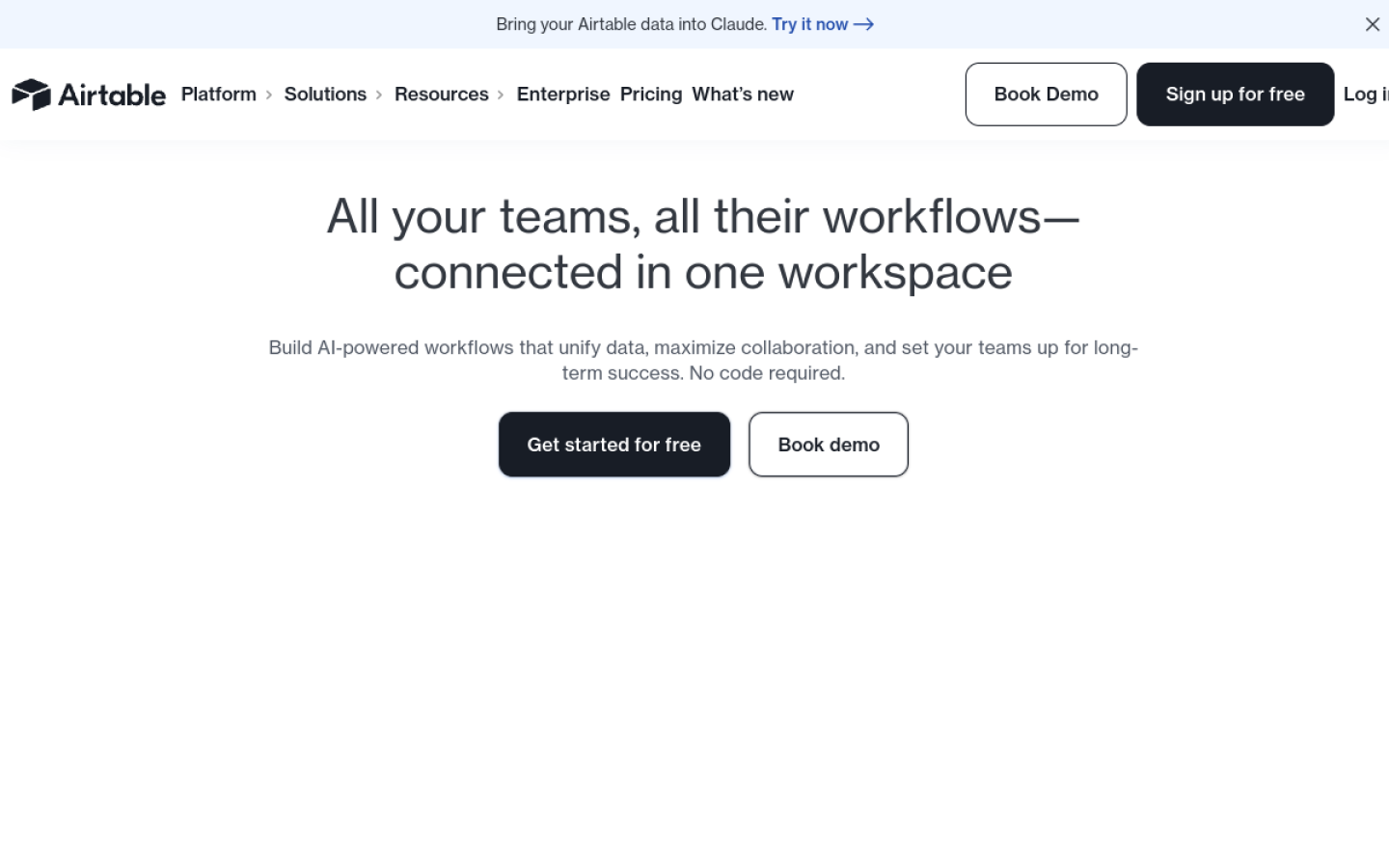
Airtable homepage, captured Nov 2026.
Airtable is a no-code relational database and app platform for inventory, content pipelines, and custom operational trackers. Its Free plan allows up to 5 editors and 1,000 records per base, while Team costs $20 per seat per month billed yearly ($24 monthly) and raises limits to 50,000 records and 25,000 automation runs.
The trade off is a steeper per-seat price than basic task apps and a sharp jump to Business at $45 per seat per month billed yearly. It suits teams that manage structured records and custom workflows rather than simple to-do lists.
What we like
Strong relational tables, linked records, automations, and interfaces
Team plan supports 50,000 records per base and 25,000 monthly automations
Free plan includes up to 5 editors with 1,000 records per base
Watch out for
Higher per-seat cost than many task-focused work trackers
Business tier rises to $45/seat/mo billed annually
Team expands capacity to 50,000 records per base and 25,000 automations.Visit airtable.com
06
Smartsheet
4.4/5on G2 (23,292 reviews, checked Nov 2026)
Starts at$108/yr
Best for spreadsheet-style schedule tracking
Free tierNone (30-day trial)
Entry paid planPro ($9/member/mo yearly)
Monthly billing$12/member/mo on Pro
G2 rating4.4/5 (23,292)
smartsheet.com
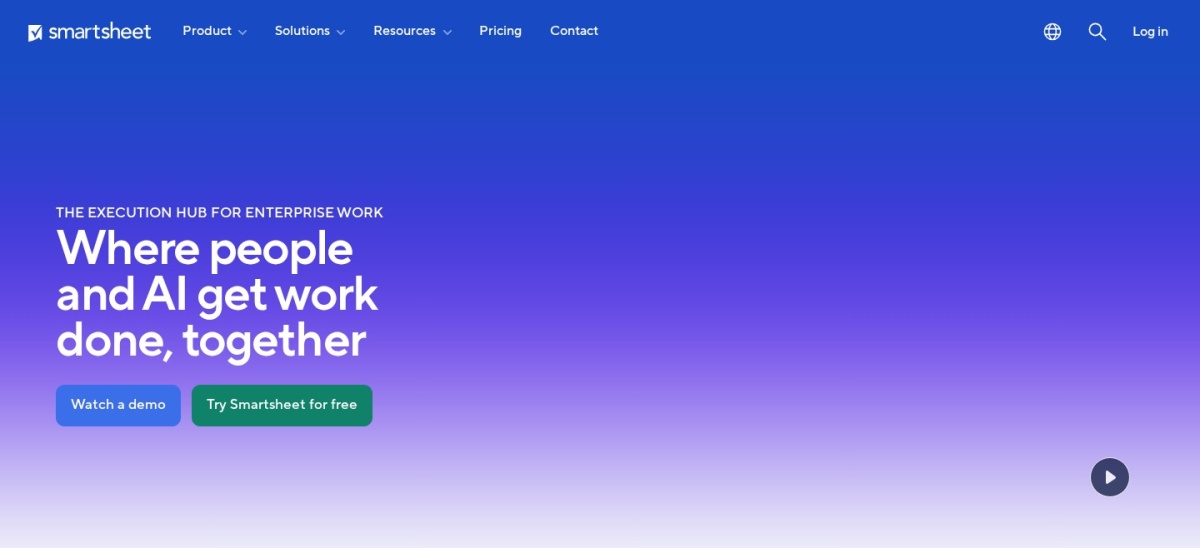
Smartsheet homepage, captured Nov 2026.
Smartsheet is a spreadsheet-style project and operations platform featuring grids, Gantt charts, forms, and automated alerts. Its entry Pro plan starts at $9 per member per month billed yearly ($12 monthly) for 1 to 10 members with unlimited free contributors and 250 monthly automations.
The trade off is no permanent free tier and a jump to Business at $19 per member per month billed yearly for unlimited automations and workload tracking. It suits spreadsheet-heavy teams that want Gantt schedules and grid formulas without starting from scratch.
What we like
Familiar grid layout with formulas, Gantt views, and intake forms
Pro includes unlimited free contributors for 1 to 10 members
23,292 G2 reviews with a 4.4/5 rating
Watch out for
No free plan after the trial period ends
Pro caps automations at 250 per month and limits member count
Business adds workload tracking, unlimited automations, and 1 TB storage.Visit smartsheet.com
07
Wrike
4.2/5on G2 (4,615 reviews, checked Nov 2026)
Paid from$120/yr
Best for multi-team project and resource workflows
Free tierFree ($0 per user/mo)
Entry paid planTeam ($10/user/mo yearly)
Monthly billingAnnual billing shown
G2 rating4.2/5 (4,615)
wrike.com
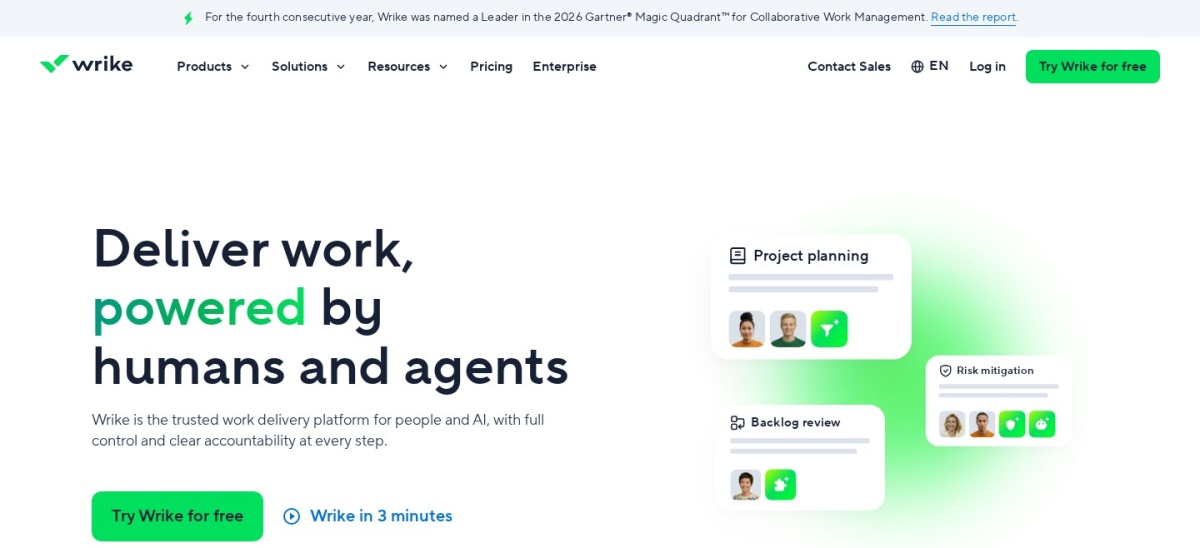
Wrike homepage, captured Nov 2026.
Wrike is a collaborative work management platform built for custom workflows, project tracking, and team execution. It offers a Free plan with 2 GB account storage, while Team starts at $10 per user per month billed yearly for 2 to 15 users with interactive Gantt charts and shareable dashboards.
The trade off is a 2 to 15 user cap on the Team plan and a step up to Business at $25 per user per month billed yearly for broader team sizes and proofing. It suits small to mid-sized teams that need interactive Gantt views and structured workflows.
What we like
Team plan at $10/user/mo yearly includes interactive Gantt charts
Free plan available to get started with basic task tracking
4,615 reviews on G2 with a 4.2/5 rating
Watch out for
Team tier is limited to 2 to 15 users
Business jumps to $25/user/mo billed annually
Business expands user capacity up to 200 users and adds proofing.Visit wrike.com
Watch for seat and automation limits
Per-user pricing looks simple on paper, but teams often hit hidden cost jumps when adding editors or crossing monthly automation quotas. Some plans bill everyone with edit access on any shared item or database.
Check whether external collaborators or occasional reviewers count as paid seats or free viewers. Picking a tier that fits your workflow avoids mid-year plan upgrades.
How we chose
This shortlist focuses on established operations and work management platforms with public pricing tiers, active development, and large review bases. Each candidate needed clear documentation covering core task, process, or data workflows.
Pricing, plan features, and G2 ratings were checked on 22 Nov 2026 against vendor pricing pages and public review listings. Entry paid prices reflect the lowest published regular tier billed annually unless noted otherwise.
Tools without clear public entry pricing or those tailored strictly to narrow vertical niches were left out of this general comparison. No vendor paid for a place, and we do not claim testing for this list.
How to choose operations software in 4 steps
Follow these four steps to narrow down the right operations platform for your team.
Map your core operational unit first. Decide whether your team runs around tasks and deadlines, SOP documents, or structured records and tables.
Check automation and view limits on the entry plan. Confirm how many automation runs, timelines, or dashboards are included before paying for a higher tier.
Count editors versus viewers and external guests. See which roles require paid seats and which can collaborate as free viewers or external guests.
Run a pilot with real recurring workflows. Test two candidates on an actual weekly process so you see where team members stumble.
FAQ
What is the best operations management software overall?
ClickUp is a strong all-around choice for teams combining tasks, docs, chat, and automations, holding a 4.6/5 rating across 15,910 G2 reviews. Its Core plan starts at $9 per user per month billed yearly, while monday.com and Asana are strong alternatives depending on how your team prefers to organize work.
Which operations tools offer a free plan?
ClickUp, monday.com, Asana, Notion, Airtable, and Wrike all offer free plans with feature, seat, or record limits. Smartsheet does not offer a free plan and provides a 30-day trial instead.
Is annual billing cheaper than monthly billing on these tools?
Yes, annual billing lowers the effective per-user monthly rate across these platforms. For example, ClickUp Core is $9 per user per month yearly versus $12 monthly, and Airtable Team is $20 per seat per month yearly versus $24 monthly.
When should a team choose Airtable over a task board?
Choose Airtable when your operations revolve around structured records, linked tables, formulas, and custom interfaces rather than simple task checklists. Its Team plan starts at $20 per seat per month billed yearly.
When is Notion a better fit than a dedicated project tracker?
Notion fits best when written SOPs, onboarding guides, and internal wikis sit at the center of daily operations alongside lightweight databases. Its Plus plan starts at $10 per member per month billed yearly.
What should small teams watch out for before upgrading?
Watch for steep jumps between entry and mid-tier plans, tight automation run caps, and seat rules for collaborators. Always calculate cost for your actual active team size before committing.
SaaS SEO and WordPress specialist with about 8 years of experience. Rakib compares WordPress plugins, themes, hosting and software using public pricing, documentation and user reviews. See how we rank.