Khan Academy Kids is the best free multiplication app for most families, because it is completely free with no ads or purchases and is rated 4.8 out of 5 from about 133,000 App Store ratings. Pick Times Tables Rock Stars for focused recall games, or XtraMath for a plain free daily drill.
How we make this list: we compare pricing pages, product documentation and public user reviews, then re-check every price before each update. No product paid for a place. Disclosure.
Khan Academy Kids is the only app here that is fully free forever, with no ads, no purchases and no chat.
SplashLearn is free through a school or teacher account, but families buying direct pay $89.99 a year.
IXL gives 10 free questions a day, which is enough for a short daily drill, and its single-subject plan costs $79 a year.
Times Tables Rock Stars has no free plan, but its family plan is the cheapest paid option here at $16 a year.
XtraMath is a plain free drill at about 10 minutes a day, with an optional Family Pro plan at $6 a year.
DreamBox teaches multiplication concepts with adaptive lessons, but it costs $99.95 a year and is rated 3.4 out of 5 on G2 from 16 reviews.
What a free multiplication app should cover
Multiplication fluency grows from short, regular practice. Ten minutes a day beats one long session a week, so the best free app is the one a child will open again tomorrow.
Free means three different things in this list. Some apps are free from a nonprofit with no ads, some give a free core and sell a membership, and one charges every family. Check which kind you are getting before you sign up.
Safety matters as much as maths. None of the apps here has open chat with strangers. Parents should still spend five minutes inside any app before handing it to a child.
A quiz format works well for checking which tables are shaky. Our guide on how to create a quiz in LearnDash shows how teachers build short checks that name the exact facts a child misses.
4.8/5on App Store (133,000 reviews, checked Nov 2026)
PriceFree
Best free multiplication app overall
Free planYes, fully free
Ages2 to 8
AdsNone
Paid planNone
khanacademy.org
Khan Academy Kids homepage, captured Nov 2026.
Khan Academy Kids is a free learning app from the Khan Academy nonprofit, built for children aged 2 to 8. It charges nothing, shows no ads, sells nothing inside the app, and includes more than 1,000 games, videos and stories where multiplication arrives in sequence after counting, grouping and addition.
The trade off is age range and depth. The app is designed for young children, so its multiplication work covers the early tables as part of a broad curriculum rather than a dedicated tables boot camp. It suits families with children up to about eight who want a safe, free starting point.
What we like
Completely free with no ads or in-app purchases
Rated 4.8 out of 5 from about 133,000 App Store ratings
No chat or social features of any kind
Multiplication taught in sequence, not as bare recall
Watch out for
Aimed at ages 2 to 8, so older children outgrow it
Multiplication depth is limited next to drill apps
4.5/5on App Store (32,000 reviews, checked Nov 2026)
Paid from$89.99/yr
Best for school-aligned practice
Free planYes, via school
Ages2 to 11
SubjectsMaths and English
Paid plan1 child, $89.99/yr
splashlearn.com
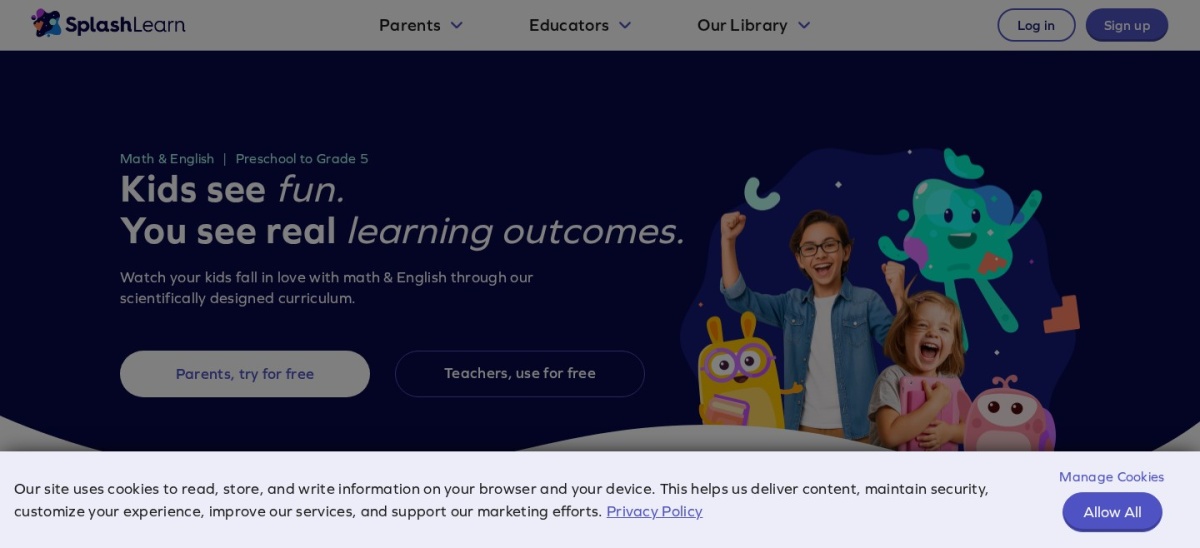
SplashLearn homepage, captured Nov 2026.
SplashLearn is a maths and English learning app for children from preschool to grade 5, used in 1 in 3 US schools according to its App Store listing. Its multiplication games follow the order schools teach, and parent and teacher dashboards name the exact facts a child misses. It is rated 4.5 out of 5 from about 32,000 App Store ratings.
The trade off is how the free plan works. It is free for teachers and schools, while families buying direct pay $11.99 a month or $89.99 a year for one child, after a 7-day trial. It suits families whose child already uses it at school.
What we like
Multiplication sequenced to the school curriculum by grade
Free for students through a school or teacher account
Dashboards show which tables are shaky
Covers maths and English in one app
Watch out for
Home users without a class code meet the paywall quickly
4.7/5on App Store (1,200 reviews, checked Nov 2026)
Paid from$49.99/yr
Best gentle daily practice for young children
Free planYes, daily missions
Ages3 to 8
Activities2,000+
Paid plan1 year from $49.99
todomath.com
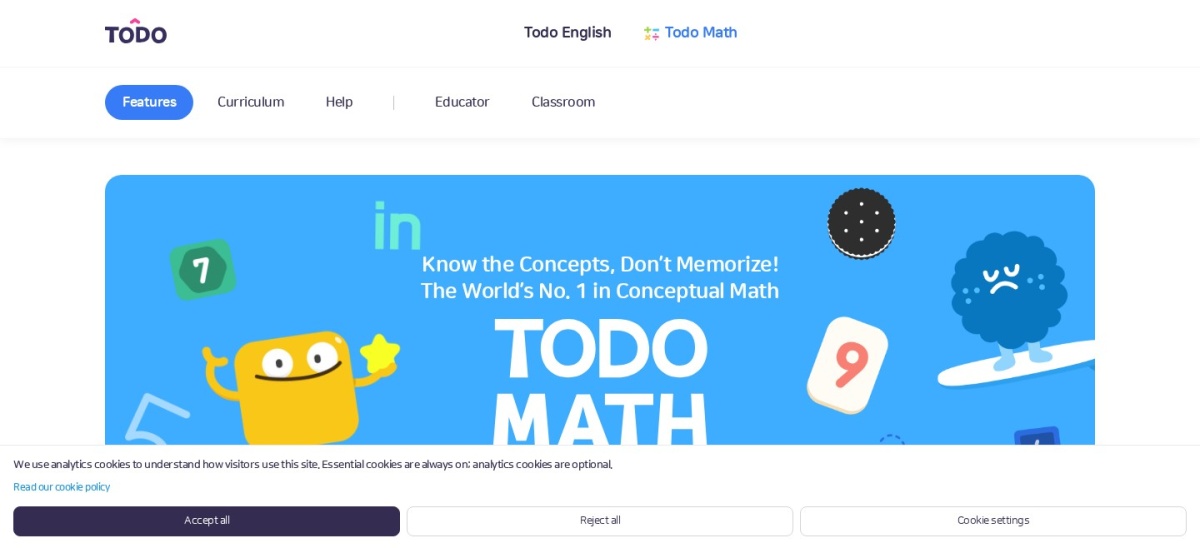
Todo Math homepage, captured Nov 2026.
Todo Math is an early maths app from Enuma with more than 2,000 activities for children from preschool to grade 2. Its daily missions parcel practice into short sessions, and its multiplication games build from grouping and arrays rather than raw recall. It is rated 4.7 out of 5 from about 1,200 App Store ratings.
The trade off is range and price. The free tier covers a daily portion, the full library needs a subscription from $49.99 a year, and the content tops out early for older children. It suits younger children who need a calm, finishable daily routine.
What we like
Daily mission structure builds a short, regular habit
Multiplication taught through grouping and arrays
Strong accessibility options, including 8 languages
No chat or social features, calm design
Watch out for
Free tier is a small daily portion of the library
Aimed at younger children, so tables depth tops out early
Subscription is pricey for a kids app at $49.99 a year
4.3/5on App Store (206,000 reviews, checked Nov 2026)
Paid from$79/yr
Best short daily drills with parent reports
Free plan10 questions a day
AgesPre-K to grade 12
SkillsBy table and property
Paid planSingle subject, $79/yr
ixl.com
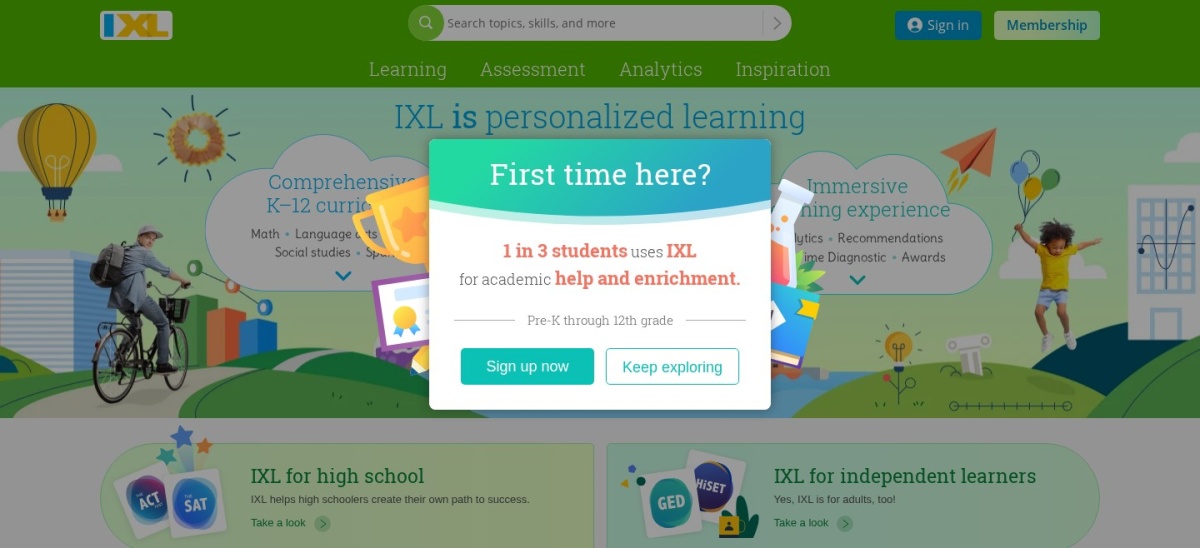
IXL homepage, captured Nov 2026.
IXL is a personalised learning platform covering maths, English, science and social studies from pre-K to grade 12. Its free offer is exact: 10 practice questions a day, with immediate correction and a record of every miss. Multiplication is broken into precise skills by table, by property, word problems and mixed review.
The trade off is that the free allowance is small and the presentation is plain schoolwork. Unlimited practice and full analytics need a membership, with a single subject at $9.95 a month or $79 a year. It suits parents who want a deliberate ten-minute morning drill with clear reports.
What we like
10 free questions a day is a sustainable drill dose
Best diagnostics here, showing exactly which facts fail
Multiplication split by table, property and word problems
No games economy, no chat and no social layer
Watch out for
10 questions is the ceiling, the 11th needs a membership
Plain presentation, so motivation must come from the parent
Lowest App Store rating in this list at 4.3 out of 5
Membership adds unlimited practice and full analyticsVisit ixl.com
05
Times Tables Rock Stars
4.6/5on App Store (1,500 reviews, checked Nov 2026)
Starts at$16/yr
Best focused times tables recall
Free planNo, 4-week school trial
Ages6 and up
FocusTimes tables only
Paid planFamily, $16/yr
ttrockstars.com
Times Tables Rock Stars homepage, captured Nov 2026.
Times Tables Rock Stars is a question-based times tables programme where children practise multiplication and division facts as a rock star, earning coins and climbing leaderboards. Its games adapt to each child, heatmaps show how close each table is to fluency, and it is used in more than 16,000 schools. It is rated 4.6 out of 5 from about 1,500 App Store ratings.
The trade off is that it is the only app here with no free plan. A family subscription costs $16 a year for up to 3 children and 2 adult accounts, while a school subscription costs $260 a year. It suits children aged 6 and up who need rapid recall, especially before a timed tables check.
What we like
Laser focus on times tables fluency, nothing else
Adaptive games, heatmaps and live multiplayer
Cheapest paid plan in this list at $16 a year
No chat, no ads and no in-app purchases
Watch out for
No free plan, only a 4-week school trial
Times tables only, no fractions or problem solving
4.6/5on App Store (13,000 reviews, checked Nov 2026)
Paid from$6/yr
Best plain free daily drill
Free planYes, full drill free
SessionAbout 10 minutes a day
GradesK to 8
Paid planFamily Pro, $6/yr
xtramath.org
XtraMath homepage, captured Nov 2026.
XtraMath is a free nonprofit programme that drills addition, subtraction, multiplication and division facts in about 10 minutes a day. Each session is a short quiz followed by practice, parents get a report of every answer and a weekly email, and the site states there are no ads to students, ever. Parents rate it 4.6 on the App Store from about 13,000 ratings.
The trade off is that it is a drill, not a game and not a teacher. It does not explain concepts, the timer cannot be turned off, and some children find the timed format stressful. It suits families who want a free, plain daily fluency routine with parent reports.
What we like
Core programme is free with no time limit
Short daily sessions with a report of every answer
No ads to students, ever
Cheapest optional upgrade here at $6 a year
Watch out for
A drill, not a teacher, so it does not explain concepts
Timer cannot be turned off, which some children find stressful
DreamBox Math is an adaptive maths programme for grades K to 8, now part of Discovery Education, that adjusts each lesson while a child works. Lessons use virtual manipulatives and real-world problems to teach concepts, including multiplication, instead of only drilling recall. It holds a Strong rating from Evidence for ESSA.
The trade off is price and polish. An individual plan costs $99.95 a year after a 14-day free trial, the family plan costs $149.95 a year, and some reviewers find the instructions hard to follow. It suits families who want adaptive lessons with published evidence behind them.
Nonprofit free apps cover the basics well. Khan Academy Kids and XtraMath charge nothing at all, and neither shows ads to children.
Freemium apps give a useful free core and sell the rest. IXL gives 10 questions a day and sells unlimited practice, and Todo Math gives daily missions and sells the full library.
Paid-only apps are the exception here. Times Tables Rock Stars costs $16 a year for a family, while DreamBox costs $99.95 a year for one child. If a child already drills happily for free, paying only makes sense when the free limit is the thing stopping a routine that works.
How we chose
We started from the multiplication apps parents and teachers mention most, then kept those with a real free offer or a low paid price and a public App Store rating.
Prices come from each vendor's pricing page or App Store listing, checked on 25 November 2026. Ratings and review counts come from the US App Store on the same day, except XtraMath, whose rating is reported from the App Store. Where a vendor shows a sale, the list shows the regular price.
We left out apps with no public rating, so Moose Math and Math Games are not in this list. No vendor paid for a place, and we do not claim to have used these tools ourselves.
How to choose a free multiplication app
Start with your child's age and what stops practice now, then match the app to that gap.
Match the age first. Khan Academy Kids and Todo Math suit ages up to about eight, while IXL, Times Tables Rock Stars and DreamBox suit older children who want drills, games or adaptive lessons.
Decide what free should mean. Pick a nonprofit app if you want no ads and no purchases, or accept a free core with a membership if the game keeps your child practising.
Check the free limit before you start. IXL stops at 10 questions a day and SplashLearn needs a school account at home, so confirm the limit fits your routine before the trial ends.
Spend five minutes inside the app first. Turn off chat if it exists, check whether purchases need a password, and watch what an ad break shows before your child plays alone.
FAQ
What is the best free multiplication app?
Khan Academy Kids is the best free option for most families. It is completely free with no ads or purchases, covers early maths in sequence, and is rated 4.8 out of 5 from about 133,000 App Store ratings.
Are free multiplication apps really free?
It depends on the app. Khan Academy Kids and XtraMath are fully free with no ads. Todo Math and IXL give a free core and sell memberships, while Times Tables Rock Stars and DreamBox charge every family.
Which multiplication app is best for a child just starting out?
Khan Academy Kids suits children up to about eight, because it teaches the ideas in sequence before drilling recall. Todo Math adds a gentle daily routine, and IXL or Times Tables Rock Stars can build speed once the concept lands.
Are these apps safe for a child to use alone?
None of the seven has open chat with strangers. Parents should still check the app first, since freemium apps show purchase prompts and the free apps with ads show advertising between games.
How much practice does a child actually need?
Short and daily beats long and rare. Ten to fifteen minutes a day, the size of IXL's free allowance or one XtraMath session, builds recall over a school term. More than that in one sitting mostly practises frustration.
When should I pay for a multiplication app?
Pay when the free version's limit is the only thing stopping a routine that already works, such as a child finishing IXL's ten questions and wanting more. Paying to start a habit rarely works, while paying to feed one usually does.
Which app is best for times tables recall before a test?
Times Tables Rock Stars is the most focused choice, with adaptive games and heatmaps for each table. It costs $16 a year for a family, and schools can trial it free for four weeks.
SaaS SEO and WordPress specialist with about 8 years of experience. Rakib compares WordPress plugins, themes, hosting and software using public pricing, documentation and user reviews. See how we rank.