LitCommerce is the best multi channel selling platform for most small and growing retailers, with plans starting at $29 per month for unlimited orders and 1,000 product listings. Choose Sellbrite for affordable marketplace management or Zoho Inventory for centralized stock control, purchasing and order fulfillment.
How we make this list: we compare pricing pages, product documentation and public user reviews, then re-check every price before each update. No product paid for a place. Disclosure.
LitCommerce starts at $29/month with 1,000 listings, 3 connected channels and unlimited orders.
Sellbrite offers a free plan for up to 30 orders per month, with paid plans starting at $29/month.
Zoho Inventory Standard supports 500 monthly orders, 2 users and 2 locations for $29/month billed annually.
BigCommerce Core costs $29/month billed annually and has a $30,000 trailing annual GMV threshold.
Cin7 Core starts at $349/month and supports 6,000 annual sales orders on its Standard plan.
What to look for in a multi channel selling platform
Selling through marketplaces, online stores and social commerce channels creates an inventory management problem. Without centralized stock tracking, the same product can sell on different platforms before your available quantity updates.
A good multi channel selling platform connects your product catalog, inventory and orders. It should let you update listings centrally rather than repeating changes across every marketplace.
Check how each platform calculates its subscription fee. LitCommerce starts with 1,000 listings and unlimited orders, while Zoho Inventory Standard includes 500 orders per month. These different pricing models affect businesses with large catalogs and businesses with high sales volumes differently.
Inventory synchronization speed, marketplace-specific listing requirements and fulfillment integrations deserve particular attention. Also check whether your subscription includes listing creation or only inventory and order synchronization.
LitCommerce is a marketplace integration platform that connects online stores with Amazon, eBay, Etsy, Walmart and other selling channels. Its entry-level paid subscription supports 1,000 product listings, 3 integrated channels and unlimited monthly orders, with inventory and pricing updates every 15 minutes.
The trade off is that subscription costs increase as your catalog and channel requirements expand beyond the $29 monthly starting plan. It suits growing retailers that want centralized listing management without paying according to monthly order volume.
What we like
Unlimited monthly orders on the paid entry plan
Centralized product listing management
Reusable listing templates
Connects established marketplaces and online stores
Watch out for
Inventory updates are not instantaneous
Larger catalogs increase subscription costs
Not a complete warehouse management system
Paid subscriptions provide automated synchronization and marketplace listing management.Visit litcommerce.com
02
Sellbrite
4.6/5on Capterra (78 reviews, checked Nov 2026)
Paid from$29/mo
Best for beginners and small marketplace sellers
Free monthly orders30
Free inventory syncEvery 2 hours
Paid inventory syncEvery 15 minutes
Starting paid planPro 100
sellbrite.com
Sellbrite homepage, captured Nov 2026.
Sellbrite is a marketplace management platform that combines product publishing, inventory tracking and order fulfillment. Its free subscription handles up to 30 monthly orders, while paid subscriptions update inventory and pricing every 15 minutes across connected sales channels.
The trade off is order-based pricing, with the Pro 100 subscription starting at $29 per month and higher volumes requiring larger plans. It suits small retailers expanding from an existing online store into established marketplaces without immediately investing in complex inventory software.
What we like
Permanent free subscription for smaller sellers
Bulk marketplace listing tools
Centralized inventory and price management
Shipping and fulfillment integrations
Watch out for
Free inventory synchronization is relatively slow
Subscription costs increase with order volume
Additional fees apply to some fulfillment features
Pro subscriptions increase order allowances and improve synchronization frequency.Visit sellbrite.com
03
Zoho Inventory
4.5/5on Capterra (424 reviews, checked Nov 2026)
Paid from$29/mo
Best for inventory and purchasing management
Standard monthly orders500
Standard users2
Standard locations2
BillingAnnual at listed price
zoho.com
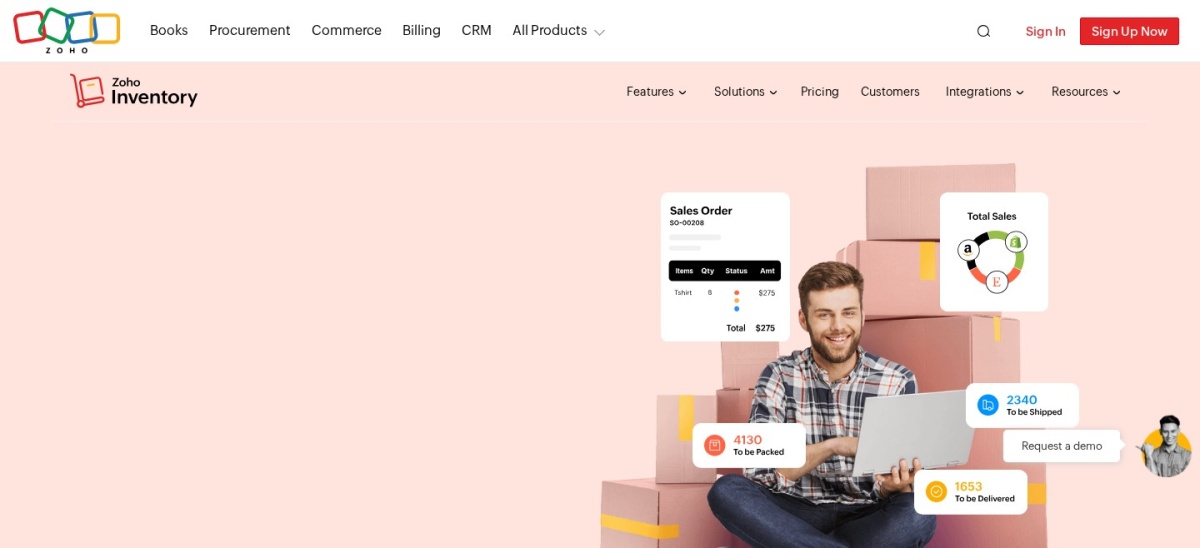
Zoho Inventory homepage, captured Nov 2026.
Zoho Inventory is an inventory and order management platform that brings purchasing, stock tracking, sales orders and fulfillment into a shared workspace. Its Standard subscription includes 500 monthly orders, 2 users, 2 inventory locations, composite products, dropshipping and backordering.
The trade off is that its $29 monthly Standard subscription, billed annually, has fixed allowances for orders, users and locations. It suits retailers that prioritize accurate inventory records, purchasing workflows and fulfillment management over extensive marketplace listing optimization.
What we like
Centralized purchasing and inventory records
Supports product bundles and composite items
Connects with other Zoho business applications
Includes customer and order management features
Watch out for
Entry-level order and user restrictions
Additional capacity can increase costs
Less focused on marketplace listing optimization
Standard expands operational capacity and adds composite items and backordering.Visit zoho.com
04
BigCommerce
4.4/5on Capterra (351 reviews, checked Nov 2026)
Starts at$29/mo
Best for building a multichannel online store
Entry planCore
Annual GMV threshold$30,000
Monthly billing alternative$39/month
Store hostingIncluded
bigcommerce.com
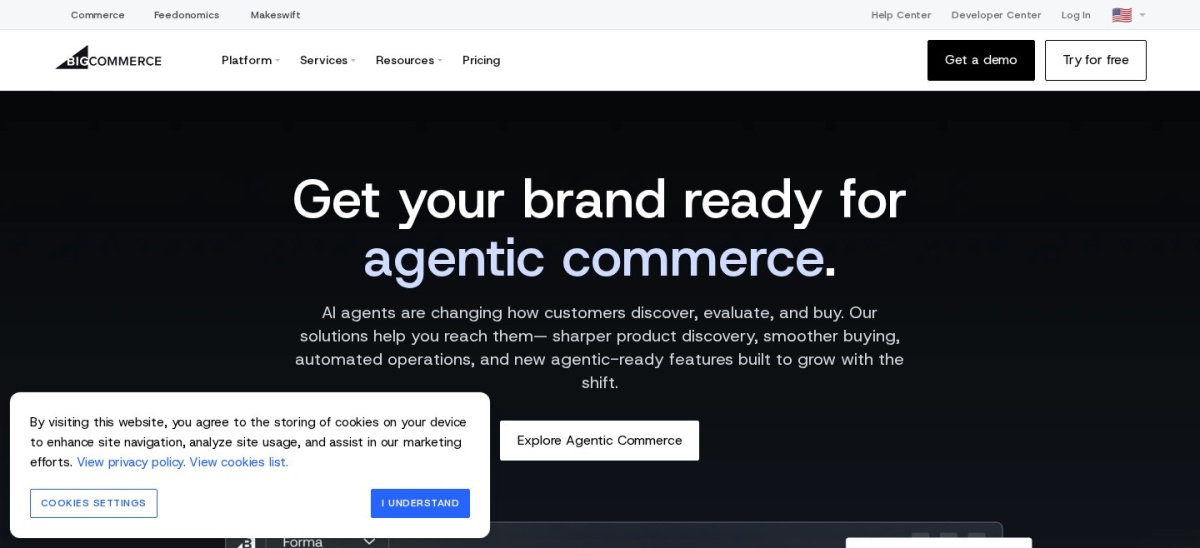
BigCommerce homepage, captured Nov 2026.
BigCommerce is a hosted ecommerce platform for businesses that want their own online storefront alongside additional selling channels. Its Core subscription provides ecommerce catalog, checkout and inventory functionality, with a $30,000 trailing annual gross merchandise value threshold.
The trade off is that the $29 monthly Core subscription requires annual billing, and increasing sales can trigger higher subscription tiers. Certain payment arrangements can also introduce additional fees. It suits retailers building an independent ecommerce business that will expand into other sales channels.
What we like
Hosted ecommerce storefront
Centralized product catalog and checkout
Marketplace and advertising integrations
Supports advanced ecommerce requirements as businesses grow
Watch out for
Revenue thresholds can trigger plan upgrades
Some marketplace connections require additional applications
Payment provider fees can apply
Core includes hosted storefront functionality, checkout and ecommerce management tools.Visit bigcommerce.com
05
Cin7 Core
4.3/5on Capterra (739 reviews, checked Nov 2026)
Starts at$349/mo
Best for wholesale and retail inventory operations
Standard users5
Annual sales orders6,000
Included integrations2
Inventory locationsUnlimited
cin7.com
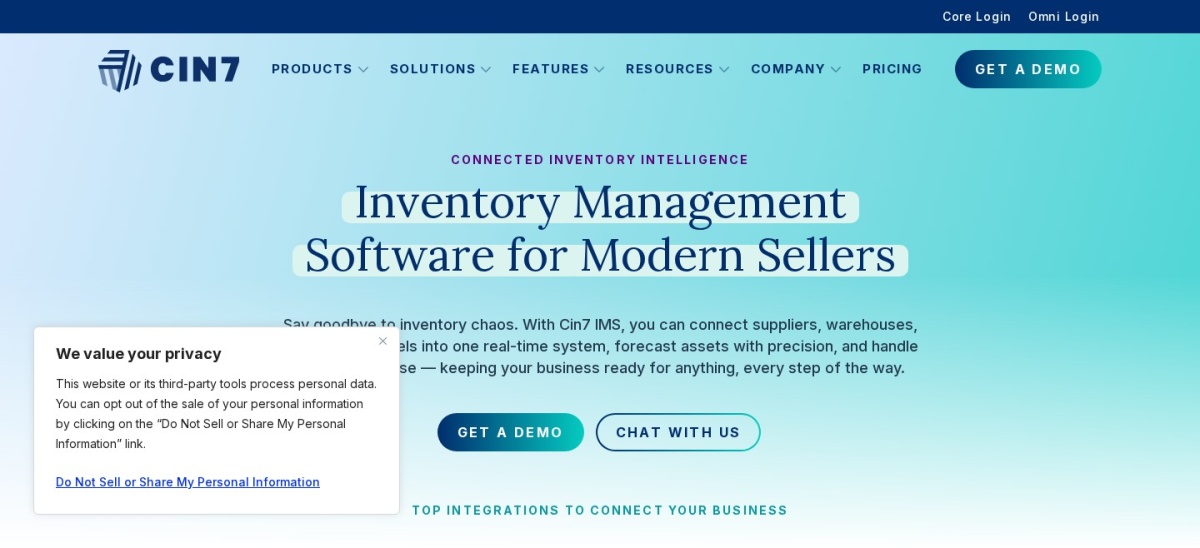
Cin7 Core homepage, captured Nov 2026.
Cin7 Core is an inventory management platform that connects ecommerce sales, wholesale orders, purchasing, accounting and warehouse operations. Its Standard subscription includes access for 5 users, 2 ecommerce or application integrations, unlimited inventory locations and an allowance of 6,000 annual sales orders.
The trade off is the $349 monthly starting price and the limited number of included integrations, with additional connections available for purchase. It suits established retailers and wholesalers that need coordinated inventory and operational management rather than a standalone marketplace listing application.
What we like
Connects purchasing, inventory and sales workflows
Unlimited inventory locations on Standard
Accounting software integrations
Warehouse management and barcode functionality
Supports wholesale business processes
Watch out for
High starting subscription cost
Limited integrations on the entry plan
Advanced warehouse features require higher tiers
Standard includes inventory, purchasing, accounting connections and basic warehouse management.Visit cin7.com
06
Linnworks
4.2/5on Capterra (49 reviews, checked Nov 2026)
PricingCustom pricing
Best for established multichannel retail operations
Pricing modelOrder volume
Revenue percentage feeNone
Order managementIncluded in platform
Listing managementPlan-dependent
linnworks.com
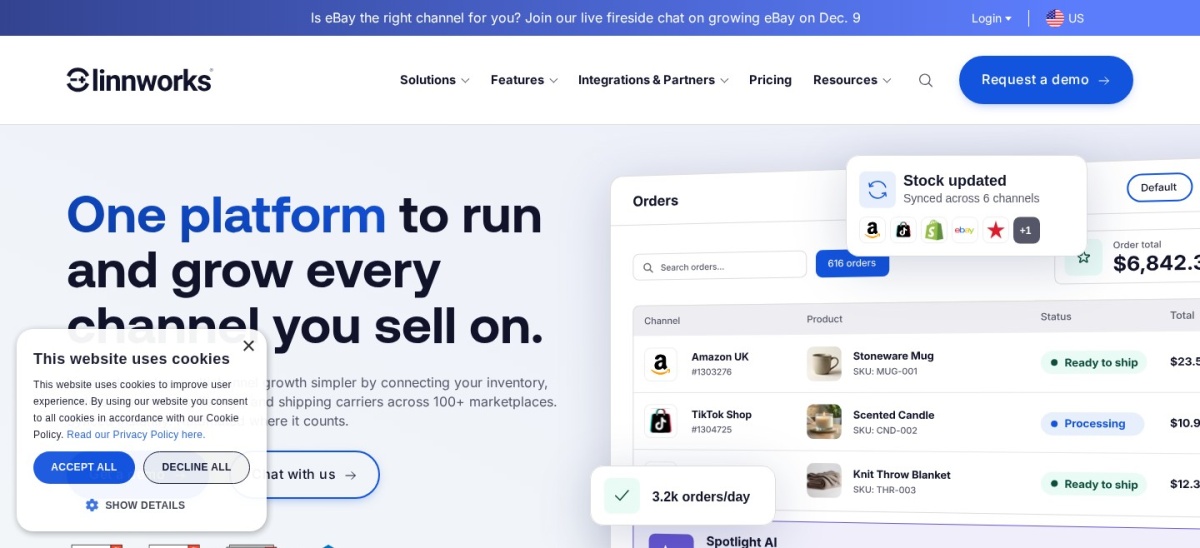
Linnworks homepage, captured Nov 2026.
Linnworks is an ecommerce operations platform that centralizes inventory, order processing, shipping and marketplace management. Its subscriptions are calculated according to order volume rather than a percentage of sales revenue, with additional capabilities available according to operational requirements.
The trade off is custom pricing, which requires a sales consultation before businesses can establish their subscription budget. Some advanced functionality may require additional modules. It suits established retailers managing multiple marketplaces, warehouses and fulfillment workflows that have outgrown simpler listing applications.
Marketplace connectionsUnlimited in standard packages
Pricing modelLicense and success-based fees
OnboardingSeparately priced
Customer supportDedicated success manager
channelengine.com
ChannelEngine homepage, captured Nov 2026.
ChannelEngine is a marketplace integration and management platform for established brands and retailers. Its standard packages include unlimited marketplace connections, shared team access, technical assistance and a dedicated customer success manager, supporting centralized product information, inventory and marketplace order management.
The trade off is custom pricing that combines onboarding charges, a recurring license and a success-based fee tied to incremental marketplace sales. It suits mid-market and enterprise businesses with established product catalogs, existing marketplace accounts and resources for managing channel expansion.
What we like
Unlimited marketplace connections in standard packages
Centralized marketplace operations
Supports enterprise system integrations
Dedicated customer success assistance
Watch out for
No public fixed starting subscription price
Success-based fees increase costs as sales grow
Separate onboarding costs
Paid packages provide marketplace connectivity, platform access and ongoing support.Visit channelengine.com
Catalog-based vs order-based multi channel selling software
Catalog-based pricing works well for businesses with relatively small product ranges and high sales volumes. LitCommerce starts at $29 per month for 1,000 listings and unlimited orders, making its entry plan particularly attractive for sellers with frequently purchased products.
Order-based pricing can work better for retailers with extensive catalogs but relatively few transactions. Sellbrite allows businesses to begin with its free 30-order monthly allowance before moving to a paid subscription.
Enterprise platforms introduce additional pricing considerations. Linnworks uses order volume, while ChannelEngine combines onboarding, recurring licensing and success-based charges. Compare these costs against your expected sales growth before signing a contract.
How we chose
We shortlisted established ecommerce platforms, marketplace integration applications and inventory management systems that support selling through multiple channels. We prioritized centralized product management, inventory synchronization, order processing and published customer feedback.
Prices and ratings are presented under the editorial reference date of 22 Nov 2026. Official pricing pages and public G2 and Capterra review profiles supplied the figures. Live verification occurred after the editorial reference date, so the figures should not be interpreted as an archived snapshot of that date. Annualized prices represent recurring subscription costs before optional services and marketplace fees.
We excluded products whose pricing could not be confirmed, applications focused exclusively on advertising feeds and platforms without sufficient relevant public reviews. Quote-based platforms were retained where their official pricing models could be established. No vendor paid for a place, and we do not claim testing for this list.
How to choose the best multi channel selling platform
Compare your existing sales channels, inventory requirements and expected order volumes before choosing a subscription.
Confirm your marketplace integrations. Check whether the platform supports every marketplace and online store you currently use. Verify that each connection handles product publishing, inventory updates and order importing rather than assuming all integrations offer identical functionality.
Calculate your catalog and order requirements. Count your product listings, variants, monthly orders and inventory locations. Compare those figures against subscription allowances and consider how seasonal sales increases could affect your monthly software costs.
Check synchronization and fulfillment workflows. Review stock update frequency, order importing, shipping integrations and return management. Businesses selling limited-stock products should pay particular attention to synchronization delays and overselling prevention.
Compare the complete annual cost. Include recurring subscriptions, additional integrations, onboarding, fulfillment modules and applicable transaction charges. Request an itemized quotation from enterprise providers before comparing them with platforms that advertise fixed subscription prices.
FAQ
What is the best multi channel selling platform?
LitCommerce is our top pick for most small and growing retailers because its $29 monthly starting subscription includes unlimited orders, 1,000 product listings and 3 integrated channels. Sellbrite and Zoho Inventory are suitable alternatives for smaller sellers and inventory-focused businesses.
Is there a free multi channel selling platform?
Yes. Sellbrite offers a permanent free subscription supporting up to 30 monthly orders. Its free inventory and pricing synchronization runs every 2 hours. Businesses that require faster updates or process more orders can upgrade to a paid subscription.
What is the difference between multichannel and omnichannel selling?
Multichannel selling means offering products through several sales channels, such as marketplaces, online stores and social commerce platforms. Omnichannel selling goes further by connecting customer experiences, inventory information and purchasing journeys across those channels.
How much does multi channel selling software cost?
Public starting prices in this comparison range from $29 per month for LitCommerce, Sellbrite, Zoho Inventory and BigCommerce to $349 per month for Cin7 Core. Linnworks and ChannelEngine calculate subscription costs according to business requirements.
Can multichannel selling software prevent overselling?
It can reduce overselling by synchronizing stock quantities across connected sales channels. However, synchronization delays, integration failures and simultaneous purchases can still create discrepancies. Review update frequency and consider maintaining inventory buffers for products with limited availability.
Which platform is best for selling on Amazon and eBay?
LitCommerce and Sellbrite are practical choices for retailers managing Amazon and eBay listings alongside an independent online store. Both provide centralized inventory and marketplace management. Compare listing requirements, fulfillment options and subscription allowances before selecting either platform.
Do I need a separate inventory management system?
Not necessarily. Platforms such as Zoho Inventory, Cin7 Core and Linnworks combine multichannel operations with dedicated inventory management functionality. Simpler listing applications may be sufficient for small retailers but require additional software for purchasing, warehouse operations or complex stock management.
Are marketplace selling fees included in software subscriptions?
Generally, marketplace commissions, referral fees, advertising expenses and fulfillment charges remain separate from software subscriptions. Some integration platforms also charge onboarding or success-based fees. Review the software provider's pricing terms alongside each marketplace's seller fees.
SaaS SEO and WordPress specialist with about 8 years of experience. Rakib compares WordPress plugins, themes, hosting and software using public pricing, documentation and user reviews. See how we rank.