Shopify Hydrogen is the best headless commerce platform for most brands, with its React framework on Shopify Plus from $2,300 a month and a hosted checkout. Pick BigCommerce Catalyst for published pricing from $29 a month, or commercetools for a fully composable enterprise build.
How we make this list: we compare pricing pages, product documentation and public user reviews, then re-check every price before each update. No product paid for a place. Disclosure.
Shopify Hydrogen runs on Plus from $2,300 a month and keeps Shopify's hosted checkout.
BigCommerce Catalyst starts at $29 a month, the lowest published entry price in this list.
Elastic Path is the only enterprise platform here with a published entry price: $49,500 a year.
commercetools, Spryker, Adobe Commerce, Nacelle and Fabric are all quote-only, so budget for a sales process.
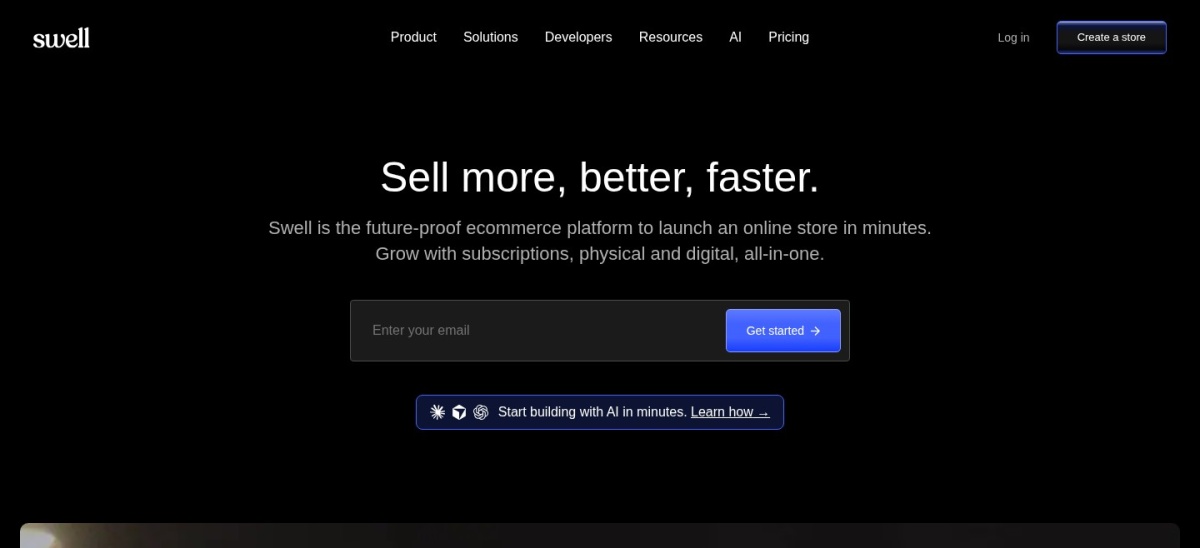
Swell is the cheapest headless start for small stores, at $29 a month for up to $50,000 in annual sales.
Nacelle has the highest G2 rating here at 4.7, but from only 14 reviews.
What headless commerce means in practice
Headless commerce splits the storefront from the backend. Your team builds the pages shoppers see, while the platform handles products, carts, orders and checkout through APIs.
That split buys speed and design freedom, but it also buys work. Somebody has to build the frontend, host it, and keep it in step with the backend, so a headless build is a poor fit for a store that wants a ready-made theme.
The platforms in this list fall into two groups. Shopify, BigCommerce and Swell are hosted SaaS platforms with a headless option, while commercetools, Elastic Path, Spryker, Adobe Commerce, Nacelle and Fabric are composable or modular systems that need more engineering. Our guide on building a headless WordPress site explains the same split for WordPress.
Prices split the same way. Hosted options publish monthly rates from $29, while enterprise platforms price by quote, usually against orders or sales volume.
Shopify Hydrogen is Shopify's React-based framework for building a custom storefront on top of Shopify's checkout, catalog and orders. It runs on Shopify Plus, which starts at $2,300 a month on a 3-year term, and it keeps the hosted checkout that handles payments, tax and fraud checks.
The trade off is cost and code. Plus starts at $2,300 a month, and a Hydrogen storefront still needs developers to build and maintain it, so the platform fee is only part of the bill. It suits high-volume brands that want a custom frontend without rebuilding checkout, payments and fulfillment.
What we like
Hosted checkout with payments, tax and fraud checks
Large app ecosystem for extra features
Hydrogen is a free, open-source framework
Watch out for
Plus starts at $2,300 a month
Needs developers to build the storefront
Extra fees apply with third-party payment providers
Plus adds B2B selling, custom checkout and higher API limitsVisit shopify.com
02
BigCommerce Catalyst
4.2/5on G2 (580 reviews, checked Nov 2026)
Starts at$29/mo
Best value headless option
Headless frameworkCatalyst (Next.js)
Transaction fees0% on BigCommerce
Entry planCore, $29/mo
Free planNo, trial available
bigcommerce.com
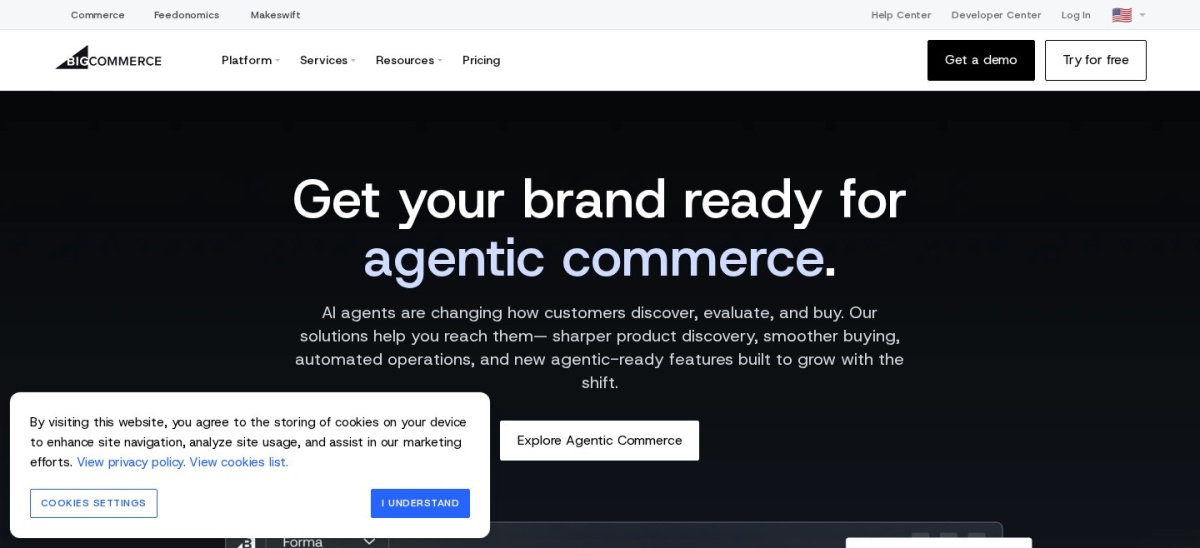
BigCommerce Catalyst homepage, captured Nov 2026.
BigCommerce Catalyst is BigCommerce's open-source headless framework for building a custom storefront in Next.js on the BigCommerce backend. Core starts at $29 a month on annual billing, and the platform charges no extra transaction fee of its own, with catalog, cart and order APIs included.
The trade off is that Catalyst is a starting point, not a finished theme. Your team still builds and hosts the frontend, and features such as abandoned cart recovery sit on higher plans. It suits mid-market stores that want published pricing and a headless option without an enterprise contract.
What we like
Published monthly pricing from $29
No extra transaction fee on BigCommerce
Open-source Catalyst framework in Next.js
Watch out for
Monthly billing costs more than the $29 annual rate
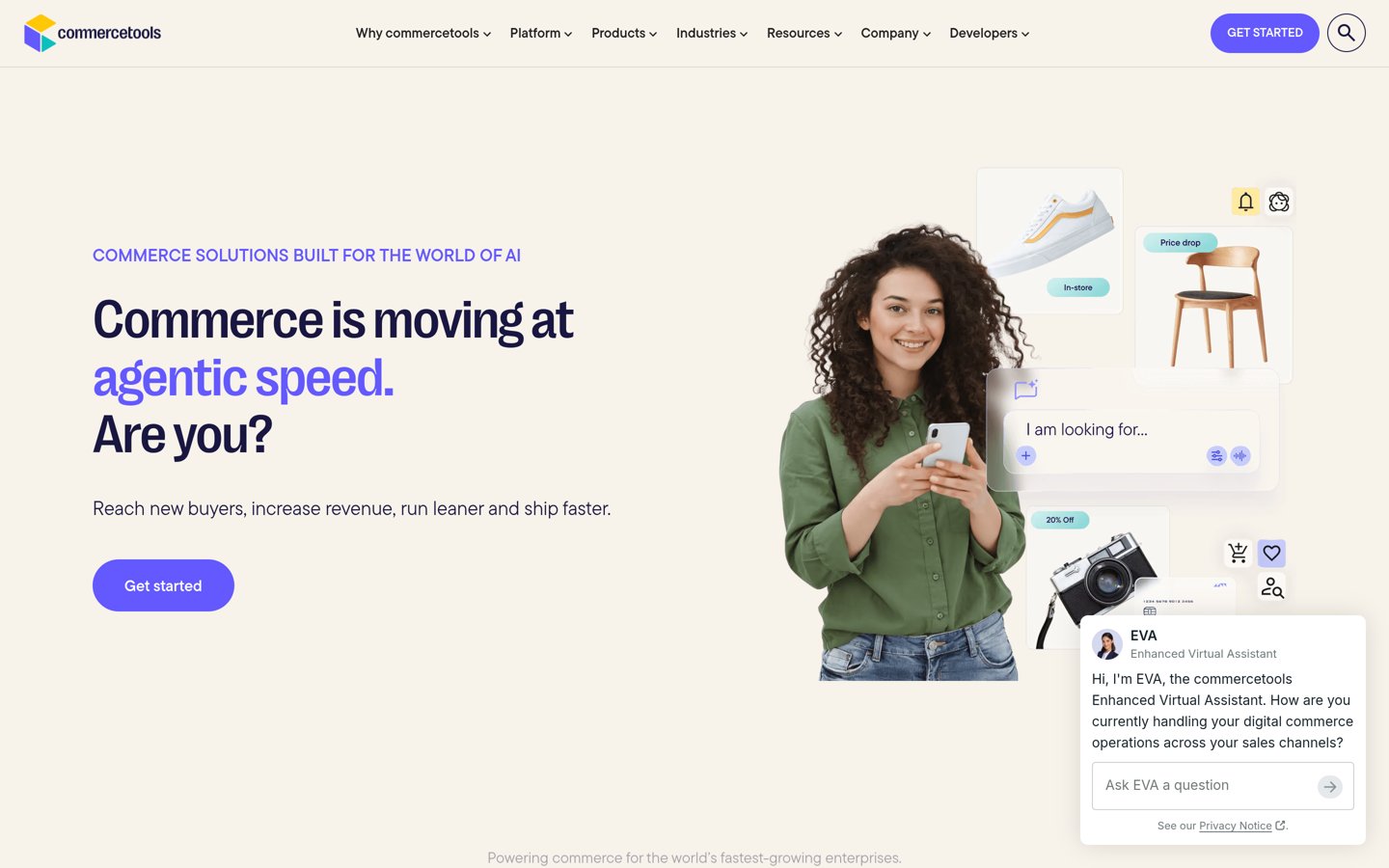
commercetools is an API-only commerce platform made of separate APIs for products, carts, orders, customers and promotions. There is no storefront included, so your team composes the pieces into the experience the business needs, across brands, regions and sales channels.
The trade off is that composable means you compose. Pricing is by quote, based on orders rather than sales volume, and the development bill is the real price of the platform. It suits enterprises with an in-house engineering team that wants full control over the storefront and data model.
Elastic Path is an API-first composable platform built for complex B2B and B2B2C selling, with catalogs, price books, subscriptions and quoting in the core. Its entry tier lists at $49,500 a year for up to 15,000 orders or $5 million in sales a year, and it includes search, a visual builder, hosting and its Composer integration layer.
The trade off is scope. The value sits in complexity, so a single-catalog, single-price store pays for architecture it never uses. It suits manufacturers and distributors with account-specific pricing, deep catalogs and subscription sales.
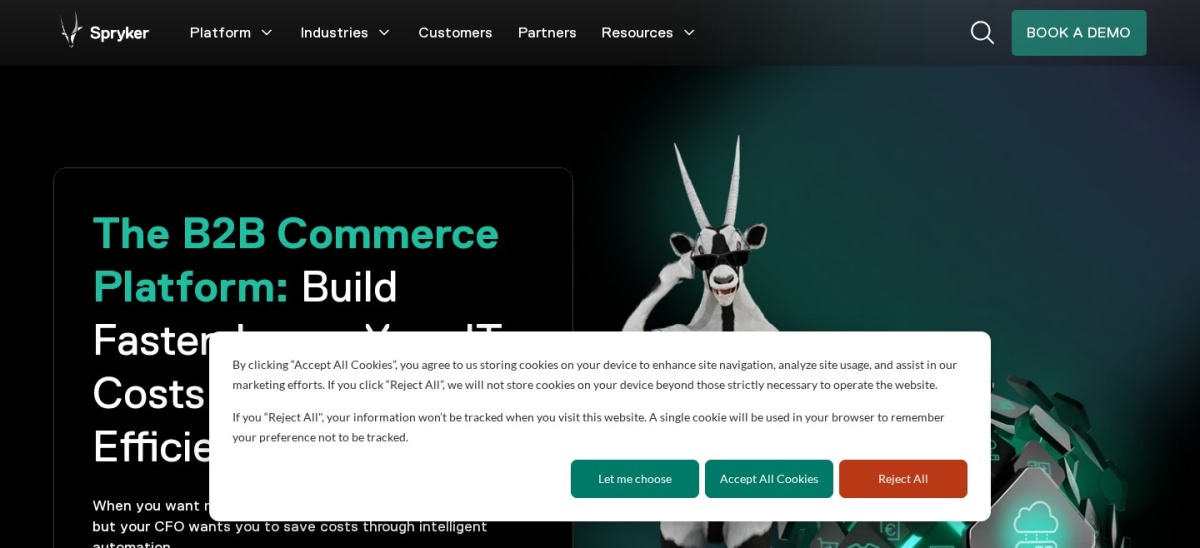
Spryker is a composable commerce platform aimed at B2B sellers and marketplaces, with modular packages for catalog, checkout, orders and customer accounts. Its B2B workflows, such as company accounts, approvals and quotes, sit in the core rather than in a bolt-on module.
The trade off is that Spryker publishes no price and runs no public pricing page, so every deal starts with a sales conversation. It suits B2B marketplaces and European operations with the developers to assemble and run a modular stack.
Adobe Commerce is the paid version of Magento, built for large and complex catalogs that can run headless through its APIs. Its native B2B module covers company accounts, quotes, requisition lists and custom price lists, and it runs on Adobe's cloud or on a merchant's own servers.
The trade off is weight and cost. Pricing is by quote, tied to sales volume, and upgrades are planned as projects, so it needs an agency partner or an in-house team. It suits merchants with an existing Magento codebase and a complex catalog they cannot simplify.
Swell is a hosted headless commerce platform with Backend and Frontend APIs for products, carts, orders, subscriptions and B2B pricing. Starter costs $29 a month billed yearly for up to $50,000 in annual sales, and every plan includes the Backend, Frontend and Checkout APIs.
The trade off is scale. Starter caps annual sales at $50,000, and higher tiers climb to $79, $299 and a custom Unlimited plan, so a fast-growing store outgrows the entry price. It suits smaller merchants and subscription brands that want headless APIs without an enterprise price tag.
What we like
Lowest entry price with full APIs
Subscriptions and B2B pricing built in
Published pricing with no sales call
Watch out for
Starter caps sales at $50,000 a year
Only 9 G2 reviews, so buyer evidence is thin
Higher tiers climb fast to $299 a month
Higher plans add API capacity and priority supportVisit swell.is
08
Nacelle
4.7/5on G2 (14 reviews, checked Nov 2026)
PricingCustom/yr
Best headless layer for Shopify stores
Works withShopify, BigCommerce
FocusStorefront speed, merchandising
PricingQuote only
Free planNo
nacelle.com
Nacelle homepage, captured Nov 2026.
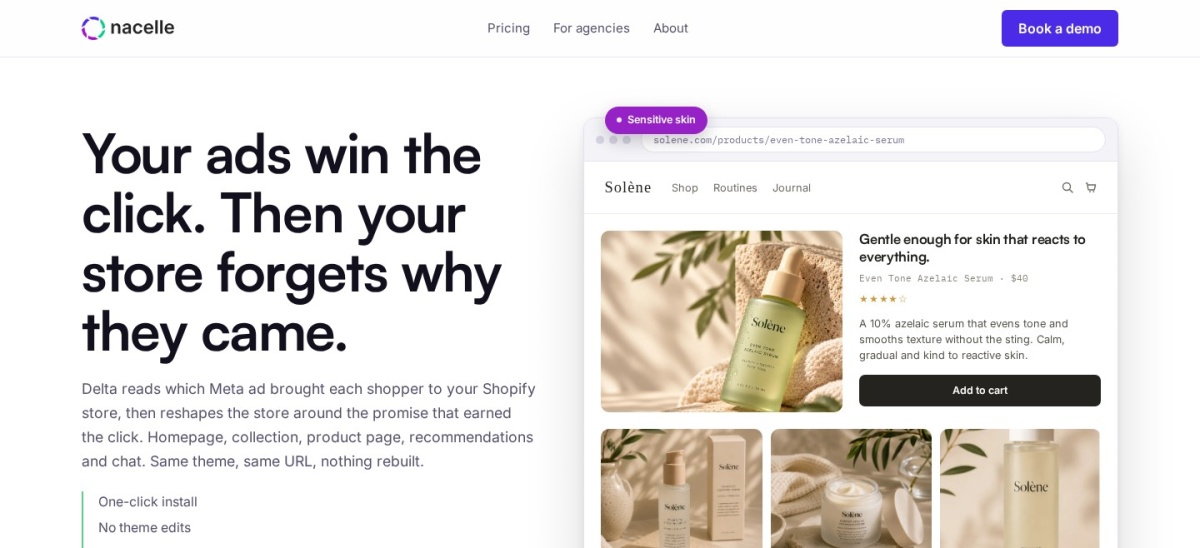
Nacelle is a headless commerce layer that sits between a storefront and a backend such as Shopify or BigCommerce, adding fast page loads and merchandising tools. It now pairs that layer with Delta, which reads which ad brought each shopper and reshapes the store around that promise.
The trade off is that Nacelle's public pricing is unclear, and its G2 base of 14 reviews dates mostly from 2022, so recent buyer evidence is thin. It suits brands on Shopify or BigCommerce that want a faster headless frontend without replacing the backend.
Fabric is a modular commerce platform for enterprise retailers, with separate products for catalog, orders, dropship and marketplace selling. Its API-first design lets a retailer pick the components it needs and plug them into an existing frontend or stack.
The trade off is transparency. Fabric publishes no list price and its pricing page leads to a demo request, and its G2 base is only 11 reviews. It suits large retailers that want modular commerce pieces and have the team to integrate them.
Five of the nine platforms here publish no price. That is normal for enterprise commerce, where the license keys off orders, sales volume or the modules you pick.
The license is the minority of the spend. Across 2026 replatforming cost analyses, the license accounts for only 20% to 40% of total replatform spend, with implementation, integration and data migration making up the rest.
A rough rule is to multiply any license quote by 2.5 to 5 for a first-pass total cost to go live, and to ask the vendor what implementation usually costs before you sign.
How we chose
We started from the best-known headless and composable commerce platforms, then kept nine with a live product, a public rating and a headless option: three hosted SaaS platforms and six composable or modular systems.
Prices come from each vendor's pricing page or, where the vendor publishes none, from the vendor's own statement that pricing is by quote, checked on 25 November 2026. Ratings come from G2 on the same day. Where a vendor shows a sale, the list shows the regular price.
We left out Saleor and Medusa, two open-source platforms with no public G2, Capterra or Trustpilot rating, because the list needs a rating for every tool. No vendor paid for a place, and we do not claim hands-on testing for this list.
How to choose a headless commerce platform
Start with the team you have, not the storefront you want, then match the platform to that reality.
Count the developers you can commit. A headless build needs frontend developers for the build and for every change after launch. With no developers in-house, pick a hosted option such as Shopify or BigCommerce.
Decide how much of the stack you want to own. Composable platforms give full control but leave the storefront, search and checkout to you. Hosted platforms keep more of the stack and limit what you can change.
Price the whole build, not the license. Enterprise licenses are quoted, and implementation usually costs more than the license. Ask each vendor for a total first-year figure before you compare.
Check the B2B features you actually need. If you sell wholesale, look for company accounts, quotes and price lists in the core. A platform with those built in costs less over time than one that needs them added.
FAQ
What is the best headless commerce platform?
Shopify Hydrogen is the best headless commerce platform for most brands. Its React framework runs on Shopify Plus from $2,300 a month and keeps the hosted checkout, so a team gets a custom storefront without rebuilding payments, tax and fraud checks.
How much does headless commerce cost?
Hosted options start at $29 a month with BigCommerce Catalyst and Swell. Enterprise platforms are quote-only, except Elastic Path, which lists $49,500 a year. Add the frontend build on top: implementation usually costs more than the license itself.
Do I need developers for headless commerce?
Yes, in almost every case. Somebody has to build the custom storefront, host it and keep it working with the backend APIs. Hosted options such as Shopify Hydrogen and BigCommerce Catalyst reduce that work, but they do not remove it.
What is the difference between headless and composable commerce?
Headless means the storefront is separate from the backend. Composable goes further: the backend itself is split into separate services for products, carts, orders and promotions, which you assemble. Every composable platform is headless, but not every headless platform is composable.
Can I go headless on Shopify without Plus?
Hydrogen itself is a free, open-source framework, but a headless storefront on Shopify is a Plus feature, and Plus starts at $2,300 a month. Smaller stores can use a standard Shopify theme instead, or pick BigCommerce Catalyst from $29 a month.
Is BigCommerce Catalyst free?
Catalyst is an open-source framework, so the code costs nothing, but it runs on a paid BigCommerce plan. Core starts at $29 a month on annual billing. You also pay for hosting the frontend you build with it.
Which headless platform is best for B2B?
Elastic Path and Spryker are the strongest B2B picks here, with company accounts, quotes and price lists in the core. Adobe Commerce also has a mature B2B module. For a smaller wholesale operation, BigCommerce and Swell include B2B pricing at much lower cost.
SaaS SEO and WordPress specialist with about 8 years of experience. Rakib compares WordPress plugins, themes, hosting and software using public pricing, documentation and user reviews. See how we rank.