Best MDR Software for Small Business Security in 2026: 9 Tools Compared
WLWPLegible EditorsLast verified 23 Nov 2026How we rank12 min read
★ Short answer
Huntress is the best MDR software for most small businesses, with a 24/7 SOC, managed EDR and a published price of $8.99 per endpoint a month, rated 4.8/5 on G2 from 908 reviews. Pick Sophos MDR if you already run Sophos, or Arctic Wolf for flat-rate pricing.
How we make this list: we compare pricing pages, product documentation and public user reviews, then re-check every price before each update. No product paid for a place. Disclosure.
Huntress leads this list with a 4.8/5 G2 rating from 908 reviews and the only published per-endpoint price, $8.99 a month.
Sophos MDR is the best pick for businesses already running Sophos, with a 4.7/5 G2 rating from 547 reviews.
Arctic Wolf offers flat, predictable pricing with a named concierge team, rated 4.7/5 on G2 from 280 reviews.
eSentire is the only other provider here with a list price, from $17 a user a month, and a 15-minute containment SLA.
CrowdStrike Falcon Complete brings the strongest containment authority, backed by a breach prevention warranty of up to $1 million.
What MDR software does
MDR, or managed detection and response, rents you a security operations center: human analysts watch your endpoints around the clock, investigate alerts and contain threats before they become incidents.
The billing unit is the first thing to check. Huntress charges per endpoint, eSentire charges per user, and most other providers in this list are quote only, so the bill depends on your size and coverage.
The second thing is whether the provider acts or only alerts. Huntress, CrowdStrike Falcon Complete and SentinelOne Vigilance remediate confirmed threats, while others guide your team through the response.
Free plans do not exist here. Huntress and CrowdStrike offer free trials, but every MDR service in this list is a paid subscription, so budget for a quote.
The 9 best MDR software for small business security
01
Huntress Managed EDR
4.8/5on G2 (908 reviews, checked Nov 2026)
Starts at$8.99/endpoint/mo
Top pick
Managed EDR$8.99/endpoint/mo
ITDR$4.80/identity/mo
SIEM$4.00/source/mo
Minimum50 units direct
huntress.com
Huntress Managed EDR homepage, captured Nov 2026.
Huntress Managed EDR is the small-business pick in this list: it is built for companies with no security staff, with deployment in minutes per endpoint and a 24/7 SOC that investigates and remediates, not just alerts. Managed EDR costs $8.99 per endpoint a month at 50 to 99 endpoints, with lower rates at volume.
The trade off is the per-product pricing. The full platform costs more than the EDR piece, since identity monitoring, SIEM and training are separate list prices, and direct buyers face a 50-unit minimum. It suits small businesses and MSPs that want enterprise-grade cover without enterprise complexity.
Sophos MDR is the ecosystem pick in this list: the vendor's own analysts watch your Sophos-protected environment around the clock, using endpoint, firewall and email telemetry natively. Pricing is quote only, and the service suits the 625,000-plus organizations already running Sophos products.
The trade off is the lock-in. The value is strongest inside the Sophos stack, and standalone MDR for other endpoint products is less compelling, with reviewers calling it costly for small companies. It suits businesses already standardized on Sophos Intercept X and Sophos Firewall.
Arctic Wolf is the flat-rate pick in this list: security operations as a service with no token metering and no per-alert fees, so the bill stays predictable. Its Concierge Security Team assigns named analysts to each account, and pricing is quote only, sized by users and servers.
The trade off is the missing SLA. Arctic Wolf publishes no contractual time to contain, and its platform breadth can mean slower onboarding than a point product. It suits mid-market teams that want predictable pricing and a named team wrapped around tools they already own.
Blackpoint Cyber is the MSP pick in this list: an MSP-native SOC that pairs automated response with human analysts, built for providers that protect many small clients at once. Pricing is quote only, and it holds 4.7/5 on G2 from 258 reviews, with 86% five-star ratings.
The trade off is the channel model. Blackpoint sells mainly through MSP partners, so a small business usually buys it as part of a managed service rather than direct. It suits MSPs and the small businesses they serve that want fast automated response with a human SOC behind it.
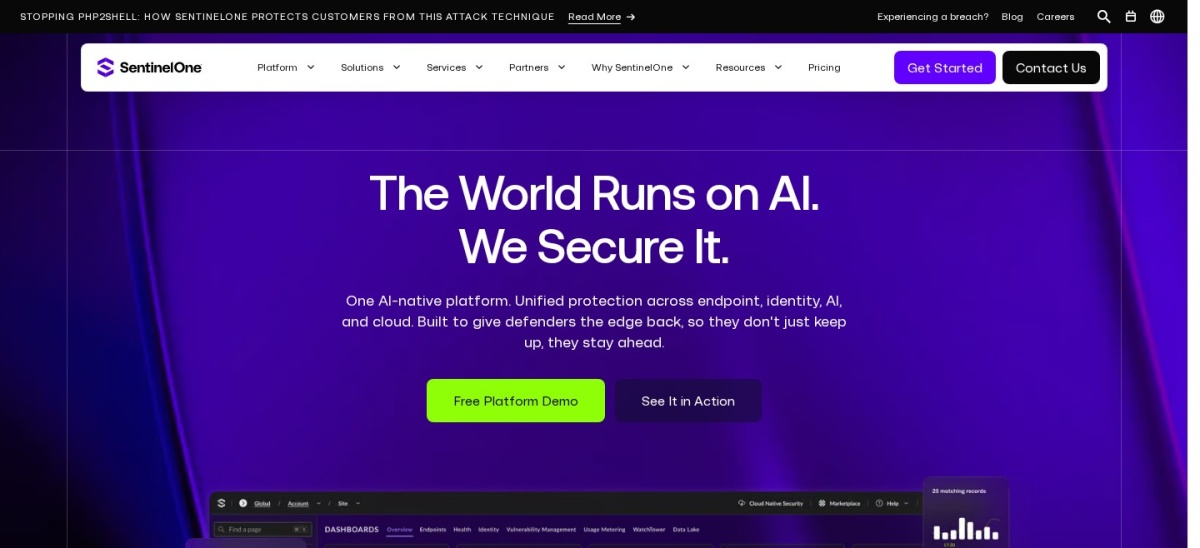
SentinelOne Vigilance homepage, captured Nov 2026.
SentinelOne Vigilance is the platform pick in this list: the managed layer on top of the Singularity platform, adding 24/7 monitoring, threat hunting and response from SentinelOne's SOC. Pricing is quote only and usually arrives through a partner or MSP.
The trade off is the rating split. One G2 listing shows 4.7/5 from 201 reviews while another shows 4.2/5 from 6 reviews, so the score depends on which listing you read. It suits SentinelOne customers that want managed threat hunting on the platform they already run.
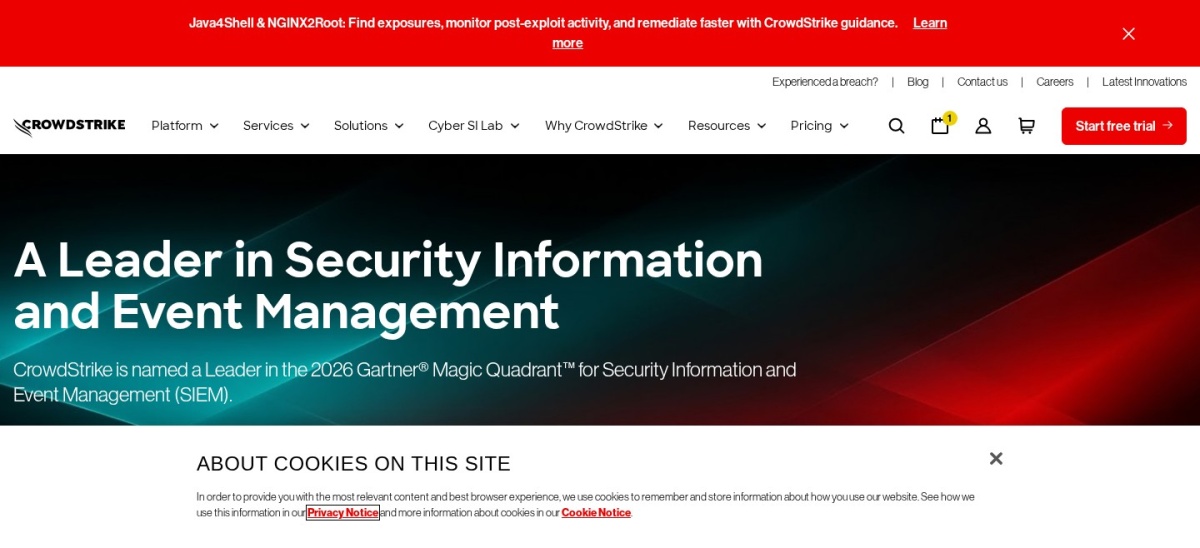
CrowdStrike Falcon Complete homepage, captured Nov 2026.
CrowdStrike Falcon Complete is the containment pick in this list: the full Falcon platform with CrowdStrike's own team doing the monitoring, hunting and response around the clock. Analysts hold full response authority and the service carries a breach prevention warranty of up to $1 million.
The trade off is the price. Falcon Complete is quote only and priced like the premium product it is, so many smaller companies get better value from Falcon Go at $7.99 a device a month plus an MSP. It suits teams that want CrowdStrike's team specifically and can justify the premium.
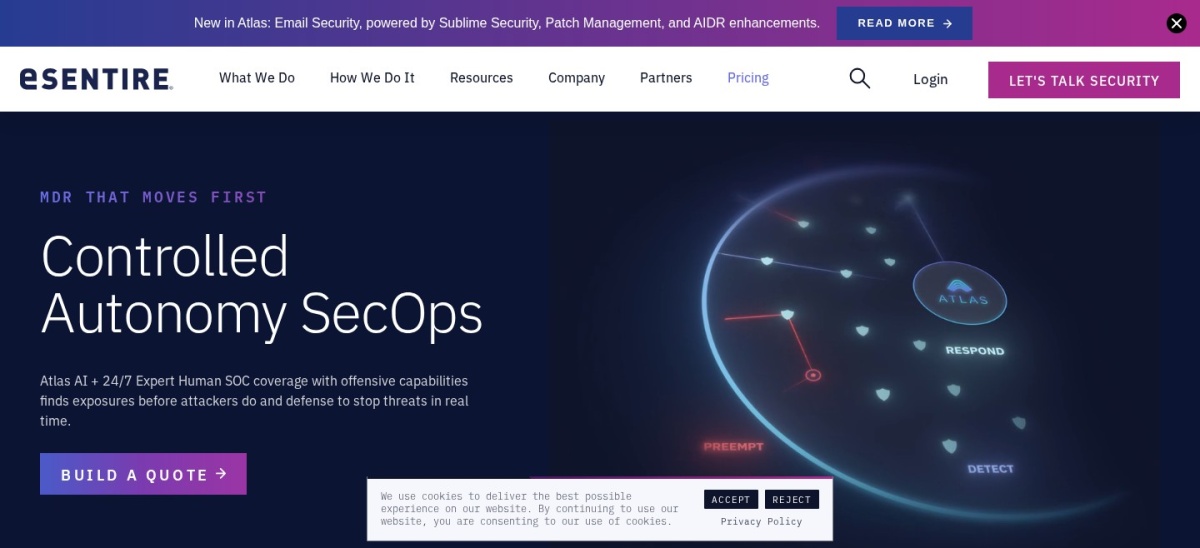
eSentire is the response-SLA pick in this list: it publishes a 15-minute containment SLA, the only contractual response-time promise here, and its Atlas platform covers endpoint, network, cloud, identity and email. Pricing starts at $17 a user a month on its list.
The trade off is the cost. Reviewers call eSentire expensive for smaller organizations, and the top tier reaches $28 a user a month, so the bill grows fast with headcount. It suits regulated industries that need a contractual containment time and network-deep coverage.
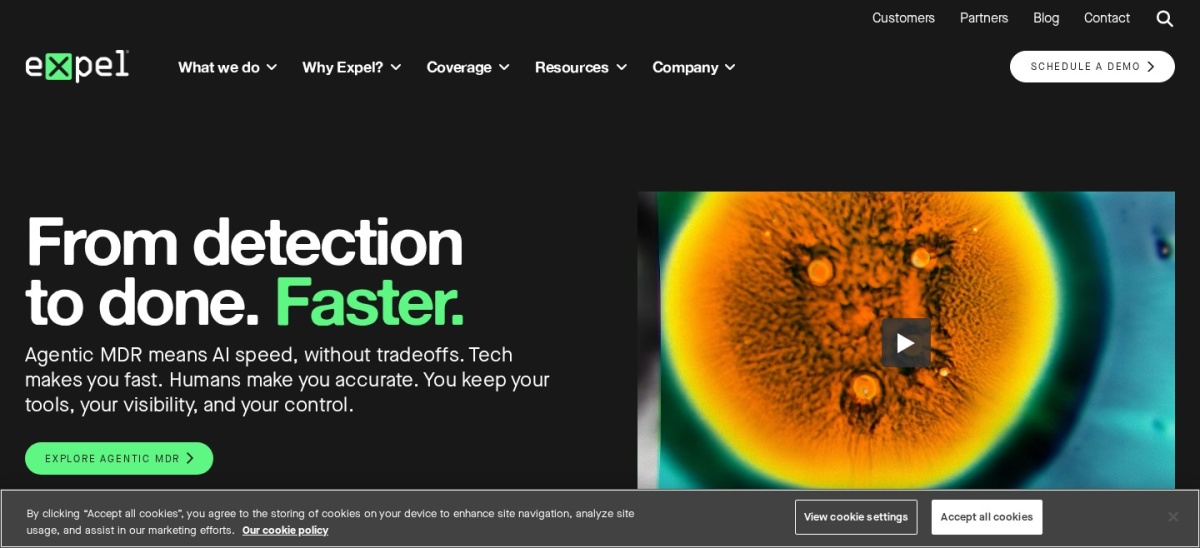
Expel is the transparency pick in this list: it keeps the EDR, SIEM and cloud tools you already have and operates them for you, with every investigation visible to your team. Pricing is quote only, with flat-tier deals reported near $11,600 a year at entry.
The trade off is the arithmetic. Expel's fee sits on top of whatever you pay for the underlying tools, so the all-in cost can exceed a bundled platform. It suits cloud and SaaS-heavy teams that want full visibility into what their SOC does.
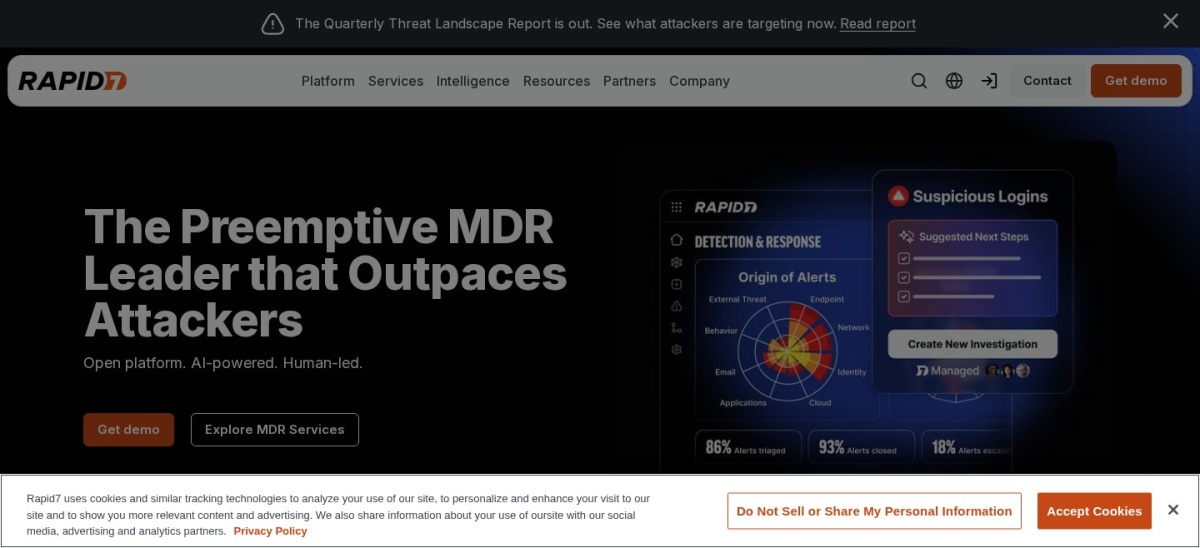
Rapid7 MDR is the incident-response pick in this list: unlimited incident response is included, so a bad month does not become a second invoice. The service runs on the Insight platform with 24/7 monitoring, detection and remediation, and its open XDR approach ingests telemetry from tools you already own.
The trade off is the thin rating. Rapid7 MDR holds 4.6/5 on G2 from only 10 reviews, so the score rests on very few voices, and the platform is historically mid-market focused. It suits companies already running Rapid7 products that want MDR plus unlimited incident response.
Seven of the nine providers in this list publish no price, so the headline number never tells the whole story. Ask for the all-in annual cost, including onboarding, log ingestion and any per-cloud or per-user add-ons.
Per-endpoint pricing runs from about $3 to $45 a month across the market, but the true cost includes data ingestion charges, cloud coverage and identity modules that sit outside the base rate.
Before you buy, get the quote in writing for your real endpoint and user counts, and ask what happens when you grow past the quoted band.
How we chose
We started from the best-known MDR providers on G2, then kept those with a live product page, a public rating and a service that sells to smaller organizations.
Prices come from each vendor's pricing page or a corroborating source, checked on 23 November 2026. Most MDR providers are quote only, so the list says so rather than inventing a number. Ratings and review counts come from G2 on the same day.
This list is based on pricing, docs and reviews, not on using the tools ourselves. We left out providers with no G2 profile or no public rating, and no vendor paid for a place.
How to choose MDR software for small business
Work out how you will be billed before you compare providers.
Work out your billing unit. Per-endpoint, per-user and flat-rate pricing produce very different bills, so model the cost at your real endpoint and user counts first.
Check who takes action. Some providers contain threats themselves, others only guide your team, so confirm the response model before you sign.
Ask for the all-in quote. Onboarding, log ingestion and cloud add-ons sit outside most base rates, so get the full annual figure in writing.
Start with a trial where offered. Huntress and CrowdStrike offer free trials, so run one before committing to a 12-month term.
FAQ
What is the best MDR software for small business?
Huntress is the best pick for most small businesses, with a 24/7 SOC, managed EDR and a published price of $8.99 per endpoint a month, rated 4.8/5 on G2 from 908 reviews. Arctic Wolf suits teams that want flat-rate pricing.
How much does MDR software cost for a small business?
Huntress Managed EDR costs $8.99 per endpoint a month and eSentire starts at $17 a user a month, while Arctic Wolf, Sophos MDR and most others are quote only. Across the market, per-endpoint MDR runs roughly $3 to $45 a month.
What is the difference between MDR and EDR?
EDR is the software on your endpoints that detects suspicious activity, while MDR adds a human security team that watches those alerts around the clock, investigates them and contains confirmed threats. Huntress bundles both in one per-endpoint price.
Do small businesses need MDR?
A small business faces the same attacks as a large one but rarely has staff to watch for them at night, so MDR closes that gap without hiring a security team. It fits best when you have no in-house SOC and hold customer or financial data.
Which MDR provider responds fastest?
eSentire publishes a 15-minute containment SLA, the only contractual response-time promise in this list, while SentinelOne Vigilance targets a 4-hour response. Arctic Wolf and CrowdStrike publish no contractual containment time.