Best Marketing Platforms in 2026: 7 Tools Compared
WLWPLegible EditorsLast verified 22 Nov 2026How we rank12 min read
★ Short answer
Brevo is our top marketing platform for businesses that need email, SMS, contact management and automation, with paid plans starting at $9 per month. HubSpot is better for CRM-connected marketing and sales, while Mailchimp offers a familiar email campaign platform with more than 300 integrations.
How we make this list: we compare pricing pages, product documentation and public user reviews, then re-check every price before each update. No product paid for a place. Disclosure.
Brevo starts at $9/month for 5,000 emails and 500 stored contacts, while its free plan allows 300 emails daily.
HubSpot Marketing Hub Starter costs $20/month per seat at the regular monthly rate, with 1,000 marketing contacts included.
Mailchimp Essentials starts at $13/month with 3 user seats and email sending allowances equal to 10 times the contact limit.
Omnisend Standard costs $16/month before promotions and supports 6,000 monthly emails for 500 contacts.
MailerLite's free plan includes 250 subscribers and 2,500 monthly emails; Comfort starts at $12/month.
Kit offers a free plan for up to 10,000 subscribers, while Creator normally costs $39/month for 1,000 subscribers.
What to look for in a marketing platform
A marketing platform brings customer communication, campaign management and performance tracking into one system. Depending on the product, it may include email marketing, automation, contact management, landing pages, ecommerce messaging, social media tools and CRM features.
Start with the channels your business actually uses. A newsletter publisher may need email campaigns, signup forms and audience segmentation. An ecommerce store may benefit more from purchase-triggered messaging, abandoned cart recovery and customer lifecycle reporting.
Consider integration coverage before comparing prices. Your platform should connect with the forms, website, ecommerce store or CRM that already collects customer information. Otherwise, valuable data can remain separated across different systems.
Pay close attention to pricing models. Some platforms charge based on stored contacts, others based on email volume, and CRM-focused products may charge per user. The cheapest introductory tier is not necessarily the least expensive choice as your business grows.
Finally, compare reporting, automation depth and customer support. Basic email statistics are useful, but businesses managing several channels may need customer segmentation, conversion attribution and connected sales information.
4.1/5on WordPress.org (284 reviews, checked Nov 2026)
Paid from$9/mo
Best overall for multichannel marketing
Free email limit300/day
Starter email limit5,000/mo
Starter contacts500
Paid planStarter, $9/mo
brevo.com
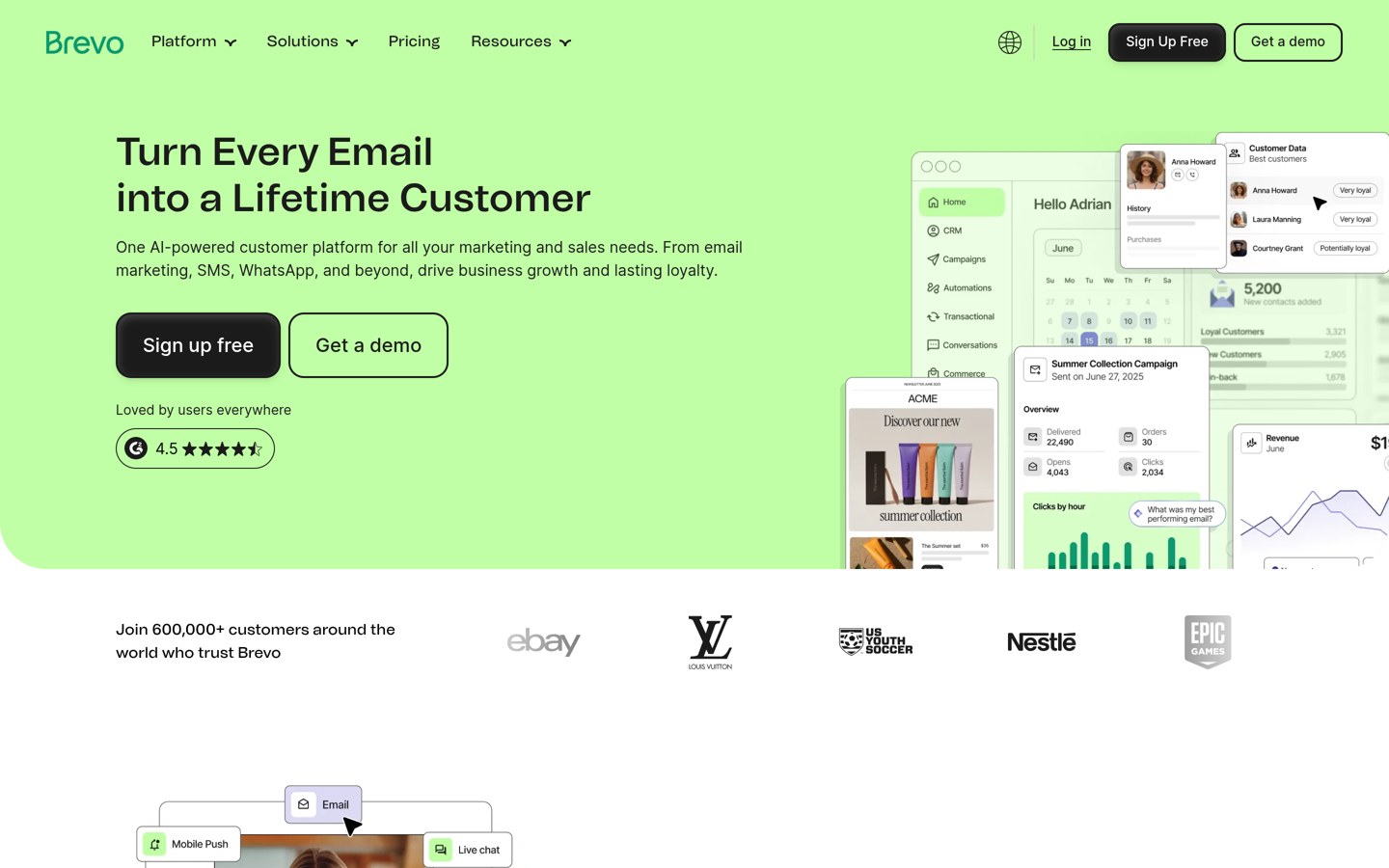
Brevo homepage, captured Nov 2026.
Brevo is a multichannel marketing platform covering email campaigns, SMS, contact management, transactional messaging and automation, with more than 100,000 active WordPress installations. Its free plan allows 300 emails daily and stores up to 100,000 contacts, while Starter begins with 5,000 monthly emails and 500 contacts.
The trade off is that advanced automation, A/B testing and landing pages require higher plans. Starter costs $9 per month, or $108 annually at the published starting rate, while Standard begins at $18 per month. It suits businesses that want coordinated customer communication without immediately investing in a larger CRM suite.
What we like
Free email marketing and contact management
Email, SMS and transactional messaging support
Pricing primarily tied to sending tiers
Free automation for up to 2,000 contacts
Official WordPress integration
Watch out for
Starter has contact and sending allowances
Advanced automation requires Standard
Removing branding on Starter costs extra
SMS and additional services may create separate charges
Starter removes daily email limits and adds web push capabilitiesVisit brevo.com
02
HubSpot
4.3/5on WordPress.org (207 reviews, checked Nov 2026)
Paid from$20/mo
Best for connected marketing and CRM
Free users2
Starter contacts1,000
Starter email allowance5x contact tier
Paid planStarter, $20/mo/seat
hubspot.com
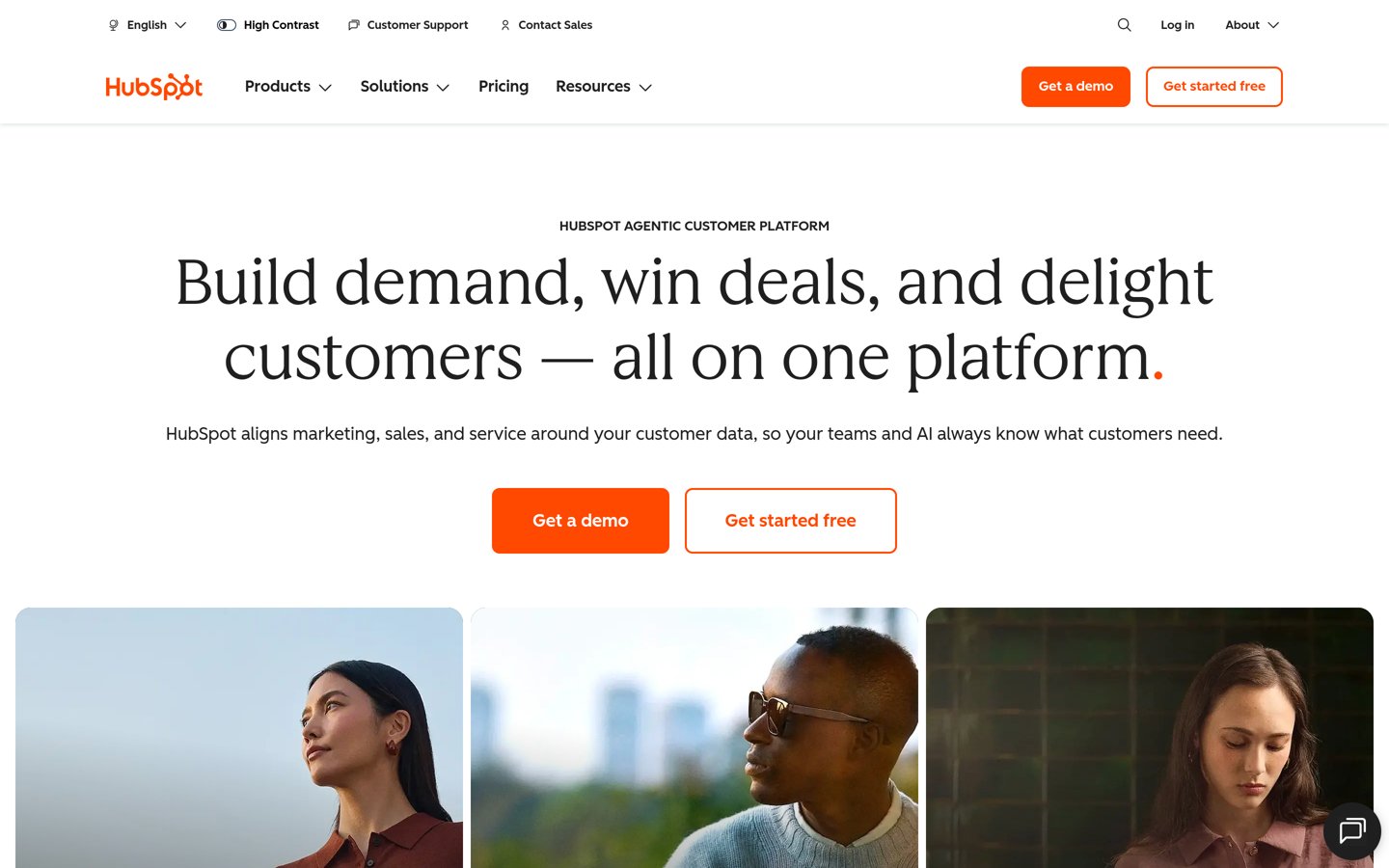
HubSpot homepage, captured Nov 2026.
HubSpot is a customer platform combining marketing, CRM, sales and service tools, with more than 200,000 installations of its WordPress plugin. Its free marketing tools support lead capture, email communication and contact tracking for up to two users, while Marketing Hub Starter includes 1,000 marketing contacts.
The trade off is pricing complexity as marketing contacts, users and automation requirements increase. Starter lists a regular monthly rate of $20 per seat, although a $7 promotional rate is displayed for eligible customers. It suits teams that want campaign information connected directly to sales records and customer relationships.
Starter adds paid marketing capabilities; Professional unlocks advanced workflowsVisit hubspot.com
03
Mailchimp
4.8/5on WordPress.org (1,499 reviews, checked Nov 2026)
Paid from$13/mo
Best for general email marketing campaigns
Free contacts250
Essentials users3
Essentials email sends10x contacts
Paid planEssentials, $13/mo
mailchimp.com
Mailchimp homepage, captured Nov 2026.
Mailchimp is an email marketing platform providing campaign design, audience segmentation, signup forms, reporting and marketing automation. Its WordPress ecosystem includes the MC4WP integration, which has more than 1 million active installations and a 4.8/5 rating from 1,499 reviews, while Mailchimp offers a free plan for up to 250 contacts.
The trade off is that automation depth, audience capacity and pricing depend on the selected tier. Essentials starts at $13 per month and supports three users with limited automation steps, while Standard begins at $20 per month. It suits businesses prioritizing email campaigns, templates and connections to existing marketing applications.
What we like
Established email campaign tools
More than 300 integrations
Free entry plan
Templates, signup forms and segmentation
Paid plans include scheduling and testing
Watch out for
Pricing increases with contact growth
Essentials limits automation complexity
Free plan has restrictive sending allowances
Advanced reporting and personalization require higher plans
Essentials adds scheduling, support and limited marketing automation flowsVisit mailchimp.com
04
Omnisend
4.8/5on WordPress.org (17 reviews, checked Nov 2026)
Paid from$16/mo
Best for ecommerce marketing campaigns
Free contacts250
Free monthly emails500
Standard monthly emails6,000
Paid planStandard, $16/mo
omnisend.com
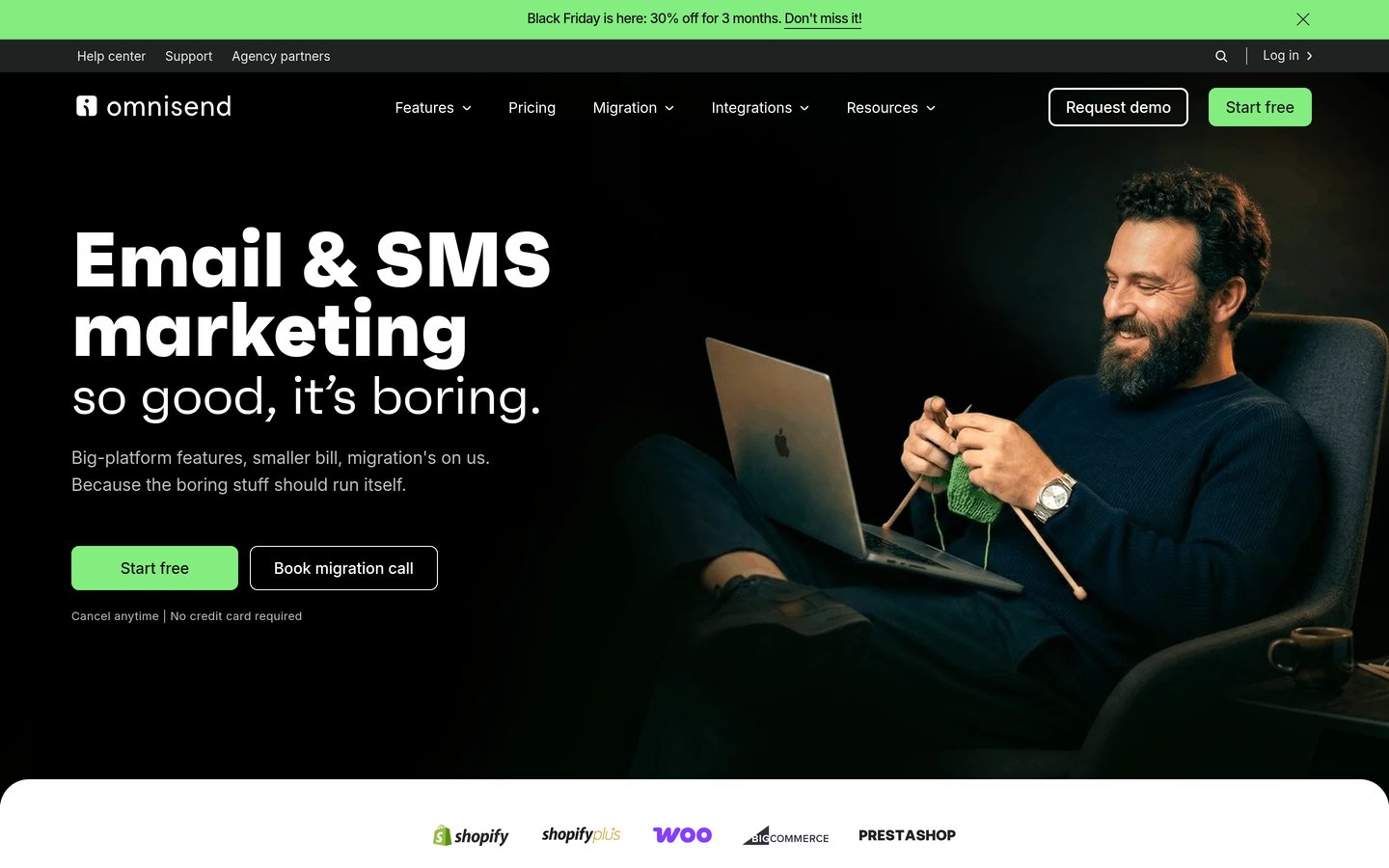
Omnisend homepage, captured Nov 2026.
Omnisend is an ecommerce marketing platform combining email campaigns, SMS, web push notifications, signup forms and automated customer journeys. Its WordPress plugin has more than 100,000 active installations, while the free service plan supports 250 contacts, 500 monthly emails and 500 web push notifications.
The trade off is that subscription costs grow with billable contacts, and SMS usage can incur additional charges. Standard normally costs $16 per month for 500 contacts and 6,000 monthly emails, with a temporary 30% promotional discount displayed. It suits online stores that want purchase-related marketing across several communication channels.
What we like
Designed around ecommerce customer journeys
Email, SMS and web push support
Free automation features
Abandoned cart and post-purchase workflows
Around-the-clock support on all plans
Watch out for
Subscriber growth increases subscription costs
Free email volume is limited
SMS messaging may incur separate charges
Less suitable for complex sales CRM pipelines
Standard increases email allowances and adds unlimited web push notificationsVisit omnisend.com
05
MailerLite
2.9/5on WordPress.org (42 reviews, checked Nov 2026)
Paid from$12/mo
Best for affordable email marketing
Free subscribers250
Free monthly emails2,500
Comfort automations50
Paid planComfort, from $12/mo
mailerlite.com
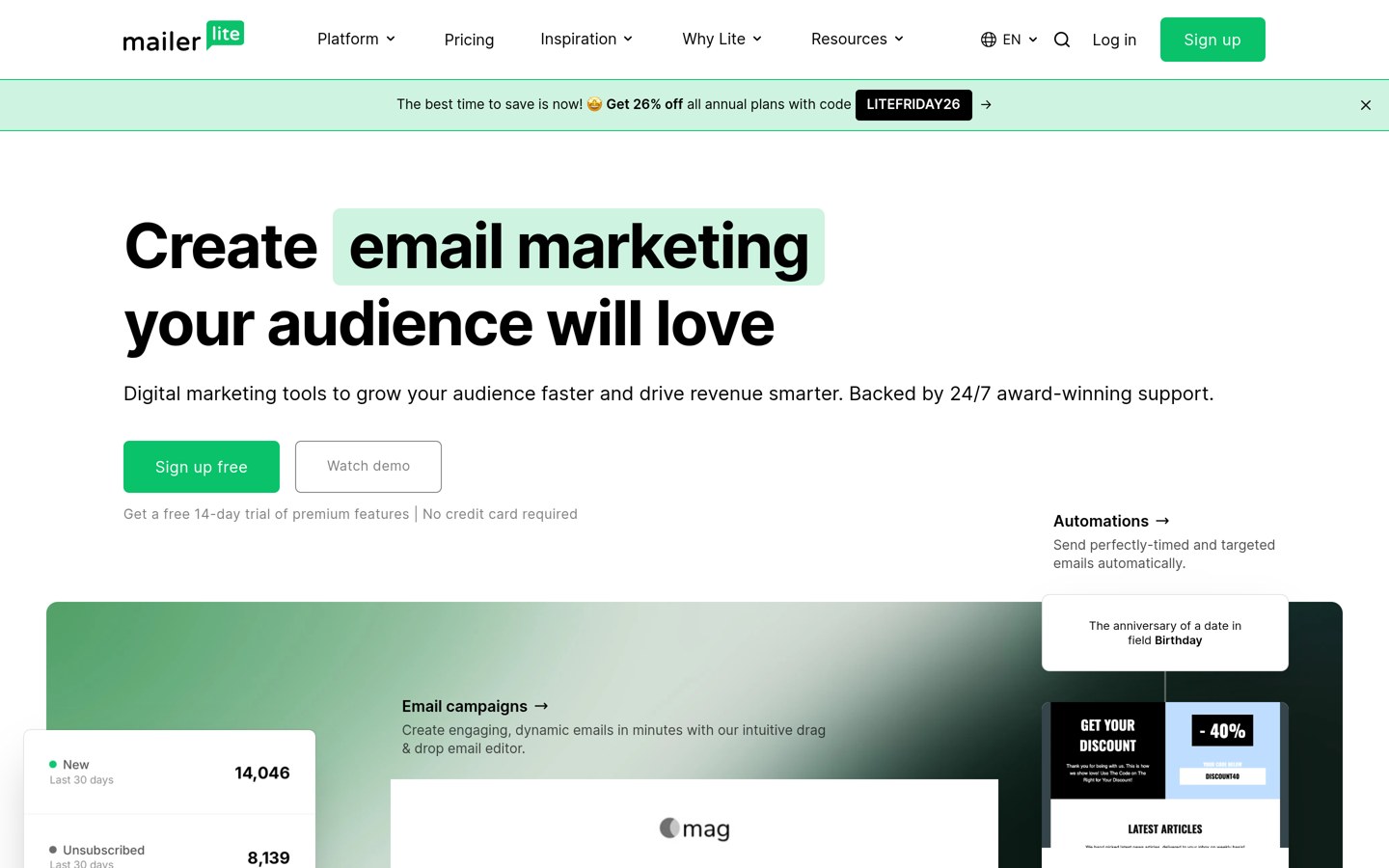
MailerLite homepage, captured Nov 2026.
MailerLite is an email marketing platform offering newsletters, landing pages, signup forms, audience management and automated email sequences. Its official WordPress signup plugin has more than 100,000 active installations, while the free service plan includes 250 subscribers, 2,500 monthly emails and three active automations.
The trade off is that subscriber allowances and advanced features depend on the selected subscription. Comfort starts at $12 per month, or $144 at the published monthly starting rate over a year, and supports 50 automations, ten forms and three user seats. It suits smaller teams focused on newsletters and straightforward marketing workflows.
What we like
Free email campaigns and automation
Landing pages and signup forms
Comfort includes 50 active automations
Audience segmentation and integrations
Affordable starting paid subscription
Watch out for
Free subscriber allowance is limited
Official WordPress plugin has a 2.9/5 rating
Monthly prices increase with list size
Unlimited automations require a higher plan
Comfort adds more automations, forms, templates and marketing featuresVisit mailerlite.com
06
Constant Contact
2.6/5on WordPress.org (107 reviews, checked Nov 2026)
Starts at$10.20/mo
Best for small-business marketing and events
Lite automation templates1
Lite custom segments1
Integrations300
Paid planLite, $10.20/mo annually
constantcontact.com
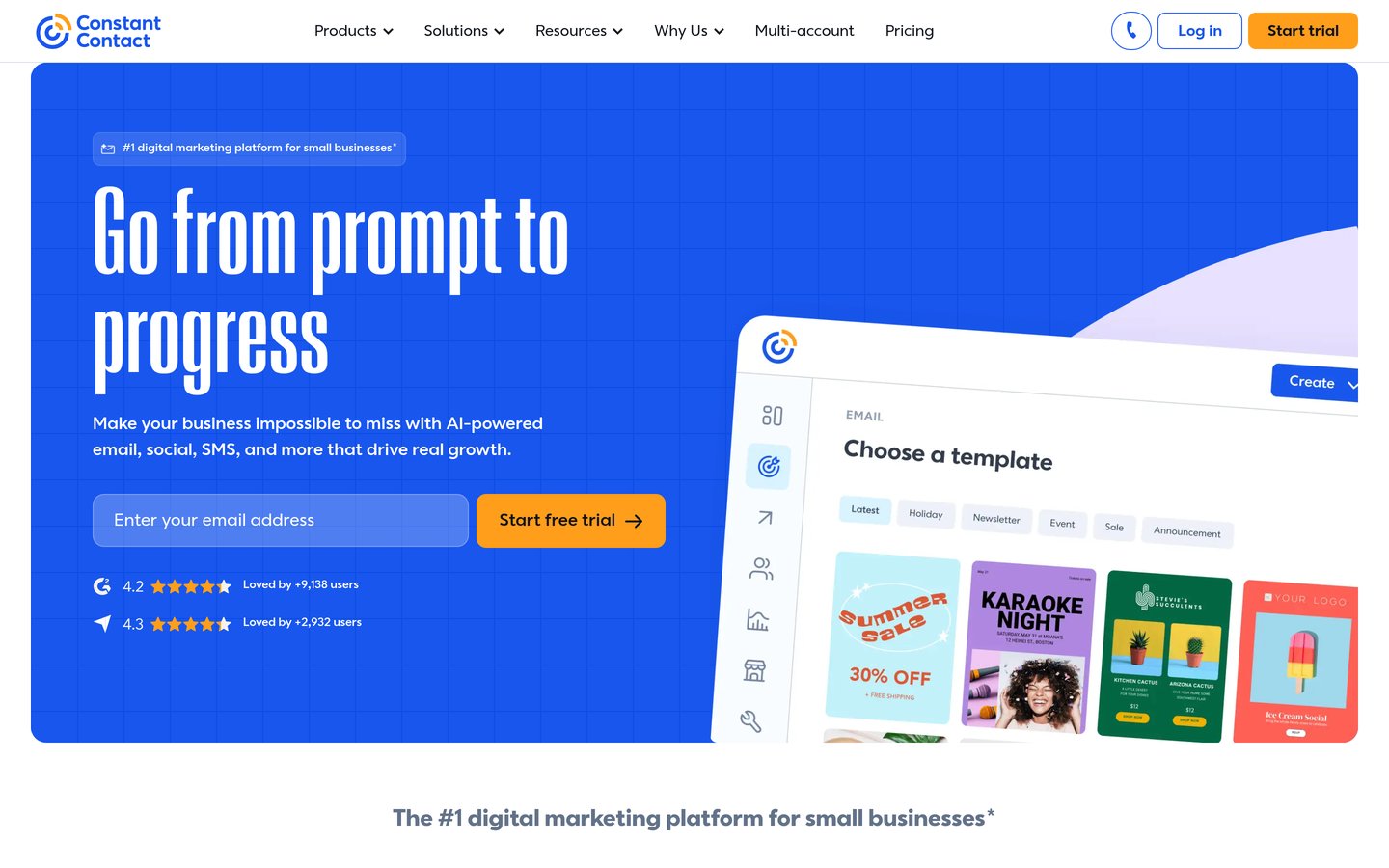
Constant Contact homepage, captured Nov 2026.
Constant Contact is a small-business marketing platform offering email campaigns, social media tools, event management, signup forms and customer contact management. Its WordPress Forms plugin has more than 20,000 active installations, while Lite includes an email editor, basic reporting, one automation template and one custom segment.
The trade off is that Lite offers limited automation and its WordPress plugin has a 2.6/5 rating. Lite starts at $10.20 per month when billed annually, equivalent to $122.40 per year, while Standard adds broader campaign tools. It suits organizations managing newsletters, events and social promotions from one service.
4.8/5on WordPress.org (90 reviews, checked Nov 2026)
Paid from$39/mo
Best for creators and newsletter businesses
Free subscribers10,000
Free broadcastsUnlimited
Creator automationsUnlimited
Paid planCreator, $39/mo
kit.com
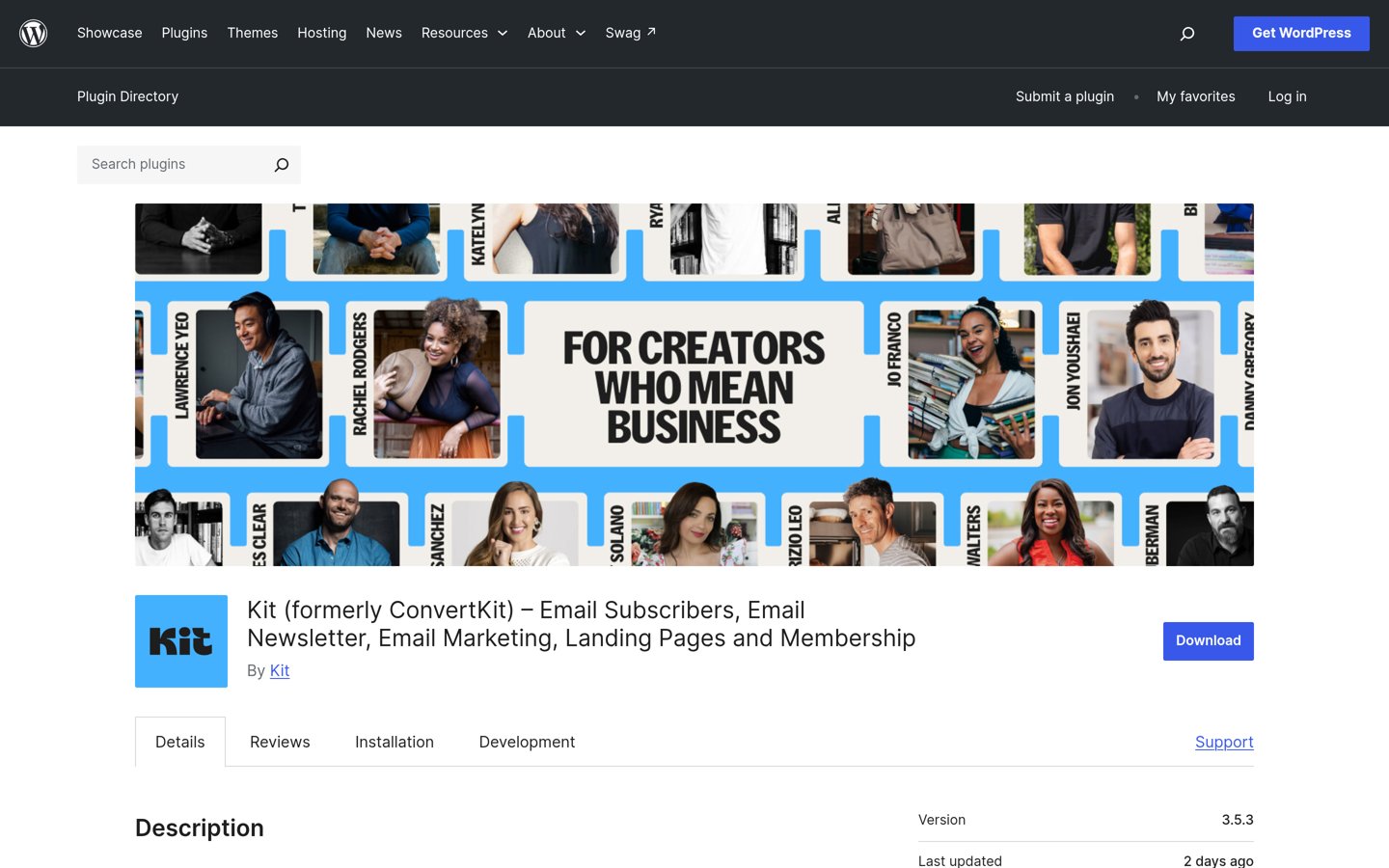
Kit homepage, captured Nov 2026.
Kit is a creator-focused marketing platform for email newsletters, subscriber management, landing pages, digital products and audience growth. Its WordPress plugin has more than 40,000 active installations and a 4.8/5 rating from 90 reviews, while the free plan supports up to 10,000 subscribers and unlimited email broadcasts.
The trade off is that visual automations, unlimited email sequences and additional integrations require Creator. The regular Creator price is $39 per month for 1,000 subscribers, or $468 annually at monthly billing, although a temporary $20 introductory offer was displayed. It suits bloggers, educators and creators selling digital products or subscriptions.
What we like
Generous free subscriber allowance
Unlimited email broadcasts on Free
Landing pages and signup forms
Digital product and subscription selling
Creator plan includes visual automation
Watch out for
Advanced automation requires Creator
Paid pricing increases with subscriber count
Less focused on traditional sales CRM
Not designed for broad social advertising management
Creator adds unlimited visual automations, sequences and integrationsVisit kit.com
Email, CRM and ecommerce marketing platforms compared
Email-first marketing platforms focus on building subscriber lists, sending campaigns and creating automated sequences. Mailchimp, MailerLite and Kit fit this category, although each also includes landing pages, forms and additional audience tools.
CRM-connected platforms combine marketing activity with customer records and sales information. HubSpot is the clearest example in this comparison, making it suitable when marketing teams need to coordinate with sales and customer service.
Multichannel platforms help businesses communicate through different channels. Brevo supports email, SMS and other customer communications, while Omnisend emphasizes email, SMS and web push campaigns tied to ecommerce activity.
Constant Contact combines email, social media and event management, making it relevant to businesses that organize events or want several basic marketing functions in one service.
The right category depends on where customer information originates, which channels produce meaningful conversions and whether marketing activity needs to connect directly to sales or ecommerce data.
Which marketing metrics should your platform track?
Campaign performance starts with basic delivery and engagement metrics. Monitor email delivery, opens, clicks and unsubscribes, but avoid treating engagement alone as proof that a campaign generated business value.
For lead generation, track qualified inquiries and completed conversions. When possible, connect form submissions and campaign sources to your CRM so that sales teams can identify which activities produce useful opportunities.
For ecommerce, review revenue associated with campaigns, abandoned cart recovery and repeat purchases. Attribution reports can be useful, but differences in tracking methods mean platform-reported revenue should be interpreted carefully.
Set realistic goals before comparing reporting dashboards. A small newsletter may need only engagement trends, while a growing online store may need customer segments, purchase histories and campaign revenue reporting.
How we chose
We selected established marketing platforms serving businesses, ecommerce stores, publishers and creators. The shortlist covers email marketing, CRM-connected campaigns, audience management, automation, social marketing and ecommerce communication, with WordPress compatibility considered throughout. Public plugin reviews and vendor documentation informed the comparisons.
Official pricing pages and WordPress.org listings were reviewed on 22 Nov 2026. We recorded the cheapest published paid plans using regular prices rather than introductory offers, converted monthly rates into annual equivalents, and checked available WordPress ratings, review counts, installation figures and maintenance dates.
We excluded discontinued or outdated plugins, services without confirmable published entry pricing, and specialist tools that did not provide meaningful marketing campaign functionality. Rankings reflect platform coverage, ease of adoption, integrations, pricing transparency and limitations rather than promotional claims. No vendor paid for a place, and we do not claim testing for this list.
How to choose the best marketing platform
Define your marketing goals and identify the channels, customer data and reporting capabilities your business needs before choosing a subscription.
Identify your primary marketing channels. Choose an email-focused platform for newsletters and subscriber campaigns, a CRM-connected platform for sales coordination, or an ecommerce marketing platform for purchase-triggered messaging. Avoid paying for channels that your business does not actively use.
Check integrations with existing systems. Confirm compatibility with your website, forms, ecommerce store, CRM and analytics tools. Review which information moves between systems and whether the selected plan supports the audience fields and campaign triggers you need.
Calculate costs at your expected audience size. Compare subscriber limits, sending volume, team seats and extra messaging fees. Estimate how much the platform will cost after your contact list grows, since entry pricing often represents a small audience or limited sending allowance.
Choose the reporting and automation features that matter. Start with welcome sequences, lead follow-ups or customer retention campaigns. Check whether the entry plan supports the necessary automation conditions, then use conversion and revenue reporting to decide when more advanced capabilities justify upgrading.
FAQ
What is the best marketing platform for small businesses?
Brevo is a strong choice for small businesses because it combines email campaigns, contact management and multichannel communication with a free plan and paid plans starting at $9 per month. MailerLite suits businesses mainly sending newsletters, while HubSpot is more appropriate when marketing and sales records need to work together.
Can I use a marketing platform for free?
Yes. Brevo, HubSpot, Mailchimp, MailerLite, Omnisend and Kit offer free plans with different limitations. Brevo allows 300 daily emails, MailerLite supports 250 subscribers and Kit supports up to 10,000 subscribers. Check contact allowances, message limits, automation features and branding requirements before choosing.
What is the difference between a marketing platform and a CRM?
A marketing platform manages activities such as campaigns, audience segmentation, lead capture and customer communication. A CRM focuses on customer records, sales interactions and relationship management. Some products, including HubSpot, connect both functions so that marketing and sales teams can work with shared customer information.
Which marketing platform is best for ecommerce?
Omnisend is particularly relevant for ecommerce because it supports purchase-related email automation, SMS, web push notifications and customer segmentation. Its free plan includes 250 contacts and 500 monthly emails, while Standard normally starts at $16 per month. Mailchimp and Brevo are alternatives for broader campaign requirements.
Which marketing platform is best for email marketing?
Mailchimp offers established campaign creation, audience segmentation and a large integration ecosystem, with Essentials starting at $13 per month. MailerLite offers a lower-cost approach to newsletters and basic automation, while Kit is designed around creators building subscriber audiences and selling digital products.
Do I need marketing automation software?
Not necessarily. Businesses sending occasional newsletters may only need campaign scheduling and contact management. Automation becomes more useful when subscribers need welcome emails, leads require follow-ups or customers receive messages based on purchases. Start with simple workflows before investing in advanced automation plans.
How much does a marketing platform cost?
Several platforms offer free subscriptions. Among the compared products, entry paid prices start at $9 per month for Brevo, $12 for MailerLite, $13 for Mailchimp and $16 for Omnisend. Costs can increase with contacts, email volume, users, messaging channels and access to advanced features.
Can I connect marketing platforms to WordPress?
Yes. All platforms in this comparison have maintained WordPress integrations or plugins. These connections can support signup forms, contact synchronization and website-related marketing activity. The available features differ by platform, so verify compatibility with your existing forms, ecommerce plugins and customer management processes.
Which marketing platform is best for content creators?
Kit is designed for creators managing newsletters, audience relationships and digital product sales. Its free plan supports up to 10,000 subscribers, while Creator adds visual automations and email sequences at a regular starting price of $39 per month. MailerLite is another option for smaller newsletter operations.