Best Inbound Marketing Software in 2026: 9 Tools Compared
WLWPLegible EditorsLast verified 23 Nov 2026How we rank12 min read
★ Short answer
HubSpot Marketing Hub is the best inbound marketing software for most teams, combining CRM and marketing automation in one database, with a free plan and Starter at $20 a seat a month, rated 4.4/5 on G2. ActiveCampaign is the best automation value at $15 a month, while Klaviyo leads for ecommerce at $20 a month.
How we make this list: we compare pricing pages, product documentation and public user reviews, then re-check every price before each update. No product paid for a place. Disclosure.
HubSpot is the best inbound marketing software for most teams: CRM and marketing in one database, with a free plan and Starter at $20 a seat a month.
ActiveCampaign is the best automation value at $15 a month, with the strongest visual builder in the small-business price band.
Klaviyo leads for ecommerce at $20 a month, with segments and flows driven by real purchase data.
Brevo is the value pick: a free plan with automation included and Starter from $9 a month, priced by email volume.
Marketo and Oracle Eloqua are the enterprise standards, but both are quote-only with implementations measured in months.
What inbound marketing software should cover
Inbound marketing software attracts visitors, converts them into leads, and nurtures them into customers: content, landing pages, email, lead scoring and automation in one system.
The core jobs are lead capture (forms, landing pages), nurturing (email sequences, workflows), scoring (ranking leads by fit and behavior) and attribution (which campaigns produce pipeline).
Pricing is the trap. Nearly every platform bills on contacts, and several count contacts you would rather not pay for. Model your bill at twice your current database size before signing.
This list covers the platforms buyers actually run for inbound marketing, from free starters to enterprise automation, with published prices and G2 ratings verified on 23 November 2026.
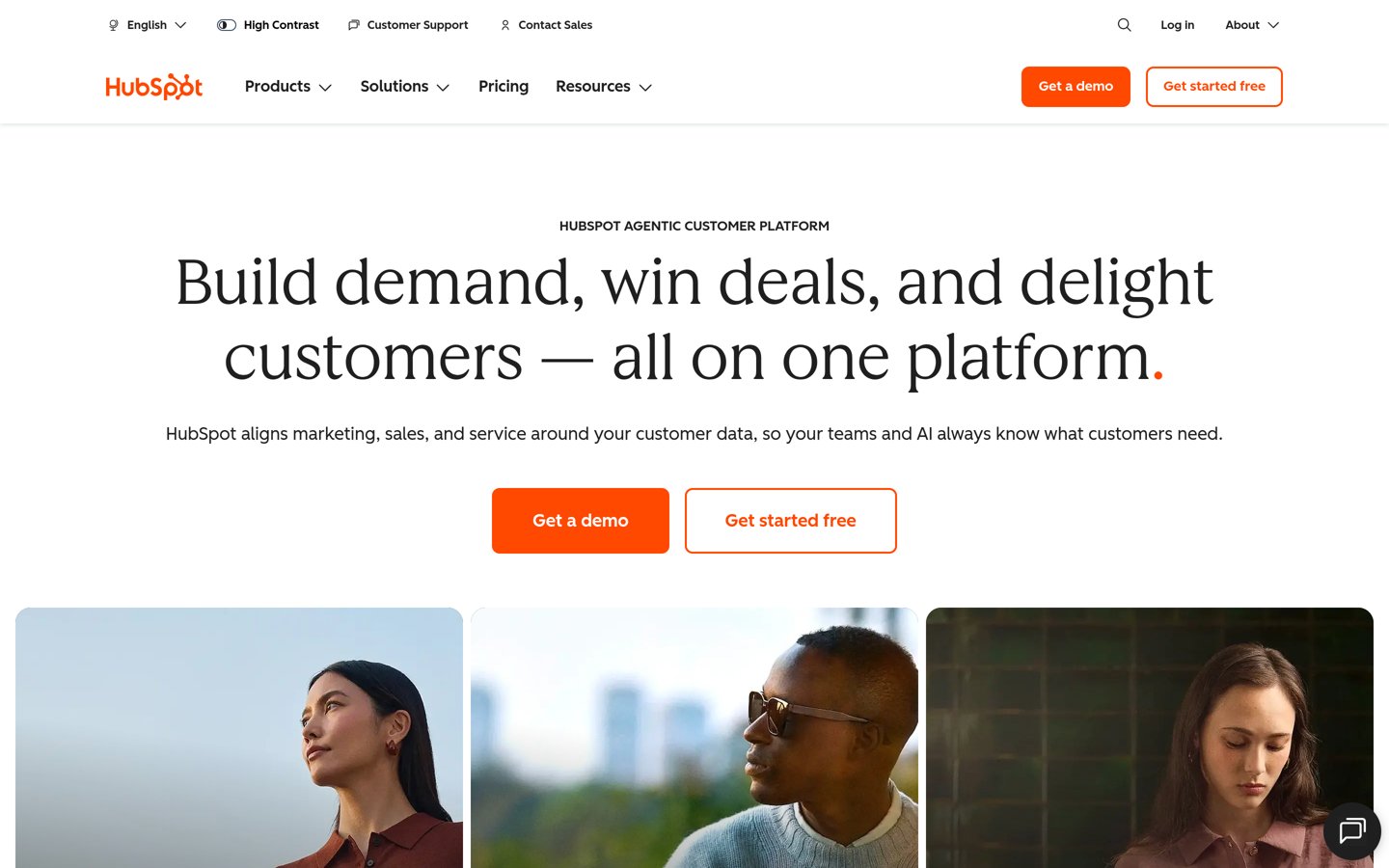
HubSpot Marketing Hub homepage, captured Nov 2026.
HubSpot Marketing Hub is the default answer for growing teams because it collapses CRM, marketing, sales and service into one database. Marketing Hub Starter runs $20 a seat a month on annual billing with 1,000 marketing contacts, while the free plan covers basic email, forms and chat for up to two users.
The trade off is the price cliff. Professional jumps to $800 a month plus a $3,000 onboarding fee, and marketing contacts drive the bill up fast as your list grows. It suits B2B teams that want one platform instead of five integrations, and that can budget carefully for the Professional jump.
What we like
Genuinely useful free plan
CRM and marketing in one database
Marketing-contact model only counts contacts you market to
Watch out for
Professional at $800+ a month is a huge jump
Marketing contacts drive the bill up fast
Onboarding fees on higher tiers
Starter is currently discounted to $9 a seat; regular price is $20Visit hubspot.com
02
ActiveCampaign
4.4/5on G2 (14,789 reviews, checked Nov 2026)
Starts at$15/mo
Best automation value for small teams
Starting price$15/mo, annual billing
Free trial14 days
Contacts on Starter1,000
Automation builderVisual, with split tests
activecampaign.com
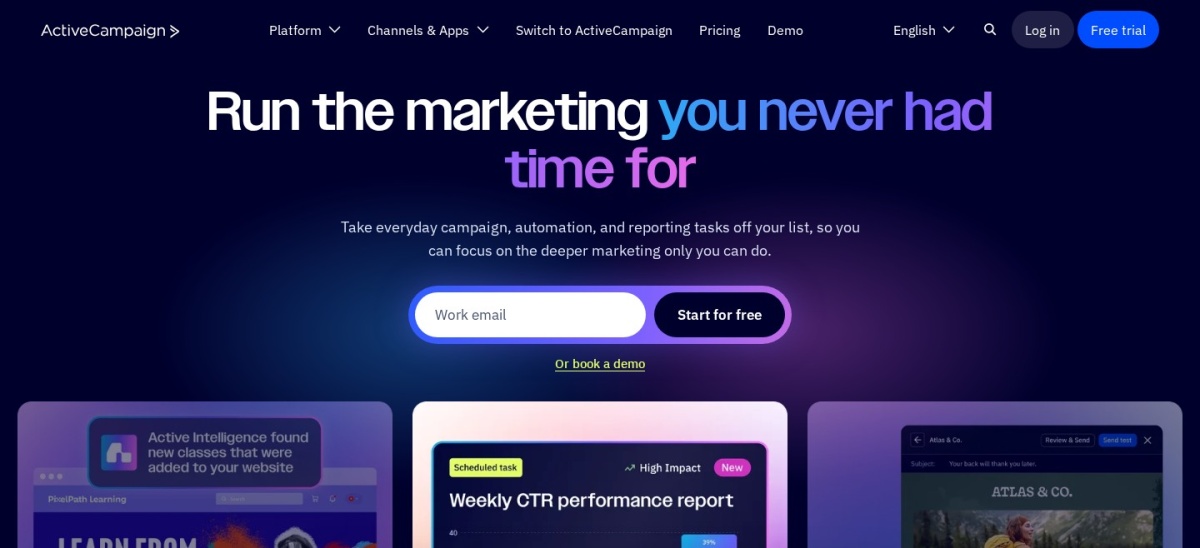
ActiveCampaign homepage, captured Nov 2026.
ActiveCampaign is an automation product that also sends email, rather than the reverse: branching conditions, goals, split tests and predictive sending arranged in a genuinely excellent visual builder. Starter is $15 a month billed annually at 1,000 contacts, with Plus at $49, Professional at $79 and Enterprise at $145.
The trade off is the Starter ceiling. Starter limits each automation to five actions, so the Plus tier at $49 is the realistic entry point for serious automation, and since late 2025 new accounts are billed for all contacts including unsubscribed ones. It suits small teams that live in nurture sequences and lead scoring.
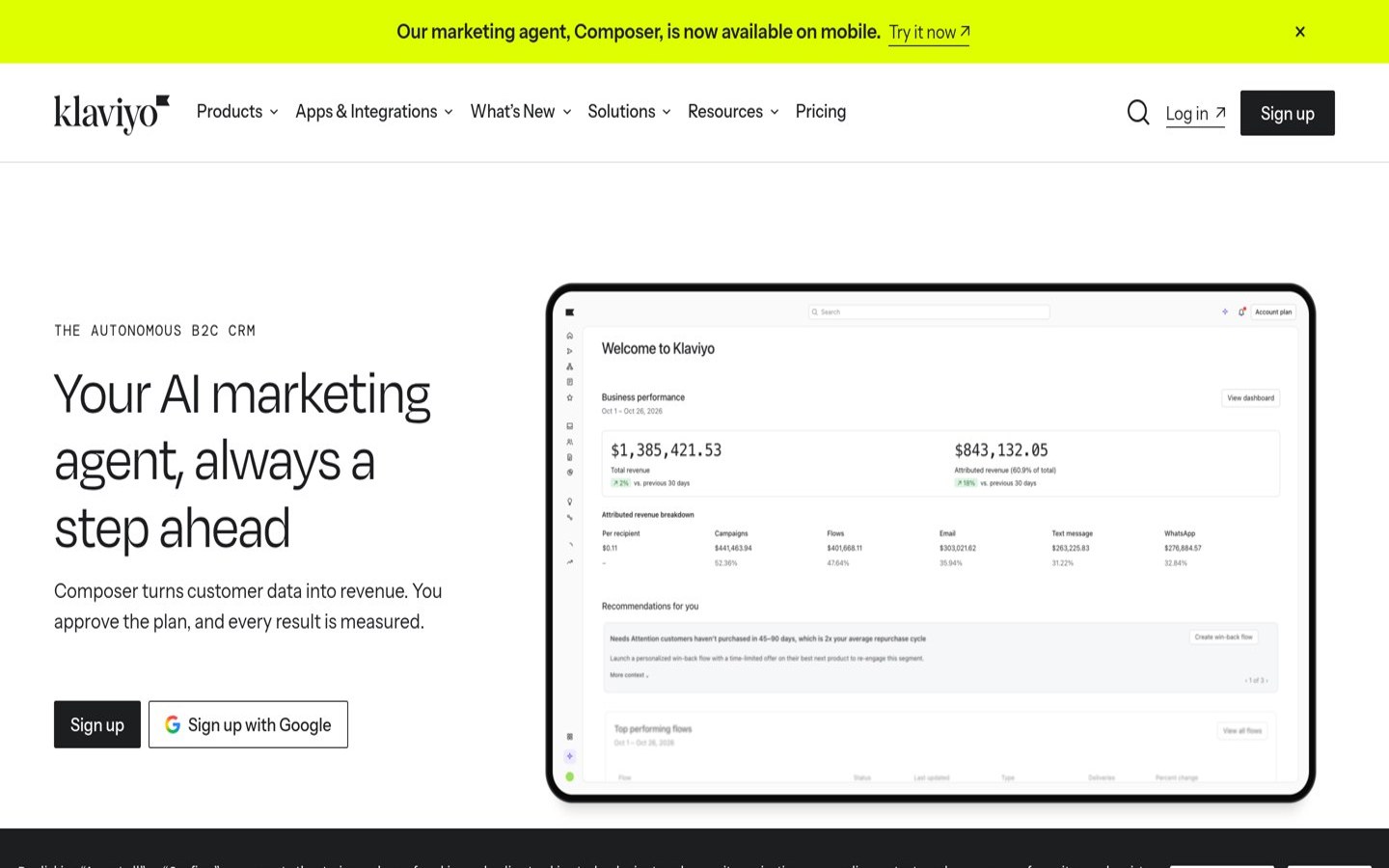
Klaviyo is built for stores. Purchase history, browsing behavior and predicted lifetime value drive segments and flows, so abandoned cart, win-back and replenishment campaigns run on real store data rather than guesses. Email and SMS share one automation builder, which suits brands that sell through both channels.
The trade off is focus and price growth. Klaviyo is an ecommerce tool first, so B2B teams will find little for them, and pricing rises with list size, starting at $20 a month for 500 contacts. It suits ecommerce brands that live on email and SMS revenue and want automation driven by purchase data.
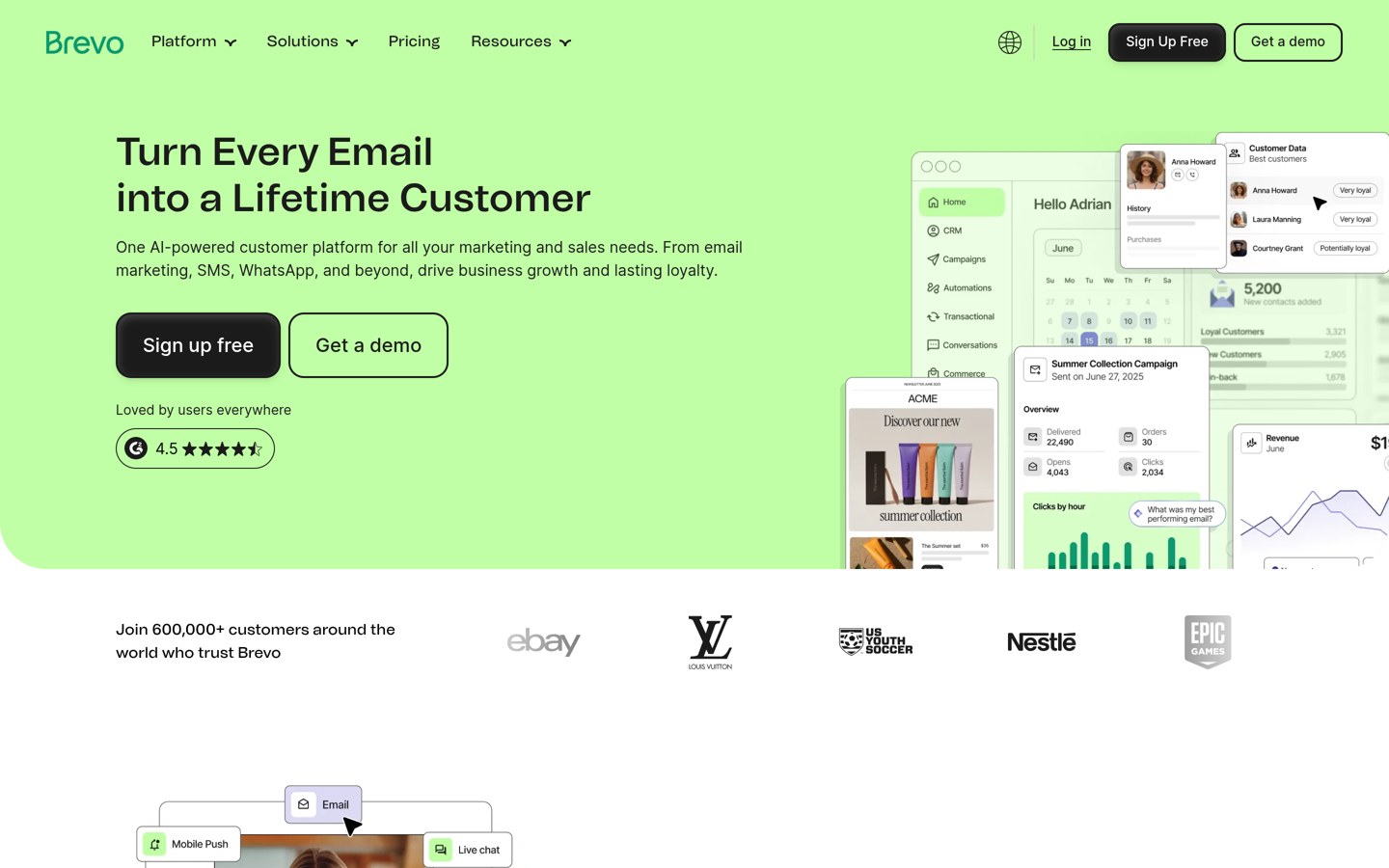
Brevo is the value pick in this list: a free plan with marketing automation included, and Starter from $9 a month for 500 contacts. It covers email marketing, SMS, landing pages, signup forms, A/B testing, segmentation and a native CRM, with pricing based on email volume rather than contacts.
The trade off is polish. Brevo has fewer premade email templates than Mailchimp, and its automation, while capable, is less deep than ActiveCampaign's. It suits businesses with large lists and small budgets that want automation without per-contact pricing, and teams that send high email volumes.
Mailchimp is the easy button: Essentials from $13 a month, Standard from $20, Premium from $350, with a free plan capped at 250 contacts and 500 sends a month. For the small company whose marketing is a newsletter and a few automated emails, it is fast and friendly, with decent templates and a journey builder on Standard.
The trade off is depth. Lead scoring, CRM depth and multi-touch attribution are thin or absent, and the free plan has shrunk from 2,000 contacts to 250. It suits beginners and small audiences where email is the whole job; graduate to ActiveCampaign or HubSpot when nurturing becomes the job.
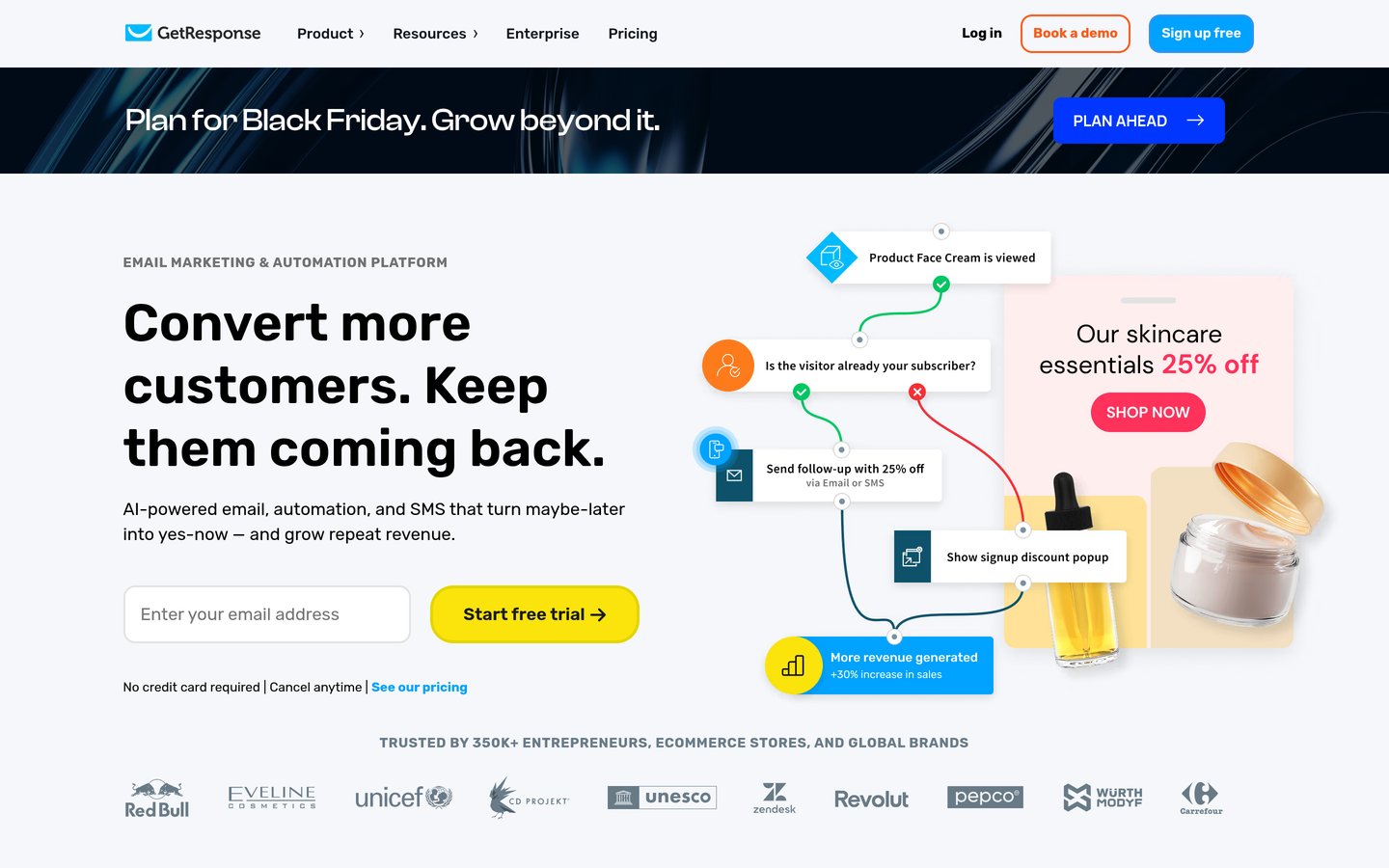
GetResponse stands out by bundling webinars with email marketing. A marketer can run a live session, capture registrants and follow up with automated sequences without a separate webinar tool, and landing pages plus funnels complete the package. Starting at $19 a month, it is priced for serious small teams.
The trade off is the price ladder. Advanced ecommerce and automation tools are included only on higher tiers from $119 a month, and the annual-billing figure of $15.58 a month reported elsewhere differs from the $19 monthly figure. It suits marketers who also run webinars and want one subscription for both.
What we like
Webinars bundled with email marketing
Landing pages and funnels included
Free plan up to 500 contacts
Watch out for
Advanced automation needs higher tiers from $119 a month
Annual-billing price differs from the monthly figure
Drip is built for ecommerce brands that want Klaviyo-style automation with flexibility. It offers behavior-based email automation priced by list size alone, starting at $39 a month for up to 2,500 contacts with unlimited emails. Deep integrations with ecommerce platforms and revenue-focused automation are its strengths.
The trade off is price and access. There is no free plan, only a 14-day trial, and pricing can become expensive as contact lists grow. It suits online retailers and direct-to-consumer brands focused on personalized, revenue-driven campaigns that want an alternative to Klaviyo.
What we like
Behavior-based automation priced by list size
Deep ecommerce integrations
Unlimited emails on every plan
Watch out for
No free plan, only a 14-day trial
Pricing grows expensive as lists grow
Less known than Klaviyo
Starts at $39 a month for up to 2,500 contactsVisit drip.com
08
Marketo Engage
4.1/5on G2 (3,234 reviews, checked Nov 2026)
PricingQuote/yr
Best enterprise marketing automation
Starting priceQuote only
Free trialNo
Best forEnterprise B2B demand generation
Lead scoringAdvanced, multi-touch
adobe.com
Marketo Engage homepage, captured Nov 2026.
Marketo Engage is the enterprise standard for B2B marketing automation: sophisticated lead scoring, nurturing, multi-touch programs and revenue attribution at a scale smaller tools cannot handle. As an Adobe product it sits alongside analytics and content tools that enterprise marketing orgs already run.
The trade off is everything enterprise. Pricing is quote-based, with guides citing around $895 a month as a starting point, a dedicated administrator is a practical requirement, and implementations are measured in months. Teams under 50 marketers rarely justify it. It suits large B2B orgs running complex multi-touch demand programs.
What we like
The deepest automation and lead management in the category
Scales to enormous databases
Adobe ecosystem integration
Watch out for
Quote-based pricing
Needs a dedicated admin
Implementation measured in months
Guides cite around $895 a month as a starting pointVisit adobe.com
09
Oracle Eloqua
3.9/5on G2 (627 reviews, checked Nov 2026)
PricingQuote/yr
Best for large global enterprises
Starting priceQuote only
Free trialNo
Best forLarge enterprise, complex programs
Global scaleRegions and languages
oracle.com
Oracle Eloqua homepage, captured Nov 2026.
Oracle Eloqua suits large enterprises running complex multi-touch programs, with advanced segmentation, account-based marketing, and global scale across regions and languages. It integrates with major CRMs beyond Oracle, making it viable for enterprises that do not standardize on a single CRM.
The trade off is complexity and cost. Pricing is custom only, and implementation is complex with enterprise timelines measured in quarters rather than weeks, so small and mid-market teams should avoid it. It suits large enterprises with complex global programs that need the most program depth.
Nearly every platform here bills on contacts, and nearly all of them count contacts you would rather not pay for. Mailchimp and ActiveCampaign bill on unsubscribed contacts unless you archive them.
HubSpot's marketing-contact model is the fairest of the bunch: only contacts you market to count toward paid tiers. Even so, contact tiers still drive the bill as your list grows.
Before signing, model your bill at twice your current database size and ask what happens when you import a purchased list or run a big webinar. Negotiate the overage terms in writing.
How we chose
We compared the marketing automation and inbound platforms buyers search most, then kept the ones with a verifiable G2 rating. Keap was left out because its G2 profile holds only about 30 reviews, too thin to rely on.
Prices come from vendor pricing pages and published plan lists, checked on 23 November 2026. Marketo and Oracle Eloqua publish no prices, so this list shows Quote rather than third-party estimates.
Ratings come from G2 pages opened on 23 November 2026, with the review count shown beside each score. This list is based on pricing, docs and reviews, not on using the tools ourselves.
How to choose inbound marketing software
Start with your CRM, then match the automation depth to your team size.
Check your CRM first. HubSpot suits CRM-first teams; Salesforce shops should shortlist Account Engagement or Marketo; Zoho shops should look at Zoho Marketing Automation.
Size the automation you need. Small teams need email sequences and lead scoring. Enterprise teams need multi-touch attribution, ABM and revenue reporting.
Model the bill at twice your list size. Contact-based pricing punishes list growth. Ask what happens when you import a big list or run a webinar.
Run a pilot with real contacts. Never choose from a choreographed demo. Ask the vendor to break a workflow during evaluation and watch how fast it recovers.
FAQ
What is the best inbound marketing software?
HubSpot Marketing Hub is the best pick for most teams, combining CRM and marketing automation in one database, with a free plan and Starter at $20 a seat a month, rated 4.4 out of 5 on G2. ActiveCampaign is the best automation value at $15 a month.
How much does inbound marketing software cost?
Small-team tools publish prices from $9 a month for Brevo Starter to $39 a month for Drip. HubSpot Professional jumps to $800 a month, and Marketo and Eloqua are quote-only enterprise platforms.
What is the difference between inbound marketing and marketing automation?
Inbound marketing is the strategy: attract visitors with content, convert them into leads, and nurture them into customers. Marketing automation is the software that runs the nurturing, scoring and email sequences behind it.
Do I need a CRM to use inbound marketing software?
Not always, but it helps. HubSpot, ActiveCampaign and Keap include a CRM, while Marketo and Eloqua expect you to bring your own, usually Salesforce or Dynamics.
Can small businesses use HubSpot?
Yes. HubSpot has a free plan for up to two users and Starter at $20 a seat a month. The jump comes at Professional, $800 a month, so small teams should budget for that step before they need it.
Which inbound marketing software is best for ecommerce?
Klaviyo is the best pick for ecommerce, with segments and flows driven by purchase data, from $20 a month. Drip is the closest alternative, starting at $39 a month for up to 2,500 contacts.