Best Email newsletter platform in 2026: 9 Tools Compared
WLWPLegible EditorsLast verified 23 Nov 2026How we rank12 min read
★ Short answer
beehiiv is the best email newsletter platform, with a free plan up to 2,500 subscribers, a referral program and an ad network, rated 4.5/5 on G2. Pick Substack if you want paid subscriptions with no monthly fee, or Ghost if you want to own your site and pay 0% on memberships.
How we make this list: we compare pricing pages, product documentation and public user reviews, then re-check every price before each update. No product paid for a place. Disclosure.
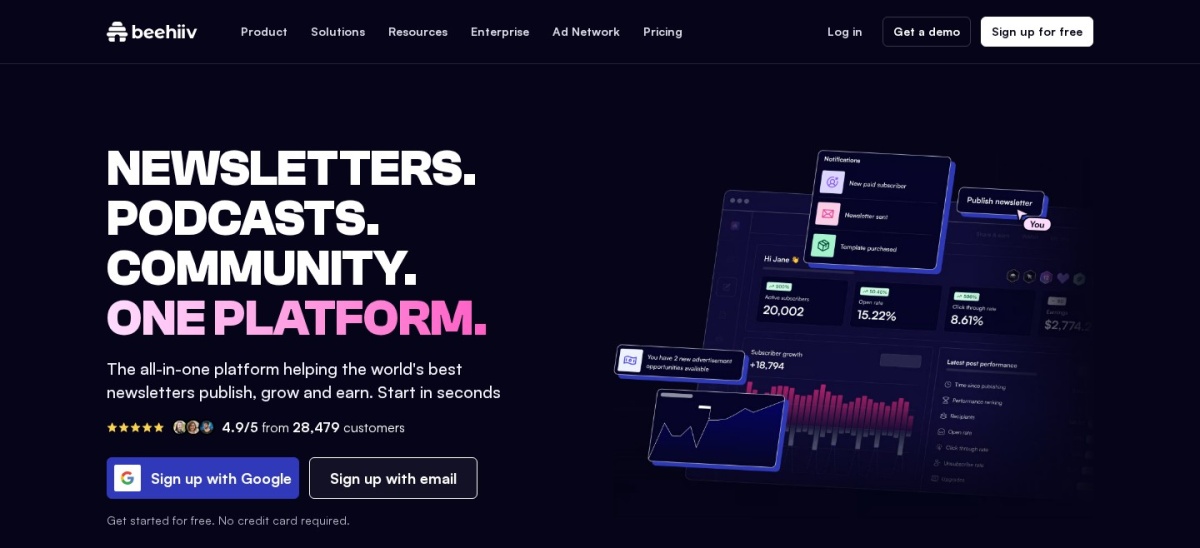
beehiiv leads for newsletters, with referrals and an ad network on top of a free plan to 2,500 subscribers.
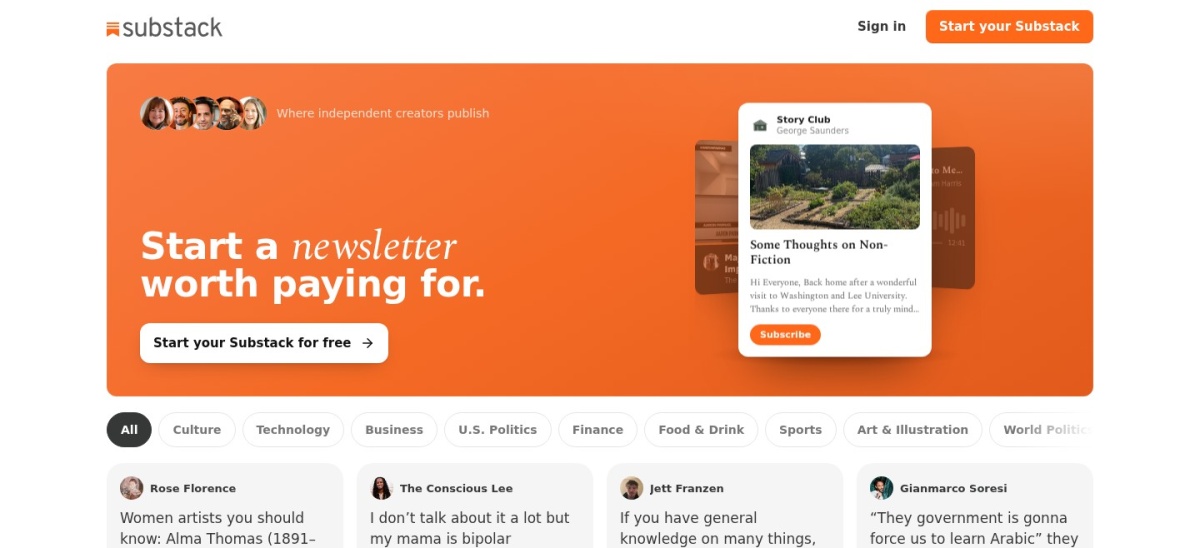
Substack charges no monthly fee, only 10% of paid subscription revenue.
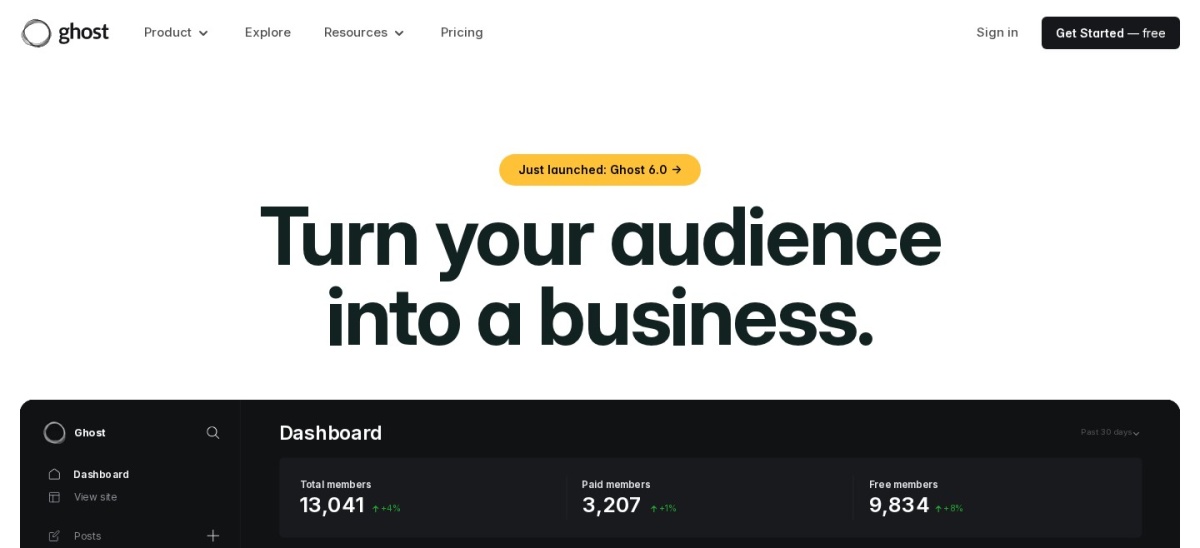
Ghost lets you own your site and keep 0% on memberships, with hosting from $18 a month billed yearly.
Buttondown is the simplest newsletter tool, free for the first 100 subscribers and $9 a month after.
Mailchimp and MailerLite are the best general email tools for newsletters, from $13 and $12 a month.
What a newsletter platform needs
A newsletter platform needs a good editor, a subscribe form, archives and a way to earn. Growth tools like referrals and recommendations matter once the list passes a few hundred readers.
The tools here split into newsletter-first and general email platforms. beehiiv, Substack, Ghost, Buttondown and Flodesk are built for newsletters, while Mailchimp, MailerLite, Kit and Campaign Monitor are general email tools that also send newsletters well.
Free plans are generous for newsletters. beehiiv is free to 2,500 subscribers, Substack is free with a 10% revenue fee, and Ghost self-hosting is free. Our guide on free newsletter plugins for WordPress covers the WordPress route.
If you charge readers, check the fee. Substack takes 10% of paid revenue, while beehiiv and Ghost take 0%, which matters more as paid subscriptions grow.
beehiiv is a newsletter platform built for growth and monetisation. The free Launch plan covers up to 2,500 subscribers with no take on paid subscriptions, and Lite at $59 a month adds custom domains, the referral program, polls, surveys and access to the ad network.
The trade off is price. Lite costs $59 a month for 1,000 subscribers, which is dearer than Substack or Ghost for a small list, and the editor is built for newsletters, not ecommerce email. It suits writers who want referrals, ads and paid subscriptions in one place.
Substack is a publishing platform where writers send newsletters and charge readers, with no monthly fee. It takes 10% of paid subscription revenue plus payment processing, so a free newsletter costs nothing, and paid tiers, podcasts, video and community chat are all included.
The trade off is control. Substack hosts the audience and the archive, customisation is limited, and the 10% fee grows with revenue, so a large paid list pays far more than a flat-fee platform. It suits writers who want the simplest route to paid subscriptions.
Ghost is an open-source publishing platform for newsletters and membership sites. Self-hosting is free, and Ghost(Pro) Starter costs $18 a month billed yearly for 1,000 members, with a website, custom domain, email newsletters and paid memberships at 0% revenue share.
The trade off is effort. Ghost is a full website platform, not just email, so setup and design take more work than Substack or beehiiv, and managed hosting rises with members. It suits publishers who want to own their site, audience and revenue.
Mailchimp is an all-in-one email marketing platform with a large template library, audience tools and built-in AI help for subject lines and send times. The free plan covers 250 contacts and 500 sends, and Essentials at $13 a month adds A/B testing, 24/7 support and more sends for a 500-contact list.
The trade off is price growth. Costs rise steeply as contacts grow, and the cheapest paid plan caps some features, such as advanced segmentation and multivariate testing, behind Standard at $20 a month. It suits small teams that want one familiar platform for email, landing pages and basic automation.
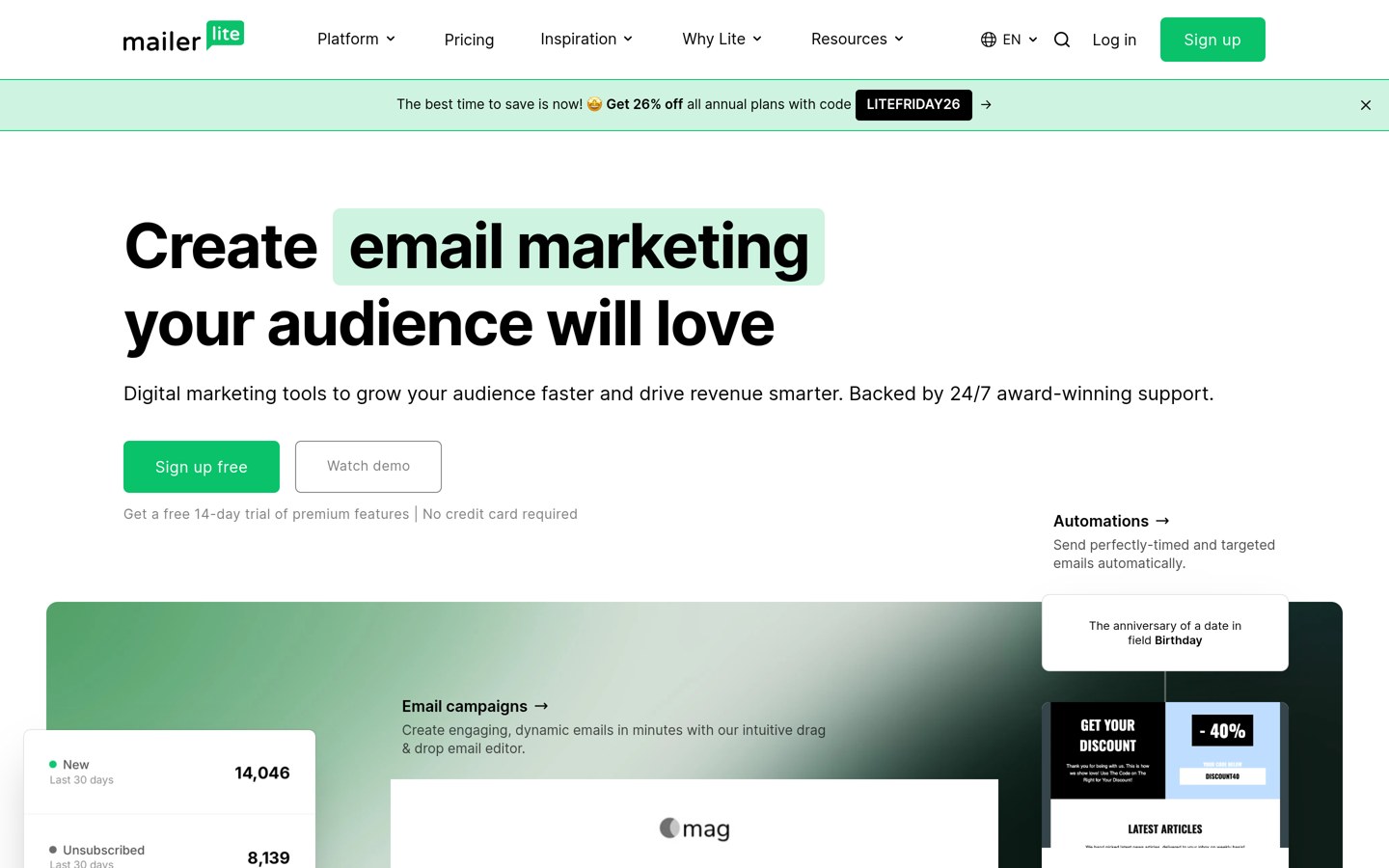
MailerLite is a simple email platform built for small teams and solo creators. The free plan covers 250 subscribers and 2,500 emails a month, and Comfort at $12 a month raises that to 500 subscribers with unlimited monthly sends, plus landing pages, forms and automation.
The trade off is scale. Automation is good for welcome series and simple journeys but thinner than ActiveCampaign or Klaviyo, and approval for new accounts can take a day. It suits beginners and small businesses that want a clean editor and a low bill.
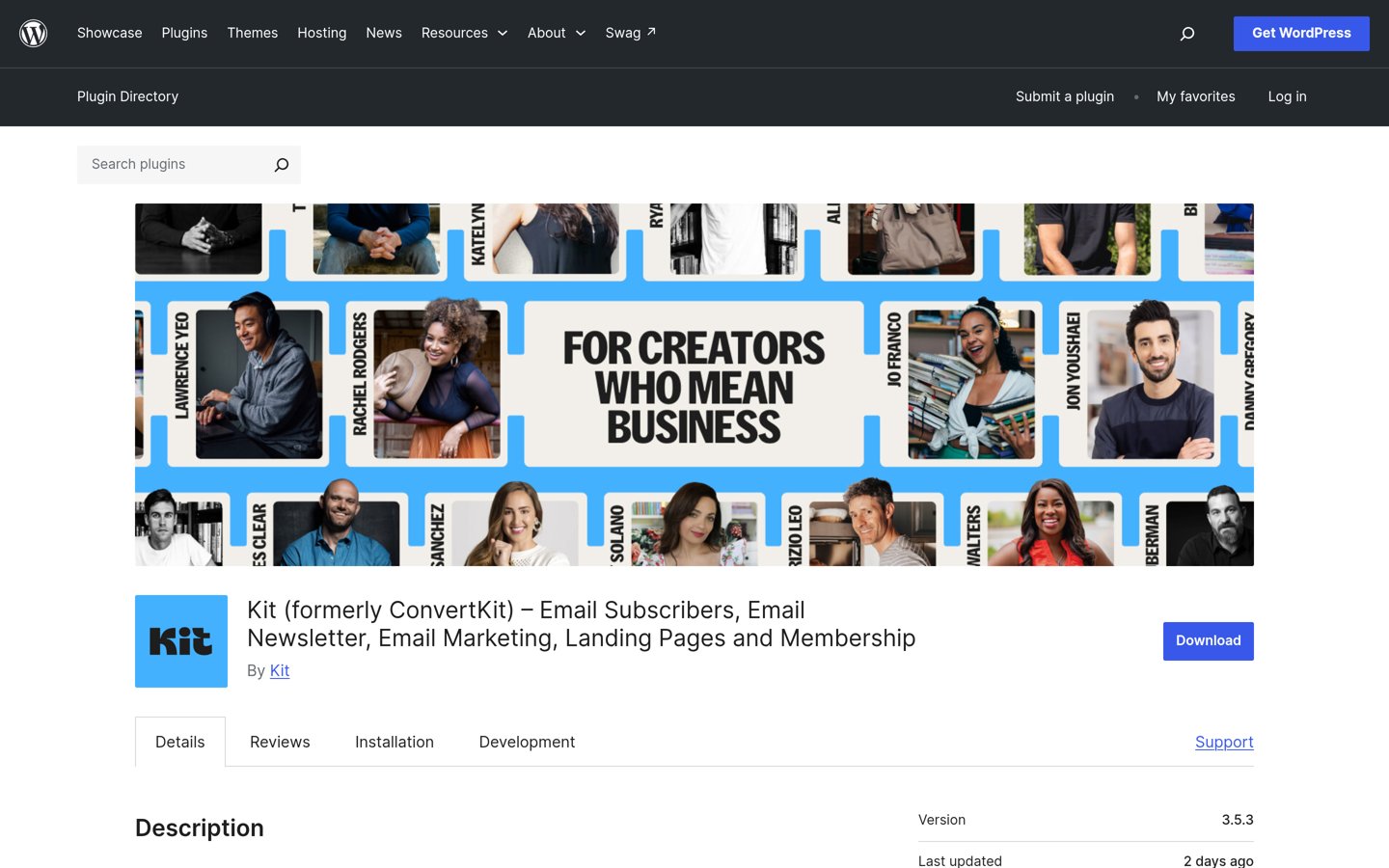
Kit is an email platform built for creators who sell. The free plan covers up to 10,000 subscribers with unlimited landing pages and forms, and Creator at $39 a month adds the visual automation builder, paid newsletters and a storefront that takes 3.5% plus 30 cents per sale.
The trade off is price. Creator starts at $39 a month for 1,000 subscribers, which is dearer than MailerLite or Brevo for the same list, and there is no built-in template gallery to match Mailchimp. It suits creators who monetise a list with paid subscriptions and digital products.
What we like
Free plan up to 10,000 subscribers
Visual automation builder
Paid newsletters and product sales built in
Watch out for
Creator starts at $39 a month
Template choice is thin
Price rises with every subscriber tier
Creator Plus adds priority support and more seatsVisit kit.com
07
Buttondown
4.8/5on Capterra (114 reviews, checked Nov 2026)
Paid from$9/mo
Best minimal newsletter tool
Free planFirst 100 subscribers free
Cheapest paid planBasic, $9/mo
Also includesCustom domains and API
Add-onsTagging +$9, automations +$29
buttondown.com
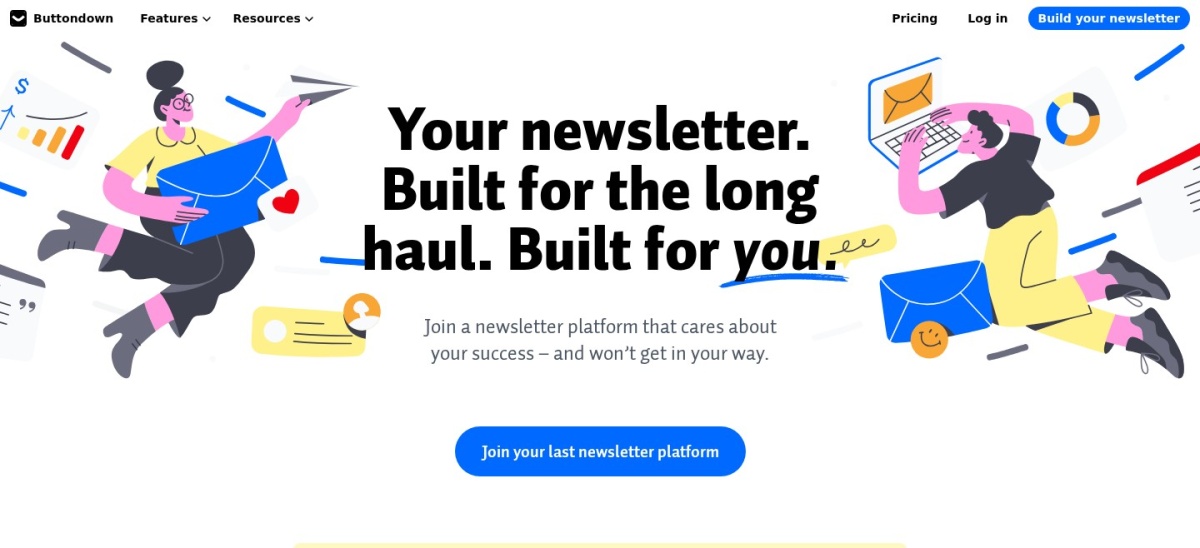
Buttondown homepage, captured Nov 2026.
Buttondown is a minimal newsletter platform for writers who like markdown and APIs. The first 100 subscribers are free, and Basic costs $9 a month with a custom domain, archives and an API, while tagging, automations and team seats are paid add-ons.
The trade off is that it is deliberately plain. There is no drag-and-drop builder and few templates, and automations cost $29 a month extra, so the bill grows with features. It suits independent writers who want a fast, simple newsletter tool.
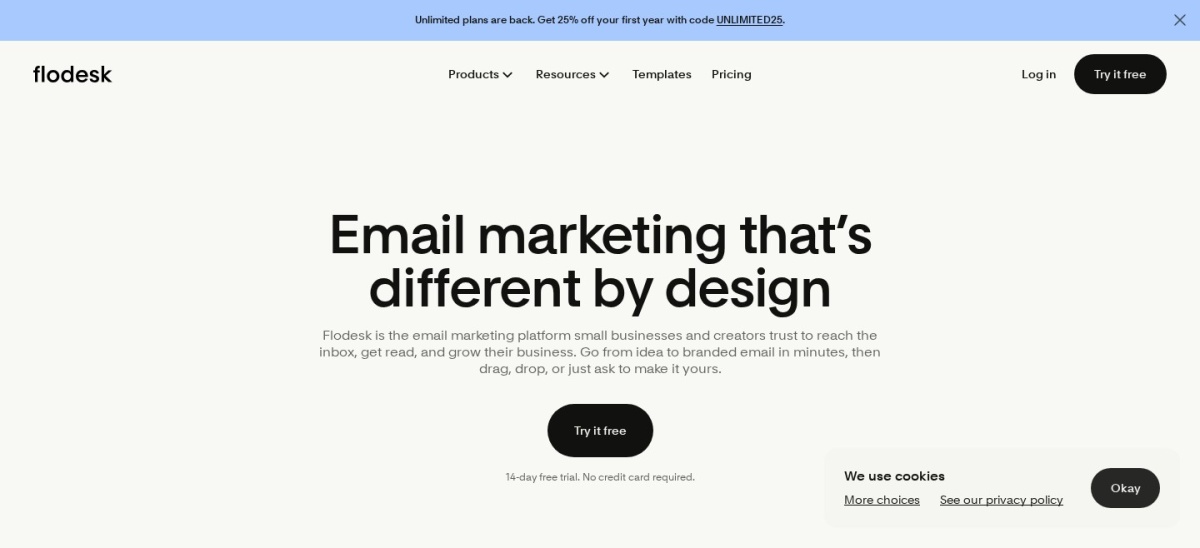
Flodesk is an email platform with flat pricing: $46 a month covers unlimited subscribers and unlimited emails. There is no free plan, but a 14-day trial needs no card, and the plan includes templates, workflows, landing pages, forms and a checkout for digital products.
The trade off is depth. Flodesk's templates are beautiful but its segmentation and automation are simpler than Klaviyo or ActiveCampaign, and there is no free tier for small lists. It suits creators and small shops whose lists keep growing and who hate per-subscriber pricing.
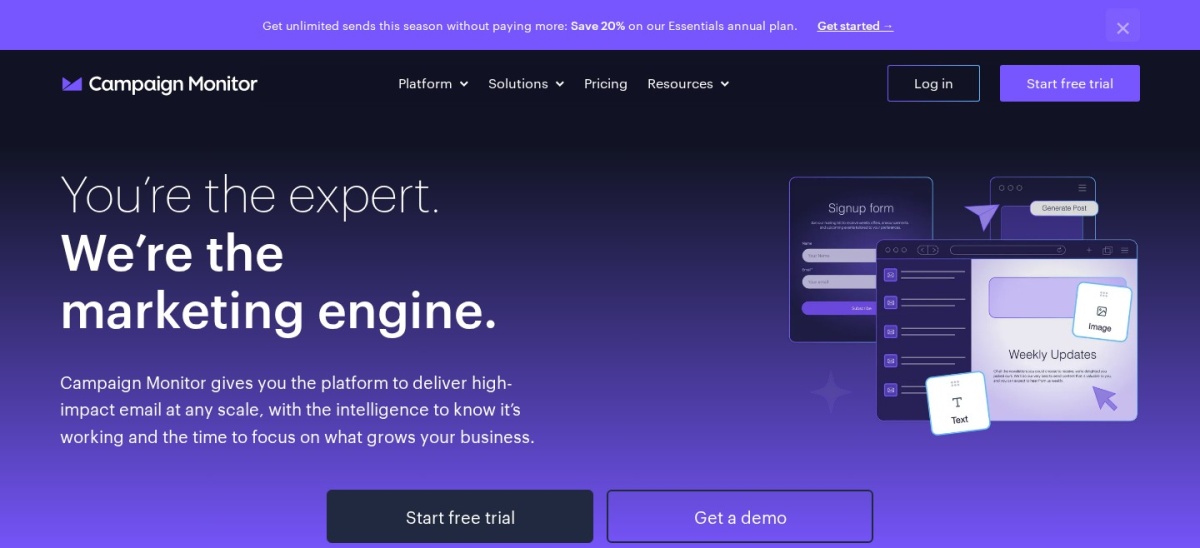
Campaign Monitor is a polished email platform known for its templates and design tools. There is no free plan, but a 30-day trial is available, and Lite starts at $13 a month for 500 contacts with templates, segmentation, basic journeys and reporting.
The trade off is price at scale. Costs rise with list size, and unlimited sends need Essentials at $31 a month, while the deepest automation sits higher still. It suits teams that care about design and want clean templates without a steep learning curve.
Free plans cover the basics well. beehiiv is free to 2,500 subscribers, Substack is free with a 10% revenue fee, and Ghost self-hosting is free.
Paid plans mostly add growth and monetisation. beehiiv Lite adds referrals and the ad network, Ghost Starter adds managed hosting, and Buttondown Basic adds a custom domain.
If you charge readers, check the fee. Substack takes 10% of paid revenue, while beehiiv and Ghost take 0%, which matters more as paid subscriptions grow.
For most writers, start free and pay when growth tools earn their keep. A paid plan that does not grow the list is wasted money.
How we chose
We started from the established tools for email newsletter platform, then kept the nine with the strongest mix of ratings, free or trial access, and a clear cheapest paid plan.
We checked each vendor's pricing page and G2 or Capterra listing on 23 November 2026, and we show regular prices, not sale prices. Ghost's Starter price is $18 a month billed yearly on its official pricing page, and Buttondown has no G2 presence, so its 4.8/5 rating comes from Capterra.
No vendor paid for a place, and we do not claim hands-on testing for this list.
How to choose email newsletter platform
Start with what you send and how big the list is, then match the tool to that.
Start free and grow. beehiiv is free to 2,500 subscribers and Substack is free with a 10% revenue fee. Pay only when growth tools earn their keep.
Decide how you will earn. Paid subscriptions favour Substack, beehiiv or Ghost, while ads and sponsorships favour beehiiv's ad network.
Check the fee on paid subs. Substack takes 10% of paid revenue, while beehiiv and Ghost take 0%.
Keep your list portable. Export subscribers every month, whatever platform you use, so you can move without losing readers.
FAQ
What is the best email newsletter platform?
beehiiv is the best overall newsletter platform, with a free plan to 2,500 subscribers, a referral program and an ad network, rated 4.5/5 on G2. Substack is best for paid subs, Ghost for ownership.
Is beehiiv free?
Yes, beehiiv Launch is free for up to 2,500 subscribers with no take on paid subscriptions. Lite costs $59 a month for 1,000 subscribers and adds custom domains, referrals, polls and the ad network.
How does Substack make money?
Substack takes 10% of paid subscription revenue plus payment processing. There is no monthly fee, so a free newsletter costs nothing, and Substack only earns when a writer's paid subscriptions earn.
Is Ghost better than Substack?
Ghost suits publishers who want to own their site and keep 0% on memberships, from $18 a month billed yearly. Substack is simpler and free to start, but takes 10% of paid revenue.
What is Buttondown?
Buttondown is a minimal newsletter platform for writers who like markdown and APIs. The first 100 subscribers are free, and Basic costs $9 a month.
Can I use Mailchimp for a newsletter?
Yes. Mailchimp Essentials costs $13 a month for 500 contacts and includes templates, forms and A/B testing, though it has no referral program or ad network.