FluentCRM Alternatives (Free and Paid) in 2026: 9 Best Tools Compared
WLWPLegible EditorsLast verified 22 Nov 2026How we rank13 min read
★ Short answer
MailPoet is the best FluentCRM alternative for most WordPress sites, with a 4.4 out of 5 rating, 500,000+ installs and a free plan for 500 subscribers. Pick HubSpot for a free CRM with sales tools, or MC4WP if you want the cheapest paid plan at $59 a year.
How we make this list: we compare pricing pages, product documentation and public user reviews, then re-check every price before each update. No product paid for a place. Disclosure.
MailPoet is the closest match: self-hosted in WordPress, 500,000+ installs, free for 500 subscribers, paid from $84 a year.
HubSpot's free CRM stores up to 15 million contacts, but real automation starts at $800 a month with Professional.
MC4WP is the cheapest paid plan here at $59 a year, and The Newsletter Plugin's Essential is a $69 one-time payment.
Kit's free plan covers 10,000 subscribers, but automations start with Creator at $39 a month.
ActiveCampaign has the deepest automation, from $15 a month, but no free plan and prices climb with contacts.
Groundhogg is the only self-hosted CRM in this list, yet it has just 1,000 active installs.
What to look for in a FluentCRM alternative
FluentCRM is a self-hosted email marketing and CRM plugin for WordPress, with Pro from $129 a year for one site. People usually look for an alternative when they want a free plan, a hosted service, or a CRM that also covers sales.
The first choice is where your data lives. MailPoet, The Newsletter Plugin and Groundhogg run inside WordPress, like FluentCRM, while HubSpot, Brevo, MailerLite, Kit and ActiveCampaign are hosted services with their own dashboards. Our guide on email marketing costs for a WordPress site explains how the two models price out.
The second choice is what you pay for. Some tools charge by subscribers, like MailPoet and Kit, some by emails sent, like Brevo, and some per seat, like HubSpot. A free plan with a 500-subscriber cap is plenty for a new blog and useless for a 20,000-person list.
Automation is where the plans split. MailerLite includes automations free, Brevo locks them behind Standard, and Kit reserves them for Creator. Check the plan table below before you assume a feature is included.
Finally, check the sending setup. Self-hosted plugins send through your host or an SMTP service, so deliverability is partly your job, while hosted tools send from their own infrastructure.
4.4/5on WordPress.org (1,435 reviews, checked Nov 2026)
Paid from$84/yr
Best FluentCRM alternative overall
Free planYes, 500 subscribers
Email templates70+
WooCommerceAbandoned cart emails
Paid planCreator, $84/yr
mailpoet.com
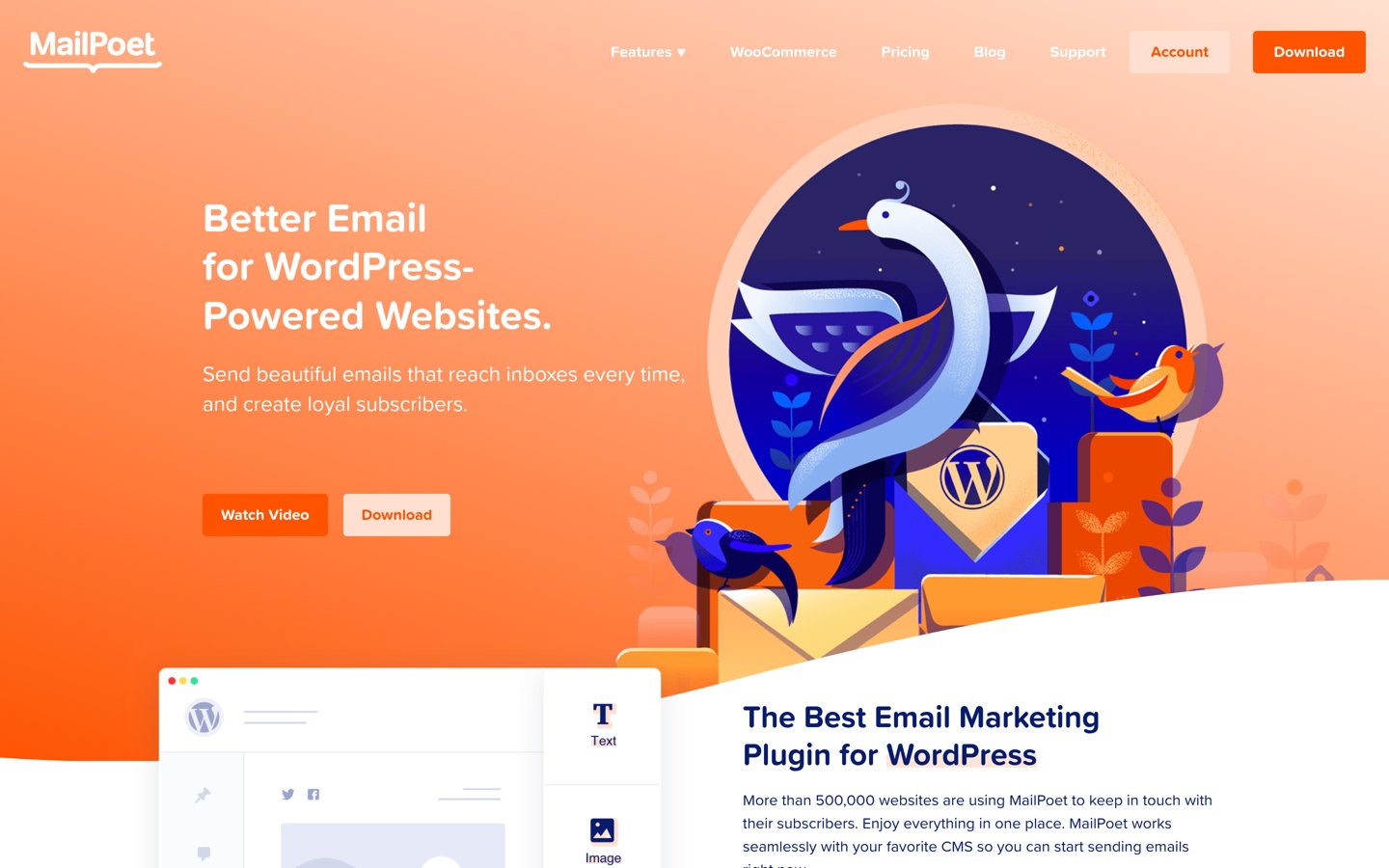
MailPoet homepage, captured Nov 2026.
MailPoet is a WordPress email marketing plugin that runs entirely inside your dashboard, with more than 500,000 active installs. The free Starter plan covers up to 500 subscribers and 5,000 emails a month, with 70+ templates, subscription forms and basic automation, plus WooCommerce emails for abandoned carts and first purchases.
The trade off is the subscriber pricing. Creator costs $84 a year for 500 subscribers and the price rises with your list, while Business at $108 a year adds segmentation and detailed reports. It suits WordPress site owners who want FluentCRM-style sending without leaving WordPress or paying a SaaS bill.
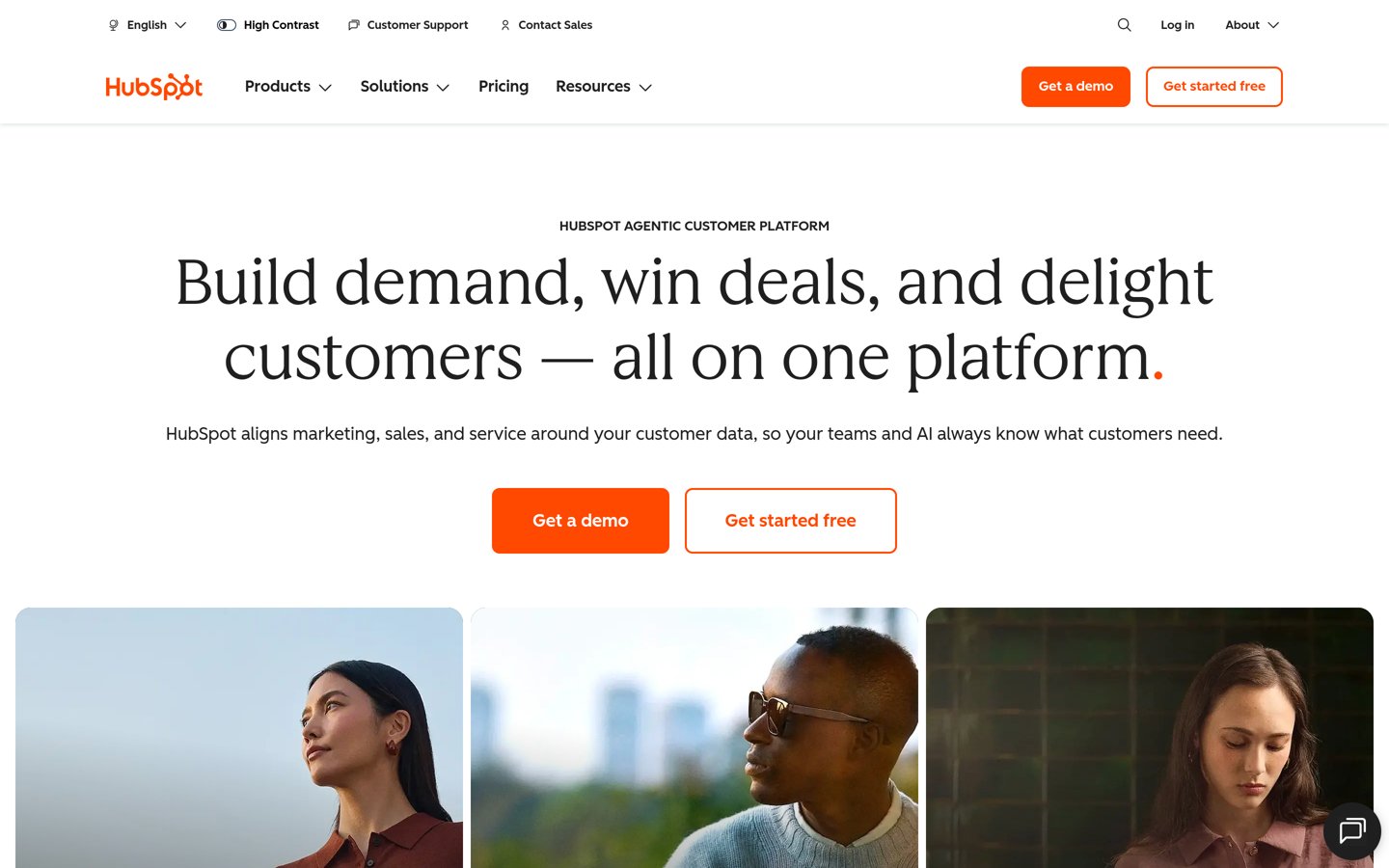
HubSpot is a full customer platform that pairs a free CRM with marketing, sales and service tools, used by more than 311,000 customers. The free plan covers contact records, forms, live chat and 2,000 branded email sends a month, with one simple automation, so a small team can run its CRM and email from one account.
The trade off is the price jump. Marketing Hub Starter costs $15 a seat a month, or $9 a seat on annual billing, and the tools most buyers want, multi-step workflows, A/B testing and custom reports, start with Professional at $800 a month. It suits teams that outgrow a WordPress-only CRM and want sales and service in the same place.
What we like
Free CRM stores up to 15 million contacts
Forms, chat and email in one account
Strong G2 rating from 16,000+ reviews
Watch out for
Starter is priced per seat, so teams pay more
Real automation needs the $800/mo Professional plan
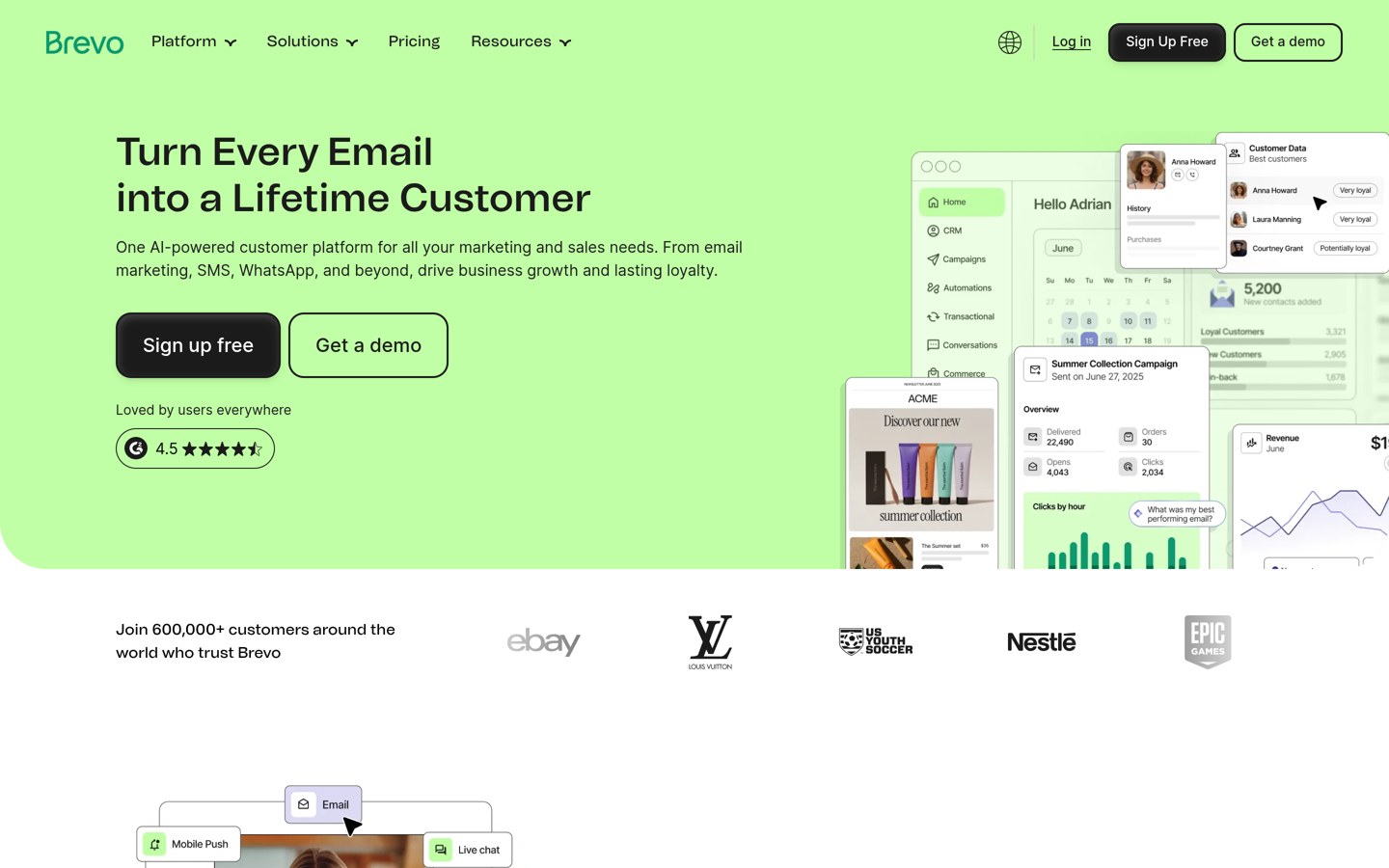
Brevo is a European email, SMS and CRM platform that charges by emails sent, not contacts stored, and counts more than 600,000 customers. The free plan covers 100,000 contacts and 300 emails a day, and Starter at $97 a year adds 5,000 emails a month and removes Brevo branding.
The trade off is automation. Multi-step workflows, A/B testing and advanced reports sit in Standard at $194 a year, not Starter, and Trustpilot reviewers report accounts suspended for high bounce rates. It suits senders with big, rarely emailed lists who want one bill for email, SMS and CRM.
What we like
Free plan stores 100,000 contacts
Cheapest hosted plan in this list
Email, SMS, WhatsApp and CRM in one account
Watch out for
Automation needs the $194/yr Standard plan
Some users report sudden account suspensions
Standard adds automation, A/B testing and heatmapsVisit brevo.com
04
MailerLite
4.6/5on G2 (1,114 reviews, checked Nov 2026)
Paid from$12/mo
Best for simple newsletters and landing pages
Free planYes, 250 subscribers
Paid planComfort, from $12/mo
Email sends2,500 a month free
Landing pagesIncluded free
mailerlite.com
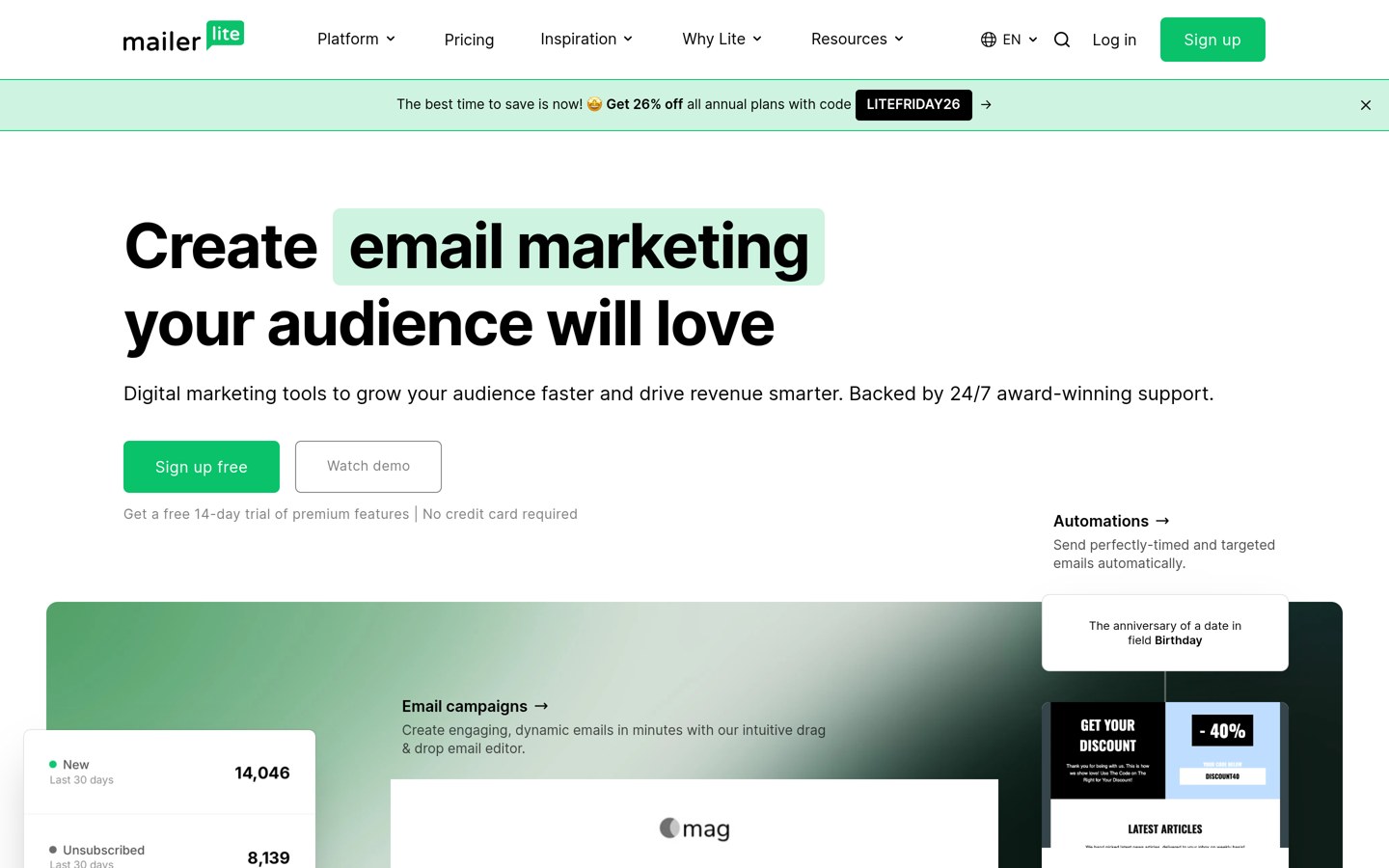
MailerLite homepage, captured Nov 2026.
MailerLite is a simple email platform used by more than 1 million creators and businesses. The free plan covers 250 subscribers and 2,500 emails a month and still includes automations, a website, a landing page and signup forms, which most rivals reserve for paid plans.
The trade off is depth. Comfort starts at $12 a month and adds unlimited templates, dynamic emails and multivariate testing, but reporting and segmentation stay lighter than ActiveCampaign or HubSpot. It suits bloggers and small businesses that want a clean editor and a generous free plan.
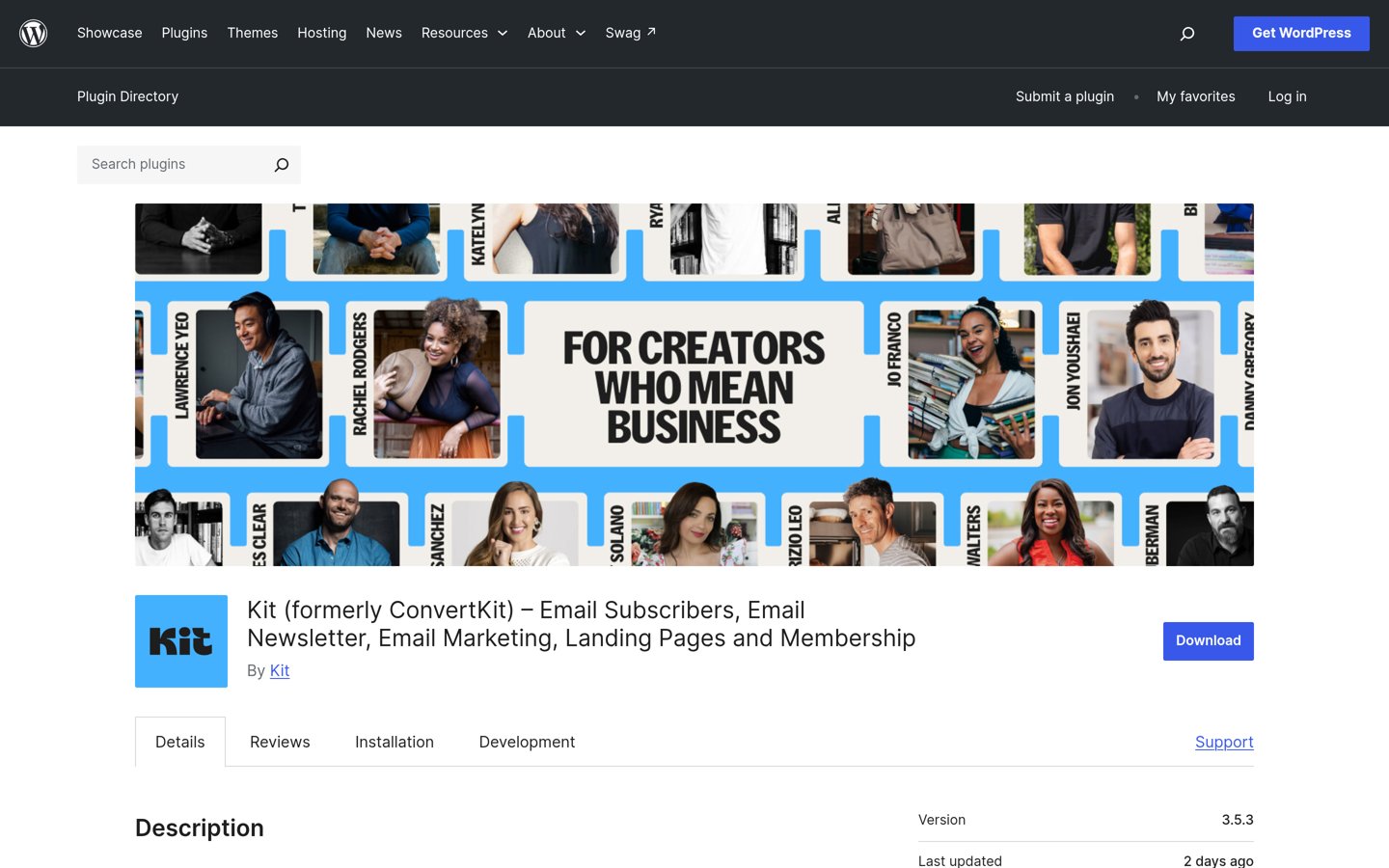
Kit is an email platform built for creators, formerly known as ConvertKit, and used by more than 550,000 creator business owners. The free plan covers up to 10,000 subscribers with unlimited landing pages, forms and broadcasts, plus tagging and segmentation, and every plan can sell digital products.
The trade off is that automations are paid. Visual automations, sequences and A/B testing start with Creator at $39 a month for 1,000 subscribers, after 50% off the first three months, and the price climbs steeply as the list grows. It suits creators who sell courses, ebooks or paid newsletters.
What we like
Free plan covers 10,000 subscribers
Built for selling digital products
Simple tagging and segmentation
Watch out for
No automations on the free plan
Creator plan is $39 a month at 1,000 subscribers
Creator adds automations, sequences and A/B testingVisit kit.com
06
ActiveCampaign
4.4/5on G2 (14,882 reviews, checked Nov 2026)
Starts at$15/mo
Best for deep automation
Free planNo, 14-day trial
Paid planStarter, $15/mo
Contacts1,000 on Starter
Automations5 actions each
activecampaign.com
ActiveCampaign homepage, captured Nov 2026.
ActiveCampaign is a marketing automation platform used by more than 180,000 customers, with the deepest automation builder in this list. Starter costs $15 a month billed yearly for 1,000 contacts, with 10,000 email sends a month, 250+ templates and multi-step automations.
The trade off is the learning curve and the price ladder. Starter caps each automation at five actions and covers one user, and the bill rises fast as contacts grow, reaching $149 a month at 10,000 contacts. It suits marketers who need behaviour-based journeys and a built-in sales CRM.
4.8/5on WordPress.org (1,499 reviews, checked Nov 2026)
Paid from$59/yr
Best if you already use Mailchimp
Free planYes, on WordPress.org
Paid planSingle, $59/yr
Mailchimp formsUnlimited in Premium
WooCommerceE-commerce sync in Premium
mc4wp.com
MC4WP: Mailchimp for WordPress homepage, captured Nov 2026.
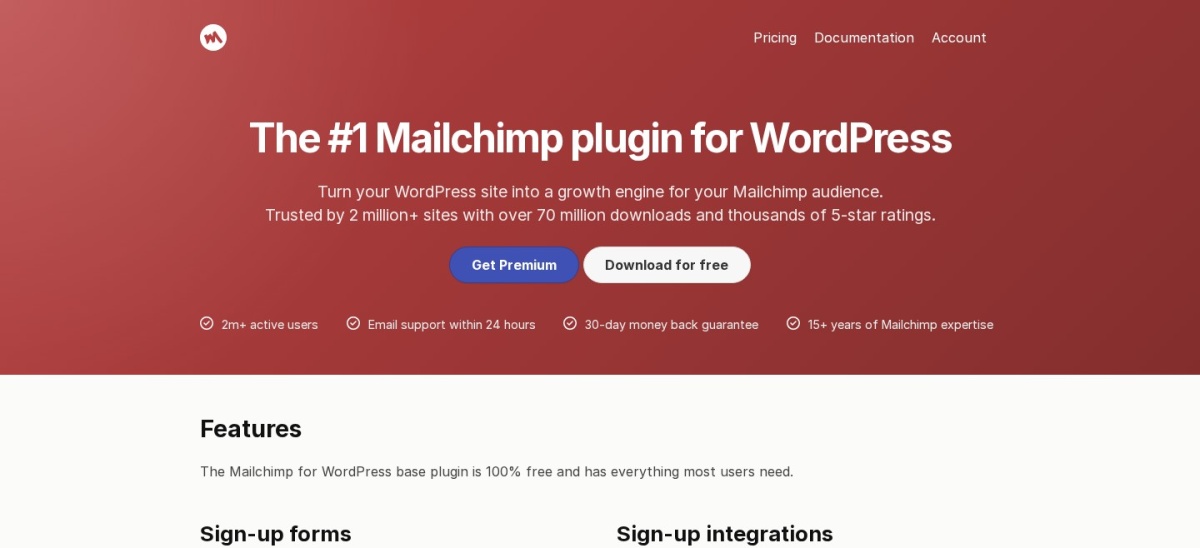
MC4WP: Mailchimp for WordPress is the plugin that connects your WordPress site to a Mailchimp account, with more than 1 million active installs and a 4.8 out of 5 rating from 1,499 reviews. The free plugin adds Mailchimp signup forms to posts, pages and widgets, and syncs new WordPress users to your list.
The trade off is that it is a bridge, not a CRM. There is no built-in automation or contact management: everything runs in Mailchimp, and Premium at $59 a year adds multiple forms, form styling, WooCommerce sync and email notifications. It suits sites already committed to Mailchimp.
4.6/5on WordPress.org (1,205 reviews, checked Nov 2026)
Paid from$69/yr
Best classic self-hosted newsletter
Free planYes, unlimited subscribers
Paid planEssential, $69
SendingYour SMTP or host
AutomationProfessional only
thenewsletterplugin.com
The Newsletter Plugin homepage, captured Nov 2026.
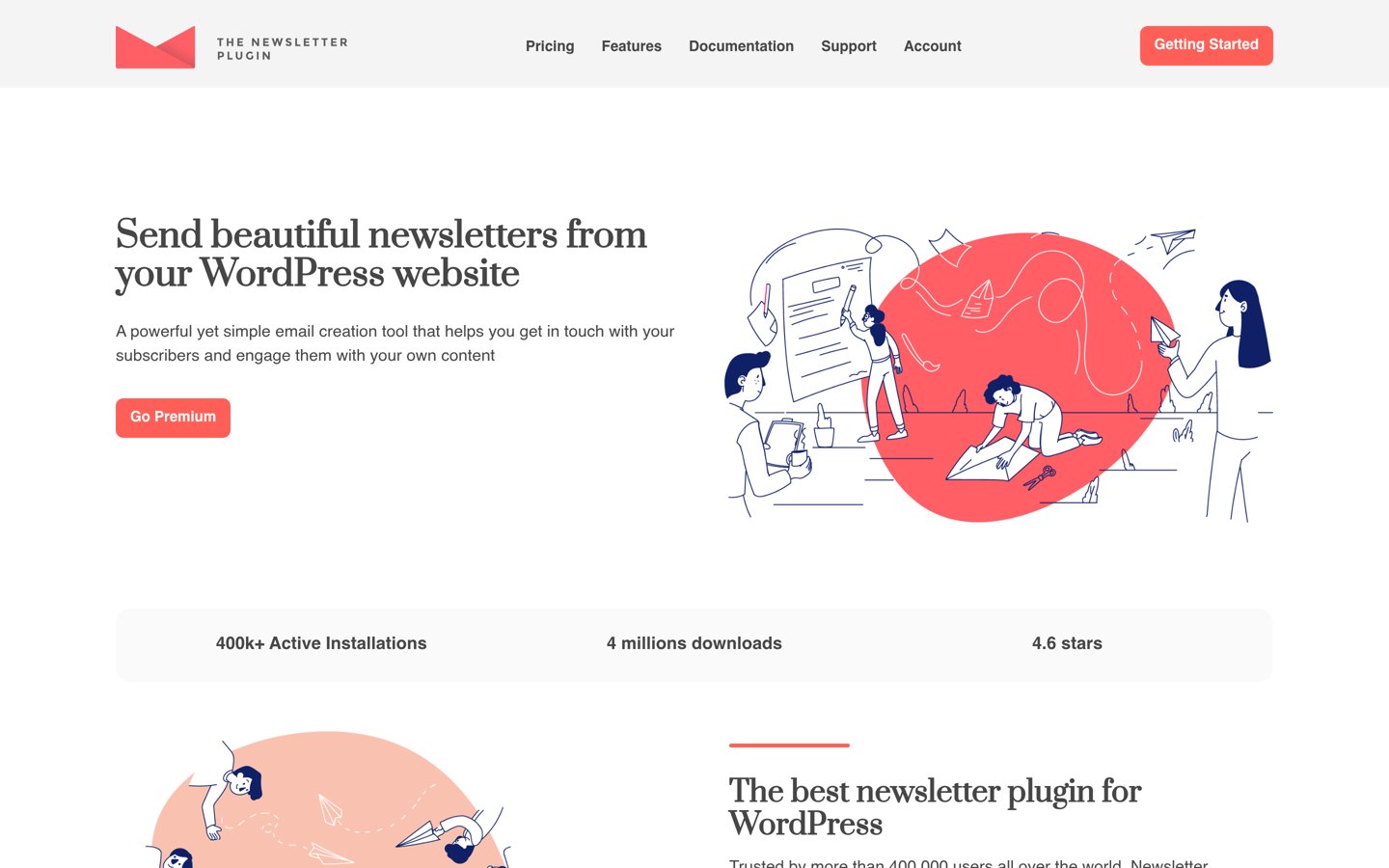
The Newsletter Plugin is a self-hosted newsletter tool with more than 200,000 active installs and a 4.6 out of 5 rating from 1,205 reviews. The free version places no cap on subscribers or newsletters and includes a drag-and-drop composer, subscription forms and basic reports, sending through your own server or SMTP.
The trade off is that you arrange delivery yourself. Essential costs $69 as a one-time payment with one year of support and updates, and automation, WooCommerce and delivery services such as Amazon SES need the Professional plan. It suits sites with large lists that want no per-subscriber bill.
4.8/5on WordPress.org (150 reviews, checked Nov 2026)
Paid from$240/yr
Best self-hosted CRM closest to FluentCRM
Free planYes, on WordPress.org
Paid planBasic, $240/yr
ContactsUnlimited, free
FunnelsFlow editor included
groundhogg.io
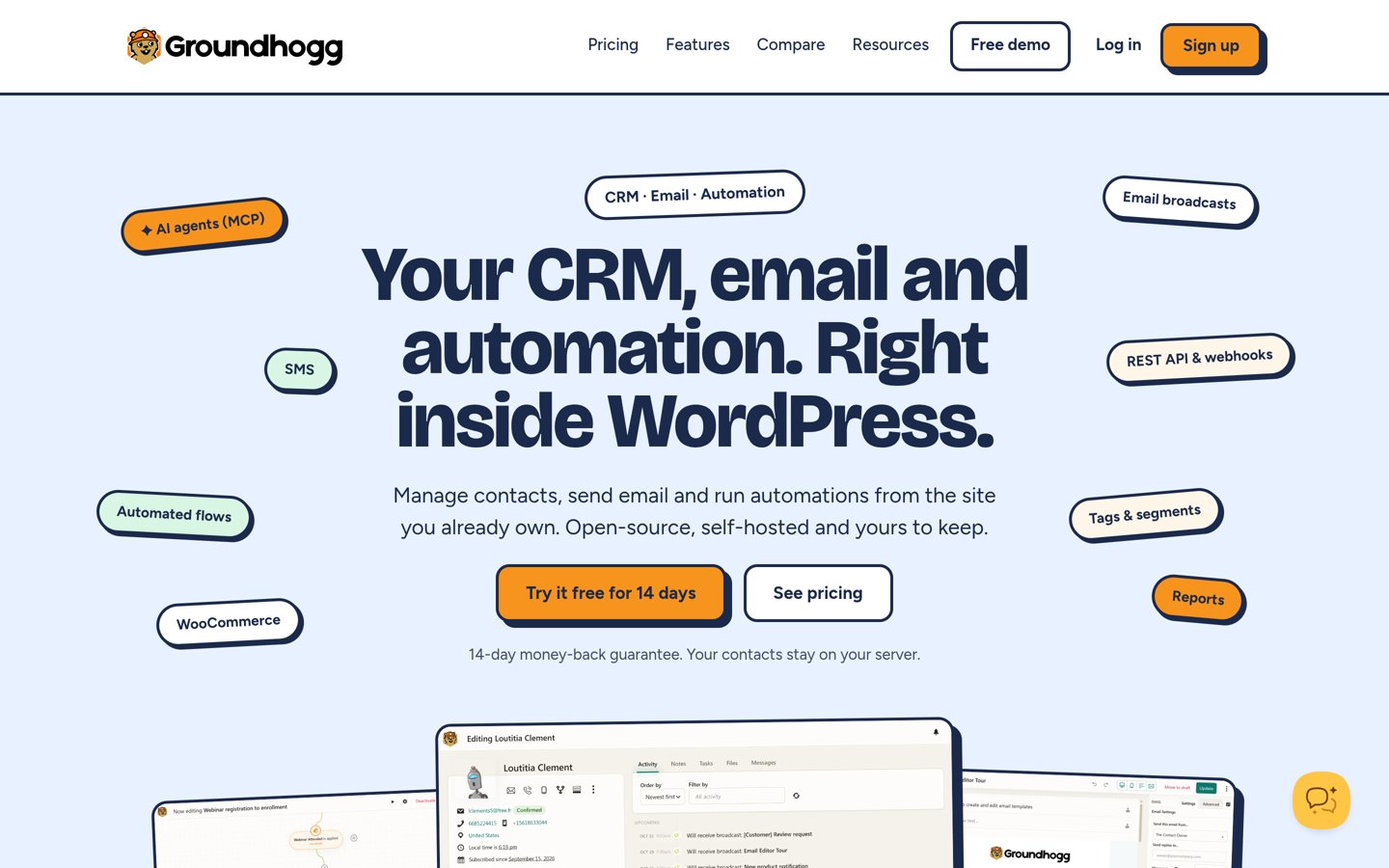
Groundhogg homepage, captured Nov 2026.
Groundhogg is an open-source CRM, email and automation plugin that runs entirely inside WordPress, like FluentCRM. The free plugin covers contacts, funnels and email campaigns with no limits on contacts, flows or emails, and your data stays on your own server.
The trade off is the small community and the price. Groundhogg has about 1,000 active installs and 150 WordPress.org reviews, and the cheapest paid plan, Basic, costs $240 a year, with integrations and add-ons on higher plans. It suits WordPress owners who want a self-hosted CRM and do not mind a smaller ecosystem.
Self-hosted tools keep your contacts in your own WordPress database. You pay for the plugin, not the list, and there is no per-subscriber bill, which is why large lists often stay with MailPoet, The Newsletter Plugin or Groundhogg.
Hosted tools take sending and deliverability off your hands. You get a managed dashboard, better analytics and support, but the bill grows with contacts or seats, and moving away means exporting everything.
If you run WooCommerce, check the integration before you choose. MailPoet handles store emails natively, Groundhogg adds WooCommerce integrations on higher plans, and hosted tools need a connector or an extra plan. See how Mailchimp compares with WordPress newsletter plugins for the hosted-versus-plugin trade-offs.
How we chose
We started from the email and CRM tools WordPress users actually switch to when they leave FluentCRM, then kept nine with a live product, a free plan or a trial, and a public price.
Prices come from each vendor's pricing page, checked on 22 November 2026. Ratings and install counts come from WordPress.org on the same day, except HubSpot, Brevo, MailerLite, Kit and ActiveCampaign, which are rated on G2. Where a vendor shows a sale, the list shows the regular price.
We left out tools with no public price and plugins not updated in the last 12 months. No vendor paid for a place, and we do not claim hands-on testing for this list.
How to choose a FluentCRM alternative
Start with where your contacts live, then match the plan to your list size.
Decide self-hosted or hosted. If your contacts must stay in WordPress, pick MailPoet, The Newsletter Plugin or Groundhogg. If you want managed sending, pick a hosted tool.
Count your subscribers. MailPoet's free plan stops at 500 subscribers and Kit's at 10,000. Brevo's free plan stores 100,000 contacts but only sends 300 emails a day.
Check automation is in your plan. MailerLite includes automations free, while Brevo and Kit charge extra for them. Do not assume the cheapest plan automates anything.
Try the free plan before you pay. Every tool here except ActiveCampaign has a free plan. Send a real campaign first, then check the renewal price for year two.
FAQ
What is the best FluentCRM alternative?
MailPoet is the best pick for most WordPress sites. It runs inside WordPress like FluentCRM, has more than 500,000 active installs, a 4.4 out of 5 rating, and a free plan for 500 subscribers with paid plans from $84 a year.
Is there a free alternative to FluentCRM?
Yes. MailPoet, HubSpot, Brevo, MailerLite, Kit, MC4WP, The Newsletter Plugin and Groundhogg all have free plans. MailerLite is the most generous for automation, since it includes automations free, while Kit's free plan covers up to 10,000 subscribers.
Can I move my contacts from FluentCRM?
Yes. Export your contacts from FluentCRM as a CSV file, then import them into the new tool. MailPoet, HubSpot, Brevo, MailerLite, Kit and ActiveCampaign all accept CSV imports, and MailPoet can also import directly from Mailchimp.
Which FluentCRM alternative is cheapest?
MC4WP has the cheapest paid plan at $59 a year for one site, and The Newsletter Plugin's Essential is a $69 one-time payment. Among hosted tools, Brevo's Starter at $97 a year is the cheapest, with 5,000 emails a month. MailPoet's Creator plan is $84 a year for 500 subscribers, so compare what each plan actually includes.
Is HubSpot a good FluentCRM alternative?
HubSpot is a good fit if you want a free CRM with sales tools, forms and live chat in one place. It is less good if you want everything inside WordPress, since it is a hosted platform, and real marketing automation needs the $800-a-month Professional plan.
Which alternative keeps my data in WordPress?
MailPoet, The Newsletter Plugin and Groundhogg all run inside WordPress and keep contacts in your own database. Groundhogg is the closest match to FluentCRM because it is a self-hosted CRM with automation, though it has a much smaller user base.