Deltek Cobra is the best earned value management software for contracts that require a compliant system, covering all 32 ANSI/EIA-748 guidelines. Primavera P6 is the scheduling standard it pairs with, and Microsoft Project is the cheapest starting point at $10 a user a month.
How we make this list: we compare pricing pages, product documentation and public user reviews, then re-check every price before each update. No product paid for a place. Disclosure.
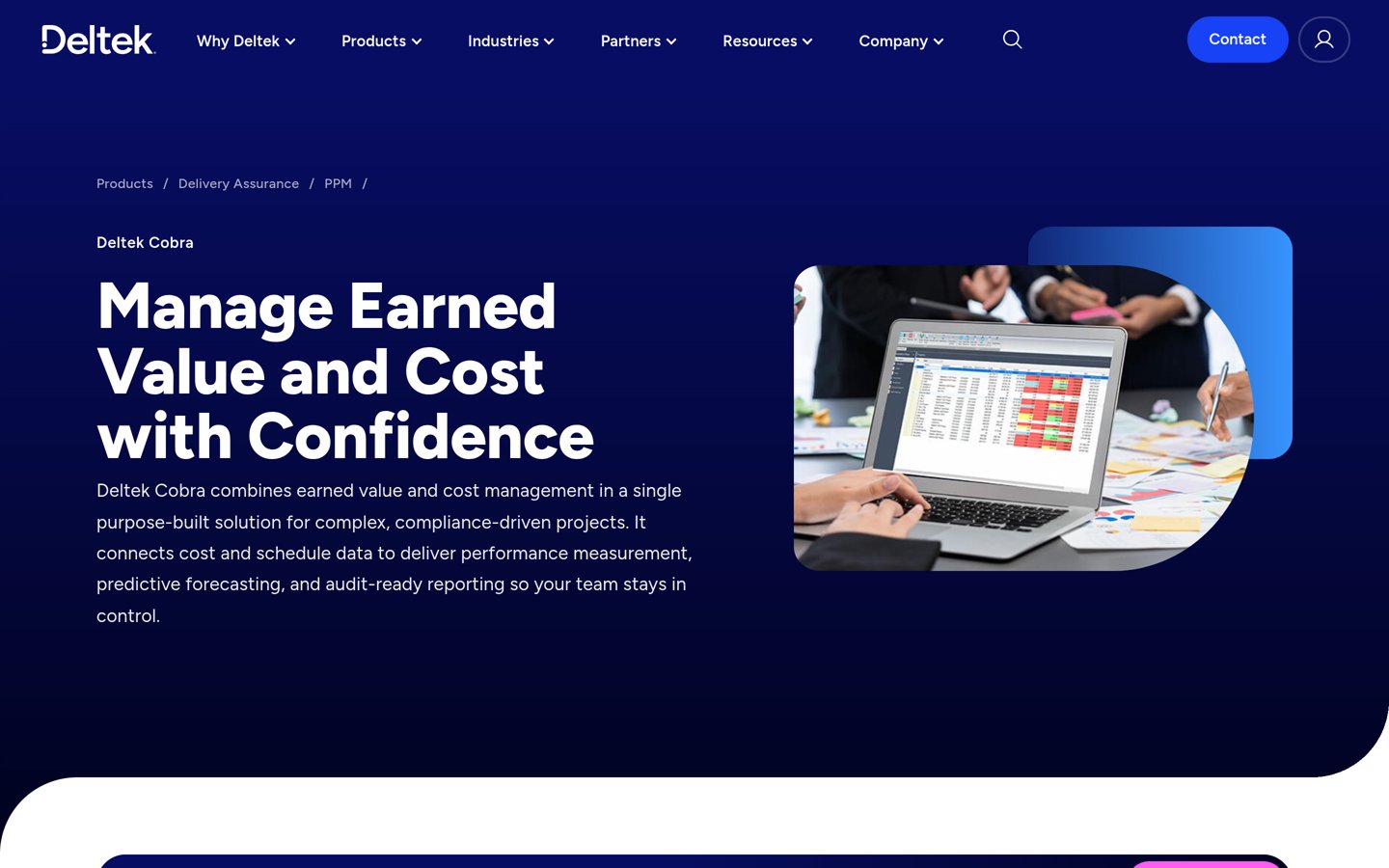
Deltek Cobra is the only purpose-built EVMS engine here, covering all 32 ANSI/EIA-748 guidelines.
Primavera P6 is the scheduling standard for large programs, with full ANSI/EIA-748 compliant earned value.
Microsoft Project is the cheapest published price at $10 a user a month, but real EVM needs Plan 3 at $30.
Almost every dedicated tool here is quote-only; only Microsoft Project and Smartsheet publish prices.
EcoSys is now Octave Sequence Enterprise and ARES PRISM is now Contruent, after 2026 rebrands.
What to look for in earned value management software
Earned value management compares planned value, earned value and actual cost against a baseline, so a project manager can see whether a project is ahead or behind on both schedule and budget.
The tools split into dedicated EVM engines such as Deltek Cobra, project controls platforms such as EcoSys and Contruent, and schedulers with EVM fields such as Primavera P6, Microsoft Project and Smartsheet.
Compliance decides the shortlist. A government or defence contract usually requires an ANSI/EIA-748 compliant system, which rules out the lighter tools no matter how cheap they are.
Deltek Cobra is the earned value management cost engine that defence, aerospace and government contractors standardise on. It covers all 32 ANSI/EIA-748 guidelines, with 11 earned value technique options, control account structures and DCMA surveillance readiness built in.
The trade off is cost and effort. Cobra is quote-based with high total cost of ownership, a 3 to 6 month enterprise implementation, and it needs trained EVMS administrators. It suits contractors whose contract requires a compliant earned value system.
Oracle Primavera P6 is the scheduling standard on large construction, engineering, energy and government programs, pairing critical path scheduling with native earned value in one system. A scheduler can compare planned value, earned value and actual cost without moving data between tools.
The trade off is that Oracle publishes no current price, and older list figures do not match current cloud terms, so budgeting needs a quote. It suits programs with thousands of activities where earned value is a formal deliverable.
Microsoft Project is the most accessible earned value tool in this list, at $10 per user a month for Plan 1 inside Microsoft 365. It covers task planning, dependencies, timelines and basic earned value metrics, and it is the default pick for teams already inside Microsoft 365.
The trade off is depth. Plan 1 alone is not enough for earned value work: baselines, critical path and full EVM need Plan 3 at $30 a user a month, and even then it is not ANSI/EIA-748 compliant. It suits non-regulated programs starting with earned value.
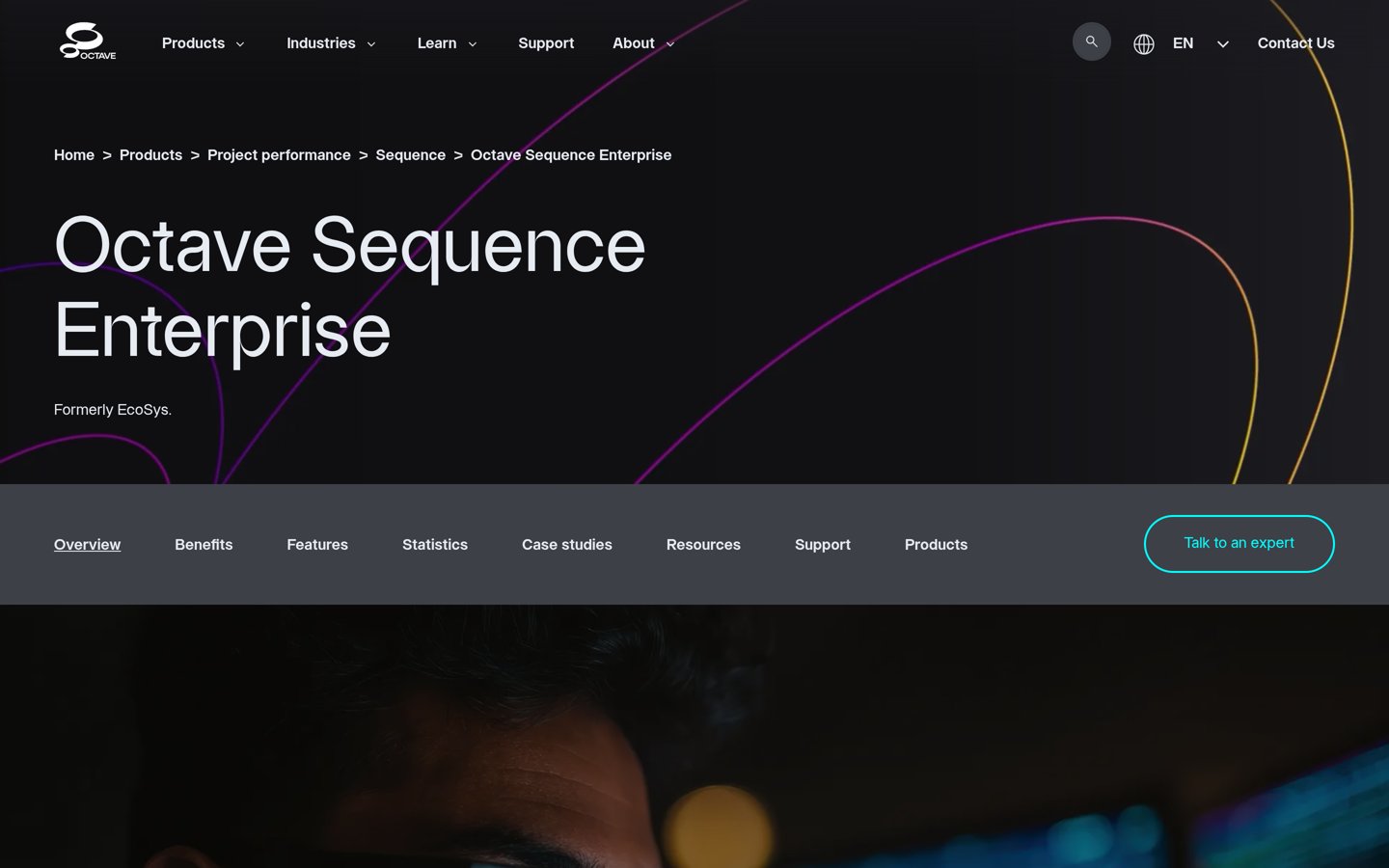
EcoSys is Hexagon's enterprise project controls platform, now operating as Octave Sequence Enterprise after the Hexagon spin-off, covering budgeting, forecasting, change management, portfolio reporting and earned value in one web platform. It suits enterprise capital project portfolios.
The trade off is the rename and the quote. The EcoSys name is now Octave Sequence Enterprise, which confuses buyers, and pricing is quote-only with enterprise implementation effort. It suits organisations managing large capital portfolios in one system.
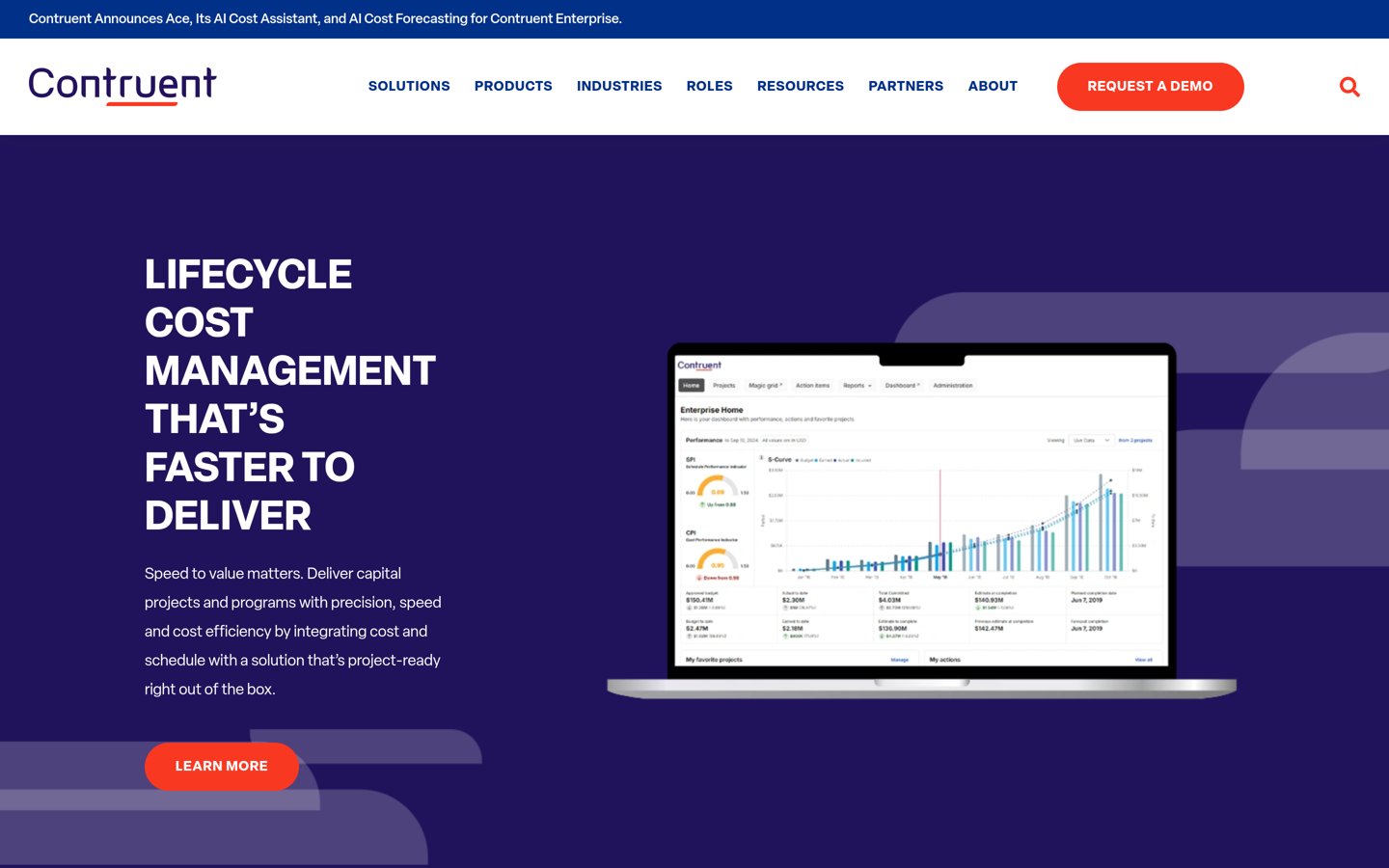
Contruent is lifecycle cost management software for complex capital projects across mining, oil and gas, transportation and infrastructure on six continents, formerly known as ARES PRISM. It pairs cost control with earned value reporting for megaproject teams.
The trade off is the small review base. Its 4.2 out of 5 on G2 rests on only 13 reviews, and pricing is quote-only with a fixed-fee implementation model under four months. It suits megaproject owners in infrastructure, energy and mining.
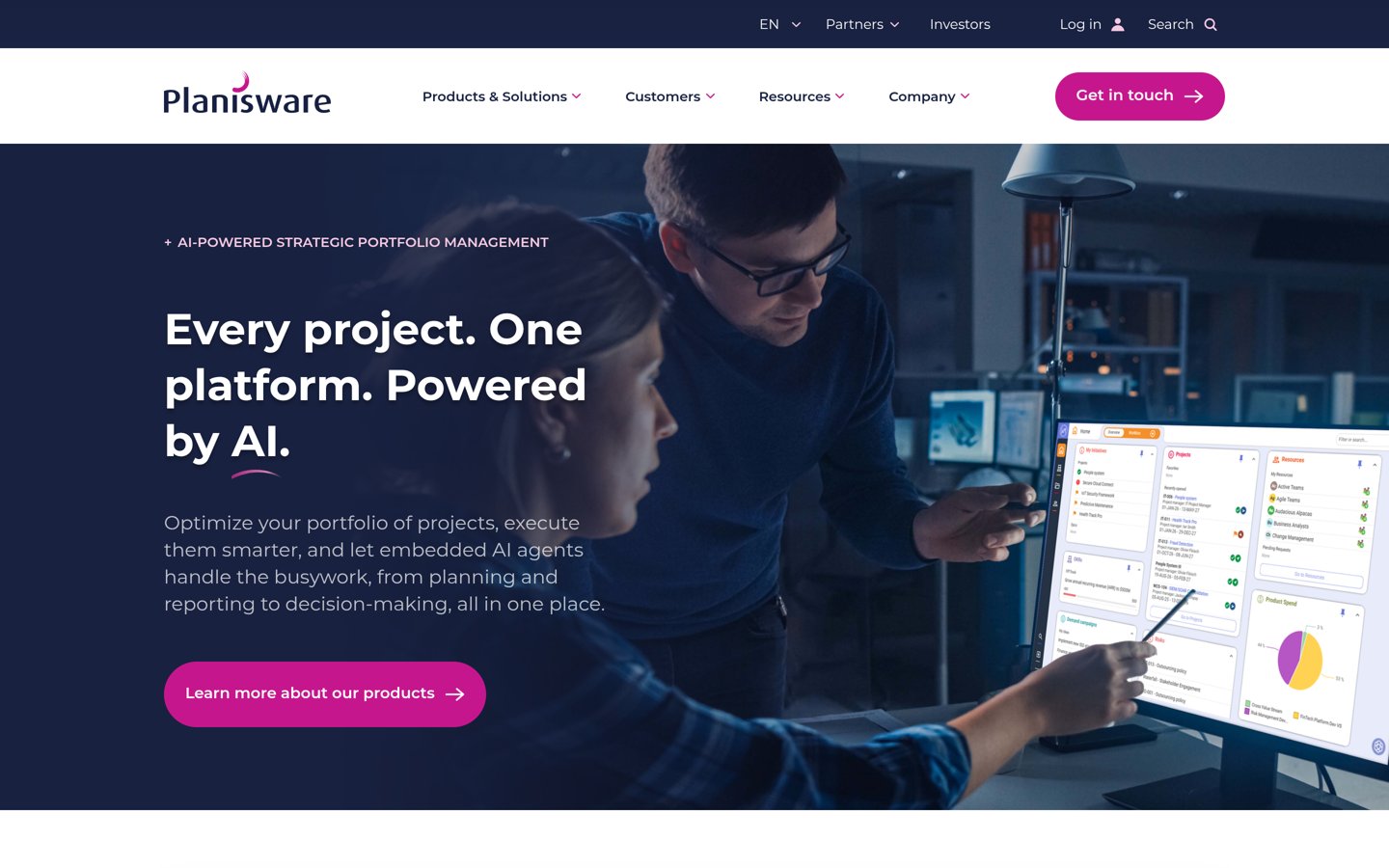
Planisware is a project portfolio management platform with earned value at portfolio level, used by large organisations to plan, track and report across many projects at once. It covers demand, capacity, cost and schedule in one system.
The trade off is that it is a portfolio platform first. Teams that need deep schedule-level earned value still pair it with a scheduler such as P6, and pricing is quote-only. It suits PMOs that report earned value across a portfolio.
Smartsheet is the budget entry point in this list, at $9 per member a month billed yearly for the Pro plan, with spreadsheet-style sheets, dashboards and reports that track cost and schedule against a baseline. It is the easiest tool here for a team that already thinks in spreadsheets.
The trade off is that Smartsheet stops at basics. Pro covers only 10 members, so a growing team moves to Business at $19 a member a month, and its earned value is tracking, not a compliant EVMS. It suits small PMOs starting with earned value.
Compliance first: ANSI/EIA-748 decides the shortlist
Earned value is not one feature. A formal EVMS follows 32 guidelines under ANSI/EIA-748, covering organisation, planning, accounting, analysis and revisions.
Deltek Cobra and Primavera P6 are built for that standard. Microsoft Project and Smartsheet track cost and schedule against a baseline, but they are not compliant systems.
If your contract names ANSI/EIA-748 or DCMA surveillance, start with Cobra and P6 and ignore the cheaper tools, however good their dashboards look.
How we chose
We started from the established tools in this category, then kept those with a verifiable rating on G2, Capterra or Trustpilot and a published price or a clear quote-only model.
Prices come from each vendor's pricing page or a published price list, checked on 25 November 2026. Ratings and review counts come from G2, Capterra or Trustpilot on the same day. Where a vendor shows a sale, the list shows the regular price.
We left out tools we could not verify a rating or a price for. No vendor paid for a place, and we do not claim hands-on testing for this list.
How to choose earned value management software
Start with the job the tool has to do every week, then check the price and the limits before you sign up.
List the features you need every week. Write down the three tasks the tool must handle, then check each shortlisted tool covers them on its entry plan.
Check the price on the vendor's own page. Compare the regular monthly or yearly price, not a first-year discount, and note any per-user, per-seat or per-gigabyte charge.
Read the limits on the cheapest plan. Caps on users, projects, products or data volume are the usual reason buyers upgrade within months.
Try the free plan or trial first. A short trial shows whether the interface fits your team before you commit to a yearly bill.
FAQ
What is the best earned value management software?
Deltek Cobra is the best earned value management software for contracts that require a compliant system. It covers all 32 ANSI/EIA-748 guidelines and is rated 4.5 out of 5 on G2. Primavera P6 is the scheduling standard it pairs with on large programs.
What is earned value management software?
Earned value management software tracks planned value, earned value and actual cost against a project baseline, then reports schedule and cost performance as CPI and SPI. It shows whether a project is ahead or behind on both time and money, in one set of numbers.
How much does earned value management software cost?
Most dedicated tools are quote-only, including Deltek Cobra, Primavera P6, EcoSys and Contruent. Microsoft Project publishes prices from $10 a user a month, and Smartsheet from $9 a member a month. Enterprise licences routinely run into five figures a year.
Does Microsoft Project do earned value management?
Yes, at a basic level. Microsoft Project tracks cost and schedule against a baseline, but real earned value work needs Plan 3 at $30 a user a month for baselines and critical path, and it is not ANSI/EIA-748 compliant, so it does not suit regulated contracts.
What is the difference between Deltek Cobra and Primavera P6?
Deltek Cobra is the cost engine: it manages the earned value system, budgets and compliance. Primavera P6 is the scheduler: it builds the critical path schedule that Cobra measures against. Most large programs run both together, with P6 feeding schedules into Cobra.
Is EcoSys the same as Octave Sequence Enterprise?
Yes. EcoSys, Hexagon's project controls platform, now operates as Octave Sequence Enterprise under the independent Octave brand after a Hexagon spin-off. ARES PRISM has also been renamed Contruent. Both rebrands happened in 2026, so older guides use the old names.
SaaS SEO and WordPress specialist with about 8 years of experience. Rakib compares WordPress plugins, themes, hosting and software using public pricing, documentation and user reviews. See how we rank.