EarMaster is the best ear training app for most musicians, with a full course covering intervals, chords, rhythm and sight-singing. Functional Ear Trainer and Earpeggio are the best free choices, and Perfect Ear suits players who want deep custom drills on a phone.
How we make this list: we compare pricing pages, product documentation and public user reviews, then re-check every price before each update. No product paid for a place. Disclosure.
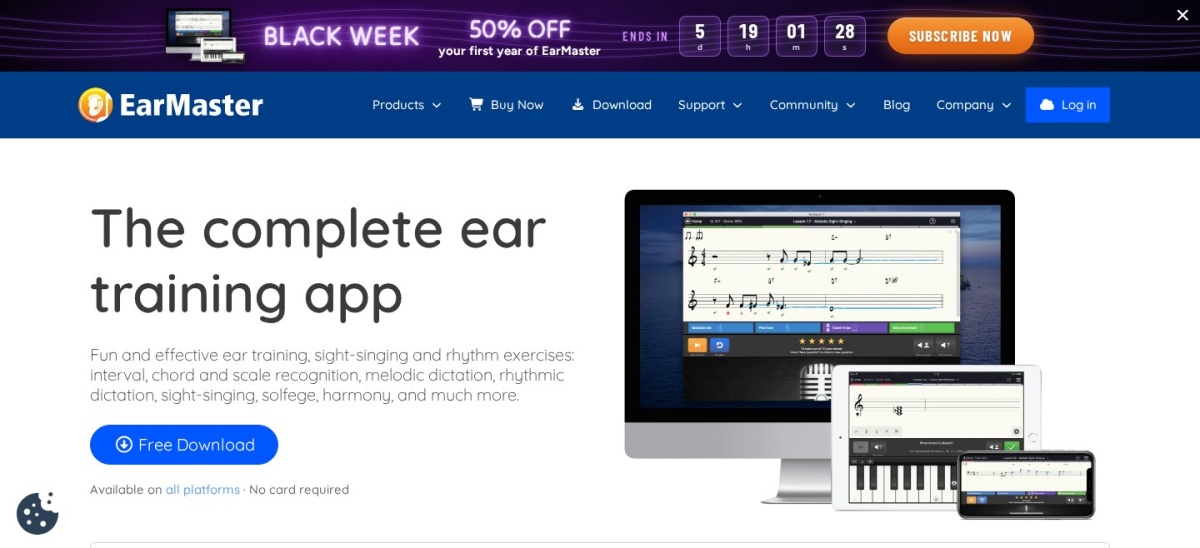
EarMaster is the most complete ear training app, with 4,000+ exercises and sight-singing scored by microphone.
Functional Ear Trainer and Earpeggio are the best free picks, both rated 4.9 stars on the App Store.
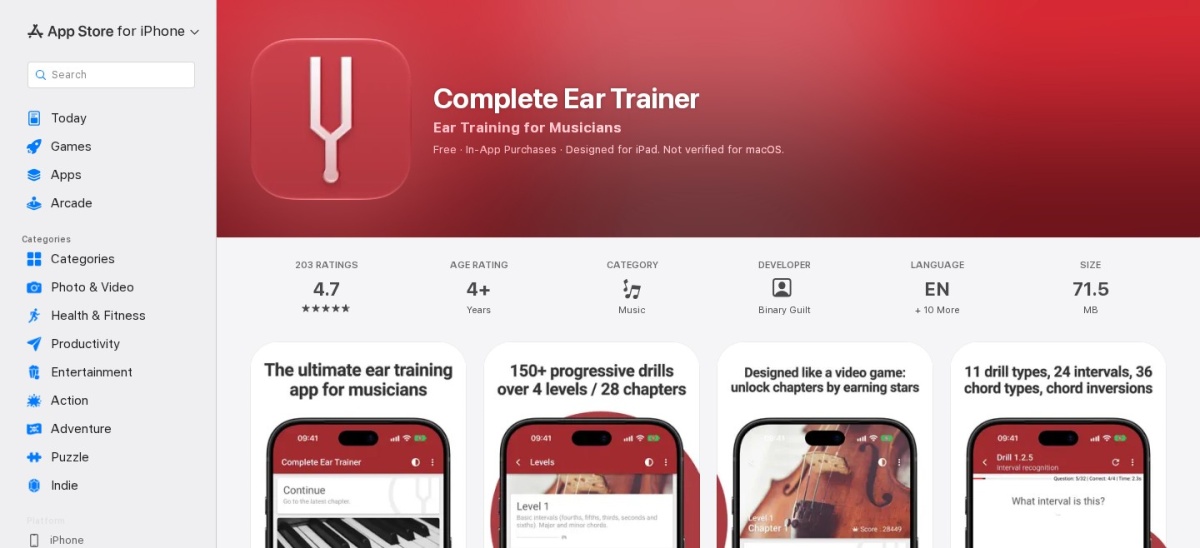
Complete Ear Trainer is the cleanest one-time buy: $6.99 opens 150+ graded drills.
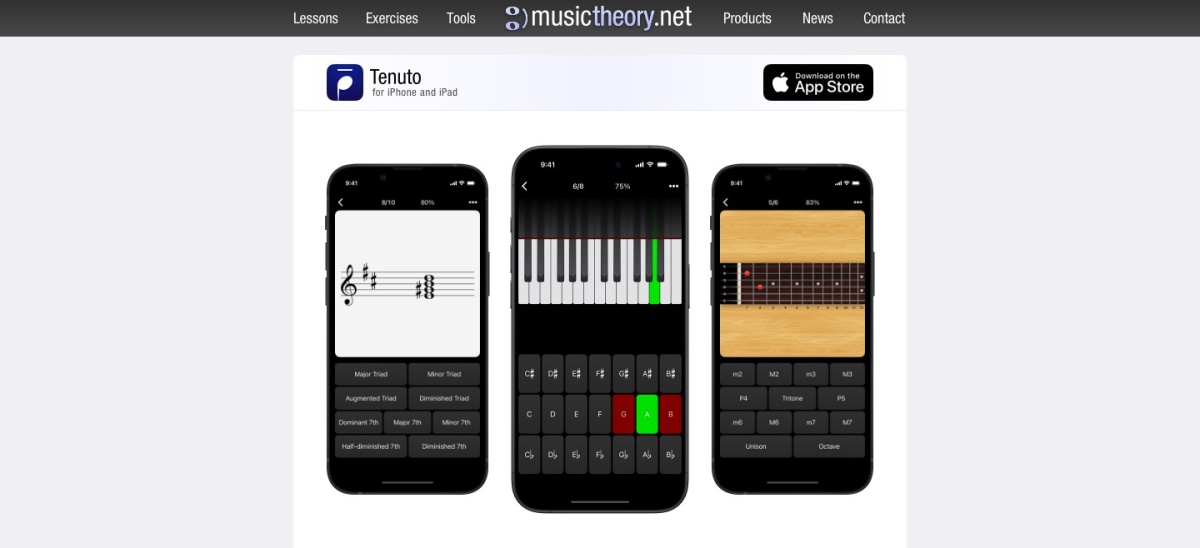
Tenuto costs $4.99 once and works fully offline on iPhone and iPad.
SingTrue is the cheapest way to fix pitch matching, but it has not been updated since 2016.
What an ear training app should cover
Ear training is the skill of hearing intervals, chords and melodies and naming them, and it underpins playing by ear, transcribing and singing in tune. Most apps drill the same core skills, but they differ in structure, platform and price.
A good app should cover intervals and chords at minimum, with a difficulty ramp that grows as you improve. Our guide to the best online learning platforms covers the wider world of structured online courses.
Free apps cover the basics well. Earpeggio and Functional Ear Trainer cost nothing and carry the highest App Store ratings in this list, so most players should start there before paying.
Paid apps make sense when you want a course, teacher tools or sight-singing. EarMaster is the only pick here with exam preparation and a teacher dashboard, which is why schools use it.
EarMaster is the closest thing to a full aural-skills course in an app, with more than 4,000 ready-made exercises across intervals, chords, scales, rhythm and sight-singing. The free version covers the first modules of the Beginner's Course, while the paid subscription opens every lesson and course on Windows, Mac, iOS and Android, with cloud sync between devices.
The trade off is price and complexity. At $43.80 a year the subscription costs more than the one-time apps here, and the wide course library can feel like a lot to navigate at first. It suits serious students, teachers and schools that want structured lessons, exam preparation and progress tracking in one place.
4.9/5on App Store (3,743 reviews, checked Nov 2026)
Paid from$19.99 (one-time)
Best for playing melodies by ear
MethodScale degrees in a key
Melodic dictationYes, in Plus
PlatformsiOS, Android, desktop
Paid planPlus, $19.99 once
miles.be
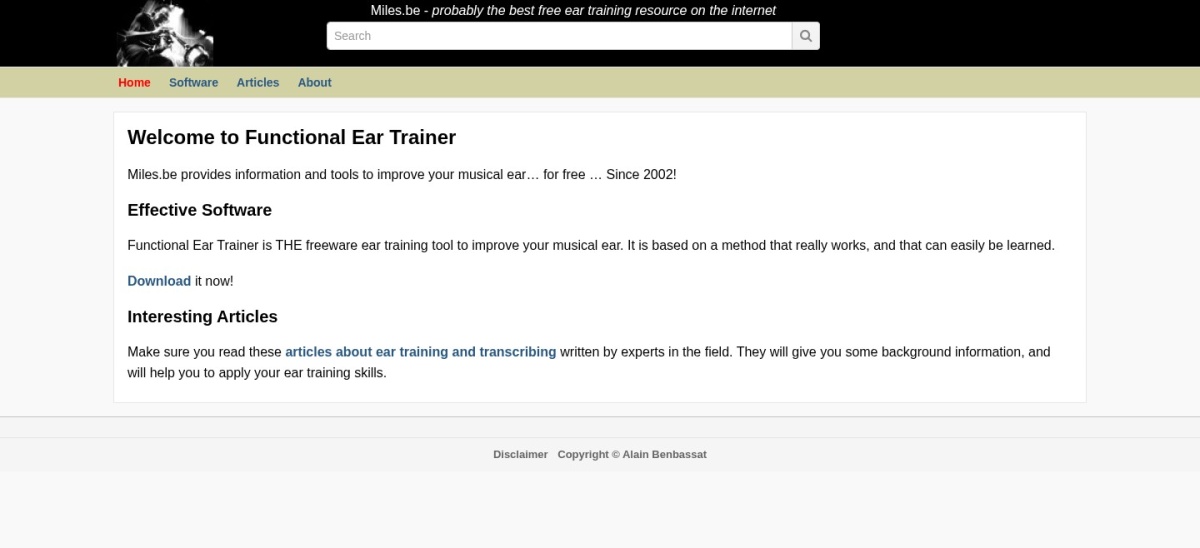
Functional Ear Trainer homepage, captured Nov 2026.
Functional Ear Trainer is a free app built around one idea: hearing each note by its role in a key, rather than as an isolated interval. After a cadence sets the key, you name the scale degree you hear, which trains the skill behind playing melodies by ear and transcribing tunes. It runs on iOS, Android and desktop, with daily reminders and result sharing.
The trade off is scope. It does not cover chords, rhythm or sight-singing, so players who want a broad course will need a second app. The Plus upgrade costs $19.99 once and adds melodic dictation and extra levels. It suits players whose main goal is to hear a tune and play it back by ear.
4.9/5on App Store (9,617 reviews, checked Nov 2026)
PriceFree
Best free ear training app
Exercises10 types, intervals to dictation
Difficulty rampGraded for beginners
PlatformsiPhone and iPad
Paid planNone, fully free
earpeggio.com
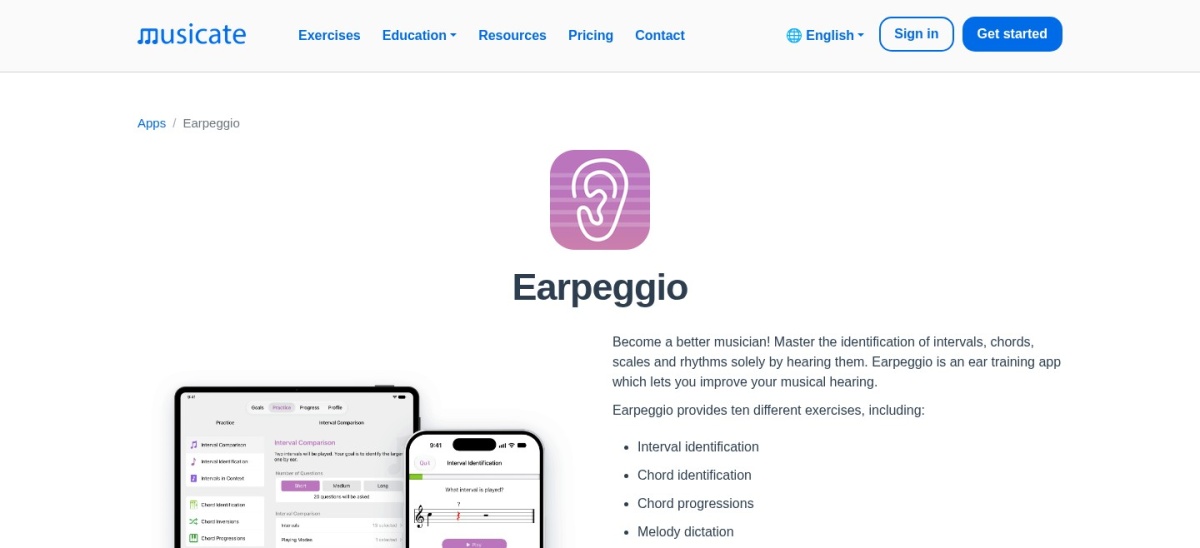
Earpeggio homepage, captured Nov 2026.
Earpeggio is a free iPhone and iPad app with ten exercise types covering intervals, chords, scales, chord progressions, and melody and rhythm dictation. The difficulty rises in small steps, which makes it easy for beginners to start, and the clean design keeps each drill quick to run. It has the highest rating count in this list, with more than 9,600 App Store ratings.
The trade off is platform and depth. It runs only on iPhone and iPad, and it has no structured course, teacher tools or sight-singing lessons. It suits iPhone owners who want a polished free trainer for daily interval and chord drills without paying for a subscription.
4.7/5on App Store (1,883 reviews, checked Nov 2026)
Paid from$4.99 (one-time)
Best for custom drills on a phone
Drill typesIntervals, chords, rhythm, singing
Custom exercisesYes, with editor
PlatformsiOS, Android, Mac
Paid planFull Exercise Pack, $4.99 once
perfectear.app
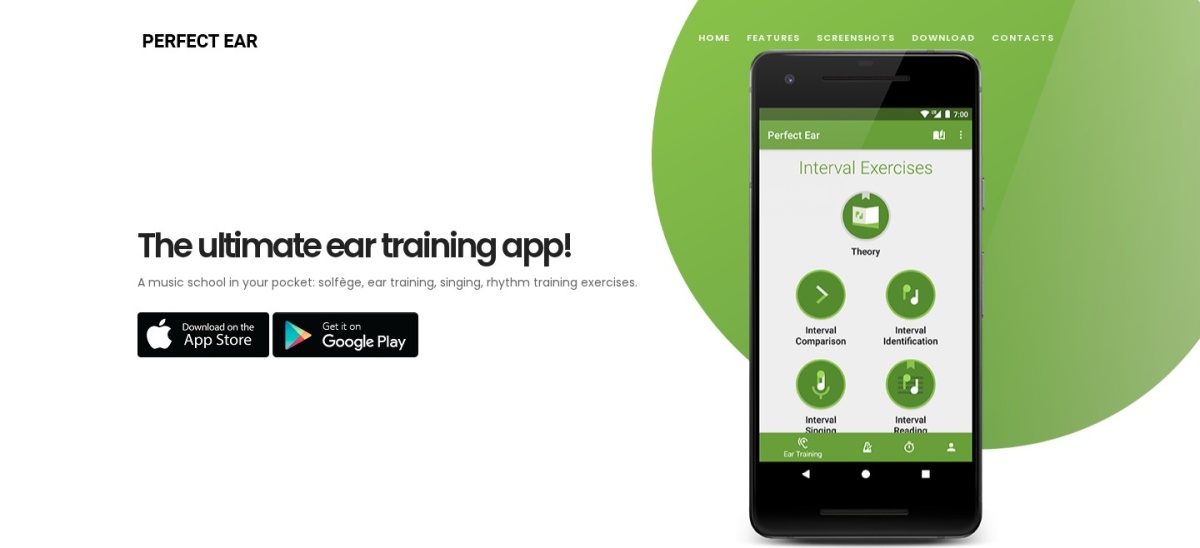
Perfect Ear homepage, captured Nov 2026.
Perfect Ear is a mobile app that packs intervals, chords, scales, rhythm, sight reading and singing drills into one free download. Its custom exercise editor lets you build your own drills, and note-singing exercises use the microphone to score your pitch. It runs on iOS, Android and Mac, with most content free to start.
The trade off is that the full set of exercises is split across small one-time purchases. The Full Exercise Pack costs $4.99 once, Premium costs $14.99, and single packs start at $0.99. It suits self-taught players who want deep custom drills on a phone without a subscription.
Complete Ear Trainer is a game-like course with more than 150 progressive drills across 4 levels and 28 chapters, covering intervals, chord types and inversions, scales, melodic dictation and chord progressions. You earn stars in each drill to open the next chapter, and an easy mode gives beginners more than 50 gentler drills. Sounds use recorded instruments, starting with a grand piano.
The trade off is polish and sync. The interface looks dated beside Earpeggio, and cloud sync with web access costs extra. The Full Version costs $6.99 once and opens every chapter on all your devices. It suits players who want a clear, level-by-level path for one low price.
Tenuto is the iPhone and iPad exercise app from the makers of musictheory.net, with 24 customisable drills for identifying and building notes, key signatures, intervals, scales and chords. It adds keyboard, fretboard and ear training drills, plus six calculators for accidentals, intervals, scales and chords. Everything works offline once installed.
The trade off is that there is no free version to try first, and it runs only on iPhone and iPad. It also focuses on drills rather than a guided course, so beginners get little direction on what to practise next. It suits theory students who already use musictheory.net and want its drills on a phone.
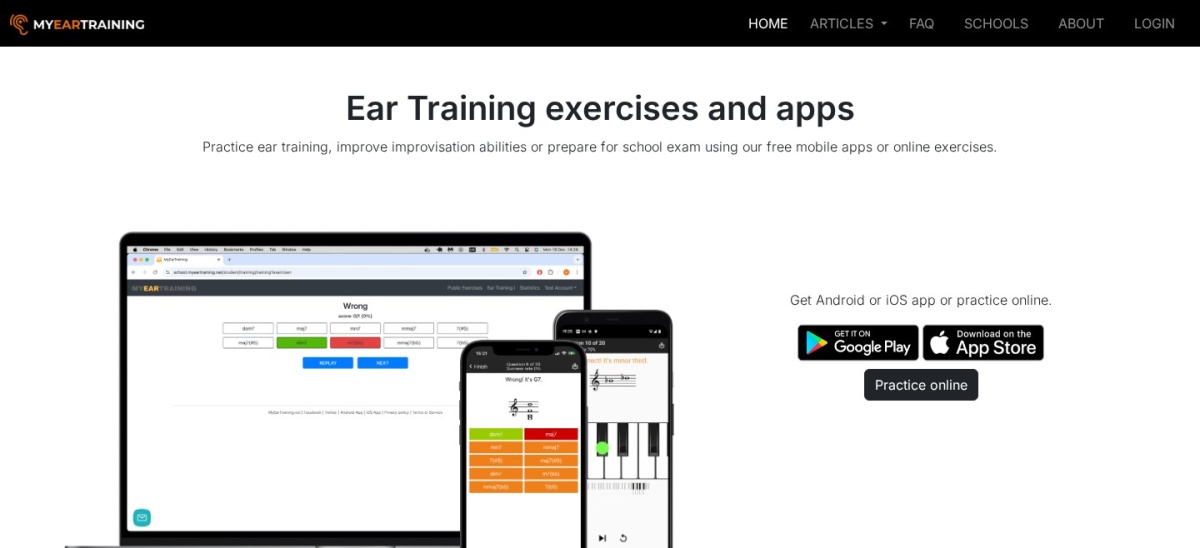
MyEarTraining is a phone app that covers more ground than most rivals, with over 100 aural exercises spanning intervals, chords, scales, melodies, inversions, chord progressions, solfege and rhythm. You can create custom exercises, follow your progress with statistics, and teachers can assign exercises and watch student progress. It runs on iOS and Android in English, German and Slovak.
The trade off is that the free version is limited, and the full set needs the Premium Upgrade at $12.99 once. The app is also less polished than the top picks here, with a smaller rating base of just over 250 App Store ratings. It suits learners and teachers who want rhythm and solfege beside standard ear drills.
4.2/5on App Store (1,332 reviews, checked Nov 2026)
Paid from$7.99 (one-time)
Best for singing back what you hear
Exercises30+ mic-based drills
Pitch matchingYes, with live feedback
PlatformsiPhone and iPad
Paid planAll Access Pass, $7.99 once
musical-u.com
SingTrue homepage, captured Nov 2026.
SingTrue is a microphone-first app that trains you to sing back the notes you hear, with more than 30 exercises that analyse your voice and give live feedback on pitch. It is built for people who struggle to match pitch, starting with simple tone-matching drills and building from there. The free download covers the first exercises, and the All Access Pass costs $7.99 once.
The trade off is age and scope. The app has not been updated since 2016, and it covers pitch matching only, with no chord, rhythm or theory drills. It suits beginners who want a cheap way to fix pitch problems before moving on to a fuller ear training app.
Free apps cover intervals, chords and basic dictation well. Earpeggio, Functional Ear Trainer and the free tiers of Perfect Ear and Complete Ear Trainer give most players months of practice at no cost.
Paid plans add structure and scoring. EarMaster adds courses, sight-singing and teacher tools, while one-time unlocks open full drill libraries for $4.99 to $19.99.
Start free, then pay only for the skill a free app cannot train. If you sing, pay for microphone scoring; if you teach, pay for assignments and progress tracking.
How we chose
We started from the ear training apps most often recommended in 2026 roundups, then kept those with a verifiable App Store rating and a live download. Apps with no public rating, such as ToneGym, were left out.
Prices come from each vendor's pricing page or US App Store listing, checked on 25 November 2026. Ratings and rating counts come from the US App Store on the same day. Where a vendor shows a sale, the list shows the regular price.
We left out apps not updated in years unless they still fill a clear gap, and we note that gap where it applies. No vendor paid for a place, and we do not claim hands-on testing for this list.
How to choose an ear training app
Start with your goal, then match it to the app that trains that skill.
Name the skill you want. Playing by ear, singing in tune and exam preparation need different drills. Pick the app that trains your goal first.
Start with a free app. Earpeggio or Functional Ear Trainer will show whether daily drills suit you before you pay for a course.
Check your platform. Tenuto, Earpeggio and SingTrue run only on Apple devices, while EarMaster and Complete Ear Trainer cover desktop too.
Pay once before you subscribe. One-time unlocks from $4.99 to $19.99 open full drill libraries. Subscribe only if you want courses, sight-singing or teacher tools.
FAQ
What is the best ear training app?
EarMaster is the best ear training app for most musicians. It covers intervals, chords, scales, rhythm and sight-singing in one course with more than 4,000 exercises, and it is rated 4.6 stars on the App Store. A subscription costs $43.80 a year, with a free version to start.
What is the best free ear training app?
Earpeggio is the best fully free ear training app, with ten exercise types and a 4.9-star App Store rating from more than 9,600 ratings. Functional Ear Trainer is the best free choice for playing melodies by ear, with a 4.9-star rating of its own. Both run on iPhone, and Functional Ear Trainer also runs on Android.
Can ear training apps help you sing in tune?
Yes, if the app listens. SingTrue and EarMaster use the microphone to score your sung pitch, which trains the link between hearing a note and producing it. Apps that only ask you to tap an answer cannot check your voice, so pick a microphone-based app for singing goals.
How much should an ear training app cost?
Most players need nothing: the best free apps cover intervals and chords well. One-time unlocks cost $4.99 to $19.99 and open full drill libraries. Subscriptions start at $43.80 a year for EarMaster, which adds courses, sight-singing and teacher tools.
Do ear training apps work for beginners?
Yes. Most apps start with simple interval drills and raise the difficulty as you answer correctly. Complete Ear Trainer adds an easy mode with more than 50 gentler drills, and Functional Ear Trainer needs only ten minutes a day to start its method.
Which ear training app is best for music exams?
EarMaster is the best choice for exams. It includes courses for ABRSM aural tests and RCM Voice, with sight-singing and rhythm reading beside ear drills. Teachers can set assignments and track results, which is why schools and conservatories use it.
SaaS SEO and WordPress specialist with about 8 years of experience. Rakib compares WordPress plugins, themes, hosting and software using public pricing, documentation and user reviews. See how we rank.