Best Digital Risk Protection Platforms in 2026: 7 Tools Compared
WLWPLegible EditorsLast verified 23 Nov 2026How we rank10 min read
★ Short answer
ZeroFox is the best digital risk protection platform for most security teams, watching social media, domains, the deep and dark web, app stores and executive profiles from one console, rated 4.4/5 on G2. Pick BrandShield for human-verified takedowns and Red Points for counterfeit enforcement at scale.
How we make this list: we compare pricing pages, product documentation and public user reviews, then re-check every price before each update. No product paid for a place. Disclosure.
ZeroFox covers the broadest surface here: social, domains, deep and dark web, app stores and executive profiles, rated 4.4/5 on G2 from 170 reviews.
Red Points has the highest G2 rating here at 4.9/5 from 71 reviews, with unlimited takedowns for counterfeit enforcement.
BrandShield pairs AI detection with human-verified takedowns and was ranked the number one Leader in G2's Fall 2025 Brand Protection category.
Recorded Future adds the deepest intelligence, with an Intelligence Graph across 1.2 million sources and 26 billion entities.
Every platform here is quote-based, so expect a sales cycle and ask about takedown SLAs before you commit.
What a digital risk protection platform actually does
Digital risk protection platforms watch the internet outside your network for threats to your brand: phishing sites, fake social profiles, lookalike domains, counterfeit listings and leaked credentials.
When they find a threat, they take it down. Some do it with automation and APIs, others with analyst teams who file the takedown by hand. Speed and coverage are what separate the good from the average.
The market splits three ways. Broad platforms such as ZeroFox cover every surface. Brand specialists such as BrandShield and Red Points focus on counterfeits and marketplaces. Intelligence platforms such as Recorded Future add the actor and campaign behind the alert.
Every platform here is quote-based enterprise software, so budget for a sales cycle. Our guide to the best AI governance platforms covers the wider governance side of external risk.
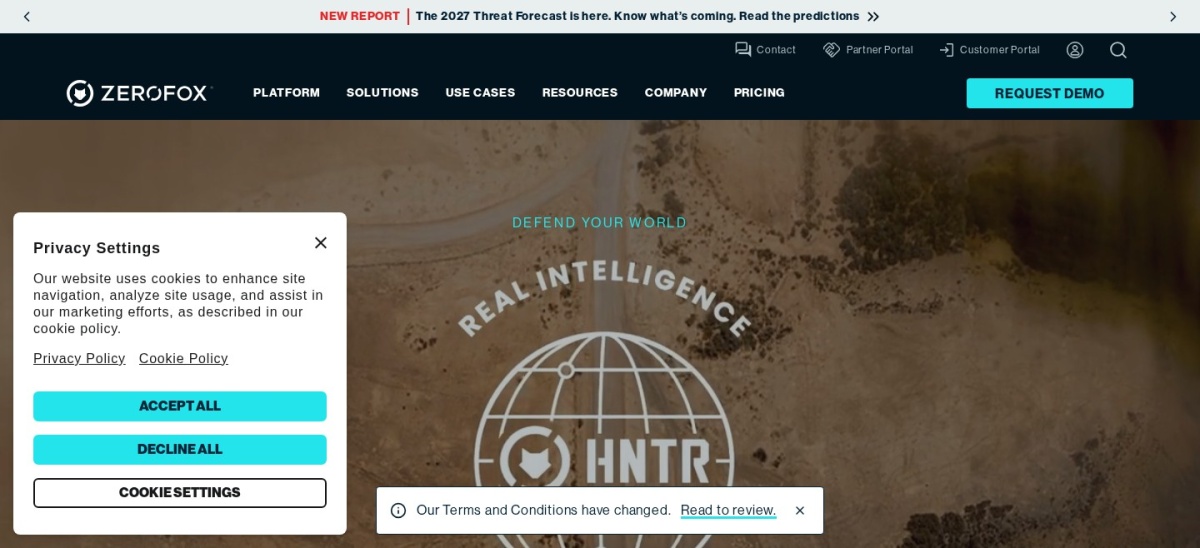
ZeroFox is the broadest platform in this list: it watches social media, domains, the deep and dark web, app stores and executive profiles from one console, and pairs automated detection with analyst-run takedowns.
The trade off is metering. Takedown caps per plan deserve a close look, and pricing is quote-only. It suits mid-market and enterprise security teams that need the broadest external threat coverage in one platform.
BrandShield pairs AI detection with a dedicated threat-hunting team that checks flagged threats before escalation. It covers websites, 100+ marketplaces, 15+ social and ad platforms, mobile apps and the dark web, and reports a 98% takedown success rate.
The trade off is price. BrandShield uses custom quotes, with managed anti-phishing listed at $22,000 a year on AWS Marketplace. It suits consumer and retail brands that need human-verified takedowns across phishing, counterfeits and social impersonation.
Bolster is an AI-driven digital risk protection platform built around detection precision and speed. It scans for lookalike domains, typosquatting, fake social profiles and phishing infrastructure, and says 75% of its takedowns happen within minutes through automated APIs.
The trade off is evidence. Bolster's G2 rating is reported as 4.7 from 46 reviews in one guide, 4.6 in its own blog and 4.5 in another, so treat the score with care. It suits security teams that need takedowns in hours, not days.
Recorded Future is the largest threat intelligence company in the market, built around an Intelligence Graph that correlates over 1.2 million sources and 26 billion entities. In 2026 it launched a dedicated Digital Risk Protection solution with an AI Triage Agent that verdicts detections.
The trade off is cost. Pricing is quote-only and modular, and third-party buyer data puts a single module at $40,000 to $60,000 a year. It suits enterprise security teams that already buy threat intelligence and want DRP on the same platform.
Red Points is built for the counterfeit fight. Its platform detects fake listings across marketplaces and the web, with automated enforcement and AI-powered detection plus human validation, and unlimited takedowns with no per-incident metering.
The trade off is price. Red Points uses custom quotes, and reviewers note pricing is on the higher side, though justified by automation. It suits brands losing revenue to counterfeits, piracy and marketplace infringements.
Netcraft is a long-established anti-phishing and domain takedown specialist, running phishing takedowns for more than two decades. It says it takes down about a third of the world's phishing attacks, and blocks phishing sites through its feeds while takedowns run.
The trade off is focus. Netcraft is phishing-first, so brands needing marketplace or social enforcement will want a broader platform beside it. It suits banks and brands hit hardest by phishing.
Doppel is a recent, AI-first entrant built for social engineering and brand abuse defense. Founded in 2022, it sweeps social platforms, domains and messaging apps for fraudulent accounts and sites, and stitches related activity into attacker campaigns rather than firing off disconnected alerts.
The trade off is youth. Doppel is newer than ZeroFox or Netcraft, so its track record is shorter, though reviewers praise its fast support and low false-alarm rate. It suits teams facing AI-driven impersonation on social channels.
Automation vs analysts: how takedowns actually happen
Takedown speed is the number that matters most, and vendors measure it differently. Bolster says 75% of its takedowns happen within minutes through automated APIs, while Netcraft cites a 33-minute median for phishing.
Automation is fastest for clear-cut phishing domains, where an API call to a host or registrar removes the site. Analysts are better for counterfeits and impersonation, where a human must verify the infringement before filing.
Ask every vendor who files the takedown and in whose name, and whether takedowns are capped per plan. ZeroFox caps takedowns on some plans, while Red Points offers unlimited takedowns.
For banks and regulated teams, a fully managed service such as Fortra Brand Protection may be worth the premium, since analysts run the whole operation.
How we chose
We started from the risk protection platforms named most often in 2026 buying guides, then kept those with a verifiable G2 rating and a live product.
Prices and ratings come from vendor sites and G2, checked on 23 November 2026. All seven platforms use custom quotes, so the list shows Custom where no price could be confirmed.
We left out SOCRadar because it has no verifiable G2, Capterra or Trustpilot rating, even though it is the only tool here with published pricing. No vendor paid for a place, and we do not claim hands-on testing for this list.
How to choose a digital risk protection platform
Start with the threats you actually face, then check takedown speed and caps.
List the threats you actually face. Phishing, counterfeits, impersonation and leaked credentials each point to different strengths. A bank needs phishing speed, a retailer needs marketplace enforcement.
Ask for median takedown times by channel. A fast domain takedown means little if social impersonation takes days. Get the numbers in writing.
Check takedown caps and who files them. Some plans cap takedowns per month. Confirm whether the vendor files in your name or theirs.
Run a trial on your own brand. Ask for a short pilot that hunts live threats against your domains and handles, then judge the noise level yourself.
FAQ
What is the best digital risk protection platform?
ZeroFox is the best all-round pick, with the broadest external threat coverage in one platform. BrandShield is the best choice for human-verified takedowns, and Red Points is the strongest pick for counterfeit enforcement at scale.
How much does digital risk protection cost?
All seven platforms use custom quotes, so there is no public price to compare. Third-party buyer data puts a single Recorded Future module at $40,000 to $60,000 a year, and BrandShield lists managed anti-phishing at $22,000 a year on AWS Marketplace.
What is the difference between DRP and threat intelligence?
Threat intelligence tells you who the attacker is and what they plan. Digital risk protection adds detection and takedown of the actual phishing sites, fake profiles and counterfeit listings aimed at your brand.
How fast are takedowns?
It varies. Bolster says 75% of its takedowns happen within minutes, and Netcraft cites a 33-minute median for phishing. Ask each vendor for their median takedown time by channel before you sign.
Do these platforms protect executives too?
Some do. ZeroFox and Doppel both cover executive protection, watching for impersonation of named leaders on social media and in messaging apps, and flagging fake profiles before they reach customers or staff.
Can small teams afford digital risk protection?
Mostly not at enterprise prices. SOCRadar is the most accessible entry point, with published pricing from $600 a month and a free plan, though it was left out of this list because it has no verifiable G2 rating.