Atlan is the best data lineage software for most teams, with automated column-level lineage across Snowflake, Databricks and dbt. Pick Collibra for regulated governance, or Secoda for published pricing from $99 a month with a free plan.
How we make this list: we compare pricing pages, product documentation and public user reviews, then re-check every price before each update. No product paid for a place. Disclosure.
Atlan is the best lineage pick for modern stacks: automated column-level lineage, active metadata and a 4.5 out of 5 G2 rating from 135 reviews.
Collibra is the governance-first pick for regulated teams, but it publishes no price and implementation takes about six months.
Secoda and Select Star are the only tools here with published prices, at $99 and $270 a month, and both offer a free plan.
Monte Carlo ties lineage to incident response, so a broken pipeline shows its blast radius instead of just a diagram.
Microsoft Purview is the pick for Azure shops, with governance at $0.50 per governed asset a month.
What to look for in data lineage software
Data lineage traces a field from its source, through every transformation, to the dashboard or report that shows it. When a number looks wrong, lineage tells you where it came from and what else it affects.
Column-level lineage is the standard that matters. Table-level lineage shows that a table feeds a report; column-level lineage shows exactly which field became which column, and that is what auditors and incident response need.
Most enterprise lineage tools are quote-only. Collibra, Alation, Atlan and Informatica publish no list price, so budget for a sales conversation and for implementation services. Our guide to database software covers the warehouses these tools trace.
Free tiers are rare in this category. Secoda and Select Star both offer a free plan, while the enterprise suites start with a demo and a quote.
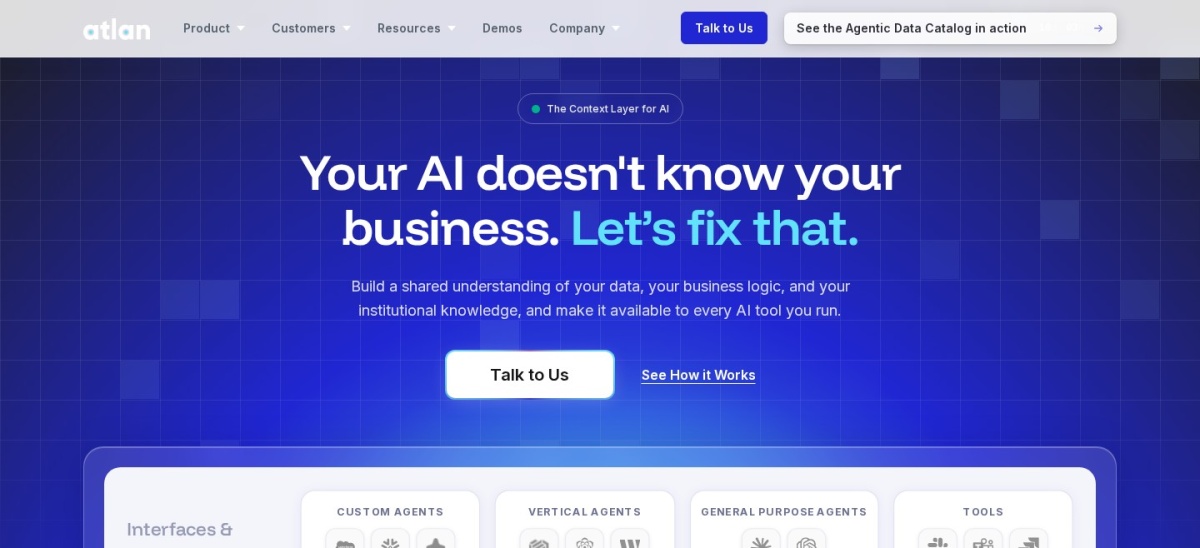
Atlan is a cloud-native catalog built around active metadata, which syncs continuously with live systems and updates lineage as pipelines change. It connects to Snowflake, Databricks, dbt, Tableau, Looker and Power BI, and renders column-level lineage analysts can follow without a ticket.
The trade off is price transparency. Atlan names its tiers but publishes no rates, and add-on modules for AI assistance and query-log processing stack up fast. It suits mid-size to enterprise teams on the modern data stack that want fast time to value.
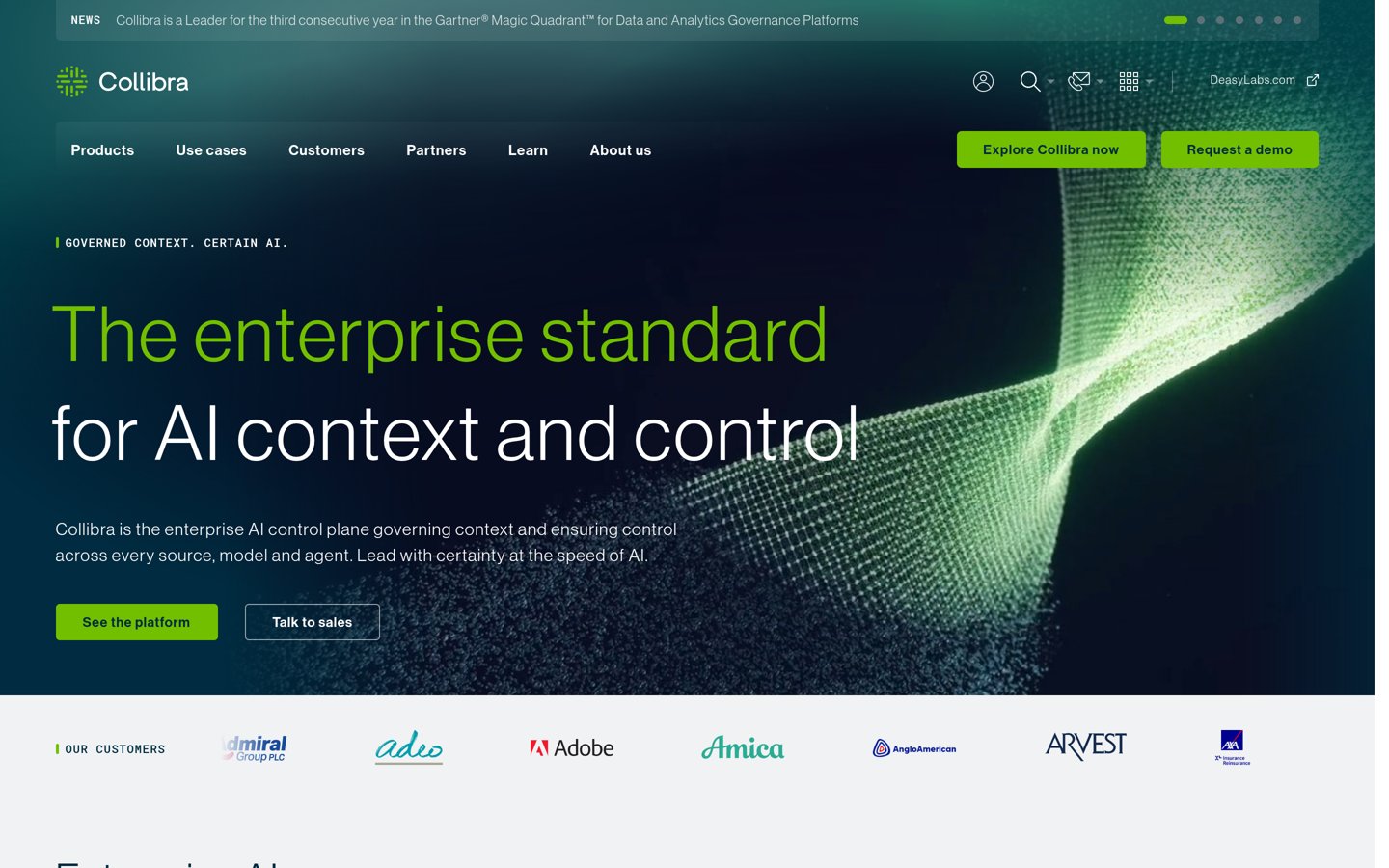
Collibra is a governance-first platform that combines a data catalog, business glossary, lineage, data quality and AI governance in one system. Stewardship runs through configurable multi-step approvals, and lineage links every field to glossary terms, policies and quality rules.
The trade off is cost and time. Collibra publishes no price, marketplace listings have shown $170,000 for a 12-month subscription, and implementation typically takes about six months. It suits banks, insurers and healthcare teams that must prove how every number was produced.
Alation is a data intelligence platform that combines a searchable catalog, automated lineage and AI-assisted search across connected sources. It reads query logs to see which tables people actually use, then ranks search results and suggests experts based on that behaviour.
The trade off is the sales process. Alation lists no price, and rollout often runs three to nine months with planning and services. It suits large teams that want analysts to find trusted tables fast without filing tickets.
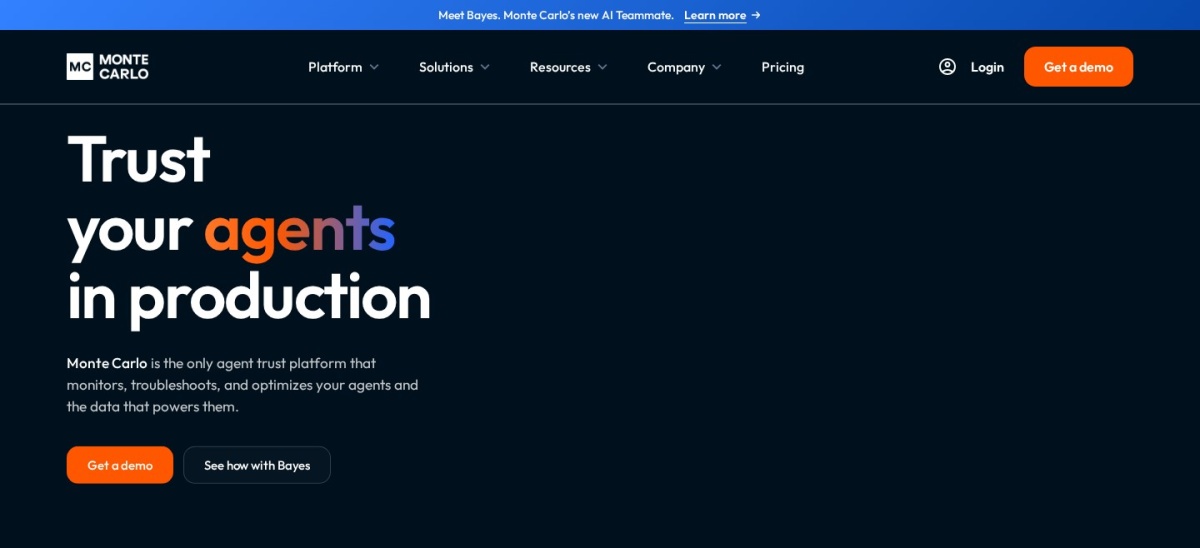
Monte Carlo is a data observability platform that ties lineage to incident response. When a pipeline breaks, you see the blast radius across tables, fields and dashboards, and ML monitors watch freshness, volume, schema, distribution and lineage.
The trade off is that it is observability first, not a catalog. It monitors data health deeply but offers less glossary and stewardship depth than Collibra or Alation. It suits data teams that want lineage to answer what broke, not just draw a diagram.
Informatica IDMC is an enterprise data management cloud whose catalog traces lineage across ingestion, transformation, quality and governance in one platform. Its CLAIRE AI engine recommends mappings and helps design pipelines, and the catalog covers cloud, on-premises and hybrid sources.
The trade off is buying friction. Pricing runs on consumption-based Informatica Processing Units with no public rate, and the platform is built for large estates. It suits enterprises already invested in Informatica that need lineage beside governance.
Microsoft Purview is the native governance layer for Azure and Microsoft 365, with a data map that scans, classifies and traces lineage across cloud and on-premises sources. The unified catalog spans security, compliance and governance in one surface.
The trade off is depth outside Microsoft. Lineage is strongest on Azure and Microsoft 365 data, and governance pricing runs $0.50 per governed asset a month on top of the Purview Suite. It suits organisations already committed to Azure.
Secoda is an all-in-one data discovery platform that automates column and table level lineage, brings dbt tests, tags and metrics into the same view, and adds a searchable catalog with documentation. Setup takes days, not months, and the interface suits non-technical users too.
The trade off is depth at scale. Secoda is built for small and mid-size teams, so very large estates may outgrow it, and the $99 Starter tier is billed annually. It suits small data teams that need value in days.
Select Star is a data catalog that automates column-level lineage, so analysts can follow a field from source to dashboard without manual mapping. It auto-generates documentation, tracks popularity, and covers millions of assets at scale.
The trade off is the per-plan jump. Pro costs $270 a month billed annually, Growth costs $810 a month, and Enterprise is custom. It suits analytics teams that want automated column-level lineage fast.
Table-level lineage shows that one table feeds another. It answers which report breaks when a table changes, but not which field is wrong.
Column-level lineage traces individual fields through every transformation. It is what auditors ask for and what incident response needs.
Every tool in this list offers column-level lineage. Confirm coverage for your own sources before signing, because depth varies by connector.
How we chose
We started from the highest-rated data lineage and catalog tools on G2, then kept the eight with a verifiable rating, a live product and lineage as a core feature.
Prices come from each vendor's pricing page, checked on 25 November 2026. Where a vendor publishes no price, the list says Custom, and Secoda and Select Star prices rest on three independent November 2026 reads of their pricing pages.
We left out tools with no verifiable rating and open-source formats with no vendor product. No vendor paid for a place, and we do not claim hands-on testing for this list.
How to choose data lineage software
Start with the sources you must trace, then check lineage depth per connector.
List the sources to trace. Write down every warehouse, BI tool and pipeline. A tool is only useful if it traces lineage across all of them.
Demand column-level lineage. Ask the vendor to show one field traced end to end on your own stack. Table-level lineage is not enough for audits.
Start with a free plan or trial. Secoda and Select Star offer free plans. Use one to prove the lineage depth before talking to enterprise sales.
Budget for implementation. Enterprise tools take months to roll out. See our database software guide for the warehouse side of the same stack.
FAQ
What is the best data lineage software?
Atlan is the best data lineage software for most teams. It offers automated column-level lineage across Snowflake, Databricks, dbt, Tableau and Power BI, and it is rated 4.5 out of 5 on G2 from 135 reviews. Collibra is the best pick for regulated governance.
What is data lineage?
Data lineage traces data from its source through every transformation to its final use in a dashboard or report. It shows where a number came from, which fields fed it and what else breaks if a source changes. Teams use it for audits, incident response and impact analysis.
How much does data lineage software cost?
Most enterprise lineage tools are quote-only, with marketplace listings showing $170,000 a year for Collibra and $50,000 a year for Monte Carlo. Secoda starts at $99 a month and Select Star at $270 a month, both billed annually, and both offer a free plan.
Is there free data lineage software?
Yes. Secoda and Select Star both offer a free plan, and open-source tools such as DataHub and OpenMetadata trace lineage without a licence fee. The enterprise suites, Collibra, Alation, Atlan and Informatica, start with a demo and a sales quote instead.
What is column-level lineage?
Column-level lineage traces individual fields, not just tables, from source to dashboard. It shows exactly which source column became which report column through every transformation. Auditors ask for it, and it is what incident response needs to find the root cause fast.
Do I need a data catalog for lineage?
Not always. Lineage can live in a catalog, an observability tool such as Monte Carlo, or a pipeline tool. A catalog adds search, glossary and ownership on top of lineage, which matters most when many teams share the same data.
SaaS SEO and WordPress specialist with about 8 years of experience. Rakib compares WordPress plugins, themes, hosting and software using public pricing, documentation and user reviews. See how we rank.