Best CRM Software for Private Equity in 2026: 7 Tools Compared
WLWPLegible EditorsLast verified 22 Nov 2026How we rank6 min read
★ Short answer
Affinity leads for private equity deal teams with automatic email and calendar capture plus relationship scoring across the firm. Attio suits customizable deal workspaces with a free tier up to three seats, while HubSpot CRM fits broader pipeline tracking starting at $20 per seat per month at regular pricing.
How we make this list: we compare pricing pages, product documentation and public user reviews, then re-check every price before each update. No product paid for a place. Disclosure.
Affinity starts at $2,000 per user per year on Essential and holds a 4.4/5 rating from 73 G2 reviews.
Attio offers a free plan for up to three seats and paid Plus seats from $35 per month billed annually.
HubSpot CRM provides a free tier for up to two users and a regular Starter rate of $20 per seat per month.
Pipedrive starts at $14 per seat per month billed annually on Lite and holds a 4.5/5 rating from 3,064 Capterra reviews.
folk starts at $24 per user per month billed annually on Standard and holds a 4.5/5 rating from 338 G2 reviews.
What private equity firms need from a CRM
Private equity deal teams track target companies, bankers, and intermediaries across long sourcing cycles where a passed-on business can return years later. Standard sales CRMs often expect linear quotes and single-owner deals, which can miss warm introduction paths held by individual partners.
Purpose-built private capital CRMs map relationship strength from email and calendar history and support multi-fund permissions. Meanwhile, flexible horizontal CRMs appeal to smaller buyout or growth teams that want lower per-seat pricing and custom objects without enterprise overhead.
When comparing entry pricing, check whether rates apply per seat or per workspace, whether annual billing is required, and where features like custom objects, sequences, or API access sit. Some vendors also run promotional discounts on entry tiers that revert to higher standard rates.
For large firms needing configurable deal and LP workflows
Custom pricing
No free plan
4.2/5
Price ladder: cheapest paid plan per year
List prices, USD, checked Nov 2026
Juniper Sq.Custom
DealCloudCustom
Pipedrive$168
HubSpotFREE$240
folk$288
AttioFREE$420
Affinity$2,000
The 7 best crm software for private equity
01
Affinity
4.4/5on G2 (73 reviews, checked Nov 2026)
Starts at$2,000/yr
Best for relationship intelligence and deal pipelines
Entry planEssential ($2,000/user/yr)
Activity syncAutomatic email & calendar
BillingAnnual per user
G2 rating4.4/5 (73 reviews)
affinity.co
Affinity homepage, captured Nov 2026.
Affinity is a relationship intelligence CRM built around shared firm networks and deal flow tracking. Essential starts at $2,000 per user per year and includes automatic email and calendar capture, relationship scoring, warm introduction paths, and deal pipelines.
The trade off is high per-seat pricing at $2,000 to $2,700 per user per year on published tiers, with AI agents and API access starting on Scale at $2,300. It suits multi-person private equity teams that rely on firmwide relationship mapping.
What we like
Captures email and calendar interactions automatically across the firm
Scores relationship strength and surfaces warm introduction paths
Purpose-built deal pipeline and network workflows for investment teams
Watch out for
High annual per-seat cost for smaller teams
No free tier or self-serve trial listed on its pricing page
Scale ($2,300/user/yr) adds AI Chat, Notetaker, bulk email, and 100,000 monthly API calls.Visit affinity.co
02
Attio
4.3/5on G2 (597 reviews, checked Nov 2026)
Paid from$420/yr
Best for customizable deal and relationship data models
Free planUp to 3 users ($0)
Paid entryPlus ($35/user/mo annual)
Records limit50k Free / 250k Plus
G2 rating4.3/5 (597 reviews)
attio.com
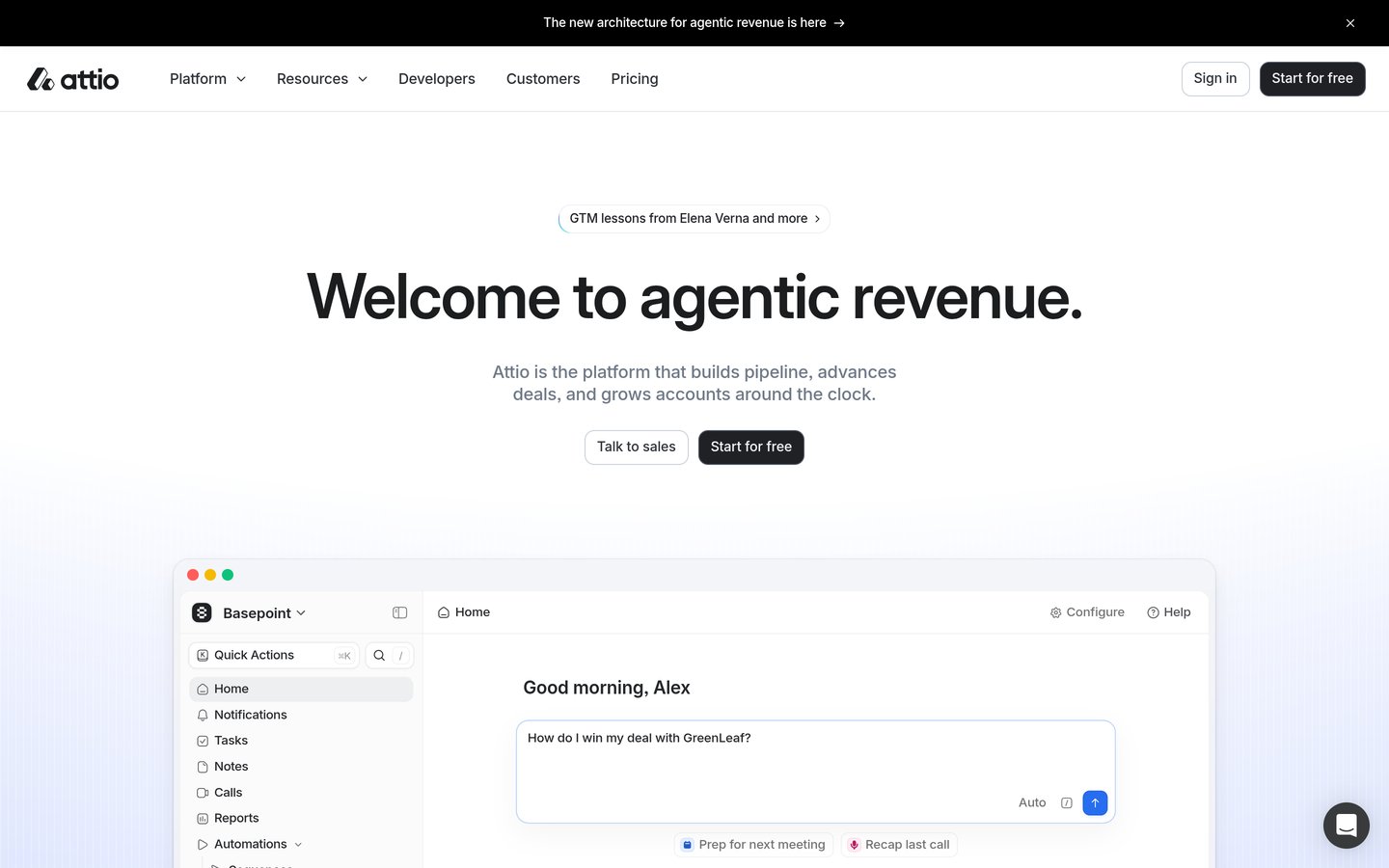
Attio homepage, captured Nov 2026.
Attio is a flexible workspace CRM that syncs email and calendar activity while letting teams shape data around people, companies, and deals. Its Free plan supports up to three users with 50,000 records, and Plus starts at $35 per user per month billed annually ($420/yr per seat) with 250,000 records.
The trade off is that custom objects, email sequences, and call intelligence sit on Pro at $79 per user per month billed annually, and Plus caps workspace seats at ten. It suits lean investment or corporate development teams that want custom lists without steep enterprise fees.
What we like
Free plan available for up to three seats with automatic enrichment
Much lower annual seat cost than dedicated private capital CRMs
Strong list and relationship modeling for tracking targets and contacts
Watch out for
Custom objects and sequences require upgrading to the Pro tier
Requires upfront workspace modeling to fit private equity workflows
Pro ($79/user/mo billed annually) unlocks custom objects, sequences, and up to 1,000,000 records.Visit attio.com
03
HubSpot CRM
4.5/5on Capterra (4,493 reviews, checked Nov 2026)
Paid from$240/yr
Best for broad pipeline and outreach workflows on a budget
Free planUp to 2 users ($0)
Regular Starter$20/seat/mo ($240/yr)
Paid tiersStarter, Pro, Enterprise
Capterra rating4.5/5 (4,493 reviews)
hubspot.com
HubSpot CRM homepage, captured Nov 2026.
HubSpot CRM is a broad customer platform with contact records, deal pipelines, email tracking, and reporting. It offers a free tier for up to two users and a regular Starter price of $20 per seat per month ($240/yr), with promotional discounts sometimes shown for new customers.
The trade off is that higher tiers jump sharply in price and add one-time onboarding fees, while generic sales pipelines need adjustment for private equity deal stages. It suits smaller teams that want familiar pipeline tools and low entry pricing.
What we like
Free tools available for up to two users with no credit card required
Accessible regular Starter pricing at $20 per seat per month
Large ecosystem of integrations, templates, and reporting tools
Watch out for
Higher tiers carry steep price jumps and mandatory onboarding fees
Lacks native private equity relationship scoring and fund structures
Professional ($90/seat/mo annual) adds sequences, more automation workflows, and conversation intelligence.Visit hubspot.com
04
folk
4.5/5on G2 (338 reviews, checked Nov 2026)
Starts at$288/yr
Best for lightweight contact lists and relationship tracking
Entry planStandard ($24/user/mo annual)
Trial14-day free trial
Sync optionsGoogle, Outlook & WhatsApp
G2 rating4.5/5 (338 reviews)
folk.app
folk homepage, captured Nov 2026.
folk is a contact- and list-oriented CRM that syncs Google, Outlook, and WhatsApp activity while offering pipeline views and relationship insights. Standard costs $24 per user per month billed annually ($288/yr per seat), or $30 billed monthly, and includes unlimited contacts.
The trade off is that custom objects, deal linking, dashboards, and email sequences are reserved for Premium at $48 per user per month billed annually. It suits small teams or emerging managers tracking contacts and outbound outreach without heavy setup.
What we like
Clean interface with unlimited contacts and simple pipeline views on Standard
Supports Gmail, Outlook, and WhatsApp interaction logging
Lower per-seat cost than specialized private capital platforms
Watch out for
Deals, custom objects, and dashboards require the Premium plan
Less suited to complex multi-fund governance and institutional reporting
Premium ($48/user/mo annual) adds custom objects and deals, sequences, dashboards, and REST API access.Visit folk.app
05
Pipedrive
4.5/5on Capterra (3,064 reviews, checked Nov 2026)
Starts at$168/yr
Best for straightforward visual deal stage tracking
Entry planLite ($14/seat/mo annual)
Monthly price$24/seat/mo on Lite
Free planNone (14-day trial)
Capterra rating4.5/5 (3,064 reviews)
pipedrive.com
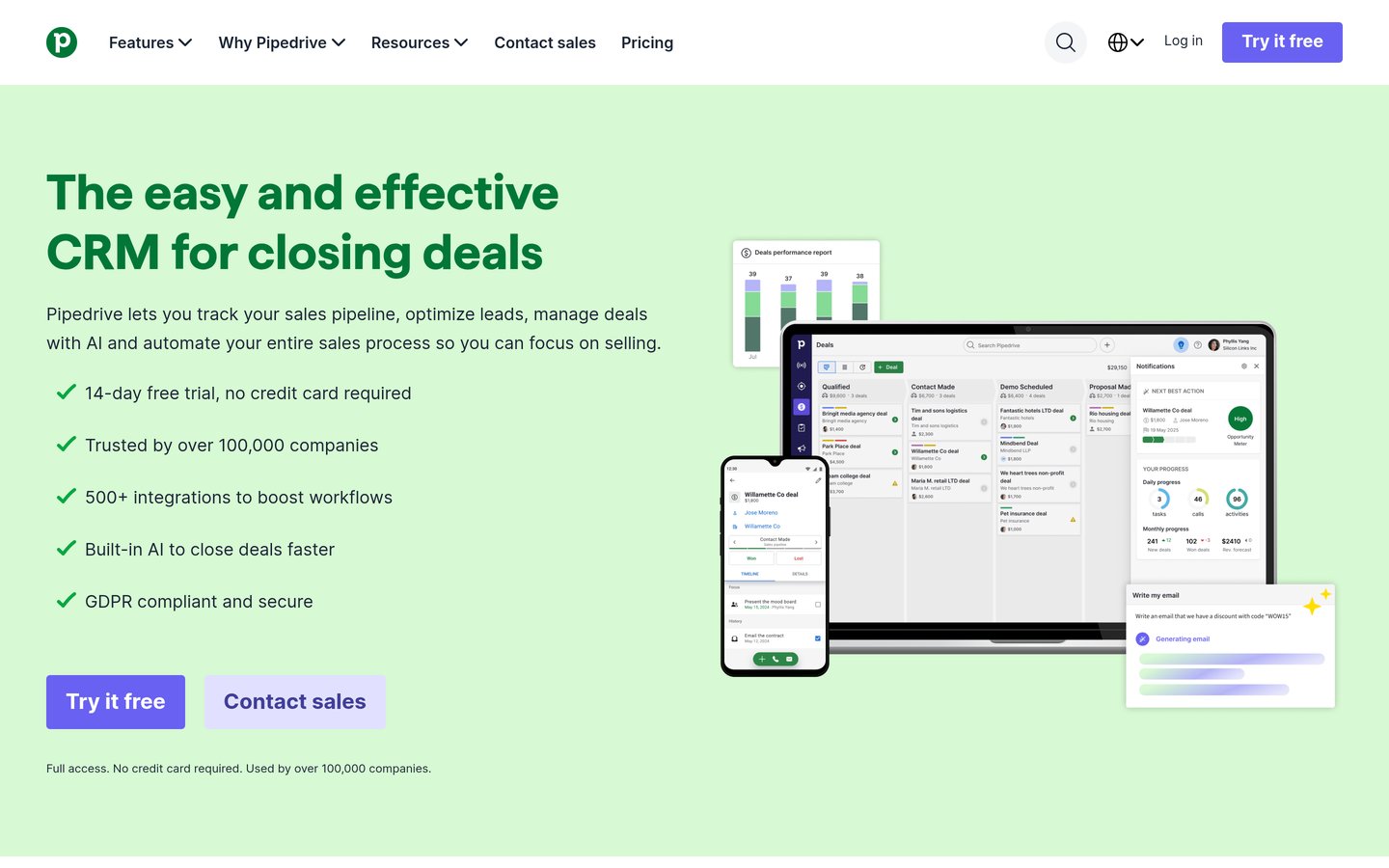
Pipedrive homepage, captured Nov 2026.
Pipedrive is a pipeline-centric CRM built around visual deal stages, activity tracking, and calendar management. Lite starts at $14 per seat per month billed annually ($168/yr per seat), or $24 billed monthly, and includes up to 2,500 leads and deals per user.
The trade off is that email sync, automations, and sequences start on Growth at $39 per seat per month billed annually, and it lacks native private equity LP or network intelligence. It suits lean teams that want an inexpensive, visual stage tracker for sourcing or business development.
What we like
Low entry pricing starting at $14 per seat per month billed annually
Clear visual pipeline board for tracking deal progression and follow-ups
14-day free trial available without a credit card
Watch out for
No permanent free tier and email sequences sit on higher plans
Built for sales pipelines rather than private equity fund or LP workflows
Best for investor relations, fundraising, and LP portals
Pricing modelCustom quote via sales
Core focusLP CRM, portal & fundraising
GP footprint2,300+ GPs
G2 rating4.7/5 (106 reviews)
junipersquare.com
Juniper Square homepage, captured Nov 2026.
Juniper Square is a fund operations and investor relations platform that pairs an LP CRM with investor portals, reporting, and fundraising workflows. It serves more than 2,300 general partners and uses custom enterprise pricing rather than a public self-serve tier.
The trade off is custom quote pricing and a focus on LP fundraising and reporting rather than early-stage deal sourcing. It suits private equity funds that prioritize investor relations, capital raising, and LP portals.
What we like
High G2 rating (4.7/5 across 106 reviews) for investor management
Connects investor CRM records directly with LP portals and reporting
Designed around general partner fundraising and LP communication
Watch out for
No public pricing or self-serve trial available
Less focused on buy-side deal sourcing than relationship-graph CRMs
Custom plans bundle Investor CRM capabilities with fundraising, reporting, and LP portal modules.Visit junipersquare.com
07
DealCloud
4.2/5on G2 (41 reviews, checked Nov 2026)
PricingCustom pricing
Best for large firms needing configurable deal and LP workflows
Pricing modelCustom quote via sales
VendorIntapp
StrengthCustom schema & reporting
G2 rating4.2/5 (41 reviews)
intapp.com
DealCloud homepage, captured Nov 2026.
DealCloud is a configurable deal flow and relationship management platform from Intapp built for private capital and financial firms. It supports custom data objects, deal pipelines, and LP tracking with quote-based enterprise pricing.
The trade off is custom enterprise pricing, longer implementation timelines, and a heavier setup footprint than lightweight CRMs. It suits established private equity firms with dedicated operations support and complex reporting needs.
What we like
Highly customizable data objects, fields, and pipeline reporting
Built for private capital deal tracking, origination, and LP workflows
Integrates with Microsoft workflows and firmwide deal data
Watch out for
No public pricing and requires a sales-led enterprise quote
Longer deployment and configuration effort than out-of-the-box tools
Custom enterprise agreements tailor deal pipelines, reporting modules, and integrations to firm requirements.Visit intapp.com
Deal flow vs. investor relations
Private equity firms often split CRM needs between deal origination and limited partner relations. Sourcing and execution focus on target companies, investment bankers, advisors, and warm introductions, whereas investor relations centers on LP commitments, fundraising, and reporting.
A tool built around network mapping and deal stages may not replace an investor portal or fund administration system. Many firms pair a deal or relationship CRM with dedicated fundraising, data room, or fund accounting software.
How we chose
We compiled this list from private equity software guides, vendor product pages, and verified review directories across G2 and Capterra.
All pricing, ratings, and review counts were checked on 22 Nov 2026 from public pricing pages and review listings, using regular list rates rather than limited-time promotional discounts.
We excluded unverified or inactive tools and omitted pricing figures for platforms that require custom quotes without public list prices. No vendor paid for a place, and we do not claim testing for this list.
How to choose a private equity CRM
Follow four practical steps to narrow down a CRM for your firm.
Map your primary workflow first. Decide whether your biggest bottleneck is tracking sourced deals and banker relationships or managing LP fundraising and investor communications.
Check how interaction data enters the system. Look for automatic email and calendar capture if your deal team dislikes manual logging, and verify what happens to historical threads.
Model full seat costs at regular prices. Multiply the regular annual per-seat rate by your headcount, accounting for required annual commitments and higher tiers for custom objects or automation.
Confirm permissions and data portability. Check access controls for sensitive deals and make sure you can export contacts, companies, and pipeline data cleanly if your stack evolves.
FAQ
Do private equity firms need a specialized CRM instead of a sales CRM?
Specialized CRMs are built around relationship graphs, bankers, and long-term target tracking, while sales CRMs focus on outbound sales quotas and standard quotes. Smaller or early-stage teams sometimes start with flexible tools like Attio or HubSpot CRM before adopting specialized software.
Why do private capital CRMs often cost more per seat than standard CRMs?
Platforms like Affinity price around relationship intelligence, automatic activity capture, and niche investment workflows rather than high-volume sales seats. Lower-cost tools like Pipedrive or folk charge less per seat but lack built-in fund structures and deep investment workflows.
Can you start with a free CRM tier for private equity?
Yes, tools like Attio and HubSpot CRM offer free tiers for small teams, though free plans limit seats, records, or automation. Specialized private equity platforms typically sell annual subscriptions through sales demos rather than offering a free plan.
What is the difference between deal flow tracking and LP management?
Deal flow tracking covers sourcing targets, tracking banker outreach, and moving investments through diligence and closing. LP management focuses on prospective and existing investors, fundraising pipelines, commitments, and investor reporting.
Should we look at regular pricing or promotional discounts when budgeting?
Budget using regular list pricing so your renewal cost does not spike after a promotional period ends. For example, HubSpot CRM lists a regular Starter rate of $20 per seat per month alongside discounted new-customer offers.
How many seats do private equity firms usually buy?
Most firms license seats for deal partners, associates, business development staff, and investor relations team members who actively track contacts and pipelines. Because per-seat costs compound on annual contracts, firms often review seat counts carefully before buying.