Best CRM Software for Higher Education in 2026: 7 Tools Compared
WLWPLegible EditorsLast verified 22 Nov 2026How we rank5 min read
★ Short answer
Slate by Technolutions leads higher education CRM for dedicated admissions workflows, starting at $30,000 per year for under 1,500 applications. HubSpot fits smaller teams needing free contact tracking or entry seats at $240 per year, while Zoho CRM starts at $168 per user per year.
How we make this list: we compare pricing pages, product documentation and public user reviews, then re-check every price before each update. No product paid for a place. Disclosure.
Slate by Technolutions starts at $30,000 per year and holds a 4.4 rating across 74 G2 reviews.
LeadSquared education plans start at $15,000 annually for up to 10 users.
Element451 higher education plans start at $20,000 per year.
Zoho CRM Standard costs $14 per user per month billed yearly ($168/yr) with a free tier for up to 3 users.
HubSpot regular Starter pricing is $20 per seat per month ($240/yr) alongside a free tier.
What to look for in a higher education CRM
Higher education CRMs track prospective students from first inquiry through application, enrollment, advising, and alumni outreach. Unlike general sales CRMs built around closed deals, campus systems manage multi-term admissions cycles, application documents, and campus visits.
Institutions often separate recruitment and admissions from student information systems (SIS) and learning management systems (LMS). Look for clean integrations or portals that sync applicant records without forcing staff to re-enter data across departments.
Pricing models split sharply between higher-ed-specific volume contracts and general per-seat subscriptions. Dedicated campus platforms frequently price by application volume or enrollment size, whereas general CRMs charge per seat and scale with contact tiers or automation add-ons.
Evaluate administrative overhead before committing to a platform. Configurable enterprise suites can handle complex multi-program rules, but they require dedicated admins and implementation time.
For straightforward contact management and email sync
$156/yr
No free plan
4.3/5
Price ladder: cheapest paid plan per year
List prices, USD, checked Nov 2026
Nutshell$156
Zoho CRMFREE$168
Pipedrive$168
HubSpotFREE$240
LeadSquared$15,000
Element451$20,000
Slate$30,000
The 7 best CRM software for higher education
01
Slate by Technolutions
4.4/5on G2 (74 reviews, checked Nov 2026)
Starts at$30,000/yr
Best for dedicated higher-ed admissions workflows
Starting price$30,000/yr (<1,500 apps)
Pricing basisApplication or enrollment volume
G2 rating4.4 / 5 (74 reviews)
Primary focusAdmissions and student lifecycle
technolutions.com
Slate by Technolutions homepage, captured Nov 2026.
Slate by Technolutions is a cloud CRM built specifically for colleges and universities to manage recruitment, applications, events, and student communications. Admissions licenses start at $30,000 per year for under 1,500 applications, with most institutions paying around $50,000 annually.
The trade off is institutional pricing starting at $30,000 per year and a learning curve around custom queries and configuration. It suits degree-granting colleges and universities that want a dedicated higher-ed admissions and outreach platform.
What we like
Purpose-built for higher education admissions, events, and communications
Predictable annual volume tiers starting at $30,000 per year
Strong 4.4/5 rating across 74 G2 reviews
Watch out for
High annual floor compared to per-seat business CRMs
Query building and configuration require staff training
Annual institutional licensing covers admissions, outreach, portals, and reporting by volume tier.Visit technolutions.com
02
HubSpot
4.4/5on G2 (38,191 reviews, checked Nov 2026)
Paid from$240/yr
Best for free contact tracking and marketing outreach
Regular entry price$20/mo/seat ($240/yr)
Free tierYes, free CRM tools available
G2 rating4.4 / 5 (38,191 seller reviews)
Best fitMarketing-led inquiries and small teams
hubspot.com
HubSpot homepage, captured Nov 2026.
HubSpot is a widely adopted CRM platform offering free core tools alongside paid seats that start at a regular price of $20 per month per seat ($240 per year), excluding temporary new-customer promotions. Schools use it to capture web inquiries, log emails, and run automated follow-up sequences.
The trade off is a regular $240 per year per-seat starting price and steep tier jumps when moving into higher marketing or automation hubs. It suits smaller education teams, continuing education units, and programs focused on inbound lead nurturing.
What we like
Generous free starting point plus transparent regular Starter pricing at $20/mo/seat
Intuitive email tracking, forms, and workflow builders
Broad review volume across 38,191 G2 seller reviews
Watch out for
Costs rise quickly as contact lists and advanced automation needs grow
Lacks native higher-ed admissions workflows without custom setup
Paid Starter seats remove branding limits and add core automation over free CRM tools.Visit hubspot.com
03
Zoho CRM
4.1/5on G2 (2,963 reviews, checked Nov 2026)
Paid from$168/yr
Best budget CRM with custom modules and a free tier
Cheapest paid planStandard at $14/user/mo yearly ($168/yr)
Free editionFree for up to 3 users
G2 rating4.1 / 5 (2,963 reviews)
AI assistantZia starts on higher tiers
zoho.com
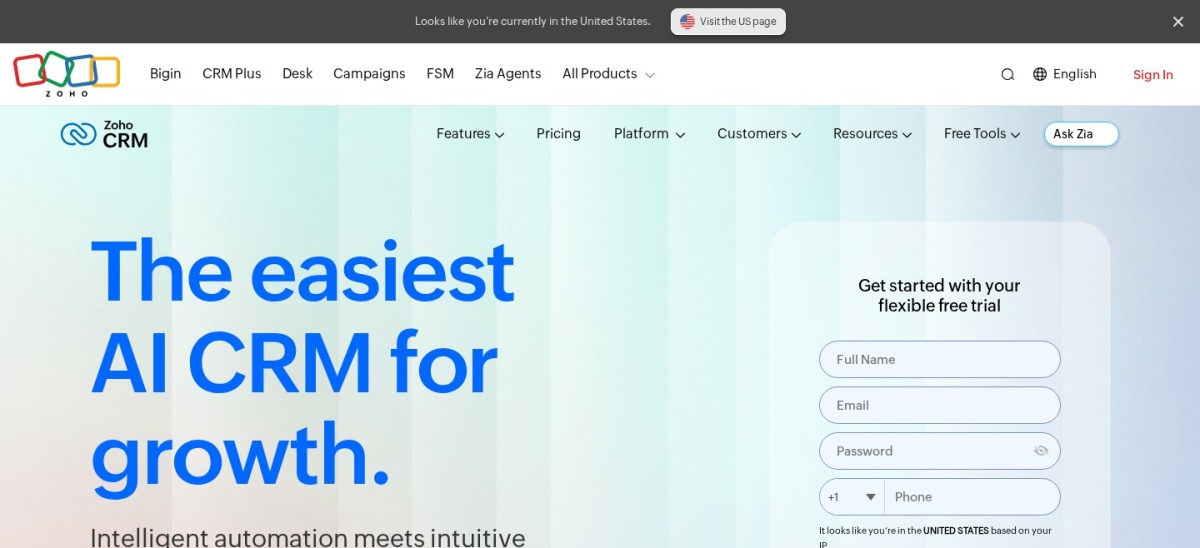
Zoho CRM homepage, captured Nov 2026.
Zoho CRM is a customizable sales and pipeline CRM offering a free edition for up to 3 users and a Standard plan at $14 per user per month billed yearly ($168 per year). It supports custom modules, workflow automation, and email tracking at a low per-user rate.
The trade off is a $168 per user per year Standard price that leaves Zia AI features and higher record limits on pricier tiers. It suits budget-conscious schools or training centers that want customizable pipelines without heavy licensing fees.
What we like
Low entry cost at $14/user/mo billed annually plus a free tier for up to 3 users
Flexible custom modules and workflow automation
Large review base of 2,963 ratings on G2
Watch out for
Advanced AI tools and higher limits sit on upper editions
Initial setup and custom fields take time to configure
Paid plans expand record limits, mass email allowances, automation depth, and AI features.Visit zoho.com
04
LeadSquared
4.5/5on G2 (580 reviews, checked Nov 2026)
Starts at$15,000/yr
Best for high-volume admissions lead capture and follow-up
Education starting price$15,000/yr (Pro plan, up to 10 users)
Higher tierSuper plan at $18,000/yr (up to 10 users)
LeadSquared is a lead management and workflow platform with dedicated higher education plans starting at $15,000 per year for the Pro plan up to 10 users. It helps admissions teams track inquiries, score leads, automate follow-ups, and manage application pipelines.
The trade off is a $15,000 per year starting commitment that scales by enrollment tier and email volume. It suits institutions with active admissions counselors and high inquiry volume that want structured lead routing and follow-up automation.
What we like
Dedicated education pricing starting at $15,000/yr for up to 10 users
Strong lead capture, scoring, and automated counselor follow-ups
Element451 is an AI-focused engagement and enrollment platform built for higher education institutions, with annual plans starting at $20,000 per year. It supports admissions applications, event management, segmented outreach, and student communication workflows.
The trade off is a $20,000 per year starting cost that scales with enrolled student count and support tier. It suits colleges and universities looking to modernize recruitment messaging and applicant workflows in one system.
What we like
Built specifically around higher education enrollment and student journeys
Published starting price at $20,000 per year
Combines applications, event tools, and automated outreach
Watch out for
Annual pricing scales up for larger enrollment counts and dedicated support
Smaller public review footprint than general sales CRMs
Higher annual tiers add greater enrollment capacity, AI agent usage, and expanded support options.Visit element451.com
06
Pipedrive
4.3/5on G2 (5,132 reviews, checked Nov 2026)
Starts at$168/yr
Best for visual stage-by-stage applicant or partnership tracking
Cheapest paid planLite at $14/seat/mo yearly ($168/yr)
Free trial14-day free trial
G2 rating4.3 / 5 (5,132 reviews)
Core strengthVisual deal and stage pipelines
pipedrive.com
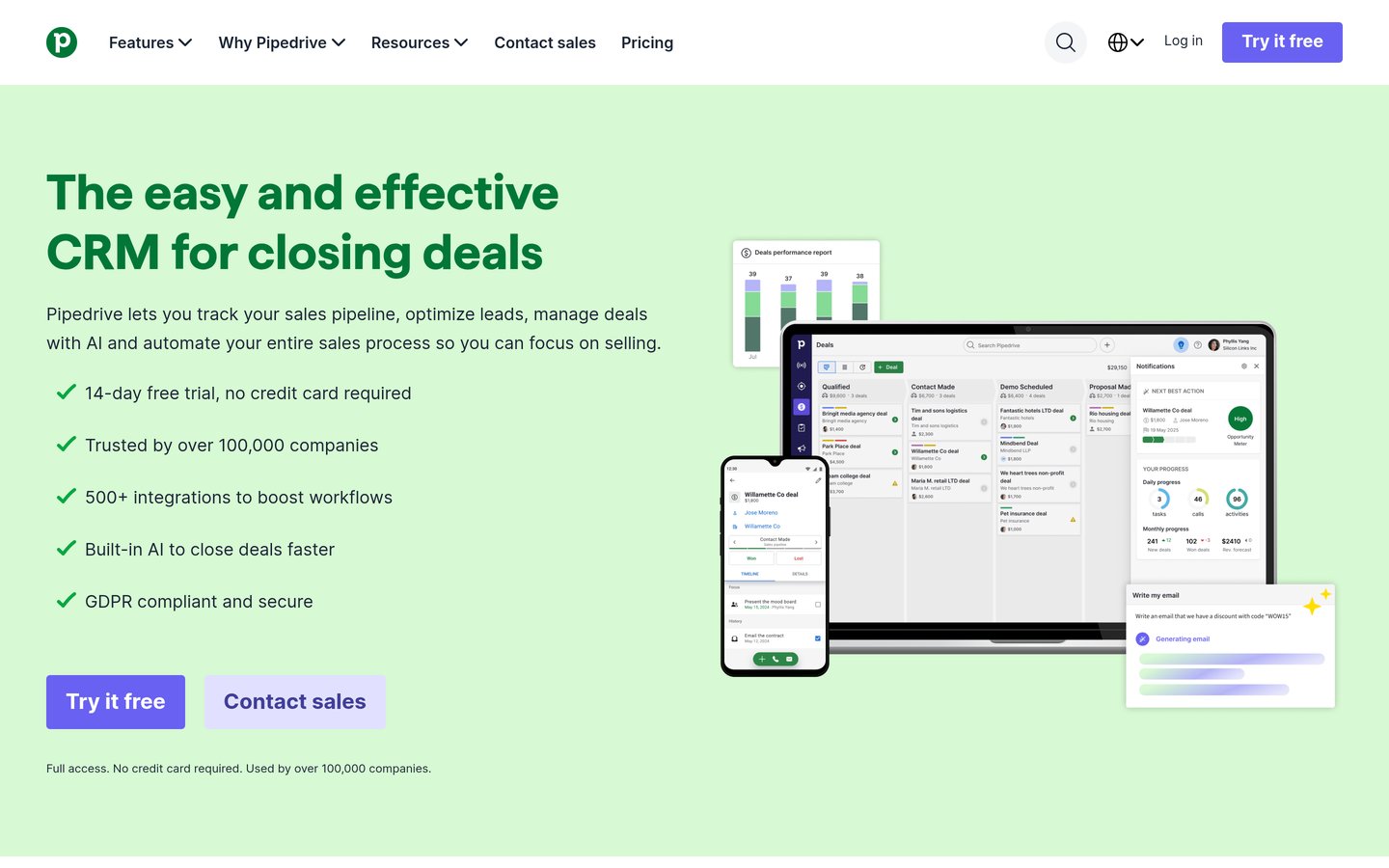
Pipedrive homepage, captured Nov 2026.
Pipedrive is a pipeline-driven CRM whose Lite plan starts at $14 per seat per month billed annually, or $168 per seat per year. Teams use its visual boards and activity reminders to move prospects or institutional partnerships through clear stages.
The trade off is a $168 per seat per year starting cost with extra fees for add-ons like email campaigns or web visitor tracking. It suits small admissions, partnership, or continuing-education teams that prefer simple visual stage tracking over complex campus suites.
What we like
Clear visual pipeline interface that is quick for teams to learn
Affordable entry plan at $168 per seat per year billed annually
Strong 4.3/5 rating across 5,132 G2 reviews
Watch out for
No permanent free tier beyond a 14-day trial
Email marketing and visitor tracking require paid add-ons
Higher plans and add-ons unlock email automations, broader limits, and campaign tools.Visit pipedrive.com
07
Nutshell
4.3/5on G2 (1,464 reviews, checked Nov 2026)
Starts at$156/yr
Best for straightforward contact management and email sync
Cheapest paid planFoundation at $13/user/mo yearly ($156/yr)
Free trial14-day free trial
G2 rating4.3 / 5 (1,464 reviews)
SupportLive support included on plans
nutshell.com
Nutshell homepage, captured Nov 2026.
Nutshell is a straightforward CRM whose Foundation plan starts at $13 per user per month billed annually, or $156 per user per year. It includes unlimited contacts, email and calendar sync, web forms, and landing pages out of the box.
The trade off is a $156 per user per year entry price with custom pipelines and sales automation locked behind higher tiers. It suits small education programs, executive training teams, and departments that want simple contact tracking without steep setup.
What we like
Low starting price at $156 per user per year billed annually
Unlimited contacts, web forms, and email sync included on Foundation
4.3/5 rating across 1,464 G2 reviews
Watch out for
Custom pipelines and deeper automation require upgrading past Foundation
Email marketing and SMS add-ons cost extra per tier
Dedicated higher education CRMs such as Slate by Technolutions and Element451 model academic terms, application checklists, events, and student records around campus workflows. That specialization reduces custom building when managing thousands of applicants or multi-step admissions review.
General sales CRMs like HubSpot, Zoho CRM, Pipedrive, and Nutshell cost far less per user and launch faster for small teams. However, admissions offices often need extra forms, portals, or integrations to replicate higher-ed application stages.
How we chose
We built this list by reviewing higher education CRM directories, vendor documentation, and software review listings for active platforms used by colleges, universities, and educational programs.
All prices, plan tiers, and review ratings were checked on 22 Nov 2026 using official pricing pages and public review profiles, recording regular annual entry pricing rather than temporary discounts.
We excluded products without verifiable current pricing or sufficient public review data, as well as student information systems that focus on core student records rather than CRM outreach and admissions pipelines. No vendor paid for a place, and we do not claim testing for this list.
How to choose a CRM for higher education
Follow four practical steps to match a CRM to your institution's admissions and outreach needs.
Map your student and inquiry stages first. List where prospective students come from, how applications are submitted, and who follows up between inquiry and enrollment.
Check existing campus systems and data flow. Confirm how the CRM connects with your student information system, email tools, forms, and reporting workflows before buying.
Compare volume pricing against per-seat plans. Model costs across your real team size, application or enrollment volume, and expected add-ons over a full academic year.
Factor in setup time and staff capacity. Balance deep customization against how much time your team can spend building workflows, training staff, and maintaining the system.
FAQ
What is the main difference between a higher-ed CRM and an SIS?
A CRM manages prospective students, inquiries, applications, communications, and enrollment pipelines. A student information system handles official academic records such as course registration, grades, and transcripts once students enroll.
Are there free CRM options for small education teams?
Yes, HubSpot offers free CRM tools and Zoho CRM provides a free edition for up to 3 users. Free tiers cover basic contact and pipeline tracking, though larger teams and deeper automation require paid plans.
Why do higher-ed CRMs often cost tens of thousands of dollars per year?
Specialized platforms like Slate by Technolutions, Element451, and LeadSquared price around institutional scale, application or enrollment volume, portals, and higher-ed workflows. That pricing structure differs from per-seat sales tools built for small business teams.
Can a general sales CRM work for a college or training program?
Yes, general CRMs like Zoho CRM, Pipedrive, and Nutshell can track leads, follow-ups, and pipelines at a lower cost. They work best for smaller teams or focused programs that do not need complex multi-stage campus application portals.
What hidden or extra costs should institutions watch for?
Watch for per-seat expansion, contact tier upgrades, email or SMS sending limits, and paid add-ons. Data migration, custom integrations, and staff training can also add noticeable effort and cost.
Should admissions and alumni teams use the same CRM?
Using one platform can keep constituent history connected across recruitment, enrollment, and ongoing outreach. However, teams with very different workflows sometimes start in one department first to keep rollout manageable.