WLWPLegible EditorsLast verified 22 Nov 2026How we rank13 min read
★ Short answer
CookieYes is the best cookie audit tool for most websites, with a free plan covering 100 pages per scan and paid plans starting at $10 per month. Complianz is better for WordPress sites wanting unlimited pageviews, while Cookiebot suits teams needing automated cookie discovery and reporting across larger websites.
How we make this list: we compare pricing pages, product documentation and public user reviews, then re-check every price before each update. No product paid for a place. Disclosure.
CookieYes combines cookie scanning, consent logging and blocking, with a free plan covering 100 pages per scan and 5,000 monthly pageviews.
Complianz starts at $59 per year for one WordPress site, with unlimited pageviews and consent records on paid plans.
Cookiebot's Premium Lite starts at $10 per month for one domain with up to 50 subpages; larger sites move to higher tiers.
iubenda Essentials starts at $5.99 per month billed yearly, with monthly site scans and a 25,000-pageview monthly allowance.
Secure Privacy offers free domain scan reports and a $15-per-month Small plan with automated monthly scanning.
Termly Starter costs $10 per month billed annually, while Cookie Compliance uses live tracker blocking instead of scheduled cookie scans.
What to look for in a cookie audit tool
A cookie audit identifies the cookies, tracking scripts and external services that operate on a website. This matters because analytics tools, advertising pixels, embedded videos and third-party integrations can collect data before visitors make a consent choice.
Start with automatic cookie discovery. A useful scanner should identify trackers, classify cookies by purpose and help build an accurate cookie declaration. Check whether the scanner covers the entire website or stops after a fixed number of pages.
Next, examine consent verification. Finding a cookie does not prove that the website blocks it correctly. A complete audit should also check consent behavior, script blocking and records showing which preferences visitors selected.
Finally, compare recurring costs. Some services charge according to pageviews, sessions or subpages, while others offer fixed annual licenses. Larger websites should examine scan limits, consent-record retention, automated scan frequency and the cost of additional domains.
4.8/5on WordPress.org (3,239 reviews, checked Nov 2026)
Paid from$10/mo
Best cookie audit tool overall
Free scan limit100 pages per scan
Free pageviews5,000/month
Basic scan limit600 pages per scan
Paid planBasic, $10/mo
cookieyes.com
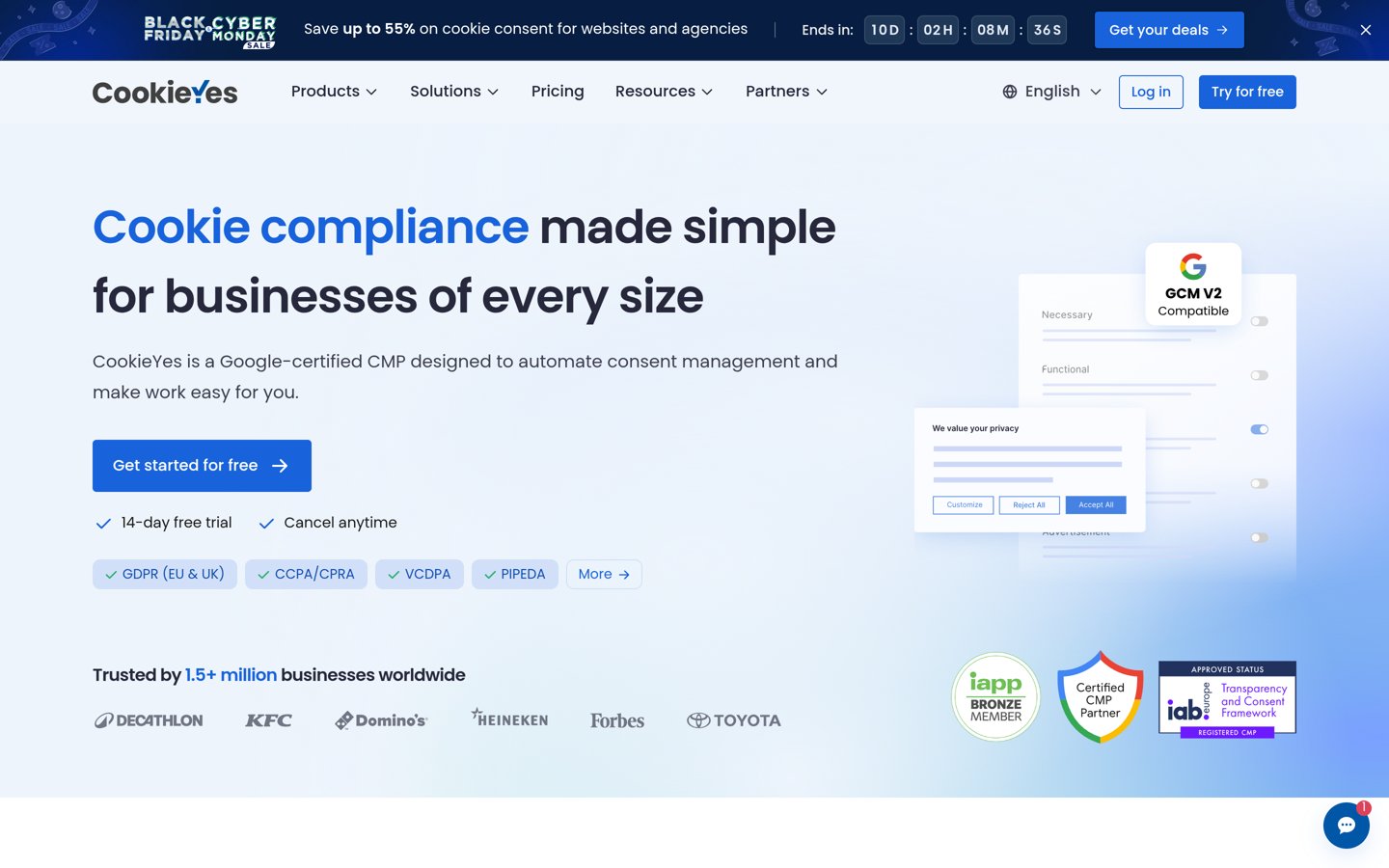
CookieYes homepage, captured Nov 2026.
CookieYes is a cookie consent platform with cloud-based cookie scanning, automatic blocking, consent records and cookie policy generation. Its free plan includes 100 pages per scan and 5,000 monthly pageviews, while the Basic plan increases those allowances to 600 pages per scan and 100,000 monthly pageviews.
The trade off is that higher traffic and automated scheduled scanning require more expensive plans. Basic costs $10 per month, while monthly scheduled scans are included with Pro at $25 per month. It suits website owners wanting cookie discovery and consent management together, particularly those using WordPress.
What we like
Free cloud scanner identifies cookies and trackers
Automatic cookie blocking and consent records
WordPress integration with over 1 million active installs
Basic plan covers 600 pages per scan
Supports Google Consent Mode v2
Watch out for
Free plan has a 5,000-pageview monthly allowance
Scheduled monthly scans require the Pro plan
Additional pageview charges can apply on paid tiers
Basic adds higher scan and traffic limits plus advanced customizationVisit cookieyes.com
02
Complianz
4.7/5on WordPress.org (1,673 reviews, checked Nov 2026)
Paid from$59/yr
Best for WordPress cookie audits
Free site scanUp to 50 posts
Paid scanFull-site scanning
Paid pageviewsUnlimited
Paid planPersonal, 1 site
complianz.io
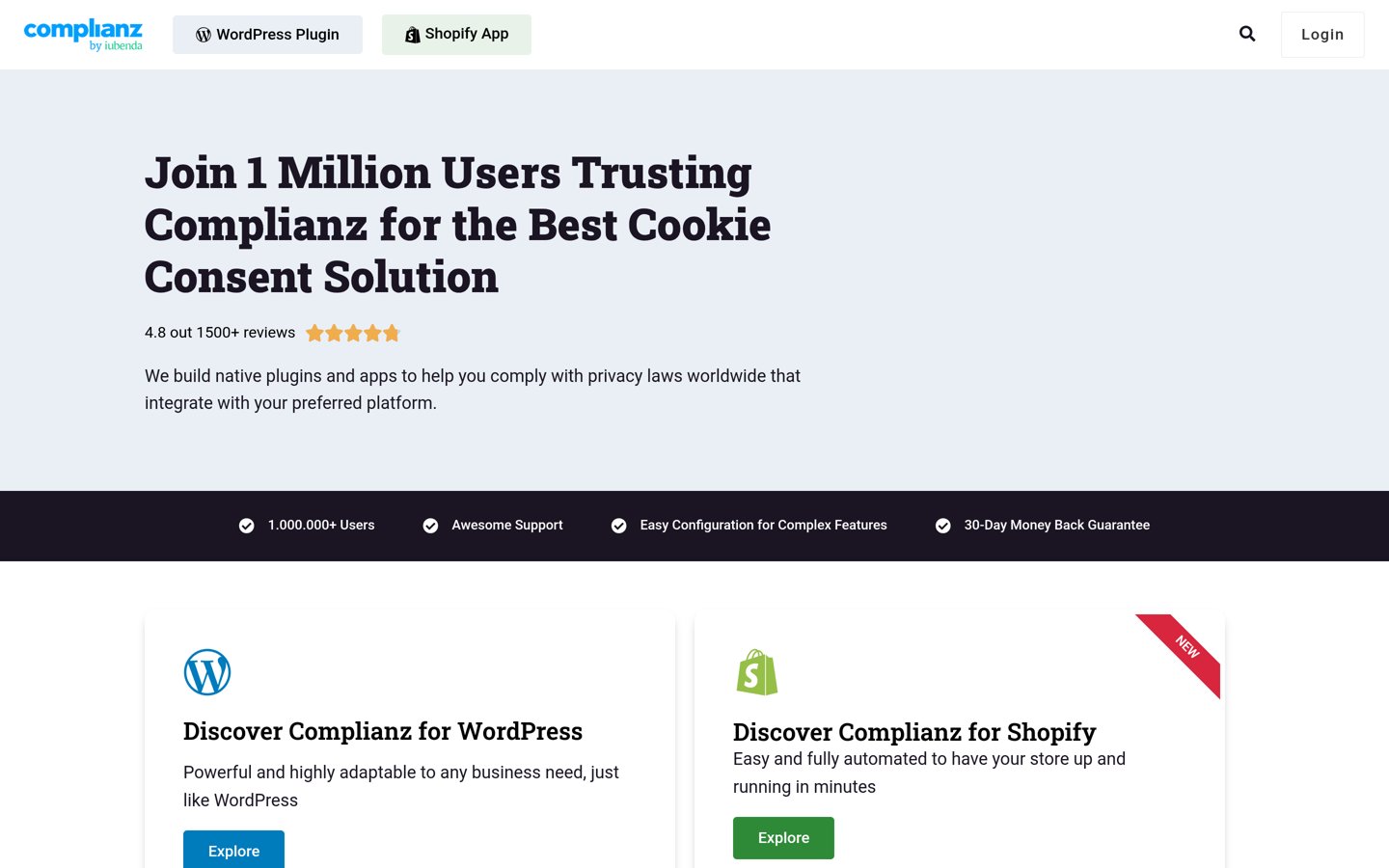
Complianz homepage, captured Nov 2026.
Complianz is a WordPress privacy and consent plugin with automatic cookie scanning, service detection, consent management and legal document generation. Its free setup scans up to 50 posts, while paid plans include full-site scanning, CookieDatabase synchronization and unlimited pageviews and consent records.
The trade off is its WordPress focus, which makes it less suitable for teams managing websites on several different platforms. Personal costs $59 per year for one website, while Professional costs $179 per year for up to five websites. It suits WordPress owners who prefer predictable annual licensing rather than traffic-based subscriptions.
What we like
Automatic cookie and service discovery
Unlimited pageviews on paid plans
Unlimited paid-plan consent records
Guided setup and WordPress integrations
Low annual entry price
Watch out for
Designed primarily for WordPress
Free scanning does not provide the full paid scan coverage
Multi-site licensing costs more
Personal adds full-site scanning, legal documents and expanded consent featuresVisit complianz.io
03
Cookiebot
4.4/5on WordPress.org (440 reviews, checked Nov 2026)
Paid from$10/mo
Best for automated cookie discovery
Free coverageUp to 50 subpages
Free domains1 domain
Premium LiteUp to 50 subpages
Paid planPremium Lite, $10/mo
cookiebot.com
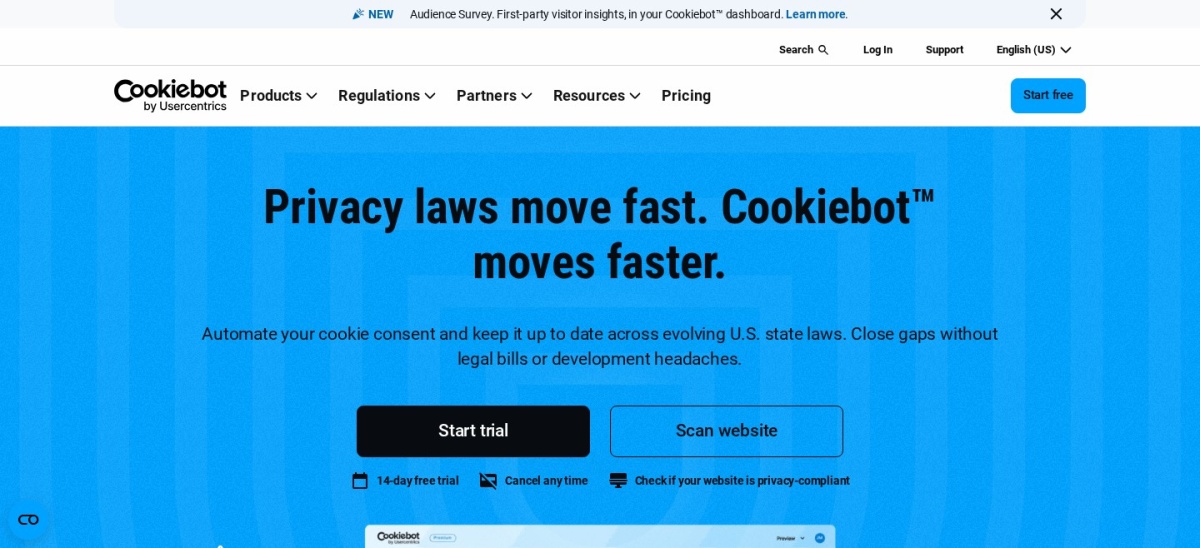
Cookiebot homepage, captured Nov 2026.
Cookiebot is an automated consent management platform that scans websites for cookies, trackers and similar technologies. Its free plan covers one domain with up to 50 subpages and includes an initial cookie scan, while Premium adds additional banner customization, consent reporting and language options.
The trade off is pricing based on discovered subpages, which means growing websites can move into more expensive tiers. Premium Lite starts at $10 per month, Premium Small costs $20 per month and higher tiers cover larger websites. It suits teams that prioritize automated discovery and recurring consent reporting.
What we like
Automatic detection of cookies and trackers
Initial cookie scan on the free plan
Premium plans include detailed reporting
Supports Google Consent Mode
Premium pricing does not depend on pageviews
Watch out for
Free plan restricted to small websites
Subpage growth can trigger higher pricing
Premium Lite is limited to one domain
Premium adds banner customization, reporting and expanded consent settingsVisit cookiebot.com
04
iubenda
4.7/5on WordPress.org (399 reviews, checked Nov 2026)
Paid from$5.99/mo
Best for audits with privacy policies
Site scanningMonthly on Essentials
Essentials traffic25,000 pageviews/mo
Policy clausesUp to 20 services
Paid planEssentials, billed yearly
iubenda.com
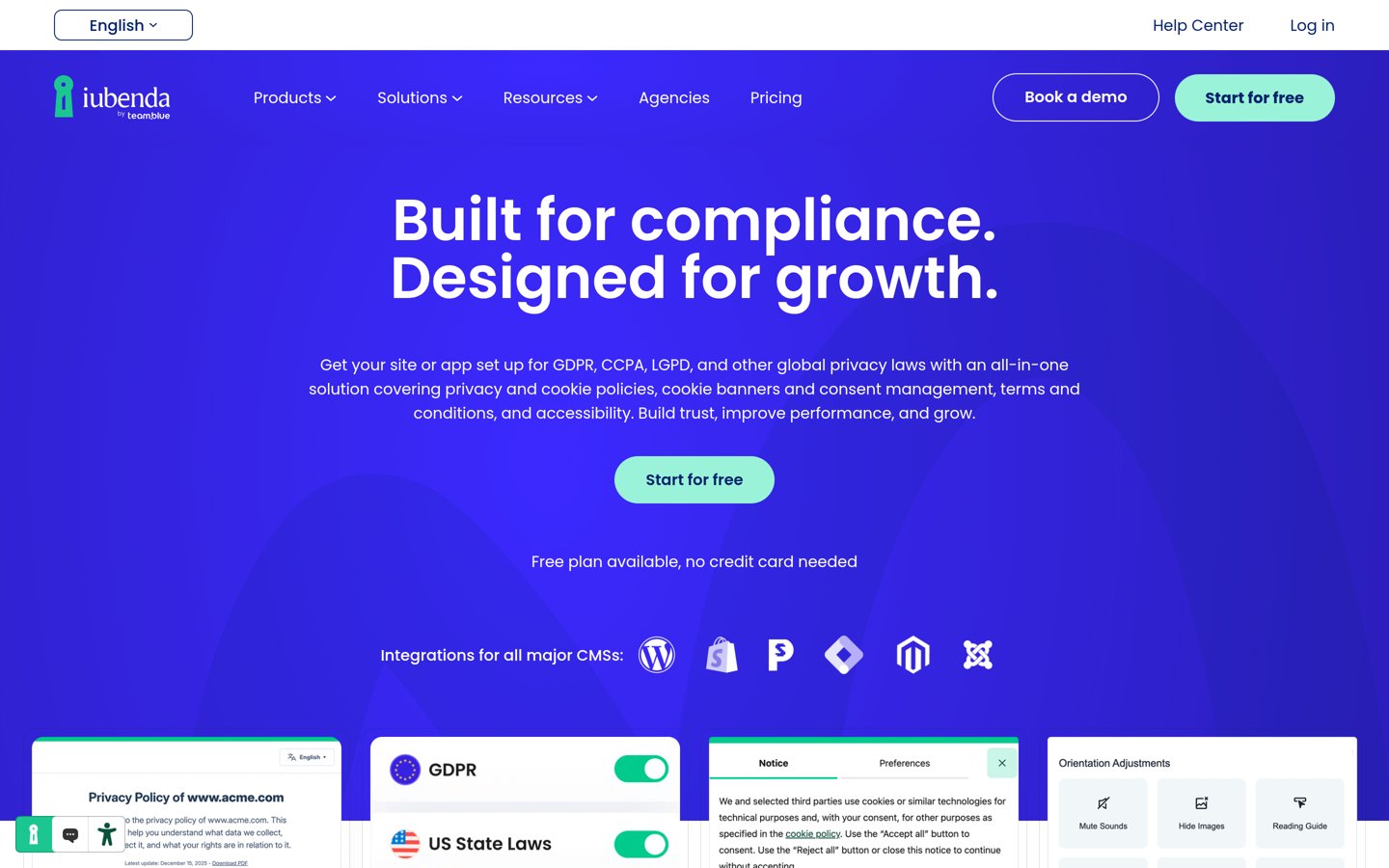
iubenda homepage, captured Nov 2026.
iubenda is a privacy management platform that combines website scanning, cookie notices, consent controls and generated legal documents. Essentials includes monthly site scans, a standard privacy and cookie policy with up to 20 service clauses, and a monthly allowance of 25,000 pageviews.
The trade off is that the entry plan has pageview and customization limits, while more demanding privacy workflows require higher tiers. Essentials is listed at $5.99 per site per month when billed annually, with usage charges possible beyond the included allowance. It suits businesses that want cookie audits and privacy documentation from one provider.
What we like
Monthly scans included with Essentials
Cookie and privacy policy generation
Combined consent and legal document tools
WordPress plugin available
Entry price below many competing platforms
Watch out for
Essentials has a monthly pageview allowance
Additional usage can generate charges
More advanced features require higher plans
Essentials adds recurring scans and expanded privacy documentationVisit iubenda.com
05
Secure Privacy
4.9/5on G2 (115 reviews, checked Nov 2026)
Paid from$15/mo
Best for consent and tracker audits
Free domain scanIncluded
Free consent limit500/month
Small plan5,000 consents/month
Paid planSmall, $15/mo
secureprivacy.ai
Secure Privacy homepage, captured Nov 2026.
Secure Privacy is a consent management platform with cookie discovery, domain scan reports, consent records and automatic tracking controls. Its free plan includes domain scan reports and 500 monthly consents, while Small adds monthly domain scanning, automatic cookie blocking and an allowance of 5,000 monthly consents.
The trade off is that pricing depends on consent volume, and some advanced audit capabilities require higher subscriptions. Small costs $15 per month per domain, while the Advanced tier adds audit logs and scanning behind login. It suits teams that need ongoing tracker discovery and consent documentation across different website platforms.
What we like
Free domain scan reporting
Monthly automated scanning on Small
Consent recording and tracker controls
Supports multiple website platforms
Rated 4.9 out of 5 on G2
Watch out for
Paid plans have consent-volume limits
Advanced audit logs require a higher tier
Pricing is per domain
Small adds monthly scans, automatic blocking and more consent capacityVisit secureprivacy.ai
06
Termly
3.6/5on WordPress.org (205 reviews, checked Nov 2026)
Paid from$10/mo
Best for cookie scans and policy updates
Starter scansMonthly
Starter banner views50,000/month
Starter policies2 legal policies
Paid planStarter, billed yearly
termly.io
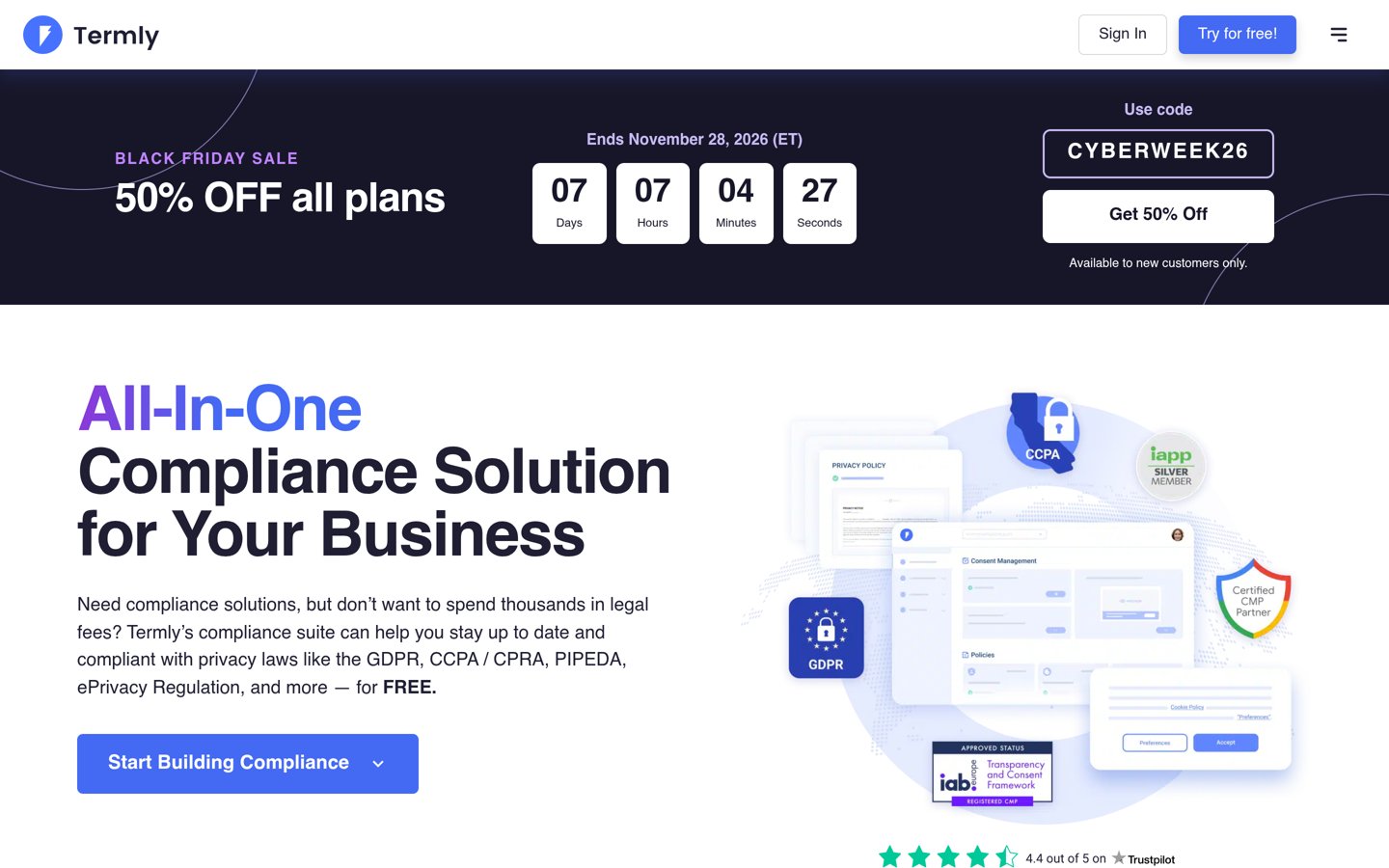
Termly homepage, captured Nov 2026.
Termly is a website compliance platform that combines cookie scanning, consent banners and legal policy generation. Starter includes monthly cookie scans, two legal policies, ten policy edits and 50,000 monthly banner views, with a WordPress plugin for connecting websites to the platform.
The trade off is that Starter has policy-edit and banner-view limits, while weekly scans and additional customization require Pro+. Starter costs $10 per month with annual billing or $14 with monthly billing, before promotional discounts. It suits smaller businesses that want automated cookie discovery alongside regularly maintained website policies.
What we like
Monthly cookie scans on Starter
Cookie policy and privacy document tools
Google Consent Mode integration
WordPress plugin available
Annual and monthly billing options
Watch out for
Starter includes only two legal policies
Monthly banner-view allowance applies
Weekly scans require Pro+
Lower WordPress.org rating than leading alternatives
Starter adds monthly scanning, more banner views and policy updatesVisit termly.io
07
Cookie Compliance
4.8/5on WordPress.org (3,027 reviews, checked Nov 2026)
Paid from$149.50/yr
Best for live consent audit records
Cookie discoveryLive tracker rules
Scheduled scansNot required
Free consent history7 days
Paid planProfessional, 1 domain
cookie-compliance.co
Cookie Compliance homepage, captured Nov 2026.
Cookie Compliance is a WordPress consent management tool from Hu-manity.co that uses live tracker rules rather than scheduled cookie scans. Its connected free plan includes automatic script blocking, consent analytics and seven days of consent history, while the Professional plan adds longer retention and additional reporting controls.
The trade off is that it is not a conventional crawler-based cookie inventory tool, so teams requiring detailed scheduled scan reports should choose another product. Professional costs $14.95 per month or $149.50 per year for one domain. It suits WordPress owners whose audit priority is proving consent choices and controlling trackers.
What we like
Live tracker controls without scheduled scans
Consent records available on the free plan
Professional includes long-term consent history
Google Consent Mode support
Large established WordPress user base
Watch out for
Not a traditional scheduled cookie scanner
Free consent history is limited to seven days
Advanced exports and reporting require Professional
Cookie scanning and consent auditing are different jobs
A cookie scanner discovers technologies operating on a website. It examines pages, identifies cookies and trackers, and helps classify their purposes. This information supports an accurate cookie declaration and exposes scripts that website owners may have overlooked.
A consent audit checks what happens after those technologies are identified. It examines whether scripts remain blocked before permission, whether visitors can reject optional cookies and whether consent decisions are recorded correctly.
Many platforms combine both functions, but their coverage differs. CookieYes, Complianz and Cookiebot emphasize discovery alongside consent management. Cookie Compliance instead emphasizes live tracker controls and consent records without requiring scheduled scans.
For a more complete assessment, scan representative pages, review detected technologies, verify blocking behavior and inspect consent records. Repeat the process after adding analytics tools, advertising services or other integrations.
What to check after running a cookie audit
Start by reviewing the scanner's cookie inventory. Look for advertising identifiers, analytics cookies, embedded media trackers and third-party scripts that were not included in the existing cookie declaration.
Next, compare the inventory against the website's consent categories. Each optional service should have an appropriate purpose, and its behavior should match the choices presented to visitors.
Check that optional tracking does not activate before the required consent. Repeat the check after rejecting optional cookies, accepting selected categories and changing a previously saved preference.
Finally, review the available consent evidence and document unresolved findings. A scanner report is useful evidence of discovery, but it does not establish that every privacy requirement has been satisfied.
How we chose
We started with established cookie discovery and consent management products that provide meaningful scanning, tracker identification, consent reporting or related audit capabilities. We prioritized actively maintained WordPress plugins with established installation bases and included Secure Privacy as a broader SaaS option with public G2 reviews.
Prices and ratings were checked against public vendor pricing, WordPress.org listings and G2 during the November 2026 verification cycle, using 22 Nov 2026 as the article reference date. We compared the cheapest regular paid plan, noted important usage allowances and distinguished annual billing from monthly billing.
We excluded closed or outdated WordPress plugins, products without verifiable paid pricing, and basic cookie banners that provide little meaningful audit functionality. We also distinguished crawler-based discovery from live consent auditing so readers can choose the appropriate type of tool. No vendor paid for a place, and we do not claim testing for this list.
How to choose a cookie audit tool
Match the tool to your website's technology, the evidence you need and the way its pricing changes as your site grows.
Identify the type of audit you need. Choose a cookie scanner when your main goal is discovering trackers and documenting their purposes. If you need evidence of visitor choices, prioritize consent records, script blocking and reporting. Some platforms cover both jobs, but a simple banner or tracker-blocking service may not provide a detailed crawl report.
Calculate the pages and traffic you need covered. Review the number of pages included in each scan, how frequently scans run and whether your subscription depends on pageviews, sessions or subpages. A small website may fit a free plan, while a larger content site may need broader scanning and a paid usage allowance.
Check integration with your website. For WordPress, compare plugin integrations, automatic service detection and consent controls. For other platforms, verify that the provider supports your publishing system and tracking setup. Pay particular attention to Google Tag Manager, embedded content and advertising scripts if your website uses them.
Compare annual costs and audit evidence. Use the regular subscription price rather than a temporary discount. Examine consent-record retention, reporting exports, scan frequency and extra usage charges. Prioritize the evidence your organization actually needs, and remember that automated software does not replace legal review when requirements are uncertain.
FAQ
What is the best cookie audit tool in 2026?
CookieYes is the top overall choice in this comparison because it combines cookie discovery, automatic blocking and consent records in one platform. Its free plan scans up to 100 pages per scan, and Basic starts at $10 per month. Complianz is a strong alternative for WordPress-specific requirements.
Can I audit website cookies for free?
Yes. CookieYes includes cookie scanning within its free plan, Complianz offers WordPress cookie discovery, and Cookiebot provides an initial scan for eligible small websites. Free plans can limit scan coverage, traffic or reporting. Check whether a free audit includes ongoing monitoring or only initial discovery.
What is the difference between a cookie scanner and a cookie audit tool?
A cookie scanner discovers cookies and tracking technologies on website pages. A cookie audit tool may go further by checking consent behavior, script blocking, classifications and consent records. Many commercial platforms combine these capabilities, but finding trackers does not automatically prove they are blocked correctly.
How often should a website run a cookie audit?
Run an audit whenever you introduce a tracking service, advertising integration, analytics change or major website update. Scheduled monthly scans can help identify unexpected changes between manual reviews. Websites with frequent marketing changes may benefit from more frequent monitoring, alongside checks of actual consent behavior.
Is CookieYes better than Cookiebot for cookie auditing?
CookieYes is attractive for straightforward website scanning and consent management, with a free scan allowance and published pageview-based plans. Cookiebot offers automated discovery and Premium reporting, with pricing determined by subpage count. The better choice depends on website size, desired reporting and whether traffic-based or page-count pricing is preferable.
Does a cookie audit tool make a website legally compliant?
No. An audit tool helps identify tracking technologies, manage consent and produce supporting documentation. Compliance also depends on correct configuration, the applicable requirements and how the website processes personal information. Automated results should be reviewed rather than treated as a legal certification.
Which cookie audit tool is best for WordPress?
Complianz is a strong WordPress-focused choice because it offers automatic service detection, cookie scanning and a guided configuration process. Its Personal plan costs $59 per year. CookieYes is another practical option for WordPress websites that prefer a cloud-based scanning and consent management platform.
Do cookie audit tools detect tracking pixels?
Several platforms identify tracking technologies beyond conventional browser cookies, including advertising scripts and third-party services. However, discovery coverage differs by product and scan configuration. Review whether the scanner can inspect relevant pages and whether it identifies technologies loaded dynamically or after user interactions.
What should a cookie audit report include?
A useful report should identify detected cookies and trackers, their associated services, relevant purposes and any unresolved classifications. For a consent-focused audit, include observations about script blocking and available consent records. Record the date and scope of the assessment so future changes can be compared accurately.