Best Collections Software in 2026: 7 Tools Compared
WLWPLegible EditorsLast verified 22 Nov 2026How we rank11 min read
★ Short answer
Chaser is the best collections software for businesses that need automated invoice follow-ups, payment tracking and escalation, with plans starting at $259 per month and a 4.3/5 G2 rating. InvoiceSherpa is better for smaller invoice portfolios, while Paidnice offers automated reminders and late-fee management at $69 per month.
How we make this list: we compare pricing pages, product documentation and public user reviews, then re-check every price before each update. No product paid for a place. Disclosure.
Chaser leads for business collections, with automated workflows, a payment portal and a 4.3/5 G2 rating from 71 reviews.
InvoiceSherpa starts at $49/month for up to 100 open invoices, but charges a 1% transaction fee on paid invoices.
Paidnice costs $69/month for up to 150 monitored invoices and 600 emails, with a 4.8/5 rating from 13 G2 reviews.
Collect! supports 100,000 debtor accounts on its $699/month Entrepreneur cloud plan, with a 4.7/5 Capterra rating.
Simplicity Essential costs $399/month for 3 users and 50,000 accounts, plus a $699 startup charge.
BILL and Melio handle invoicing and payment collection, but neither replaces a dedicated debt recovery platform.
What to look for in collections software
Collections software helps businesses track unpaid invoices, contact customers, arrange payments and recover overdue balances. The right system reduces repetitive follow-up work while keeping records of customer conversations.
The first distinction is between first-party collections and third-party debt recovery. First-party tools help businesses collect their own unpaid invoices. Third-party platforms support collection agencies managing debts on behalf of creditors.
For everyday accounts receivable work, prioritize automated reminders, accounting integrations, payment links and customer account histories. Dedicated collection agencies also need case management, compliance controls, payment arrangements and creditor reporting.
Pricing varies considerably. Some vendors charge by invoice volume, others by users or debtor accounts. Payment processing charges, setup fees and onboarding costs can change the total cost beyond the advertised subscription.
Review the entire workflow before choosing. A low-cost invoicing platform may be sufficient for occasional overdue invoices, but businesses with disputed accounts or formal debt recovery processes usually need specialized software.
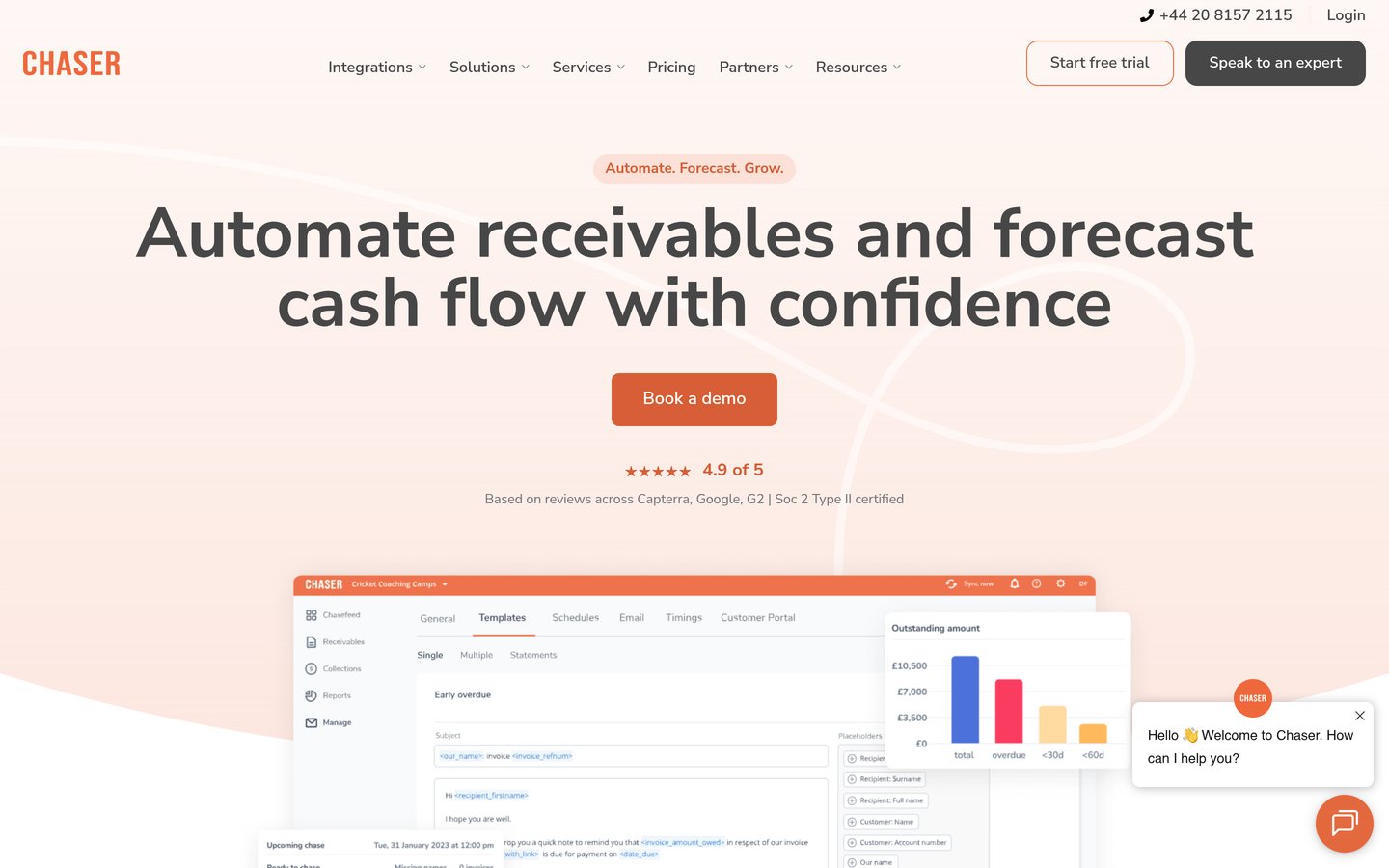
Chaser is an accounts receivable and collections platform that automates payment reminders, tracks customer communications and helps finance teams manage overdue invoices. Its Compact plan supports 4 users, 30 follow-up templates and 4 automated receivables workflows. The platform also offers payment portals, credit monitoring and collection escalation capabilities.
The trade off is its higher entry price of $259 per month, although annual billing reduces the advertised monthly equivalent to $233. Some advanced forecasting and workflow capabilities require higher plans. It suits businesses managing recurring overdue invoices that need more structured collection processes than accounting software provides.
What we like
Automated invoice reminders and follow-up workflows
Centralized customer communication history
Payment portal and debt recovery escalation options
Credit monitoring and cash flow visibility
G2 rating backed by 71 reviews
Watch out for
Higher starting price than basic reminder tools
Entry plan limits users and workflows
Some forecasting features require higher tiers
Higher plans expand workflows, users and forecasting capabilities.Visit chaserhq.com
02
InvoiceSherpa
4/5on Capterra (13 reviews, checked Nov 2026)
Starts at$49/mo
Best for small-business invoice collections
Entry planSole Proprietor
Open invoicesUp to 100
Payment remindersUnlimited
Transaction fee1% on paid invoices
invoicesherpa.com
InvoiceSherpa homepage, captured Nov 2026.
InvoiceSherpa is an automated accounts receivable tool that sends reminders and helps businesses follow up on outstanding payments. Its $49 monthly Sole Proprietor plan supports up to 100 open invoices, custom scheduling and accounting integrations. All plans include unlimited payment reminders, customizable email templates and access to a customer payment portal.
The trade off is the 1% transaction fee on paid invoices, although the vendor describes a processing arrangement that can waive it. The $99 monthly Small Business plan supports larger portfolios. It suits small businesses that primarily need invoice reminders rather than formal debt collection case management.
What we like
Affordable $49 monthly entry plan
Unlimited automated payment reminders
Customizable reminder schedules and templates
Accounting and payment integrations
Customer self-service payment portal
Watch out for
Entry plan limited to 100 open invoices
Transaction fees can increase total cost
Limited formal collection agency functionality
Higher plans increase invoice capacity to 500 or unlimited open invoices.Visit invoicesherpa.com
03
Paidnice
4.8/5on G2 (13 reviews, checked Nov 2026)
Starts at$69/mo
Best for automatic reminders and late fees
Entry planEssentials
Invoices monitored150/month
Emails included600/month
Team membersUp to 2
paidnice.com
Paidnice homepage, captured Nov 2026.
Paidnice is an accounts receivable automation platform for invoice reminders, late fees, interest charges and customer statements. Essentials costs $69 per month and covers up to 150 monitored invoices, 600 emails and 2 team members. It integrates with Xero, QuickBooks Online and Stripe, and offers a free initial allowance of 20 actions.
The trade off is that the Essentials plan has invoice, email and team limits, while advanced workflows require Pro starting at $99 per month. It suits finance teams that want overdue payment reminders and consistent late-fee policies without purchasing an enterprise collections platform.
What we like
Automates late fees, interest and reminders
Entry price of $69 per month
Integrates with major accounting platforms
Email engagement tracking and debtor reports
Strong G2 rating, although review volume is limited
Watch out for
Essentials has invoice and email limits
Advanced calling features require Pro
Limited public review volume
Pro adds unlimited users, payment plans, calling and webhook integrations.Visit paidnice.com
04
Collect!
4.7/5on Capterra (70 reviews, checked Nov 2026)
Starts at$699/mo
Best for established debt collection agencies
Entry planEntrepreneur Cloud
Included users3
Debtor accounts100,000
Annual subscription$6,990
collect.org
Collect! homepage, captured Nov 2026.
Collect! is debt collection management software designed for agencies and organizations handling debtor accounts. Its Entrepreneur cloud plan starts at $699 per month, includes 3 users and supports up to 100,000 debtor accounts. The platform provides collection workflows, payment processing connections, reporting and account management capabilities.
The trade off is cost and implementation complexity compared with basic invoice reminder systems. Annual billing is available at $6,990, while additional users and larger editions increase costs. It suits established collection agencies that need detailed debtor records, configurable workflows and structured recovery operations.
What we like
Designed specifically for debt recovery operations
Supports large debtor account portfolios
Configurable workflows and collection processes
Cloud pricing includes updates and support
4.7/5 Capterra rating from 70 reviews
Watch out for
More expensive than small-business AR tools
Requires configuration for specialized workflows
Additional users increase subscription costs
Professional and Corporate editions expand user and debtor account capacity.Visit collect.org
05
Simplicity
4.3/5on Capterra (97 reviews, checked Nov 2026)
Starts at$399/mo
Best for growing collection agencies
Entry planSimplicity Essential
Included users3
Accounts supported50,000
Startup fee$699
finvi.com
Simplicity homepage, captured Nov 2026.
Simplicity is Finvi's cloud-based debt collection software for agencies managing creditor clients and outstanding accounts. Essential costs $399 per month and includes 3 users, 50,000 accounts and unlimited clients. The platform includes consumer payment access, a creditor portal, reporting, bulk account management and collection workflow features.
The trade off is an additional $699 startup charge, with extra users costing $99 each per month. Businesses needing more account capacity and additional support must upgrade to Scale at $599 monthly. It suits growing collection agencies that need dedicated case management without moving immediately to a larger enterprise platform.
What we like
Purpose-built debt collection platform
Consumer and creditor portals
Unlimited creditor clients on the entry plan
Bulk account operations and reporting
Clear published monthly subscriptions
Watch out for
Separate startup fee
Additional users increase monthly expenses
Account limits depend on subscription tier
Scale increases capacity to 250,000 accounts and includes 10 users.Visit finvi.com
06
BILL
4.4/5on G2 (1,828 reviews, checked Nov 2026)
Starts at$49/mo
Best for combined invoicing and payment collection
Entry planEssentials
Subscription$49/user/month
Payment remindersAutomated
Receivable paymentsACH and card
bill.com
BILL homepage, captured Nov 2026.
BILL is a financial operations platform combining accounts payable and accounts receivable management. Its Essentials plan costs $49 per user monthly and includes invoice creation, payment tracking, automated reminders and electronic payment collection. Businesses can also manage supplier bills and approval workflows within the same system.
The trade off is that BILL focuses on broader financial operations rather than specialized debt recovery. The Essentials tier also relies on manual accounting data exchange through CSV files, while higher tiers offer deeper integrations. It suits businesses that need routine payment collection alongside accounts payable management.
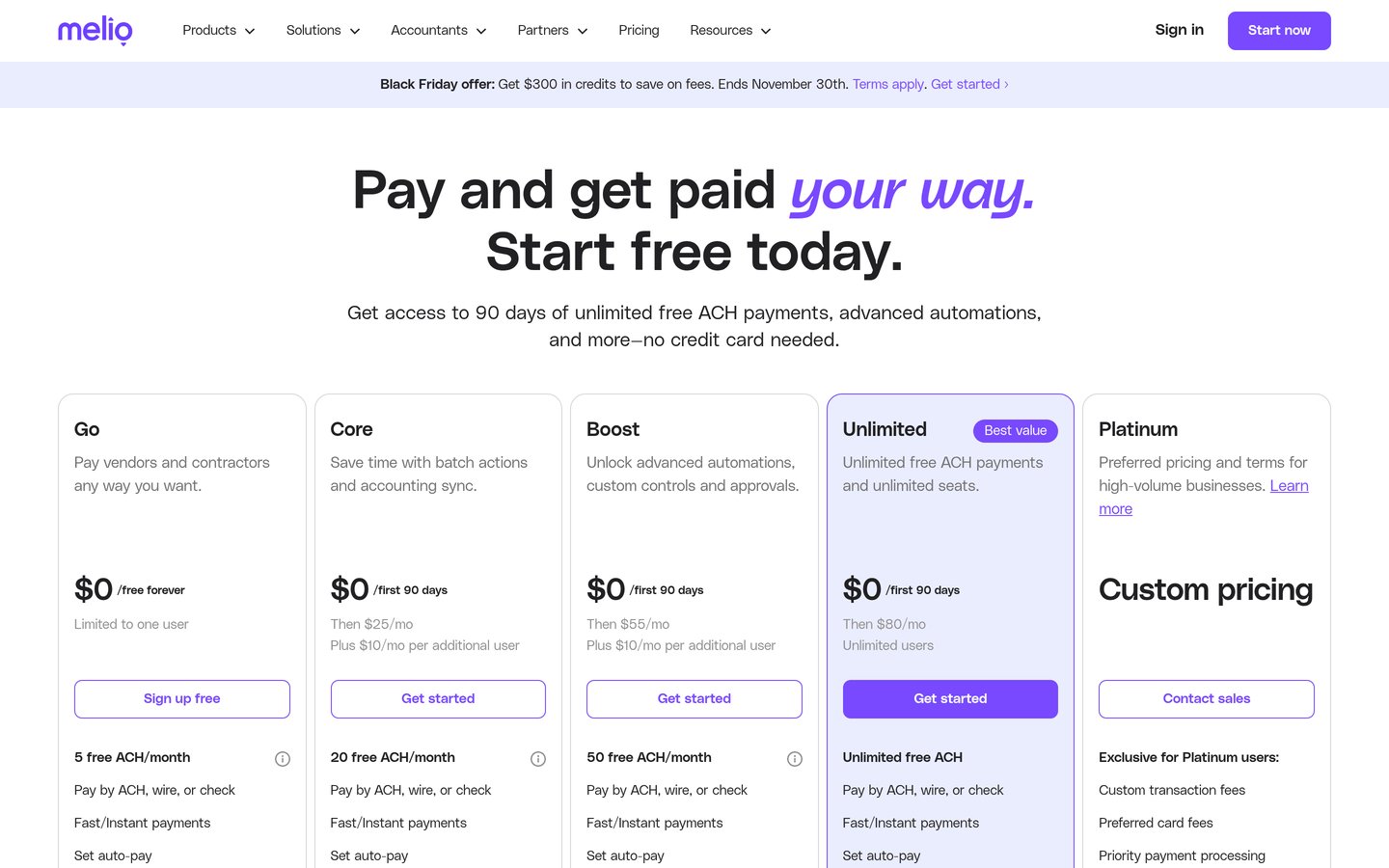
Melio is a business payments platform with invoicing, payment links and accounts receivable features. Its free Go plan supports invoice creation, customer payment collection and payment links, with 5 free ACH payments per month for outgoing payments. Core costs $25 monthly and adds accounting synchronization, batch payments and expanded business payment capabilities.
The trade off is that Melio is mainly a payment management system, not a dedicated collections platform. It does not provide the debtor case management and recovery workflows offered by specialized alternatives, and transaction charges can apply. It suits small businesses that need basic customer payment collection rather than complex overdue debt recovery.
What we like
Free plan includes invoicing and payment collection
First-party collections software helps businesses recover money owed directly to them. It usually connects with accounting software, monitors overdue invoices and automates follow-up communication.
Chaser, InvoiceSherpa and Paidnice focus on this area. They are generally a better fit for finance teams managing ordinary commercial receivables than platforms designed for collection agencies.
Third-party collections software is built for organizations collecting debts on behalf of creditors. It adds debtor account management, creditor reporting, payment arrangements, workflow controls and compliance-related records.
Collect! and Simplicity are more suitable for that operating model. BILL and Melio cover the lighter end of the market, where issuing invoices and collecting electronic payments are more important than formal debt recovery.
What collections software really costs
Subscription fees are only part of the cost. Check whether the advertised price covers your invoice volume, collection users, debtor accounts and accounting integrations.
InvoiceSherpa combines a $49 monthly entry subscription with a stated 1% transaction fee on paid invoices, subject to its published fee-waiver arrangement. Paidnice uses invoice and email limits, while BILL charges per user.
Dedicated recovery software can have larger upfront costs. Simplicity Essential includes a $699 startup fee in addition to its $399 monthly subscription. Collect! offers a separate annual subscription that changes the effective yearly cost.
Payment processing, migration work, staff training and additional integrations should be considered before signing a contract. Comparing only the starting monthly price can make a larger deployment appear cheaper than it actually is.
How we chose
We reviewed established accounts receivable and debt collection platforms, including software for business invoice follow-ups and specialist collection agencies. We compared collection workflows, payment features, account management, integrations and publicly available customer feedback.
Official vendor pricing pages and public ratings were researched for this November 2026 comparison, with the requested editorial reference date of 22 November 2026. Ratings come from G2 and Capterra. Prices reflect published standard entry plans rather than promotional offers, and annual costs reflect the available billing terms.
We excluded prominent quote-only collections platforms because their entry prices could not be independently confirmed. We also distinguished specialized debt recovery products from simpler invoicing platforms. No vendor paid for a place, and we do not claim testing for this list.
How to choose collections software
Identify your collections workflow, compare the actual subscription limits and confirm that the software connects with your financial systems before committing.
Decide what kind of collections you manage. If you collect your own overdue invoices, begin with an accounts receivable automation tool. If you operate a collection agency, choose dedicated debtor case management software with creditor reporting and recovery workflows.
Match automation to your collection process. Look for configurable reminder schedules, customer communication records, payment links and escalation rules. More complex operations may also require payment arrangements, dispute handling and compliance-related audit records.
Calculate the full annual cost. Include subscription fees, processing charges, extra users, invoice or account limits and implementation expenses. Compare annual billing with monthly billing rather than assuming the advertised entry price represents the full cost.
Check integrations and migration requirements. Confirm compatibility with your existing accounting platform, payment processor and customer records. Ask how overdue balances, customer histories and payment statuses are synchronized before moving live collection processes into a new system.
FAQ
What is the best collections software in 2026?
Chaser is our top choice for businesses managing overdue invoices because it combines automated follow-ups, payment tracking and escalation capabilities. Its entry subscription starts at $259 per month. Collection agencies may prefer Collect! or Simplicity because those platforms provide more specialized debtor account management.
What is the difference between collections software and accounts receivable software?
Accounts receivable software manages invoicing, outstanding balances, reminders and incoming payments. Collections software focuses more specifically on recovering overdue balances. Many platforms overlap, but dedicated debt collection systems also support complex account histories, creditor relationships, recovery workflows and compliance documentation.
Is there free collections software?
Melio offers a free invoicing and payment collection plan, but it is not a complete debt recovery platform. Paidnice also provides a limited free allowance of initial actions. Businesses needing advanced collection workflows, debtor account management or formal recovery processes generally need a paid subscription.
How much does collections software cost?
Published entry prices vary by product type. InvoiceSherpa starts at $49 monthly, Paidnice at $69 and Chaser at $259. Dedicated agency software is more expensive: Simplicity starts at $399 monthly plus setup, while Collect! lists a $699 monthly cloud option. Additional fees may apply.
Can collections software automatically contact overdue customers?
Yes. Chaser, InvoiceSherpa and Paidnice support automated invoice reminders and scheduled follow-up communication. Available channels and scheduling controls differ by subscription. Businesses should review message templates, payment records and applicable communication requirements before enabling automated collection sequences.
Which collections software is best for a small business?
InvoiceSherpa is a reasonable choice when the main requirement is sending reminders for unpaid invoices. Its $49 monthly plan supports up to 100 open invoices. Paidnice is another option for businesses that also want automated late fees and interest calculations.
What collections software should a debt collection agency use?
Collect! and Simplicity are more appropriate than general invoicing software for agencies working on behalf of creditors. Both support debtor records and collection workflows. The better choice depends on account volume, users, reporting requirements, implementation costs and how much workflow customization the agency requires.
Does collections software integrate with accounting systems?
Many platforms offer accounting integrations, but coverage varies by vendor and subscription. Paidnice connects with Xero and QuickBooks Online, while BILL provides accounting integration options. Before purchasing, verify whether invoice balances, customer information and completed payments synchronize automatically or require manual imports.