Duolingo is the best free app to learn Japanese if you want a daily habit with no cost, while LingoDeer is the best structured course once you want grammar explained properly. Renshuu covers vocabulary, kanji and grammar free in one place, and Bunpro drills grammar with spaced repetition for a small yearly fee.
How we make this list: we compare pricing pages, product documentation and public user reviews, then re-check every price before each update. No product paid for a place. Disclosure.
Duolingo is the best free start, with a full Japanese course from hiragana to kanji at $0.
LingoDeer is the best structured course, with grammar explained properly from $95.99 a year.
Renshuu is the best free all-in-one, covering vocabulary, kanji, grammar and listening at $0.
Bunpro drills more than 900 grammar points with spaced repetition for $64.99 a year.
Busuu Premium costs €57.99 a year, in euros, and adds corrections from native speakers.
What a free Japanese learning app should cover
Learning Japanese free splits into four jobs: building a daily habit, learning the kana and kanji, understanding grammar, and speaking with real people. No single free app covers all four well, so the best plan pairs one course app with one specialist.
Start with the habit. Duolingo is free with ads and teaches hiragana first, then katakana and kanji, in short daily lessons. LingoDeer explains grammar properly from the first lesson, which Duolingo skips, and its free lessons cover the alphabet and early grammar before Premium at 95.99 dollars a year.
Then add a specialist for your weak spot. Renshuu covers vocabulary, kanji, grammar and listening free in one place, Bunpro drills more than 900 grammar points with spaced repetition, and Kanji Study teaches kanji through vocabulary. Our guide to the best online learning platforms covers paid courses when free apps run out.
Speaking needs people, not lessons. Busuu adds corrections from native speakers on its free course, and JapanesePod101 gives short audio lessons for commutes. Anki is free on desktop and Android and holds whatever vocabulary you collect, with the iPhone app costing 24.99 dollars once.
List prices in each vendor's currency, checked Nov 2026
DuolingoFree
RenshuuFree
BunpoFree
Kanji StudyFree
JPod101Free
AnkiFREE$25
BusuuFREE€58
Bunpro$65
LingoDeerFREE$96
The 9 best apps to learn Japanese for free
01
Duolingo
4.7/5on App Store (5,622,522 reviews, checked Nov 2026)
PriceFree
Best free start and daily habit
Free tierFull course with ads
Super$83.99 a year, removes ads
Japanese courseHiragana, katakana, kanji
App Store rating4.7 from 5.6M reviews
duolingo.com
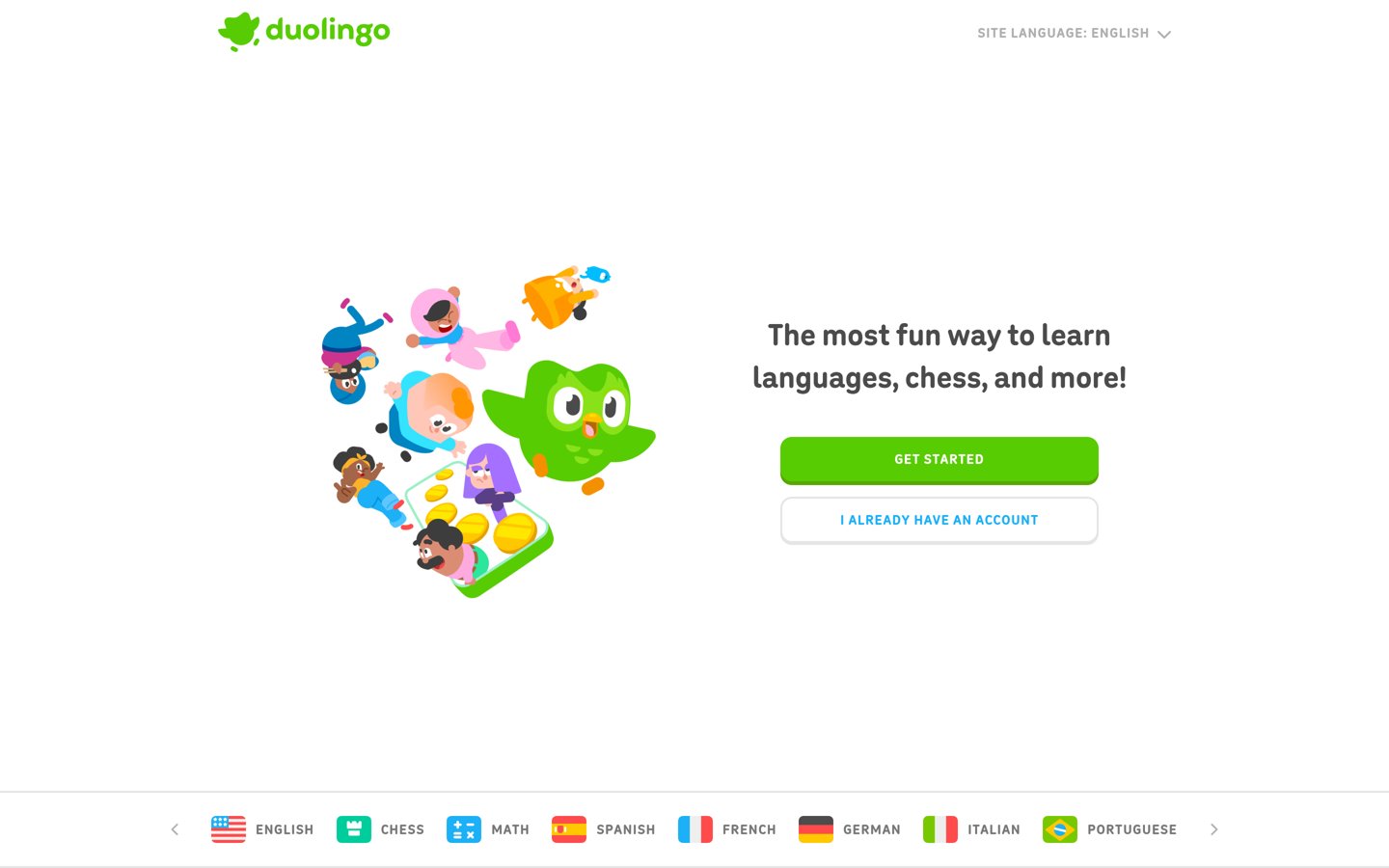
Duolingo homepage, captured Nov 2026.
Duolingo is the most popular free way to start Japanese, with a full course that introduces hiragana first, then katakana and kanji, in short daily lessons. The free tier covers the whole course with ads, and it holds a 4.7 rating from more than 5.6 million App Store reviews. It works on iOS, Android and the web.
The trade off is depth. Grammar explanations stay thin, sentences can sound unnatural, and Super at 83.99 dollars a year mainly removes ads and adds offline lessons. It suits absolute beginners who want a free daily habit and will add a grammar app later.
4.7/5on App Store (28,192 reviews, checked Nov 2026)
Paid from$95.99/yr
Best structured Japanese course
Premium$95.99 a year
Monthly$14.99 a month
Lifetime$159.99 once
Free tierFirst lessons free
lingodeer.com
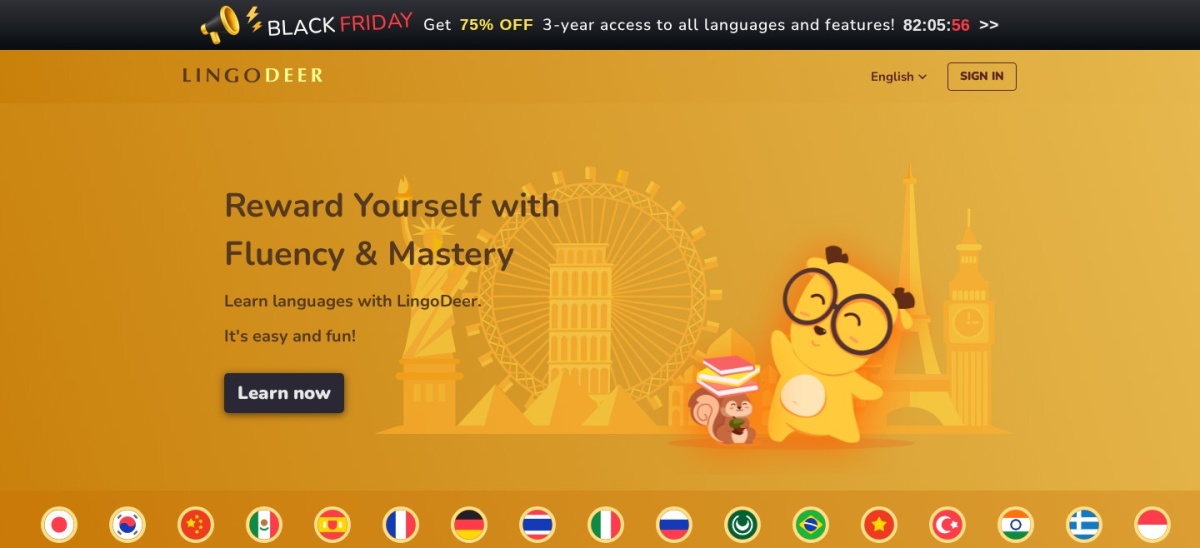
LingoDeer homepage, captured Nov 2026.
LingoDeer is a grammar-first Japanese course with structured lessons written by language teachers, native-speaker audio on every sentence, and clear explanations from the alphabet to intermediate grammar. It covers Japanese, Korean and Chinese, and it holds a 4.7 rating from more than 28,000 App Store reviews.
The trade off is the paywall. The first lessons are free, but most of the course needs Premium at 95.99 dollars a year, or 14.99 dollars a month. It suits learners who want grammar explained properly and will pay for structure.
4.9/5on Google Play (15,234 reviews, checked Nov 2026)
PriceFree
Best free all-in-one study hub
Free tierFull study system free
CoverageVocabulary, kanji, grammar, listening
JLPT practiceN5 to N1 drills
Google Play rating4.9 from 15,234 reviews
renshuu.org
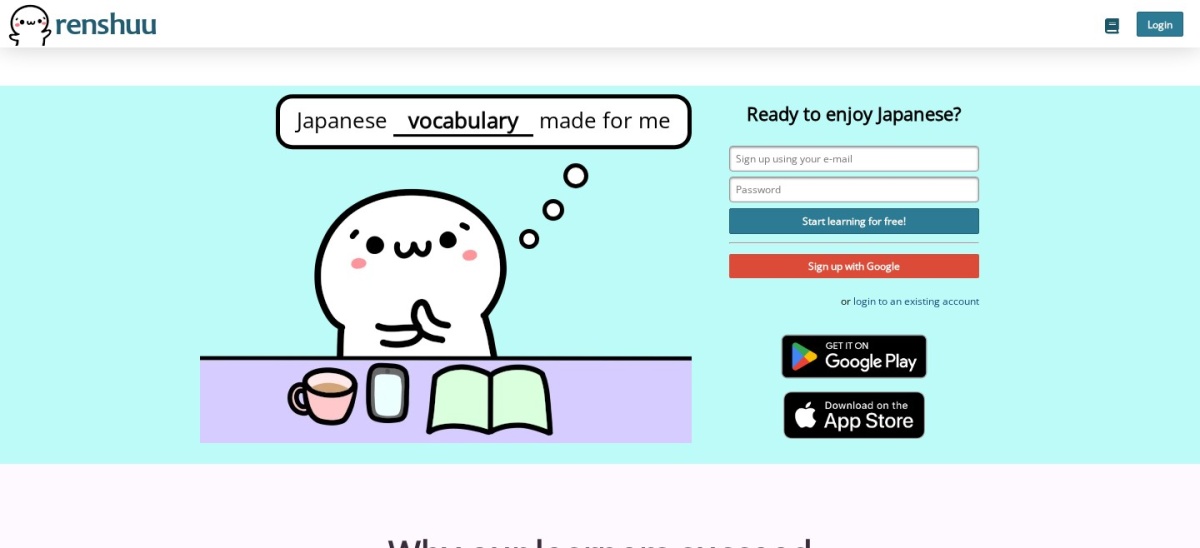
Renshuu homepage, captured Nov 2026.
Renshuu is a free-to-start study hub that covers vocabulary, kanji, grammar, listening and dictionaries in one place, with spaced repetition and JLPT practice from N5 to N1. Its free tier covers the full study system, and it holds a 4.9 rating from more than 15,000 Google Play reviews.
The trade off is the interface. There is so much content that new users can get lost in the menus, and the design is plainer than Duolingo or LingoDeer. It suits self-directed learners who want everything free in one place and do not mind exploring.
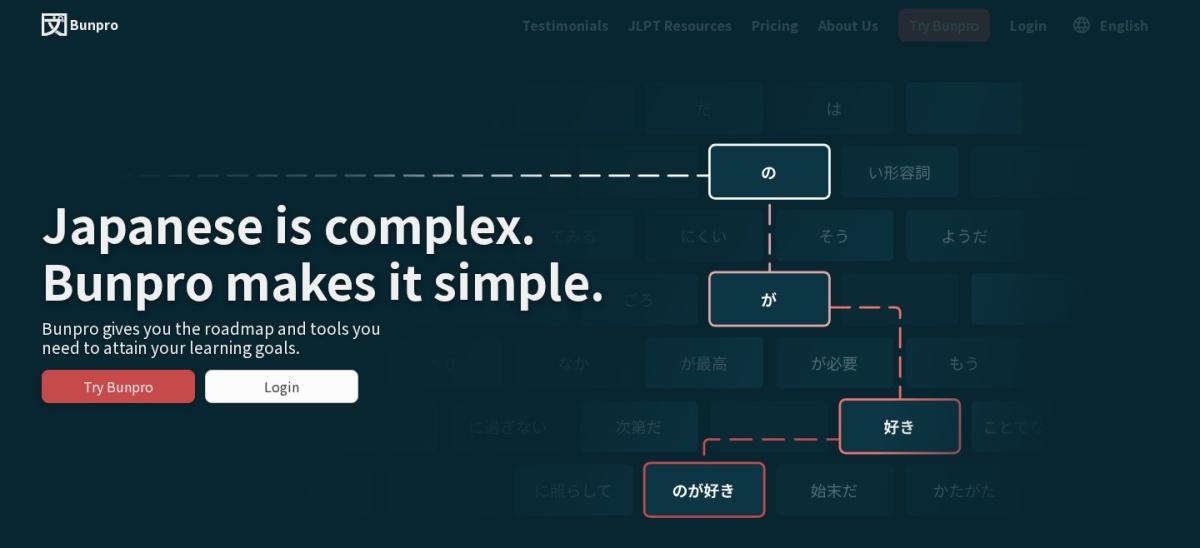
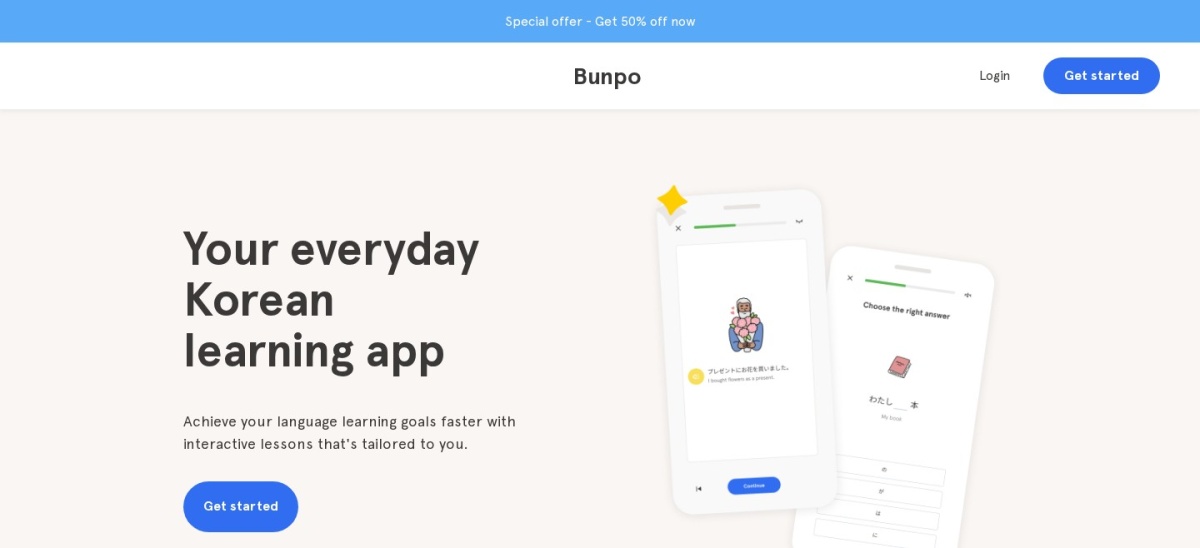
Bunpro is a grammar specialist that drills more than 900 Japanese grammar points with spaced repetition, example sentences and links to textbook explanations. It tracks JLPT levels from N5 to N1 and works beside a course app or textbook. It holds a 4.9 rating from 685 App Store reviews.
The trade off is scope and price. It teaches grammar only, with no vocabulary, listening or speaking, and after a 30-day trial it costs 64.99 dollars a year on the App Store, or 5 dollars a month on the web. It suits learners who already have a course and want grammar to stick.
4.9/5on App Store (17,979 reviews, checked Nov 2026)
PriceFree
Best free grammar lessons
Free tierCore grammar lessons free
JLPT grammarN5 to N1
ExtrasDictionary and quizzes
App Store rating4.9 from 17,979 reviews
bunpo.app
Bunpo homepage, captured Nov 2026.
Bunpo is a grammar-focused app that teaches Japanese through short lessons, quizzes and example sentences, with JLPT grammar from N5 to N1 and a built-in dictionary. Its core lessons are free, and it holds a 4.9 rating from nearly 18,000 App Store reviews.
The trade off is that it is grammar only. It does not teach speaking or listening, and the free tier covers the core while extras sit behind a subscription. It suits beginners who want free grammar lessons beside a course app.
4.7/5on App Store (101,663 reviews, checked Nov 2026)
Paid from€57.99/yr
Best feedback from native speakers
Free tierBasic course free
Premium€57.99 a year
Premium Plus€69.90 a year
Native feedbackCorrections on exercises
busuu.com
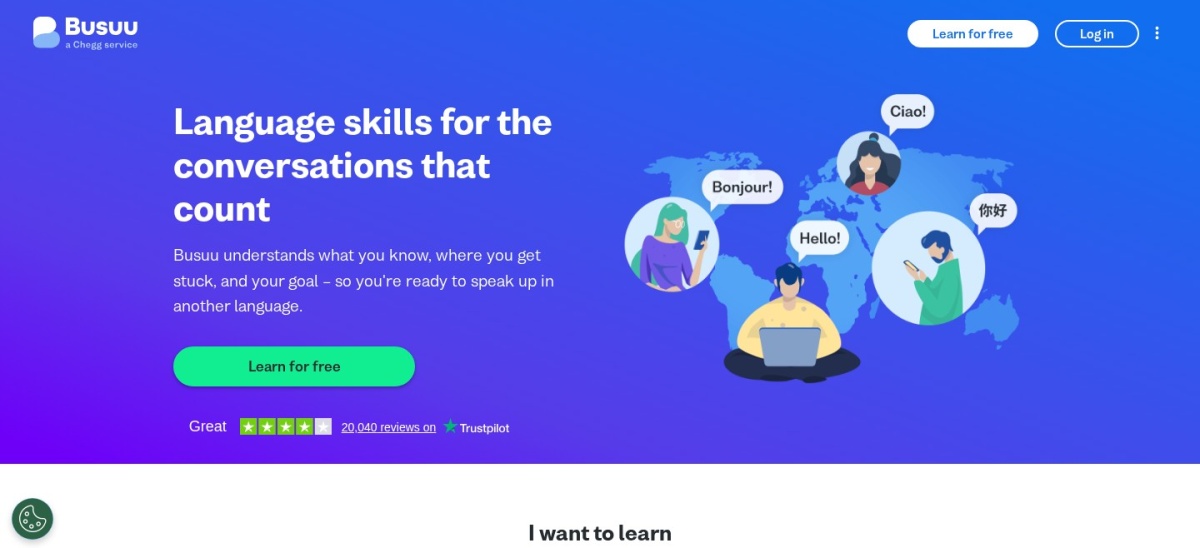
Busuu homepage, captured Nov 2026.
Busuu is a full language course with separate alphabet and kanji tracks, structured lessons from beginner to upper intermediate, and corrections from native speakers on writing exercises. Its free course covers the basics, and it holds a 4.7 rating from more than 101,000 App Store reviews.
The trade off is price and currency. Premium costs 57.99 euros a year, not dollars, and most of the course sits behind the paywall. It suits learners who want human feedback on their Japanese and do not mind paying in euros.
4.9/5on Google Play (58,600 reviews, checked Nov 2026)
PriceFree
Best free kanji practice
Free tierFree to start
MethodKanji through vocabulary
PracticeFlashcards, quizzes, writing
Google Play rating4.9 from 58,600 reviews
mindtwisted.com
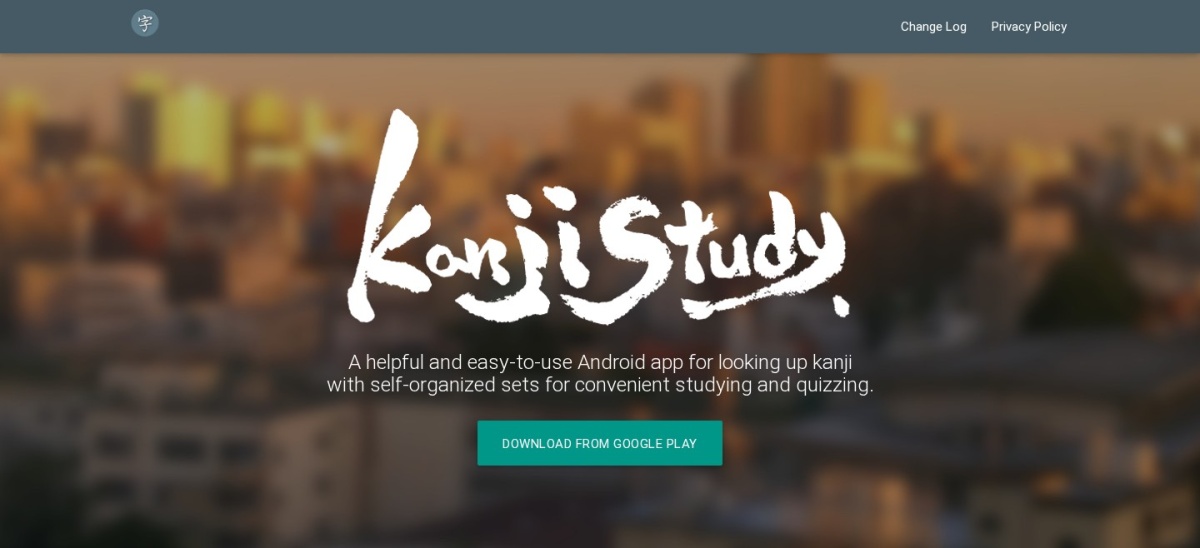
Kanji Study homepage, captured Nov 2026.
Kanji Study is a dedicated kanji app that teaches characters through the vocabulary words they appear in, with flashcards, multiple-choice quizzes, writing challenges and spaced repetition. It is free to start, and it holds a 4.9 rating from more than 58,000 Google Play reviews.
The trade off is narrow focus. It teaches kanji and vocabulary only, with no grammar, listening or speaking, and the iPhone version has far fewer reviews than the Android one. It suits learners who want a free kanji drill beside a course app.
3.9/5on App Store (2,500 reviews, checked Nov 2026)
Paid from$24.99 (one-time)
Best custom flashcards
Desktop and AndroidFree
iPhone app$24.99 once
SyncFree, no subscription
Learners15M+ worldwide
apps.ankiweb.net
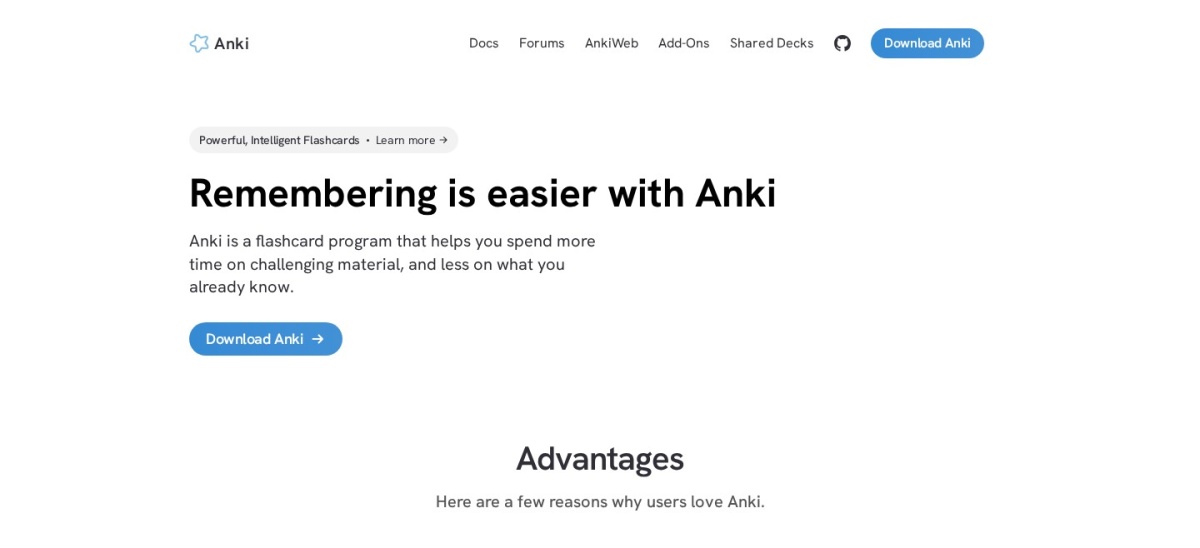
Anki homepage, captured Nov 2026.
Anki is a free flashcard system that schedules reviews with spaced repetition, so vocabulary and kanji you collect from anywhere actually stick. Decks are shared by the community, sync is free, and the desktop and Android apps cost nothing. The iPhone app costs 24.99 dollars once.
The trade off is setup and polish. You build or find your own decks, the interface is plain, and its App Store rating is only 3.9 from 2,500 reviews. It suits learners who want full control over what they memorise.
JapanesePod101 is an audio and video lesson library with hundreds of short lessons organised by level, from absolute beginner to advanced, in a podcast style that fits commutes and workouts. A free account opens the first lessons, and lessons are downloadable for offline listening.
The trade off is structure and proof. Lessons can feel disorganised without a clear learning path, and its G2 rating of 3.8 rests on only 19 reviews. Premium plans run from 8 to 47 dollars a month. It suits commuters who learn by listening.
Free vs paid: what the free tier actually includes
Duolingo's free tier covers the whole Japanese course with ads, and Super at 83.99 dollars a year mainly removes ads and adds offline lessons. You can learn a lot without paying, but the grammar explanations stay thin.
LingoDeer and Bunpro gate most content behind paywalls. LingoDeer gives the first lessons free, then Premium at 95.99 dollars a year, while Bunpro offers a 30-day trial before 64.99 dollars a year on the App Store.
Renshuu, Bunpo and Kanji Study give the most away free. Renshuu's free tier covers its full study system, Bunpo's core grammar lessons are free, and Kanji Study is free with optional extras. Start with these before you pay for anything.
How we chose
We started from the apps most often recommended for learning Japanese free in 2026 roundups, then kept those with a verifiable App Store, Google Play or G2 rating and a genuinely free tier.
Prices come from each vendor's pricing page or App Store listing, checked on 25 November 2026. Ratings and rating counts come from the App Store, Google Play or G2 on the same day. Where a vendor shows a sale, the list shows the regular price.
We left out tools with no public rating and tools with no free tier. No vendor paid for a place, and we do not claim hands-on testing for this list.
How to choose a free Japanese learning app
Pick one course app first, then add a specialist for your weak spot.
Pick one course app first. Duolingo suits a free daily habit, while LingoDeer suits learners who want grammar explained from day one.
Learn hiragana and katakana before kanji. Both scripts take a few weeks, and every app here teaches them; kanji comes easier once you can read kana.
Add one specialist for your weak spot. Bunpro drills grammar, Kanji Study drills kanji, and Anki holds the vocabulary you collect from anywhere.
Practise speaking early. Busuu adds native-speaker corrections, and JapanesePod101 audio lessons fit commutes; neither needs a paid plan to start.
FAQ
What is the best free app to learn Japanese?
Duolingo is the best free app to learn Japanese if you want a daily habit with no cost, with a full course from hiragana to kanji. LingoDeer is the best structured course, with grammar explained properly, though most of it needs Premium at 95.99 dollars a year.
Can you learn Japanese completely free?
Yes, to an intermediate level. Duolingo, Renshuu, Bunpo and Kanji Study are free, and Anki is free on desktop and Android. You will still need speaking practice with real people, which free apps only partly cover.
Is Duolingo good for Japanese?
Duolingo is good for building a daily habit and learning hiragana, katakana and basic kanji free. It teaches grammar thinly and its sentences can sound unnatural, so pair it with LingoDeer or Bunpro once you pass the basics.
What is the best app for Japanese kanji?
Kanji Study is the best free kanji app, with a 4.9 rating from more than 58,000 Google Play reviews and kanji taught through vocabulary. WaniKani is the best-known kanji system, but it has no public App Store or G2 rating, so it is not in this list.
Is WaniKani free?
WaniKani is free for the first three levels, then costs 9 dollars a month, 89 dollars a year or 299 dollars once. It teaches more than 2,000 kanji with mnemonics, but it has no verifiable public rating, so this list does not rank it.
How long does it take to learn Japanese with an app?
Reaching everyday conversation usually takes one to two years of daily study, even with the best apps. Hiragana and katakana take a few weeks, basic kanji several months, and speaking needs real practice beyond any app.
SaaS SEO and WordPress specialist with about 8 years of experience. Rakib compares WordPress plugins, themes, hosting and software using public pricing, documentation and user reviews. See how we rank.