Best All-in-One HR Platforms for Retail in 2026: 7 Tools Compared
WLWPLegible EditorsLast verified 22 Nov 2026How we rank11 min read
★ Short answer
Homebase is the best all-in-one HR platform for most small retail businesses, with scheduling, attendance and employee management starting at $30 per location per month on its paid plans. Choose Connecteam for mobile workforce management and Factorial for centralized employee records and HR administration.
How we make this list: we compare pricing pages, product documentation and public user reviews, then re-check every price before each update. No product paid for a place. Disclosure.
Homebase starts at $30 per location per month and supports unlimited employees on its paid Essentials plan.
Connecteam offers individual software hubs from $29 per month with annual billing for the first 30 users.
Factorial publishes a starting price of $8 per employee per month for its HR platform.
Gusto combines payroll and basic HR administration from $49 per month plus $6 per employee.
Deputy scores 4.6/5 from 775 Capterra reviews and focuses on hourly workforce management.
What an all-in-one retail HR platform should cover
Retail HR involves more than maintaining employee records. Managers need to fill shifts, track attendance, onboard seasonal workers, approve time off and prepare accurate payroll without relying on separate spreadsheets.
Look for mobile employee self-service, location-based permissions and shift-swapping tools. These features help store managers handle routine workforce changes without sending every request to a central HR department.
An effective retail HR platform should connect scheduled hours with actual attendance and payroll records. Check whether payroll is built into the platform or requires an external provider.
Pricing models matter when employee numbers change throughout the year. Per-location subscriptions can suit busy stores, while per-employee pricing may be more economical for smaller teams spread across multiple locations.
4.6/5on Capterra (1,158 reviews, checked Nov 2026)
Paid from$30/mo
Best for small retail businesses
Billing modelPer location
Shift schedulingIncluded
PayrollPaid add-on
Paid planEssentials, unlimited employees
joinhomebase.com
Homebase homepage, captured Nov 2026.
Homebase is a workforce management platform that combines employee scheduling, time tracking, team communication and HR services for hourly businesses. Its $30 monthly Essentials plan supports unlimited employees per location and adds advanced scheduling, attendance tools and team communication.
The trade off is that more extensive HR features require higher-priced subscriptions, while payroll costs extra even on the $30 Essentials plan. A temporary payroll promotion is available, but it does not replace the regular subscription price. It suits independent retailers and growing store teams.
What we like
Per-location pricing accommodates larger store teams
Scheduling and time tracking in the same system
Free plan available for small businesses
Integrations with retail point-of-sale systems
Watch out for
Payroll requires a separate add-on
Advanced HR features require higher plans
Subscription costs increase with additional locations
4.6/5on Capterra (5,322 reviews, checked Nov 2026)
Paid from$29/mo
Best for mobile frontline workforce management
Billing modelPer software hub
Entry plan capacity30 users
Employee trainingHR & Skills Hub
PayrollExternal integrations
connecteam.com
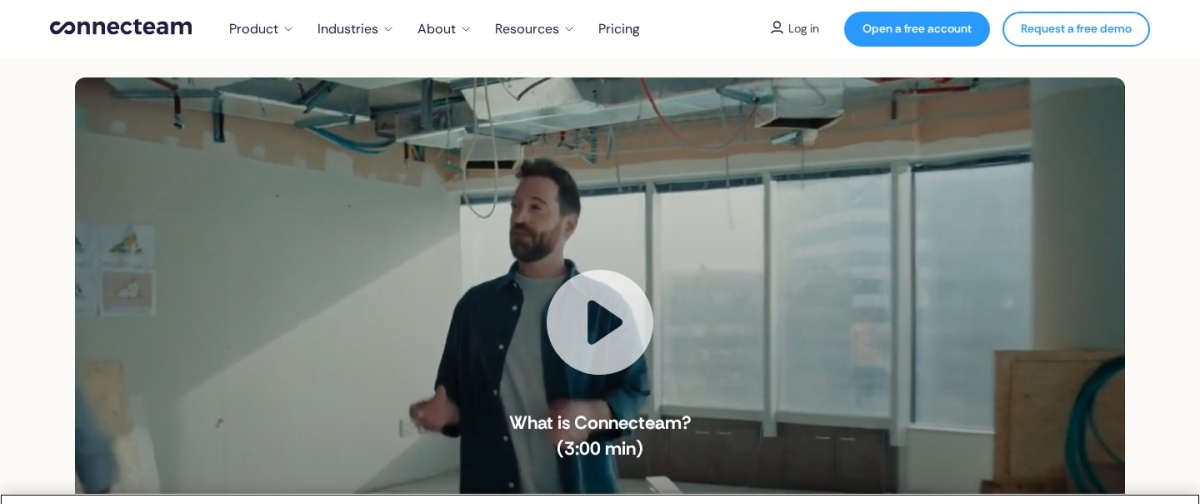
Connecteam homepage, captured Nov 2026.
Connecteam is a mobile workforce platform with separate hubs for operations, communications and HR. Each Basic hub starts at $29 per month for the first 30 users with annual billing, covering functions such as scheduling, employee communication or training depending on the selected hub.
The trade off is modular pricing: the $29 monthly subscription covers an individual hub rather than every available business function. Retailers needing all three paid Basic hubs would spend $87 per month with annual billing. It suits stores that prioritize mobile communication, employee training and daily task management.
What we like
Mobile-first employee experience
Scheduling and operational checklists
Employee training and document management
Group communication for distributed teams
Free plan for small teams
Watch out for
Separate subscriptions for different software hubs
Payroll relies on external integrations
Additional user charges above the included capacity
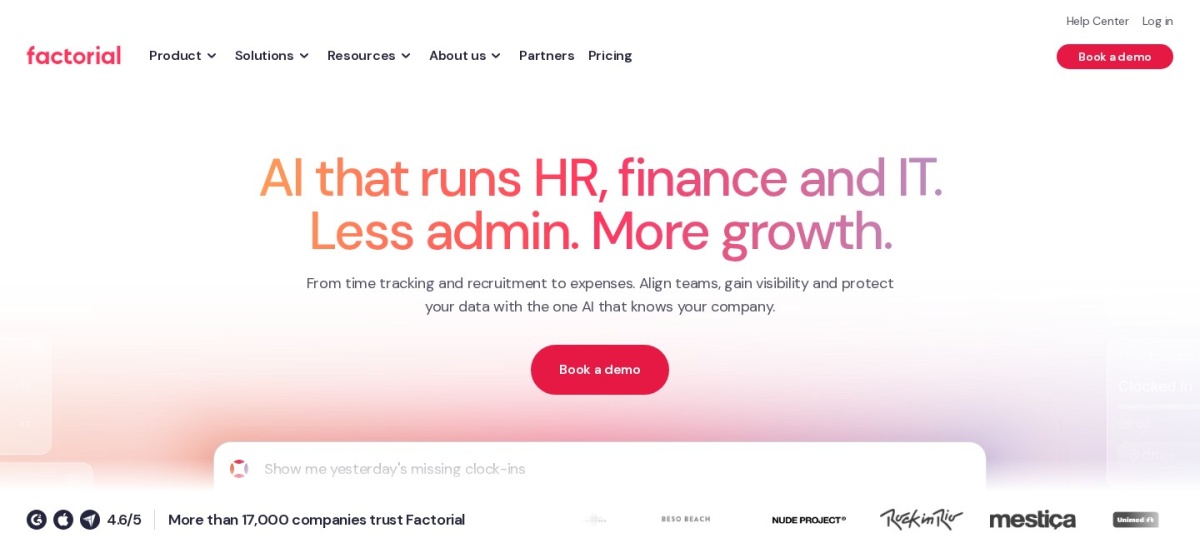
Factorial is an HR management platform covering employee documentation, recruitment, attendance, scheduling and performance management. Pricing starts at $8 per employee per month, with Factorial Core providing employee directories, onboarding workflows, document distribution and electronic signatures.
The trade off is that the $8 starting price does not necessarily cover every workforce management module. Retailers must request a tailored quote for their required combination of scheduling, time tracking and talent management features. It suits growing retail businesses that need centralized HR administration.
What we like
Centralized employee records and documents
Digital onboarding and electronic signatures
Shift planning and attendance modules
Employee performance management
Configurable HR workflows
Watch out for
Complete platform pricing requires a quote
Some reviewers report slow customer support
Additional modules increase subscription costs
Paid subscriptions include Factorial Core with optional modulesVisit factorial.com
04
Deputy
4.6/5on Capterra (775 reviews, checked Nov 2026)
Starts at$5/mo
Best for retail shift scheduling and labor planning
Billing modelPer user
Entry planLite
HR add-on$2/user/mo
Demand forecastingCore plan
deputy.com
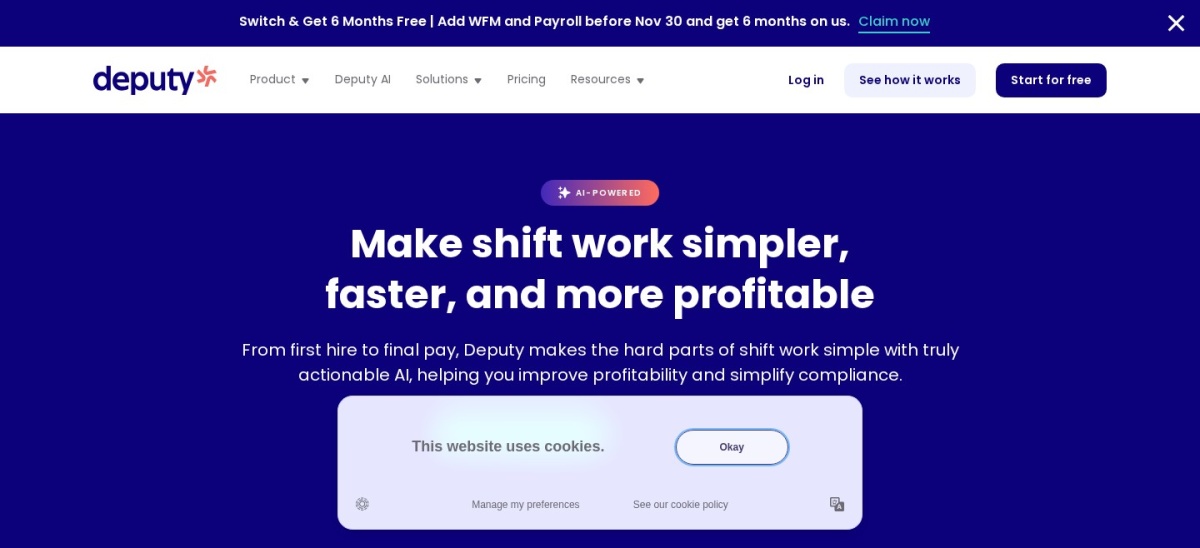
Deputy homepage, captured Nov 2026.
Deputy is a workforce management platform designed for businesses with hourly employees and changing schedules. Its Lite plan costs $5 per user per month and covers shift scheduling, attendance tracking, employee availability, shift exchanges and payroll integrations.
The trade off is that comprehensive employee administration requires the HR add-on, priced at $2 per user per month on monthly billing, alongside the $5 Lite subscription. Payroll also requires additional services, although a temporary promotion is available. It suits retailers managing variable staffing demands.
What we like
Employee shift exchanges and availability management
Scheduling tools for hourly workforces
Attendance and break management
Demand forecasting on higher plans
Dedicated HR add-on
Watch out for
No permanent free plan
Full HR functionality requires an add-on
Payroll availability and eligibility vary
Lite adds scheduling and attendance, with optional HR upgradesVisit deputy.com
05
BambooHR
4.6/5on Capterra (3,653 reviews, checked Nov 2026)
Starts at$10.25/mo
Best for established retail HR departments
Billing modelPer employee or flat rate
Employee databaseIncluded
Time and attendancePaid add-on
PayrollPaid add-on
bamboohr.com
BambooHR homepage, captured Nov 2026.
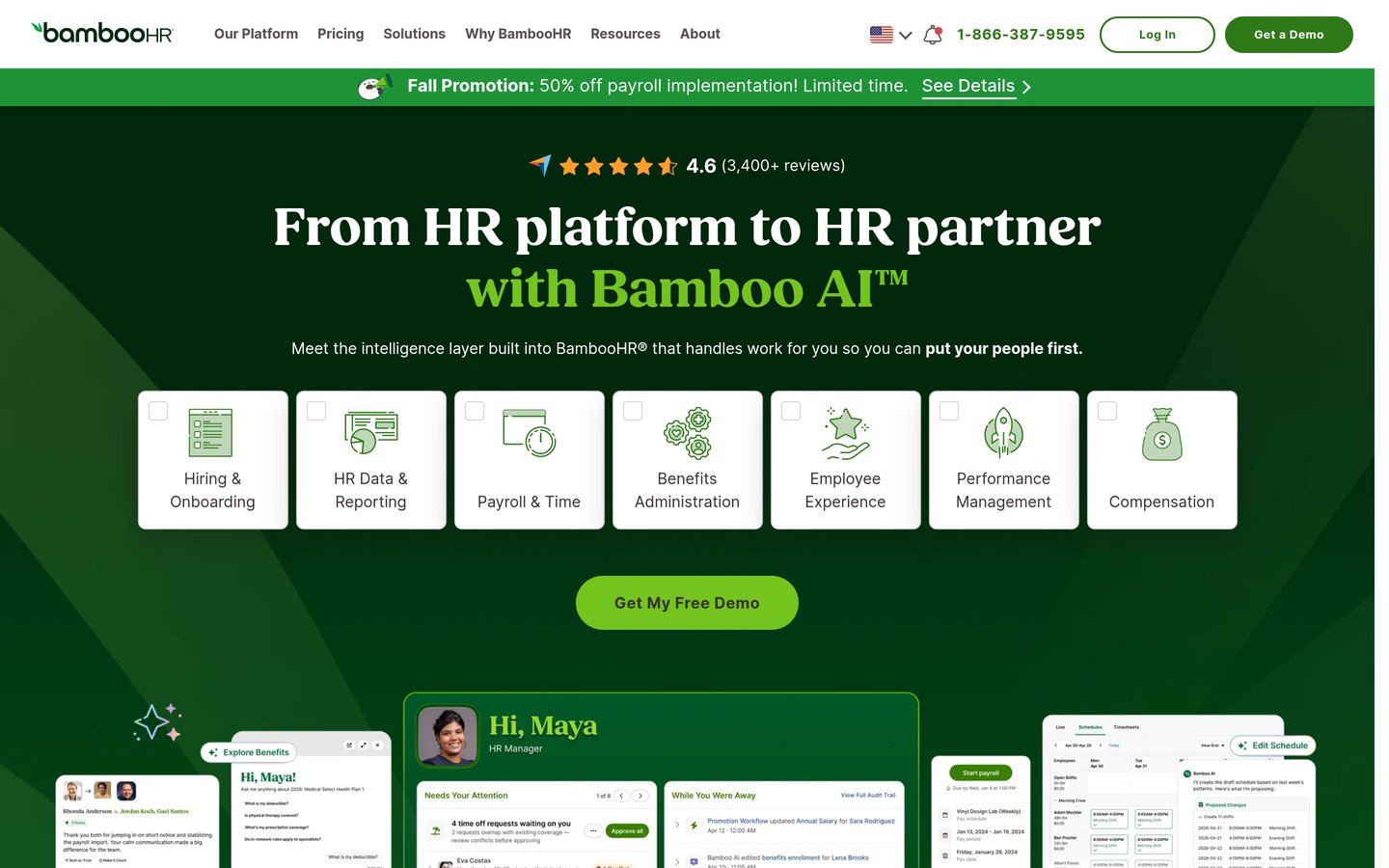
BambooHR is an employee management platform that centralizes HR records, reporting and administrative processes. Its pricing FAQ lists Core from $10.25 per employee per month for businesses with more than 25 employees, with employee databases and configurable HR reporting included.
The trade off is that smaller businesses with 25 employees or fewer pay a $250 monthly flat rate for Core. Shift scheduling, attendance and payroll require additional modules. It suits established retail companies that need structured HR processes rather than inexpensive scheduling software alone.
What we like
Centralized employee information
Configurable HR reports
Employee self-service functionality
Optional payroll and workforce management modules
Watch out for
Relatively expensive for small stores
Scheduling requires an additional module
Complete subscription costs depend on selected services
4.6/5on Capterra (4,232 reviews, checked Nov 2026)
Starts at$49/mo
Best for payroll-focused retail businesses
Billing modelBase fee plus employee fee
Employee charge$6/person/mo
PayrollIncluded in Simple
SchedulingPlus plan
gusto.com
Gusto homepage, captured Nov 2026.
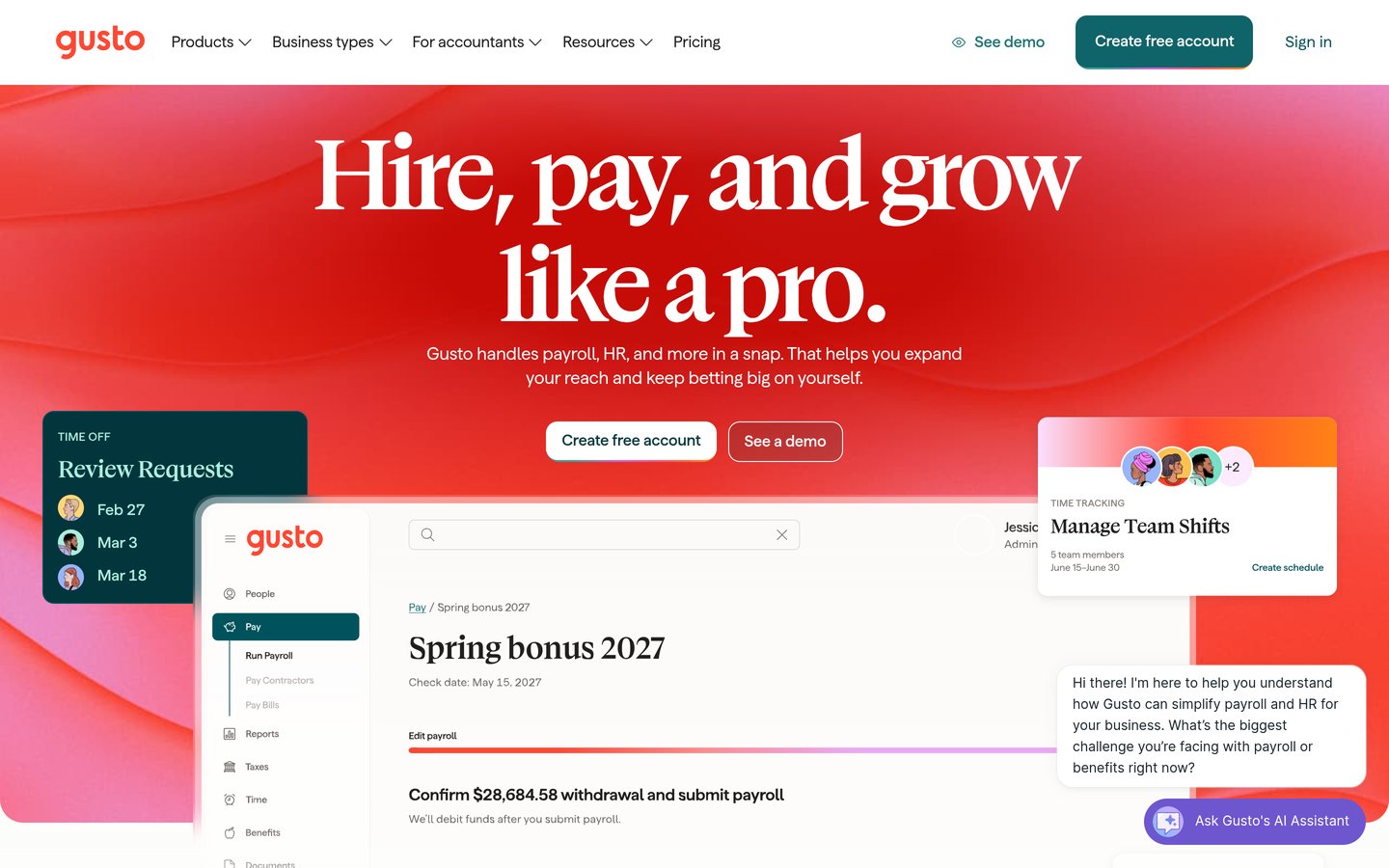
Gusto is a payroll and HR platform that helps businesses manage employee payments, benefits and routine administration. Its Simple plan costs $49 per month plus $6 per person, with recurring payroll processing, payroll tax administration and basic paid time off policies included.
The trade off is that built-in scheduling and time tracking require Plus, which costs $80 per month plus $12 per person. The price ladder shows the Simple base subscription before employee charges. It suits retail businesses that prioritize payroll accuracy and want related HR functions in the same system.
What we like
Payroll included in the entry subscription
Employee benefits administration
Basic leave policies included
Higher plans combine scheduling and payroll
Watch out for
Base fee excludes employee charges
Entry plan lacks built-in shift scheduling
Payroll coverage depends on business location
Simple includes payroll, while Plus adds workforce trackingVisit gusto.com
07
Rippling
4.9/5on Capterra (4,884 reviews, checked Nov 2026)
Starts at$8/mo
Best for growing multi-location retail businesses
Billing modelPer employee plus base fee
Workflow automationAvailable
Shift schedulingAvailable module
PayrollAvailable module
rippling.com
Rippling homepage, captured Nov 2026.
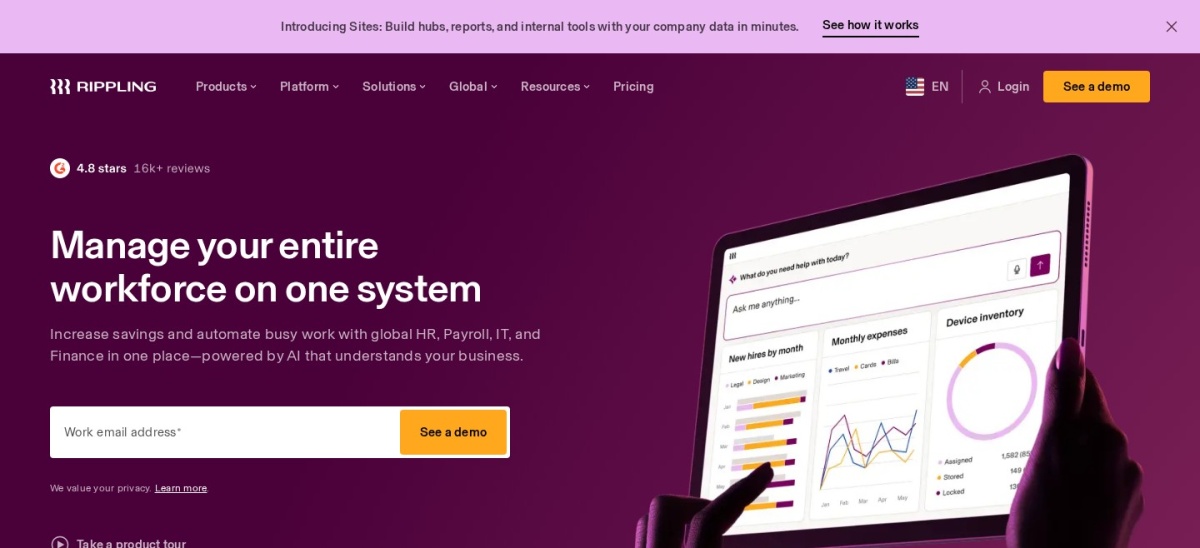
Rippling is a business management platform that connects HR records with payroll, scheduling, employee benefits, IT administration and finance. Its official pricing FAQ lists subscriptions starting at $8 per employee per month, plus a monthly base fee determined through a quote.
The trade off is that the $8 starting price represents only part of the complete subscription cost. Retailers need a quote covering required workforce modules, employee numbers and base charges. It suits multi-location businesses seeking connected employee administration and automated workflows across departments.
What we like
Connected employee data across business functions
Configurable workflow automation
Scheduling and attendance modules
Payroll and employee benefits integration
Centralized permissions management
Watch out for
Complete subscription pricing requires a quote
Additional modules can increase total costs
Broader implementation requirements than scheduling-focused tools
Paid modules connect HR, payroll, workforce management and ITVisit rippling.com
How retail HR software pricing affects your budget
The price ladder annualizes the published entry subscription for each platform. Per-employee prices represent individual employee costs, per-location prices represent individual stores, and base subscriptions exclude additional employee charges. These figures are starting points rather than equivalent complete platform costs.
Homebase charges $30 per location per month for Essentials, while Deputy charges $5 per user per month for Lite. The appropriate pricing model depends on store headcount, employee turnover and the number of locations you manage.
Connecteam charges separately for its software hubs. Factorial, BambooHR and Rippling also offer additional modules that can increase subscription costs. Compare quotes for your actual feature requirements before choosing the platform with the lowest advertised price.
Which HR features matter most for retail businesses?
Employee scheduling should account for staff availability, opening hours, planned absences and changing customer demand. Managers also need clear approval processes for shift changes and unexpected absences.
Attendance records should flow directly into payroll preparation. Automatic overtime calculations, break tracking and manager approvals help reduce discrepancies between scheduled shifts and actual working hours.
Digital onboarding is particularly useful when hiring seasonal employees. Look for reusable onboarding workflows, electronic documents and employee training resources that workers can access from their phones.
Multi-location retailers should prioritize store-specific permissions and consolidated reporting. Individual managers need access to their own employees, while central HR teams need visibility across the business.
How we chose
We shortlisted established HR and workforce management platforms suitable for retail businesses. The comparison prioritizes employee scheduling, attendance, onboarding, payroll availability, mobile access, employee administration and support for distributed workforces.
Prices and ratings were checked on 24 Nov 2026 using official vendor pricing pages and Capterra reviews, following the editorial publication date of 22 Nov 2026. Annual prices represent published starting subscriptions before applicable employee charges, additional modules and unspecified base fees.
We excluded standalone attendance trackers, recruitment-only platforms and products without sufficient independent review evidence. Temporary promotions were excluded from regular subscription prices. No vendor paid for a place, and we do not claim testing for this list.
How to choose the best all-in-one HR platform for retail
Compare platforms against your actual workforce requirements before committing to an annual subscription.
Identify your essential retail HR features. Determine whether you need scheduling, payroll, employee records, recruitment, training or performance management. Separate essential features from optional capabilities to avoid paying for unnecessary software modules.
Calculate costs using your real employee numbers. Compare per-location subscriptions, individual employee charges and monthly base fees. Include seasonal headcount increases and additional store openings when calculating your expected annual software expenses.
Check payroll and point-of-sale compatibility. Confirm that approved attendance records can transfer to your payroll provider. Retailers should also check whether their existing point-of-sale system can supply sales information for labor planning and reporting.
Evaluate mobile access and manager permissions. Review how employees request leave, exchange shifts and complete onboarding. Ensure store managers can approve requests and access relevant employee records without exposing confidential information from other locations.
FAQ
What is the best all-in-one HR platform for retail?
Homebase is our top pick for small retail businesses because it combines scheduling, time tracking and employee management with per-location pricing. Connecteam is better suited to mobile frontline teams, while Factorial offers broader centralized HR administration.
How much does retail HR software cost?
Published starting prices include $5 per user per month for Deputy, $8 per employee per month for Factorial and $30 per location per month for Homebase Essentials. Complete HR subscriptions can cost more when payroll, training and additional modules are included.
Is there free HR software for retail stores?
Yes. Homebase and Connecteam offer free plans suitable for smaller teams. However, free subscriptions generally have limitations on employee capacity or available features. Businesses requiring advanced HR administration, payroll or broader workforce management should compare paid upgrades.
Which HR platform is best for managing multiple retail stores?
Rippling is a suitable option for growing retail businesses that want connected employee records, payroll and workflow automation. Deputy is worth considering when scheduling and labor planning are the main priorities. Both require careful evaluation of module costs.
Can retail HR software handle seasonal employees?
Yes. Retail workforce platforms can support temporary hiring through employee onboarding, availability tracking, shift scheduling and document management. Check how the vendor bills temporary, inactive and archived employees before selecting a subscription for a seasonal business.
Does all-in-one retail HR software include payroll?
Not always. Gusto includes payroll in its Simple subscription, while Homebase offers payroll as an add-on. Other platforms may provide optional payroll modules or integrations. Confirm payroll availability, eligibility and additional costs before purchasing.
What is the difference between retail HR software and employee scheduling software?
Scheduling software primarily manages shifts, attendance and employee availability. Retail HR platforms extend these functions to employee documentation, onboarding, payroll coordination and other administrative processes. Some vendors combine both categories through separate paid software modules.
Is per-location or per-employee HR pricing better for retail?
Per-location pricing can be economical for stores with many employees, while per-employee subscriptions may suit smaller teams distributed across several locations. Compare the full annual cost using your expected staffing levels rather than relying on advertised starting prices.