Best AI Tools for Teacher Productivity in 2026: 8 Tools Compared
WLWPLegible EditorsLast verified 24 Nov 2026How we rank12 min read
★ Short answer
MagicSchool AI is the best AI tool for teacher productivity for most teachers, with more than 80 planning, grading and communication tools on a free plan. Pick Quizizz for AI-generated quizzes and games, and CoGrader for rubric-based essay grading with teacher approval on every score.
How we make this list: we compare pricing pages, product documentation and public user reviews, then re-check every price before each update. No product paid for a place. Disclosure.
MagicSchool AI leads with 80-plus teacher tools on a free plan, rated 4.7 on G2, though from only 7 reviews.
Quizizz holds the highest rating here at 4.9 on G2 from 255 reviews, with an AI quiz generator on paid plans.
CoGrader and EssayGrader grade essays against your rubric, and both keep the teacher as the final grader.
Khanmigo is free for teachers and costs $4 a month for learners, the cheapest paid plan in this list.
Curipod and Gradescope publish no individual price; both sell school and district plans by quote.
What AI adds to teacher productivity
AI teacher tools save time on the repetitive half of teaching: drafting lesson plans, leveling reading passages, grading essays and writing feedback. The teacher still reviews every output before it reaches students.
This list splits into planners, graders and live-lesson tools. MagicSchool AI and Khanmigo cover planning and tutoring, CoGrader, EssayGrader and Gradescope grade student work, and Quizizz, Kahoot and Curipod run live lessons and quizzes.
Ratings in this category are thin. Most of these tools hold fewer than 300 reviews on G2, and two hold fewer than 10, so treat the scores as a rough guide rather than a verdict. Our guide on choosing AI tools for business explains how to weigh ratings against price.
Free plans matter here because teachers often pay out of pocket. Every tool in this list has a free plan or a free tier, and the cheapest paid plans run from $4 to $19 a month.
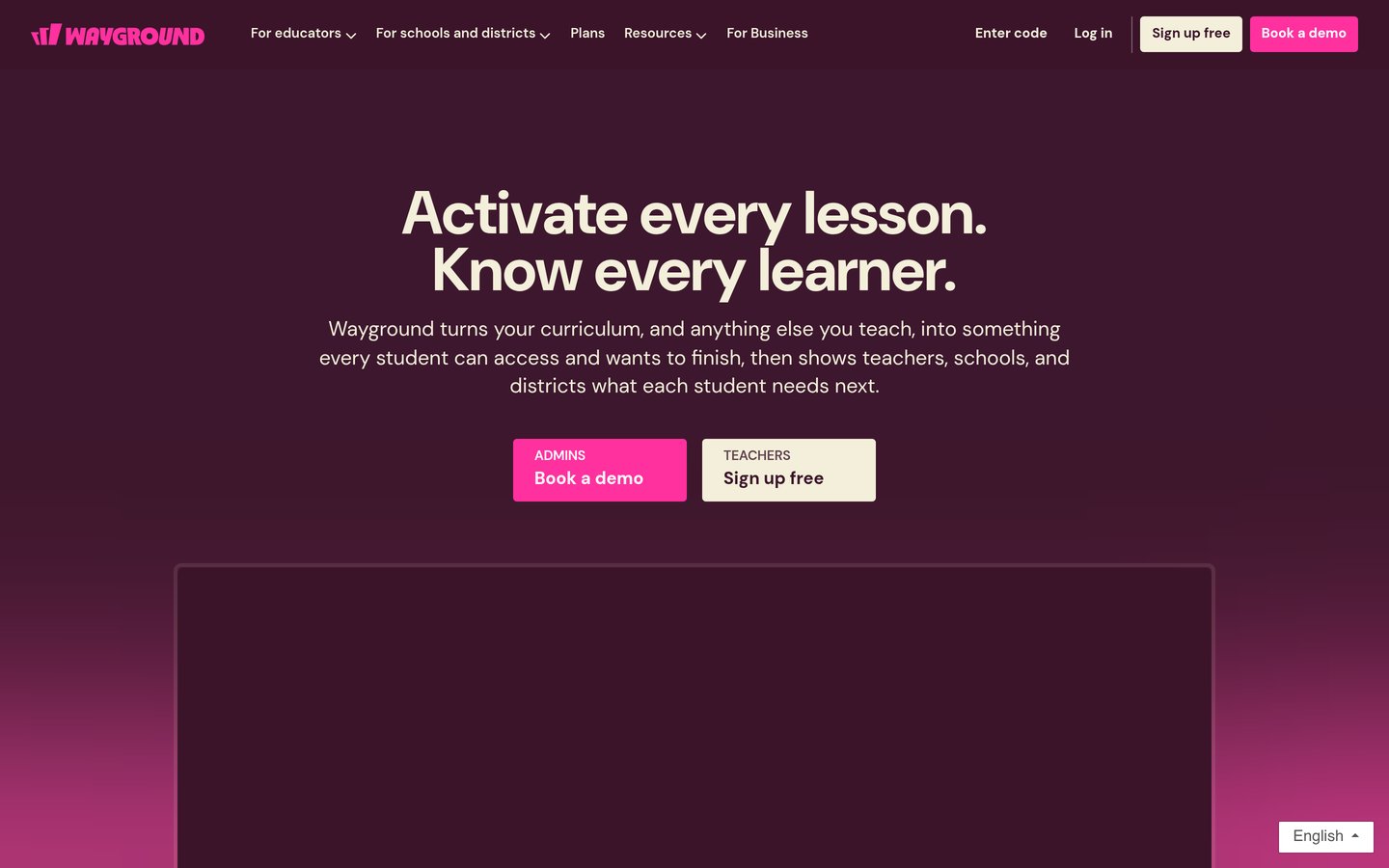
Quizizz is a gamified quiz platform that turns topics, text or files into interactive quizzes with an AI quiz generator, and it now trades as Wayground after a June 2025 rebrand. The free plan covers core quiz features, while the paid Super plan adds AI-generated quizzes, interactive video lessons and larger participant limits.
The trade off is that AI generation and the more advanced question types sit behind the paid plan, and some features that were once free now need a subscription. It suits teachers who run frequent quizzes and want AI to draft the questions.
MagicSchool AI is an AI platform built for K-12 teachers, with more than 80 tools for lesson planning, rubric creation, quiz generation, grading support and parent emails. The free plan covers the core tools with usage limits, and Plus at $12.99 a month adds unlimited generations and student tools.
The trade off is breadth. A tool that does 80 jobs does some of them at draft quality only, and the IEP and assessment outputs need a specialist review before use. It suits teachers who want one dashboard for the whole planning week.
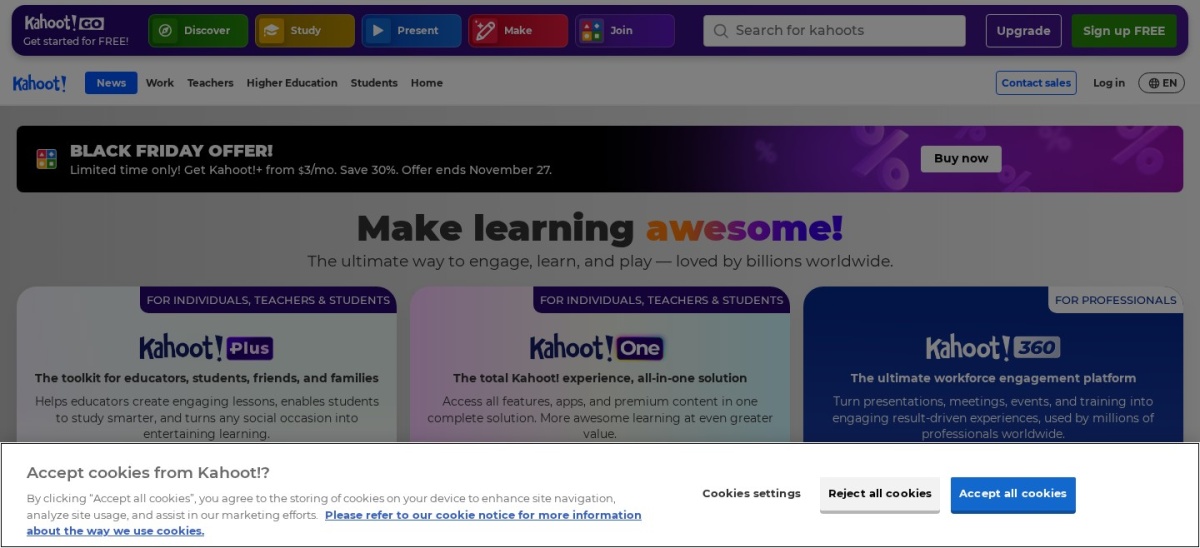
Kahoot! is a game-based learning platform that runs live quiz games, self-paced assignments and flashcards, with AI that builds question sets from a topic, URL or file on paid plans. The free Go plan covers core games for up to 40 players, and Bronze starts at $9 a month.
The trade off is the paywall. AI creation, premium question types and larger player counts all need a paid plan, and G2 reviewers call the pricing restrictive. It suits teachers who run review sessions as scored, ranked games.
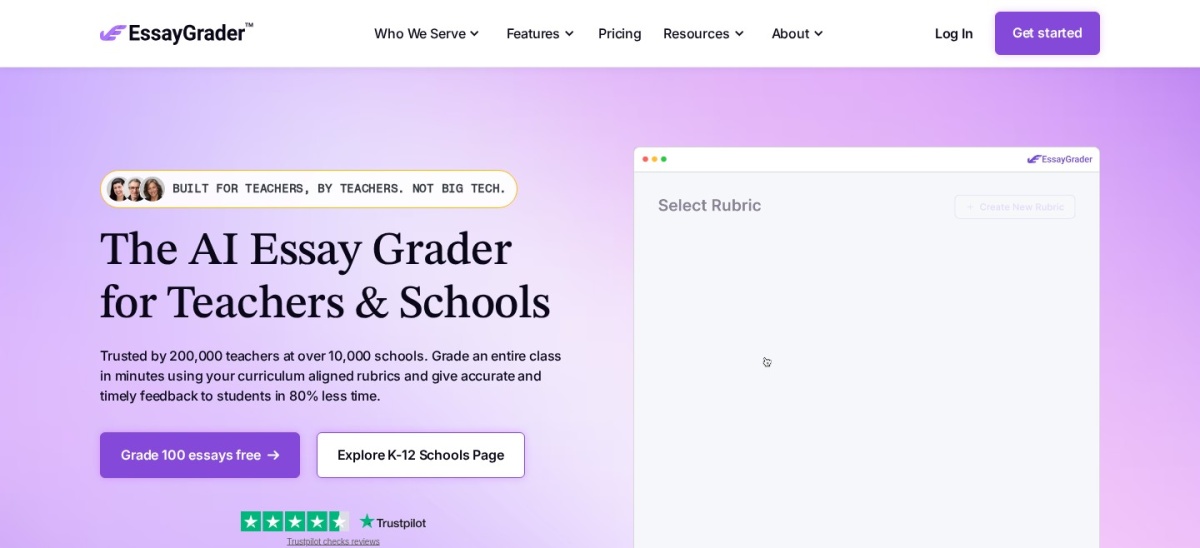
EssayGrader is an AI essay grading platform that scores student writing against a custom rubric or one from its library of more than 800 standards-aligned options, with AI-writing and plagiarism checks on paid plans. The free Basic plan grades 50 essays a month, and Lite starts at $6.99 a month.
The trade off is the free cap. Fifty essays a month covers one class section, so a full teaching load needs Pro at $14.99 a month, and AI detection flags need human judgment. It suits teachers grading long papers in bulk.
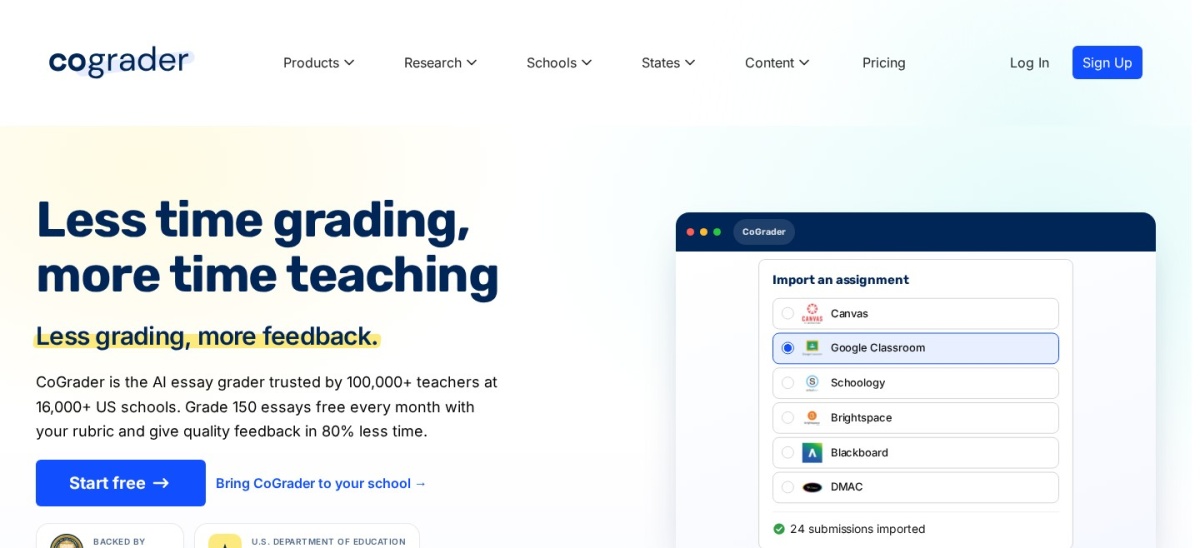
CoGrader is an AI grading platform that scores essays against a rubric criterion by criterion, writes Glow and Grow feedback, checks grammar and reads handwritten work from photos. The free Starter plan covers 100 submissions a month, and Standard at $19 a month adds 350 submissions and handwriting support.
The trade off is scope. CoGrader covers writing only, so it helps English, history and AP teachers most, and Canvas and Schoology integrations sit behind school plans. It suits teachers grading weekly stacks of essays in Google Classroom.
Khanmigo is Khan Academy's AI tutor and teaching assistant, built to coach students with guiding questions instead of handing over answers. Teachers in 44-plus countries get the full teacher toolset free, including lesson planning, rubrics and summaries of student work, while learners pay $4 a month.
The trade off is fit. Khanmigo is a tutor first, so it covers math, science, coding, history and writing well but does not replace a planning suite, and younger learners may struggle with the typing-heavy flow. It suits teachers who want a Socratic tutor inside Khan Academy.
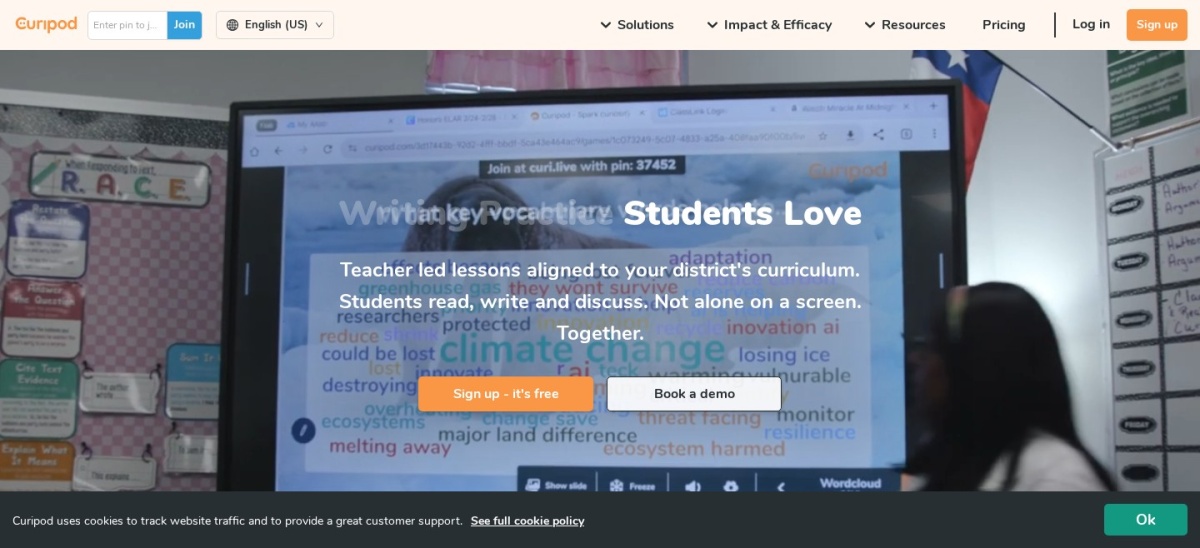
Curipod is an AI lesson builder that turns a topic and grade level into a slide deck with polls, word clouds, drawing activities and open-response prompts that students join from their own devices. The free plan covers two live sessions a week with unlimited lesson building and editing.
The trade off is the paywall and the price confusion. The individual Premium tier was removed in 2026, so unlimited sessions now need a school or district quote, and third-party sources still disagree on the old price. It suits teachers with connected classrooms who teach live.
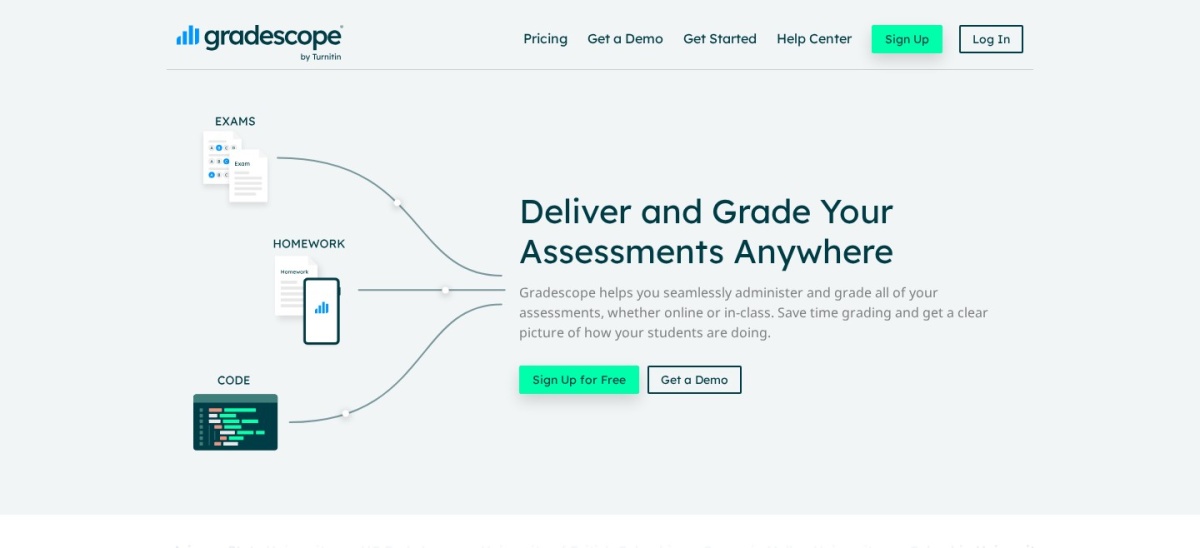
Gradescope is an assessment and grading platform owned by Turnitin that handles paper, code, bubble-sheet and online assignments, with AI grouping similar answers so a marker grades one response and applies the decision across the group. The free Basic plan covers core rubrics and question-by-question grading.
The trade off is access. AI grading, programming assignments and LMS integration sit behind an institutional license with no published price, and setup takes real effort before classes start. It suits large courses where consistency between markers is the problem.
Most teacher AI tools are young, and their review bases show it. MagicSchool AI holds 4.7 on G2 from only 7 reviews, Curipod 4.5 from 2, and Gradescope 4.2 from 33. Only Quizizz, Kahoot and Khanmigo have more than 150 reviews.
A thin base means one unhappy teacher moves the score. Treat a 4.7 from 7 reviews as a hint, not a verdict, and weigh the free plan more heavily: it costs nothing to test the tool on your own work.
The tools with the thinnest ratings are also the newest. Brisk Teaching, Diffit and SchoolAI have no G2, Capterra or Trustpilot rating at all, so they are not in this list even though teachers use them widely. Check them separately if your school already runs one.
When in doubt, pick the tool with the largest review base in the job you need. Quizizz for quizzes, Kahoot for live games and Khanmigo for tutoring all clear 150 reviews.
How we chose
We started from the most-mentioned AI teacher tools in 2026 buying guides, then kept those with a verifiable rating on G2, Capterra or Trustpilot and a published price or a clear quote-only model.
Prices come from each vendor's pricing page or a November 2026 read of it, checked on 24 November 2026. Ratings come from G2 or Trustpilot on the same day. Where a vendor shows a sale, the list shows the regular price.
We left out Brisk Teaching, Diffit, SchoolAI, Teachermatic and Twee, which have no verifiable rating on G2, Capterra or Trustpilot. No vendor paid for a place, and we do not claim hands-on testing for this list.
How to choose an AI tool for teacher productivity
Start with the job that eats your evenings, then match the tool to it.
Start with the job that eats your evenings. Planning, grading and live lessons are different jobs. Pick the tool built for your biggest time sink first, not the one with the longest feature list.
Check the review base, not just the score. A 4.7 from 7 reviews means far less than a 4.9 from 255. Read the one-star reviews for accuracy, billing and support patterns.
Test the free plan on real work. Every tool here starts free. Run a real lesson plan or a real class set through it before paying, and check the output against your rubric.
Confirm the price before you commit. Several vendors changed plans during 2026 and sources disagree on some prices. Check the vendor pricing page, and avoid sale prices that expire.
FAQ
What is the best AI tool for teacher productivity?
MagicSchool AI is the best all-round pick for most teachers. It packs more than 80 planning, grading and communication tools into one dashboard, holds 4.7 out of 5 on G2, and the free plan covers a normal planning week, with Plus at $12.99 a month.
How much do AI teacher tools cost?
Cheapest paid plans in this list run from $4 a month for Khanmigo learners to $19 a month for CoGrader, with Quizizz at about $5 and EssayGrader at $6.99 in between. Curipod and Gradescope publish no individual price and sell school plans by quote.
Are AI teacher tools free?
Every tool here has a free plan or free tier. MagicSchool AI, Quizizz, Kahoot, CoGrader, EssayGrader, Khanmigo, Curipod and Gradescope all start free, though free plans cap generations, submissions or live sessions, so heavy users move to a paid plan.
Can AI grade essays reliably?
AI graders draft scores and feedback, but the teacher stays in charge. CoGrader publishes its own test showing scores within one point of Texas state raters on 98.5 percent of 600 responses, and EssayGrader reports 94 percent agreement within one point across 22,000 essays. Both are vendor studies, not independent tests.
Which AI tool is best for grading?
CoGrader is the best pick for rubric-based essay grading, with 4.6 out of 5 on G2 from 65 reviews and a free plan covering 100 submissions a month. EssayGrader suits higher volumes at $6.99 a month, and Gradescope suits large university classes with handwritten and code work.
Do these tools protect student data?
Most of them list FERPA and COPPA compliance, and MagicSchool AI states that student data is not used to train its models. Tools that handle student work directly need a data agreement with your district before you roll them out to a class.