Best AI Tool for Cyber Security in 2026: 9 Tools Compared
WLWPLegible EditorsLast verified 24 Nov 2026How we rank12 min read
★ Short answer
CrowdStrike Falcon is the best AI tool for cyber security for most teams. Its Charlotte AI triages detections and its Falcon Go plan costs $59.99 per device a year, with a 4.7 G2 rating from 585 reviews. Pick SentinelOne for autonomous response with ransomware rollback and Microsoft Defender for the cheapest Microsoft 365 option.
How we make this list: we compare pricing pages, product documentation and public user reviews, then re-check every price before each update. No product paid for a place. Disclosure.
CrowdStrike Falcon Go costs $59.99 per device a year, but real EDR starts at Falcon Enterprise for $184.99.
SentinelOne is the strongest pick for ransomware, with autonomous response and file rollback from $69.99 a year.
Microsoft Defender for Business is the cheapest entry at $3 a user a month, covering up to 5 devices per user.
Huntress includes a 24/7 human SOC in its $8.99 per endpoint price, which no other tool here does.
Darktrace and Vectra AI are quote-only enterprise tools for network-wide anomaly detection.
What an AI tool for cyber security should cover
AI security tools split by the surface they defend: endpoints, networks, email and the Microsoft estate. No single tool covers all four well, so the pick starts with where your attacks come from.
On endpoints, behavioural AI watches what programs do rather than matching known malware signatures. On networks, self-learning AI models normal traffic and flags what does not fit. In email, AI builds a profile of each sender to catch impersonation.
Prices run from $3 a user a month for Microsoft Defender for Business to custom enterprise contracts for Darktrace and Vectra AI. Endpoint tools mostly price per device per year.
Small teams do best with a published price and a trial. Enterprise teams need the detection depth and managed hunting that only the big platforms sell.
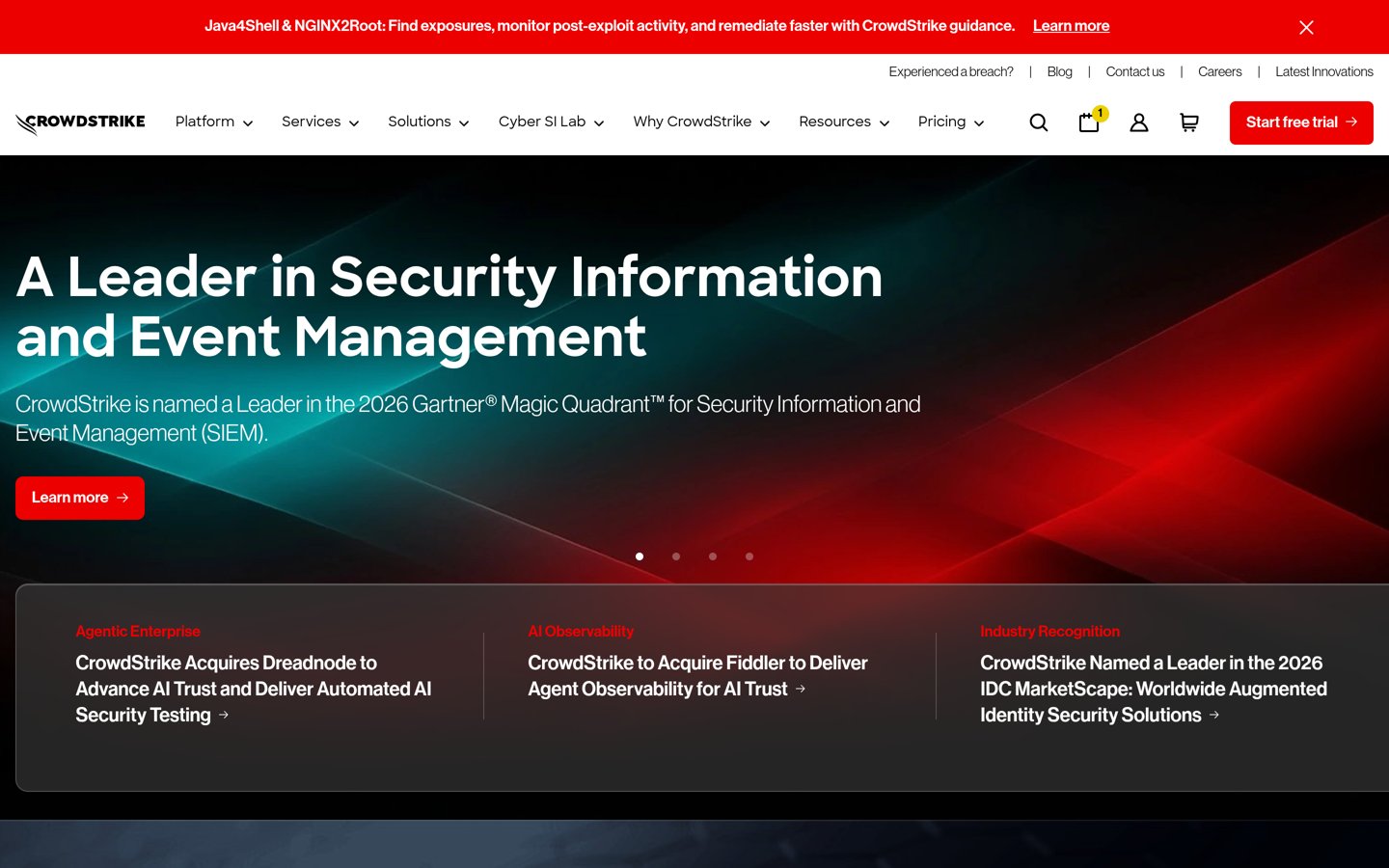
CrowdStrike Falcon is a cloud-native endpoint platform that combines detection, threat intelligence, identity security and incident response in one lightweight sensor. Its Charlotte AI scores each detection as a true or false positive from historical analyst decisions, and Falcon Go costs $59.99 per device a year.
The trade off is that the entry tier is not full EDR. Falcon Go covers next-generation antivirus only, and real EDR starts at Falcon Enterprise for $184.99 per device a year. It suits teams that want the most proven detection engine at enterprise scale.
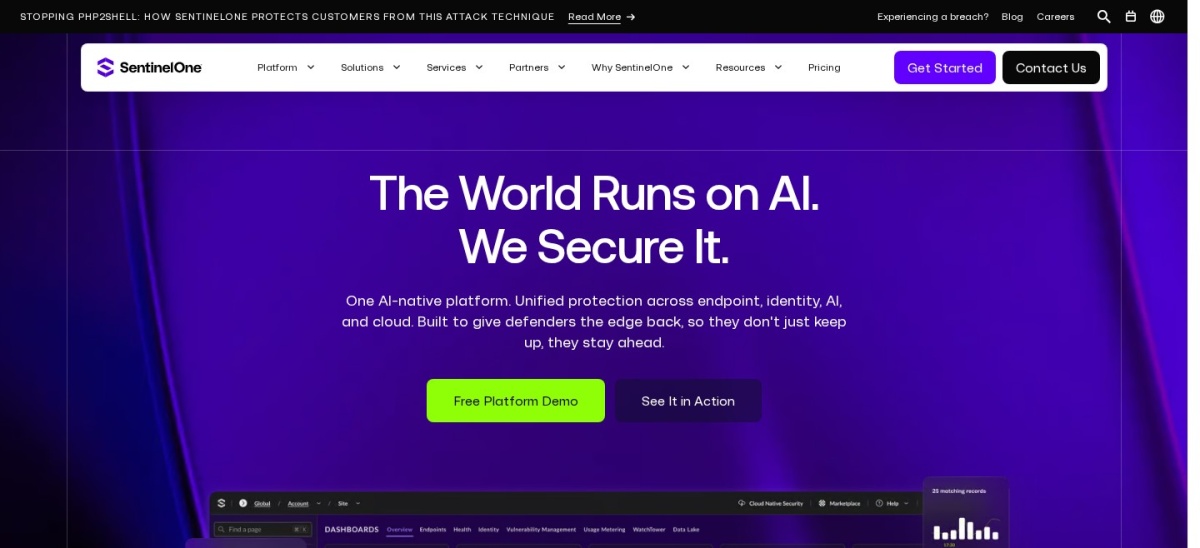
SentinelOne Singularity homepage, captured Nov 2026.
SentinelOne Singularity is an AI-native endpoint platform that detects, prevents and responds to attacks without waiting for an analyst. Its Purple AI runs natural-language investigation, and its rollback feature restores files changed by ransomware without a separate backup restore.
The trade off is price for the full AI. Purple AI is included on Complete at $179.99 per endpoint a year, while Core at $69.99 covers next-generation antivirus only. It suits teams that want the AI to close investigations, not just surface them.
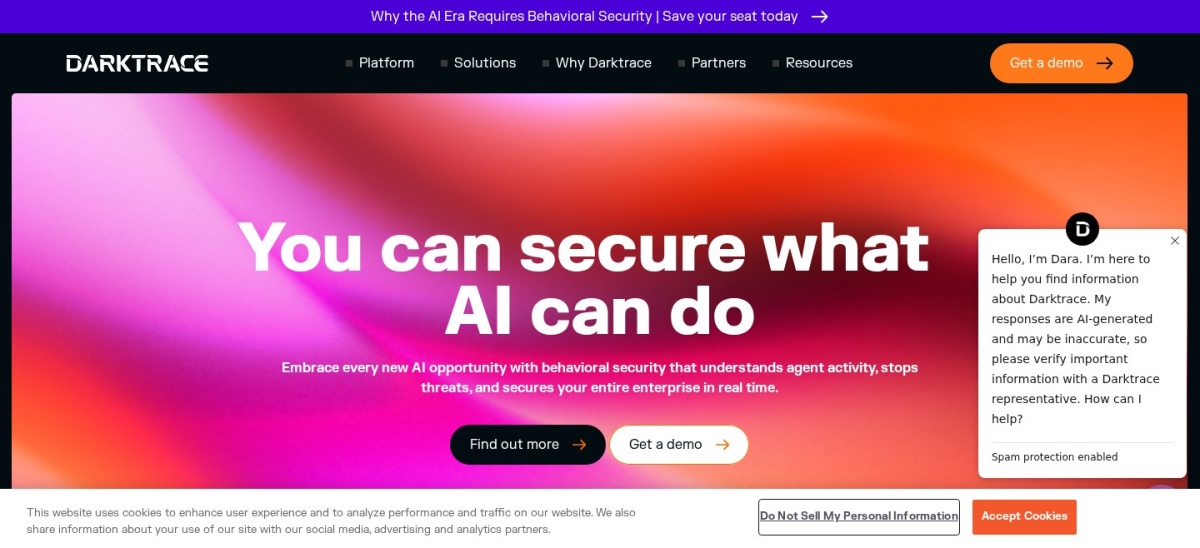
Darktrace is a self-learning AI platform that models the normal pattern of life for a network, its users and its devices, then flags what does not fit. It covers network, cloud, email and endpoints, with autonomous response that can contain a threat without waiting for an analyst.
The trade off is cost and complexity. Pricing is quote-only and module-based, with a typical deal around $55,000 a year and enterprise deployments at $300,000 to $500,000 or more. It suits large enterprises that want AI anomaly detection across all surfaces.
Microsoft Defender for Business homepage, captured Nov 2026.
Microsoft Defender for Business is the small-business edition of Defender for Endpoint. It costs $3 a user a month billed annually, covers up to 5 devices per user across Windows, Mac and mobile, and includes endpoint detection and response, ransomware protection and phishing controls.
The trade off is scope. It is built for teams up to 300 users inside Microsoft 365, and it lacks the managed hunting and cross-platform depth of CrowdStrike or SentinelOne. It suits small teams already on Microsoft 365 that want the cheapest credible EDR.
What we like
Cheapest entry price in this list
Up to 5 devices per user
No new console to learn for Microsoft shops
Watch out for
Capped at 300 users
No managed hunting included
Included in Microsoft 365 Business Premium at $22 a user a monthVisit microsoft.com
05
Vectra AI
4.3/5on G2 (20 reviews, checked Nov 2026)
PricingCustom/yr
Best for network detection and response
Entry planCustom quote
SurfacesNetwork, cloud, identity
Alert noiseCut by over 80%
Free trialYes
vectra.ai
Vectra AI homepage, captured Nov 2026.
Vectra AI is a network detection and response platform that focuses its machine learning on attacker methods rather than anomalies. It covers public cloud, SaaS, identity systems and on-premises networks, connecting a suspicious login, odd network traffic and a cloud misconfiguration into one attack story.
The trade off is pricing and scope. It is quote-only with no public tiers, and it is a network tool, not an endpoint one, so it needs an EDR beside it. It suits enterprise teams that want clear alert prioritisation across hybrid networks.
What we like
Attacker-behaviour detection, not just anomalies
Reduces alert noise by over 80%
Covers cloud, SaaS and identity too
Watch out for
Quote-only pricing
Needs an EDR beside it
Leader in the 2026 Gartner Magic Quadrant for NDRVisit vectra.ai
06
Huntress
4.9/5on G2 (229 reviews, checked Nov 2026)
Starts at$8.99/mo
Best for teams with no security staff
Entry planManaged EDR, $8.99/mo
24/7 SOCIncluded
Direct minimum50 endpoints
Free trialYes, 21 days
huntress.com
Huntress homepage, captured Nov 2026.
Huntress is a managed endpoint security service with a listed price, which is rare in the managed detection market. Its Managed EDR costs $8.99 per endpoint a month, and the 24/7 security operations centre is included in that price, investigating alerts, isolating devices and calling you when it matters.
The trade off is the minimum. Direct buys carry a 50-endpoint minimum on a 12-month term, though there is no minimum through a managed service provider. It suits small teams with no in-house security staff who want humans watching the alerts.
Sophos Intercept X is a mid-market endpoint platform that uses deep learning to stop unknown malware. CryptoGuard rolls back ransomware-encrypted files automatically, and exploit prevention blocks attack techniques without tuning, at $28 per endpoint a year on the Advanced tier.
The trade off is AI depth. Its AI is strong on prevention but lighter on autonomous investigation than SentinelOne or CrowdStrike, and managed detection is a separate product. It suits budget-conscious teams that want solid endpoint protection with a managed option beside it.
What we like
Cheapest endpoint price here
Automatic ransomware rollback
Strongest G2 review base here at 837 reviews
Watch out for
Lighter AI investigation than rivals
Managed detection sold separately
Sophos MDR adds 24/7 human monitoring from $30 a yearVisit sophos.com
08
Abnormal AI
4.7/5on G2 (90 reviews, checked Nov 2026)
Starts at$3/mo
Best for email and account takeover defence
Entry planAbout $3/user/mo
SurfaceEmail and cloud accounts
Free trialYes
AIBehavioural profiling
abnormal.ai
Abnormal AI homepage, captured Nov 2026.
Abnormal AI is an AI-native email security platform that defends the inbox, where most attacks still start. Instead of analysing content for known threats, its AI builds behavioural profiles of every sender and recipient, catching socially engineered attacks and business email compromise that bypass traditional gateways.
The trade off is price clarity. It costs about $3 a user a month, but exact pricing depends on the deployment, and it covers email only. It suits teams that want the strongest AI defence against phishing and account takeover.
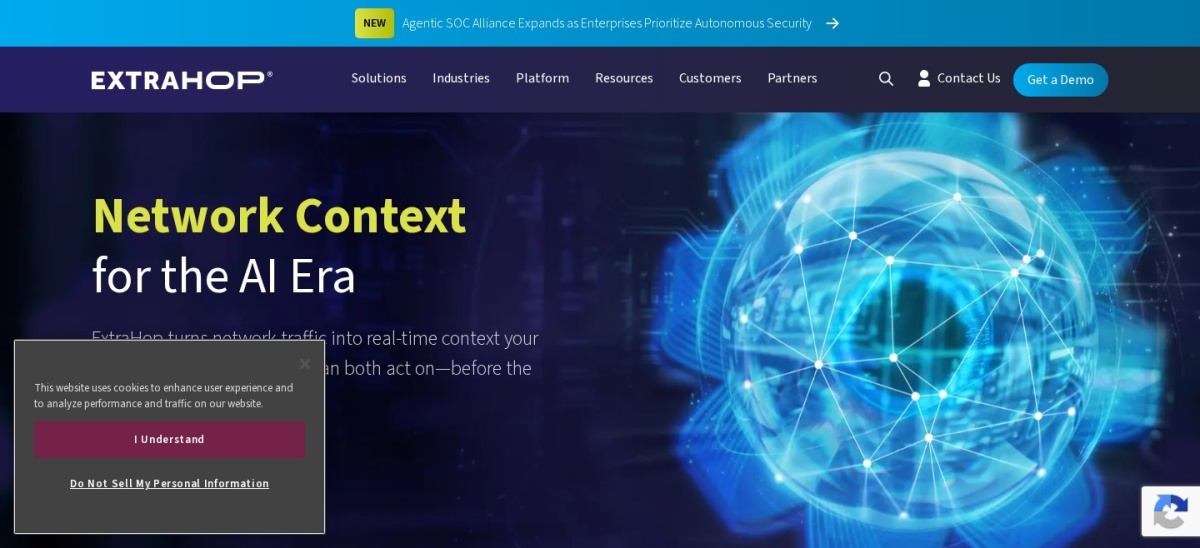
ExtraHop is a cloud-native network detection and response platform that watches east-west traffic inside the network. Its Reveal(x) platform decrypts traffic, detects threats with behavioural AI and gives analysts the packet-level evidence behind every alert.
The trade off is pricing and scope. It is quote-only with no public tiers, and it is a network tool, so it needs an endpoint platform beside it. It suits enterprise teams that want deep network visibility across cloud and on-premises estates.
Endpoint tools such as CrowdStrike, SentinelOne, Sophos and Defender watch laptops and servers, blocking malware and isolating machines when an attack starts.
Network tools such as Darktrace and Vectra AI watch traffic, logins and cloud activity, catching attacks that never touch a managed endpoint.
Email tools such as Abnormal AI stop phishing and business email compromise before the message reaches the inbox, where most attacks still start.
How we chose
We started from the AI security platforms in active sale in November 2026, across endpoint, network, email and managed detection.
Prices come from each vendor's pricing page and November 2026 comparisons, checked on 24 November 2026. Ratings and review counts come from G2 profiles as reported in October and November 2026. Where a vendor shows a sale, the list shows the regular price.
We left out tools with no AI detection and no public price. No vendor paid for a place, and we do not claim hands-on testing for this list.
How to choose an AI tool for cyber security
Start with the surface you need to defend, then check the price per device.
Name the surface to defend. Endpoints, network, email or all three. One surface should decide the pick.
Count devices and users. Endpoint tools price per device, Microsoft prices per user. A 20-user team covers up to 100 devices on Defender.
Check what the entry tier actually includes. Falcon Go has no EDR; real EDR from CrowdStrike starts at Falcon Enterprise for $184.99 a device a year.
Decide who watches the alerts. If nobody on staff triages alerts, buy managed detection. Huntress includes a 24/7 SOC in its price.
FAQ
What is the best AI tool for cyber security?
CrowdStrike Falcon is the best pick for most teams. Its Charlotte AI triages detections, Falcon Go costs $59.99 per device a year, and it holds 4.7 out of 5 on G2 from 585 reviews.
How much does AI cyber security software cost?
Entry prices in this list run from $3 a user a month for Microsoft Defender for Business to $69.99 per endpoint a year for SentinelOne. Darktrace and Vectra AI are quote-only, with typical Darktrace deals around $55,000 a year.
Is Microsoft Defender enough for a small business?
For many small teams, yes. Defender for Business costs $3 a user a month, covers up to 5 devices per user and includes endpoint detection and response. Larger teams usually add a managed service.
What is the difference between EDR and MDR?
EDR is software that detects and responds to threats on your devices. MDR adds a 24/7 human team that watches the alerts and acts on them, which Huntress includes in its $8.99 per endpoint price.
Which AI security tool is best for ransomware?
SentinelOne is the strongest pick for ransomware, with automated response and a rollback feature that restores files changed by ransomware. Sophos Intercept X also rolls back encrypted files automatically.
Do AI security tools work offline?
Partly. SentinelOne puts its AI models on the device itself, so detection keeps working when an endpoint is offline. Cloud-based tools need a connection for full analysis.