Best AI Automation Testing Tools in 2026: 9 Tools Compared
WLWPLegible EditorsLast verified 24 Nov 2026How we rank12 min read
★ Short answer
Tricentis Testim is the best AI automation testing tool for most teams. Its smart locators adapt when the interface changes, and a free Community plan covers small teams, though paid pricing is quote-based and reported from around $20,000 a year. Pick Functionize for published pricing from $20 a month, or Katalon for an all-round platform.
How we make this list: we compare pricing pages, product documentation and public user reviews, then re-check every price before each update. No product paid for a place. Disclosure.
Tricentis Testim is the best all-round pick, with self-healing smart locators and a free Community plan, though pricing is quote-based.
mabl is the agentic runner-up, with auto-healing and runtime recovery, reported from around $500 a month.
Functionize is the transparency outlier, with published pricing from $20 a month and a free tier.
Katalon is the best all-round platform at $70 a seat a month, covering web, mobile, API and desktop in one place.
Applitools is the visual AI standard at $667 a month, while BrowserStack and Sauce Labs cover real devices from $29 and $39 a month.
What AI automation testing tools should cover
AI automation testing tools split into three jobs: low-code platforms such as Testim, mabl and Katalon that author and run tests, visual AI such as Applitools that catches screen drift, and device clouds such as BrowserStack and Sauce Labs that run tests on real devices.
Self-healing is the headline feature. Smart locators learn from every execution, so tests stay stable when a developer renames a button or restructures a page, and maintenance drops sharply.
Pricing is the friction in this category. Testim and mabl publish no prices at all, and most vendors sell through demos, so budget a sales cycle and ask for written pricing against the same run volume.
Prices run from $19 a user a month for Qodo to $667 a month for Applitools Starter. Functionize is the transparency outlier, with published plans from $20 a month and a free tier.
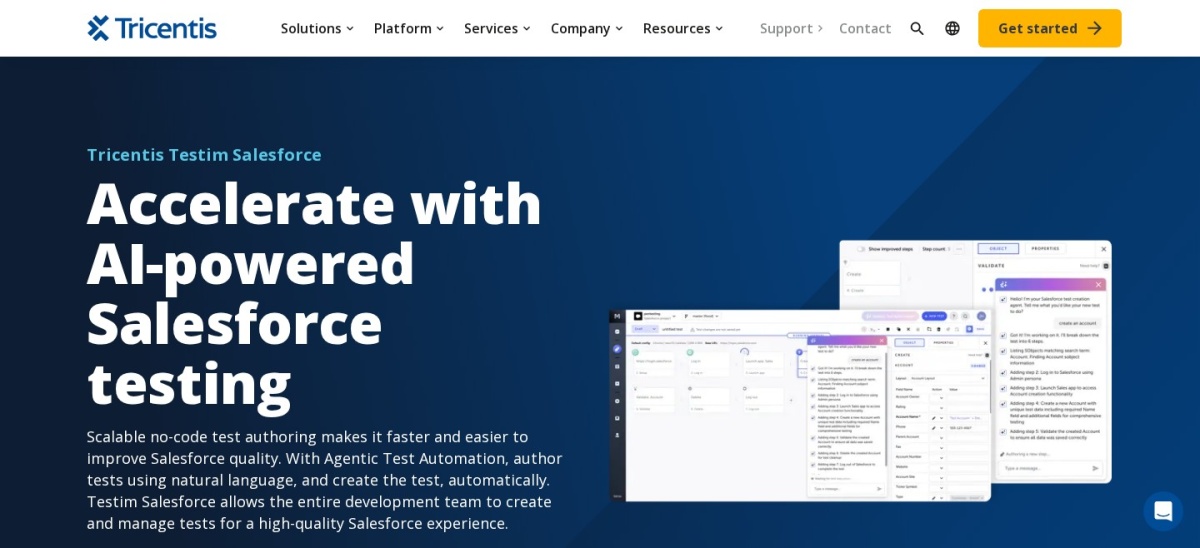
Tricentis Testim is an AI-led test automation platform that builds end-to-end tests without code, using smart locators that adapt when the interface changes. Pricing is quote-based and reported from around $20,000 a year, with a free Community plan for small teams.
The trade off is the sales cycle. You cannot buy Testim from a pricing page, and the reported price puts it out of reach for small teams. It suits enterprises already invested in the Tricentis suite that run millions of tests a month.
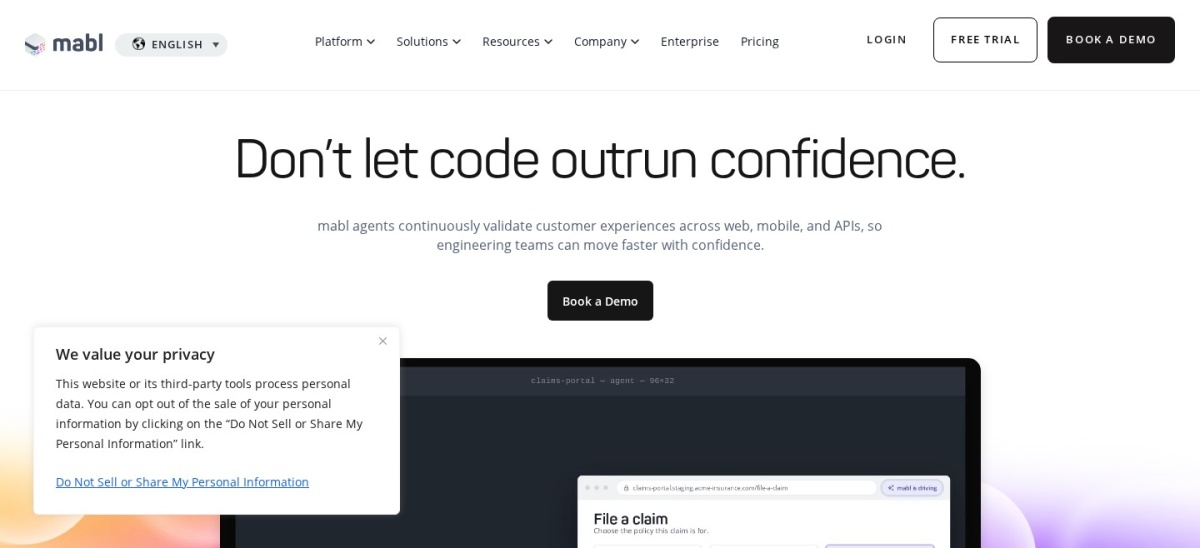
mabl is a cloud-native, AI-first test automation platform whose machine-learning engine heals broken locators automatically and whose agentic runtime can adapt mid-run when a flow goes sideways. Pricing is quote-based, reported from around $500 a month, with a 14-day trial and free local runs.
The trade off is price opacity. mabl publishes no prices, mobile testing costs extra, and you cannot try it against your real application before a sales conversation. It suits DevOps teams with frequently changing interfaces and heavy test maintenance.
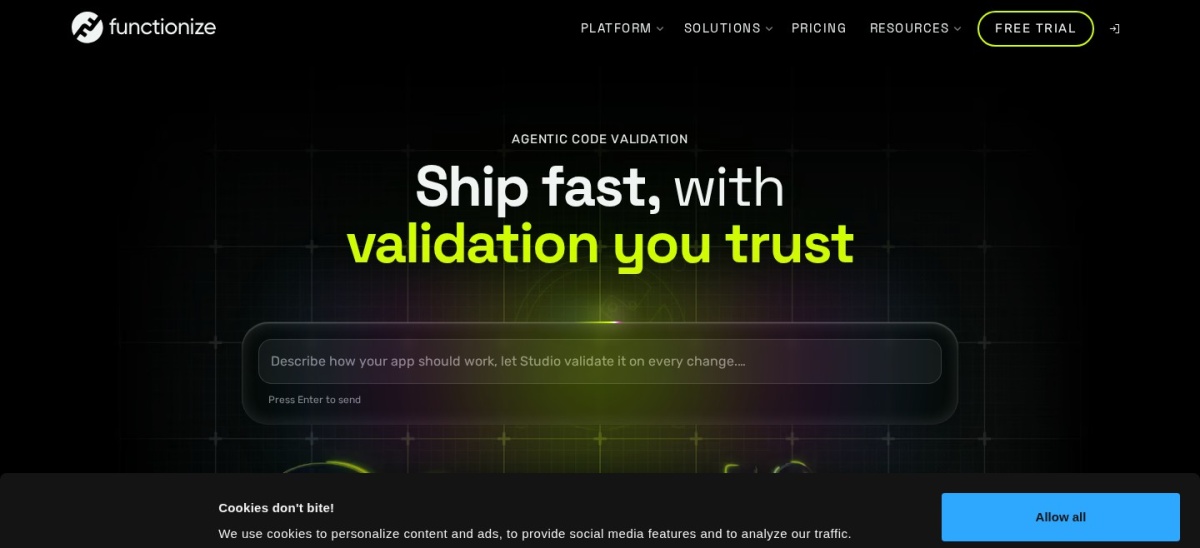
Functionize is an NLP-driven test automation platform that writes and maintains tests from plain-English descriptions, with self-healing locators and massive parallel execution. Growth costs $20 a month, Scale costs $100 a month, and a free tier covers small teams.
The trade off is the small review base. Its G2 rating rests on only 11 reviews, and enterprise features sit behind custom quotes. It suits teams that want agentic testing without an enterprise sales call and a price they can read before buying.
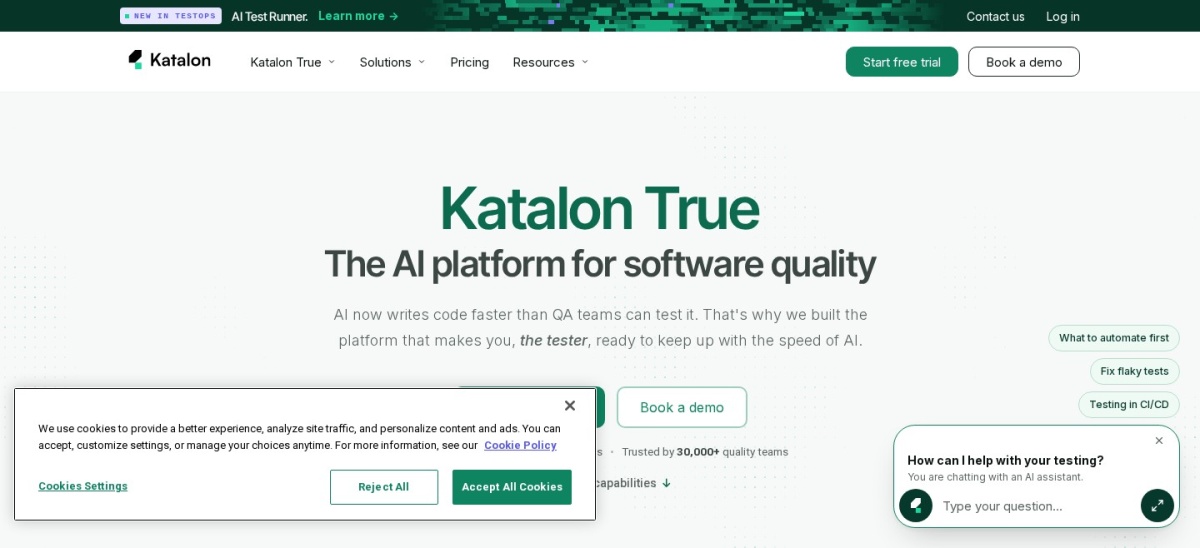
Katalon is a low-code test platform that covers web, mobile, API and desktop testing in one place, with a visual recorder, partial scripting and TestOps analytics. The True Platform plan costs $70 per seat a month billed yearly, and a free tier covers web, API, mobile and desktop testing.
The trade off is per-seat pricing. At $70 a seat a month, a large QA team pays a lot, and the free tier is limited. It suits mixed QA and engineering teams that test everything in one platform.
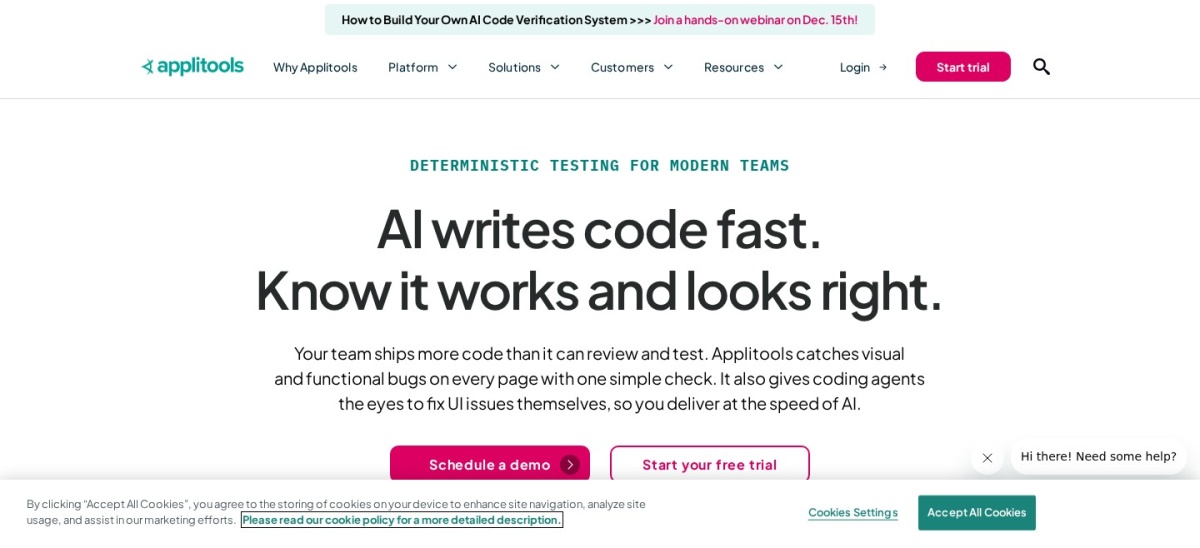
Applitools is a visual AI testing platform that layers visual intelligence on top of Selenium, Playwright, Cypress, Appium and other frameworks, catching visual drift that functional tests miss. Starter costs $667 a month billed yearly for 1,000 page checkpoints, with a 14-day free trial.
The trade off is price. At $667 a month it is the most expensive published plan here, and it complements rather than replaces a functional framework. It suits teams drowning in false-positive visual diffs across many browsers and viewports.
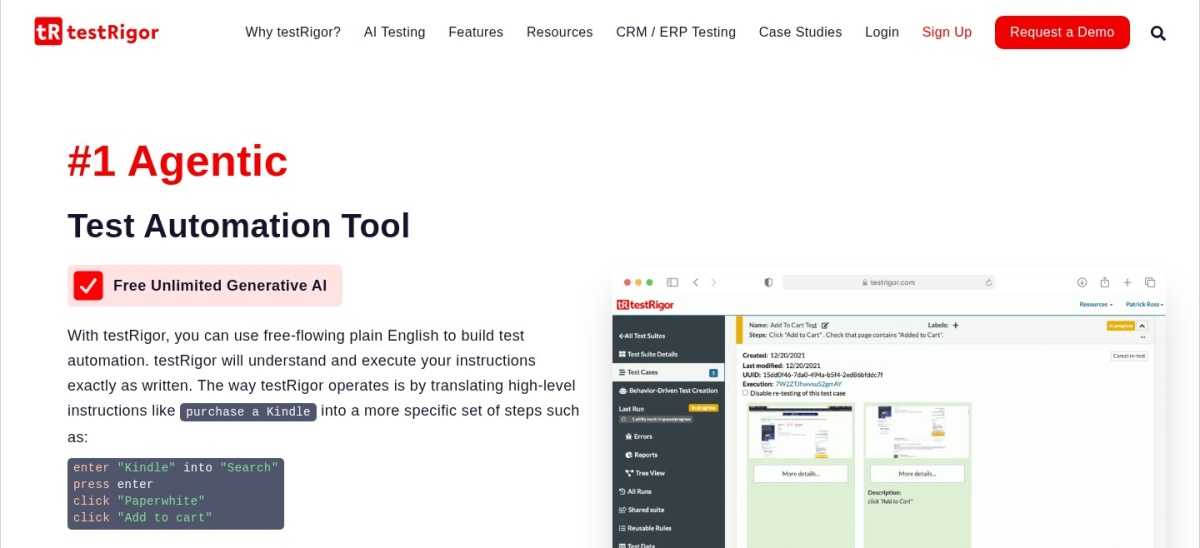
testRigor is a codeless automation platform where a test is a set of plain-English sentences describing elements the way a user would, with no locators for the author to write. Private plans start at $300 a month for Linux Chrome, with a free public plan and a 14-day trial for private tests.
The trade off is price transparency. Private plans beyond the $300 starting point are custom-quoted, and other configurations use custom pricing. It suits small to medium teams without dedicated automation engineers who want manual QA staff writing tests.
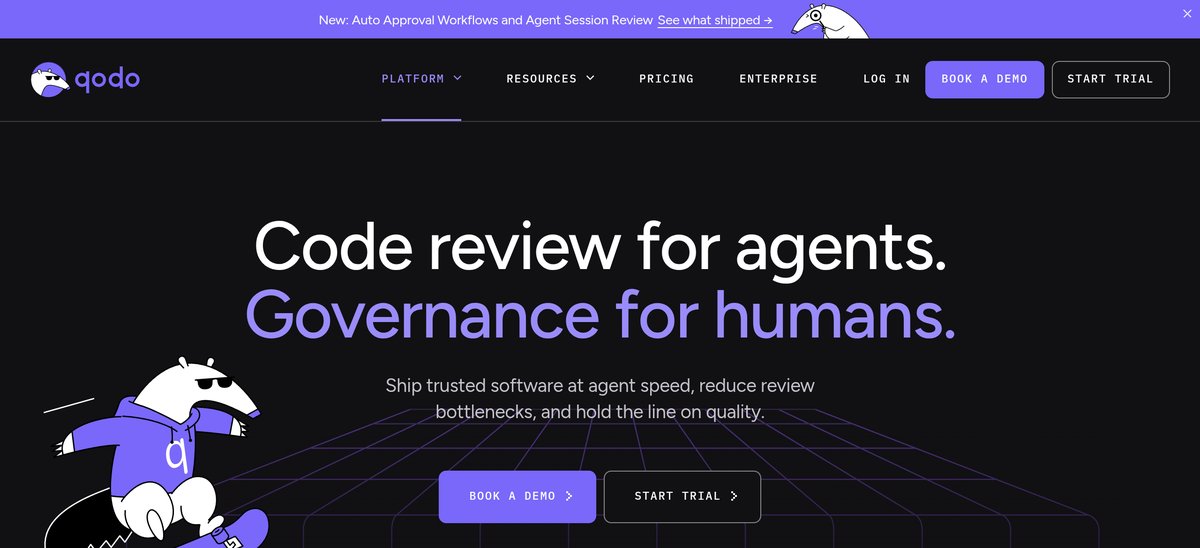
Qodo is an AI code testing platform that generates unit and regression tests for your code, with AI code review and coverage analysis built in. Teams costs $19 per user a month, with a free tier for individual developers.
The trade off is scope. Qodo writes code tests, not end-to-end UI tests, so it pairs with a UI tool such as Testim or mabl rather than replacing one. It suits developers who want AI-written unit tests and code review inside their workflow.
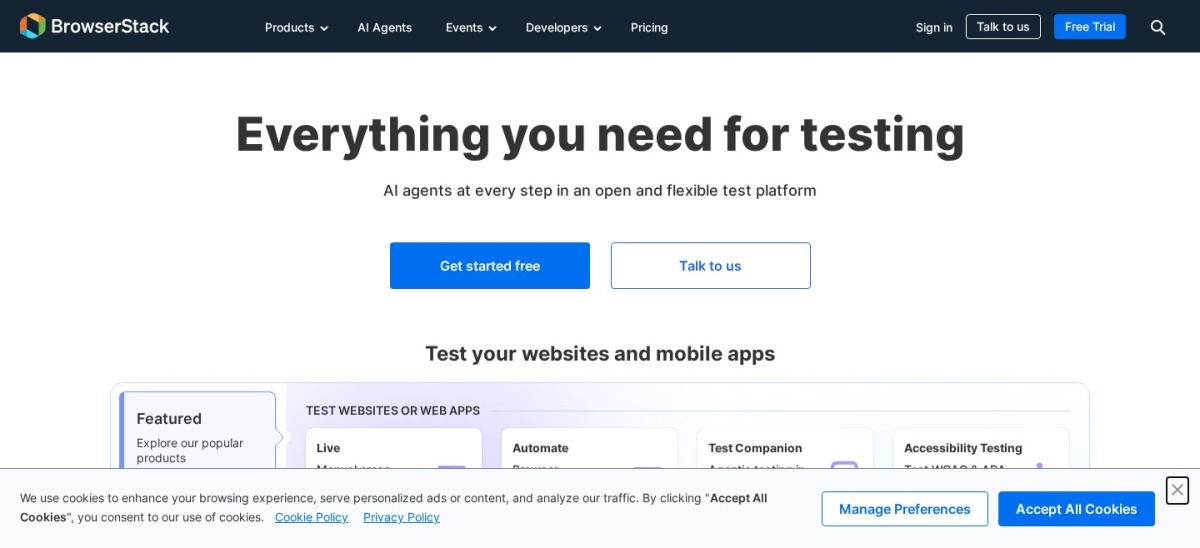
BrowserStack is the largest real-device testing cloud, with 30,000 plus real devices and the full desktop browser matrix, plus live manual testing and automation in one platform. Live starts at $29 a month, with real device automation at $175 per parallel a month on annual billing.
The trade off is cost at scale. Once a team needs many parallels, the bill climbs fast, and BrowserStack is incompatible with VPN-dependent enterprise setups. It suits teams that need the broadest device coverage and run whatever framework they already use.
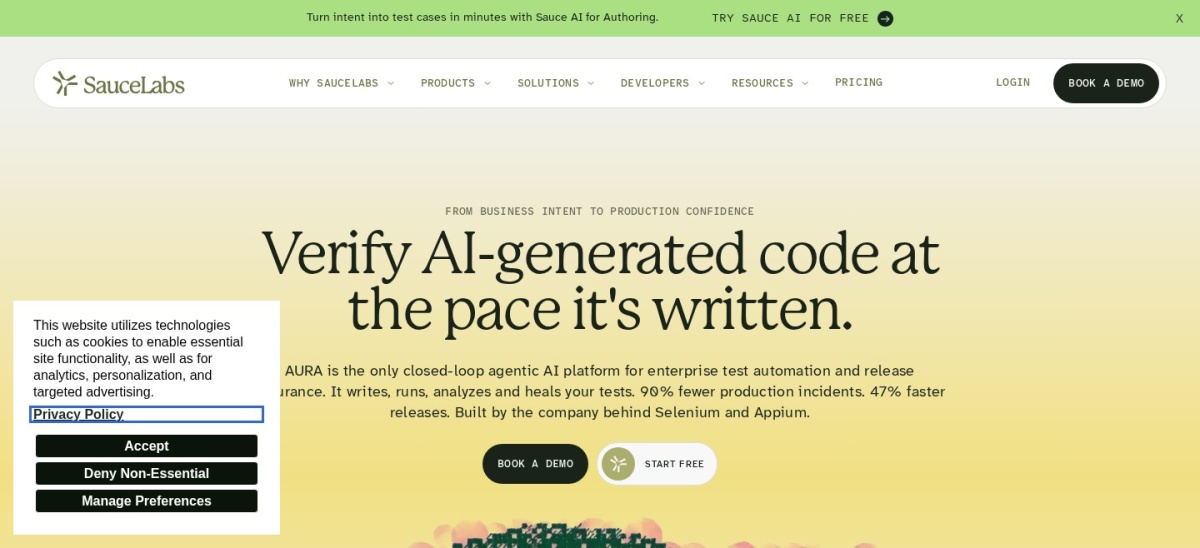
Sauce Labs is an enterprise cloud platform for automated and live web and mobile testing, with Sauce Connect VPN tunneling, 9,000 plus real devices and governance features regulated enterprises require. Live starts at $39 a month, with real device automation at $199 per parallel a month.
The trade off is the review base and price. Its G2 rating rests on 185 reviews, and the per-parallel price matches BrowserStack at the top end. It suits enterprises with VPN requirements and compliance needs that BrowserStack cannot meet.
Two tools in this list publish no price: Testim and mabl. Third-party sources report Testim from around $20,000 a year and mabl from around $500 a month, but those are reports, not vendor prices.
Ask each vendor for a written quote at your exact run volume, including mobile testing, parallel runs and any platform fees, before you compare totals. Functionize, Katalon, Applitools, testRigor, Qodo, BrowserStack and Sauce Labs all publish a starting price.
How we chose
We started from the best-known AI test automation platforms with published or reported pricing and a G2 rating, then kept nine that cover low-code authoring, visual AI, code testing and device clouds.
Prices come from each vendor's pricing page and recent pricing checks, read on 24 November 2026. Ratings and review counts come from G2 on the same day. Where a vendor shows a sale, the list shows the regular price.
We left out Virtuoso, which publishes no price and no G2 rating we could verify. No vendor paid for a place, and we do not claim hands-on testing for this list.
How to choose AI automation testing tools
Start with the test type, then match the pricing model to your run volume.
Pick the test type first. If you test web UI, start with Testim, mabl or Katalon. If you test visuals, add Applitools. If you test code, add Qodo.
Compare the billing unit. Testim and mabl are quote-based, Functionize starts at $20 a month, and Katalon charges $70 a seat a month. Get written quotes at the same run volume.
Check the free plan limits. Testim Community, Functionize free tier and Katalon free tier all cover small teams, so trial a real suite before you pay.
Trial on a real suite. Run the trial on your live application with real tests, so you learn the true maintenance and run cost before you commit.
FAQ
What is the best AI automation testing tool?
Tricentis Testim is the best pick for most teams. Its smart locators adapt when the interface changes, and a free Community plan covers small teams, though paid pricing is quote-based and reported from around $20,000 a year.
How much does AI automation testing cost?
Published prices in this list run from $19 a user a month for Qodo to $667 a month for Applitools Starter. Functionize starts at $20 a month, Katalon at $70 a seat a month, and testRigor at $300 a month.
Is there free AI automation testing software?
Yes. Testim, Functionize, Katalon, testRigor and Qodo all offer free plans or tiers. mabl, Applitools, BrowserStack and Sauce Labs offer trials only.
What is self-healing in test automation?
Self-healing means the test tool updates its own locators when the interface changes, so a renamed button or restructured page does not break the test. Testim, mabl, Functionize and Katalon all offer it.
Do I need a device cloud as well as a test tool?
Only if you test on real phones and tablets. BrowserStack and Sauce Labs run tests on real devices, while Testim, mabl and Katalon run in browsers and simulators.
Why are Testim and mabl quote-only?
Both sell through demos with unpublished pricing, which favours larger teams with procurement processes. Ask for a written quote at your exact run volume before you compare totals.