Best AI Test Automation Tools in 2026: 9 Tools Compared
WLWPLegible EditorsLast verified 22 Nov 2026How we rank9 min read
★ Short answer
mabl is the best AI test automation tool for most teams, with low-code auto-healing tests across web, mobile, API and performance testing, rated 4.4/5 on G2. Pick Testim for self-healing web tests, and Katalon for published per-seat pricing from $150 a month.
How we make this list: we compare pricing pages, product documentation and public user reviews, then re-check every price before each update. No product paid for a place. Disclosure.
mabl and Testim lead on AI self-healing, but both are quote-only, so budget a sales cycle and ask for written pricing.
Katalon publishes per-seat pricing from $150 a month and covers web, mobile, API and desktop in one platform.
Functionize is the transparency outlier: published plans start at $20 a month with a free tier.
Applitools owns visual testing: its Visual AI catches layout bugs that functional tests miss, from $667 a month billed yearly.
LambdaTest undercuts other cloud grids at $15 a month for Live testing, with KaneAI for AI test authoring.
What an AI test automation tool should do
AI test automation tools fix the oldest QA pain: brittle tests. When a developer renames a button or reorders a form, a normal test fails. A self-healing test adapts instead, which cuts the maintenance work that eats most QA time.
The tools split into three kinds. Low-code platforms such as mabl, Testim and Katalon author and run tests. Visual tools such as Applitools watch for layout bugs. Cloud grids such as LambdaTest and Sauce Labs run your tests across thousands of browsers and devices.
Price is the hardest part of this category. mabl and Testim publish no price, so budget a sales cycle and ask for written pricing against the same run volume. Our guide on testing on a budget explains how to compare cost per run.
Start with the app you actually ship. A web-only team does not need mobile device coverage, and a team with no QA engineers needs plain-English authoring more than a code framework.
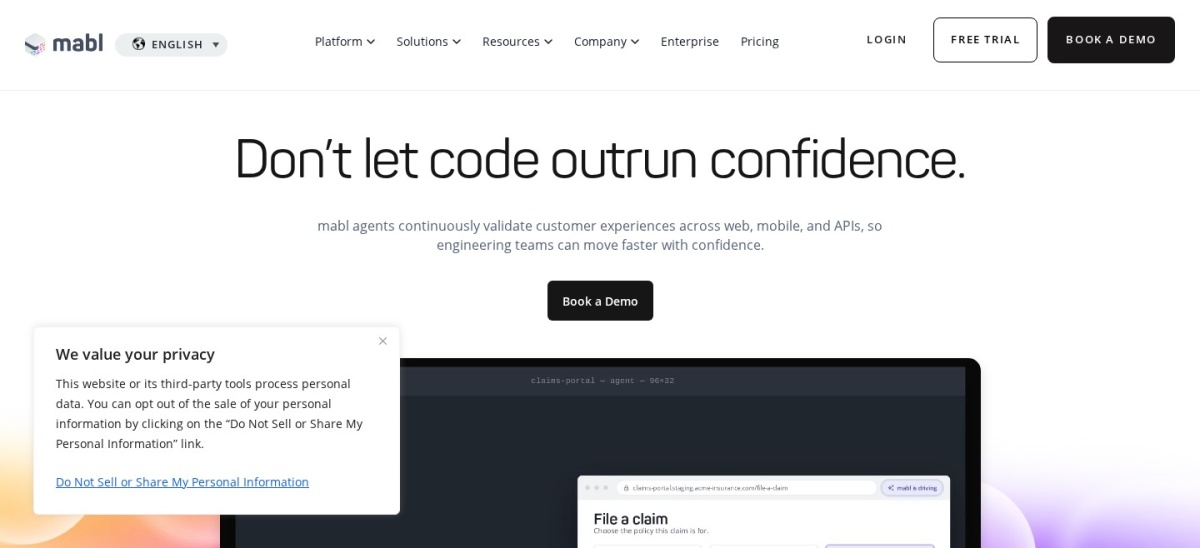
mabl is a low-code, AI-first test automation platform for web, mobile, API and performance testing. Its machine-learning engine heals broken locators automatically, and its agentic runtime recovery can adapt mid-run when a flow changes, then produce failure summaries with root-cause insights. Local and CI runs are unlimited and free.
The trade off is price. mabl publishes no price and sells through sales, with third-party estimates near $499 a month and buyer data putting the median contract near $36,000 a year. It suits teams with frequently changing UIs and heavy test maintenance.
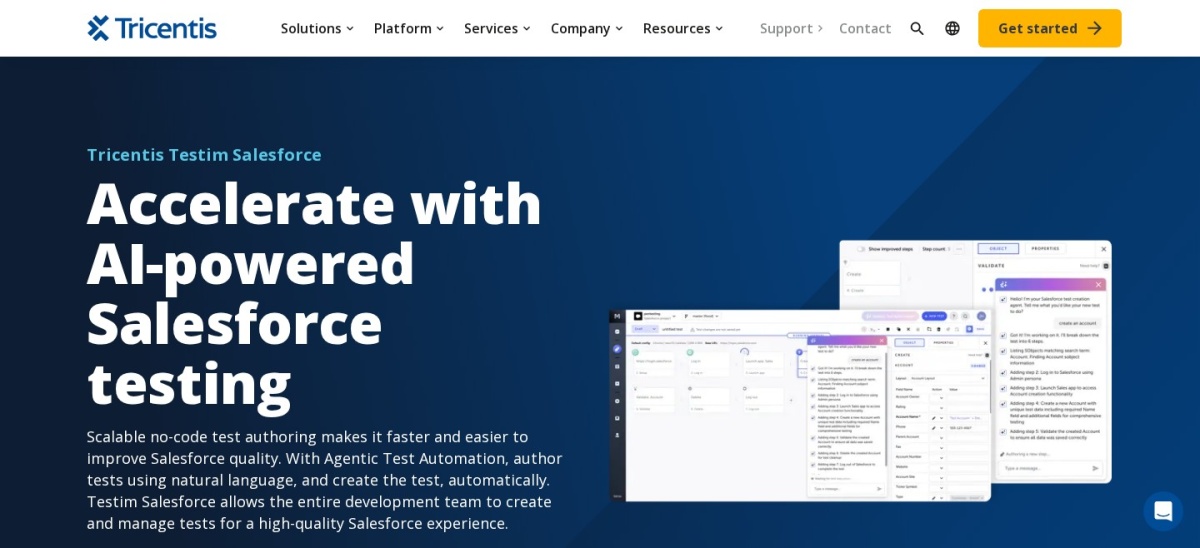
Testim is a self-healing test platform, part of Tricentis, that uses smart locators that learn from every execution, so tests stay stable when element attributes change. A visual canvas lets QA teams record and edit tests without writing code, with JavaScript available for custom steps, and it plugs into the wider Tricentis suite.
The trade off is price. Paid editions are custom quotes priced by parallel tests, with third-party estimates near $450 a month, and trial accounts revert to a free Community plan. It suits enterprises already invested in the Tricentis suite.
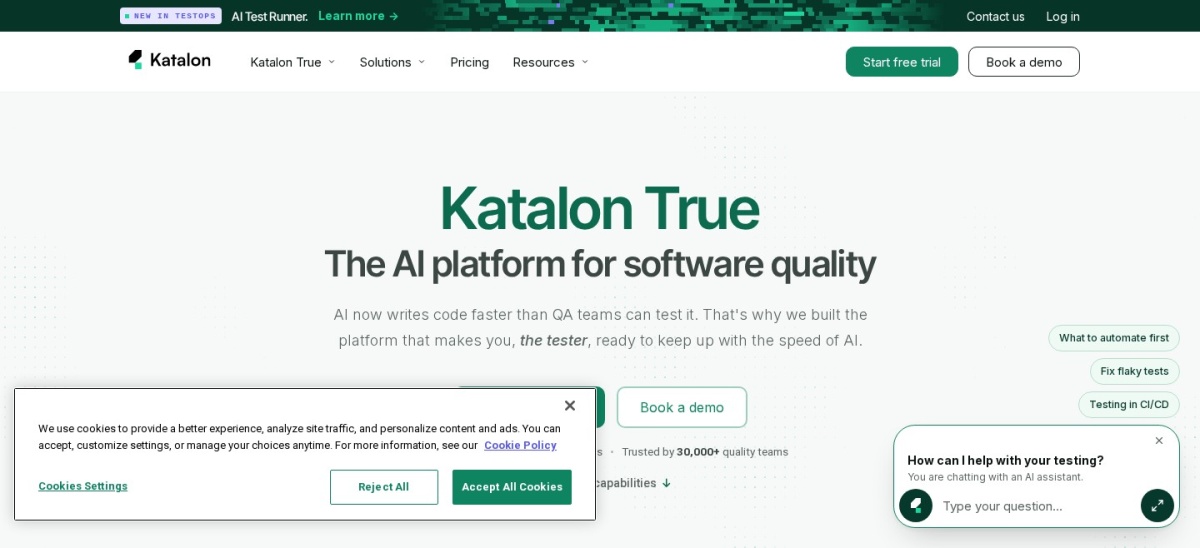
Katalon is an integrated platform covering web, mobile, API and desktop testing, plus test management, in one place. Its AI assistant, smart XPath and self-healing locators cut maintenance, and it publishes per-seat pricing from $150 a month billed yearly, which suits teams that need to budget directly.
The trade off is that execution add-ons sit on top of the seat price. True Platform starts at $150 per seat a month, and the free starter tier is limited. It suits mixed QA and engineering teams testing everything in one platform.
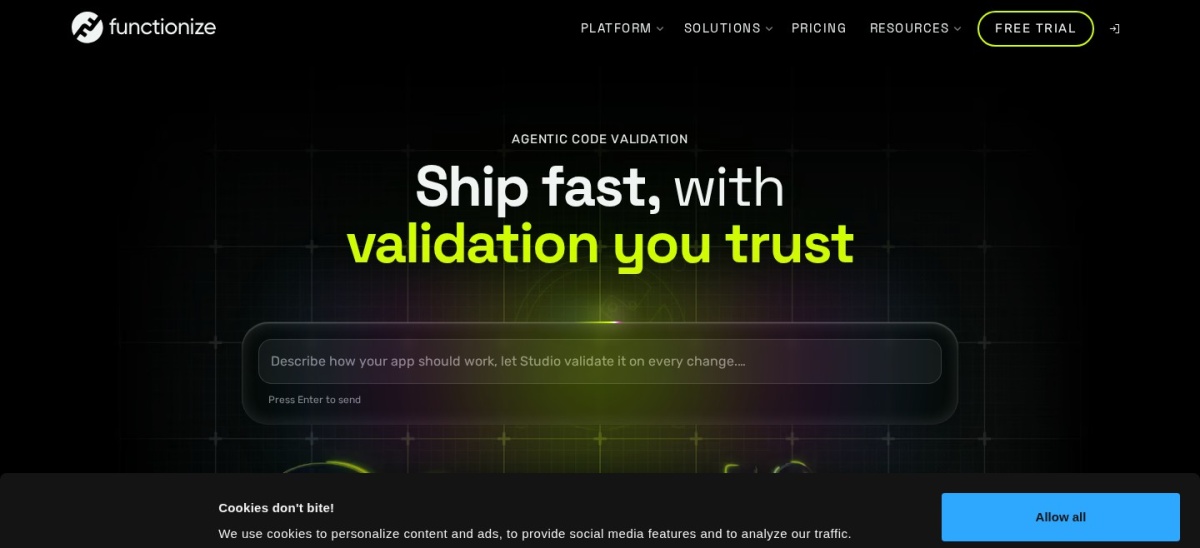
Functionize is an AI-native testing platform that lets non-technical users write tests in natural language. Its machine-learning engine claims 99.97 percent element recognition accuracy, and it publishes what its competitors hide: a free plan, Growth at $20 a month, Scale at $100 a month and a custom Enterprise tier.
The trade off is review depth. Functionize is rated 4.6 out of 5 on G2, but from only 11 reviews. It suits teams that want agentic testing without an enterprise sales call.
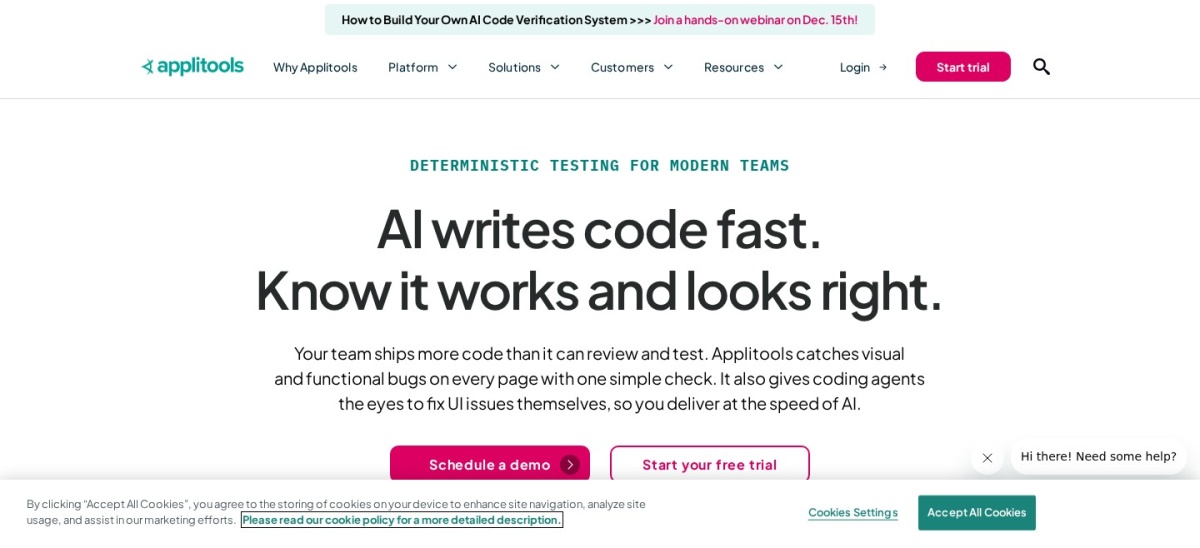
Applitools is a visual AI platform that does not run your tests; it watches them. Its Visual AI compares screenshots the way a human eye would, ignoring irrelevant rendering differences, and catches layout shifts and styling regressions that functional tests miss. It plugs into Selenium, Playwright and Cypress.
The trade off is price. The Starter plan costs $667 a month billed yearly, and it is a validation layer, not a test runner, so you still need a framework beside it. It suits teams drowning in false-positive visual diffs.
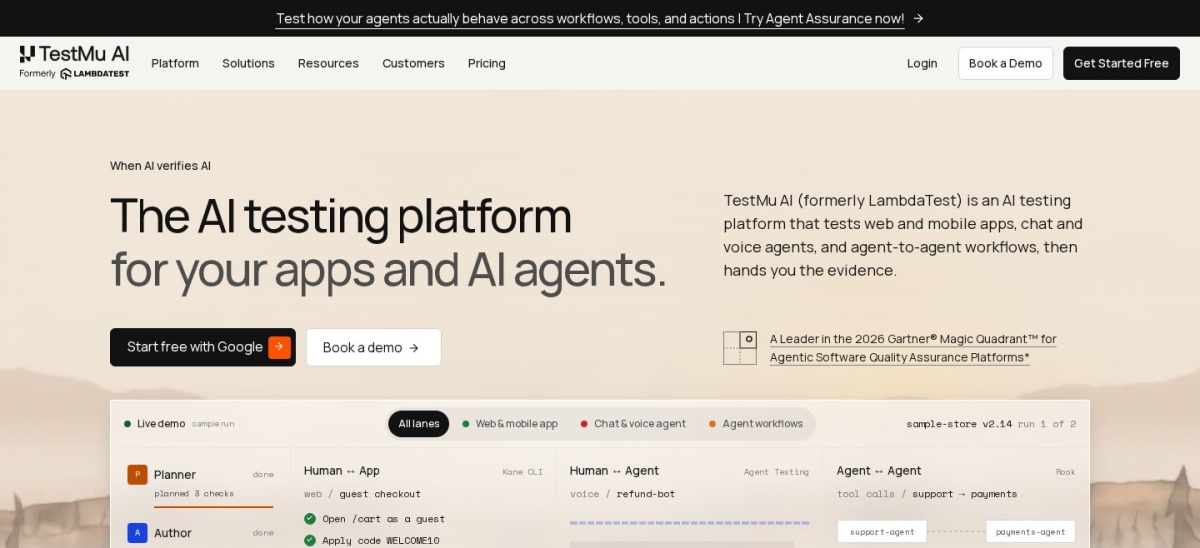
LambdaTest is a cloud testing platform, now TestMu AI, with 3,000-plus browser and operating-system combinations, plus KaneAI, a GenAI-native QA agent that plans tests from plain-language prompts and exports them to Selenium, Playwright or Appium. The classic Live plan starts at $15 a month.
The trade off is that pricing has moved with the rebrand: KaneAI Starter is listed near $17 a month, and higher parallel plans cost more. It suits budget-conscious teams that want a grid plus AI authoring for less than BrowserStack or Sauce Labs.
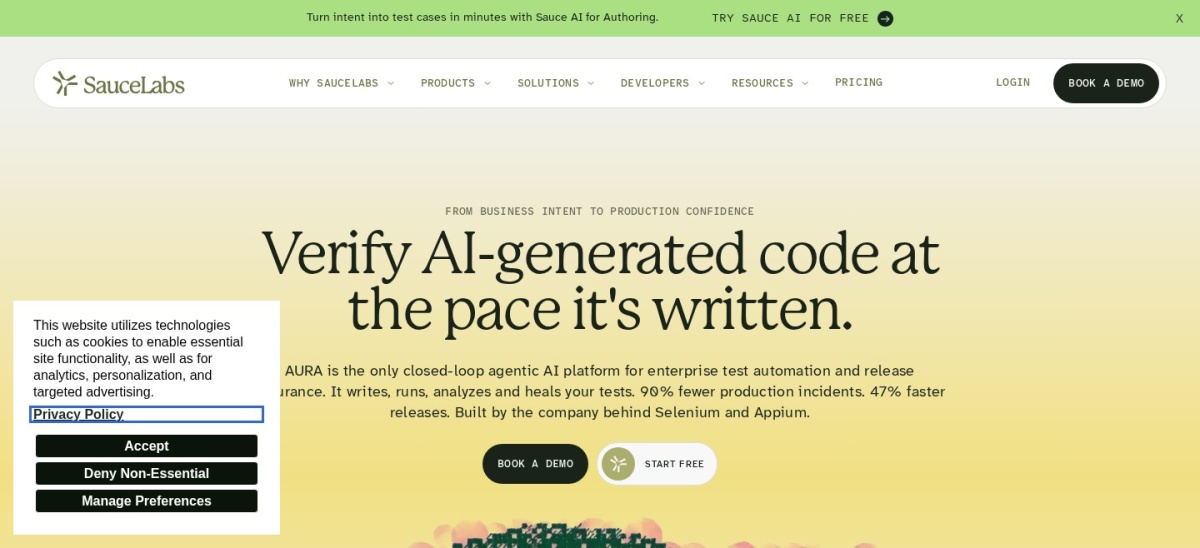
Sauce Labs is a cloud testing platform that provides the infrastructure AI test tools run on: thousands of browser and device combinations for execution at scale, with Sauce AI Agents for test generation, debugging and maintenance. Live testing starts at $39 a month billed yearly, or $49 month to month.
The trade off is that the entry plan is live testing only. Virtual and real-device plans start at $149 and $199 a month, and AI agents are Enterprise only. It suits regulated enterprises that need compliance and analytics.
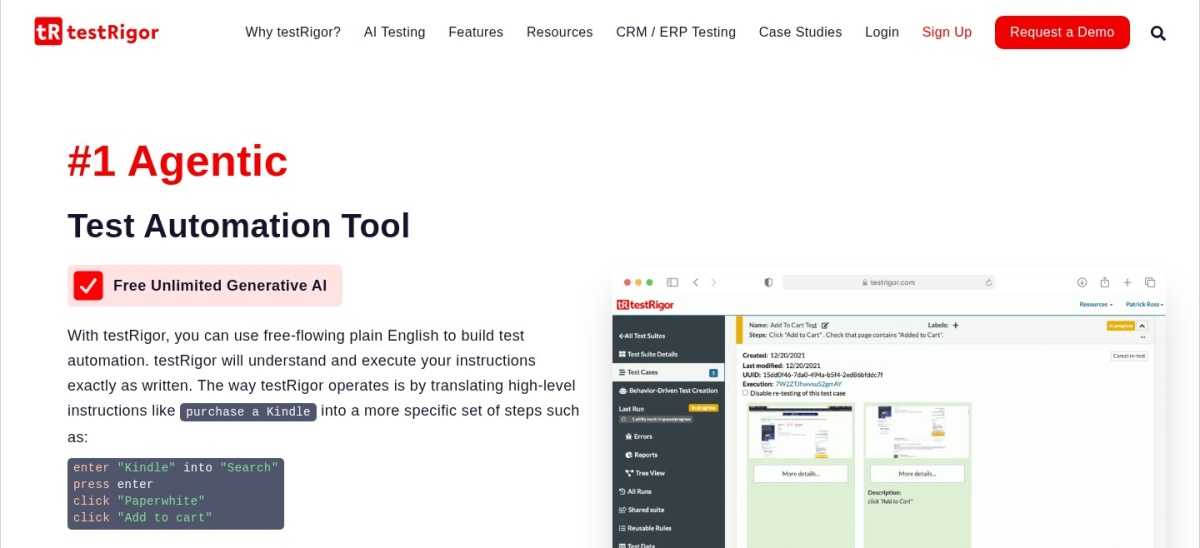
testRigor is a plain-English test platform that writes tests in plain English, so teams with non-technical authors can create and maintain tests without code. Its AI-driven recognition resolves elements as the app changes, and it covers web, mobile and API testing from one platform.
The trade off is price. Plans start from around $300 a month, which is far above Functionize at $20 a month, and we could not verify a G2 review count for it. It suits teams whose authors are not engineers.
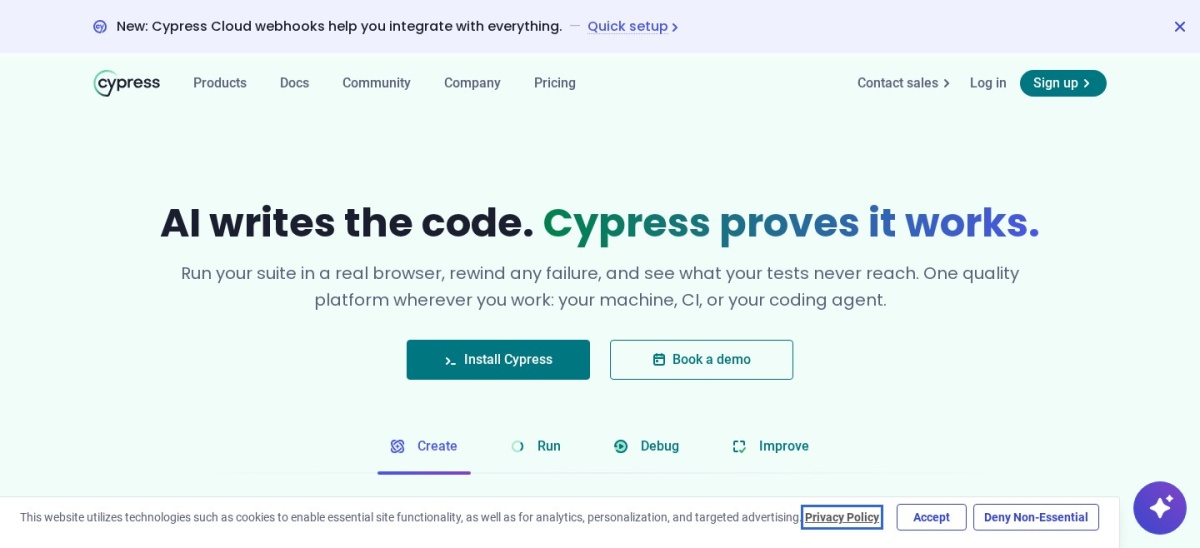
Cypress is a JavaScript front-end testing framework with time-travel debugging and component testing. It is free and open source for local runs, with Cypress Cloud adding AI-assisted features, parallel runs and flake detection from $67 a month. It is rated 4.7 out of 5 on G2.
The trade off is that Cypress is a framework, not a managed platform. You write the tests in code and run them yourself, so it suits code-first teams, not QA teams that need a recorder.
Free plans are real but small. Testim has a free Community plan, Katalon has a free starter tier, and LambdaTest has a free tier with limited minutes.
Paid plans mostly add parallel runs and credits. mabl meters cloud runs by credits, Applitools meters visual checkpoints, and Sauce Labs meters parallel sessions.
If you test a side project, a free tier plus Playwright may be enough. Our guide on free testing tools lists other no-cost options worth pairing with these.
For a team that ships daily, the cheapest seat is rarely the cheapest suite. Compare cost per run before you pick.
How we chose
We started from the AI test automation tools QA teams name most often in 2026 comparisons, then kept those with a published price, a free plan or a trial.
Prices come from each vendor's pricing page or a dated comparison that read it, checked on 22 November 2026. mabl and Testim publish no price, so the list shows third-party estimates and says so. Ratings come from G2 on the same day.
We left out code-only frameworks with no AI features, except where they anchor the free end of the list. No vendor paid for a place. This list is based on pricing, docs and reviews, not on using the tools ourselves.
How to choose an AI test automation tool
Start with the app you ship and the people who will write the tests, then count the runs you need each month.
Name what you test. Web, mobile, API and desktop need different tools. A web-only team does not need a device cloud.
Check who writes the tests. Low-code recorders suit QA teams without deep coding. Plain-English tools suit non-technical authors. Code-first teams may prefer a framework.
Count runs per month. Cloud runs, visual checkpoints and parallel sessions are the meters that decide the bill. Ask for pricing against your real run volume.
Run a trial on a live flow. Record a real user journey, change one button label, and see if the test heals. That one check tells you more than any feature list.
FAQ
What is the best AI test automation tool?
mabl is the best pick for most teams. Its low-code platform heals broken tests with machine learning, covers web, mobile, API and performance testing, and is rated 4.4 out of 5 on G2.
Is there a free AI test automation tool?
Yes. Testim has a free Community plan, Katalon has a free starter tier, LambdaTest has a free tier, and Functionize has a free plan. Playwright is free and open source, though it is a framework, not a platform.
How much does mabl cost?
mabl publishes no price on its pricing page and sells through sales. Third-party estimates put entry around $499 a month, and buyer data puts the median contract near $36,000 a year.
How much does Testim cost?
Testim publishes no price and sells through sales, with a free Community plan after a trial. Third-party estimates put paid plans near $450 a month for small teams.
What is self-healing in test automation?
Self-healing means the test adapts when the app changes. Smart locators learn from each run, so a renamed button or a reordered form does not break the test.
What is visual AI testing?
Visual AI testing compares screenshots the way a human eye would, catching layout shifts and styling regressions that functional tests miss. Applitools is the specialist here.