Best Agentic AI Platforms in 2026: 9 Tools Compared
WLWPLegible EditorsLast verified 22 Nov 2026How we rank13 min read
★ Short answer
Microsoft Copilot Studio is the best agentic AI platform for most enterprises, with a 4.4 out of 5 G2 rating and agents that run inside Microsoft 365 from $200 a month per tenant. Pick Salesforce Agentforce if your data lives in Salesforce, and LangGraph if your engineers want code-first control over multi-agent workflows.
How we make this list: we compare pricing pages, product documentation and public user reviews, then re-check every price before each update. No product paid for a place. Disclosure.
Copilot Studio leads for Microsoft 365 companies: 4.4/5 on G2, agents from $200 a month per tenant.
Agentforce is the pick for Salesforce shops, at $2 per conversation with a free Foundations tier.
LangGraph is the only code-first framework here: free and open source, with hosted Plus at $39 per seat a month.
UiPath pairs robots with agents, but its agent features sit on quote-only Standard and Enterprise plans.
Vertex AI and Bedrock are pure usage-based: no seat fee, but bills that are hard to forecast.
n8n is the cheapest entry here: Starter costs €20 a month billed annually, with a free self-hosted Community Edition.
What enterprise agent orchestration means
An agentic platform is not a chatbot. It runs several agents that plan, call tools, hand work to each other and finish tasks without a human starting each step, and it keeps a record of what each agent did.
Governance is what separates enterprise platforms from hobby builders. Look for human approval steps, audit trails, role-based access and cost tracking per agent, because an agent that can move money or change records needs the same controls as a person.
Pricing is usage-shaped in this market. Three of these nine tools charge per conversation, per credit or per token, so ask for the meter before the headline price. If your agents will also answer website visitors, our guide to the best chatbot plugins for WordPress covers the website side.
Start with the systems you already run. An agent platform is only as useful as the data and tools it can reach, so the best pick is usually the one built for your CRM, cloud or productivity suite.
List prices in each vendor's currency, checked Nov 2026
AgentforceFREE$2
CrewAIFREECustom
Vertex AIFree
BedrockFrom $0.50
n8nFREE€240
UiPathFREE$300
LangGraphFREE$468
CopilotFREE$2,400
watsonx$6,360
The 9 best agentic AI platforms
01
Microsoft Copilot Studio
4.4/5on G2 (203 reviews, checked Nov 2026)
Paid from$200/mo
Best agentic platform for Microsoft shops
Agent buildingNatural language or visual
Connectors1,400+
BillingCopilot Credits, $200/pack
Free tierWith Microsoft 365 Copilot
copilotstudio.microsoft.com
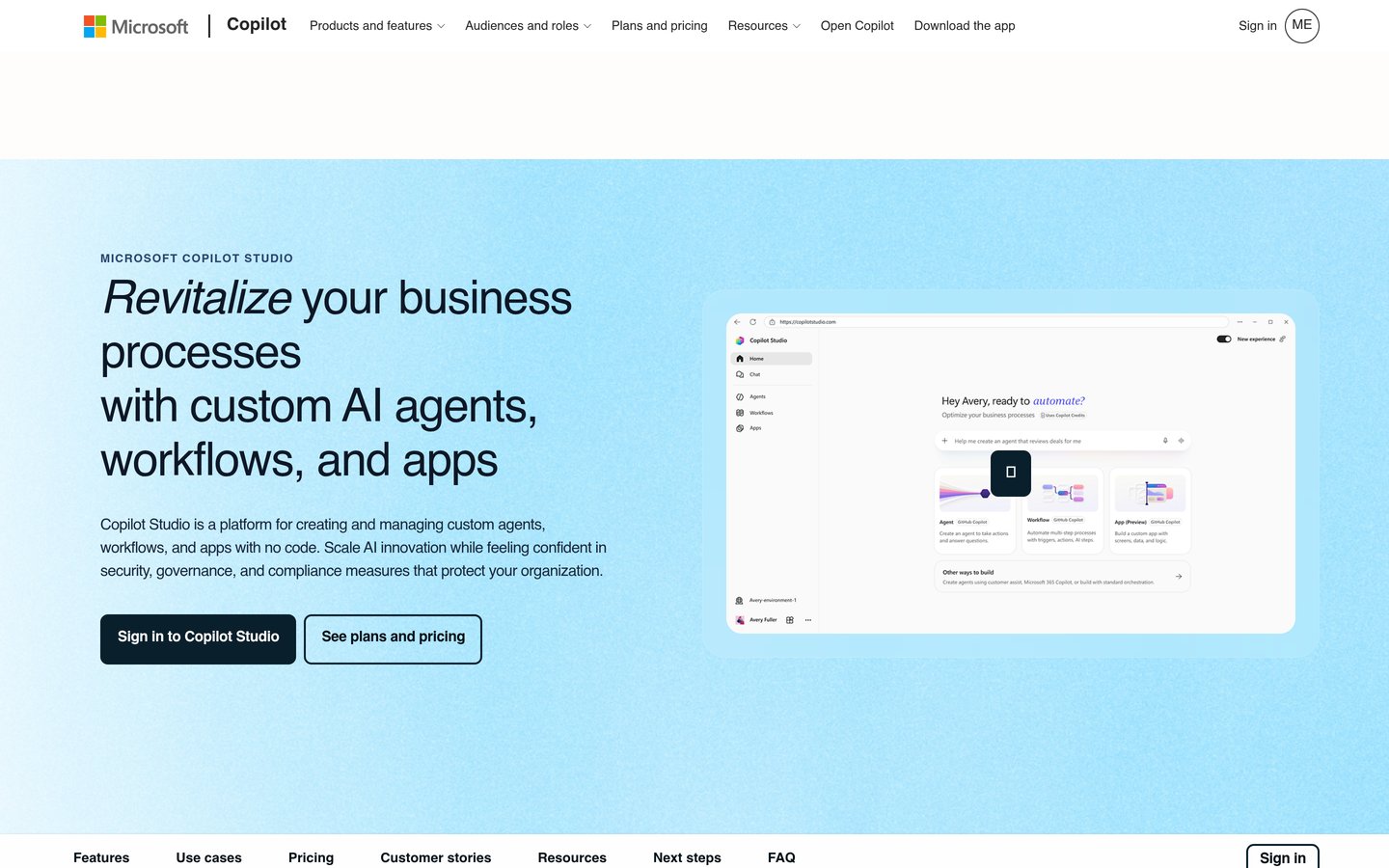
Microsoft Copilot Studio homepage, captured Nov 2026.
Microsoft Copilot Studio is Microsoft's platform for building agents that work inside Teams, SharePoint and Microsoft 365, with more than 1,400 connectors to business systems. Agents built in Copilot Studio can answer questions, run multi-step tasks and hand work to people, and internal agents are included for Microsoft 365 Copilot licensed users.
The trade off is the meter. Copilot Studio bills in Copilot Credits, and a generative answer or an agent action burns several credits, so a busy agent can use a 25,000-credit pack faster than expected. It suits companies already running on Microsoft 365 that want agents governed inside the tools staff already use.
What we like
1,400+ connectors to business systems
Internal agents included with Microsoft 365 Copilot
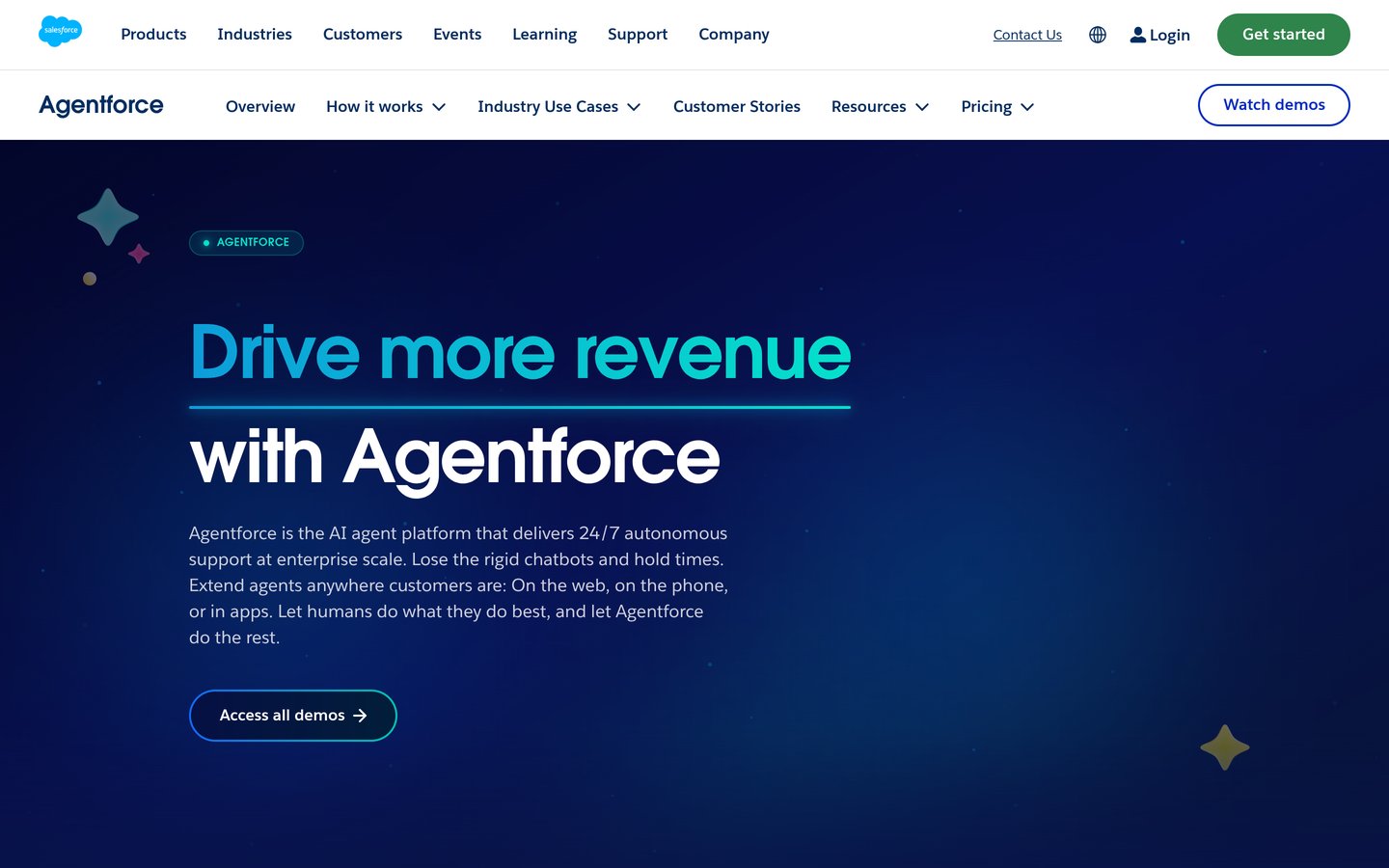
Salesforce Agentforce homepage, captured Nov 2026.
Salesforce Agentforce is Salesforce's layer of autonomous agents that work directly on CRM records, answering customers, qualifying leads and updating cases without a human starting each step. It runs on Salesforce data and tools, and the free Foundations tier includes Agent Builder, Prompt Builder and 200,000 Flex Credits to start with.
The trade off is cost control. At $2 per conversation or about $0.10 per action through Flex Credits, a popular support agent can run up a large bill, and the meter makes budgets hard to predict. It suits companies whose customer data already lives in Salesforce and who want agents acting on it.
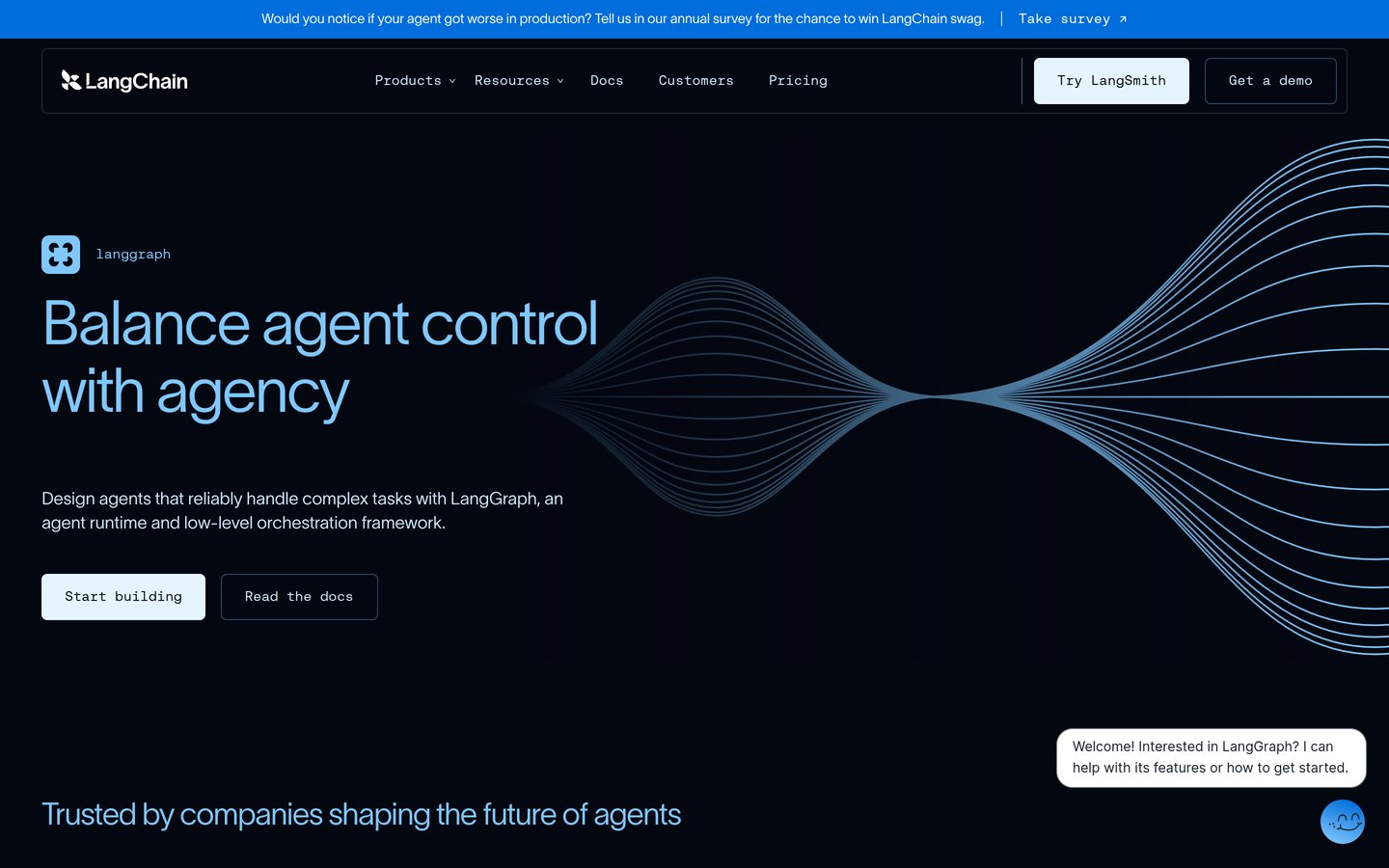
LangGraph is LangChain's open-source framework for building agents as graphs, where nodes do the work and edges decide what happens next. State persists between steps, so an agent can pause for human approval, recover from failure and pick up where it stopped, and the hosted LangSmith platform adds tracing and deployment.
The trade off is that it is developer-only. There is no visual builder for non-engineers, and state management, graph structure and conditional routing take time to learn. It suits engineering teams that need fine-grained control over multi-agent workflows and already build on LangChain.
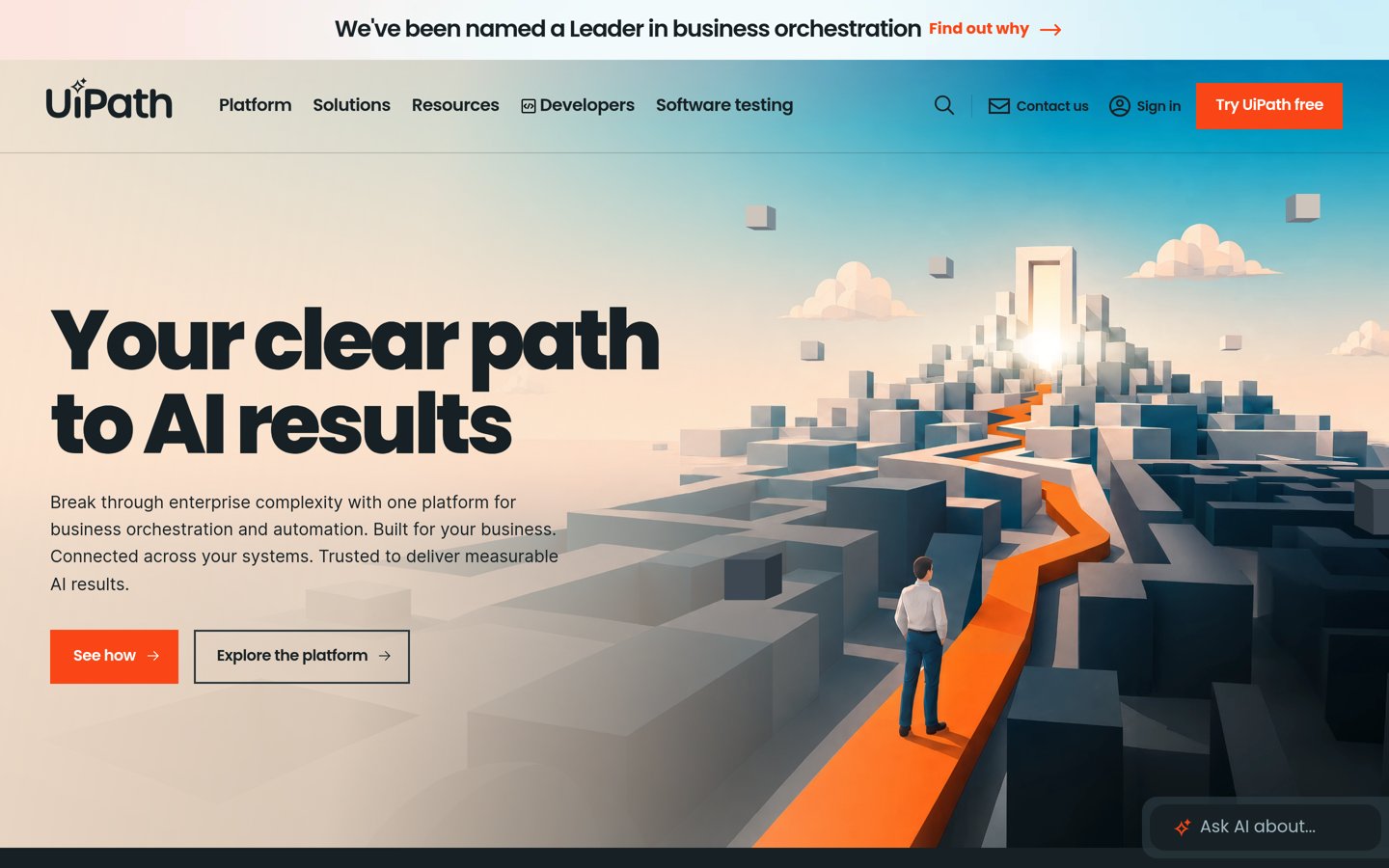
UiPath is an enterprise automation platform that runs software robots, AI agents and API workflows together under one orchestrator. Its agentic layer adds Agent Builder and Maestro orchestration, and the free Community plan includes one Pro user, one Plus user and one unattended robot.
The trade off is pricing. The cheapest paid plan starts at $25 a month, but the agent features sit on Standard and Enterprise plans that are sold by quote, and users and robots are licensed separately. It suits large enterprises automating legacy systems that need audited, governed automation at scale.
What we like
One orchestrator for robots, agents and APIs
Mature governance and audit controls
Free Community plan for small teams
Watch out for
Agent features need quote-only plans
Users and robots licensed separately
Licensing is complex to forecast
Standard and Enterprise add Maestro and Agent BuilderVisit uipath.com
05
IBM watsonx Orchestrate
4.4/5on G2 (404 reviews, checked Nov 2026)
Starts at$530/mo
Best agent control plane for IBM estates
Control planeMulti-framework agents
IntegrationsSAP, Workday, Salesforce
Audit trailsYes
Paid planEssentials, $530/mo
ibm.com
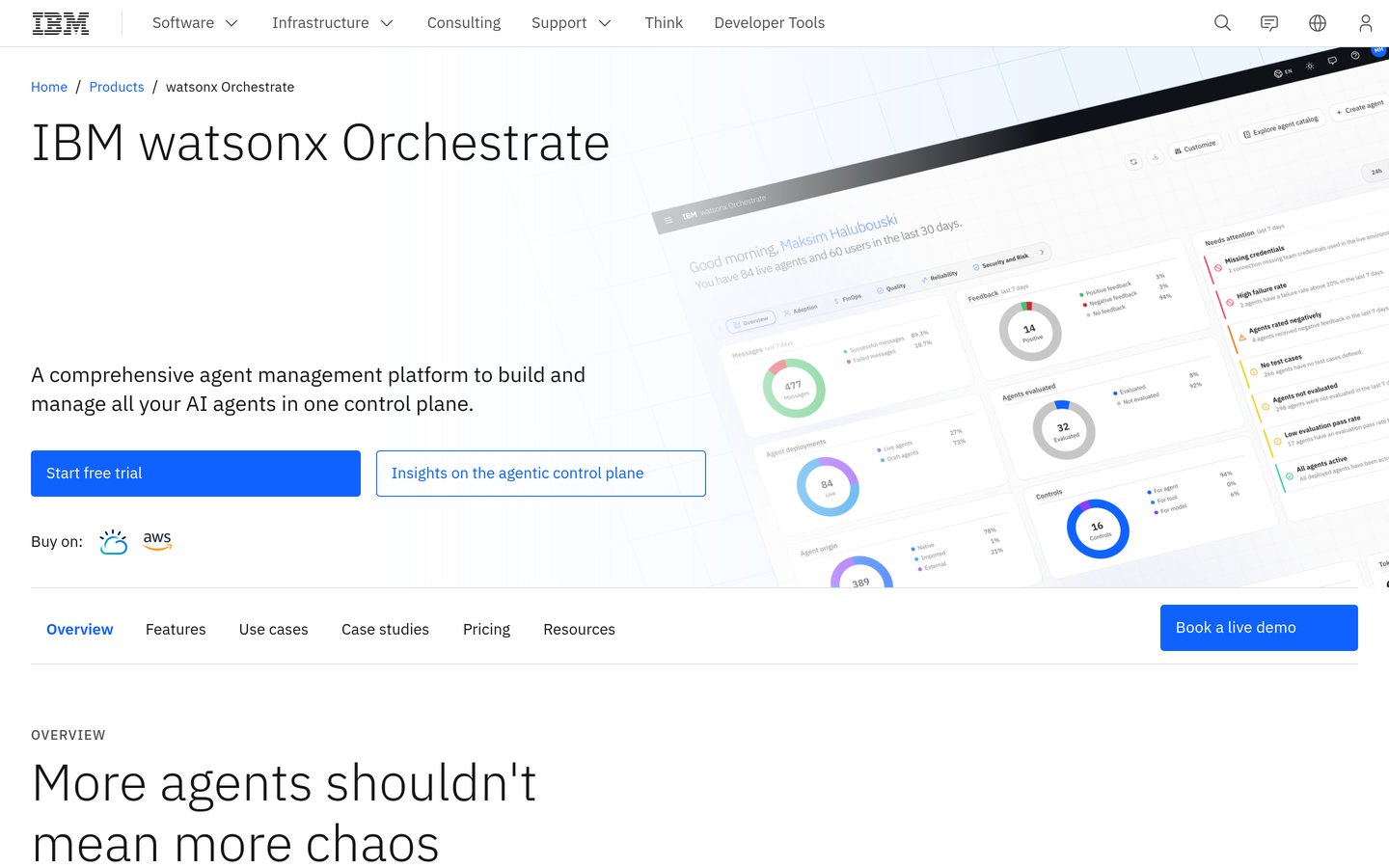
IBM watsonx Orchestrate homepage, captured Nov 2026.
IBM watsonx Orchestrate is an agent management platform that discovers, orchestrates, governs and tracks the cost of AI agents across an enterprise. It connects agents to SAP, Workday and Salesforce, keeps audit trails of agent actions, and its Essentials plan covers up to 4,000 monthly active users and 200,000 messages a month.
The trade off is the entry price and the setup effort. Essentials starts at $530 a month, and reviewers say getting from an empty environment to a first working custom tool takes days. It suits IBM and SAP-heavy enterprises that need one governed control plane for agents from mixed frameworks.
What we like
One control plane for agents from any framework
Strong audit trails and governance
SAP, Workday and Salesforce integrations
Watch out for
Essentials starts at $530 a month
Setup takes days for a first custom tool
No free plan, only a 30-day trial
Standard adds 40,000 users and 2M messages a monthVisit ibm.com
06
CrewAI
4.3/5on G2 (26 reviews, checked Nov 2026)
PricingCustom/yr
Best for fast multi-agent prototypes
FrameworkOpen source, MIT
Crews and FlowsRole-based + event-driven
Free tier50 executions/mo
Paid planEnterprise, custom
crewai.com
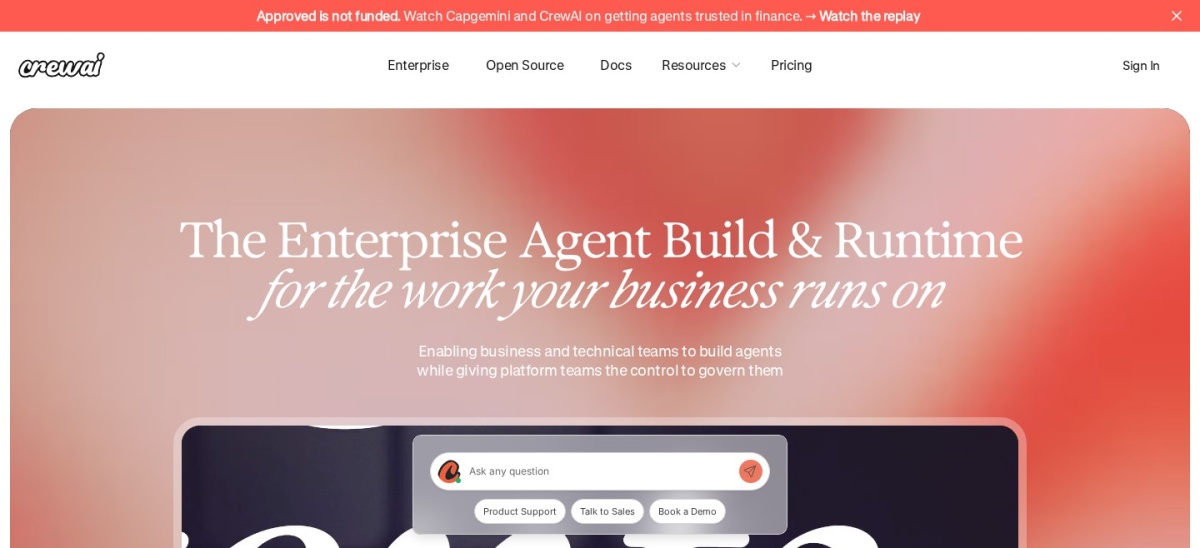
CrewAI homepage, captured Nov 2026.
CrewAI is an open-source Python framework for building teams of AI agents organised as role-based Crews, with event-driven Flows for deterministic control. Its hosted platform, CrewAI AMP, adds a visual Studio editor, tracing, guardrails and deployment, and the free Basic tier covers 50 workflow executions a month.
The trade off is the gap between free and paid. Basic stops at 50 executions a month, and the only step up is a custom-quoted Enterprise contract, since the $25 middle tier was removed in spring 2026. It suits teams that prototype multi-agent crews fast and can self-host the framework.
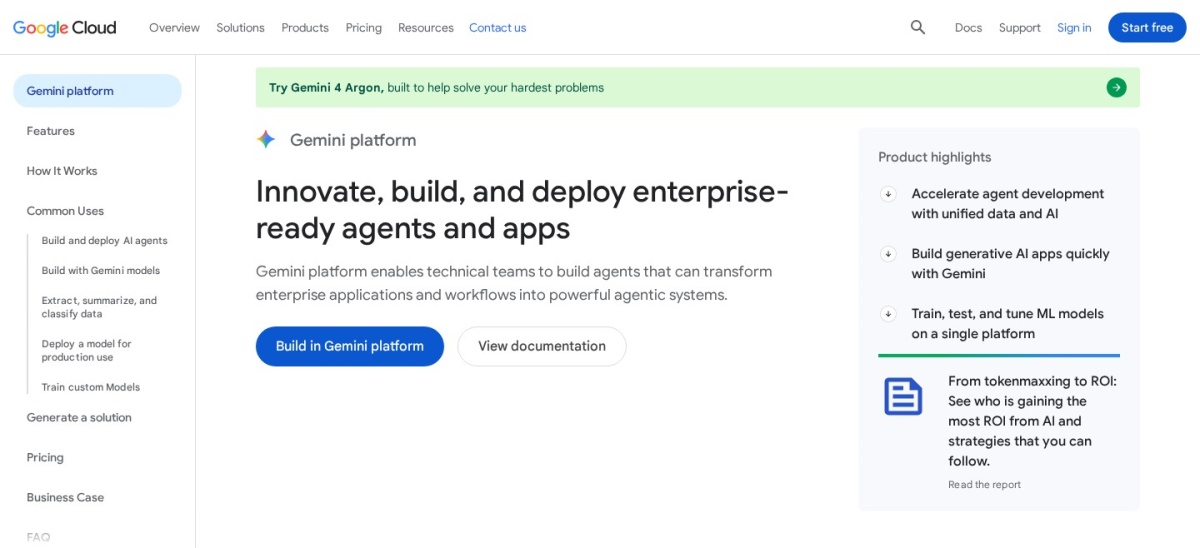
Vertex AI Agent Builder homepage, captured Nov 2026.
Vertex AI Agent Builder is Google Cloud's platform for building, deploying and governing production AI agents on Gemini models. It includes the Agent Development Kit, Agent Engine runtime, sessions and a Memory Bank, and it connects agents to BigQuery, Cloud Storage and other Google Cloud data. Google renamed it the Gemini Enterprise Agent Platform in April 2026.
The trade off is billing complexity. There is no flat fee: runtime, storage, search and model tokens are metered separately, so forecasting a monthly bill takes work. It suits teams already committed to Google Cloud that want agents grounded in their own data.
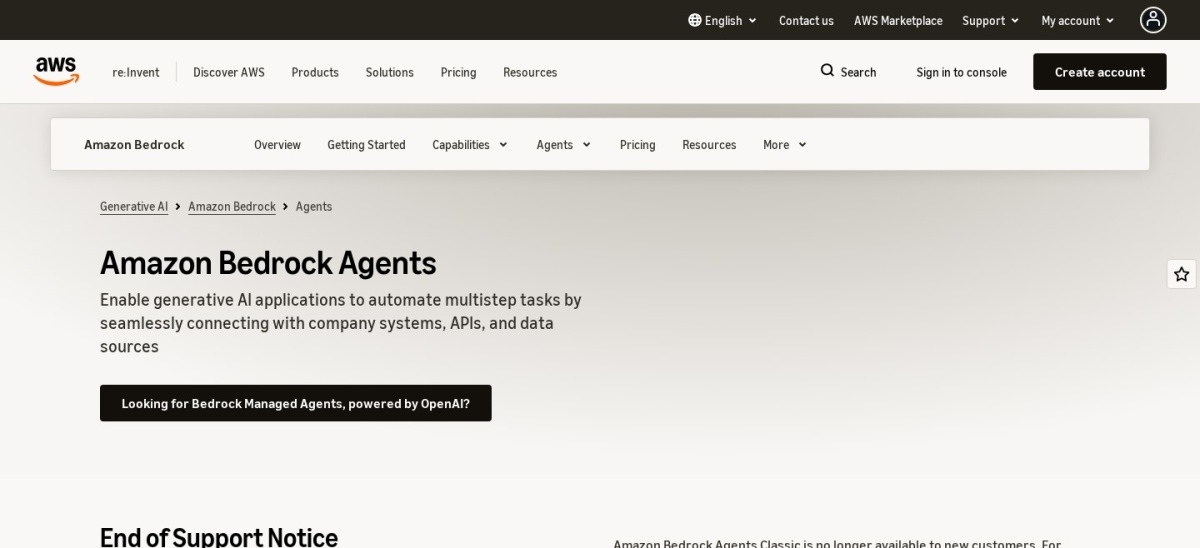
AWS Bedrock Agents is Amazon's managed service for building multi-step agents on foundation models from Anthropic, Meta, Mistral and Amazon's own Nova family. Agents can reason, call tools and APIs, retrieve from knowledge bases and keep memory, with IAM, VPC and guardrails from AWS. Bedrock charges no orchestration fee; you pay only for model tokens.
The trade off is cost forecasting. Agents often consume four to eight times the tokens of a simple prompt, and AgentCore runtime, memory and gateway meters add separate lines to the bill. It suits AWS-native enterprises that want framework freedom with AWS security and isolation.
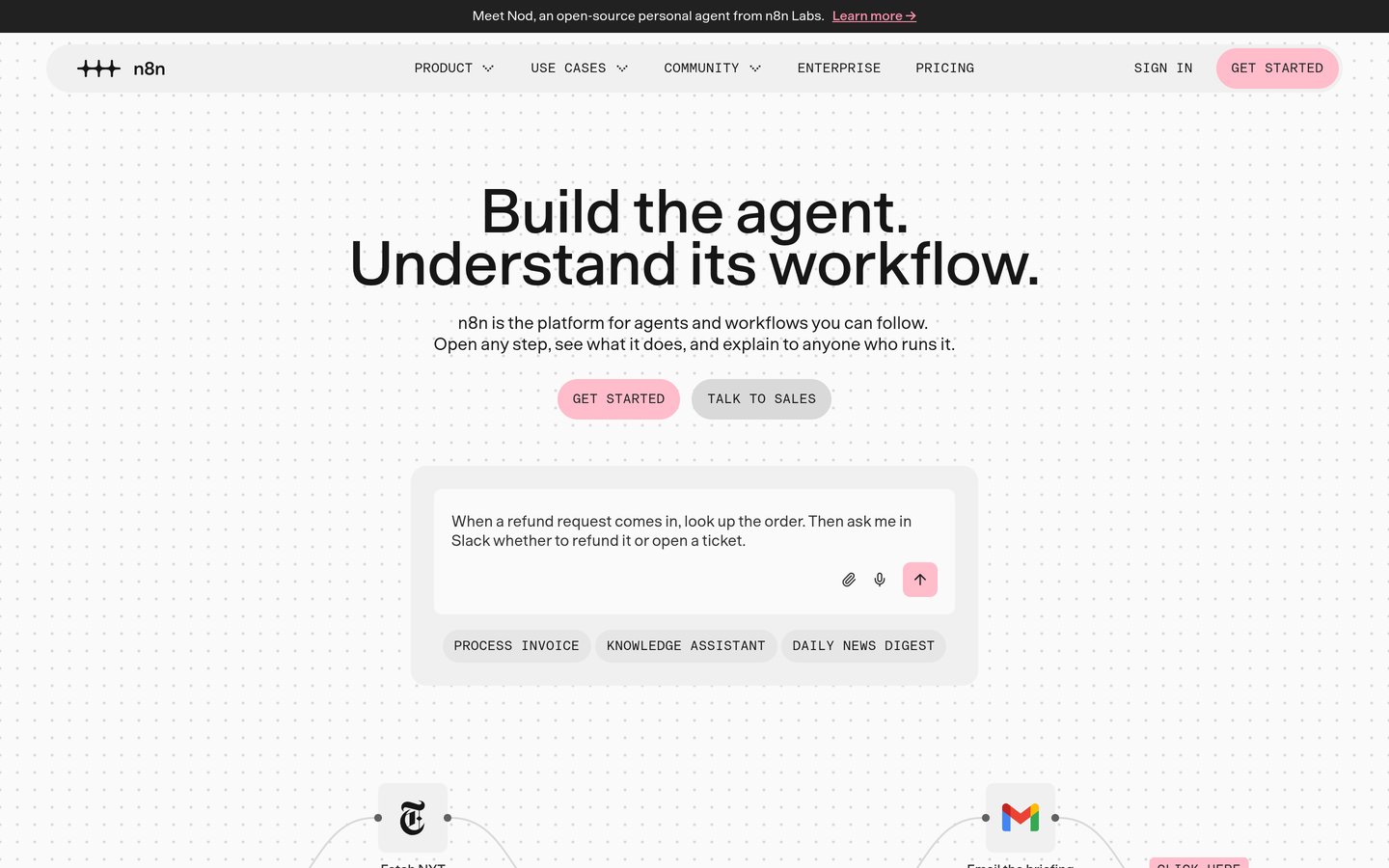
n8n is an open-source workflow automation platform with a visual builder, code nodes and AI agent nodes for building multi-agent workflows. Agents can call tools, use memory and hand work to each other, and the Community Edition is free to self-host on your own server.
The trade off is the learning curve. n8n suits technical teams: building reliable multi-agent workflows takes time, and governance features such as SSO and audit logs sit on the €667-a-month Business plan. It suits small technical teams that want visual agent workflows without per-seat pricing.
What we like
Visual builder with AI agent and MCP nodes
Free Community Edition to self-host
Flat pricing with unlimited users
Watch out for
Steep learning curve for newcomers
Governance features need the €667 Business plan
Cloud prices are billed in euros
Pro adds 10,000 executions a month for €50Visit n8n.io
Enterprise orchestration vs no-code builders
No-code agent builders let anyone describe an agent in plain language and ship it in an afternoon. They are fast, but they rarely offer approval chains, audit logs or cost controls.
Enterprise orchestration platforms add those controls. Agents run under policies, pause for human review, and every action is logged, which is what regulated teams and large companies need.
Pick a builder when one team needs one agent quickly. Pick an orchestration platform when agents will touch customer data, money or production systems.
How we chose
We started from the enterprise agent platforms with a public G2 rating and a published price or meter, then kept the nine that cover multi-agent orchestration with governance, not single-purpose chatbots.
Prices come from each vendor's pricing page, checked on 22 November 2026, or from secondary trackers who checked those pages in September to November 2026 where a vendor page is JavaScript-rendered. Ratings and review counts come from G2 on the same day. Where a vendor shows a sale, the list shows the regular price.
We left out tools with no verifiable G2, Capterra or Trustpilot rating, including the OpenAI Agents SDK, which has no paid plan or review listing. We also left out SmythOS: its website now redirects to a GitHub repository and its paid plans are no longer purchasable. No vendor paid for a place, and we do not claim hands-on testing for this list.
How to choose an agentic AI platform
Start with the systems your agents must touch, then check the meter and the governance controls before you commit.
List the systems agents must reach. CRM, ERP, cloud storage and email decide the shortlist. Copilot Studio fits Microsoft 365, Agentforce fits Salesforce, Bedrock fits AWS.
Ask how each agent action is billed. Per-conversation, per-credit and per-token meters all behave differently at volume. Model a busy month before you sign, not a quiet one.
Check the approval and audit controls. An agent that can refund a customer or change a record needs human approval steps and a log. Test those controls in a trial, not after launch.
Prototype one real workflow first. Pick a single workflow with a clear owner and a measurable outcome, and run it on the free tier or trial before rolling agents out wider.
FAQ
What is the best agentic AI platform?
Microsoft Copilot Studio is the best pick for most enterprises. It scores 4.4 out of 5 on G2, its agents run inside Microsoft 365 and Teams, and pricing starts at $200 a month per tenant for 25,000 Copilot Credits.
What is an agentic AI platform?
It is software that runs AI agents which plan multi-step work, call tools and APIs, and finish tasks without a human starting each step. Enterprise platforms add governance: approval steps, audit trails, role-based access and cost tracking for every agent.
How much does an agentic AI platform cost?
It varies widely. Copilot Studio starts at $200 a month per tenant, Agentforce charges $2 per conversation, LangGraph Plus costs $39 per seat a month, and Vertex AI and Bedrock bill purely by usage. CrewAI's Enterprise plan is custom-quoted, so ask for a written quote.
Do I need engineers to run an agentic AI platform?
It depends on the tool. Copilot Studio, Agentforce and n8n offer low-code or visual builders, while LangGraph and CrewAI are code-first frameworks for engineering teams. UiPath and watsonx Orchestrate sit in between, with visual tools plus developer options.
What is the difference between an AI agent and a chatbot?
A chatbot answers questions in a conversation. An AI agent plans work, calls tools, changes records and finishes multi-step tasks on its own, then reports back. Agents need governance and approval controls because they act, while chatbots mostly talk.
Which agentic AI platform is best for small teams?
n8n is the cheapest starting point for small teams. Its Starter plan costs €20 a month billed annually, and the Community Edition is free to self-host. CrewAI's free Basic tier covers 50 workflow executions a month. Both suit teams building a few agents, not a company-wide rollout.