QuickBooks Online is the best accounting software for inventory management for most small businesses, with inventory tracking from its Plus plan at $140 a month. Xero is the best budget pick at $27 a month, while Zoho Books suits small teams at $40 a month for inventory.
How we make this list: we compare pricing pages, product documentation and public user reviews, then re-check every price before each update. No product paid for a place. Disclosure.
QuickBooks Online Plus is the best all-round pick, with inventory tracking at $140 a month.
Xero is the best budget pick, with inventory from its $27 Early plan.
Zoho Books adds inventory at its $40 Professional plan, with a free plan under $50K revenue.
Cin7, Fishbowl and Unleashed are inventory-first tools for product businesses, from $229 a month.
NetSuite and Sage Intacct suit larger teams and sell by quote only.
What accounting software with inventory should cover
Accounting software with inventory management tracks stock and money in one place. It records purchases, sales, stock levels and costs, so the balance sheet matches the warehouse.
Inventory depth varies a lot. QuickBooks, Xero and Zoho Books add inventory to general accounting, while Cin7, Fishbowl and Unleashed are built for product businesses with warehouses, batches and serial numbers.
Prices in this list use the inventory tier, not the cheapest plan. QuickBooks inventory needs Plus at $140 a month, and Zoho Books inventory needs Professional at $40, so check which tier includes stock before you compare.
Ratings come from G2 and Capterra, checked in November 2026. Review counts run from 274 for Fishbowl to more than 4,900 for NetSuite, so the smaller samples deserve more caution.
The 8 best accounting software tools for inventory management
01
QuickBooks Online
4/5on G2 (3,871 reviews, checked Nov 2026)
Paid from$140/mo
Best accounting with inventory overall
Free planYes, $0
Inventory planPlus, $140/mo
Users25 on Plus
G2 rating4.0 from 3,871 reviews
quickbooks.intuit.com
QuickBooks Online homepage, captured Nov 2026.
QuickBooks Online is the accounting software most small businesses reach for first, and its Plus plan adds the inventory tracking product sellers need. Plus covers inventory, project profitability, budgets and class tracking, with 25 users included. Reviewers rate QuickBooks Online 4.0 out of 5 on G2.
The trade off is the tier jump. Simple Start costs $38 a month but has no inventory, so sellers must pay $140 a month for Plus, and the 70 percent Black Friday price is only for three months. It suits small businesses that want accounting and inventory in one place.
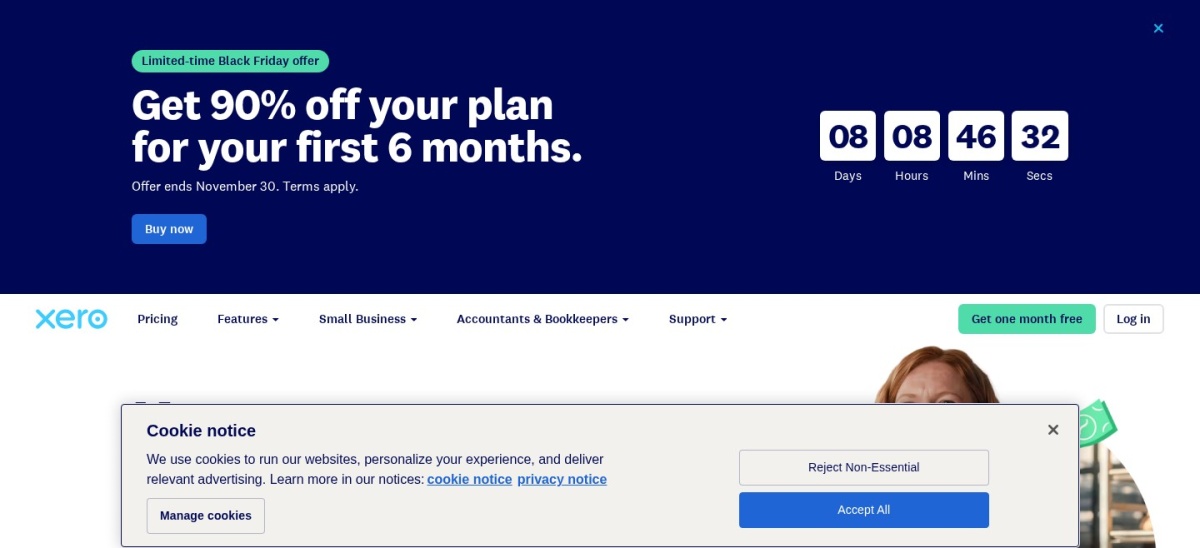
Xero is a cloud accounting platform with inventory tracking from its cheapest paid plan. Early costs $27 a month and includes inventory for up to 4,000 items, unlimited users, bank reconciliation and quotes. Reviewers rate Xero 4.4 out of 5 on G2.
The trade off is the invoice cap. Early covers only 20 invoices and 5 bills a month, so growing sellers move to Growing at $59 a month, and multi-channel inventory needs the Inventory Plus add-on. It suits small teams that want inventory without a big monthly bill.
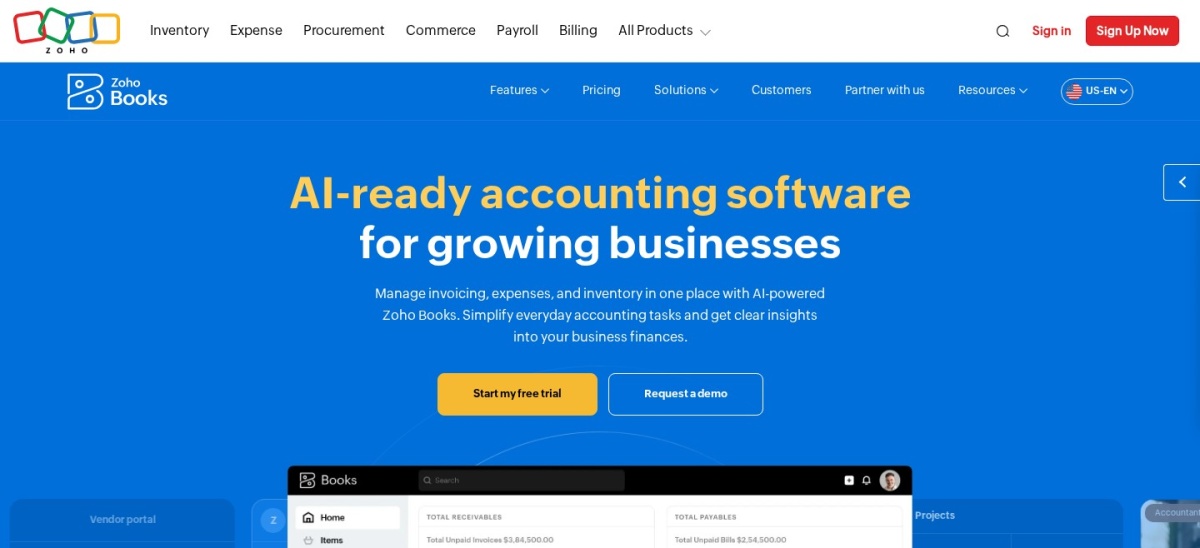
Zoho Books is an accounting platform for small businesses that adds inventory at its Professional plan. Professional costs $40 a month billed annually and covers inventory tracking, sales and purchase orders, projects and multi-currency. Reviewers rate Zoho Books 4.4 out of 5 on G2.
The trade off is the tier jump. Standard costs $15 a month but has no inventory, and the free plan only fits businesses under $50,000 revenue. It suits small teams that already use Zoho apps and want inventory in the same system.
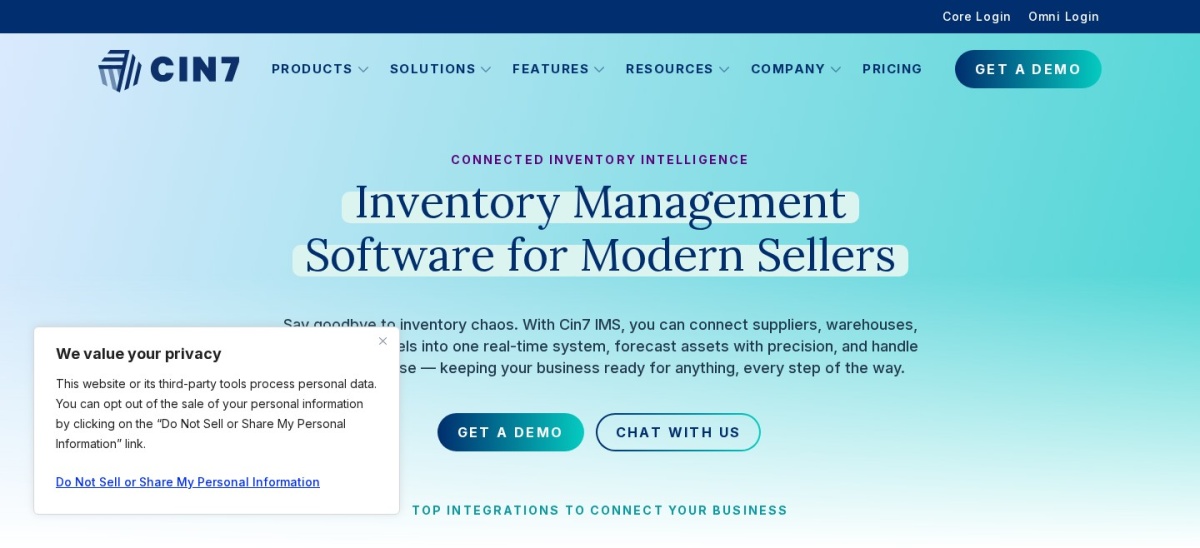
Cin7 is an inventory-first platform for product businesses that sell across channels. It covers inventory, orders, warehousing and production, with 5 users on the Standard plan at $349 a month billed annually. Reviewers rate Cin7 4.2 out of 5 on G2.
The trade off is price and the review base. Standard costs $349 a month, and the G2 review count is reported between 286 and 345 across sources. It suits product businesses that outgrew accounting-tool inventory and need real warehousing.
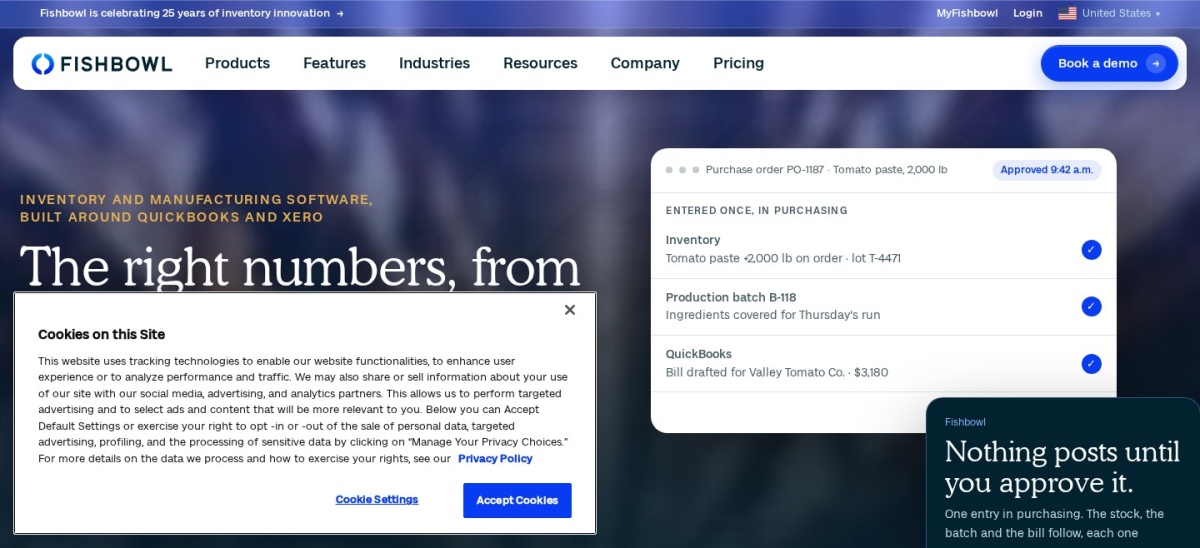
Fishbowl is an inventory management platform that pairs with QuickBooks and Xero for accounting. Its Essentials plan costs $229 a month for 2 users billed annually and covers inventory, orders, manufacturing and barcoding. Reviewers rate Fishbowl 4.0 out of 5 on G2.
The trade off is that Fishbowl is inventory only, so you still pay for QuickBooks or Xero beside it, and the $229 plan covers only 2 users. It suits manufacturers and wholesalers that need deep inventory beside their accounting.
Unleashed is a cloud inventory platform for manufacturers, wholesalers, retailers and distributors. It covers stock, purchasing, production and sales across multiple locations and channels in real time. Reviewers rate Unleashed 4.4 out of 5 on Capterra.
The trade off is price transparency. The vendor does not publish pricing, and Capterra lists $399 a month, so buyers must confirm the figure with sales. It suits product businesses that need real-time stock across locations and channels.
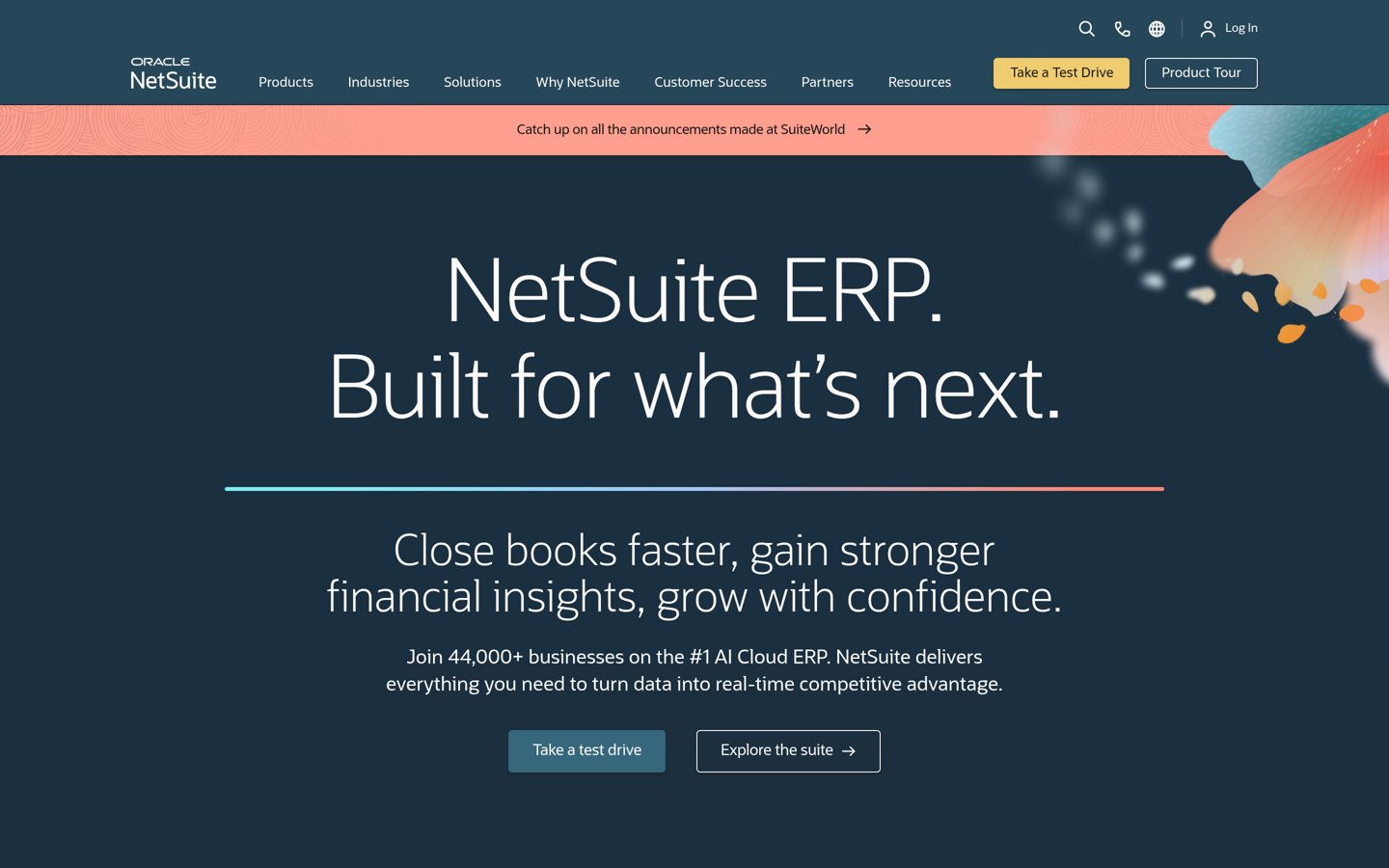
NetSuite is the ERP for larger teams that need accounting, inventory, CRM and ecommerce in one system. Its inventory management covers demand planning, replenishment and multi-location stock beside full financials. Reviewers rate NetSuite 4.1 out of 5 on G2.
The trade off is that pricing is by quote and implementation takes months, so NetSuite is a project, not a signup. It suits larger teams that outgrew small-business accounting and need one ERP.
Sage Intacct is a cloud financial management platform for mid-size teams that need strong accounting with inventory. It covers multi-entity accounting, order management and inventory beside reporting and dashboards. Reviewers rate Sage Intacct 4.3 out of 5 on G2.
The trade off is that pricing is by quote and the platform is built for finance teams rather than warehouse operators. It suits mid-size companies that need multi-entity accounting with inventory in one system.
We started from every accounting tool with inventory management and a G2 or Capterra listing, then kept the eight that track stock, orders and costs in one system. Accounting tools without inventory were left out.
Prices come from each vendor's pricing page or a November 2026 read of that page. QuickBooks and Zoho Books were opened on 26 November 2026; the rest rest on vendor-page reads from October and November 2026.
Ratings and review counts come from G2 or Capterra, checked in November 2026. No vendor paid for a place, and we do not claim hands-on testing for this list.
How to choose accounting software for inventory
Start with your stock locations, then check which tier includes inventory.
Count your stock locations. One warehouse and ten need different tools, so list locations, bins and channels before you compare.
Check which tier includes inventory. Inventory often sits above the cheapest plan, so confirm the tier price, not the entry price.
Test one full stock cycle. Buy, receive, sell and count one product in the trial and check the numbers match.
Check your sales channels. If you sell on Shopify, Amazon or Etsy, confirm the tool syncs stock with those channels.
FAQ
What is the best accounting software for inventory management?
QuickBooks Online is the best accounting software for inventory management for most small businesses. Its Plus plan costs $140 a month and adds inventory tracking, project profitability and budgets, and it is rated 4.0 out of 5 on G2 from 3,871 reviews.
What is inventory management in accounting software?
Inventory management in accounting software tracks stock levels, costs and sales in one system. It records what you buy, what you sell and what remains, then values the stock on the balance sheet and the cost of goods sold.
How much does accounting software with inventory cost?
Prices in this list run from $27 a month for Xero Early to $140 a month for QuickBooks Plus and $40 a month for Zoho Books Professional. Inventory-first tools cost more: Fishbowl starts at $229 a month and Cin7 at $349 a month.
Is QuickBooks or Xero better for inventory?
QuickBooks is better for most small businesses, with deeper inventory tracking in Plus and stronger reporting. Xero is better on budget, with inventory from its $27 Early plan, unlimited users and a simpler interface for small teams.
Can I manage inventory for free?
QuickBooks and Zoho Books both offer free plans, but neither includes inventory tracking on the free tier. Xero has no free plan. For free inventory tracking, look at Zoho Inventory or Odoo, which offer free tiers for small catalogs.
Do I need separate inventory software?
It depends on your volume. Small teams can manage stock inside QuickBooks, Xero or Zoho Books. Product businesses with warehouses, batches or serial numbers usually need Cin7, Fishbowl or Unleashed beside their accounting.
SaaS SEO and WordPress specialist with about 8 years of experience. Rakib compares WordPress plugins, themes, hosting and software using public pricing, documentation and user reviews. See how we rank.