Python is the best alternative to Elixir for most teams, rated 4.8 out of 5 from 275 G2 reviews and free, with the largest library collection of any pick here. Node.js suits real-time APIs, while Akka is the closest match to Elixir's actor model.
How we make this list: we compare pricing pages, product documentation and public user reviews, then re-check every price before each update. No product paid for a place. Disclosure.
Python leads the list at 4.8 out of 5 from 275 G2 reviews, and it is free, with the largest library collection here.
Node.js is the best pick for real-time APIs, also rated 4.8 out of 5, from 101 G2 reviews.
Laravel is the highest-rated framework here at 4.7 out of 5 from 161 reviews, and the closest to Phoenix-style web work.
Akka is the only pick with Elixir-style actors and supervision, rated 4.2 out of 5 from 30 reviews.
All 9 picks are free to use, so the choice turns on fit, not fees — and Erlang, the closest match, has no public rating, so it could not be listed.
What should you look for in alternatives to Elixir?
Elixir's strength is the BEAM, not its syntax. Lightweight processes, message passing and supervision trees are what make it strong for real-time and fault-tolerant systems, so an alternative should be judged on those qualities first.
No other language in this list runs on the BEAM with a public rating. Erlang shares the same virtual machine, but it has no G2, Capterra or Trustpilot rating, so it could not be listed here — see the section below on what no alternative replaces.
Web frameworks cover most of what teams actually build with Elixir. Laravel, Django and Ruby on Rails each ship routing, a database layer and authentication, and our PHP explainer covers the language Laravel is built on.
Hiring pool and ecosystem size matter as much as features. Python and JavaScript have the largest pools of developers, which is why they lead this list even though neither copies the BEAM model.
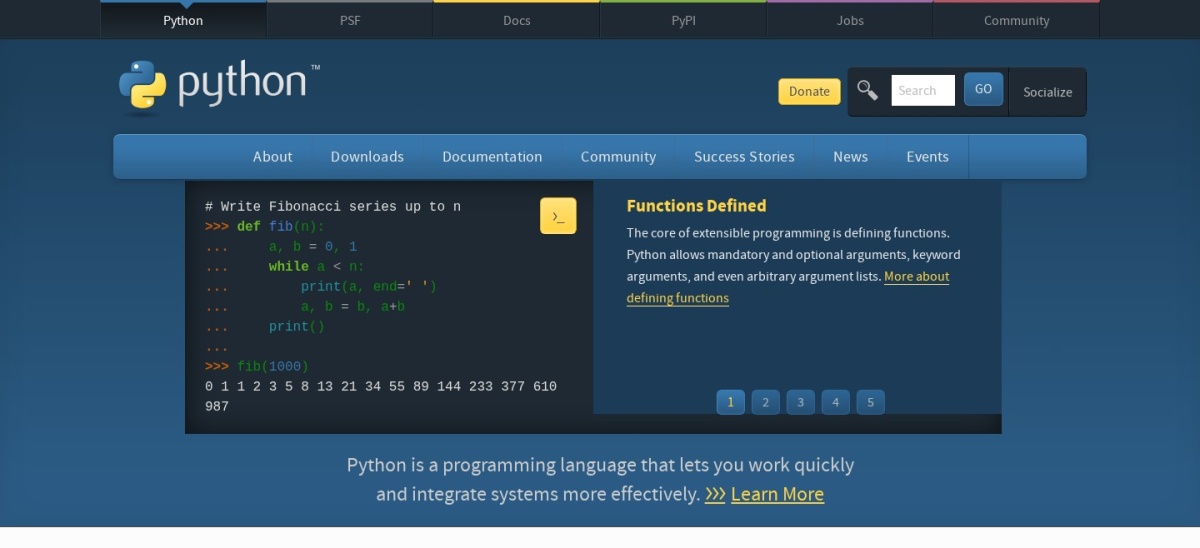
Python is a readable, general-purpose language with the largest library collection in this list, covering web backends, data work and automation with NumPy, SciPy and pandas. It is free and open source, runs on Windows, macOS and Linux, and its plain syntax makes it the fastest of these languages for a beginner to read and write.
The trade off is concurrency. Python's asyncio handles many connections, but it does not offer the lightweight processes and supervision that make Elixir strong for fault-tolerant systems. It suits APIs, data work and teams that value hiring pool and library depth over BEAM-style fault tolerance.
What we like
Free with the largest library collection here
Easy to learn and read
Runs on Windows, macOS and Linux
Huge community and hiring pool
Watch out for
No built-in supervision like Elixir's OTP
Slower than compiled languages on CPU-heavy work
Async code needs care to avoid blocking calls
The language is free; paid help comes from support vendorsVisit python.org
02
Node.js
4.8/5on G2 (101 reviews, checked Nov 2026)
PriceFree
Best for real-time APIs in JavaScript
LicenceMIT, free and open source
EngineV8 with an event loop
Packagesnpm registry
Paid planNone, fully free
nodejs.org
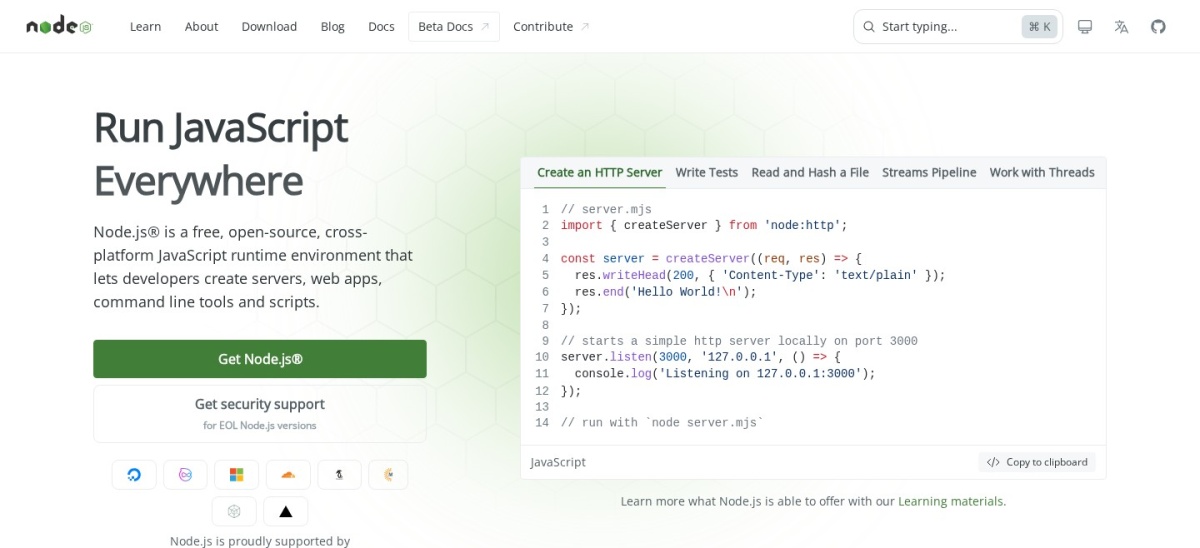
Node.js homepage, captured Nov 2026.
Node.js is a runtime that runs JavaScript on the server, built on Google's V8 engine, with an event loop that handles many open connections at once. It is free and open source, and its npm registry gives it one of the largest package collections of any pick here, so teams can reuse the same language on the front end and the back end.
The trade off is fault tolerance. A single Node.js process has no supervision tree, so a crash takes down that process unless you add a manager or run several copies. It suits real-time APIs, chat features and teams that already write JavaScript.
What we like
Same language on front end and back end
Event loop suits many open connections
Huge npm package collection
Fast to start for JavaScript teams
Watch out for
No supervision tree like Elixir's OTP
CPU-heavy work blocks the event loop
Async error handling takes discipline
The runtime is free; paid help comes from support vendorsVisit nodejs.org
03
Laravel
4.7/5on G2 (161 reviews, checked Nov 2026)
PriceFree
Best web framework for Phoenix-style apps
LicenceMIT, free and open source
ORMEloquent
QueuesBuilt in
Paid planNone for the framework
laravel.com
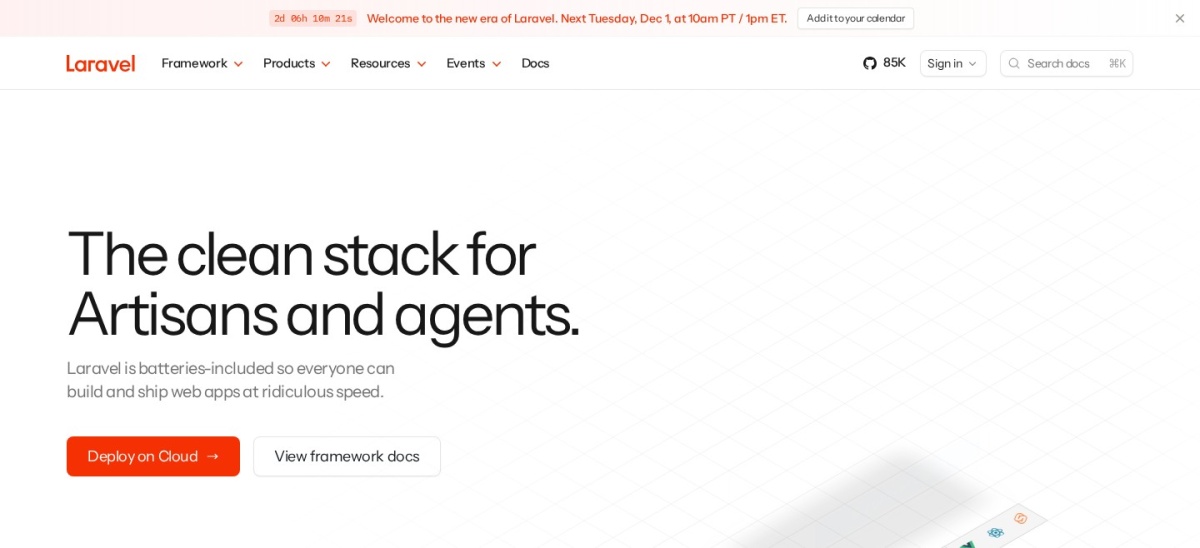
Laravel homepage, captured Nov 2026.
Laravel is a PHP web framework that ships with the pieces a Phoenix app would need separately: routing, an ORM called Eloquent, queues, scheduled jobs and authentication. It is free and open source, and its docs and large community make it one of the fastest frameworks here for shipping a complete web app.
The trade off is concurrency. PHP handles one request per process by default, so Laravel leans on queues and Octane for long-lived connections instead of the always-on processes Elixir runs. It suits web apps, APIs and small teams that want everything included.
What we like
Routing, ORM, queues and auth included
Clear docs and a large community
Fast to ship a complete web app
Ecosystem covers billing, admin and deploy
Watch out for
No lightweight processes like Elixir
Upgrades between major versions take work
Magic helpers can hide what code does
The framework is free; paid hosting comes from Laravel Cloud and ForgeVisit laravel.com
04
Kotlin
4.6/5on G2 (44 reviews, checked Nov 2026)
PriceFree
Best for JVM teams that want coroutines
LicenceApache 2.0, free and open source
ConcurrencyCoroutines
Runs onJava virtual machine
Paid planNone, fully free
kotlinlang.org
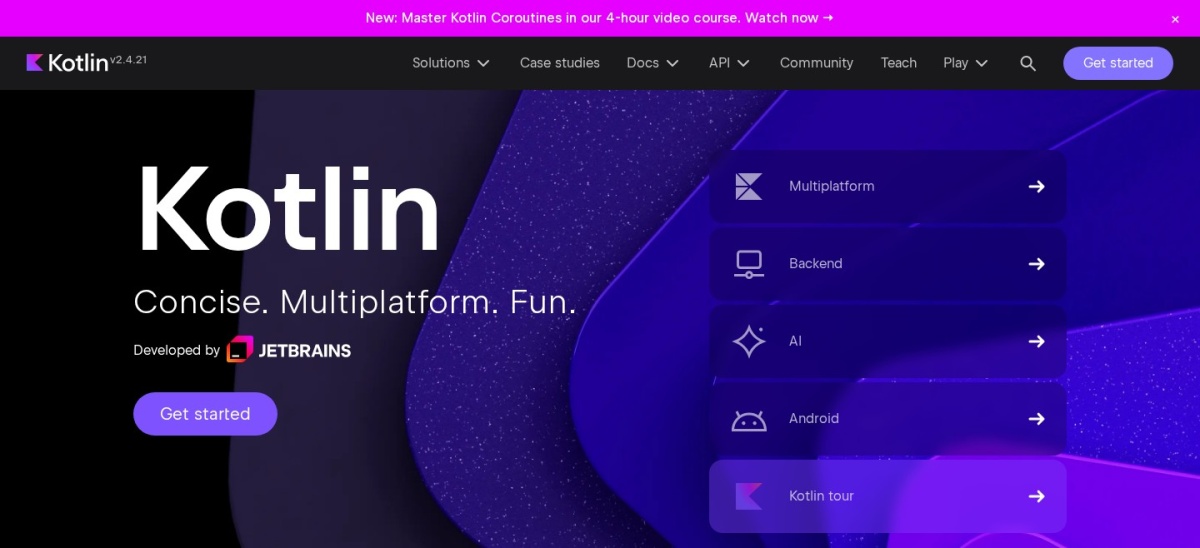
Kotlin homepage, captured Nov 2026.
Kotlin is a modern language that runs on the Java virtual machine and is free and open source under the Apache licence. Its coroutines handle many concurrent tasks without blocking threads, and its null safety catches a common class of errors at compile time, which suits teams moving from Elixir to the JVM.
The trade off is the runtime. Kotlin runs on the JVM, so it cannot match the BEAM's lightweight processes or its supervision trees for fault tolerance. It suits Android apps, JVM backends and teams that already run Java services.
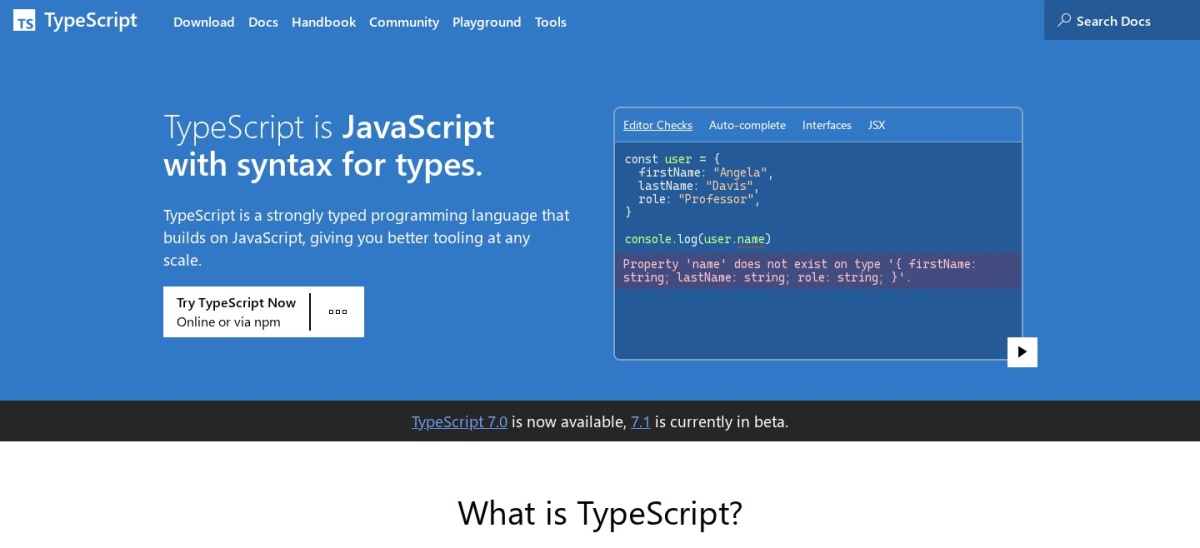
TypeScript is a typed superset of JavaScript from Microsoft that compiles to plain JavaScript and runs anywhere JavaScript runs. It is free and open source, and its static types catch many errors before code runs, which suits teams that found Elixir's dynamic style too loose for a growing codebase.
The trade off is that types are only a compile-time check. TypeScript adds no runtime supervision or concurrency model of its own, so real-time behaviour still depends on the Node.js runtime underneath. It suits large JavaScript teams and typed API work.
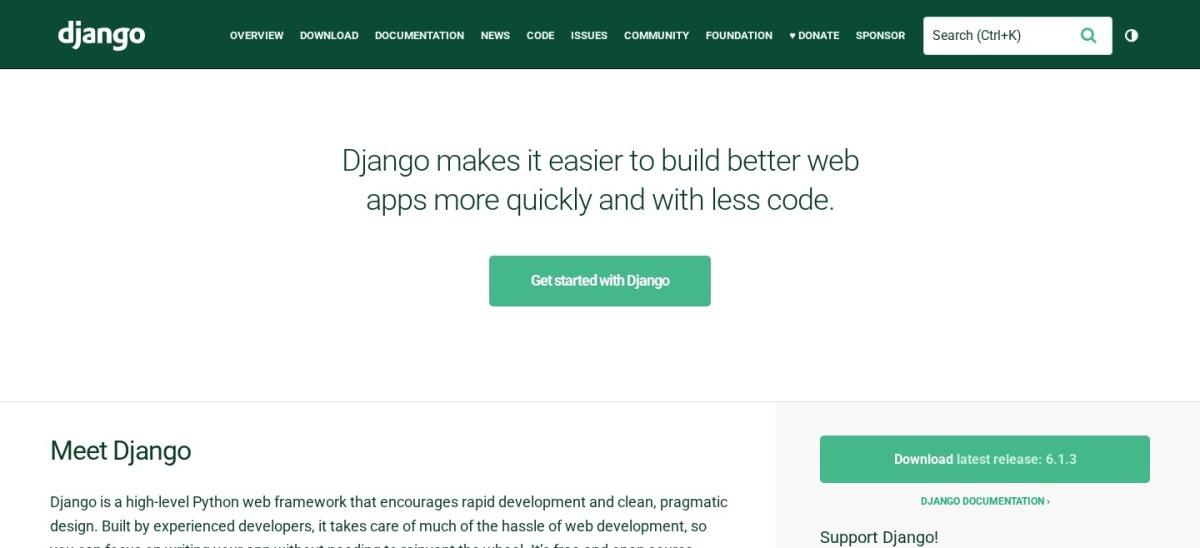
Django is a high-level Python web framework that includes an ORM, authentication and a ready-made admin panel, so a small team can ship a complete app without assembling parts. It is free and open source, and its security defaults and long history make it a steady pick for content sites, dashboards and internal tools.
The trade off is real-time work. Django handles requests one at a time by default, and live features need Channels or a separate service, unlike Elixir's built-in live processes. It suits data-backed web apps and teams that already write Python.
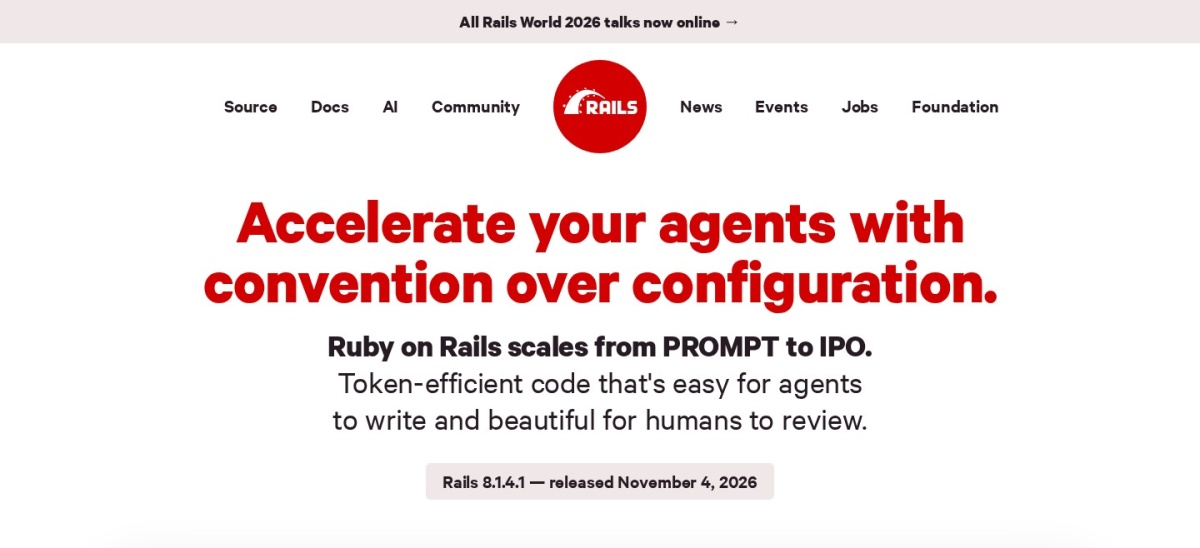
Ruby on Rails is a web framework built on Ruby that favours convention over configuration, so a small team can move from idea to a working app quickly. It is free and open source, and its Active Record ORM, routing and mailers cover the same ground as Elixir's Phoenix for standard web apps and APIs.
The trade off is scale and concurrency. Rails handles requests with threads or processes rather than the lightweight processes Elixir runs, so very high connection counts need extra infrastructure. It suits startups, SaaS products and teams that value shipping speed.
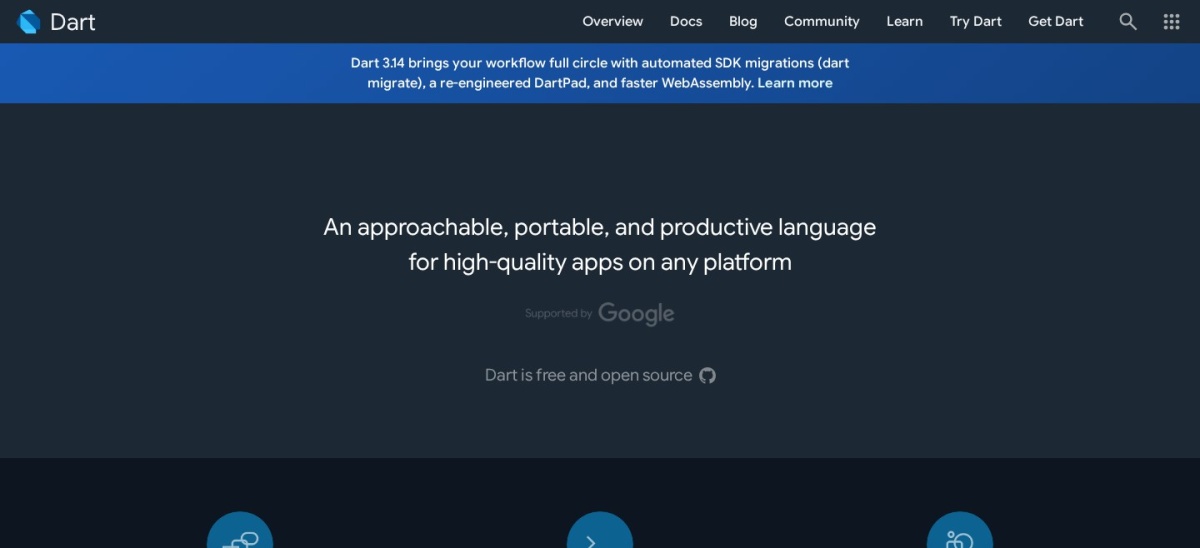
Dart is a language from Google that compiles to native code or JavaScript, with null safety built in and a fast development cycle. It is free and open source, and it is the language of Flutter, so a team that builds mobile apps with Flutter can use the same language for its server code.
The trade off is the server ecosystem. Dart's web and server libraries are smaller than those of Python, Node.js or PHP, so some integrations need more hand-written code. It suits Flutter teams and small services rather than large backends.
What we like
One language for app and server code
Null safety built in
Compiles to native code or JavaScript
Fast development cycle
Watch out for
Smaller server library collection
Fewer Dart developers to hire
No supervision model like Elixir
The language is free; paid help comes from support vendorsVisit dart.dev
09
Akka
4.2/5on G2 (30 reviews, checked Nov 2026)
PriceFree
Closest match to Elixir's actor model
LicenceBusiness Source Licence 1.1
LanguagesScala and Java
ModelActors and supervision
Paid planAkka Platform, contact sales
akka.io
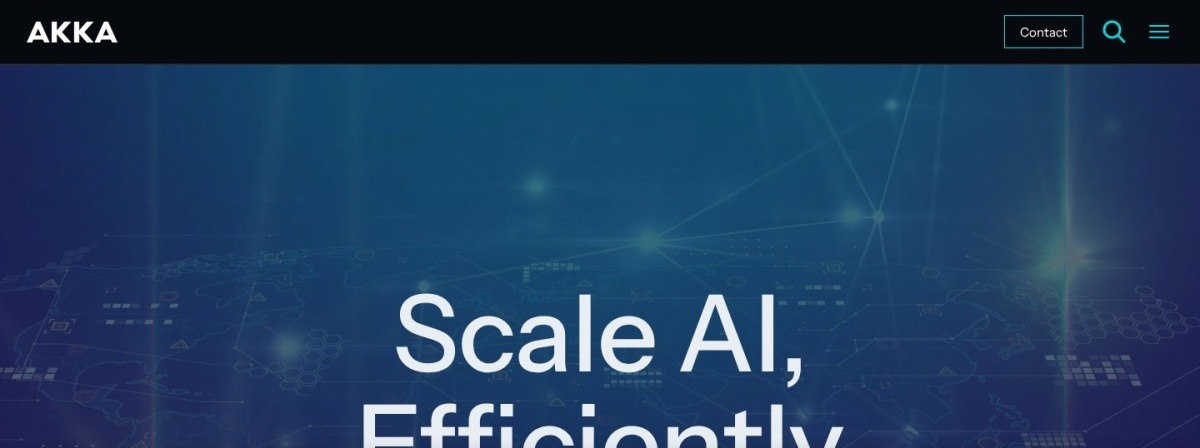
Akka homepage, captured Nov 2026.
Akka is a toolkit for the Java virtual machine that builds distributed systems from actors, small units that pass messages to each other, with supervision that restarts a failed actor. It is the closest pick here to Elixir's OTP model, and its core toolkit is free to use under the Business Source Licence.
The trade off is complexity and licensing. Akka runs on the JVM with Scala or Java, its learning curve is steep, and newer versions use the Business Source Licence rather than Apache. It suits JVM teams building distributed services that need supervision.
What we like
Actor model closest to Elixir's OTP
Supervision restarts failed actors
Clustering across many nodes
Works with Scala and Java
Watch out for
Steep learning curve
Business Source Licence, not Apache
JVM setup is heavier than the BEAM
The toolkit is free under the BSL; the managed Akka Platform is contact-pricedVisit akka.io
What no alternative replaces: the BEAM
Erlang is the closest alternative to Elixir because Elixir runs on its virtual machine, and Gleam adds static typing to the same runtime. Neither has a public rating on G2, Capterra or Trustpilot, so neither could be listed with a score, and this list does not invent one.
Rust, Go, Scala, Haskell and Clojure are the other names most often suggested, and the same problem applies: no rating exists for the language itself on the sources this list uses. Their absence here is a gap in public ratings, not a verdict on the languages.
If keeping the BEAM matters more than a rating, Erlang is the honest first choice, and Gleam is the typed option on the same runtime. Pick from this list only when you are ready to leave the BEAM behind.
How we chose
We started from the languages, runtimes and frameworks most often named as Elixir replacements for real-time web apps and distributed systems, then kept only those with a numeric rating and review count on G2 for the tool itself.
Prices and ratings were checked on 29 November 2026. Every pick here is free to use, so the price ladder is $0 throughout and the choice turns on fit, not fees.
We left out Erlang, Gleam, Rust, Go, Scala, Haskell, Clojure, Ruby, Java, PHP and Swift because no G2, Capterra or Trustpilot rating exists for the language itself, and we did not use IDE, framework or services-company ratings in their place. No vendor paid for a place, and we do not claim to have used these tools ourselves.
How to choose an alternative to Elixir
Start with the job your Elixir app actually does, then match the replacement to that job.
Name the Elixir feature you rely on most. If it is live updates, compare Node.js and Akka first. If it is fault tolerance, nothing here matches OTP, so weigh how much that matters.
Check what your team already knows. A Python or JavaScript team ships faster in Python, Node.js or Django than in a new JVM stack, even when the JVM option looks stronger on paper.
Pick the framework, not just the language. Laravel, Django and Rails ship the routing, database and auth pieces a Phoenix app has built in, so compare those pieces before the language.
Plan for the missing supervision. None of these picks restarts failed work the way OTP does, so budget for process managers, health checks and retries from the start.
FAQ
What is the best alternative to Elixir in 2026?
Python is the best alternative to Elixir for most teams. It is rated 4.8 out of 5 from 275 G2 reviews, it is free, and it has the largest library collection and hiring pool of any pick in this list.
Are there free alternatives to Elixir?
Yes, all 9 picks in this list are free to use. Python, Node.js, Laravel, Kotlin, TypeScript, Django, Ruby on Rails, Dart and Akka cost nothing for the language, runtime or framework itself, so the choice turns on fit rather than price.
What is the cheapest alternative to Elixir?
Every pick here costs $0, so there is no cheapest one. Paid costs only appear around the edges, such as hosting, the managed Akka Platform, or Laravel Cloud, while Elixir itself is also free.
Which alternative to Elixir is best for beginners?
Python is the best pick for beginners. Its plain syntax is easy to read, it runs on Windows, macOS and Linux, and its large community means answers to common problems are easy to find.
Python or Node.js: which replaces Elixir better?
Node.js replaces Elixir better for real-time APIs, because its event loop handles many open connections and it shares JavaScript with the front end. Python wins for data work, automation and hiring, with the larger library collection.
Is Erlang the closest alternative to Elixir?
Yes. Erlang shares the BEAM virtual machine and the OTP supervision model that Elixir is built on, so it keeps everything Elixir does best. It is not in this list only because it has no public rating on G2, Capterra or Trustpilot.
Which alternative is best for a small team building a real-time app?
Node.js is the best pick for a small team building a real-time app. It is free, rated 4.8 out of 5 from 101 G2 reviews, and one language covers the front end and the back end, which keeps a small team moving fast.
SaaS SEO and WordPress specialist with about 8 years of experience. Rakib compares WordPress plugins, themes, hosting and software using public pricing, documentation and user reviews. See how we rank.